


测绘学报 ›› 2025, Vol. 54 ›› Issue (10): 1769-1785.doi: 10.11947/j.AGCS.2025.20250257
罗亦泳( ), 占奥文, 冯小欢, 鲁铁定
收稿日期:2025-06-26
修回日期:2025-10-19
出版日期:2025-11-14
发布日期:2025-11-14
作者简介:罗亦泳(1982—),男,博士,教授,研究方向为测量数据处理。E-mail:luoyiyong@whu.edu.cn
Yiyong LUO(), Aowen ZHAN, Xiaohuan FENG, Tieding LU
Received:2025-06-26
Revised:2025-10-19
Online:2025-11-14
Published:2025-11-14
About author:LUO Yiyong (1982—), male, PhD, professor, majors in measurement data processing. E-mail: luoyiyong@whu.edu.cn
摘要:
针对当前只考虑时间因素或固定地球物理因素进行GNSS高程时序预测时存在的不足,本文顾及多种地球物理因素,提出多模型融合(BO-BiLSTM-A-Bootstrap)的GNSS高程时序预测模型及结果不确定分析方法。针对GNSS高程变化影响因素空间差异显著的特点,提出物理因素优选策略。利用贝叶斯优化算法(BO)优化双向长短期记忆网络-注意力机制(BO-BiLSTM-A)参数并进行GNSS高程预测,同时基于Bootstrap算法估计预测结果的置信区间,进而分析预测结果的不确定性。从全球4个区域选择56个GNSS站数据验证了本文方法的有效性。试验结果表明,不同区域的GNSS高程变化影响因素差异明显,基于地球物理因素优选策略建立的GNSS高程预测方法比采用固定影响因素和仅考虑时间因素方法具有更好的预测精度和普适性;本文方法对全球56个测站预测结果的RMSE和MAE分别为4.60和3.62 mm,相比自适应提升、极端梯度提升、门控循环单元、长短期记忆网络模型分别提高3.6%~25.8%和4.2%~ 29.7%,精度指标分布更为集中,并且本文方法在不同月份的预测平均精度总体上优于其他方法,结果更加稳定;在95%置信水平下,本文方法预测结果的平均覆盖宽度的标准为25.95,平均连续排名概率得分为2.67,总体上优于其他模型,表明本文方法预测结果具有较好的精度及可靠性。
中图分类号:
罗亦泳, 占奥文, 冯小欢, 鲁铁定. 基于地球物理因素与多模型融合的GNSS高程时间序列预测方法[J]. 测绘学报, 2025, 54(10): 1769-1785.
Yiyong LUO, Aowen ZHAN, Xiaohuan FENG, Tieding LU. A GNSS elevation time series prediction method based on geophysical factors and multi-model fusion[J]. Acta Geodaetica et Cartographica Sinica, 2025, 54(10): 1769-1785.
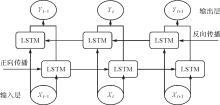
图1
BiLSTM网络结构"

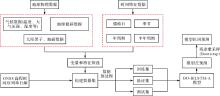
图2
BO-BiLSTM-A-Bootstrap模型构建流程"


图3
GNSS测站分布"
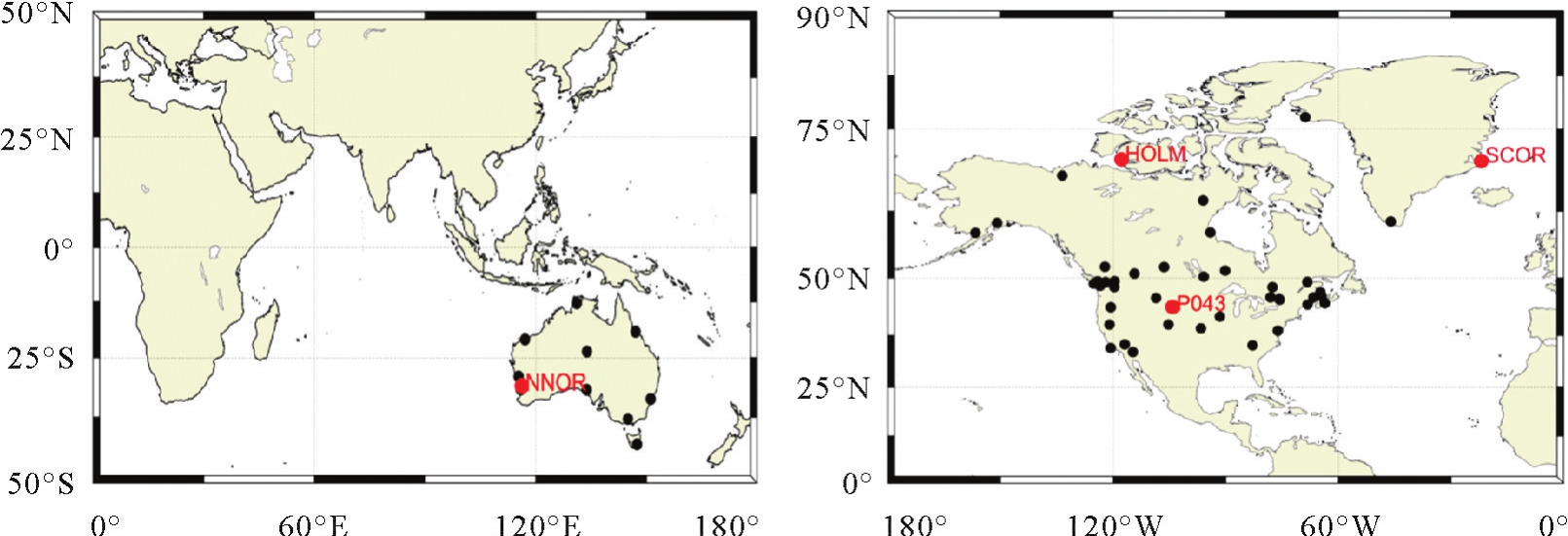
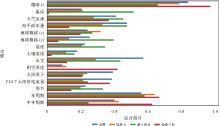
图4
特征综合得分区域对比"
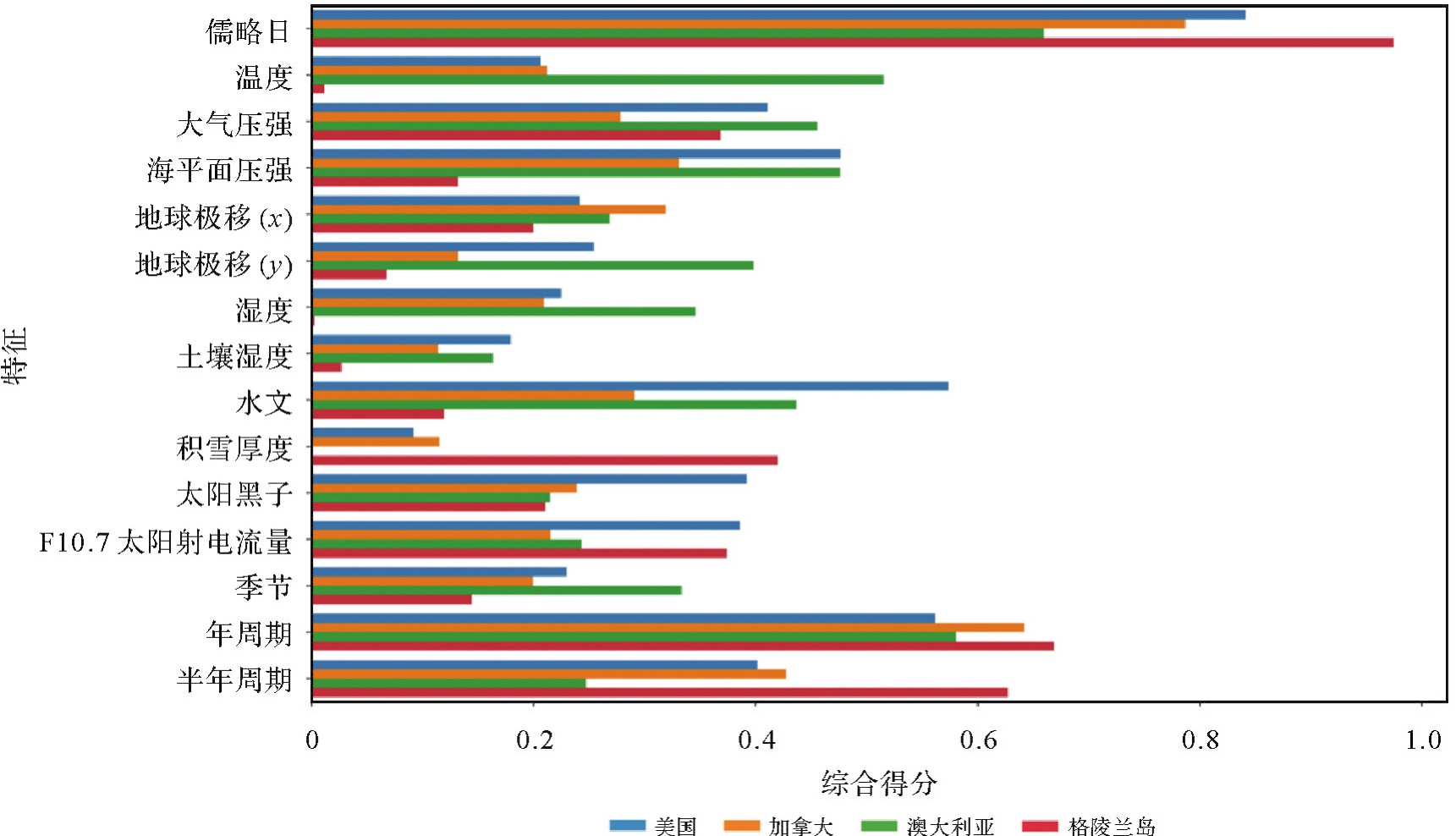
表1
模型核心参数"
| 测站 | 隐藏层神经元 | 训练次数 | 批数量 | 学习率 |
|---|---|---|---|---|
| P043 | 93 | 85 | 125 | 0.006 53 |
| HOLM | 83 | 104 | 16 | 0.000 1 |
| NNOR | 112 | 124 | 110 | 0.009 59 |
| SCOR | 71 | 89 | 34 | 0.000 1 |
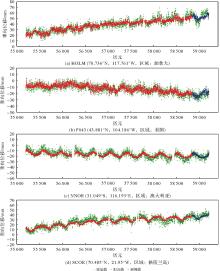
图5
P043、HOLM、NNOR、SCOR测站的拟合、预测结果"

表2
各测站不同方法预测精度比较"
| 测站 | 方法 | RMSE | MAE |
|---|---|---|---|
| P043 | 时间变量建模 | 5.8 | 4.82 |
| 部分物理因素建模 | 4.93 | 4.14 | |
| 多物理因素特征筛选建模 | 3.63 | 2.89 | |
| NNOR | 时间变量建模 | 4.87 | 4.81 |
| 部分物理因素建模 | 3.87 | 3.12 | |
| 多物理因素特征筛选建模 | 3.6 | 2.88 | |
| HOLM | 时间变量建模 | 6.67 | 5.33 |
| 部分物理因素建模 | 6.33 | 5.22 | |
| 多物理因素特征筛选建模 | 5.7 | 4.8 | |
| SCOR | 时间变量建模 | 6.35 | 5.38 |
| 部分物理因素建模 | 5.69 | 4.75 | |
| 多物理因素特征筛选建模 | 4.5 | 3.63 |
表3
基于BiLSTM-A的数据增强方法试验结果"
| 评估指标 | 数据增强前/mm | 数据增强后/mm | ARI/(%) |
|---|---|---|---|
| RMSE | 4.822 | 4.614 | 4.3 |
| MAE | 3.821 | 3.637 | 4.8 |
表4
4个区域不同方法预测精度(均值)比较"
| 区域 | 方法 | RMSE | MAE |
|---|---|---|---|
| 美国 | AdaBoost | 5.90 | 4.9 |
| XGBoost | 5.60 | 4.63 | |
| GRU | 4.71 | 3.74 | |
| LSTM | 4.66 | 3.69 | |
| 本文方法 | 4.44 | 3.51 | |
| 澳大利亚 | AdaBoost | 4.51 | 3.61 |
| XGBoost | 4.4 | 3.50 | |
| GRU | 4.47 | 3.55 | |
| LSTM | 4.63 | 3.69 | |
| 本文方法 | 4.28 | 3.36 | |
| 加拿大 | AdaBoost | 6.74 | 5.57 |
| XGBoost | 6.67 | 5.58 | |
| GRU | 5.12 | 4.02 | |
| LSTM | 5.01 | 3.91 | |
| 本文方法 | 4.76 | 3.66 | |
| 格陵兰岛 | AdaBoost | 10.64 | 9.56 |
| XGBoost | 10.67 | 9.56 | |
| GRU | 5.16 | 4.26 | |
| LSTM | 4.82 | 3.95 | |
| 本文方法 | 4.61 | 3.67 |
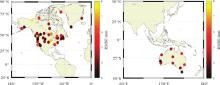
图6
BiLSTM-A在56个测站的预测精度指标(RMSE)"

表5
精度较差站(NLIB、VNDP、CHWK、PICL、INVK)不同方法预测精度比较"
| 测站 | 方法 | RMSE | MAE |
|---|---|---|---|
| NLIB | AdaBoost | 8.1 | 6.52 |
| XGBoost | 8.28 | 6.56 | |
| GRU | 8.48 | 6.73 | |
| LSTM | 8.06 | 6.49 | |
| 本文方法 | 7.60 | 6.10 | |
| CHWK | AdaBoost | 6.8 | 5.62 |
| XGBoost | 6.8 | 5.61 | |
| GRU | 7.32 | 6.04 | |
| LSTM | 7.25 | 5.98 | |
| 本文方法 | 6.44 | 5.15 | |
| INVK | AdaBoost | 9.61 | 7.69 |
| XGBoost | 8.73 | 6.87 | |
| GRU | 8.91 | 6.23 | |
| LSTM | 8.67 | 6.24 | |
| 本文方法 | 8.32 | 6.17 | |
| VNDP | AdaBoost | 6.84 | 4.96 |
| XGBoost | 6.73 | 4.86 | |
| GRU | 6.72 | 4.85 | |
| LSTM | 6.95 | 5.15 | |
| 本文方法 | 6.56 | 4.85 | |
| PICL | AdaBoost | 8.71 | 6.7 |
| XGBoost | 7.19 | 5.3 | |
| GRU | 7.11 | 5.24 | |
| LSTM | 7.77 | 5.95 | |
| 本文方法 | 6.97 | 5.16 |
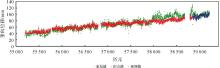
图7
PICL测站的拟合、预测结果"


图8
56个测站的预测精度指标箱线图"
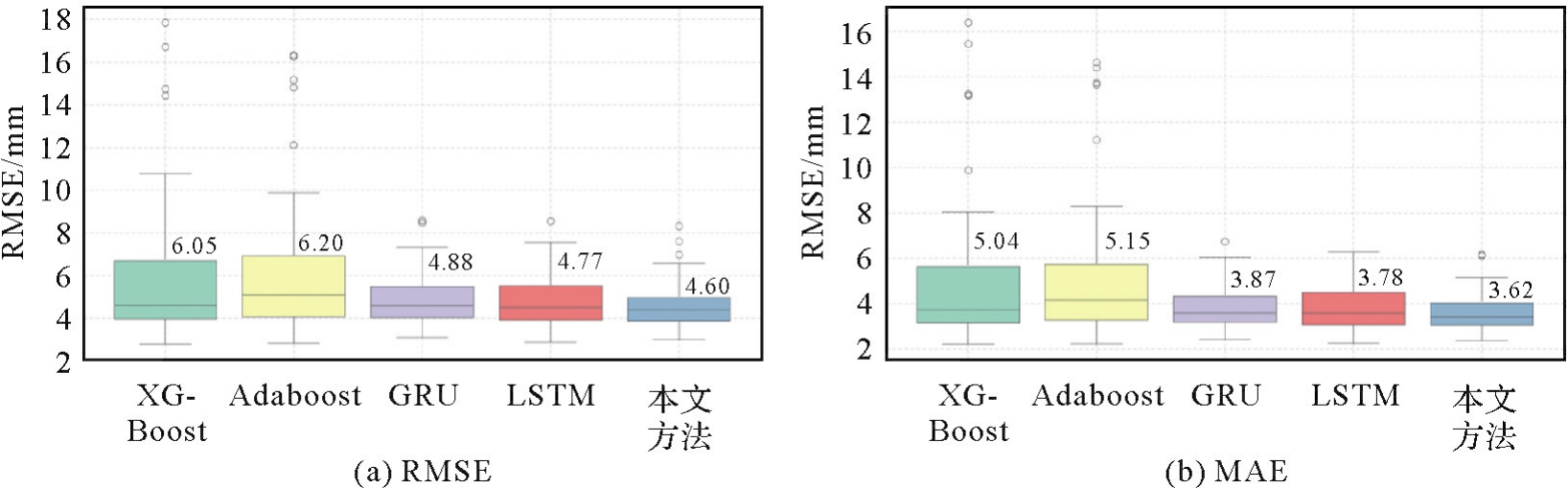
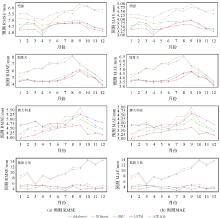
图9
P043、HOLM、NNOR、SCOR测站的预测精度与周期相关性"

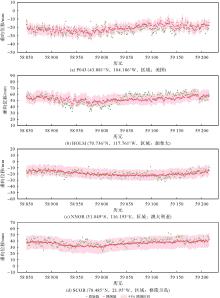
图10
95%置信水平下的预测结果"

表6
P043、HOLM、NNOR、SCOR测站区间预测精度指标"
| 测站 | PICP | PINAW | CWC | CRPS |
|---|---|---|---|---|
| P043 | 0.90 | 12.06 | 24.78 | 2.13 |
| HOLM | 0.96 | 16.92 | 16.92 | 3.43 |
| NNOR | 0.96 | 16.12 | 16.12 | 2.07 |
| SCOR | 0.98 | 20.18 | 20.18 | 2.46 |
表7
各方法区间预测精度指标"
| 模型 | CWC均值 | CRPS均值 |
|---|---|---|
| AdaBoost | 27.28 | 4.13 |
| XGBoost | 29.85 | 3.92 |
| GRU | 30.20 | 2.88 |
| LSTM | 29.8 | 2.87 |
| 本文方法 | 25.95 | 2.67 |
| [1] | GAO Wenzong, LI Zhao, CHEN Qusen, et al. Modelling and prediction of GNSS time series using GBDT, LSTM and SVM machine learning approaches[J]. Journal of Geodesy, 2022, 96(10): 71. |
| [2] | 明锋, 杨元喜, 曾安敏, 等. 中国区域IGS站高程时间序列季节性信号及长期趋势分析[J]. 中国科学:地球科学, 2016, 46(6): 834-844. |
| MING Feng, YANG Yuanxi, ZENG Anmin, et al. Seasonal signal and long-term trend analysis of elevation time series of IGS station in China area[J]. Scientia Sinica (Terrae), 2016, 46(6): 834-844. | |
| [3] | DHIRA Y, MEILANO I, DUDY D W. Analysis of tectonic plate velocity variations in the sunda strait based on GPS time-series data[J]. IOP Conference Series: Earth and Environmental Science, 2021, 873(1): 012084. |
| [4] | STALLER A, ÁLVAREZ-GÓMEZ J A, LUNA M P, et al. Crustal motion and deformation in Ecuador from cGNSS time series[J]. Journal of South American Earth Sciences, 2018, 86: 94-109. |
| [5] | 周东旭, 冯义楷, 张化疑, 等. 联合卫星测高和GNSS观测的天津沿海近25年相对海平面变化分析[J]. 武汉大学学报(信息科学版), 2024, 49(5): 775-784. |
| ZHOU Dongxu, FENG Yikai, ZHANG Huayi, et al. Analysis of relative sea level change of Tianjin coast in recent 25 years using satellite altimetry and GNSS observations[J]. Geomatics and Information Science of Wuhan University, 2024, 49(5): 775-784. | |
| [6] | WANG Xiaolei, NIU Zijin, HE Xiufeng, et al. Monitoring of coastal subsidence changes based on GNSS positioning and GNSS-IR[J]. Journal of Geodesy and Geoinformation Science, 2023, 6(2): 71-80. |
| [7] | BOGUSZ J, KLOS A, POKONIECZNY K. Optimal strategy of a GPS position time series analysis for post-glacial rebound investigation in Europe[J]. Remote Sensing, 2019, 11(10): 1209. |
| [8] | LAHTINEN S, JIVALL L, HÄKLI P, et al. Densification of the ITRF2014 position and velocity solution in the Nordic and Baltic countries[J]. GPS Solutions, 2019, 23(4): 95. |
| [9] | 何会齐, 谢伟, 孔冷进. 基于STL-XGBoost模型的GNSS高程时间序列预测方法[J]. 测绘通报, 2024(): 282-287. |
| HE Huiqi, XIE Wei, KONG Lengjin. Prediction method of GNSS elevation time series based on STL-XGBoost model[J]. Bulletin of Surveying and Mapping, 2024(): 282-287. | |
| [10] | LI Zhen, LU Tieding. Prediction of multistation GNSS vertical coordinate time series based on XGBoost algorithm[C]//Processings of 2022 China Satellite Navigation Conference. Singapore: Springer, 2022: 275-286. |
| [11] | WANG Jian, JIANG Weiping, LI Zhao, et al. A new multi-scale sliding window LSTM framework (MSSW-LSTM): a case study for GNSS time-series prediction[J]. Remote Sensing, 2021, 13(16): 3328. |
| [12] | ZHOU Yu, HE Xiaoxing, MONTILLET J P, et al. An improved ICEEMDAN-MPA-GRU model for GNSS height time series prediction with weighted quality evaluation index[J]. GPS Solutions, 2025, 29(3): 113. |
| [13] | ŞIMŞEK M, TAŞKıRAN M, DOGĞAN U. Modelling of GNSS station position time series using deep learning approaches[J]. Earth Science Informatics, 2024, 18(1): 96. |
| [14] | 胡顺强, 陈克杰, 贺小星, 等. 顾及环境负载的青藏高原东南缘GNSS垂向坐标时序噪声模型研究[J/OL]. 武汉大学学报(信息科学版), 2024: 1-26. [2024-06-24]. https://link.cnki.net/doi/10.13203/j.whugis20240098. |
| HU Shunqiang, CHEN Kejie, HE Xiaoxing, et al. GNSS vertical coordinate time series noise model in southeastern Tibet plateau based on environmental loading[J/OL]. Geomatics and Information Science of Wuhan University, 2024: 1-26. [2024-06-24]. https://link.cnki.net/doi/10.13203/j.whugis20240098. | |
| [15] | LI Zhao, JIANG Weiping, VAN DAM T, et al. A review on modeling environmental loading effects and their contributions to nonlinear variations of global navigation satellite system coordinate time series[J]. Engineering, 2025, 47: 26-37. |
| [16] | ZHANG Zihao, XU Keke, LIU Yifu, et al. Study on the influence of nonlinear change of regional GNSS station coordinate time series and environmental loading[DB/OL]. [2025-06-26]. https://doi.org/10.21203/rs.3.rs-4590502/v1. |
| [17] | 高菡, 匡翠林, 楚彬. 广义回归神经网络修正GNSS垂向坐标时间序列环境负荷效应[J]. 地球物理学报, 2024, 67(9): 3357-3366. |
| GAO Han, KUANG Cuilin, CHU Bin. Correction of environmental loading effects in GNSS vertical coordinate time series based on generalized regression neural network[J]. Chinese Journal of Geophysics, 2024, 67(9): 3357-3366. | |
| [18] |
鲁铁定, 李祯. 顾及地球物理效应的GNSS高程时间序列AdaBoost预测和插值方法[J]. 测绘学报, 2024, 53(6): 1077-1085. DOI: .
doi: 10.11947/j.AGCS.2024.20230434 |
|
LU Tieding, LI Zhen. Prediction and interpolation of GNSS vertical time series based on the AdaBoost method considering geophysical effects[J]. Acta Geodaetica et Cartographica Sinica, 2024, 53(6): 1077-1085. DOI: .
doi: 10.11947/j.AGCS.2024.20230434 |
|
| [19] | 宋绍剑, 姜屹远, 刘斌. 一种TCN的改进模型及其在短期光伏功率区间预测的应用[J]. 计算机应用研究, 2023, 40(10): 3064-3069. |
| SONG Shaojian, JIANG Yiyuan, LIU Bin. Improved TCN model and its application in short-term photovoltaic power interval prediction[J]. Application Research of Computers, 2023, 40(10): 3064-3069. | |
| [20] |
潘雄, 黄伟凯, 赵万卓, 等. 基于BiLSTM模型的BDS-3短期钟差预报精度研究[J]. 测绘学报, 2024, 53(1): 65-78. DOI: .
doi: 10.11947/j.AGCS.2024.20230082 |
|
PAN Xiong, HUANG Weikai, ZHAO Wanzhuo, et al. Research on short-term prediction accuracy of BDS-3 clock bias based on BiLSTM model[J]. Acta Geodaetica et Cartographica Sinica, 2024, 53(1): 65-78. DOI: .
doi: 10.11947/j.AGCS.2024.20230082 |
|
| [21] | 王凯, 肖星星, 余永明, 等. CEEMDAN-CNN-BiLSTM混合模型矿区地表沉降预测[J]. 导航定位学报, 2024, 12(5): 156-163. |
| WANG Kai, XIAO Xingxing, YU Yongming, et al. Hybrid prediction model of surface subsidence deformation using CEEMDAN-CNN-BiLSTM[J]. Journal of Navigation and Positioning, 2024, 12(5): 156-163. | |
| [22] | BAHDANAU D, CHO K, BENGIO Y. Neural machine translation by jointly learning to align and translate[EB/OL]. [2025-02-24]. arxiv.org/abs/1409.0473. |
| [23] | WANG Xilu, JIN Yaochu, SCHMITT S, et al. Recent advances in Bayesian optimization[J]. ACM Computing Surveys, 2023, 55(13s): 1-36. |
| [24] | 张明书, 姚琛, 吴贤国, 等. 基于BO-Adam-Bi-LSTM的盾构下穿既有隧道变形预测及调控[J]. 现代隧道技术, 2024, 61(6): 92-99, 110. |
| ZHANG Mingshu, YAO Chen, WU Xianguo, et al. Deformation prediction and control for shield tunnelling passing under existing tunnels based on BO-Adam-Bi-LSTM[J]. Modern Tunnelling Technology, 2024, 61(6): 92-99, 110. | |
| [25] | 林平, 李有鹏, 谭彬. 基于Bootstrap方法和LSSVM模型的滑坡位移区间预测[J]. 测绘与空间地理信息, 2024, 47(9): 48-51, 56. |
| LIN Ping, LI Youpeng, TAN Bin. Interval prediction of landslide displacement based on Bootstrap method and LSSVM model[J]. Geomatics & Spatial Information Technology, 2024, 47(9): 48-51, 56. | |
| [26] | 田景环, 李丛鑫, 王文川, 等. 基于Bootstrap法和极限学习机的月降水区间预测[J]. 水文, 2022, 42(3): 14-19. |
| TIAN Jinghuan, LI Congxin, WANG Wenchuan, et al. Monthly precipitation interval forecast based on Bootstrap and extreme learning machine[J]. Journal of China Hydrology, 2022, 42(3): 14-19. | |
| [27] | 文海平, 钟萍, 汤苗, 等. 利用GNSS探究2015—2022年澳大利亚东南部干旱时空演变特征及其与ENSO-IOD的遥相关[J]. 地球物理学进展, 2025, 40(3): 875-892. |
| WEN Haiping, ZHONG Ping, TANG Miao, et al. Exploring the spatiotemporal evolution characteristics and teleconnection with ENSO-IOD of drought in Southeastern Australia from 2015 to 2022 using GNSS[J]. Progress in Geophysics, 2025, 40(3): 875-892. | |
| [28] | ALTAMIMI Z, REBISCHUNG P, MÉTIVIER L, et al. ITRF2014: a new release of the International Terrestrial Reference Frame modeling nonlinear station motions[J]. Journal of Geophysical Research: Solid Earth, 2016, 121(8): 6109-6131. |
| [29] | 王鹏, 刘静, 刘小利, 等. GNSS在地表过程研究中的应用[J]. 武汉大学学报(信息科学版), 2024, 49(12): 2159-2180. |
| WANG Peng, LIU Jing, LIU Xiaoli, et al. Application of GNSS in the study of Earth surface processes[J]. Geomatics and Information Science of Wuhan University, 2024, 49(12): 2159-2180. | |
| [30] | NIE Wenfeng, ROVIRA-GARCIA A, WANG Yong, et al. On the global kinematic positioning variations during the September 2017 solar flare events[J]. Journal of Geophysical Research: Space Physics, 2022, 127(8): e2021JA030245. |
| [31] | ZHOU Wei, GU Shegnfeng, GE Maorong, et al. Analysis of the effect of the 06-09-2017 solar flare on GNSS signal and positioning performance[C]//Proceedings of 2018 China Satellite Navigation Conference. Singapore: Springer, 2018: 555-569. |
| [32] | 任文宗, 刘婕, 邓玉婷, 等. 基于RF回归和LSTM神经网络的空气污染耦合性研究及预测:以北京市为例[J]. 科学技术创新, 2025(10): 22-26. |
| REN Wenzong, LIU Jie, DENG Yuting, et al. Research and prediction on air pollution coupling based on RF regression and LSTM neural networks: a case study of Beijing[J]. Scientific and Technological Innovation, 2025(10): 22-26. | |
| [33] | 罗亦泳, 占奥文, 冯小欢. 基于CEEMDAN与TCN-Attention的陆态网络GNSS高程时间序列多尺度预测[J]. 大地测量与地球动力学, 2025, 45(8): 781-790. |
| LUO Yiyong, ZHAN Aowen, FENG Xiaohuan. Multi-scale prediction of GNSS elevation time series of CMONOC based on CEEMDAN and TCN-attention[J]. Journal of Geodesy and Geodynamics, 2025, 45(8): 781-790. | |
| [34] | 蒋婷婷. 基于不确定性理论的区域光伏发电功率预测[D]. 北京: 华北电力大学, 2023. |
| JIANG Tingting. Regional photovoltaic power forecasting based on uncertainty theory[D]. Beijing: North China Electric Power University, 2023. | |
| [35] | 陈船宇, 熊国江, 方厚康, 等. 基于MODWT-CEEMDAN-LSTM的短期光伏功率区间预测模型[J]. 太阳能学报, 2025, 46(2): 416-424. |
| CHEN Chuanyu, XIONG Guojiang, FANG Houkang, et al. Short-term photovoltaic power interval prediction model based on modwt-ceemdan-lstm[J]. Acta Energiae Solaris Sinica, 2025, 46(2): 416-424. | |
| [36] | 赵宇, 郑东健. 基于QR-KOA-ITransformer-BiLSTM的混凝土坝变形区间预测模型[J/OL]. 河海大学学报(自然科学版), 2025: 1-12. [2025-02-24]. https://kns.cnki.net/kcms/detail/32.1117.tv.20250224.1500.004.html. |
| ZHAO Yu, ZHENG Dongjian. Prediction model of deformation interval of concrete dam based on QR-KOA-ITransformer-BiLSTM[J/OL]. Journal of Hohai University (Natural Sciences), 2025: 1-12. [2025-02-24]. https://kns.cnki.net/kcms/detail/32.1117.tv.20250224.1500.004.html. |
| [1] | 鲁铁定, 李祯. 顾及地球物理效应的GNSS高程时间序列AdaBoost预测和插值方法[J]. 测绘学报, 2024, 53(6): 1077-1085. |
| [2] | 武曙光, 边少锋, 李厚朴, 李昭, 欧阳华. 基于变分模态分解的GNSS高程时间序列时变信号提取[J]. 测绘学报, 2024, 53(1): 79-90. |
| 阅读次数 | ||||||
|
全文 |
|
|||||
|
摘要 |
|
|||||
