


测绘学报 ›› 2026, Vol. 55 ›› Issue (2): 275-286.doi: 10.11947/j.AGCS.2026.20250512
薛树强1( ), 高金来1(), 赵爽2, 李保金2, 范云浩1, 刘冰倩1
收稿日期:2025-12-02
修回日期:2026-01-23
出版日期:2026-03-13
发布日期:2026-03-13
通讯作者:
高金来
E-mail:xuesq@casm.ac.cn;1073649120@qq.com
作者简介:薛树强(1980—),男,博士,研究员,研究方向为海底大地测量。 E-mail:xuesq@casm.ac.cn
基金资助:
Shuqiang XUE1(), Jinlai GAO1(), Shuang ZHAO2, Baojin LI2, Yunhao FAN1, Bingqian LIU1
Received:2025-12-02
Revised:2026-01-23
Online:2026-03-13
Published:2026-03-13
Contact:
Jinlai GAO
E-mail:xuesq@casm.ac.cn;1073649120@qq.com
About author:XUE Shuqiang (1980—), male, PhD, researcher, majors in marine geodesy. E-mail: xuesq@casm.ac.cn
Supported by:摘要:
针对高精度水下定位模型对声线跟踪定位模型算法的依赖问题,本文提出了一种静态声呐延迟补偿定位模型。本文借鉴了GNSS大气静态延迟模型,定义了协议声速,构建了天顶声呐延迟与斜方向声呐延迟之间的高度角映射函数模型,以及其非线性最小二乘参数估计算法,即将声速剖面转化为静态声呐延迟及映射函数信息产品,实现了声呐测距定位模型在斜距上的静态声呐延迟补偿。本文提出的高度角正弦2阶连分式可精确逼近声呐延迟映射函数,辅以动态声呐延迟补偿后,不仅可以实现厘米级精度海底大地测量精密定位,而且计算效率较传统算法提升约80%,较现有快速声线跟踪算法提升50%以上。本文提出的静态声呐延迟补偿定位模型对于海洋水下声学测距定位理论研究具有借鉴意义,也为大规模水下声学导航定位服务信息产品构建提供了一种解决方案。
中图分类号:
薛树强, 高金来, 赵爽, 李保金, 范云浩, 刘冰倩. 静态声呐延迟补偿定位模型[J]. 测绘学报, 2026, 55(2): 275-286.
Shuqiang XUE, Jinlai GAO, Shuang ZHAO, Baojin LI, Yunhao FAN, Bingqian LIU. A static acoustic delay compensation positioning model[J]. Acta Geodaetica et Cartographica Sinica, 2026, 55(2): 275-286.
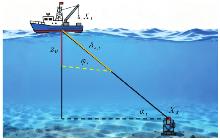
图1
静态声呐延迟补偿"
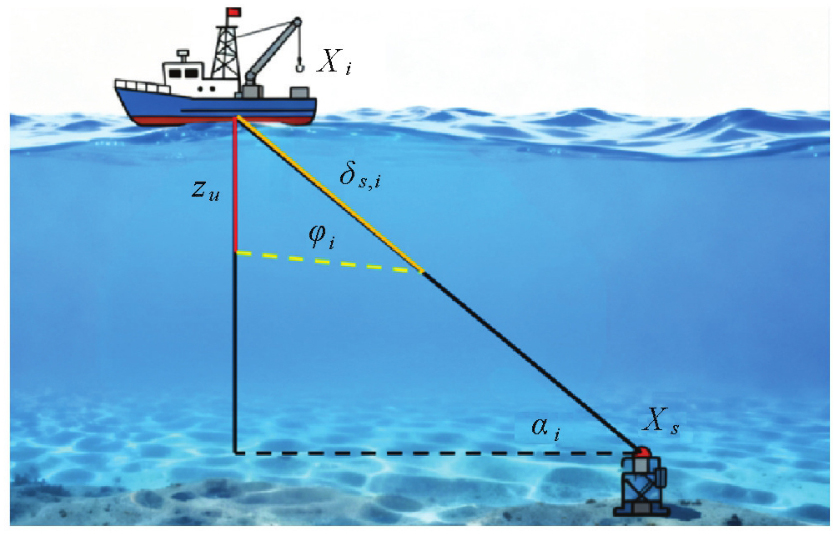
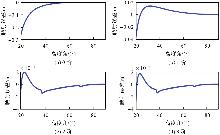
图2
0~3阶连分式的映射误差"
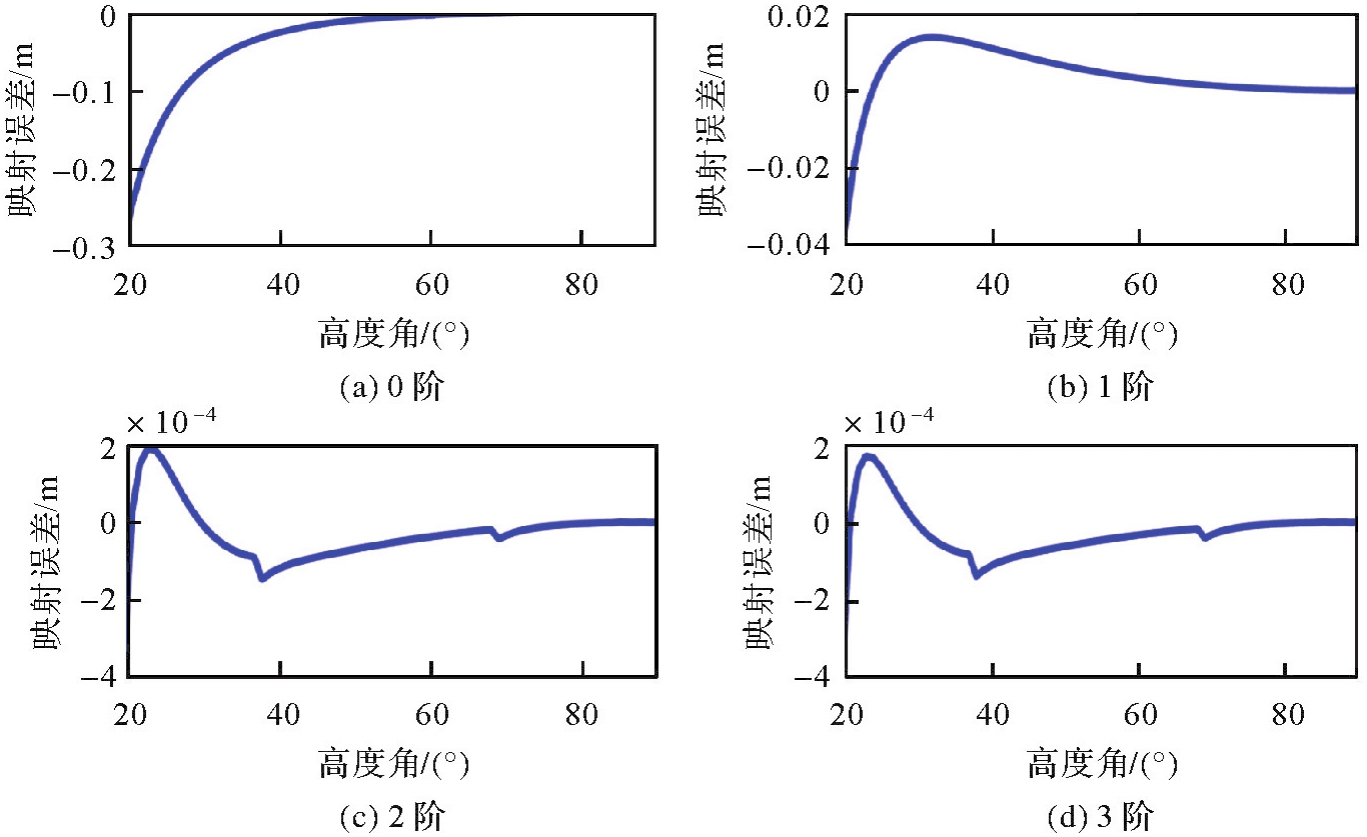
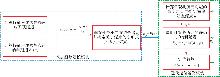
图3
静态声呐延迟补偿定位模型解算流程"
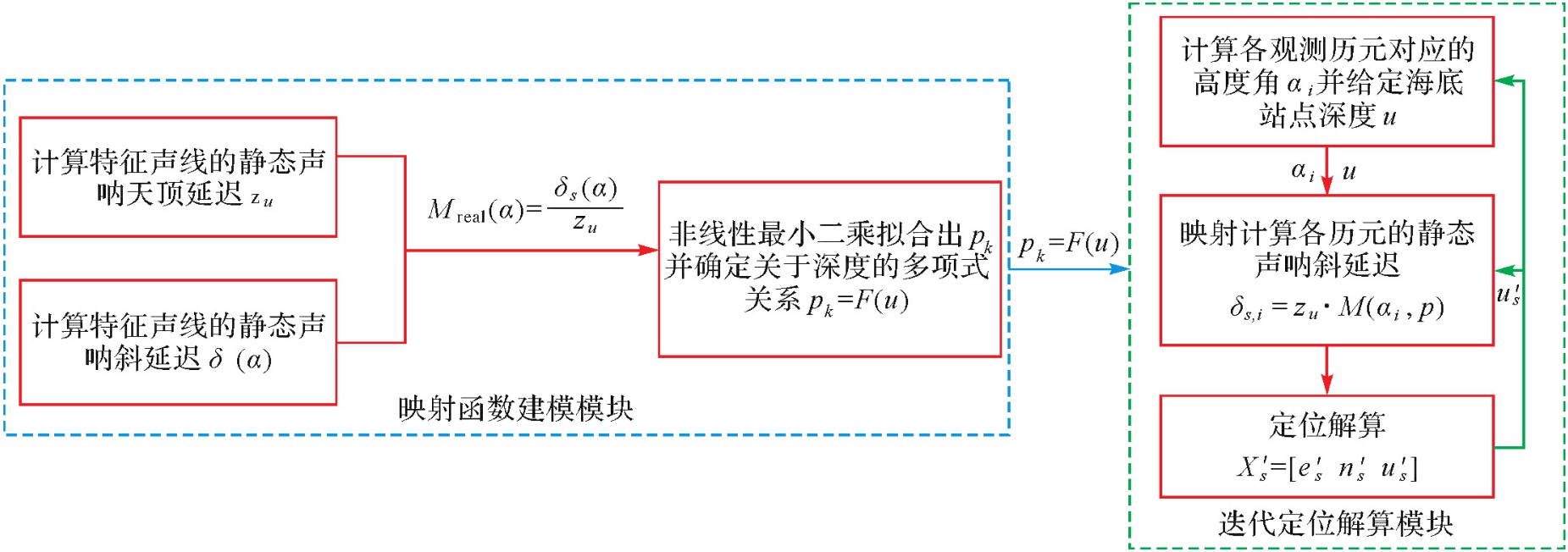
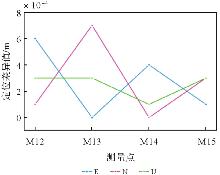
图4
两种算法各点位定位差异"
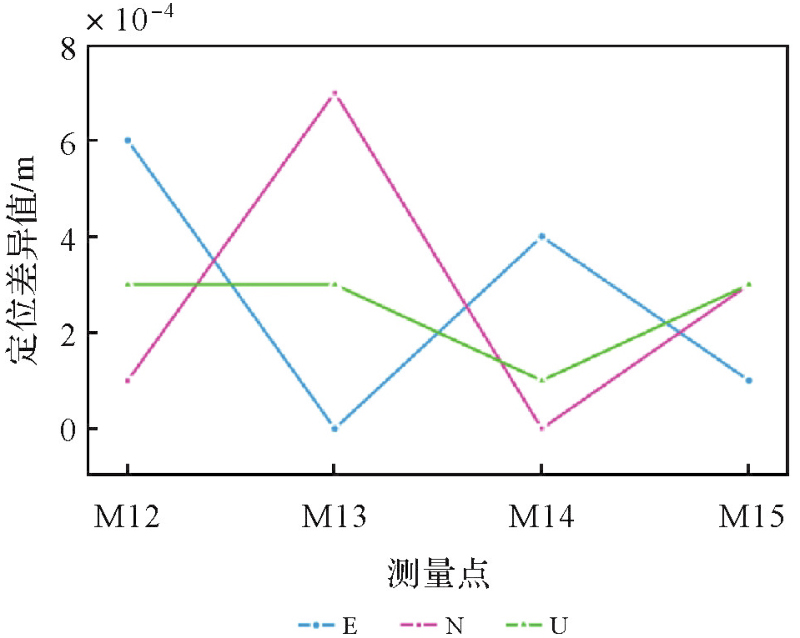
图5
航迹与声速剖面(数据1)"
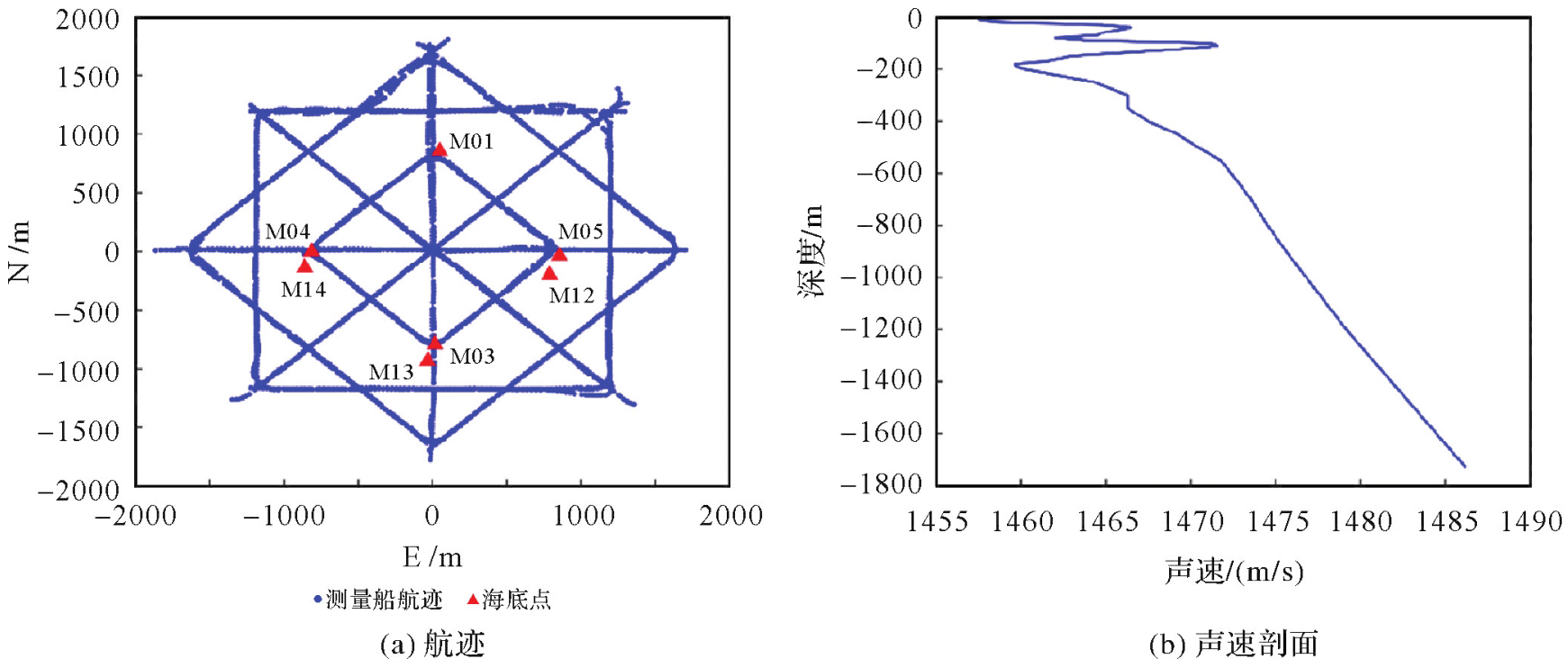
图6
航迹与声速剖面(数据2)"
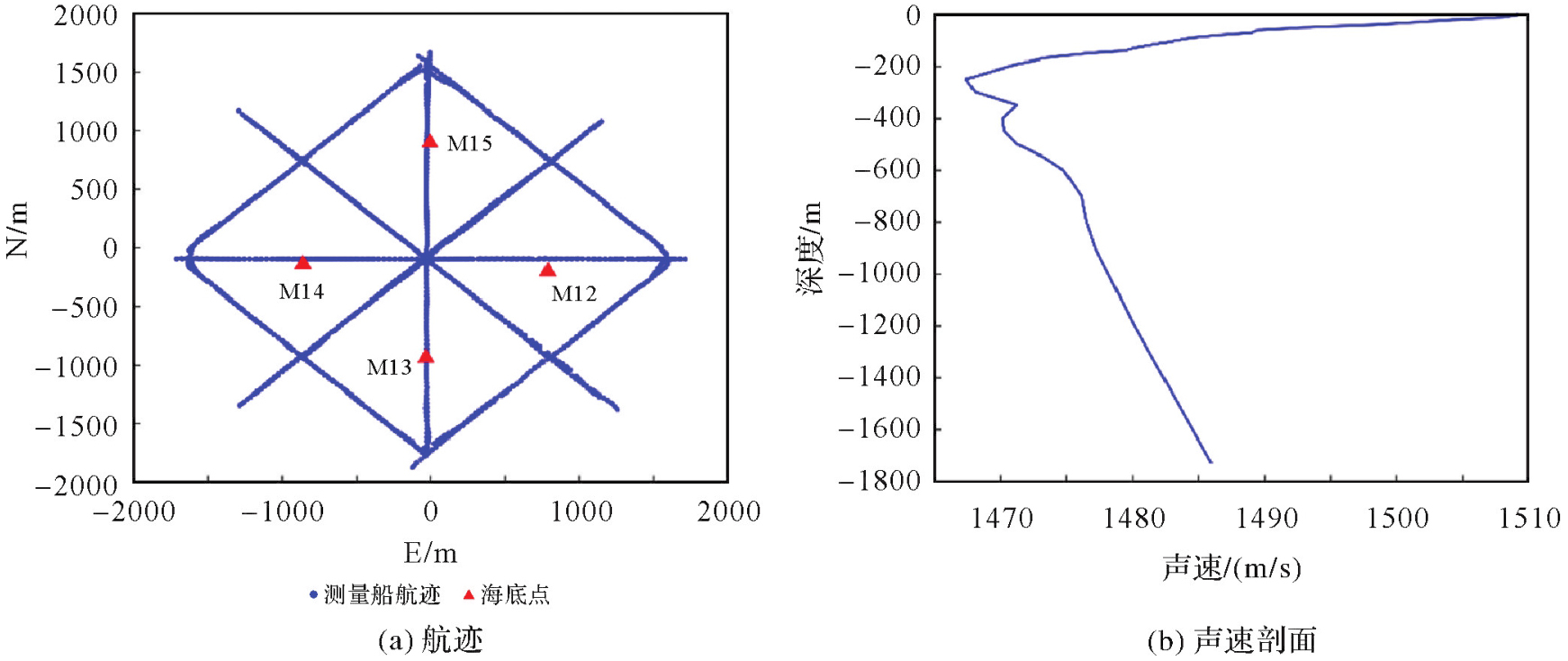
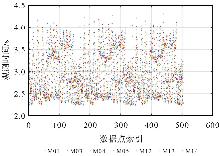
图7
各应答器时延观测数据(数据1)"
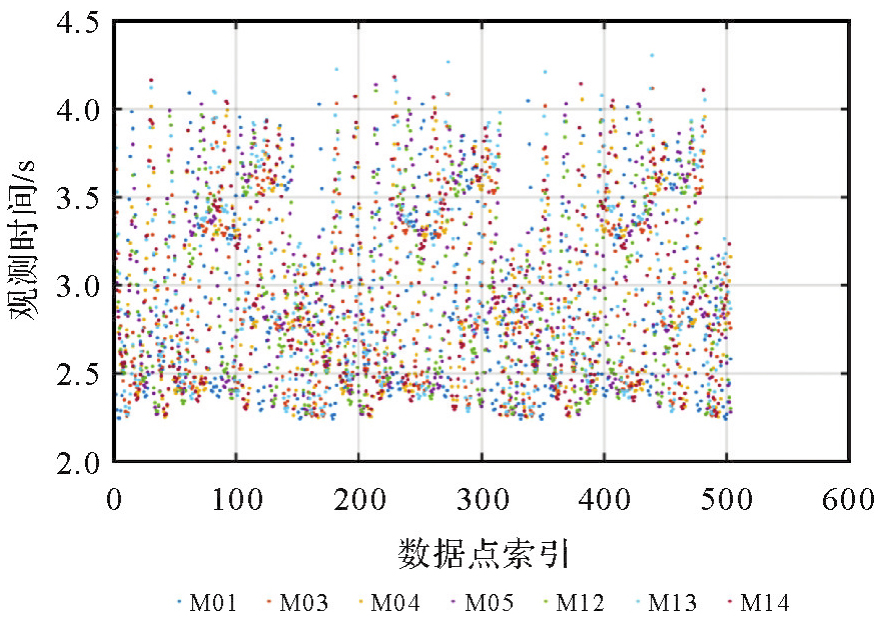
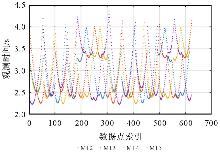
图8
各应答器时延观测数据(数据2)"
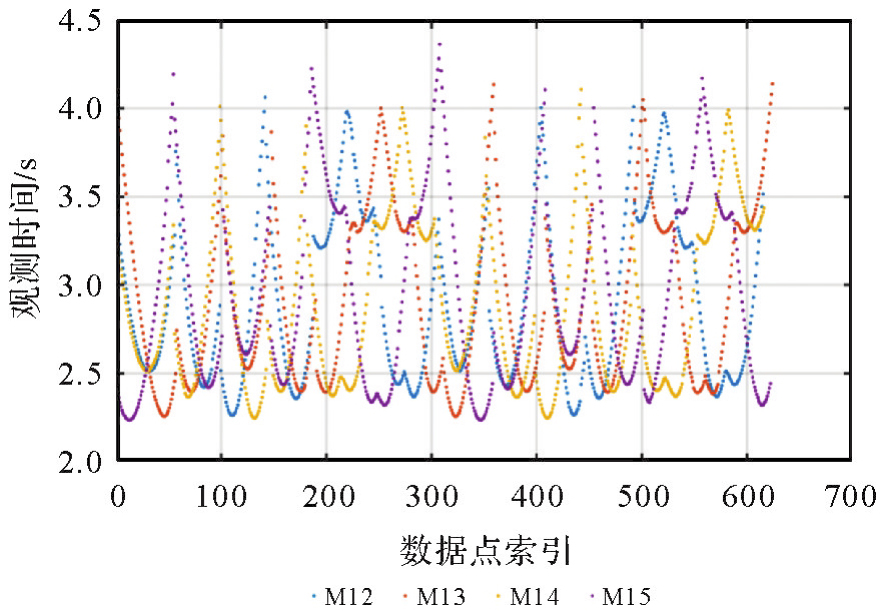
表1
各算法的定位解算结果(数据1)"
| 点位 | 算法 | E | N | U |
|---|---|---|---|---|
| M01 | 标准声线跟踪法 | 49.425 0 | 853.876 9 | -1 659.760 4 |
| 声线入射角推估法 | 49.425 0 | 853.876 8 | -1 659.760 4 | |
| 声线传播时间推估法 | 49.425 0 | 853.876 9 | -1 659.760 4 | |
| 静态天顶延迟补偿法 | 49.425 0 | 853.876 9 | -1 659.760 4 | |
| M03 | 标准声线跟踪法 | 16.575 3 | -792.193 6 | -1 673.885 8 |
| 声线入射角推估法 | 16.575 3 | -792.193 2 | -1 673.886 1 | |
| 声线传播时间推估法 | 16.575 3 | -792.193 3 | -1 673.886 1 | |
| 静态天顶延迟补偿法 | 16.575 3 | -792.193 3 | -1 673.886 2 | |
| M04 | 标准声线跟踪法 | -814.347 5 | -1.862 5 | -1 667.060 1 |
| 声线入射角推估法 | -814.347 4 | -1.862 5 | -1 667.060 3 | |
| 声线传播时间推估法 | -814.347 4 | -1.862 5 | -1 667.060 3 | |
| 静态天顶延迟补偿法 | -814.347 4 | -1.862 5 | -1 667.060 3 | |
| M05 | 标准声线跟踪法 | 855.385 6 | -34.426 2 | -1 678.097 2 |
| 声线入射角推估法 | 855.385 3 | -34.426 2 | -1 678.097 4 | |
| 声线传播时间推估法 | 855.385 3 | -34.426 2 | -1 678.097 4 | |
| 静态天顶延迟补偿法 | 855.385 3 | -34.426 2 | -1 678.097 5 | |
| M12 | 标准声线跟踪法 | 788.746 8 | -199.970 8 | -1 676.716 0 |
| 声线入射角推估法 | 788.746 5 | -199.970 7 | -1 676.716 2 | |
| 声线传播时间推估法 | 788.746 6 | -199.970 7 | -1 676.716 2 | |
| 静态天顶延迟补偿法 | 788.746 6 | -199.970 7 | -1 676.716 3 | |
| M13 | 标准声线跟踪法 | -31.177 8 | -933.264 8 | -1 675.404 8 |
| 声线入射角推估法 | -31.177 8 | -933.264 5 | -1 675.405 1 | |
| 声线传播时间推估法 | -31.177 8 | -933.264 5 | -1 675.405 1 | |
| 静态天顶延迟补偿法 | -31.177 9 | -933.264 5 | -1 675.405 1 | |
| M14 | 标准声线跟踪法 | -859.881 4 | -138.981 3 | -1 668.389 9 |
| 声线入射角推估法 | -859.881 3 | -138.981 3 | -1 668.390 1 | |
| 声线传播时间推估法 | -859.881 3 | -138.981 3 | -1 668.390 1 | |
| 静态天顶延迟补偿法 | -859.881 3 | -138.981 3 | -1 668.390 1 |
表2
各算法的定位解算结果(数据2)"
| 点位 | 算法 | E | N | U |
|---|---|---|---|---|
| M12 | 标准声线跟踪法 | 788.289 0 | -199.529 7 | -1 677.361 6 |
| 声线入射角推估法 | 788.288 6 | -199.529 6 | -1 677.362 0 | |
| 声线传播时间推估法 | 788.288 6 | -199.529 6 | -1 677.362 0 | |
| 静态天顶延迟补偿法 | 788.288 5 | -199.529 6 | -1 677.361 9 | |
| M13 | 标准声线跟踪法 | -31.792 3 | -932.981 2 | -1 676.212 9 |
| 声线入射角推估法 | -31.792 3 | -932.980 7 | -1 676.213 3 | |
| 声线传播时间推估法 | -31.792 3 | -932.980 7 | -1 676.213 3 | |
| 静态天顶延迟补偿法 | -31.792 3 | -932.980 6 | -1 676.213 2 | |
| M14 | 标准声线跟踪法 | -860.668 1 | -138.568 7 | -1 669.111 0 |
| 声线入射角推估法 | -860.667 7 | -138.568 7 | -1 669.111 3 | |
| 声线传播时间推估法 | -860.667 8 | -138.568 7 | -1 669.111 3 | |
| 静态天顶延迟补偿法 | -860.667 7 | -138.568 7 | -1 669.111 2 | |
| M15 | 标准声线跟踪法 | -4.581 7 | 898.430 1 | -1 660.459 1 |
| 声线入射角推估法 | -4.581 7 | 898.429 7 | -1 660.459 4 | |
| 声线传播时间推估法 | -4.581 7 | 898.429 7 | -1 660.459 4 | |
| 静态天顶延迟补偿法 | -4.581 8 | 898.429 7 | -1 660.459 4 |
表3
各算法的单位权中误差"
| 数据 | 标准声线跟踪法 | 声线入射角推估法 | 声线传播时间推估法 | 静态天顶延迟补偿法 |
|---|---|---|---|---|
| 数据1 | 0.760 428 | 0.760 426 | 0.760 428 | 0.760 435 |
| 数据2 | 0.328 908 | 0.328 894 | 0.328 905 | 0.328 871 |
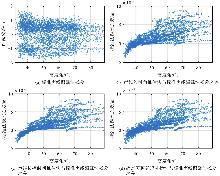
图9
各算法残差随高度角分布(数据1)"
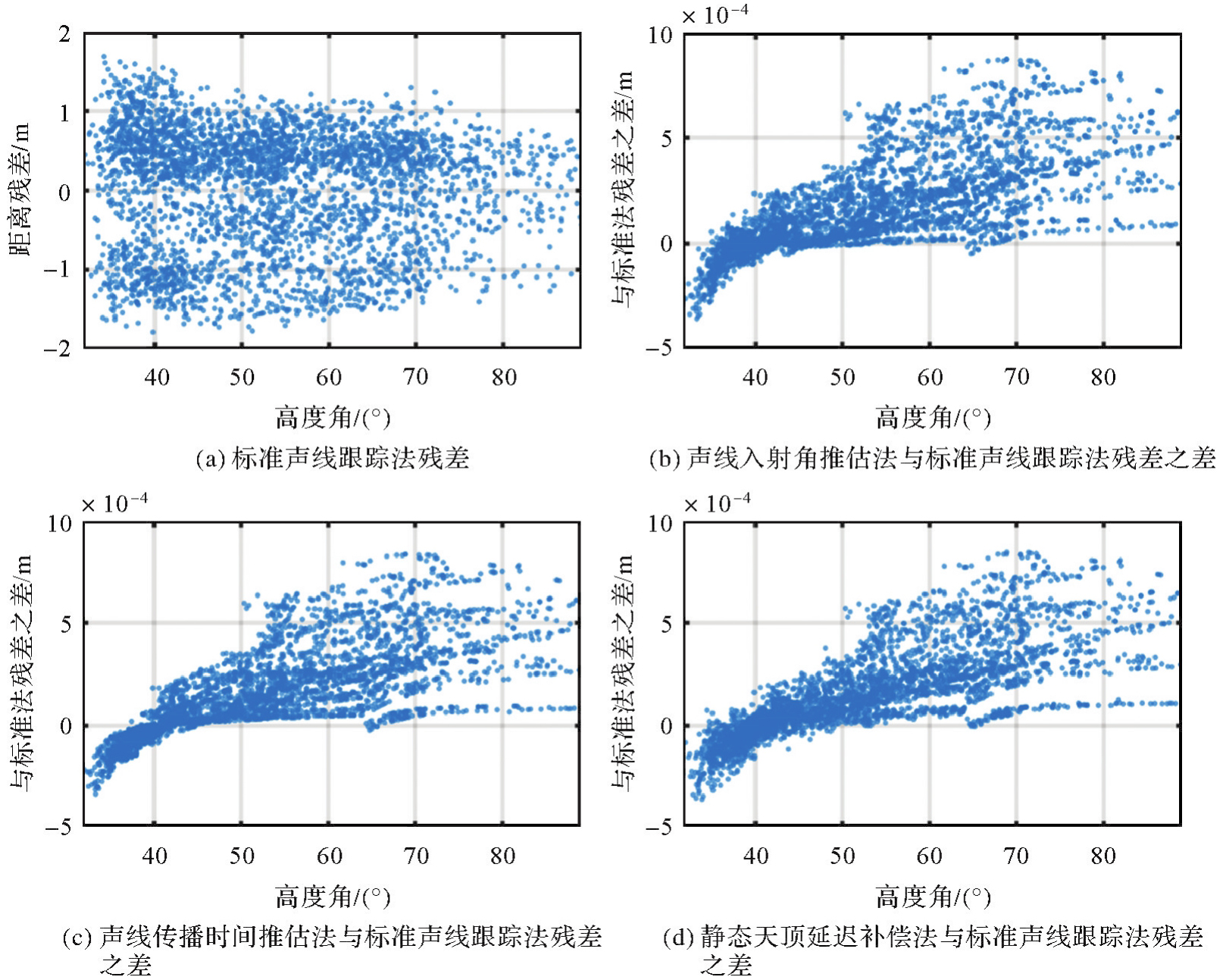
图10
各算法残差随高度角分布(数据2)"
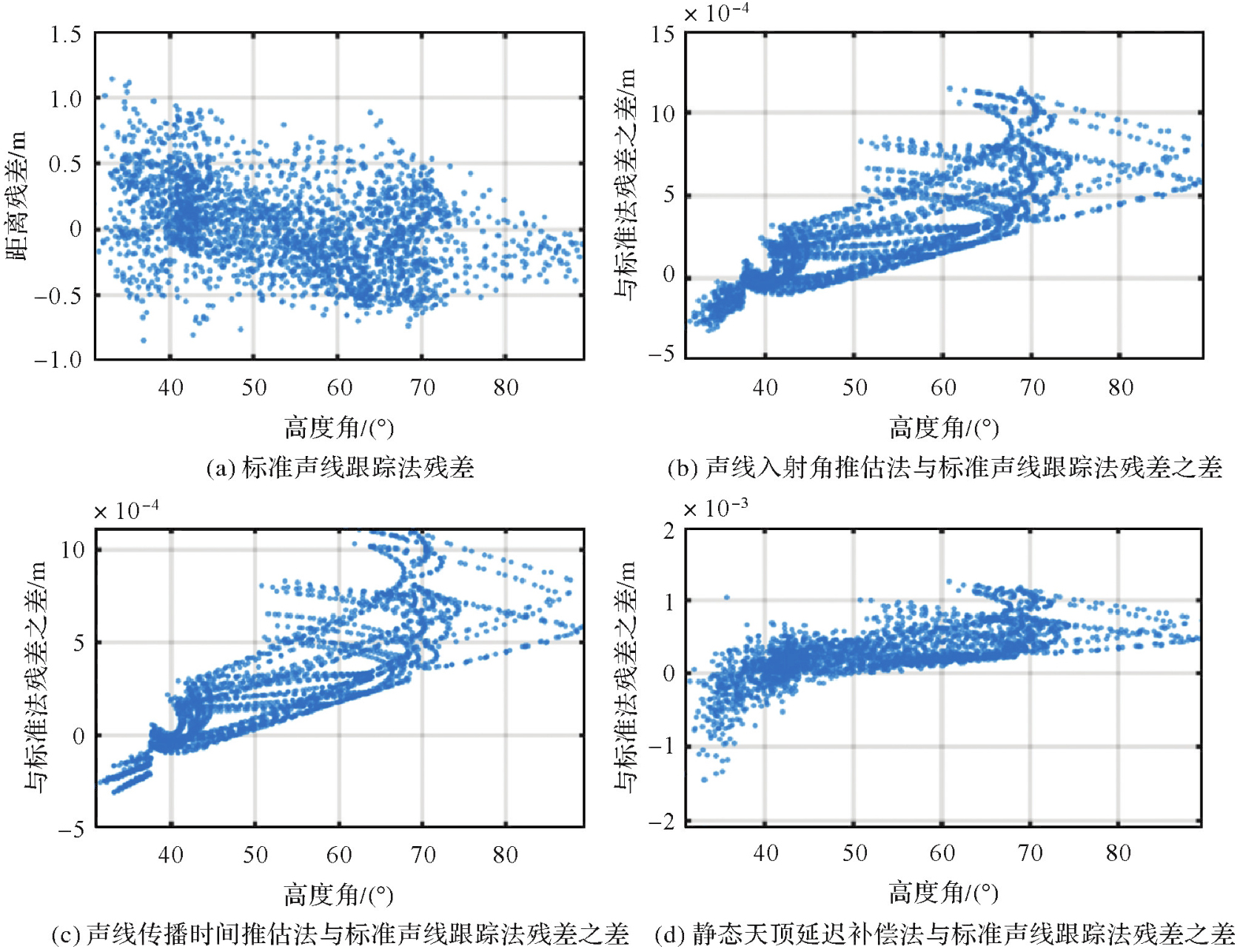
表4
各算法的解算效率"
| 数据 | 标准声线跟踪法 | 声线入射角推估法 | 声线传播时间推估法 | 静态天顶延迟补偿法 |
|---|---|---|---|---|
| 数据1 | 31.905 3 | 18.283 3 | 12.909 6 | 6.562 6 |
| 数据2 | 21.543 2 | 9.096 0 | 6.483 2 | 2.606 4 |
图11
残差随高度角分布(数据1)"
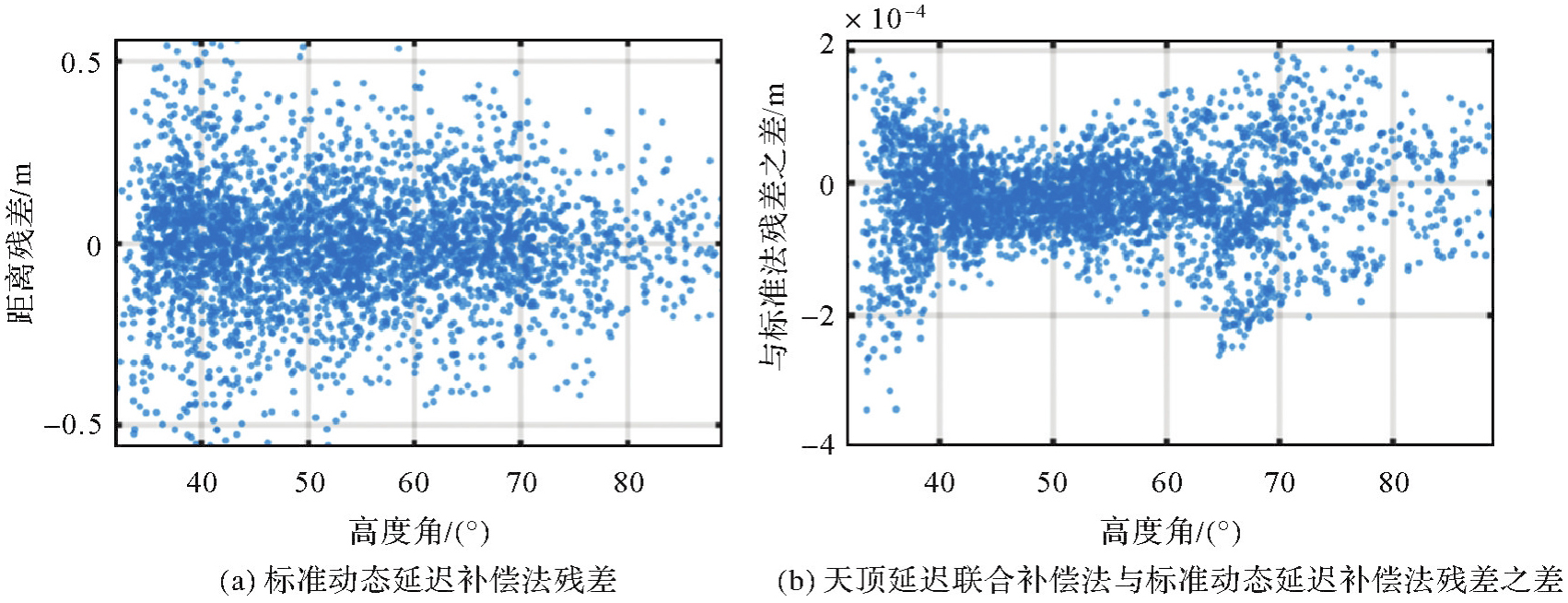
图12
残差随高度角分布(数据2)"
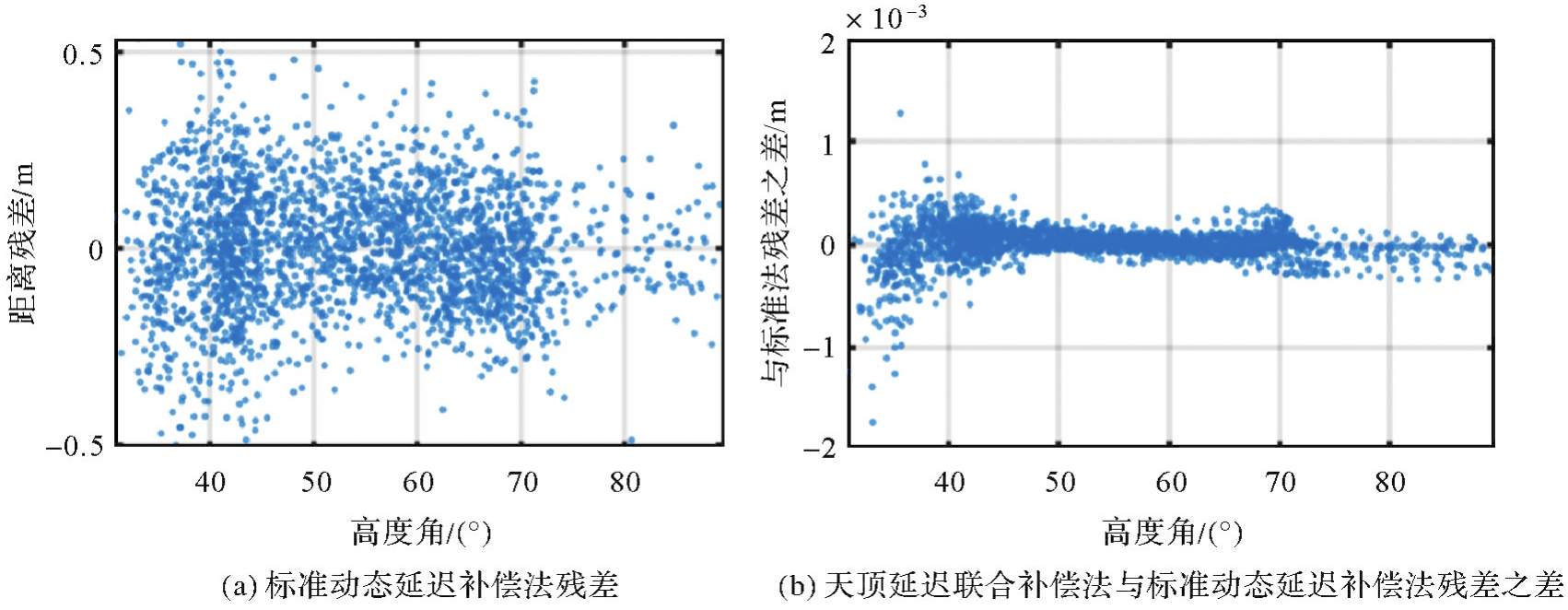
表5
两种算法的定位解算结果(数据1)"
| 点位 | 算法 | E | N | U |
|---|---|---|---|---|
| M01 | 标准动态延迟补偿法 | 49.326 9 | 854.168 3 | -1 659.449 2 |
| 天顶延迟联合补偿法 | 49.326 7 | 854.168 5 | -1 659.449 1 | |
| M03 | 标准动态延迟补偿法 | 16.489 8 | -791.672 2 | -1 673.877 8 |
| 天顶延迟联合补偿法 | 16.489 6 | -791.672 0 | -1 673.877 9 | |
| M04 | 标准动态延迟补偿法 | -814.317 9 | -1.435 2 | -1 666.874 0 |
| 天顶延迟联合补偿法 | -814.318 1 | -1.435 1 | -1 666.873 9 | |
| M05 | 标准动态延迟补偿法 | 855.188 4 | -33.998 5 | -1 677.983 5 |
| 天顶延迟联合补偿法 | 855.188 2 | -33.998 4 | -1 677.983 6 | |
| M12 | 标准动态延迟补偿法 | 788.560 2 | -199.523 1 | -1 676.627 8 |
| 天顶延迟联合补偿法 | 788.560 0 | -199.523 0 | -1 676.627 8 | |
| M13 | 标准动态延迟补偿法 | -31.264 9 | -932.712 9 | -1675.437 6 |
| 天顶延迟联合补偿法 | -31.265 1 | -932.712 7 | -1 675.437 6 | |
| M14 | 标准动态延迟补偿法 | -859.849 4 | -138.528 0 | -1 668.231 3 |
| 天顶延迟联合补偿法 | -859.849 6 | -138.527 8 | -1 668.231 2 |
表6
两种算法的定位解算结果(数据2)"
| 点位 | 算法 | E | N | U |
|---|---|---|---|---|
| M12 | 标准动态延迟补偿法 | 787.720 1 | -199.343 6 | -1 676.948 4 |
| 天顶延迟联合补偿法 | 787.720 2 | -199.343 5 | -1 676.948 4 | |
| M13 | 标准动态延迟补偿法 | -32.016 3 | -932.472 6 | -1 675.770 1 |
| 天顶延迟联合补偿法 | -32.016 1 | -932.472 4 | -1 675.770 3 | |
| M14 | 标准动态延迟补偿法 | -860.530 1 | -138.398 9 | -1 668.527 8 |
| 天顶延迟联合补偿法 | -860.530 0 | -138.398 7 | -1 668.527 9 | |
| M15 | 标准动态延迟补偿法 | -4.836 3 | 898.151 5 | -1 659.923 8 |
| 天顶延迟联合补偿法 | -4.826 1 | 898.151 8 | -1 659.923 8 |
表7
各算法的单位权中误差"
| 数据 | 标准动态延迟补偿法 | 天顶延迟联合补偿法 |
|---|---|---|
| 数据1 | 0.166 707 | 0.166 707 |
| 数据2 | 0.154 763 | 0.154 755 |
| [1] |
杨元喜, 徐天河, 薛树强. 我国海洋大地测量基准与海洋导航技术研究进展与展望[J]. 测绘学报, 2017, 46(1): 1-8. DOI: .
doi: 10.11947/j.AGCS.2017.20160519 |
|
YANG Yuanxi, XU Tianhe, XUE Shuqiang. Progresses and prospects in developing marine geodetic datum and marine navigation of China[J]. Acta Geodaetica et Cartographica Sinica, 2017, 46(1): 1-8. DOI: .
doi: 10.11947/j.AGCS.2017.20160519 |
|
| [2] | 陈冠旭, 刘杨, 李梦昊, 等. GNSS-声学海底定位的声速误差处理方法综述[J]. 武汉大学学报(信息科学版), 2022, 47(9): 1349-1363. |
| CHEN Guanxu, LIU Yang, LI Menghao, et al. Review on the processing methods of sound speed errors in GNSS-acoustic seafloor positioning[J]. Geomatics and Information Science of Wuhan University, 2022, 47(9): 1349-1363. | |
| [3] | 孙大军, 郑翠娥, 张居成, 等. 水声定位导航技术的发展与展望[J]. 中国科学院院刊, 2019, 34(3): 331-338. |
| SUN Dajun, ZHENG Cui'e, ZHANG Jucheng, et al. Development and prospect for underwater acoustic positioning and navigation technology[J]. Bulletin of the Chinese Academy of Sciences, 2019, 34(3): 331-338. | |
| [4] | 李景森, 薛树强, 肖圳, 等. GNSS/A组合观测臂长改正不确定度评估[J]. 武汉大学学报(信息科学版), 2025, 50(3): 535-544. |
| LI Jingsen, XUE Shuqiang, XIAO Zhen, et al. Uncertainty evaluation on arm length correction of GNSS/A combined observation[J]. Geomatics and Information Science of Wuhan University, 2025, 50(3): 535-544. | |
| [5] |
闫凤池, 王振杰, 赵爽, 等. 顾及双程声径的常梯度声线跟踪水下定位算法[J]. 测绘学报, 2022, 51(1): 31-40. DOI: .
doi: 10.11947/j.AGCS.2022.20210234 |
|
YAN Fengchi, WANG Zhenjie, ZHAO Shuang, et al. A layered constant gradient acoustic ray tracing underwater positioning algorithm considering round-trip acoustic path[J]. Acta Geodaetica et Cartographica Sinica, 2022, 51(1): 31-40. DOI: .
doi: 10.11947/j.AGCS.2022.20210234 |
|
| [6] |
辛明真, 阳凡林, 薛树强, 等. 顾及波束入射角的常梯度声线跟踪水下定位算法[J]. 测绘学报, 2020, 49(12): 1535-1542. DOI: .
doi: 10.11947/j.AGCS.2020.20190518 |
|
XIN Mingzhen, YANG Fanlin, XUE Shuqiang, et al. A constant gradient sound ray tracing underwater positioning algorithm considering incident beam angle[J]. Acta Geodaetica et Cartographica Sinica, 2020, 49(12): 1535-1542. DOI: .
doi: 10.11947/j.AGCS.2020.20190518 |
|
| [7] | 李景森, 薛树强, 徐莹, 等. 声速剖面测量误差对水下定位的影响[J]. 哈尔滨工程大学学报, 2023, 44(11): 2062-2070. |
| LI Jingsen, XUE Shuqiang, XU Ying, et al. Effects of sound speed profile measurement error on underwater positioning[J]. Journal of Harbin Engineering University, 2023, 44(11): 2062-2070. | |
| [8] |
周杰, 薛树强, 肖圳, 等. 海洋声速场水平梯度对海底大地测量定位的影响[J]. 测绘学报, 2024, 53(12): 2328-2337. DOI: .
doi: 10.11947/j.AGCS.2024.20230551 |
|
ZHOU Jie, XUE Shuqiang, XIAO Zhen, et al. Impact of the horizontal gradient of sound speed on seafloor geodetic positioning[J]. Acta Geodaetica et Cartographica Sinica, 2024, 53(12): 2328-2337. DOI: .
doi: 10.11947/j.AGCS.2024.20230551 |
|
| [9] | 李保金, 薛树强, 肖圳, 等. 附加先验声速结构约束的GNSS-A观测反演声速剖面[J/OL]. 武汉大学学报(信息科学版), 1-14 [2025-11-29]. https://doi.org/10.13203/j.whugis20240005. |
| LI Baojin, XUE Shuqiang, XIAO Zhen, et al. Inversion of sound speed profile using GNSS-A observations with prior sound speed structure constraint[J]. Geomatics and Information Science of Wuhan University, 1-14 [2025-11-29]. https://doi.org/10.13203/j.whugis20240005. | |
| [10] | 沈远海, 马远良, 屠庆平, 等. 浅水声速剖面的反演方法与实验验证[J]. 西北工业大学学报, 2000, 18(2): 212-215. |
| SHEN Yuanhai, MA Yuanliang, TU Qingping, et al. Inversion of sound speed profile for shallow-water environment with experimental verification[J]. Journal of Northwestern Polytechnical University, 2000, 18(2): 212-215. | |
| [11] | 贾雨晴, 苏林, 莫亚枭, 等. 浅海复杂环境下等效声速剖面的构建方法[J]. 应用声学, 2019, 38(4): 623-634. |
| JIA Yuqing, SU Lin, MO Yaxiao, et al. A method of constructing equivalent sound speed profile in complex shallow water[J]. Applied Acoustics, 2019, 38(4): 623-634. | |
| [12] |
朱冀星, 薛树强, 李保金, 等. GNSS-声呐观测反演双指数温度剖面[J]. 测绘学报, 2025, 54(2): 286-296. DOI: .
doi: 10.11947/j.AGCS.2025.20240065 |
|
ZHU Jixing, XUE Shuqiang, LI Baojin, et al. GNSS-acoustic inversion of double-exponential temperature profile[J]. Acta Geodaetica et Cartographica Sinica, 2025, 54(2): 286-296. DOI: .
doi: 10.11947/j.AGCS.2025.20240065 |
|
| [13] | 张盛秋, 杨元喜, 徐天河. 基于GNSS-A的海洋声速变化估计及其对定位的影响[J]. 地球物理学报, 2023, 66(3): 961-972. |
| ZHANG Shengqiu, YANG Yuanxi, XU Tianhe. Estimation of ocean sound velocity variation based on GNSS-A and its influence on positioning[J]. Chinese Journal of Geophysics, 2023, 66(3): 961-972. | |
| [14] |
赵爽, 王振杰, 聂志喜, 等. 顾及声速结构时域变化的海底基准站高精度定位方法[J]. 测绘学报, 2023, 52(1): 41-50. DOI: .
doi: 10.11947/j.AGCS.2023.20210326 |
|
ZHAO Shuang, WANG Zhenjie, NIE Zhixi, et al. Precise positioning method for seafloor geodetic stations based on the temporal variation of sound speed structure[J]. Acta Geodaetica et Cartographica Sinica, 2023, 52(1): 41-50. DOI: .
doi: 10.11947/j.AGCS.2023.20210326 |
|
| [15] | XUE Shuqiang, YANG Yuanxi, YANG Wenlong, et al. GNSS-A network solution with zenith acoustic delay estimation[J]. Marine Geodesy, 2024, 47(3): 237-268. |
| [16] |
赵爽, 王振杰, 刘慧敏. 顾及声线入射角的水下定位随机模型[J]. 测绘学报, 2018, 47(9): 1280-1289. DOI: .
doi: 10.11947/j.AGCS.2018.20170026 |
|
ZHAO Shuang, WANG Zhenjie, LIU Huimin. Investigation on underwater positioning stochastic model based on sound ray incidence angle[J]. Acta Geodaetica et Cartographica Sinica, 2018, 47(9): 1280-1289. DOI: .
doi: 10.11947/j.AGCS.2018.20170026 |
|
| [17] | 段中华, 刘新, 张慧莹, 等. 顾及行程时间的水下声学定位分段指数随机模型[J/OL]. 武汉大学学报(信息科学版), 2025: 1-17 [2025-11-29]. https://doi.org/10.13203/j.whugis20240437. |
| DUAN Zhonghua, LIU Xin, ZHANG Huiying, et al. Segmented exponential stochastic model for underwater acoustic positioning based on travel time[J]. Geomatics and Information Science of Wuhan University, 2025: 1-17 [2025-11-29]. https://doi.org/10.13203/j.whugis20240437. | |
| [18] | 刘以旭, 薛树强, 卢秀山, 等. 顾及声线高度角的水下定位随机模型优化[J]. 海洋测绘, 2021, 41(5): 21-25. |
| LIU Yixu, XUE Shuqiang, LU Xiushan, et al. Optimization on underwater positioning stochastic model based on sound ray elevation angle[J]. Hydrographic Surveying and Charting, 2021, 41(5): 21-25. | |
| [19] | 肖圳, 薛树强, 杨文龙, 等. 声线跟踪反问题的可解析性及数值计算[J]. 全球定位系统, 2025, 50(4): 3-11. |
| XIAO Zhen, XUE Shuqiang, YANG Wenlong, et al. Analytical solvability and numerical calculation of acoustic ray tracing inverse problems[J]. GNSS World of China, 2025, 50(4): 3-11. | |
| [20] | 樊曌, 刘晓东. 多项式拟合的自适应声线跟踪算法[J/OL]. 应用声学, 1-12 [2025-11-29]. https://link.cnki.net/urlid/11.2121.o4.20250328.1620.004. |
| FAN Zhao, LIU Xiaodong. Adaptive sound ray tracking algorithm based on polynomial fitting[J/OL]. Journal of Applied Acoustics, 1-12 [2025-11-29]. https://link.cnki.net/urlid/11.2121.o4.20250328.1620.004. | |
| [21] | 冯国君, 单志龙, 项婉. 基于最小方差的声线跟踪自适应分层算法[J]. 声学技术, 2020, 39(4): 511-516. |
| FENG Guojun, SHAN Zhilong, XIANG Wan. An adaptive stratification algorithm for acoustic ray tracking based on minimum variance[J]. Technical Acoustics, 2020, 39(4): 511-516. | |
| [22] | YANG Wenlong, XUE Shuqiang, LIU Yixu. P-order secant method for rapidly solving the ray inverse problem of underwater acoustic positioning[J]. Marine Geodesy, 2023, 46(1): 3-15. |
| [23] | YANG Wenlong, XUE Shuqiang, MA Yueyuan, et al. An ultra-efficient ray-tracing method based on a precomputed full-element ray grid for underwater acoustic positioning[J]. Measurement, 2026, 258: 119546. |
| [24] | 高金来, 薛树强, 肖圳, 等. 声线传播时间近似公式及适用条件[J]. 全球定位系统, 2025, 50(4): 12-19. |
| GAO Jinlai, XUE Shuqiang, XIAO Zhen, et al. Approximate formulas for acoustic ray-travel time and applicable conditions[J]. GNSS World of China, 2025, 50(4): 12-19. | |
| [25] | LUZUM B, PETIT G. The IERS Conventions (2010): reference systems and new models[J]. Proceedings of the International Astronomical Union, 2012, 10(H16): 227-228. |
| [26] | XUE Shuqiang, LI Baojin, XIAO Zhen, et al. Centimeter-level-precision seafloor geodetic positioning model with self-structured empirical sound speed profile[J]. Satellite Navigation, 2023, 4(1): 30. |
| [27] | DEL GROSSO V A. New equation for the speed of sound in natural waters (with comparisons to otherequations)[J]. The Journal of the Acoustical Society of America, 1974, 56(4): 1084-1091. |
| [28] |
章迪. GNSS对流层天顶延迟模型及映射函数研究[J]. 测绘学报, 2022, 51(9): 1984. DOI: .
doi: 10.11947/j.AGCS.2022.20210100 |
|
ZHANG Di. The study of the GNSS tropospheric zenith delay model and mapping function[J]. Acta Geodaetica et Cartographica Sinica, 2022, 51(9): 1984. DOI: .
doi: 10.11947/j.AGCS.2022.20210100 |
| [1] | 张爽, 陈西宏, 刘强, 刘赞, 王庆力. 耦合PSO与扩展RBF神经网络估计NWM模型ZTD计算精度[J]. 测绘学报, 2022, 51(9): 1911-1919. |
| [2] | 闫凤池, 王振杰, 赵爽, 聂志喜, 孙振, 李伟嘉. 顾及双程声径的常梯度声线跟踪水下定位算法[J]. 测绘学报, 2022, 51(1): 31-40. |
| [3] | 辛明真, 阳凡林, 薛树强, 王振杰, 韩云峰. 顾及波束入射角的常梯度声线跟踪水下定位算法[J]. 测绘学报, 2020, 49(12): 1535-1542. |
| [4] | 毛健, 崔铁军, 李晓丽, 陈莉, 孙艳玲, 高爽, 张辉. 融合大气数值模式的高精度对流层天顶延迟计算方法[J]. 测绘学报, 2019, 48(7): 862-870. |
| [5] | 范昊鹏, 孙中苗, 张丽萍, 刘晓刚. 顾及映射函数误差的对流层延迟两步估计法[J]. 测绘学报, 2019, 48(3): 286-294. |
| [6] | 董杨, 范大昭, 纪松, 雷蓉. 一种区域立体快速自适应重建方法[J]. 测绘学报, 2016, 45(10): 1241-1249. |
| [7] | 黄良珂 刘立龙 文鸿雁 姚朝龙. 亚洲地区EGNOS天顶对流层延迟模型单站修正与精度分析[J]. 测绘学报, 2014, 43(8): 808-817. |
| 阅读次数 | ||||||
|
全文 |
|
|||||
|
摘要 |
|
|||||
