


测绘学报 ›› 2026, Vol. 55 ›› Issue (3): 548-563.doi: 10.11947/j.AGCS.2026.20250446
王泽矫1( ), 向隆刚1(), 王猛1, 王兴娟1, 刘清2
收稿日期:2025-10-23
修回日期:2026-03-18
出版日期:2026-04-16
发布日期:2026-04-16
通讯作者:
向隆刚
E-mail:zjwang@whu.edu.cn;geoxlg@whu.edu.cn
作者简介:王泽矫(1993—),男,博士生,研究方向为时空数据分析与应用、人工智能。E-mail:zjwang@whu.edu.cn
基金资助:
Zejiao WANG1(), Longgang XIANG1(), Meng WANG1, Xingjuan WANG1, Qing LIU2
Received:2025-10-23
Revised:2026-03-18
Online:2026-04-16
Published:2026-04-16
Contact:
Longgang XIANG
E-mail:zjwang@whu.edu.cn;geoxlg@whu.edu.cn
About author:WANG Zejiao (1993—), male, PhD candidate, majors in spatio-temporal data analysis and applications, and artificial intelligence. E-mail: zjwang@whu.edu.cn
Supported by:摘要:
深度学习已成为基于时空数据实现路网自动提取的主流手段。然而,由于道路尺度差异显著、易被遮挡等原因,现有方法普遍存在道路断裂、漏提、边缘锯齿等问题。针对上述问题,本文提出了一种融合层级特征,具备多样化注意力机制的道路面与中心线协同提取网络(HFDA-Net)。该网络以单一图像或多源数据为输入,采用双路协同建模策略提取路网。首先,设计层级特征交互融合模块(HFIFM),实现卷积网络与Transformer结构相耦合,有效融合不同层级特征中的局部细节与全局语义信息。其次,为了增强道路线性结构感知和特征判别性,提出状态空间全局扫描增强模块(SGSEM)和多样化注意力优化增强模块(DARM)。最后,构建基于图Transformer的双路解码器(DDGT),显式建模道路面与中心线之间的空间-结构共生关系,实现解码阶段的信息互补与预测协同,提升路网提取的完整性。在BJRoad、Massachusetts和City-scale数据集上的试验结果表明,本文方法在IoU、F1值和TOPO等关键指标上均优于现有对比方法,能够有效缓解道路漏提和中断等问题。本文方法可为大规模路网更新和智能驾驶提供技术支持。
中图分类号:
王泽矫, 向隆刚, 王猛, 王兴娟, 刘清. 融合层级特征与多样化注意力的道路面与中心线协同提取网络[J]. 测绘学报, 2026, 55(3): 548-563.
Zejiao WANG, Longgang XIANG, Meng WANG, Xingjuan WANG, Qing LIU. Hierarchical feature and diversified attention fusion network for collaborative extraction of road surface and centerline[J]. Acta Geodaetica et Cartographica Sinica, 2026, 55(3): 548-563.
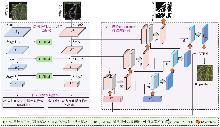
图1
HFDA-Net网络结构"
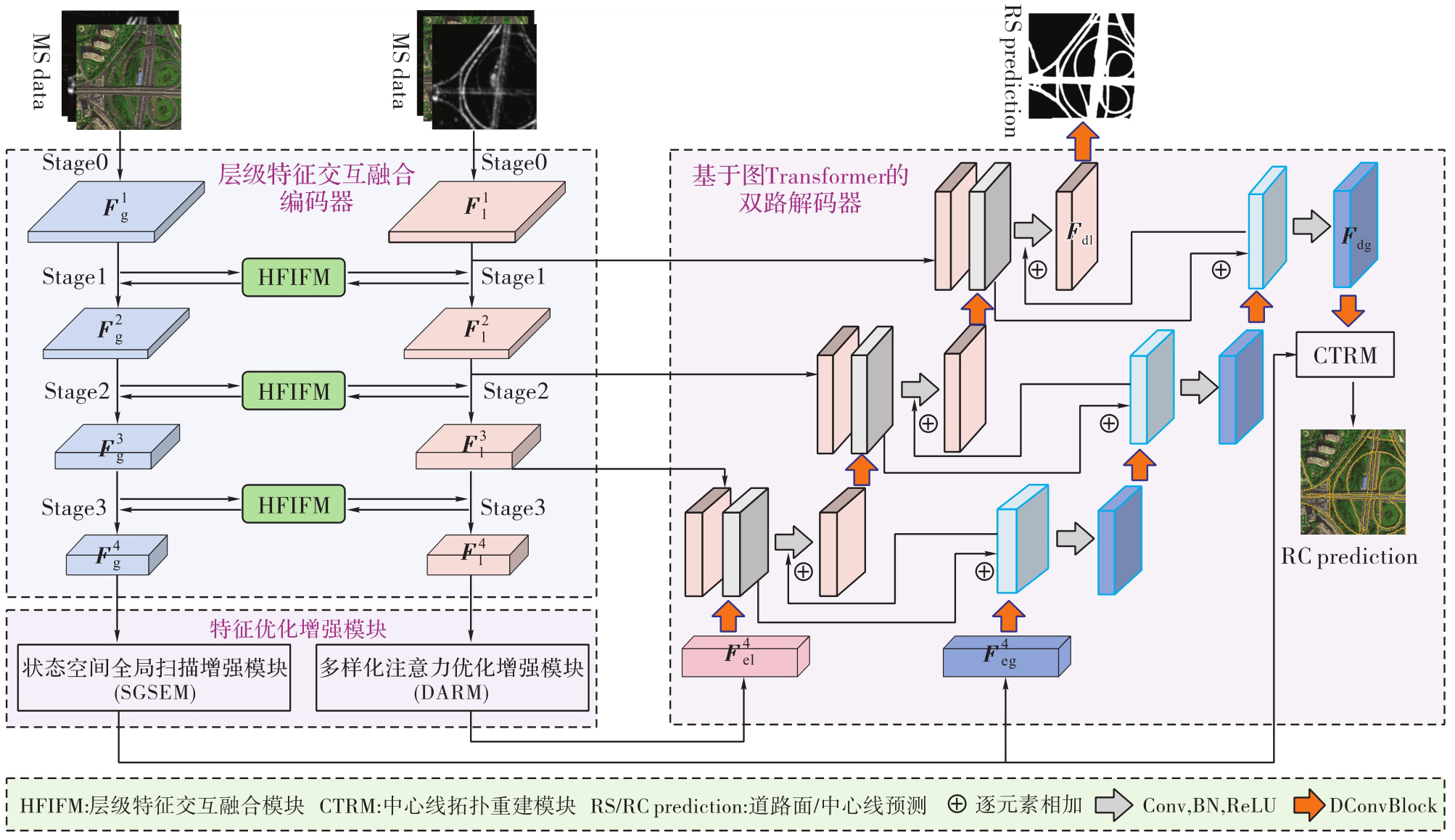
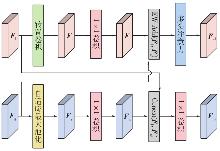
图2
层级特征交互融合模块"
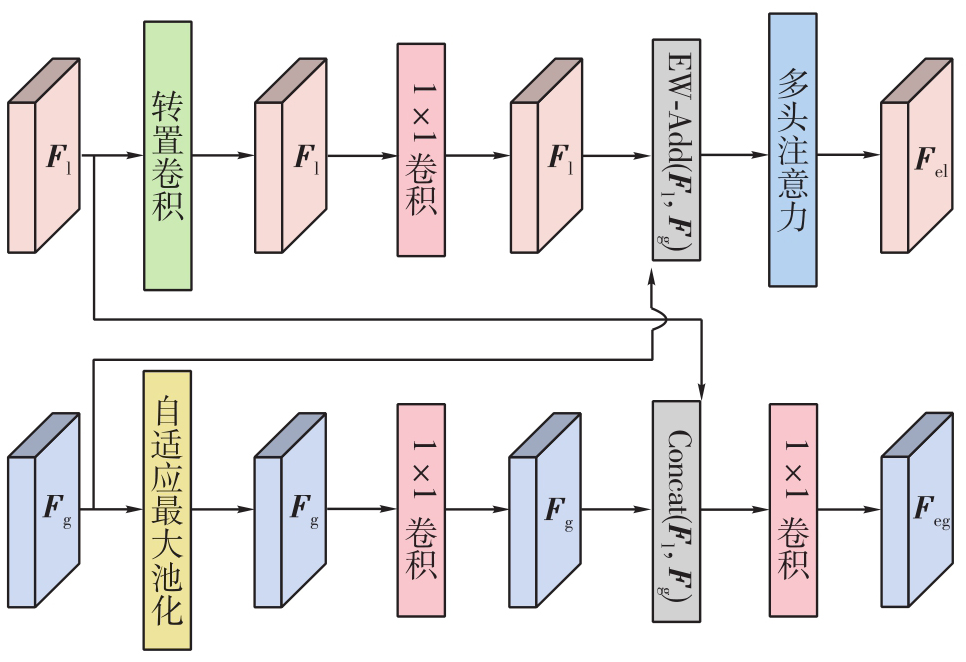
图3
状态空间全局扫描增强模块"
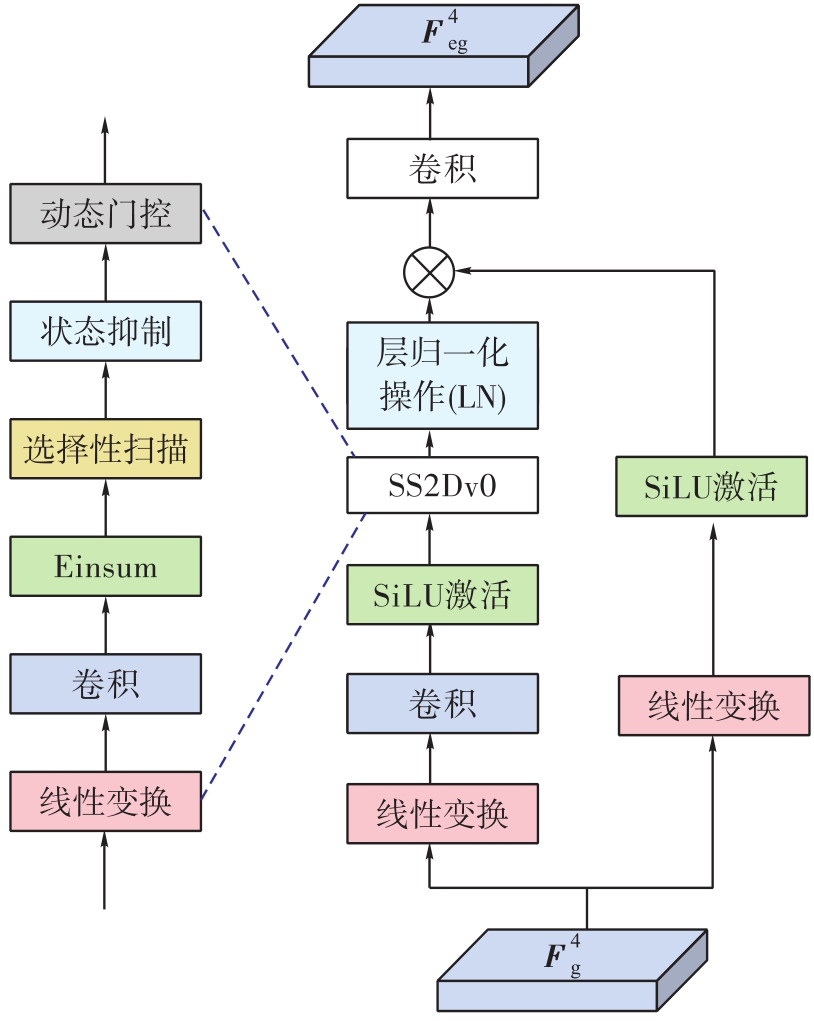
图4
多样化注意力优化增强模块"
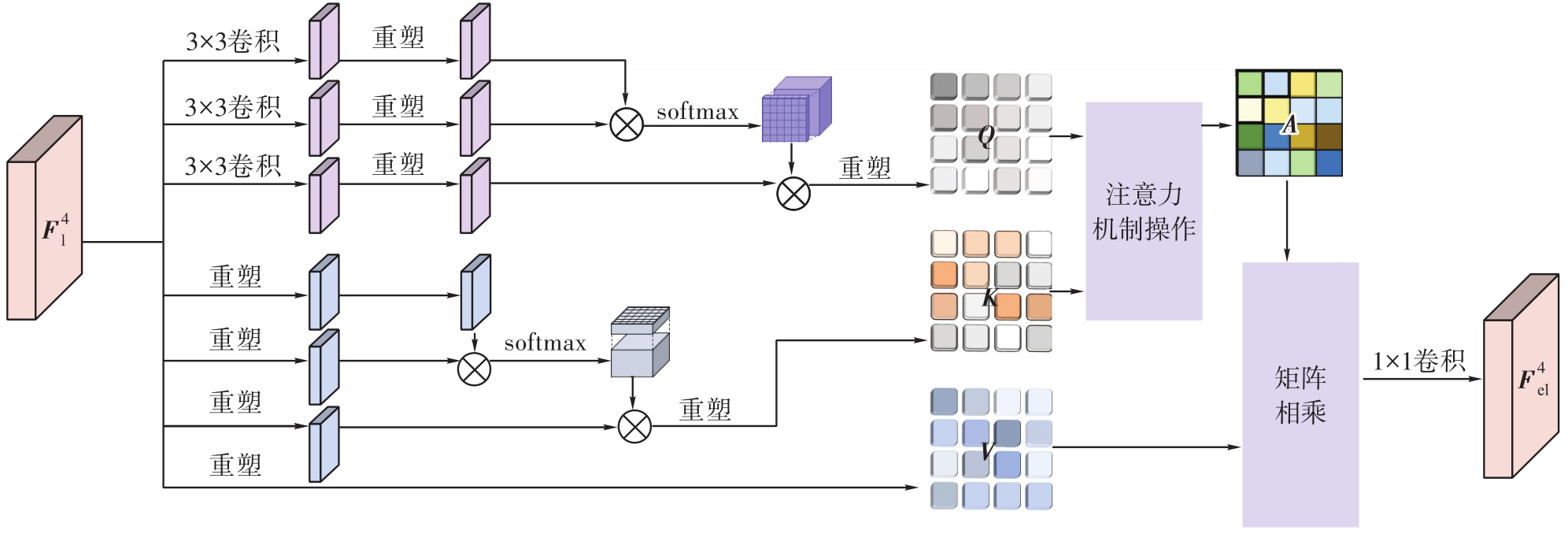
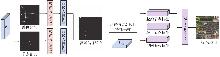
图5
中心线拓扑重建模块"
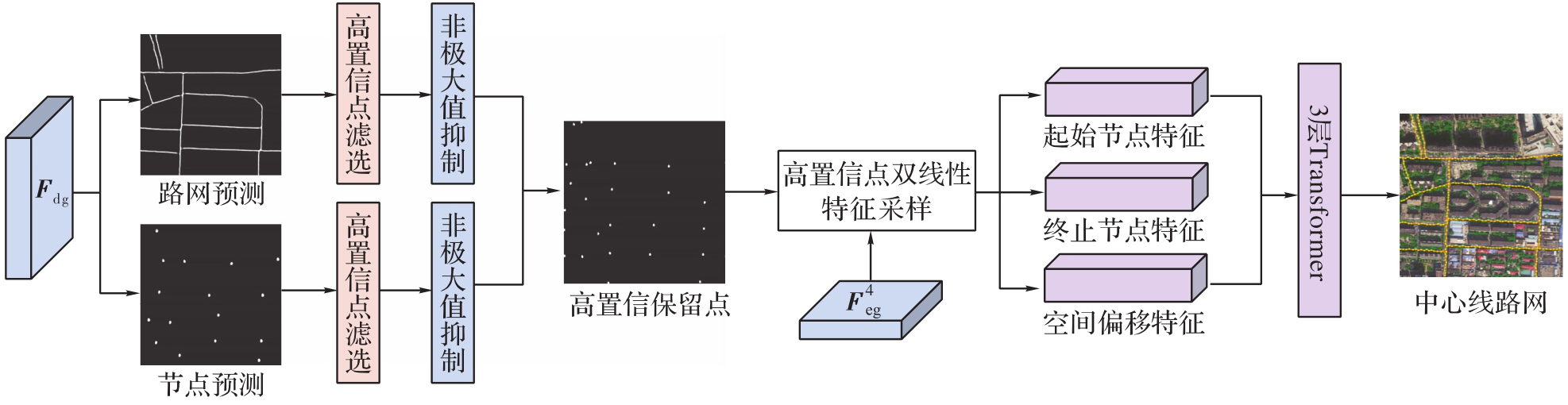
表1
BJRoad数据集各模型道路面分割性能比较"
| 方法 | Precision/(%) | Recall/(%) | F1值/(%) | IoU/(%) | 多任务 | 参数量/MB | FLOPs(G) | 显存/GB | 训练时间/(s/Epoch) |
|---|---|---|---|---|---|---|---|---|---|
| ResUnet | 84.57 | 90.55 | 87.36 | 77.65 | N | 26.64 | 1 224.62 | 10.17 | 114 |
| SegFormer | 85.86 | 88.76 | 87.17 | 77.36 | N | 13.68 | 53.37 | 4.63 | 45 |
| RoadCon | 86.90 | 90.96 | 88.79 | 79.94 | N | 29.01 | 665.82 | 7.40 | 84 |
| D-LinkNet | 87.13 | 91.45 | 89.15 | 80.53 | N | 31.22 | 144.79 | 2.96 | 30 |
| CMMPNet | 87.99 | 89.24 | 88.49 | 79.43 | N | 84.99 | 317.03 | 7.28 | 84 |
| OARENet | 86.79 | 90.25 | 88.40 | 79.30 | N | 65.98 | 401.74 | 9.45 | 89 |
| FRCFNet | 84.64 | 90.22 | 87.23 | 77.44 | N | 7.89 | 151.87 | 8.21 | 173 |
| MSMDFFNet | 85.79 | 90.30 | 87.91 | 78.51 | N | 39.27 | 599.30 | 8.33 | 96 |
| MG-RoadNet | 88.08 | 89.61 | 88.77 | 79.85 | N | 70.95 | 4 443.10 | 36.68 | 21 654 |
| SA-MixNet | 86.05 | 91.81 | 88.75 | 79.87 | N | 33.02 | 1 488.03 | 5.42 | 93 |
| HFDA-Net(M1) | 87.17 | 91.14 | 88.96 | 80.29 | Y | 108.95 | 269.98 | 5.51 | 25 |
| HFDA-Net(M4) | 88.34 | 90.59 | 89.29 | 80.82 | Y | 174.64 | 755.08 | 7.50 | 36 |
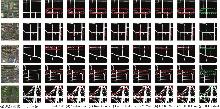
图6
不同方法在BJRoad数据集上的分割结果"

表2
BJRoad数据集各模型道路中心线提取性能比较"
| 方法 | F1值/(%) | Precision/(%) | Recall/(%) | APLS/(%) | 多任务 | 参数量/MB | FLOPs(G) | 显存/GB | 训练时间/(s/Epoch) |
|---|---|---|---|---|---|---|---|---|---|
| RNGDet++ | 76.98 | 92.57 | 65.88 | 67.36 | N | 41.28 | 809.01 | 9.28 | 29 |
| SAM-Road | 81.58 | 93.30 | 72.48 | 72.64 | N | 87.06 | 209.154 | 5.04 | 21 |
| SAM-Road++ | 77.52 | 93.04 | 66.43 | 69.94 | N | 87.08 | 209.24 | 4.98 | 46 |
| HFDA-Net | 84.22 | 95.48 | 75.33 | 79.46 | Y | 174.64 | 755.08 | 7.50 | 36 |
图7
BJRoad数据集上道路中心线对比结果"
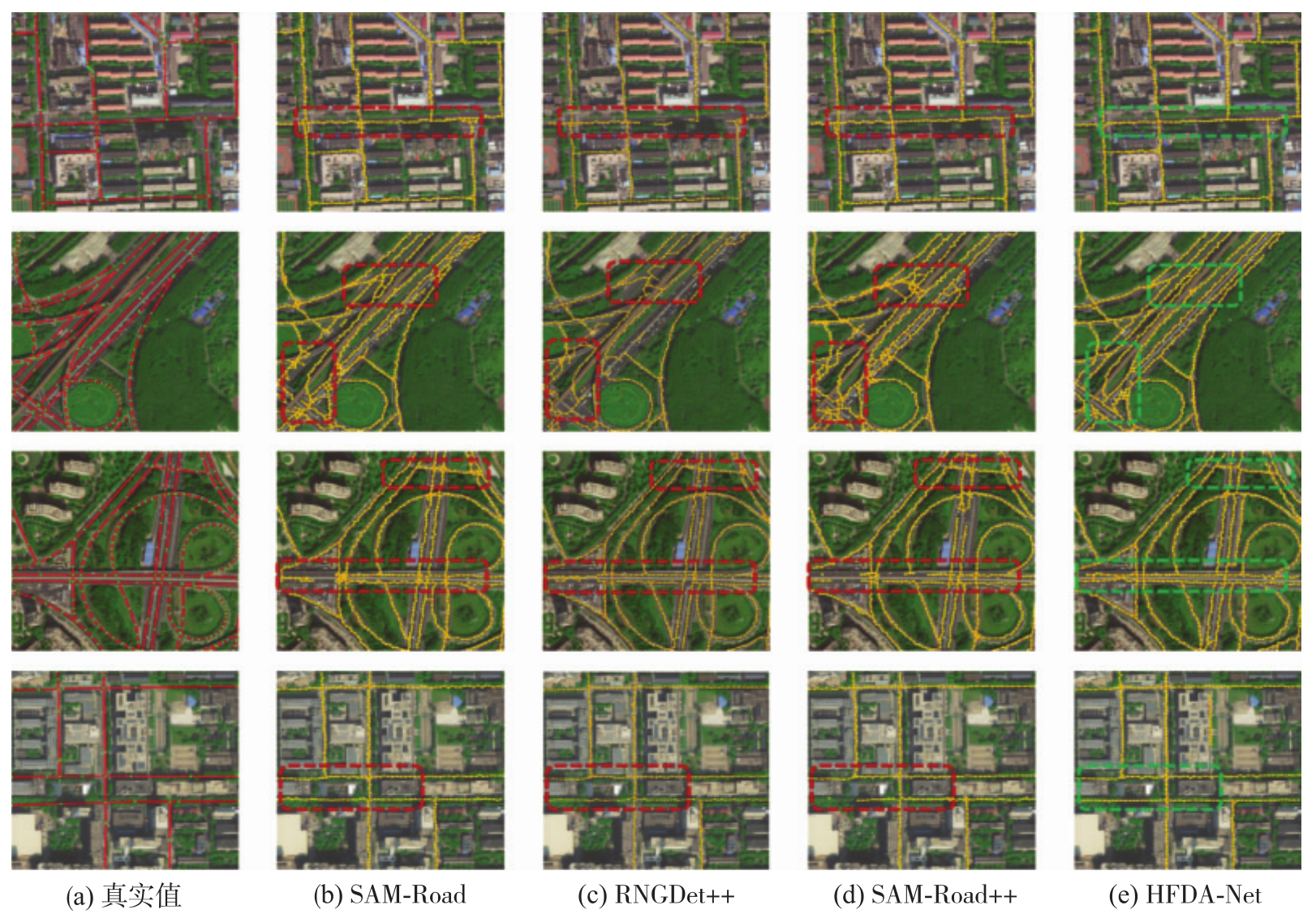
表3
Massachusetts数据集各模型道路面分割性能比较"
| 方法 | Precision | Recall | F1值 | IoU |
|---|---|---|---|---|
| D-LinkNet | 79.75 | 76.32 | 77.76 | 63.95 |
| U-Net | 80.67 | 76.68 | 78.40 | 64.80 |
| CMMPNet | 79.94 | 76.66 | 78.07 | 64.37 |
| RoadCon | 80.84 | 76.37 | 78.32 | 64.69 |
| OARENet | 78.73 | 76.02 | 77.09 | 63.11 |
| FRCFNet | 79.67 | 77.64 | 78.44 | 64.86 |
| MSMDFFNet | 79.76 | 77.66 | 78.51 | 64.94 |
| MG-RoadNet | 83.37 | 72.33 | 77.46 | 63.21 |
| SA-MixNet | 73.66 | 80.13 | 76.77 | 62.28 |
| HFDA-Net | 81.19 | 77.03 | 78.81 | 65.34 |
图8
不同方法在Massachusetts数据集上的分割结果"
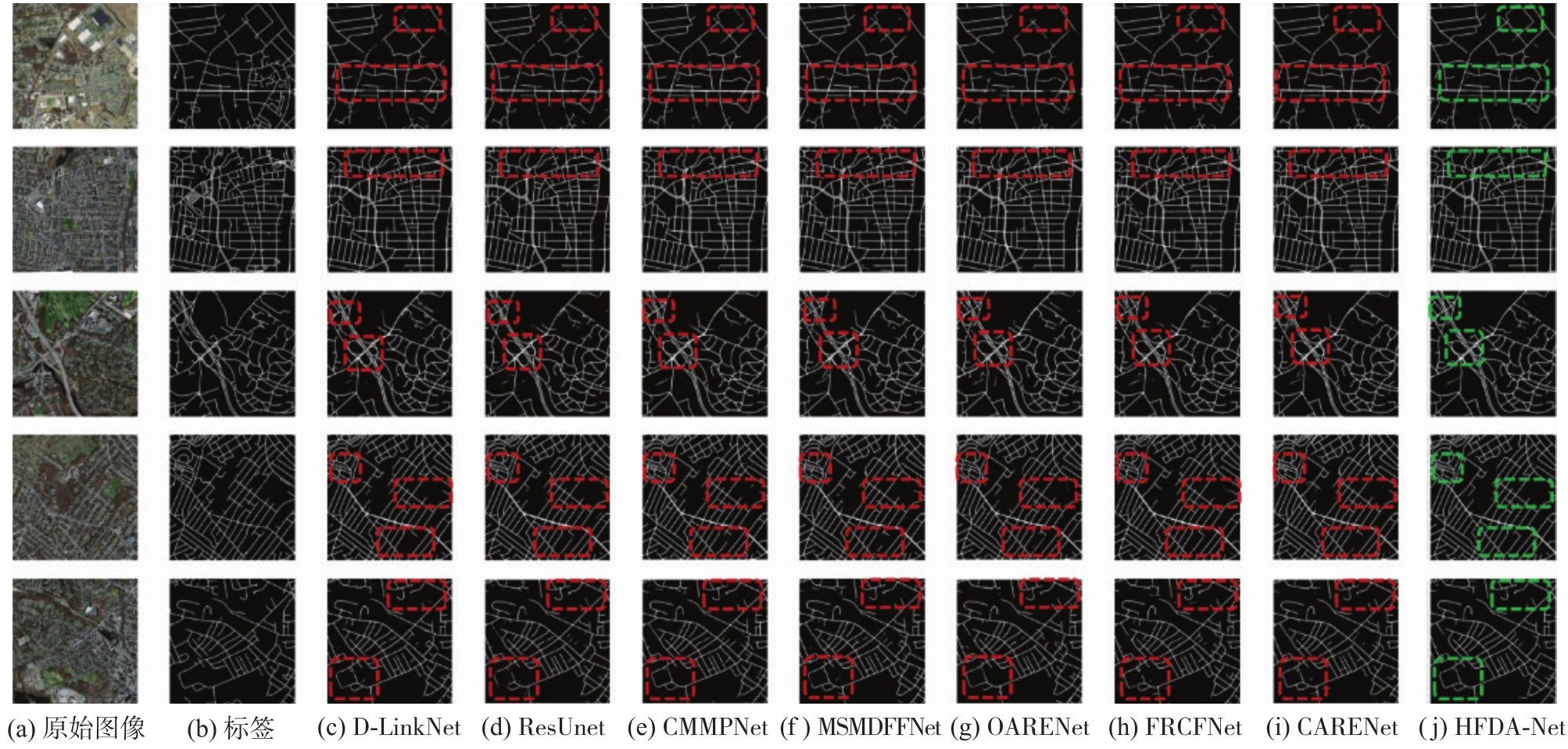
表4
City-scale数据集各模型道路中心线提取性能比较"
| 方法 | F1值 | Precision | Recall | APLS | 方法 | F1值 | Precision | Recall | APLS |
|---|---|---|---|---|---|---|---|---|---|
| Seg-Improved | 72.20 | 75.83 | 68.90 | 55.34 | RNGDet++ | 78.44 | 85.65 | 72.58 | 67.76 |
| Seg-DLA | 73.89 | 75.59 | 72.26 | 57.22 | SAM-Road | 77.23 | 90.47 | 67.69 | 68.37 |
| Sat2Graph | 76.26 | 80.70 | 72.28 | 63.14 | SAM-Road++ | 80.66 | 89.08 | 74.07 | 69.55 |
| TD-Road | 76.43 | 81.94 | 71.63 | 65.74 | HFDA-Net | 80.93 | 87.12 | 75.56 | 68.50 |
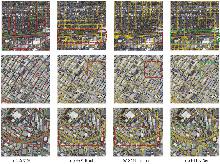
图9
不同方法在City-scale数据集上道路中心线提取结果"

表5
BJRoad数据集上关键模块消融试验"
| 模型 | HFIFM | SGSEM | DARM | EWA | 道路中心线提取指标 | 道路面提取指标 | ||||||
|---|---|---|---|---|---|---|---|---|---|---|---|---|
| F1值 | Precision | Recall | APLS | IoU | F1值 | Precision | Recall | |||||
| M0 | 79.34 | 92.01 | 69.74 | 74.17 | 79.33 | 88.36 | 85.20 | 92.18 | ||||
| M1 | √ | 81.01 | 92.98 | 71.78 | 76.41 | 80.29 | 88.96 | 87.17 | 91.14 | |||
| M2 | √ | √ | 82.53 | 93.95 | 73.58 | 77.69 | 80.33 | 88.98 | 87.44 | 90.92 | ||
| M3 | √ | √ | √ | 83.61 | 94.11 | 75.22 | 78.28 | 79.76 | 88.61 | 87.80 | 89.84 | |
| M4 | √ | √ | √ | √ | 84.22 | 95.48 | 75.33 | 79.46 | 80.82 | 89.29 | 88.34 | 90.59 |
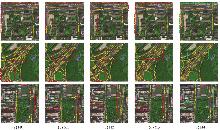
图10
HFDA-Net不同变体在BJRoad数据集上中心线提取结果"

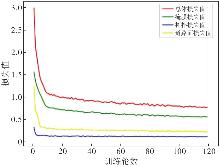
图11
M4损失函数曲线"
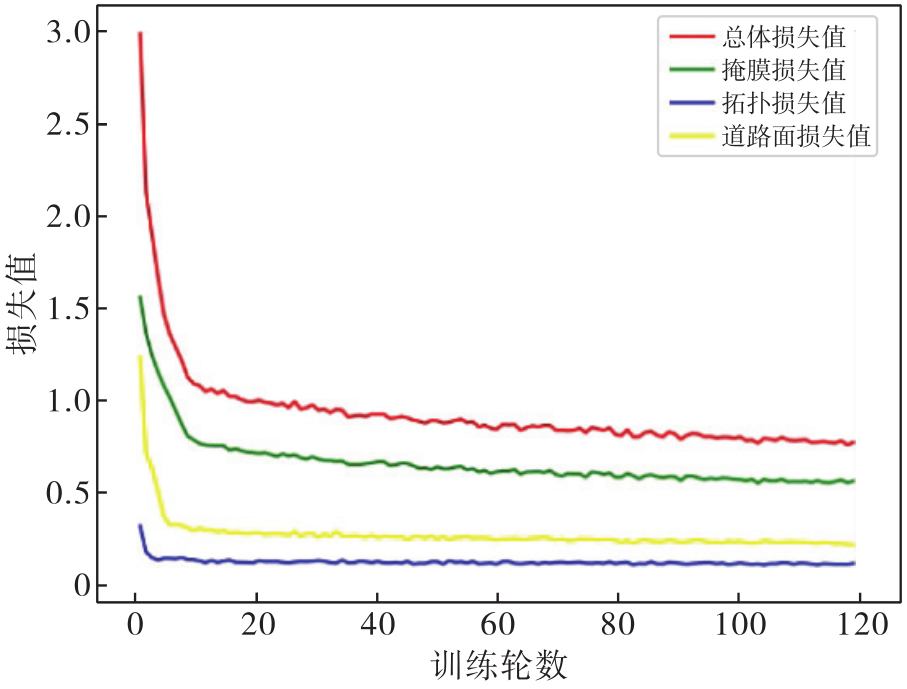
表6
BJRoad数据集上道路面和中心线信息关联性消融试验"
| 试验设置 | 道路中心线提取指标 | 道路面提取指标 | ||||||
|---|---|---|---|---|---|---|---|---|
| F1值 | Precision | Recall | APLS | IoU | F1值 | Precision | Recall | |
| 道路面提取 | — | — | — | — | 79.74 | 88.62 | 87.77 | 89.88 |
| 中心线提取 | 81.65 | 93.70 | 72.35 | 72.00 | — | — | — | — |
| 多任务提取 | 84.22 | 95.48 | 75.33 | 79.46 | 80.82 | 89.29 | 88.34 | 90.59 |
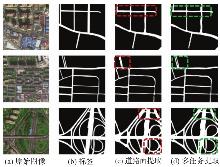
图12
在BJRoad数据集上道路面提取与多任务提取结果"
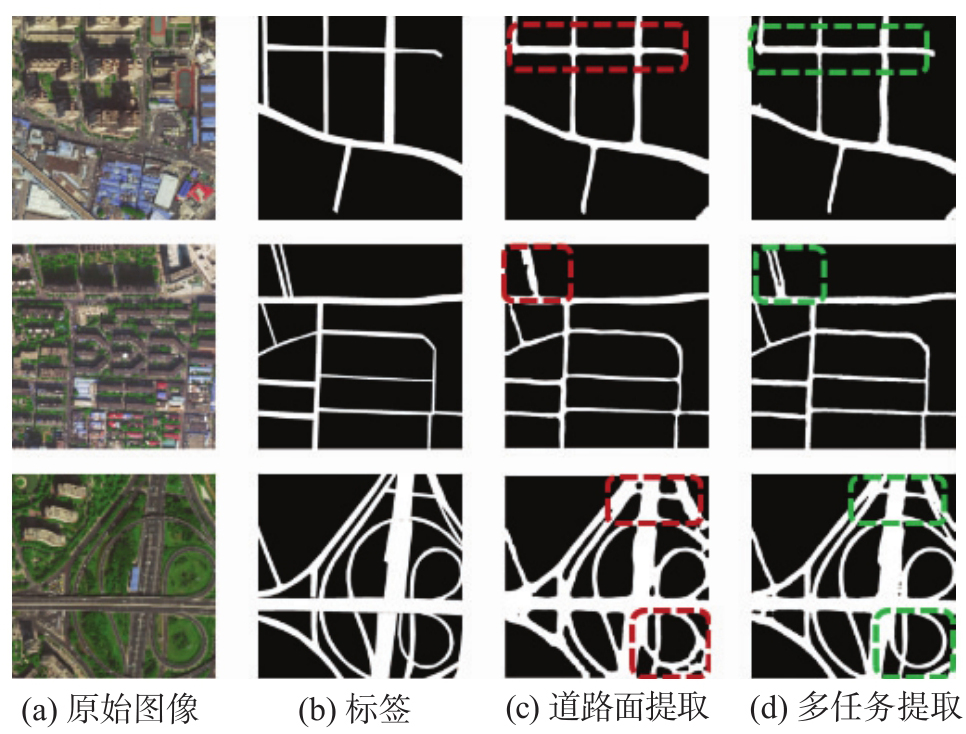
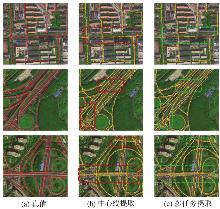
图13
在BJRoad数据集上中心线提取与多任务提取结果"

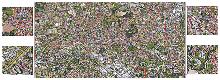
图14
波尔图市大范围中心线预测结果"
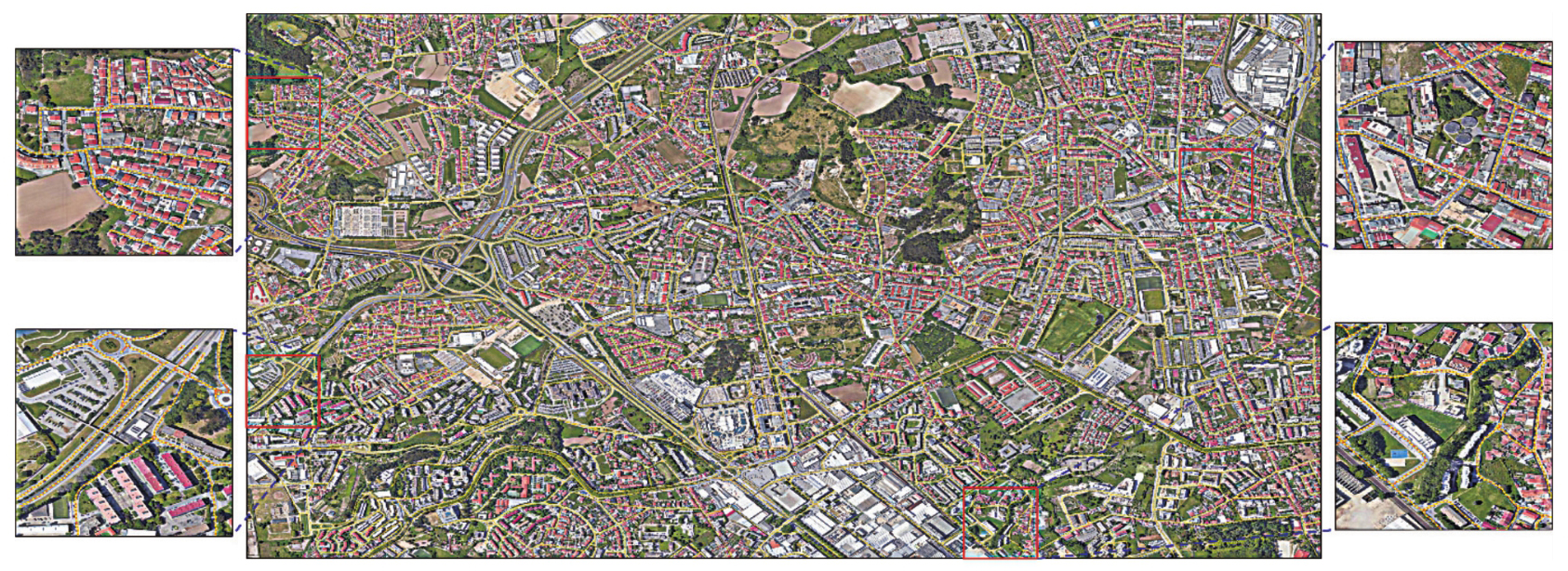
图15
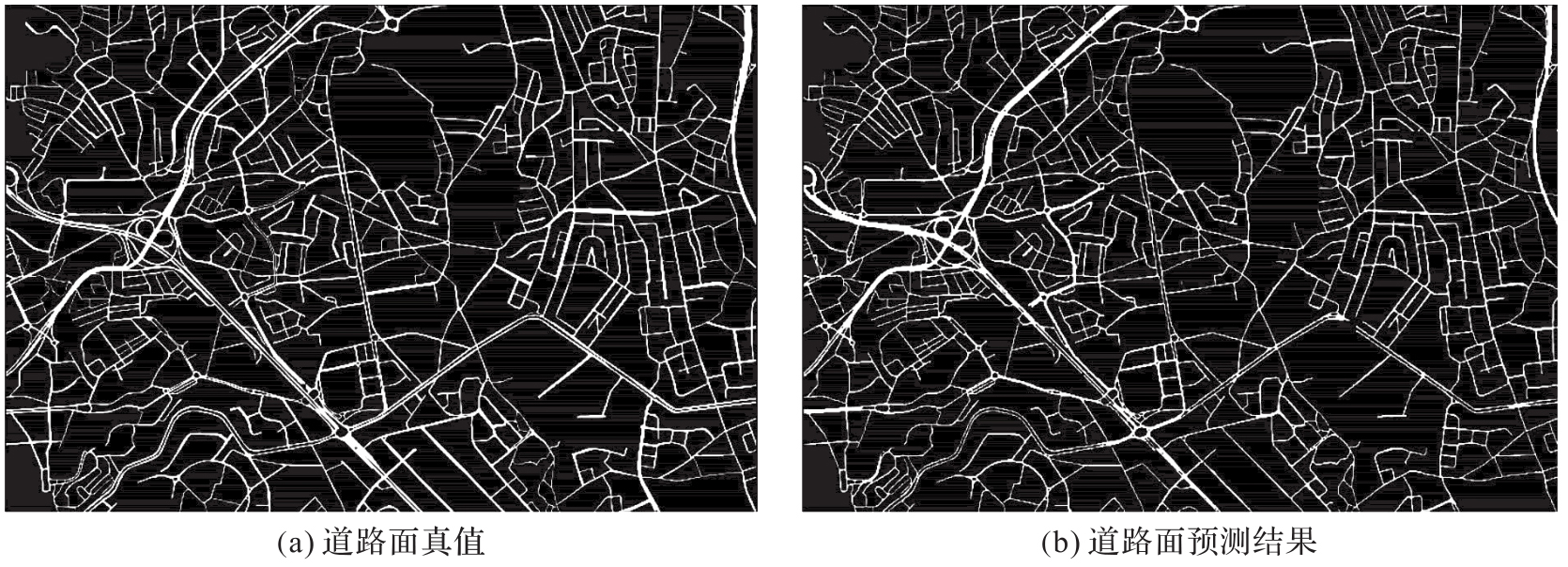
波尔图市大范围道路面提取效果"
| [1] | WANG Xuan, JIN Xizhi, DAI Zhe, et al. Deep learning-based methods for road extraction from remote sensing images: a vision, survey, and future directions[J]. IEEE Geoscience and Remote Sensing Magazine, 2025, 13(1): 55-78. |
| [2] | LI S Z. Markov random field modeling in image analysis[M]. Tokyo: Springer Japan, 2001. |
| [3] | LONG J, SHELHAMER E, DARRELL T. Fully convolutional networks for semantic segmentation[C]//Proceedings of 2015 IEEE Conference on Computer Vision and Pattern Recognition. Boston: IEEE, 2015: 3431-3440. |
| [4] | ZHOU Lichen, ZHANG Chuang, WU Ming. D-LinkNet: LinkNet with pretrained encoder and dilated convolution for high resolution satellite imagery road extraction[C]//Proceedings of 2018 IEEE/CVF Conference on Computer Vision and Pattern Recognition Workshops. Salt Lake City: IEEE, 2018: 192-1924. |
| [5] | YANG Ruoyu, ZHONG Yanfei, LIU Yinhe, et al. Occlusion-aware road extraction network for high-resolution remote sensing imagery[J]. IEEE Transactions on Geoscience and Remote Sensing, 2024, 62: 5619316. |
| [6] |
孙根云, 孙超, 张爱竹. 融合多尺度与边缘特征的道路提取网络[J]. 测绘学报, 2024, 53(12): 2233-2243. DOI: .
doi: 10.11947/j.AGCS.2024.20230291 |
|
SUN Genyun, SUN Chao, ZHANG Aizhu. Road extraction networks fusing multiscale and edge features[J]. Acta Geodaetica et Cartographica Sinica, 2024, 53(12): 2233-2243. DOI: .
doi: 10.11947/j.AGCS.2024.20230291 |
|
| [7] |
王艳军, 唐徐超, 王成, 等. 基于道路拓扑关联特征的城乡道路面精细提取网络[J]. 测绘学报, 2025, 54(1): 75-89. DOI: .
doi: 10.11947/j.AGCS.2025.20240124 |
|
WANG Yanjun, TANG Xuchao, WANG Cheng, et al. Urban and rural road surface extraction network based on road topologi-cal correlation features[J]. Acta Geodaetica et Cartographica Sinica, 2025, 54(1): 75-89. DOI: .
doi: 10.11947/j.AGCS.2025.20240124 |
|
| [8] | JAMALI A, ROY S K, LI J, et al. Neighborhood attention makes the encoder of ResUNet stronger for accurate road extraction[J]. IEEE Geoscience and Remote Sensing Letters, 2024, 21: 6003005. |
| [9] | GAO Lipeng, ZHOU Yiqing, TIAN Jiangtao, et al. DDCTNet: a deformable and dynamic cross-transformer network for road extraction from high-resolution remote sensing images[J]. IEEE Transactions on Geoscience and Remote Sensing, 2024, 62: 4407819. |
| [10] |
徐永洋, 王健, 吴亮, 等. 顾及道路边界与连通性的道路提取方法研究[J]. 测绘学报, 2025, 54(7): 1254-1264. DOI: .
doi: 10.11947/j.AGCS.2025.20240271 |
|
XU Yongyang, WANG Jian, WU Liang, et al. Research on road extraction considering road boundaries and connectivity[J]. Acta Geodaetica et Cartographica Sinica, 2025, 54(7): 1254-1264. DOI: .
doi: 10.11947/j.AGCS.2025.20240271 |
|
| [11] | LIU Ruyi, MIAO Qiguang, SONG Jianfeng, et al. Multiscale road centerlines extraction from high-resolution aerial imagery[J]. Neurocomputing, 2019, 329: 384-396. |
| [12] | HE Songtao, BASTANI F, JAGWANI S, et al. Sat2Graph: road graph extraction through graph-tensor encoding[C]//Proceedings of 2020 Computer Vision. Cham: Springer, 2020: 51-67. |
| [13] | XU Zhenhua, LIU Yuxuan, SUN Yuxiang, et al. RNGDet++: road network graph detection by transformer with instance segmentation and multi-scale features enhancement[J]. IEEE Robotics and Automation Letters, 2023, 8(5): 2991-2998. |
| [14] | YIN Pan, LI Kaiyu, CAO Xiangyong, et al. Towards satellite image road graph extraction: a global-scale dataset and a novel method[C]//Proceedings of 2025 IEEE/CVF Conference on Computer Vision and Pattern Recognition. Nashville: IEEE, 2025: 1527-1537. |
| [15] | LIN Yuzhun, JIN Fei, WANG Dandi, et al. Dual-task network for road extraction from high-resolution remote sensing images[J]. IEEE Journal of Selected Topics in Applied Earth Observations and Remote Sensing, 2023, 16: 66-78. |
| [16] | LU Xiaoyan, ZHONG Yanfei, ZHENG Zhuo, et al. Multi-scale and multi-task deep learning framework for automatic road extraction[J]. IEEE Transactions on Geoscience and Remote Sensing, 2019, 57(11): 9362-9377. |
| [17] | YAN Jingjing, JI Shunping, WEI Yao. A combination of convolutional and graph neural networks for regularized road surface extraction[J]. IEEE Transactions on Geoscience and Remote Sensing, 2022, 60: 4409113. |
| [18] | VASWANI A, SHAZEER N, PARMAR N, et al. Attention is all you need[J]. Advances in neural information processing systems, 2017, 30: 5216457. |
| [19] | DOSOVITSKIY A, BEYER L, KOLESNIKOV A, et al. An image is worth 16×16 words: Transformers for image recognition at scale[EB/OL]. [2025-11-12]. https://arxiv.org/abs/2010.11929. |
| [20] | MNIH V, HINTON G E. Learning to detect roads in high-resolution aerial images[C]//Proceedings of 2010 Computer Vision. Berlin: Springer, 2010: 210-223. |
| [21] | SUN Tao, DI Zonglin, CHE Pengyu, et al. Leveraging crowdsourced GPS data for road extraction from aerial imagery[C]//Proceedings of 2019 IEEE/CVF Conference on Computer Vision and Pattern Recognition. Long Beach: IEEE, 2020: 7501-7510. |
| [22] | BIAGIONI J, ERIKSSON J. Inferring road maps from global positioning system traces: survey and comparative evaluation[J]. Transportation Research Record: Journal of the Transportation Research Board, 2012, 2291(1): 61-71. |
| [23] | VAN ETTEN A, LINDENBAUM D, BACASTOW T M. SpaceNet: a remote sensing dataset and challenge series[EB/OL]. [2025-11-02]. https://arxiv.org/abs/1807.01232. |
| [24] | DIAKOGIANNIS F I, WALDNER F, CACCETTA P, et al. ResUNet-a: a deep learning framework for semantic segmentation of remotely sensed data[J]. ISPRS Journal of Photogrammetry and Remote Sensing, 2020, 162: 94-114. |
| [25] | BATRA A, SINGH S, PANG Guan, et al. Improved road connectivity by joint learning of orientation and segmentation[C]//Proceedings of 2019 IEEE/CVF Conference on Computer Vision and Pattern Recognition. Long Beach: IEEE, 2020: 10377-10385. |
| [26] | XIE Enze, WANG Wenhai, YU Zhiding, et al. SegFormer: simple and efficient design for semantic segmentation with Transformers[EB/OL]. [2025-10-16]. https://arxiv.org/abs/2105.15203. |
| [27] | LIU Lingbo, YANG Zewei, LI Guanbin, et al. Aerial images meet crowdsourced trajectories: a new approach to robust road extraction[J]. IEEE Transactions on Neural Networks and Learning Systems, 2023, 34(7): 3308-3322. |
| [28] | WANG Haijuan, BAI Lin, XUE Danni, et al. FRCFNet: feature reassembly and context information fusion network for road extraction[J]. IEEE Geoscience and Remote Sensing Letters, 2024, 21: 2502805. |
| [29] | SONG Runtian, SHI Fan, DU Guikang, et al. MG-RoadNet: road segmentation network for remote sensing images based on multi-receptive field graph convolution[J]. Signal, Image and Video Processing, 2025, 19(8): 679. |
| [30] | WANG Yuchuan, TONG Ling, LUO Shiyu, et al. A multiscale and multidirection feature fusion network for road detection from satellite imagery[J]. IEEE Transactions on Geoscience and Remote Sensing, 2024, 62: 5615718. |
| [31] | FENG Jie, HUANG Hao, ZHANG Junpeng, et al. SA-MixNet: structure-aware mix-up and invariance learning for scribble-supervised road extraction in remote sensing images[J]. IEEE Transactions on Geoscience and Remote Sensing, 2025, 63: 5602214. |
| [32] | BATRA A, SINGH S, PANG Guan, et al. Improved road connectivity by joint learning of orientation and segmentation[C]//Proceedings of 2019 IEEE/CVF Conference on Computer Vision and Pattern Recognition. Long Beach: IEEE, 2020: 10377-10385. |
| [33] | YU F, WANG Dequan, SHELHAMER E, et al. Deep layer aggregation[C]//Proceedings of 2018 IEEE/CVF Conference on Computer Vision and Pattern Recognition. Salt Lake City: IEEE, 2018. |
| [34] | HE Y, GARG R, CHOWDHURY A R. TD-road: top-down road network extraction with Holistic graph construction[C]//Proceedings of 2022 Computer Vision. Cham: Springer, 2022: 562-577. |
| [35] | HETANG Congrui, XUE Haoru, LE C, et al. Segment anything model for road network graph extraction[C]//Proceedings of 2024 IEEE/CVF Conference on Computer Vision and Pattern Recognition Workshops. Seattle: IEEE, 2024: 2556-2566. |
| [1] | 万杰, 谢忠, 徐永洋, 陶留锋. 面向城市道路场景的车载LiDAR点云语义分割U形图卷积网络方法[J]. 测绘学报, 2025, 54(7): 1280-1293. |
| [2] | 胡波, 陈翰新, 任松, 屈英豪, 刘清屹, 涂歆玥, 王大涛. 一种基于分割掩码的隧道裂缝病害自动识别后处理算法[J]. 测绘学报, 2024, 53(9): 1715-1724. |
| [3] | 徐涛, 杨元维, 高贤君, 王志威, 潘越, 李少华, 许磊, 王艳军, 刘波, 余静, 吴凤敏, 孙浩宇. 融合图卷积与多尺度特征的接触网点云语义分割[J]. 测绘学报, 2024, 53(8): 1624-1633. |
| [4] | 林云浩, 王艳军, 李少春, 蔡恒藩. 一种耦合DeepLab与Transformer的农作物种植类型遥感精细分类方法[J]. 测绘学报, 2024, 53(2): 353-366. |
| [5] | 姚志鹏, 彭程, 唐建波, 刘国平, 杨学习, 刘慧敏, 邓敏. 适应不同轨迹数据场景的道路线形组合优化提取方法[J]. 测绘学报, 2024, 53(2): 379-390. |
| [6] | 孙根云, 孙超, 张爱竹. 融合多尺度与边缘特征的道路提取网络[J]. 测绘学报, 2024, 53(12): 2233-2243. |
| [7] | 张银胜, 陈戈, 段修贤, 童俊毅, 单梦姣, 单慧琳. 基于多层特征信息融合的滑坡图像分割模型[J]. 测绘学报, 2024, 53(11): 2201-2212. |
| [8] | 刘家兴, 黄玉春, 石文轩, 叶曦, 杨鹤. 顾及拓扑结构的道路标线提取[J]. 测绘学报, 2024, 53(11): 2213-2227. |
| [9] | 胡功明, 杨春成, 徐立, 尚海滨, 王泽凡, 秦志龙. 改进U-Net的遥感图像语义分割方法[J]. 测绘学报, 2023, 52(6): 980-989. |
| [10] | 刘帅, 李笑迎, 于梦, 邢光龙. 高分辨率遥感图像双解耦语义分割网络模型[J]. 测绘学报, 2023, 52(4): 638-647. |
| [11] | 沈秭扬, 倪欢, 管海燕. 遥感图像跨域语义分割的无监督域自适应对齐方法[J]. 测绘学报, 2023, 52(12): 2115-2126. |
| [12] | 张荣庭, 张广运, 尹继豪. 复杂城市动态图卷积网络三维场景语义分割法[J]. 测绘学报, 2023, 52(10): 1703-1713. |
| [13] | 李佳田, 杨汝春, 姚彦吉, 贺日兴, 阿晓荟, 吕少云. 结合多尺度共享编码的半监督网络航空影像语义分割[J]. 测绘学报, 2022, 51(11): 2355-2364. |
| [14] | 蒋腾平, 王永君, 张林淇, 梁冲, 孙剑. 融合CNN和MRF的激光点云层次化语义分割方法[J]. 测绘学报, 2021, 50(2): 215-225. |
| [15] | 邵晓航, 吴杭彬, 刘春, 陈晨, 蔡天池, 程帆瑾. 语素关联约束的动态环境视觉定位优化[J]. 测绘学报, 2021, 50(11): 1478-1486. |
| 阅读次数 | ||||||
|
全文 |
|
|||||
|
摘要 |
|
|||||
