

Acta Geodaetica et Cartographica Sinica ›› 2026, Vol. 55 ›› Issue (2): 191-205.doi: 10.11947/j.AGCS.2026.20250480
• Spatial Artificial Intelligence and Smart Cities • Next Articles
Yunbo RAN1( ), Xue YANG1(), Wenhao ZHOU1, Chengen WU2, Baoding ZHOU3, Luliang TANG4, Qingquan LI5
Received:2025-11-13
Revised:2026-01-05
Online:2026-03-13
Published:2026-03-13
Contact:
Xue YANG
E-mail:ranyb@cug.edu.cn;yangxue@cug.edu.cn
About author:RAN Yunbo (2002—), male, postgraduate, majors in pedestrian path planning. E-mail: ranyb@cug.edu.cn
Supported by:CLC Number:
Yunbo RAN, Xue YANG, Wenhao ZHOU, Chengen WU, Baoding ZHOU, Luliang TANG, Qingquan LI. Pedestrian path planning driven by preference-enhanced adversarial deep reinforcement learning[J]. Acta Geodaetica et Cartographica Sinica, 2026, 55(2): 191-205.
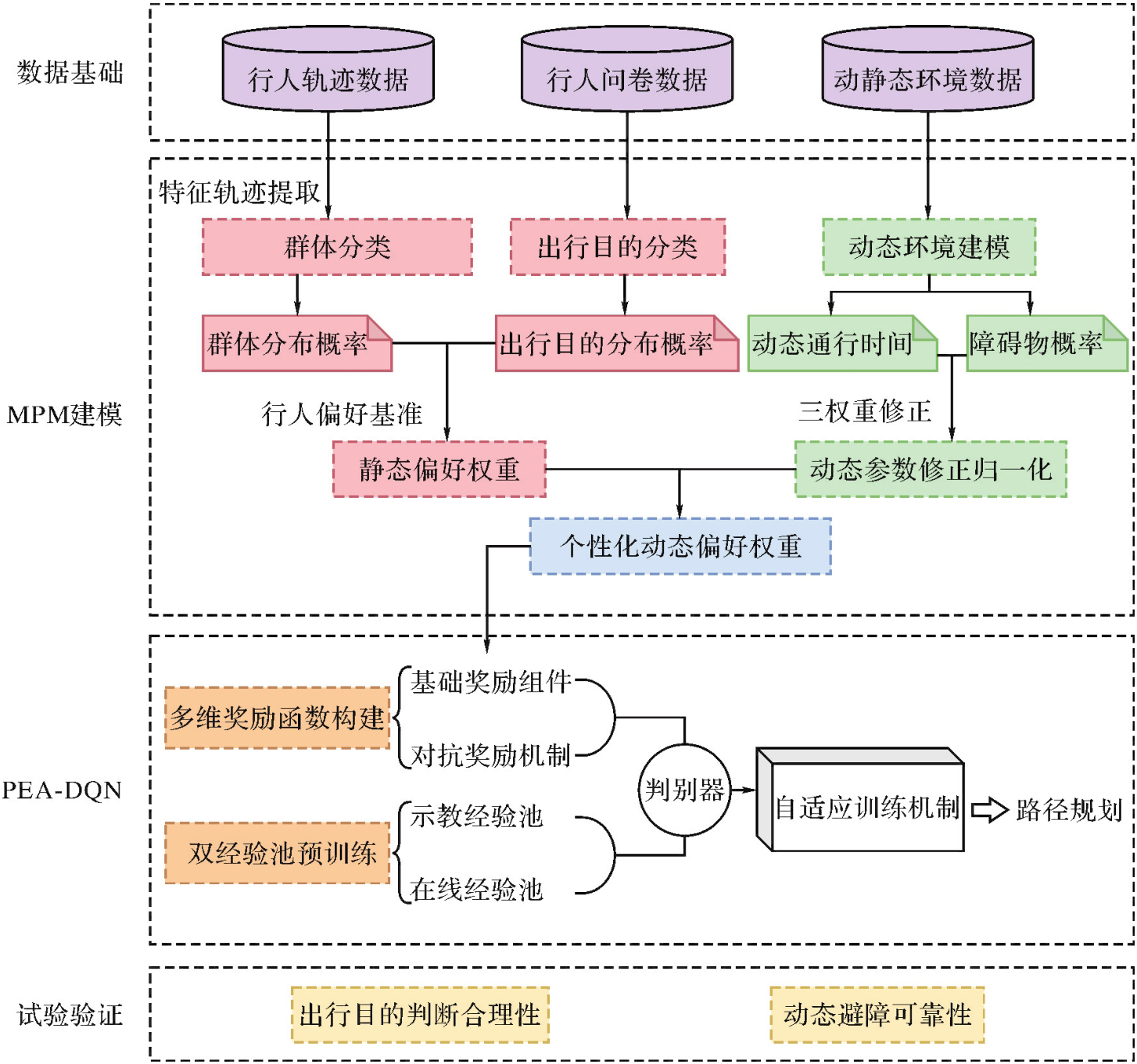
Fig. 1
Technical architecture"

Tab. 1
Baseline weights of user groups and travel purposes"
| 群体 | 目的 | 效率 | 安全 | 舒适 | 设定依据 |
|---|---|---|---|---|---|
| 普通 | 通勤 | 0.70 | 0.10 | 0.20 | 通勤用户最关注效率 |
| 休闲 | 0.40 | 0.30 | 0.30 | 休闲场景需平衡效率与景观体验 | |
| 紧急 | 0.50 | 0.40 | 0.10 | 紧急场景需兼顾效率与基本安全 | |
| 轮椅 | 通勤 | 0.50 | 0.30 | 0.20 | 通勤路径需满足坡度小 |
| 休闲 | 0.30 | 0.20 | 0.50 | 休闲时优先选无障碍 | |
| 紧急 | 0.20 | 0.60 | 0.20 | 紧急路径需无障碍 | |
| 视障 | 通勤 | 0.30 | 0.50 | 0.20 | 通勤路径盲道覆盖率 |
| 休闲 | 0.10 | 0.60 | 0.30 | 视障需高安全感 | |
| 紧急 | 0.10 | 0.80 | 0.10 | 紧急时安全权重最大化 |
Tab. 2
Destination functional zones and basic purpose probabilities"
| 功能区 | 通勤概率 | 休闲概率 | 紧急概率 | 逻辑依据 |
|---|---|---|---|---|
| 工业区 | 0.90 | 0.05 | 0.05 | 通勤需求占绝对主导 |
| 商业区 | 0.40 | 0.55 | 0.05 | 休闲场景高频 |
| 文教区 | 0.75 | 0.20 | 0.05 | 学校科研通勤集中 |
| 居民区 | 0.30 | 0.65 | 0.05 | 社区活动与日常为主 |
| 公园 | 0.00 | 0.95 | 0.05 | 散步等休闲行为主导 |
| 紧急区 | 0.00 | 0.00 | 1.00 | 医院、警局等触发 |
Tab. 3
Initial values of the group sensitivity coefficient"
| 群体 | 障碍物敏感度(γobs) | 拥挤敏感度(γcong) | 坡度敏感度(γslope) |
|---|---|---|---|
| 普通 | 0.3 | 0.5 | 0.2 |
| 轮椅 | 0.6 | 0.4 | 0.8 |
| 视障 | 0.9 | 0.2 | 0.3 |
Fig. 2
An example of action space"
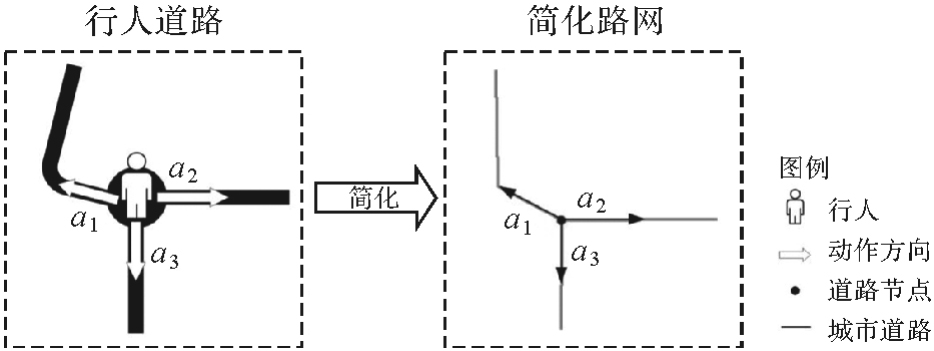
Fig. 3
Dual experience replay buffer architecture with adversarial DQN"
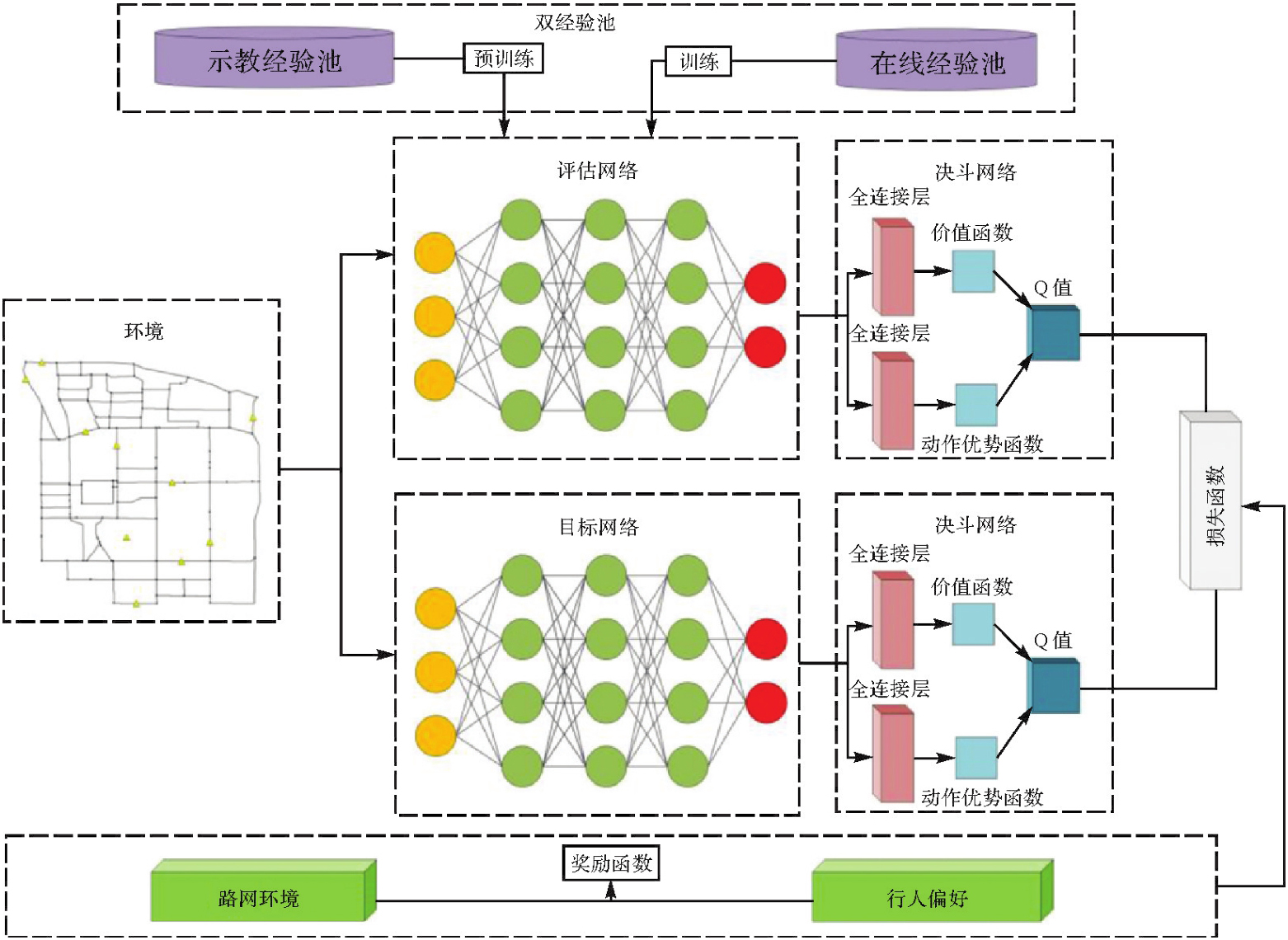
Fig. 4
Adaptive training mechanism"
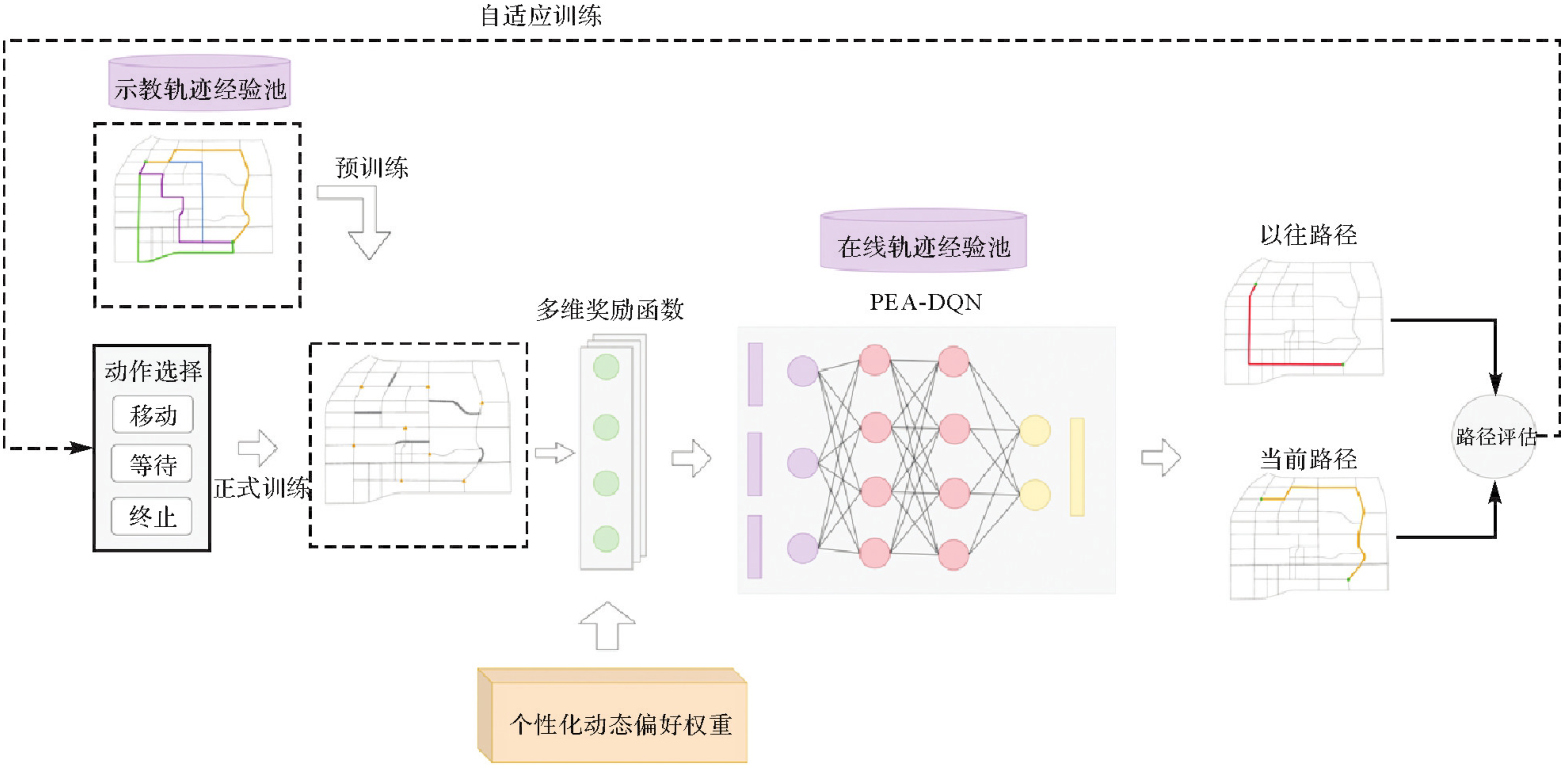
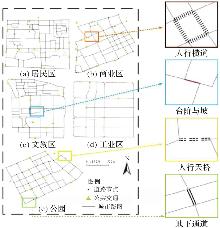
Fig. 5
Road network of dynamic planning experimental areas"
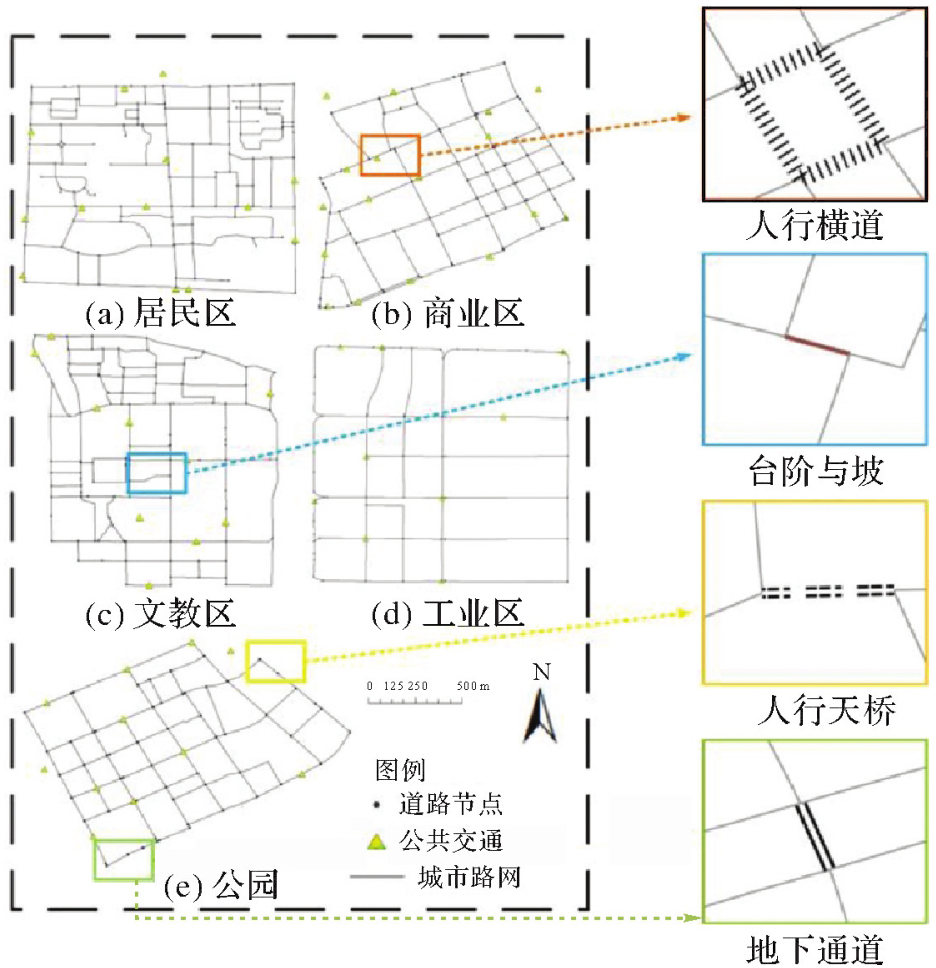
Tab. 4
Data information of dynamic planning experimental area"
| 地区 | 面积/km2 | 节点数 | 道路数 | 位置 |
|---|---|---|---|---|
| 工业区 | 2.770 2 | 70 | 78 | 光谷工业园 |
| 商业区 | 3.442 9 | 83 | 113 | 武商广场 |
| 文教区 | 2.111 5 | 108 | 154 | 武汉大学信息学部 |
| 居民区 | 2.143 3 | 126 | 168 | 宝安璞园 |
| 公园 | 2.062 7 | 65 | 98 | 中山公园 |
Fig. 6
Road network of navigation decision experimental area"
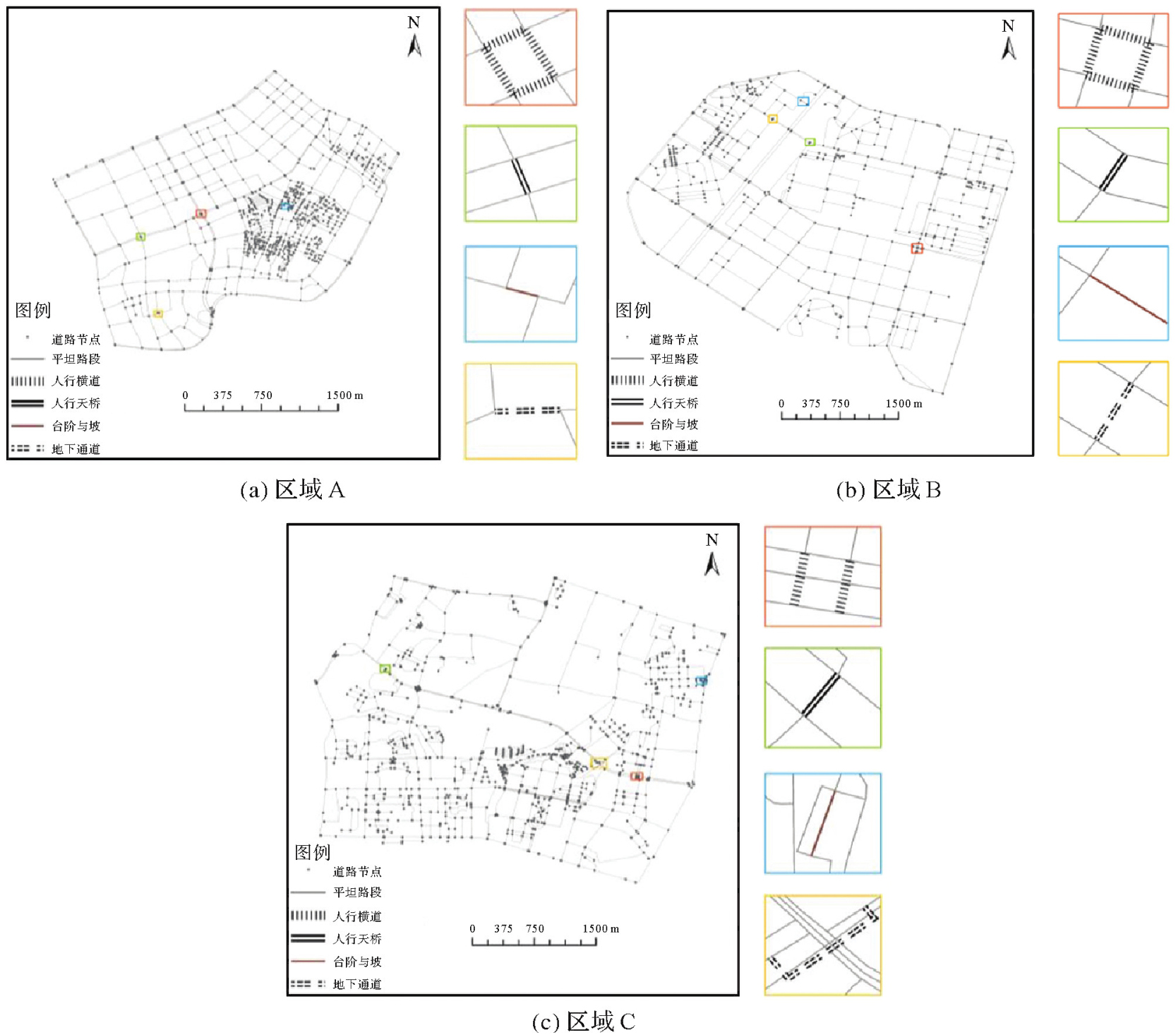
Tab. 5
Data information of navigation decision experimental area"
| 区域 | 面积/km2 | 道路节点 | 路段总数 |
|---|---|---|---|
| A | 4.648 7 | 772 | 1088 |
| B | 10.721 6 | 568 | 881 |
| C | 11.573 9 | 869 | 1233 |
Tab. 6
Model training parameter definitions"
| 参数 | 值 | 描述 |
|---|---|---|
| 动作空间大小 | 4 | 行人可选的动作数 |
| 学习率α | 0.001 | 神经网络的学习率 |
| 衰减因子γ | 0.9 | 累计奖励的衰减因子 |
| 探索率ε | 0.2 | 探索率 |
| 经验回放存储H | 10 000 | 存储历史经验数据 |
| 样本大小Dmin | 20 | 提取的经验数据大小 |
| 激活函数 | ReLU | 神经元激活函数 |
| 目标网络更新频率 | 300 | 目标网络的更新频率 |
| 最大训练轮数 | 20 | 模型最大训练轮数 |
| 训练步数t | — | 每一轮训练步数 |
| 路径相似度阈值P | — | 最小路径相似度 |
Tab. 7
Comparison of results for different training steps"
| 训练步数 | 每轮时间/s | 平均路径质量 | 平均收敛时间/s |
|---|---|---|---|
| 100 | 14.051 4 | 134.513 | 54.790 5 |
| 500 | 14.235 2 | 142.548 | 58.036 9 |
| 1000 | 15.741 7 | 149.256 | 50.568 8 |
| 2000 | 19.646 1 | 150.418 | 70.134 4 |
Tab. 8
Path similarity comparison"
| 算法 | 路径相似度 |
|---|---|
| DQN | 0.78 |
| Double DQN | 0.73 |
| Dueling DQN | 0.79 |
| PEA-DQN | 0.74 |
Tab. 9
Ablation experiments in five different regions"
| 评价指标 | 算法 | 居民区 | 商业区 | 文教区 | 工业区 | 公园 |
|---|---|---|---|---|---|---|
| 平均规划路径长度/m | Dueling DQN | 3 462.269 | 4 470.144 | 2 159.692 | 4 582.358 | 3 845.664 |
| MPM驱动DQN | 2 241.205 | 2793.158 | 1 262.568 | 2 793.393 | 2 109.751 | |
| 双经验池预训练DQN | 2 941.685 | 3 493.524 | 1 762.279 | 3 243.817 | 2 809.033 | |
| 添加自适应训练机制的DQN | 3 398.741 | 4 392.295 | 2 068.629 | 3 981.762 | 3 546.965 | |
| PEA-DQN | 2 144.016 | 2 615.509 | 1 147.134 | 2 759.692 | 2 005.342 | |
| 平均规划时间成本/s | Dueling DQN | 60.489 | 59.418 | 71.169 | 58.217 | 64.42 |
| MPM驱动DQN | 59.676 | 60.821 | 70.237 | 59.865 | 63.972 | |
| 双经验池预训练DQN | 54.854 | 53.463 | 61.489 | 50.148 | 57.323 | |
| 添加自适应训练机制的DQN | 37.545 | 34.185 | 40.659 | 33.356 | 37.197 | |
| PEA-DQN | 36.199 | 32.579 | 37.188 | 32.179 | 34.332 | |
| 平均规划路径质量 | Dueling DQN | 54.3 | 44.8 | 72.1 | 63.3 | 65.1 |
| MPM驱动DQN | 107.4 | 109.2 | 122.5 | 106.5 | 119.7 | |
| 双经验池预训练DQN | 75.1 | 78.4 | 84.4 | 71.1 | 87.4 | |
| 添加自适应训练机制的DQN | 54.2 | 44.6 | 71.1 | 62.1 | 63.6 | |
| PEA-DQN | 110.3 | 116.3 | 128.5 | 105.2 | 124.3 |
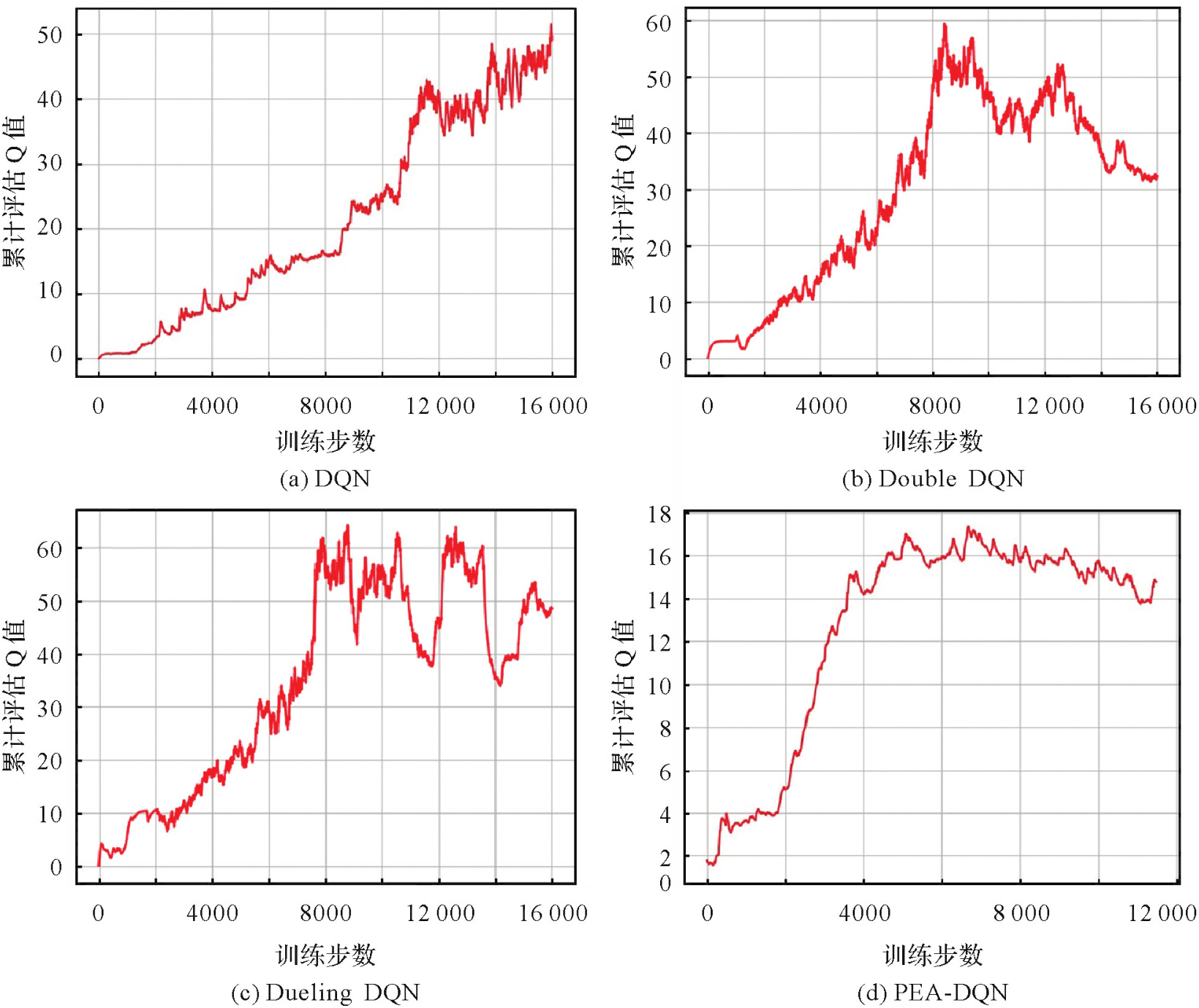
Fig. 7
Cumulative Q eval change"
Tab. 10
Dynamic planning experiments in five regions"
| 评价指标 | 算法 | 居民区 | 商业区 | 文教区 | 工业区 | 公园 |
|---|---|---|---|---|---|---|
| 平均规划路径长度/m | DQN | 4 802.587 | 5 891.232 | 3 025.484 | 5 229.813 | 4 668.945 |
| Double DQN | 4 549.257 | 5 023.25 | 2 665.437 | 4 597.613 | 4 507.143 | |
| Dueling DQN | 3642.588 | 4 670.324 | 2 374.841 | 4 632.763 | 3 845.636 | |
| 动态A* | 2 434.744 | 2 883.451 | 1 223.869 | 3 028.202 | 2 635.652 | |
| PEA-DQN | 2 821.796 | 3 420.259 | 1 412.304 | 3 540.384 | 2 881.209 | |
| 平均规划时间成本/s | DQN | 174.872 | 151.217 | 170.22 | 163.254 | 154.361 |
| Double DQN | 137.106 | 125.536 | 130.305 | 123.255 | 125.693 | |
| Dueling DQN | 134.74 | 130.084 | 126.978 | 114.636 | 129.507 | |
| 动态A* | 18.547 | 22.203 | 19.681 | 21.452 | 19.622 | |
| PEA-DQN | 52.727 | 48.445 | 57.083 | 49.268 | 54.872 | |
| 平均规划路径质量 | DQN | 38.5 | 31.3 | 49.9 | 49.6 | 51.6 |
| Double DQN | 49.1 | 37.5 | 68.1 | 59.5 | 55.5 | |
| Dueling DQN | 51.7 | 42.1 | 69.1 | 61.5 | 60.7 | |
| 动态A* | 61.9 | 58.2 | 75.3 | 69.3 | 72.7 | |
| PEA-DQN | 89.3 | 88.5 | 107.2 | 85.9 | 100.9 |
Tab. 11
MPM validation experimental results"
| 群体 | 群体识别准确率 | 目的识别准确率 | 避障成功率 |
|---|---|---|---|
| 普通 | 87.6 | 85.3 | 89.2 |
| 轮椅 | 85.4 | 83.9 | 87.5 |
| 视障 | 82.1 | 79.8 | 83.4 |
| 整体均值 | 84.7 | 83.0 | 86.7 |
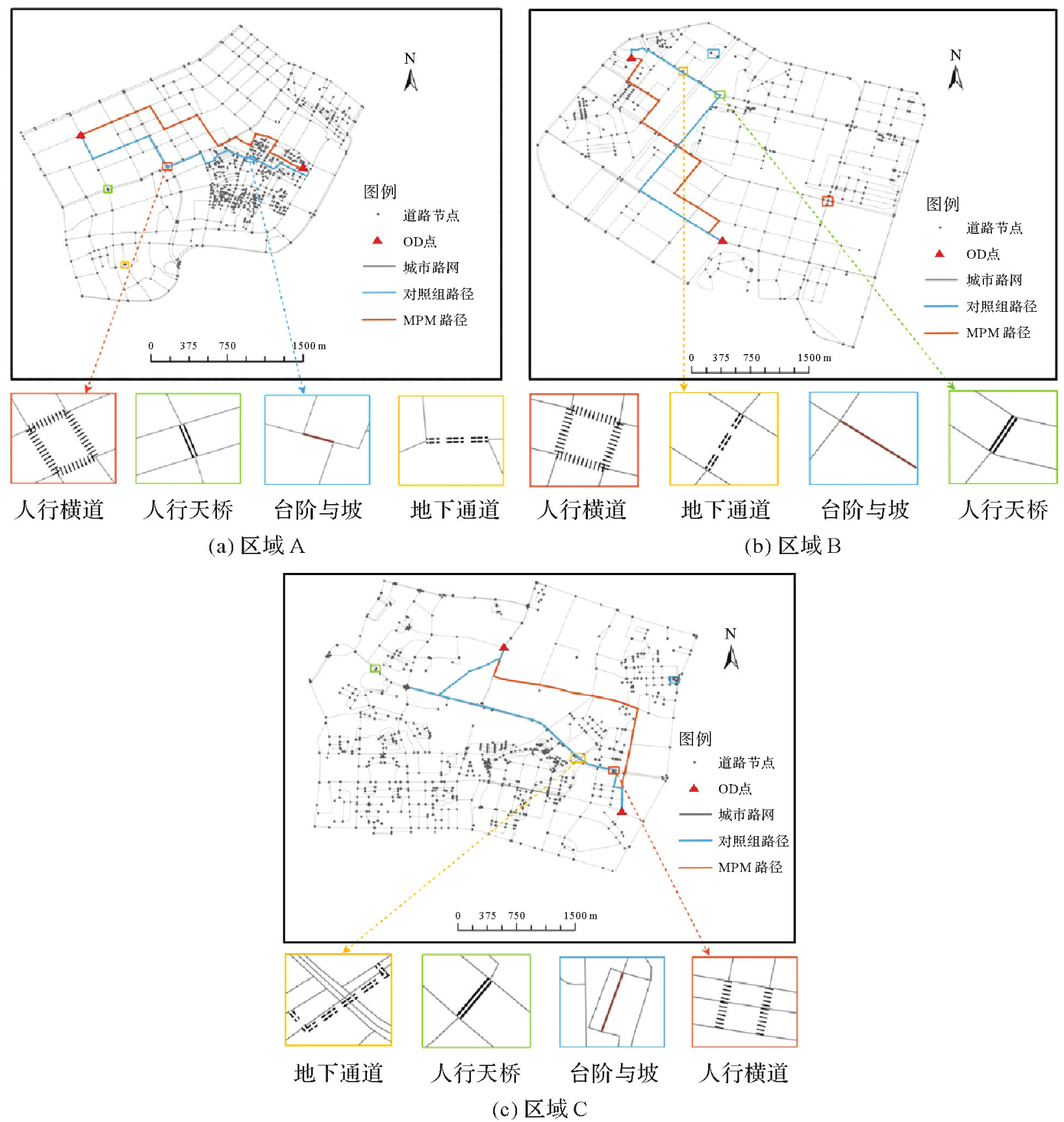
Fig. 8
Comparative results of path planning"
| [1] | BRAND C, GÖTSCHI T, DONS E, et al. The climate change mitigation impacts of active travel: evidence from a longitudinal panel study in seven European cities[J]. Global Environmental Change, 2021, 67: 102224. |
| [2] | 王鹏龙, 高峰, 黄春林, 等. 面向SDGs的城市可持续发展评价指标体系进展研究[J]. 遥感技术与应用, 2018, 33(5): 784-792. |
| WANG Penglong, GAO Feng, HUANG Chunlin, et al. Progress on sustainable city assessment index system for SDGs[J]. Remote Sensing Technology and Application, 2018, 33(5): 784-792. | |
| [3] | BOSSOWSKI J, SZANDAŁA T, MAZURKIEWICZ J. Predicting desire paths: agent-based simulation for neighbourhood route planning[J]. Computers, Environment and Urban Systems, 2025, 117: 102251. |
| [4] | TRINH T T, VU D M, KIMURA M. A pedestrian path-planning model in accordance with obstacle's danger with reinforcement learning[C]//Proceedings of 2020 International Conference on Information Science and System. New York: ACM Press, 2020: 115-120. |
| [5] | SUN Huakai, ZHU Kai, ZHANG Weiguang, et al. Emergency path planning based on improved ant colony algorithm[J]. Journal of Building Engineering, 2025, 100: 111725. |
| [6] | MENNER M, DI CAIRANO S, HAMADA M, et al. MPC-based pedestrian routing for congestion balancing[C]//Proceedings of 2023 IEEE Conference on Control Technology and Applications. Bridgetown: IEEE, 2023: 1089-1094. |
| [7] | SONG Yuchen, LI Dawei, CAO Qi, et al. The whole day path planning problem incorporating mode chains modeling in the era of mobility as a service[J]. Transportation Research Part C: Emerging Technologies, 2021, 132: 103360. |
| [8] | EBOLI L, FORCINITI C, MAZZULLA G, et al. Establishing performance criteria for evaluating pedestrian environments[J]. Sustainability, 2023, 15(4): 3523. |
| [9] | DIJKSTRA E W. A note on two problems in connexion with graphs[J]. Numerische Mathematik, 1959, 1(1): 269-271. |
| [10] | HART P E, NILSSON N J, RAPHAEL B. A formal basis for the heuristic determination of minimum cost paths[J]. IEEE Transactions on Systems Science and Cybernetics, 1968, 4(2): 100-107. |
| [11] | LAVALLE S. Rapidly-exploring random trees: a new tool for path planning[EB/OL]. [2025-11-05]. https://msl.cs.illinois.edu/~lavalle/papers/Lav98c.pdf. |
| [12] | DONG Yuansheng, ZOU Xingjie. Mobile robot path planning based on improved DDPG reinforcement learning algorithm[C]//Proceedings of the 11th International Conference on Software Engineering and Service Science. Beijing: IEEE, 2020: 52-56. |
| [13] | LI Jianxin, CHEN Yiting, ZHAO Xiuniao, et al. An improved DQN path planning algorithm[J]. The Journal of Supercomputing, 2022, 78(1): 616-639. |
| [14] | SCHULMAN J, WOLSKI F, DHARIWAL P, et al. Proximal policy optimization algorithms[EB/OL]. [2025-11-05]. https://arxiv.org/pdf/1707.06347. |
| [15] | HALL C M, RAM Y. Walk Score® and its potential contribution to the study of active transport and walkability: a critical and systematic review[J]. Transportation Research Part D: Transport and Environment, 2018, 61: 310-324. |
| [16] | PONZI V, COMITO L, NAPOLI C. PNMLR: enhancing route recommendations with personalized preferences using graph attention networks[J]. IEEE Access, 2025, 13: 57465-57475. |
| [17] | CAI Kuanqi, CHEN Weinan, DUGAS D, et al. Sampling-based path planning in highly dynamic and crowded pedestrian flow[J]. IEEE Transactions on Intelligent Transportation Systems, 2023, 24(12): 14732-14742. |
| [18] | MNIH V, KAVUKCUOGLU K, SILVER D, et al. Human-level control through deep reinforcement learning[J]. Nature, 2015, 518(7540): 529-533. |
| [19] | VAN HASSELT H, GUEZ A, SILVER D. Deep reinforcement learning with double Q-learning[C]//Proceedings of the 30th AAAI Conference on Artificial Intelligence. Palo Alto: AAAI Press, 2016: 2094-2100. |
| [20] | WANG Ziyu, SCHAUL T, HESSEL M, et al. Dueling network architectures for deep reinforcement learning[C]//Proceedings of the 33rd International Conference on Machine Learning. New York: PMLR, 2016: 1995-2003. |
| [21] | NAIR A, SRINIVASAN P, BLACKWELL S, et al. Massively parallel methods for deep reinforcement learning[EB/OL]. [2025-11-05]. https://arxiv.org/pdf/1507.04296. |
| [22] | SCHAUL T, QUAN J, ANTONOGLOU I, et al. Prioritized experience replay[EB/OL]. [2025-11-05]. https://arxiv.org/pdf/1511.05952. |
| [23] | LIU Ping, MA Xiangyu, DING Jie, et al. Multi-agent collaborative path planning algorithm with reinforcement learning and combined prioritized experience replay in Internet of Things[J]. Computers and Electrical Engineering, 2024, 116: 109193. |
| [24] | 刘用, 杨晓飞, 夏金铭. 基于模糊算法的AUV避障与姿态控制[J]. 江苏大学学报(自然科学版), 2021, 42(6): 655-660. |
| LIU Yong, YANG Xiaofei, XIA Jinming. Obstacle avoidance and attitude control of AUV based on fuzzy algorithm[J]. Journal of Jiangsu University (Natural Science Edition), 2021, 42(6): 655-660. | |
| [25] | BAO Siya, NITTA T, SHINDOU D, et al. A landmark-based route recommendation method for pedestrian walking strategies[C]//Proceedings of the 4th Global Conference on Consumer Electronics. Osaka: IEEE, 2015: 672-673. |
| [26] | 胡松, 吴海俊, 赵慧. 基于层次熵分析法的自行车交通系统评价及应用研究[C]//2016年中国城市交通规划年会论文集. 深圳: 中国城市规划学会城市交通规划学术委员会, 2016. |
| HU Song, WU Haijun, ZHAO Hui. Bicycle transportation system evaluation and application based on hierarchical entropy analysis[C]//Proceedings of 2016 China Urban Transport Planning Annual Conference. Shenzhen: Urban Transportation Planning Academic Committee of Urban Planning Society of China, 2016. | |
| [27] |
方志祥, 罗浩, 李灵. 有限状态自动机辅助的行人导航状态匹配算法[J]. 测绘学报, 2017, 46(3): 371-380. DOI: .
doi: 10.11947/j.AGCS.2017.20160530 |
|
FANG Zhixiang, LUO Hao, LI Ling. A finite state machine aided pedestrian navigation state matching algorithm[J]. Acta Geodaetica et Cartographica Sinica, 2017, 46(3): 371-380. DOI: .
doi: 10.11947/j.AGCS.2017.20160530 |
|
| [28] |
方志祥, 王禄斌. 面向行人导航意图探测的脑电分类研究[J]. 测绘学报, 2024, 53(9): 1829-1841. DOI: .
doi: 10.11947/j.AGCS.2024.20230444 |
|
FANG Zhixiang, WANG Lubin. Detecting pedestrian intention using EEG signals in navigation[J]. Acta Geodaetica et Cartographica Sinica, 2024, 53(9): 1829-1841. DOI: .
doi: 10.11947/j.AGCS.2024.20230444 |
|
| [29] | 赵青, 陈勇, 罗斌, 等. 一种融合行人预测信息的局部路径规划算法[J]. 武汉大学学报(信息科学版), 2020, 45(5): 667-675. |
| ZHAO Qing, CHEN Yong, LUO Bin, et al. A local path planning algorithm based on pedestrian prediction information[J]. Geomatics and Information Science of Wuhan University, 2020, 45(5): 667-675. | |
| [30] | 吴文静, 王占中, 马芳武. 从众心理影响下的行人群体行为演化博弈的仿真分析:以行人过街为例[J]. 吉林大学学报(工学版), 2017, 47(1): 92-96. |
| WU Wenjing, WANG Zhanzhong, MA Fangwu. Simulation analysis of evolutionary game of pedestrians' group behaviors under influence of herd behavior: in case of crossing behavior[J]. Journal of Jilin University (Engineering and Technology Edition), 2017, 47(1): 92-96. | |
| [31] | HU Xuemin, CHEN Long, TANG Bo, et al. Dynamic path planning for autonomous driving on various roads with avoidance of static and moving obstacles[J]. Mechanical Systems and Signal Processing, 2018, 100: 482-500. |
| [32] | YANG Xue, STEWART K, FANG Mengyuan, et al. Attributing pedestrian networks with semantic information based on multi-source spatial data[J]. International Journal of Geographical Information Science, 2022, 36(1): 31-54. |
| [33] | HASSAN L M, SHIU E, PARRY S. Addressing the cross-country applicability of the theory of planned behaviour (TPB): a structured review of multi-country TPB studies[J]. Journal of Consumer Behaviour, 2016, 15(1): 72-86. |
| [34] | 王姣娥, 杜方叶, 靳海涛, 等. 基于交通出行链的就医活动识别理论框架与方法体系[J]. 地球信息科学学报, 2020, 22(4): 805-815. |
| WANG Jiao'e, DU Fangye, JIN Haitao, et al. Identifying hospital-seeking behavior based on trip chain data: theoretical framework and methodological system[J]. Journal of Geo-information Science, 2020, 22(4): 805-815. | |
| [35] | CHEN Jun, YANG Dongyuan. Estimating smart card commuters origin-destination distribution based on APTS data[J]. Journal of Transportation Systems Engineering and Information Technology, 2013, 13(4): 47-53. |
| [36] | 刘丽敏, 虞虎, 靳海涛. 基于公交刷卡数据的北京城市居民周末户外休闲行为特征研究[J]. 地域研究与开发, 2018, 37(6): 52-57. |
| LIU Limin, YU Hu, JIN Haitao. Characteristics of outdoor recreation behaviors of Beijing residents on weekends based on public transportation data[J]. Areal Research and Development, 2018, 37(6): 52-57. | |
| [37] | SONG Yuchen, LI Dawei, LIU Dongjie, et al. Modeling activity-travel behavior under a dynamic discrete choice framework with unobserved heterogeneity[J]. Transportation Research Part E: Logistics and Transportation Review, 2022, 167: 102914. |
| [38] |
代维秀, 陈占龙, 谢鹏. 居民出行与轨迹行为交互模式挖掘与关联技术[J]. 测绘学报, 2021, 50(4): 532-543. DOI: .
doi: 10.11947/j.AGCS.2021.20200072 |
|
DAI Weixiu, CHEN Zhanlong, XIE Peng. Research on the interactive mode of residents' behavior based on trajectory data mining[J]. Acta Geodaetica et Cartographica Sinica, 2021, 50(4): 532-543. DOI: .
doi: 10.11947/j.AGCS.2021.20200072 |
|
| [39] | LUDERS B, KOTHARI M, HOW J. Chance constrained RRT for probabilistic robustness to environmental uncertainty[C]//Proceedings of 2010 AIAA Guidance, Navigation, and Control Conference. Toronto: AIAA, 2010. |
| [40] | ZHANG Jun, SEYFRIED A. Quantification of bottleneck effects for different types of facilities[J]. Transportation Research Procedia, 2014, 2: 51-59. |
| [41] | RAHMAN K, ABDUL G N, ABDULBASAH K A, et al. Modelling pedestrian travel time and the design of facilities: a queuing approach[J]. PLoS One, 2013, 8(5): e63503. |
| [42] | 龙瀛, 赵健婷, 李双金, 等. 中国主要城市街道步行指数的大规模测度[J]. 新建筑, 2018(3): 4-8. |
| LONG Ying, ZHAO Jianting, LI Shuangjin, et al. The large-scale calculation of “walk score” of main cities in China[J]. New Architecture, 2018(3): 4-8. | |
| [43] | GENG Yuanzhe, LIU Erwu, WANG Rui, et al. Deep reinforcement learning based dynamic route planning for minimizing travel time[C]//Proceedings of 2021 IEEE International Conference on Communications Workshops. Montreal: IEEE, 2021. |
| [44] | LI Xin, WANG Lei, AN Yi, et al. Dynamic path planning of mobile robots using adaptive dynamic programming[J]. Expert Systems with Applications, 2024, 235: 121112. |
| [45] | STENTZ A. Optimal and efficient path planning for partially-known environments[C]//Proceedings of 1994 IEEE International Conference on Robotics and Automation. San Diego: IEEE, 1994: 3310-3317. |
| [1] | Shaohua WANG, Haojian LIANG, Cheng SU, Dachuan XU, Liang ZHOU, Kun QIN. Advances and prospects in urban facility allocation optimization through coupling spatio-temporal big data and artificial intelligence [J]. Acta Geodaetica et Cartographica Sinica, 2026, 55(2): 222-235. |
| [2] | YE Haoyu, TU Wei, YE Hehui, MAI Ke, ZHAO Tianhong, LI Qingquan. Deep reinforcement learning based electric taxi service optimization [J]. Acta Geodaetica et Cartographica Sinica, 2020, 49(12): 1630-1639. |
| Viewed | ||||||
|
Full text |
|
|||||
|
Abstract |
|
|||||
