

Acta Geodaetica et Cartographica Sinica ›› 2026, Vol. 55 ›› Issue (3): 502-514.doi: 10.11947/j.AGCS.2026.20250362
• Marine Surveying and Mapping • Previous Articles Next Articles
Yongcan YU1,2( ), Jianhu ZHAO1,2(), Bingmo LI1,2, Ziyang HE1,2
Received:2025-09-04
Revised:2026-02-25
Online:2026-04-16
Published:2026-04-16
Contact:
Jianhu ZHAO
E-mail:2019202140056@whu.edu.cn;jhzhao@sgg.whu.edu.cn
About author:YU Yongcan (1998—), male, PhD candidate, majors in underwater target recognition and sonar image processing. E-mail: 2019202140056@whu.edu.cn
Supported by:CLC Number:
Yongcan YU, Jianhu ZHAO, Bingmo LI, Ziyang HE. Class-incremental update method for target recognition models in sidescan sonar images[J]. Acta Geodaetica et Cartographica Sinica, 2026, 55(3): 502-514.
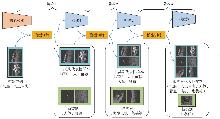
Fig. 1
Framework of class-incremental update for underwater target recognition model based on SSS images"
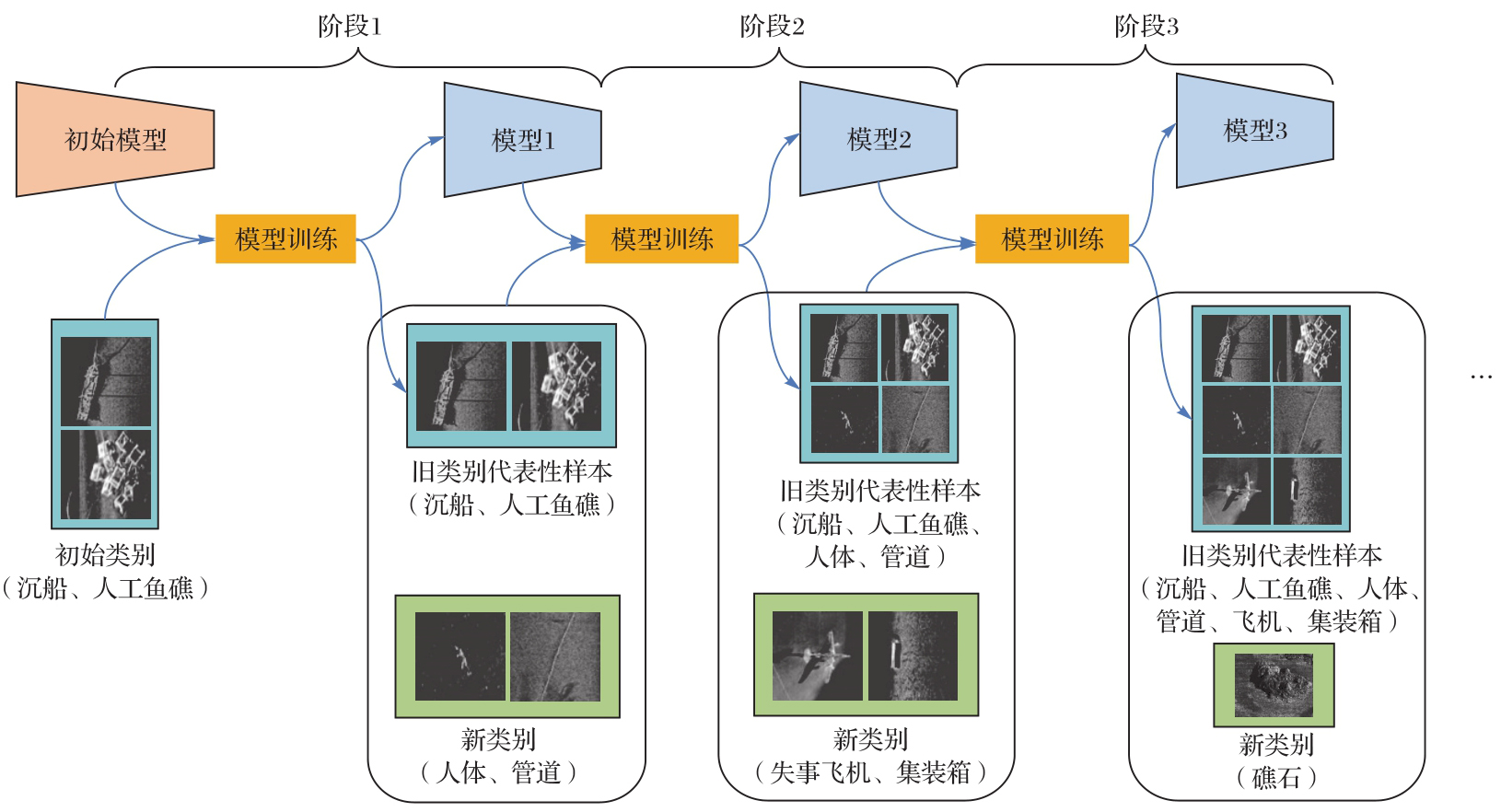
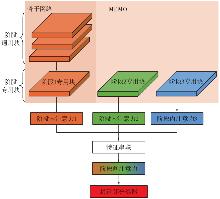
Fig. 2
Model class-incremental update method combining dual-scale dynamic attention and nearest neighbor classifier"
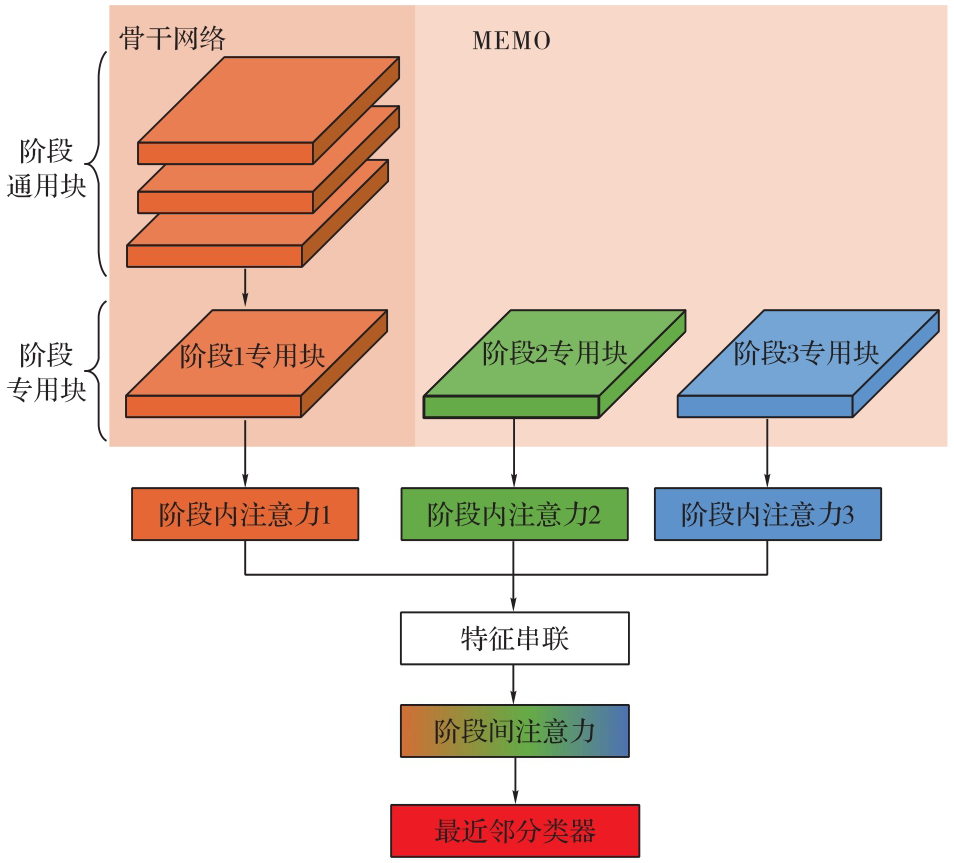
Fig. 3
Stage-progressive dual-scale dynamic attention module"
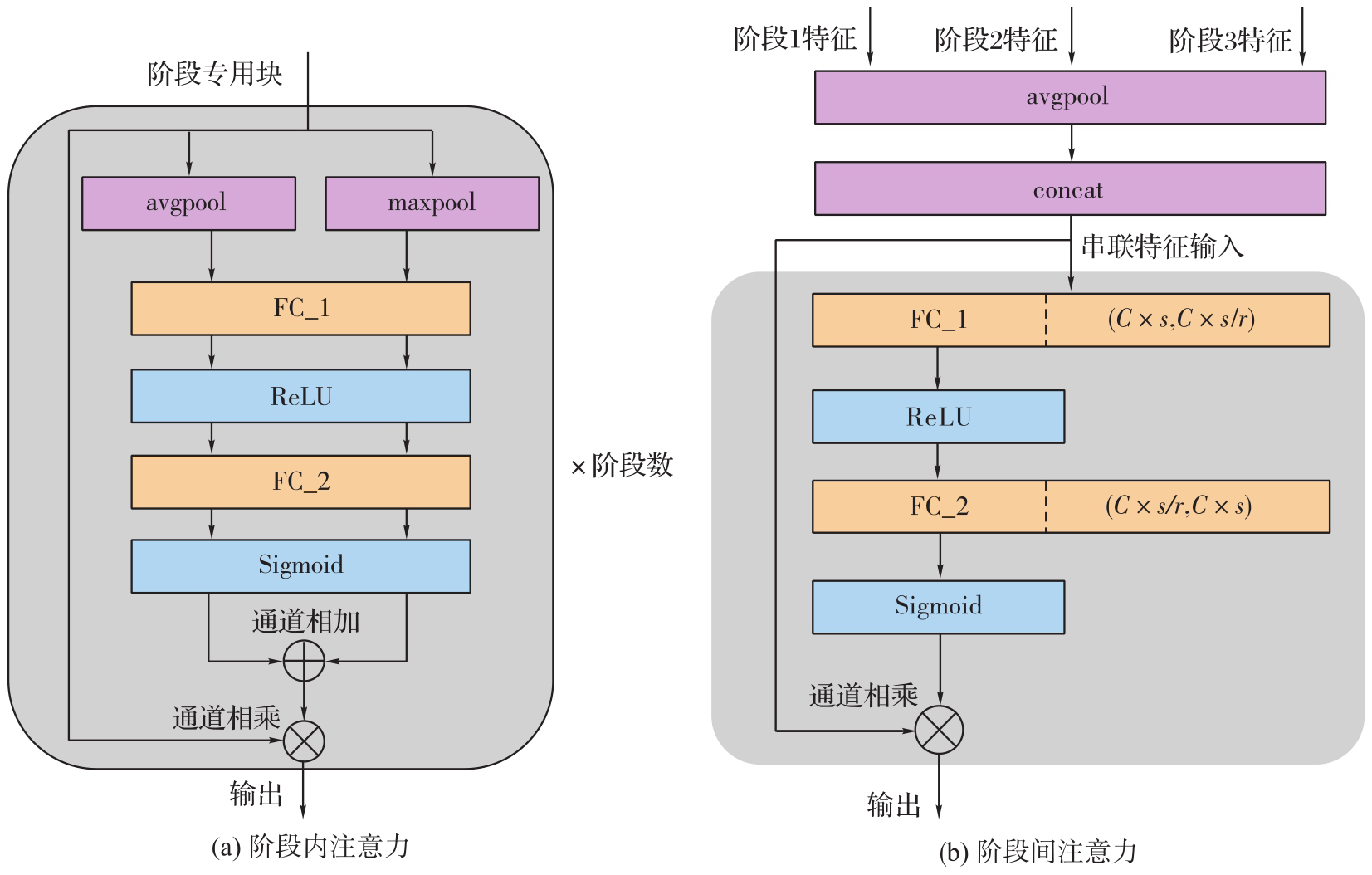
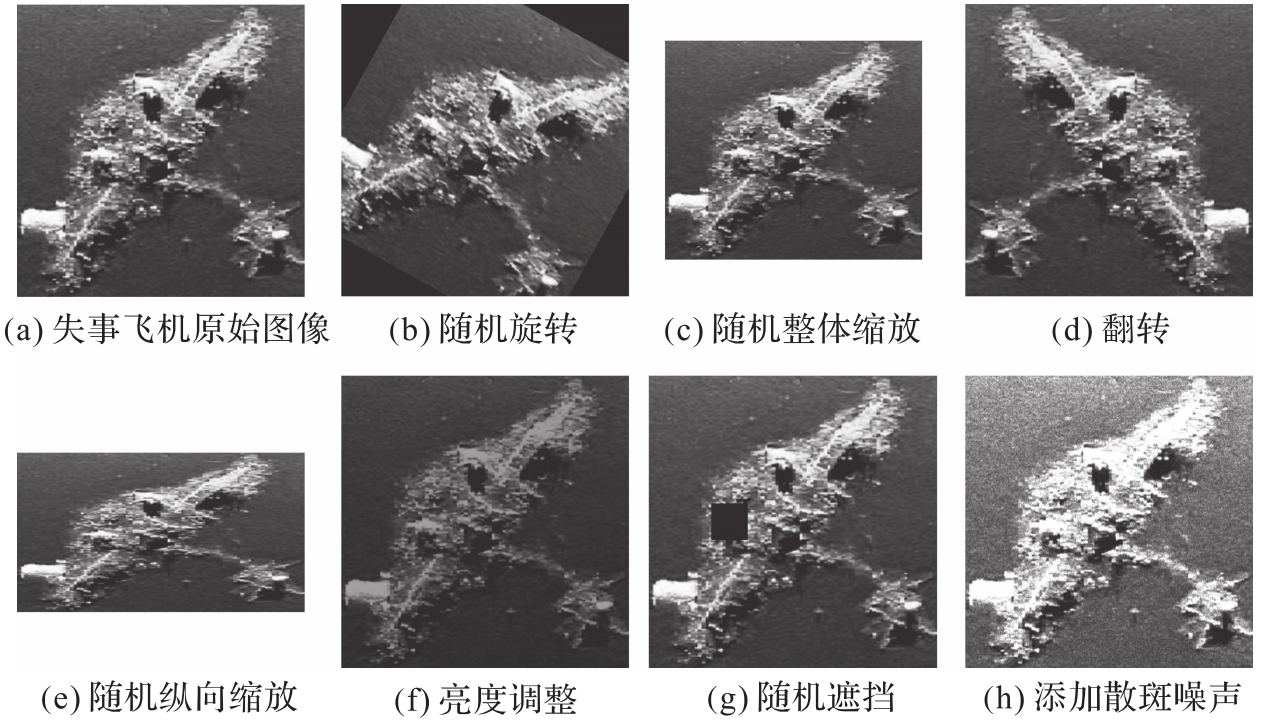
Fig. 4
Examples of SSS data augmentation"
Tab. 1
The sample size of the underwater target class-incremental recognition dataset in SSS images"
| 序号 | 类别 | 训练集 | 测试集 | 总计 |
|---|---|---|---|---|
| 0 | 沉船 | 500(350) | 150 | 650(500) |
| 1 | 人工鱼礁 | 500(350) | 150 | 650(500) |
| 2 | 管道 | 500(283) | 122 | 622(405) |
| 3 | 人体 | 500(231) | 100 | 600(331) |
| 4 | 失事飞机 | 500(102) | 45 | 545(147) |
| 5 | 集装箱 | 500(67) | 30 | 530(97) |
Tab. 2
Comparisons of the test results before and after improvement"
| 方法 | 类别零散程度 | Last/(%) | Avg/(%) |
|---|---|---|---|
| MEMO | 222 | 64.54±5.41 | 77.32±4.97 |
| 2121 | 69.79±3.38 | 72.67±5.04 | |
| 3111 | 74.2±2.32 | 77.74±1.94 | |
| 平均 | 69.51±5.56 | 75.91±4.82 | |
| 本文方法 | 222 | 81.46±1.3 | 88.64±0.84 |
| 2121 | 78.78±2.79 | 83.82±2.81 | |
| 3111 | 82.58±3.56 | 87.91±1.52 | |
| 平均 | 80.94±3.15 | 86.79±2.85 |
Fig. 5
Comparisons of confusion matrices between MEMO and our method in the second and third stages"
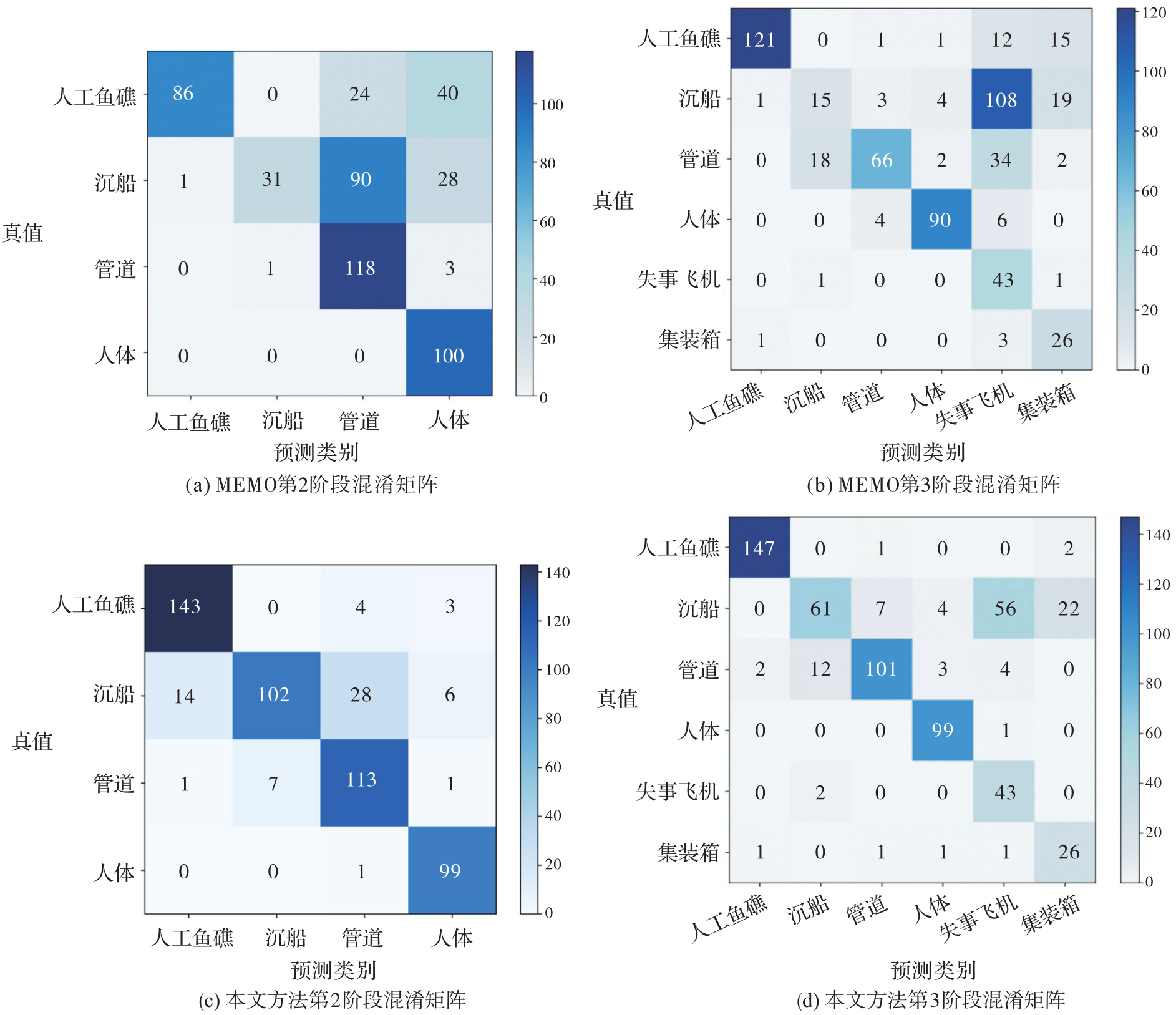
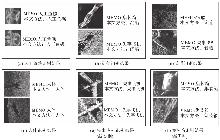
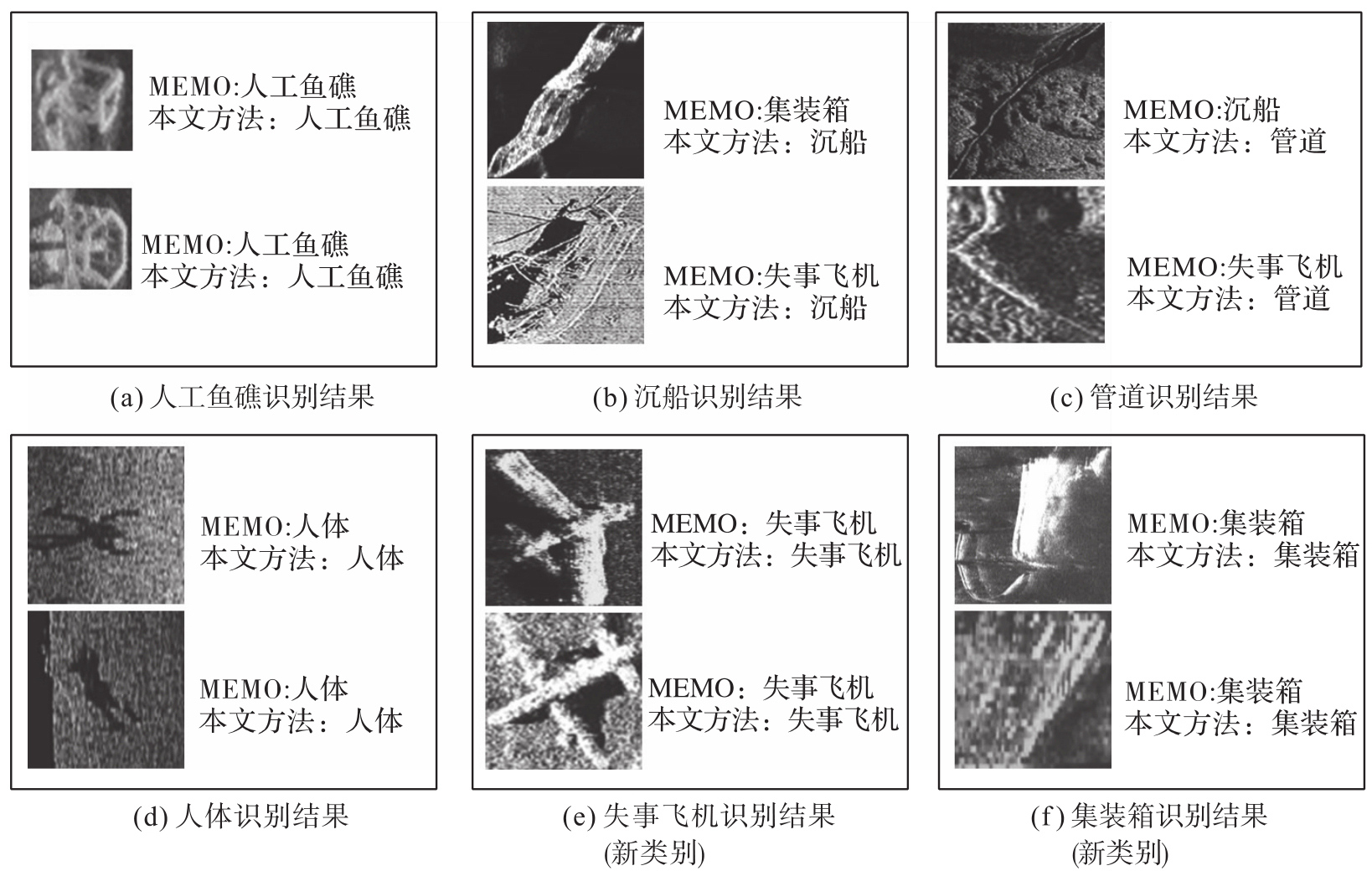
Fig. 6
Visualization of target recognition results in the third phase"
Tab. 3
Results of ablation study"
| 组合 | 动态注意力 | 最近邻分类器 | Last/(%) | Avg/(%) |
|---|---|---|---|---|
| 组合1 | 69.51±5.56 | 75.91±4.82 | ||
| 组合2 | √ | 77.24±4.60 | 82.77±4.31 | |
| 组合3 | √ | 73.18±2.73 | 81.15±2.56 | |
| 组合4 | √ | √ | 80.94±3.15 | 86.79±2.85 |
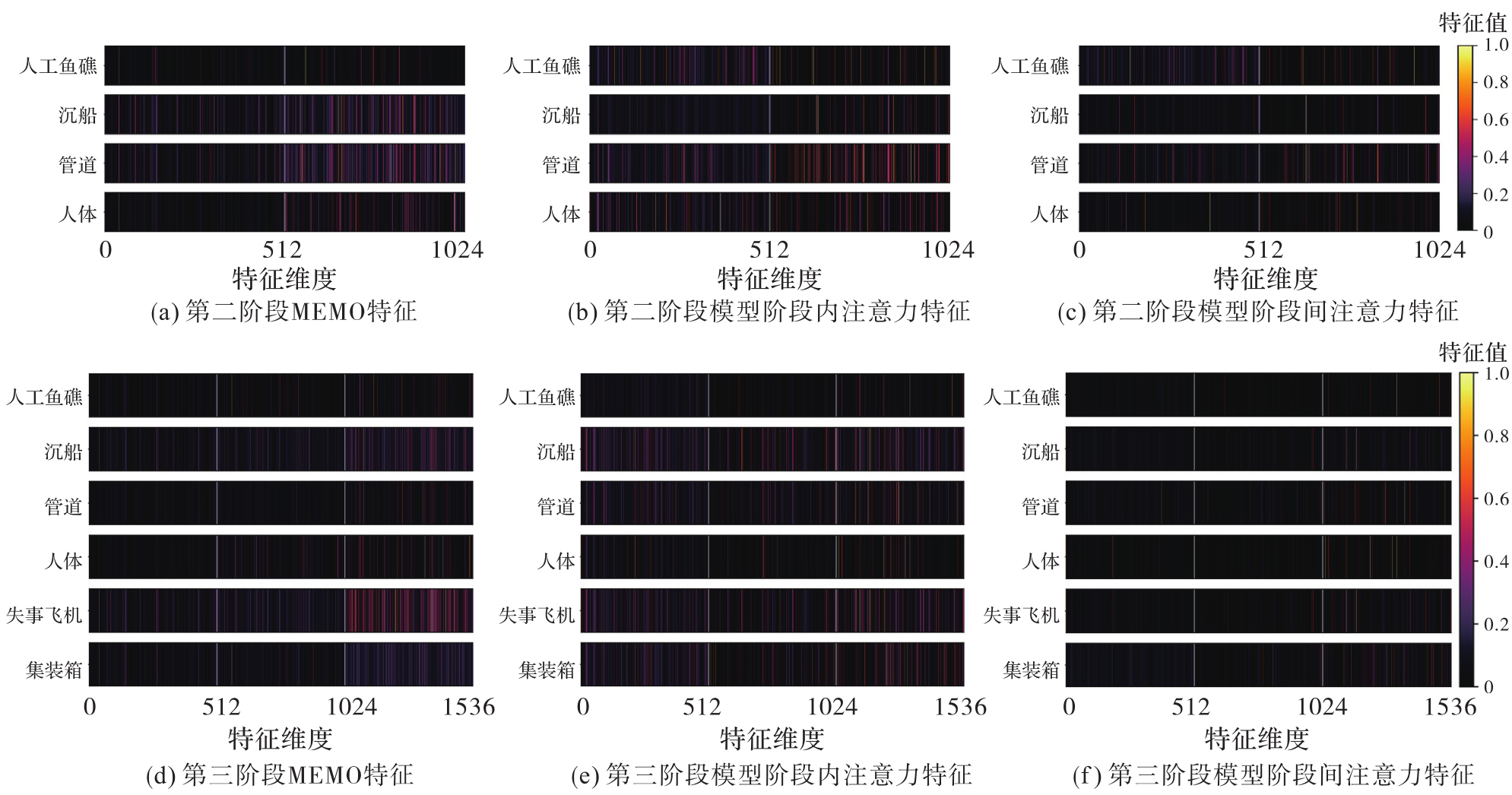
Fig. 7
Visualization of the feature maps"
Tab. 4
Comparisons with the existing methods"
| 增量方法 | Last/(%) | Avg/(%) | 参数量 | 推理速度/FPS | 总训练时长/min |
|---|---|---|---|---|---|
| iCaRL | 61.86 | 75.64 | 11 178 564 | 16 542 | 76.52 |
| PODNet | 62.87 | 78.91 | 11 196 993 | 15 375 | 78.10 |
| DER | 56.45 | 72.19 | 33 540 297 | 5843 | 77.17 |
| MEMO | 65.83 | 78.96 | 27 974 729 | 10 492 | 76.09 |
| BEEF | 66.94 | 77.28 | 33 541 848 | 1447 | 122.56 |
| FECIL | 76.27 | 85.45 | 11 170 884 | 27 361 | 457.35 |
| MEMO+动态注意力 | 75.15 | 83.33 | 28 367 945 | 9238 | 76.58 |
| MEMO+最近邻分类器 | 74.09 | 84.17 | 27 974 729 | 9429 | 76.09 |
| 本文方法 | 81.46 | 88.64 | 28 367 945 | 8192 | 76.58 |
Tab. 5
Results on FLSMDD dataset"
| 方法 | 类别零散程度 | Last/(%) | Avg/(%) |
|---|---|---|---|
| MEMO | 333 333 | 93.01 | 90.94 |
| 52 416 | 94.62 | 95.38 | |
| 4 223 142 | 92.94 | 94.92 | |
| 平均 | 93.52 | 93.75 | |
| 本文方法 | 333 333 | 94.96 | 95.24 |
| 52 416 | 95.16 | 97.22 | |
| 4 223 142 | 92.81 | 96.73 | |
| 平均 | 94.31 | 96.40 |
| [1] | XUE Shuqiang, XU Tianhe, LIU Yanxiong, et al. Recent advances in marine geodesy of China[J]. Journal of Geodesy and Geoinformation Science, 2023, 6(3): 58-66. |
| [2] | TOLIE H F, Ren Jinchang, HASAN J M, et al. Effective marine monitoring with multimodal sensing and improved underwater robotic perception towards environmental protection and smart energy transition[J]. Journal of Geodesy and Geoinformation Science, 2024, 7(4): 19-35. |
| [3] | 刘经南, 陈冠旭, 赵建虎, 等. 海洋时空基准网的进展与趋势[J]. 武汉大学学报(信息科学版), 2019, 44(1): 17-37. |
| LIU Jingnan, CHEN Guanxu, ZHAO Jianhu, et al. Development and trends of marine space-time frame network[J]. Geomatics and Information Science of Wuhan University, 2019, 44(1): 17-37. | |
| [4] |
李邵波, 赵建虎, 王爱学, 等. 结构特征约束的三维浅剖声呐层界提取[J]. 测绘学报, 2025, 54(2): 262-271. DOI: .
doi: 10.11947/j.AGCS.2025.20240143 |
|
LI Shaobo, ZHAO Jianhu, WANG Aixue, et al. Three-dimensional sub-bottom profiler sonar horizon picking with struc-tural feature constraints[J]. Acta Geodaetica et Cartographica Sinica, 2025, 54(2): 262-271. DOI: .
doi: 10.11947/j.AGCS.2025.20240143 |
|
| [5] | SHEN He, XU Songbo, LI Ni, et al. Zero-shot lightweight submarine cable detection in side-scan sonar images[J]. Ocean Engineering, 2025, 338: 121929. |
| [6] | 杨龙, 高珊, 冯义楷, 等. 海洋牧场人工鱼礁群探测及空方量测算方法[J]. 水产学报, 2024, 48(11): 73-81. |
| YANG Long, GAO Shan, FENG Yikai, et al. Detection and empty volume measurement and calculation method of artificial reef groups in marine pastures[J]. Journal of Fisheries of China, 2024, 48(11): 73-81. | |
| [7] | 于永灿, 李永奎, 龚权华, 等. 联合YOLOv4和迁移学习的侧扫声呐图像沉船检测[J]. 海洋测绘, 2021, 41(4): 38-42. |
| YU Yongcan, LI Yongkui, GONG Quanhua, et al. Shipwreck detection in side-scan sonar images using YOLOv4 with transfer learning[J]. Hydrographic Surveying and Charting, 2021, 41(4): 38-42. | |
| [8] |
汤寓麟, 金绍华, 边刚, 等. 侧扫声呐识别沉船影像的迁移学习卷积神经网络法[J]. 测绘学报, 2021, 50(2): 260-269. DOI: .
doi: 10.11947/j.AGCS.2021.20200187 |
|
TANG Yulin, JIN Shaohua, BIAN Gang, et al. The transfer learning with convolutional neural network method of side-scan sonar to identify wreck images[J]. Acta Geodaetica et Cartographica Sinica, 2021, 50(2): 260-269. DOI: .
doi: 10.11947/j.AGCS.2021.20200187 |
|
| [9] |
何义才, 赵建虎, 张红梅, 等. 联合NSCT与多重分形的高噪声侧扫声呐图像分割[J]. 测绘学报, 2020, 49(2): 162-170. DOI: .
doi: 10.11947/j.AGCS.2020.20180276 |
|
HE Yicai, ZHAO Jianhu, ZHANG Hongmei, et al. Segmentation of polluted SSS image by combining NSCT and multifractal[J]. Acta Geodaetica et Cartographica Sinica, 2020, 49(2): 162-170. DOI: .
doi: 10.11947/j.AGCS.2020.20180276 |
|
| [10] | ZHOU Dawei, WANG Qiwei, QI Zhihong, et al. Class-incremental learning: a survey[J]. IEEE Transactions on Pattern Analysis and Machine Intelligence, 2024, 46(12): 9851-9873. |
| [11] | WANG Liyuan, ZHANG Xingxing, SU Hang, et al. A comprehensive survey of continual learning: theory, method and application[J]. IEEE Transactions on Pattern Analysis and Machine Intelligence, 2024, 46(8): 5362-5383. |
| [12] | REBUFFI S A, KOLESNIKOV A, SPERL G, et al. iCaRL: incremental classifier and representation learning[C]//Proceedings of 2017 IEEE Conference on Computer Vision and Pattern Recognition. New York: IEEE, 2017: 5533-5542. |
| [13] | VAN DE VEN G M, SIEGELMANN H T, TOLIAS A S. Brain-inspired replay for continual learning with artificial neural networks[J]. Nature Communications, 2020, 11: 4069. |
| [14] | ZOU Xiaohan, MA Wenchao, ZHAO Shu. Learning conditional space-time prompt distributions for video class-incremental learning[C]//Proceedings of 2025 IEEE/CVF Conference on Computer Vision and Pattern Recognition. New York: IEEE, 2025: 4862-4873. |
| [15] | FERDINAND Q, CLEMENT B, PAPADAKIS P, et al. Feature expansion and enhanced compression for class incremental learning[J]. Neurocomputing, 2025, 634: 129807. |
| [16] | 刘展阳, 刘进锋. 基于知识蒸馏的不存储旧数据的类增量学习[J]. 计算机应用, 2024, 44(S2): 12-17. |
| LIU Zhanyang, LIU Jinfeng. Data-free class incremental learning based on knowledge distillation[J]. Journal of Computer Applications, 2024, 44(S2): 12-17. | |
| [17] | JIAO Wenpei, ZHANG Jianlei, ZHANG Chunyan. Open-set recognition with long-tail sonar images[J]. Expert Systems with Applications, 2024, 249: 123495. |
| [18] | HUANG Chao, ZHAO Jianhu, ZHANG Hongmei, et al. Seg2Sonar: a full-class sample synthesis method applied to underwater sonar image target detection, recognition, and segmentation tasks[J]. IEEE Transactions on Geoscience and Remote Sensing, 2024, 62: 5909319. |
| [19] | 陈鑫哲, 梁红, 徐微雨. 基于声呐图像的类别增量学习方法研究[J]. 西北工业大学学报, 2023, 41(2): 303-309. |
| CHEN Xinzhe, LIANG Hong, XU Weiyu. Research on a class-incremental learning method based on sonar images[J]. Journal of Northwestern Polytechnical University, 2023, 41(2): 303-309. | |
| [20] | CHEN Xinzhe, LIANG Hong. An optimized class incremental learning network with dynamic backbone based on sonar images[J]. Journal of Marine Science and Engineering, 2023, 11(9): 1781. |
| [21] | YAN Shipeng, XIE Jiangwei, HE Xuming. DER: dynamically expandable representation for class incremental learning[C]//Proceedings of 2021 IEEE/CVF Conference on Computer Vision and Pattern Recognition. New York: IEEE, 2021: 3013-3022. |
| [22] | ZENG Fengcheng, YANG Qiming, WU Yuquan. DFACIL: decoupled feature adaptive class incremental learning for high-similarity sonar image classification[C]//Proceedings of 2025 Advanced Intelligent Computing Technology and Applications. Berlin: Springer, 2025: 88-99. |
| [23] | ZHOU Dawei, WANG Qiwei, YE Hanjia, et al. A model or 603 exemplars: towards memory-efficient class-incremental learning[C]//Proceedings of the 11th International Conference on Learning Representations. San Diego: OpenReview.net, 2023. |
| [24] | HE Kaiming, ZHANG Xiangyu, REN Shaoqing, et al. Deep residual learning for image recognition[C]//Proceedings of 2016 IEEE Conference on Computer Vision and Pattern Recognition. New York: IEEE, 2016: 770-778. |
| [25] | HU Jie, SHEN Li, SUN Gang. Squeeze-and-excitation networks[C]//Proceedings of 2018 IEEE Conference on Computer Vision and Pattern Recognition. New York: IEEE, 2018: 7132-7141. |
| [26] | WOO S, PARK J, LEE J Y, et al. CBAM: convolutional block attention module[C]//Proceedings of 2018 European Conference on Computer Vision. Berlin: Springer, 2018: 3-19. |
| [27] | WU Yue, CHEN Yinpeng, WANG Lijuan, et al. Large scale incremental learning[C]//Proceedings of 2019 IEEE/CVF Conference on Computer Vision and Pattern Recognition. New York: IEEE, 2020: 374-382. |
| [28] | COVER T, HART P. Nearest neighbor pattern classification[J]. IEEE Transactions on Information Theory, 1967, 13(1): 21-27. |
| [29] | ZHANG Peng, TANG Jinsong, ZHONG Heping, et al. Self-trained target detection of radar and sonar images using automatic deep learning[J]. IEEE Transactions on Geoscience and Remote Sensing, 2022, 60: 4701914. |
| [30] | HUO Guanying, WU Ziyin, LI Jiabiao. Underwater object classification in sidescan sonar images using deep transfer learning and semisynthetic training data[J]. IEEE Access, 2020, 8: 47407-47418. |
| [31] | AALTONEN T. Consumer class side scanning sonar dataset for human detection[C]//Proceedings of 2023 MIPRO ICT and Electronics Convention. New York: IEEE, 2023: 1161-1166. |
| [32] | YU Yongcan, ZHAO Jianhu, HUANG Chao, et al. Treat noise as domain shift: noise feature disentanglement for underwater perception and maritime surveys in side-scan sonar images[J]. IEEE Transactions on Geoscience and Remote Sensing, 2023, 61: 4208115. |
| [33] | YU Yongcan, ZHAO Jianhu, GONG Quanhua, et al. Real-time underwater maritime object detection in side-scan sonar images based on transformer-YOLOv5[J]. Remote Sensing, 2021, 13(18): 3555. |
| [34] | WANG F Y, ZHOU D W, LIU L, et al. BEEF: bi-compatible class-incremental learning via energy-based expansion and fusion[C]//Proceedings of the 11th International Conference on Learning Representations. San Diego: OpenReview.net, 2023. |
| [35] | DOUILLARD A, CORD M, OLLION C, et al. PODNet: pooled outputs distillation for small-tasks incremental learning[C]//Proceedings of 2020 Computer Vision. Berlin: Springer, 2020: 86-102. |
| [36] | VALDENEGRO-TORO M, PRECIADO-GRIJALVA A, WEHBE B. Pre-trained models for sonar images[EB/OL] [2025-08-25]. http://arxiv.org/abs/2207.07341. |
| [1] | FAN Junfu MA Ting ZHOU Chenghu JI Min ZHOU Yuke XU Tao. Research on a Buffer Algorithm Based on Region-Merging of Buffered Geometry Components and Its Parallel Optimization [J]. Acta Geodaetica et Cartographica Sinica, 2014, 43(9): 969-975. |
| [2] | ZHOU Xinxin, YUAN Linwang, WU Changbin, HAN Peipei, HUANG Jing, YU Zhaoyuan. A quantum evolutionary algorithm for spatial optimization of facility allocation [J]. Acta Geodaetica et Cartographica Sinica, 2023, 52(1): 142-154. |
| [3] | ZHOU Xinxin. Spatial dynamic allocation model of urban service facilities and quantum optimization method [J]. Acta Geodaetica et Cartographica Sinica, 2023, 52(2): 344-344. |
| Viewed | ||||||
|
Full text |
|
|||||
|
Abstract |
|
|||||
