

Acta Geodaetica et Cartographica Sinica ›› 2025, Vol. 54 ›› Issue (5): 831-839.doi: 10.11947/j.AGCS.2025.20230117
• Marine Survey • Previous Articles Next Articles
Wenzhou SUN1,2,3( ), Anmin ZENG1,3, Zhengming QIAO2
Received:2023-04-19
Revised:2025-05-06
Online:2025-06-23
Published:2025-06-23
About author:SUN Wenzhou (1991—), male, PhD, senior engineer, majors in the theory and methods of ocean geodesy and hydrographic surveying. E-mail: 1519374228@qq.com
Supported by:CLC Number:
Wenzhou SUN, Anmin ZENG, Zhengming QIAO. Influence of draft depth error of acoustic ray tracing on underwater positioning[J]. Acta Geodaetica et Cartographica Sinica, 2025, 54(5): 831-839.
Fig. 1
The influence of draft depth errors on the negative gradient sound velocity profile"
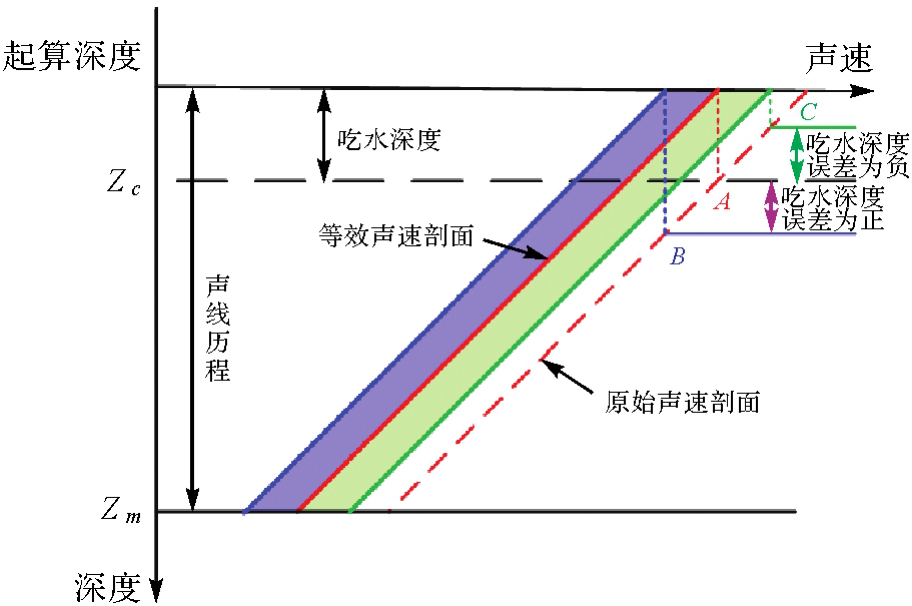
Fig. 2
The influence of draft depth errors on the positive gradient sound velocity profile"
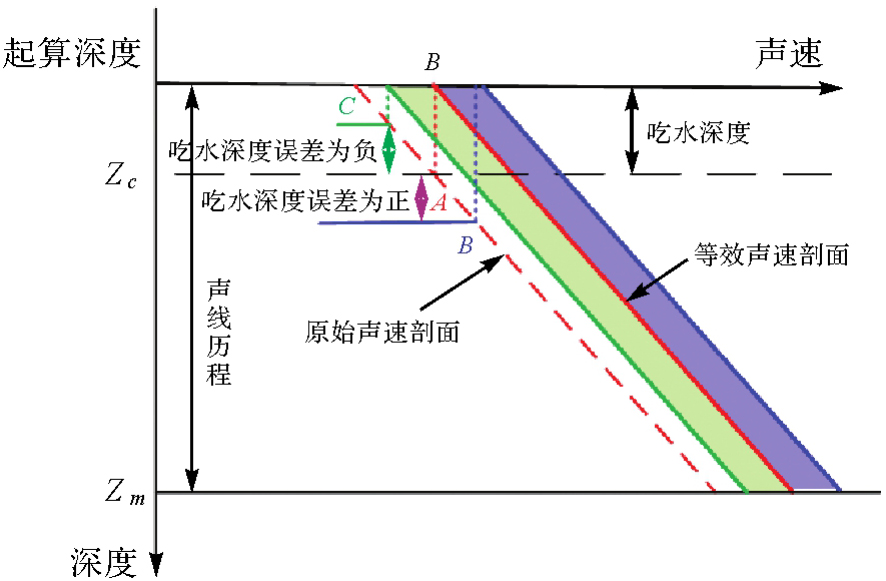
Fig. 3
The influence of sound velocity gradient on SVP area difference caused by draft depth errors"
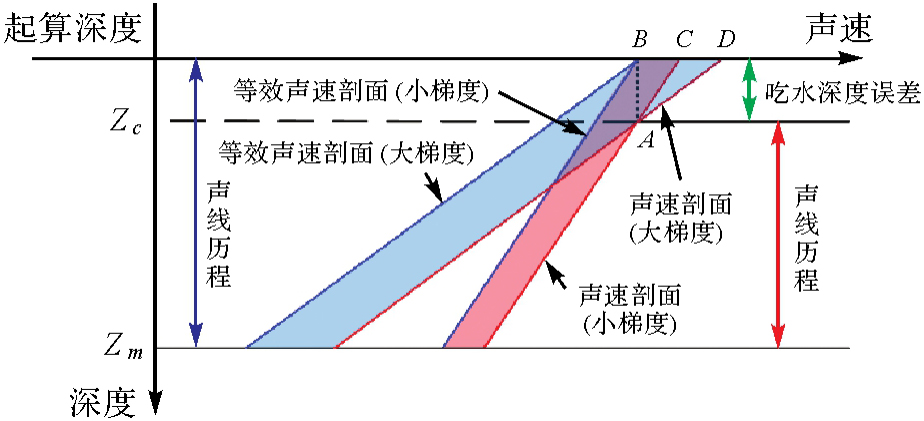
Fig. 4
The influence of starting depth errors on the typical deep-sea sound speed profile"
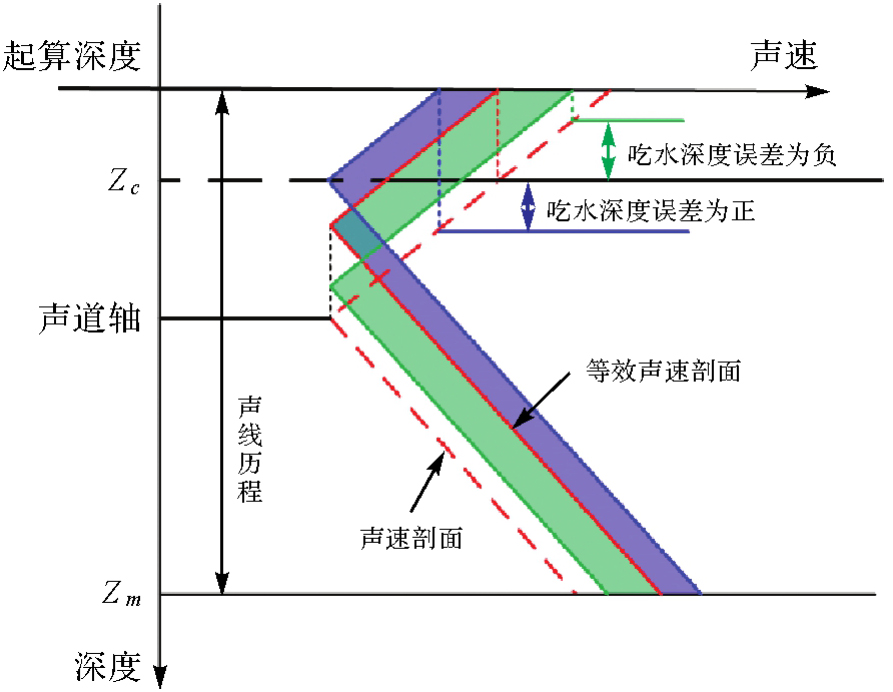
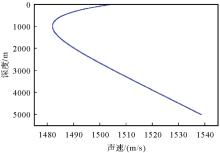
Fig. 5
Sound velocity profile obtained by Munk's equation"
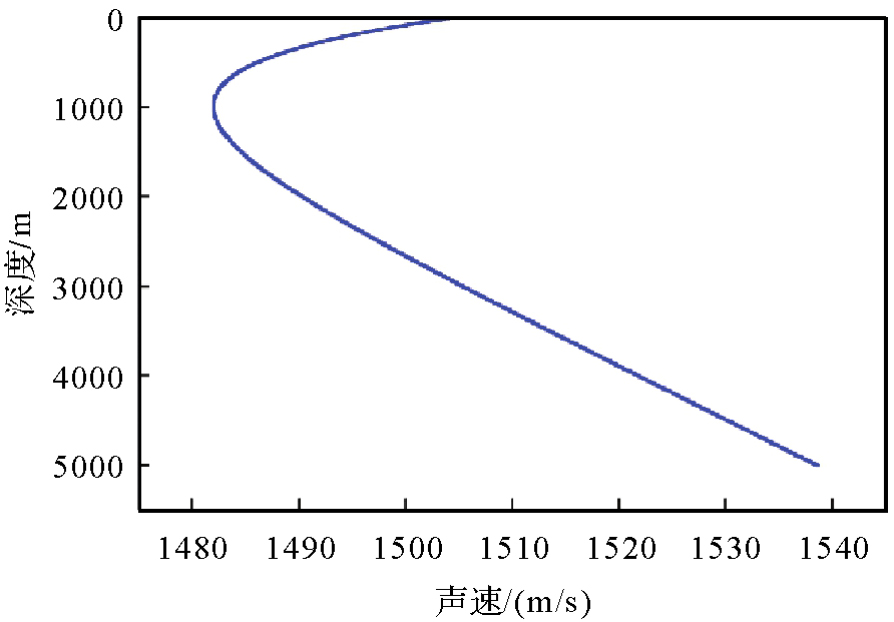
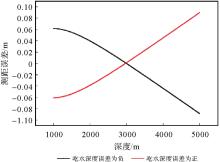
Fig. 6
Ranging errors caused by draft depth errors on different water depths"
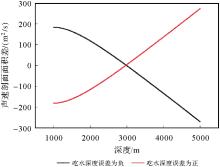
Fig. 7
The corresponding variation of SVP area difference"
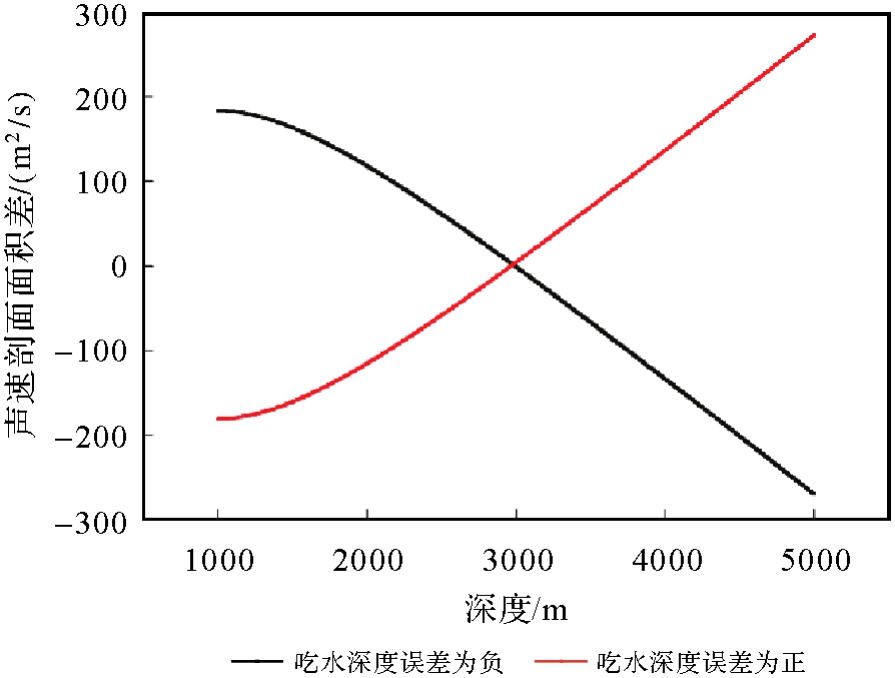
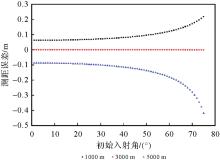
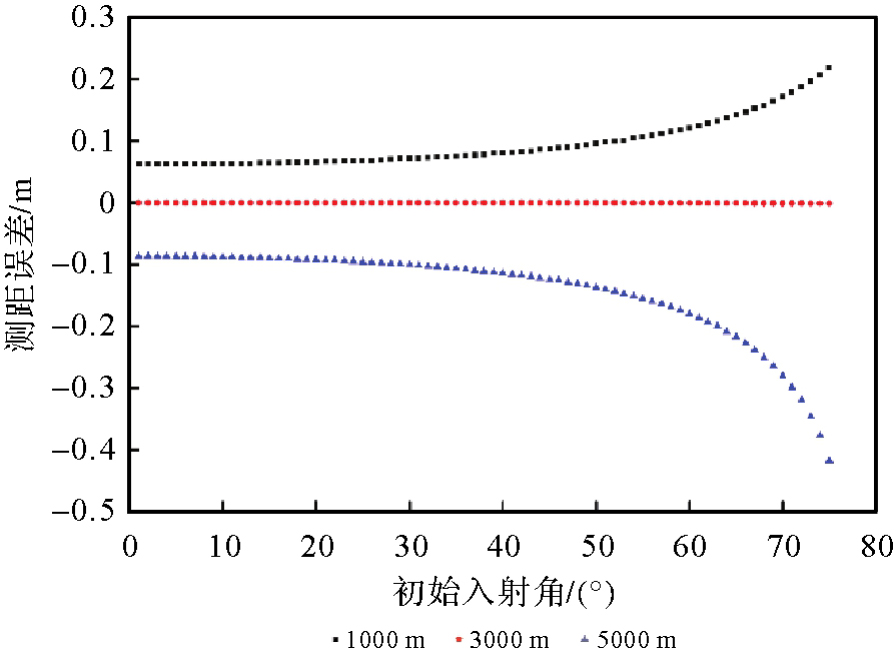
Fig. 8
Ranging errors vary with initial incidence angles"
Tab. 1
The difference in SVP area caused by draft errors in different water depths"
| 深度/m | 1000 | 3000 | 5000 |
|---|---|---|---|
| 声速剖面面积差/(m2/s) | 92.460 1 | -0.799 5 | -133.852 3 |
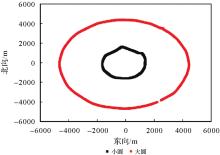
Fig. 9
The sailing tracks of the survey ship"
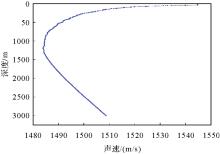
Fig. 10
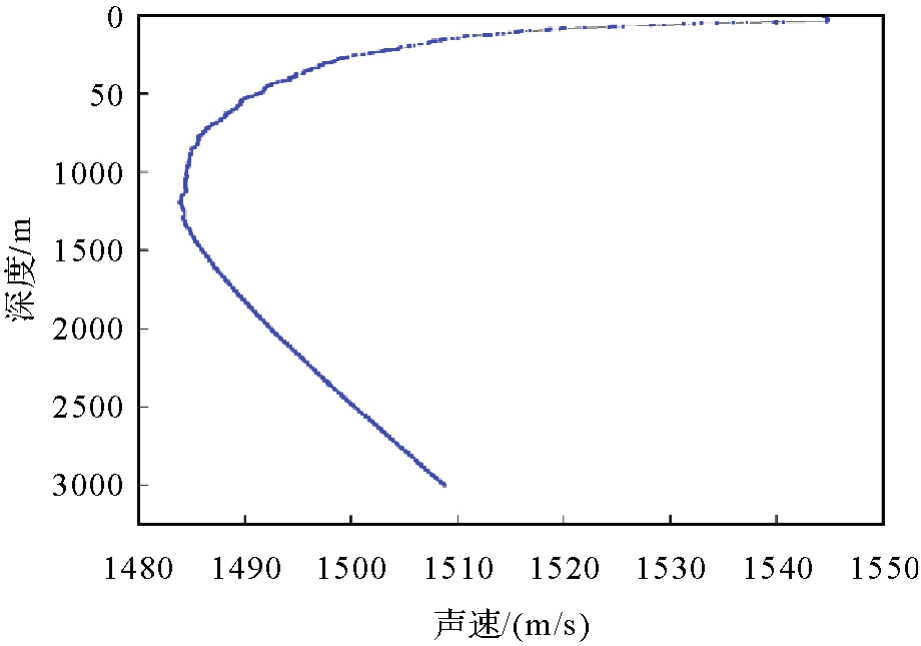
The measured sound velocity profile"
Tab. 2
The positioning results of seafloor transponder on different starting depths and sailing strategies"
| 吃水深度 | 小圆 | 大圆 | ||||
|---|---|---|---|---|---|---|
| E | N | U | E | N | U | |
| 表层起算 | -42.293 3 | -110.085 7 | -3 094.494 9 | -42.892 7 | -111.810 7 | -3 093.748 9 |
| 吃水深度处 | -42.298 9 | -110.086 2 | -3 094.387 9 | -42.896 3 | -111.015 6 | -3 093.458 0 |
| 坐标差 | -0.005 6 | -0.000 4 | 0.107 0 | 0.003 9 | -0.000 8 | 0.290 8 |
| [1] |
杨元喜, 徐天河, 薛树强. 我国海洋大地测量基准与海洋导航技术研究进展与展望[J]. 测绘学报, 2017, 46(1): 1-8. DOI: .
doi: 10.11947/j.AGCS.2017.20160519 |
|
YANG Yuanxi, XU Tianhe, XUE Shuqiang. Progresses and prospects in developing marine geodetic datum and marine navigation of China[J]. Acta Geodaetica et Cartographica Sinica, 2017, 46(1): 1-8. DOI: .
doi: 10.11947/j.AGCS.2017.20160519 |
|
| [2] | 杨元喜, 刘焱雄, 孙大军, 等. 海底大地基准网建设及其关键技术[J]. 中国科学:地球科学, 2020, 50(7): 936-945. |
| YANG Yuanxi, LIU Yanxiong, SUN Dajun, et al. Seafloor geodetic network establishment and key technologies[J]. Scientia Sinica (Terrae), 2020, 50(7): 936-945. | |
| [3] | SPIESS F N, CHADWELL C D, HILDEBRAND J A, et al. Precise GPS/acoustic positioning of seafloor reference points for tectonic studies[J]. Physics of the Earth and Planetary Interiors, 1998, 108(2): 101-112. |
| [4] | KUSSAT N H, CHADWELL C D, ZIMMERMAN R. Absolute positioning of an autonomous underwater vehicle using GPS and acoustic measurements[J]. IEEE Journal of Oceanic Engineering, 2005, 30(1): 153-164. |
| [5] | WATANABE S I, ISHIKAWA T, YOKOTA Y, et al. GARPOS: analysis software for the GNSS-A seafloor positioning with simultaneous estimation of sound speed structure[J]. Frontiers in Earth Science, 2020, 8: 597532. |
| [6] |
赵建虎, 梁文彪. 海底控制网测量和解算中的几个关键问题[J]. 测绘学报, 2019, 48(9): 1197-1202. DOI: .
doi: 10.11947/j.AGCS.2019.20190157 |
|
ZHAO Jianhu, LIANG Wenbiao. Some key points of submarine control network measurement and calculation[J]. Acta Geodaetica et Cartographica Sinica, 2019, 48(9): 1197-1202. DOI: .
doi: 10.11947/j.AGCS.2019.20190157 |
|
| [7] | OSADA Y, FUJIMOTO H, MIURA S, et al. Estimation and correction for the effect of sound velocity variation on GPS/acoustic seafloor positioning: an experiment off Hawaii Island[J]. Earth, Planets and Space, 2003, 55(10): e17-e20. |
| [8] | KIDO M, OSADA Y, FUJIMOTO H. Temporal variation of sound speed in ocean: a comparison between GPS/acoustic and in situ measurements[J]. Earth, Planets and Space, 2008, 60(3): 229-234. |
| [9] | 陆秀平, 边少锋, 黄谟涛, 等. 常梯度声线跟踪中平均声速的改进算法[J]. 武汉大学学报(信息科学版), 2012, 37(5): 590-593. |
| LU Xiuping, BIAN Shaofeng, HUANG Motao, et al. An improved method for calculating average sound speed in constant gradient sound ray tracing technology[J]. Geomatics and Information Science of Wuhan University, 2012, 37(5): 590-593. | |
| [10] | CHADWELL C D, SWEENEY A D. Acoustic ray-trace equations for seafloor geodesy[J]. Marine Geodesy, 2010, 33(2/3): 164-186. |
| [11] | SAKIC P, BALLU V, CRAWFORD W C, et al. Acoustic ray tracing comparisons in the context of geodetic precise off-shore positioning experiments[J]. Marine Geodesy, 2018, 41(4): 315-330. |
| [12] | ZHAO Jianhu, ZOU Yajing, ZHANG Hongmei, et al. A new method for absolute datum transfer in seafloor control network measurement[J]. Journal of Marine Science and Technology, 2016, 21(2): 216-226. |
| [13] | SAKIC P, BALLU V, ROYER J Y. A multi-observation least-squares inversion for GNSS-acoustic seafloor positioning[J]. Remote Sensing, 2020, 12(3): 448. |
| [14] | 孙文舟, 殷晓冬, 曾安敏, 等. 海底控制点定位初始入射角迭代计算方法的比较研究[J]. 武汉大学学报(信息科学版), 2020, 45(10): 1588-1593. |
| SUN Wenzhou, YIN Xiaodong, ZENG Anmin, et al. Calculating the starting incidence angle by iterative method for positioning seafloor control points[J]. Geomatics and Information Science of Wuhan University, 2020, 45(10): 1588-1593. | |
| [15] |
辛明真, 阳凡林, 薛树强, 等. 顾及波束入射角的常梯度声线跟踪水下定位算法[J]. 测绘学报, 2020, 49(12): 1535-1542. DOI: .
doi: 10.11947/j.AGCS.2020.20190518 |
|
XIN Mingzhen, YANG Fanlin, XUE Shuqiang, et al. A constant gradient sound ray tracing underwater positioning algorithm considering incident beam angle[J]. Acta Geodaetica et Cartographica Sinica, 2020, 49(12): 1535-1542. DOI: .
doi: 10.11947/j.AGCS.2020.20190518 |
|
| [16] | 孙文舟, 曾安敏, 赵翔. 顾及参考深度误差的海底控制点迭代算法[J]. 武汉大学学报(信息科学版), 2024, 49(2): 324-330. |
| SUN Wenzhou, ZENG Anmin, ZHAO Xiang. Iterative algorithm of seafloor control points positioning taking reference depth error into account[J]. Geomatics and Information Science of Wuhan University, 2024, 49(2): 324-330. | |
| [17] | XU Peiliang, ANDO M, TADOKORO K. Precise, three-dimensional seafloor geodetic deformation measurements using differencetechniques[J]. Earth, Planets and Space, 2005, 57(9): 795-808. |
| [18] | 马越原, 曾安敏, 许扬胤. 圆走航模式下海底控制点对称差分定位模型及分析[J]. 武汉大学学报(信息科学版), 2024, 49(7): 1155-1165. |
| MA Yueyuan, ZENG Anmin, XU Yangyin. Symmetric difference positioning model and analysis of sailing circle mode of seafloor control points[J]. Geomatics and Information Science of Wuhan University, 2024, 49(7): 1155-1165. | |
| [19] |
孙文舟, 殷晓冬, 曾安敏, 等. 附加深度差和水平距离约束的深海控制点差分定位算法[J]. 测绘学报, 2019, 48(9): 1190-1196. DOI: .
doi: 10.11947/j.AGCS.2019.20180514 |
|
SUN Wenzhou, YIN Xiaodong, ZENG Anmin, et al. Differential positioning algorithm for deep-sea control points on constraint of depth difference and horizontal distance constraint[J]. Acta Geodaetica et Cartographica Sinica, 2019, 48(9): 1190-1196. DOI: .
doi: 10.11947/j.AGCS.2019.20180514 |
|
| [20] |
曾安敏, 杨元喜, 明锋, 等. 海底大地基准点圆走航模式定位模型及分析[J]. 测绘学报, 2021, 50(7): 939-952. DOI: .
doi: 10.11947/j.AGCS.2021.20200529 |
|
ZENG Anmin, YANG Yuanxi, MING Feng, et al. Positioning model and analysis of the sailing circle mode of seafloor geodetic datum points[J]. Acta Geodaetica et Cartographica Sinica, 2021, 50(7): 939-952. DOI: .
doi: 10.11947/j.AGCS.2021.20200529 |
|
| [21] | ZHAO Jianhu, ZOU Yajing, ZHANG Hongmei, et al. A new method for absolute datum transfer in seafloor control network measurement[J]. Journal of Marine Science and Technology, 2016, 21(2): 216-226. |
| [22] | YANG Fanlin, LU Xiushan, LI Jiabiao, et al. Precise positioning of underwater static objects without sound speed profile[J]. Marine Geodesy, 2011, 34(2): 138-151. |
| [23] |
孙文舟, 殷晓冬, 暴景阳, 等. 海底控制点定位的半参数平差模型法[J]. 测绘学报, 2019, 48(1): 117-123. DOI: .
doi: 10.11947/j.AGCS.2019.20180187 |
|
SUN Wenzhou, YIN Xiaodong, BAO Jingyang, et al. Semi-parametric adjustment model methods for positioning of seafloor control point[J]. Acta Geodaetica et Cartographica Sinica, 2019, 48(1): 117-123. DOI: .
doi: 10.11947/j.AGCS.2019.20180187 |
|
| [24] | YANG Yuanxi, QIN Xianping. Resilient observation models for seafloor geodetic positioning[J]. Journal of Geodesy, 2021, 95(7): 79. |
| [25] | QIN Xianping, YANG Yuanxi, SUN Bijiao. The refined resilient model for underwater acoustic positioning[J]. Ocean Engineering, 2022, 266: 112795. |
| [26] | 明锋, 杨元喜, 曾安敏. 基于贝叶斯估计的深海GNSS-A定位精度[J]. 地球物理学报, 2023, 66(3): 951-960. |
| MING Feng, YANG Yuanxi, ZENG Anmin. Positioning accuracy of GNSS-A in deep sea based on Bayesian estimation[J]. Chinese Journal of Geophysics, 2023, 66(3): 951-960. | |
| [27] | CHEN Guanxu, LIU Yang, LIU Yanxiong, et al. Adjustment of transceiver lever arm offset and sound speed bias for GNSS-acoustic positioning[J]. Remote Sensing, 2019, 11(13): 1606. |
| [28] | 马越原, 杨元喜, 曾安敏, 等. 顾及偏移参数先验信息的海底控制点贝叶斯估计模型[J]. 武汉大学学报(信息科学版), 2023, 48(9): 1465-1472. |
| MA Yueyuan, YANG Yuanxi, ZENG Anmin, et al. Bayesian estimation model for seafloor geodetic positioning based on prior information of offset parameters[J]. Geomatics and Information Science of Wuhan University, 2023, 48(9): 1465-1472. | |
| [29] | SUN Wenzhou, YIN Xiaodong, ZENG Anmin. The relationship between propagation time and sound velocity profile for positioning seafloor reference points[J]. Marine Geodesy, 2019, 42(2): 186-200. |
| [30] | 孙文舟, 曾安敏, 乔正明, 等. 海底控制点水声定位测距误差的近似数学表达式[J]. 中国惯性技术学报, 2023, 31(1): 40-44. |
| SUN Wenzhou, ZENG Anmin, QIAO Zhengming, et al. Approximate mathematical expression of ranging error for acoustic positioning of seafloor control points[J]. Journal of Chinese Inertial Technology, 2023, 31(1): 40-44. | |
| [31] | 孙文舟, 殷晓冬, 夏文杰. 声速误差对圆走航水下控制点定位影响分析[J]. 大地测量与地球动力学, 2020, 40(12): 1299-1302. |
| SUN Wenzhou, YIN Xiaodong, XIA Wenjie. Analysis of the influence of sound velocity error on sailing-circle positioning method for seafloor control points[J]. Journal of Geodesy and Geodynamics, 2020, 40(12): 1299-1302. | |
| [32] | MUNK W H. Sound channel in an exponentially stratified ocean, with application to SOFAR[J]. The Journal of the Acoustical Society of America, 1974, 55(2): 220-226. |
| [1] | Jie ZHOU, Shuqiang XUE, Zhen XIAO, Ying XU, Kaiming WANG, Jingsen LI. Impact of the horizontal gradient of sound speed on seafloor geodetic positioning [J]. Acta Geodaetica et Cartographica Sinica, 2024, 53(12): 2328-2337. |
| [2] | DU Zhenqiang, CHAI Hongzhou, XIANG Minzhi, ZHANG Fan, HUI Jun. Configuration design and analysis of UUVs cooperative localization with underwater acoustic error [J]. Acta Geodaetica et Cartographica Sinica, 2023, 52(8): 1268-1277. |
| [3] | ZENG Anmin, YANG Yuanxi, MING Feng, MA Yueyuan. Positioning model and analysis of the sailing circle mode of seafloor geodetic datum points [J]. Acta Geodaetica et Cartographica Sinica, 2021, 50(7): 939-952. |
| [4] | KUANG Yingcai, Lü Zhiping, WANG Fangchao, LI Linyang, YANG Kaichun. The adaptive filtering algorithm of GNSS/acoustic joint positioning [J]. Acta Geodaetica et Cartographica Sinica, 2020, 49(7): 854-864. |
| [5] | SUN Wenzhou, YIN Xiaodong, ZENG Anmin, BAO Jingyang. Differential positioning algorithm for deep-sea control points on constraint of depth difference and horizontal distance constraint [J]. Acta Geodaetica et Cartographica Sinica, 2019, 48(9): 1190-1196. |
| Viewed | ||||||
|
Full text |
|
|||||
|
Abstract |
|
|||||
