

Acta Geodaetica et Cartographica Sinica ›› 2026, Vol. 55 ›› Issue (5): 838-849.doi: 10.11947/j.AGCS.2026.20250445
• Cartography and Geographic Information • Previous Articles Next Articles
Xusheng ZHOU1,2,3,4( ), Yongbin TAN1,2,3,4(), Zhonghai YU5, Wei WANG1,2,3,4, Qingyun XIAO2
Received:2025-10-23
Revised:2026-04-20
Online:2026-06-23
Published:2026-06-23
Contact:
Yongbin TAN
E-mail:2022120416@ecut.edu.cn;tyb@ecut.edu.cn
About author:ZHOU Xusheng (2000—), male, master, majors in urban geospatial intelligence and spatial information visualization. E-mail: 2022120416@ecut.edu.cn
Supported by:CLC Number:
Xusheng ZHOU, Yongbin TAN, Zhonghai YU, Wei WANG, Qingyun XIAO. A complex building shape recognition method integrating vector structural features[J]. Acta Geodaetica et Cartographica Sinica, 2026, 55(5): 838-849.
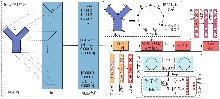
Fig. 1
Overall framework of the proposed method"

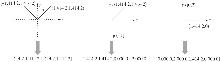
Fig. 2
Translation-invariant vector encoding scheme based on local coordinate systems (using three corners of a Y-shaped building as an example)"
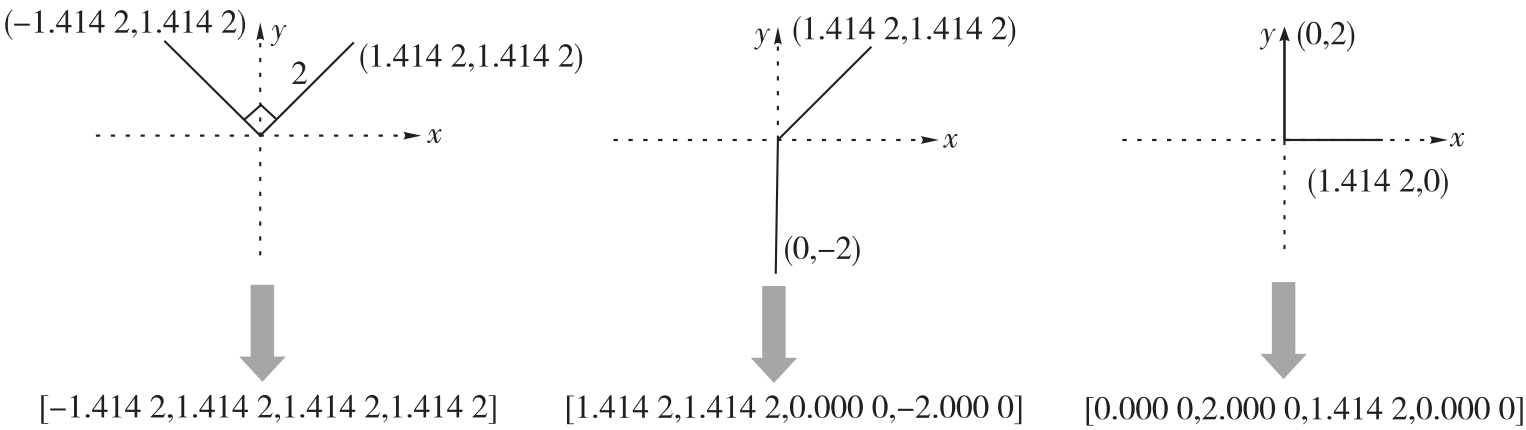
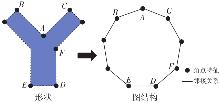
Fig. 3
Initial contour and graph-structured representation of Y-shaped buildings"
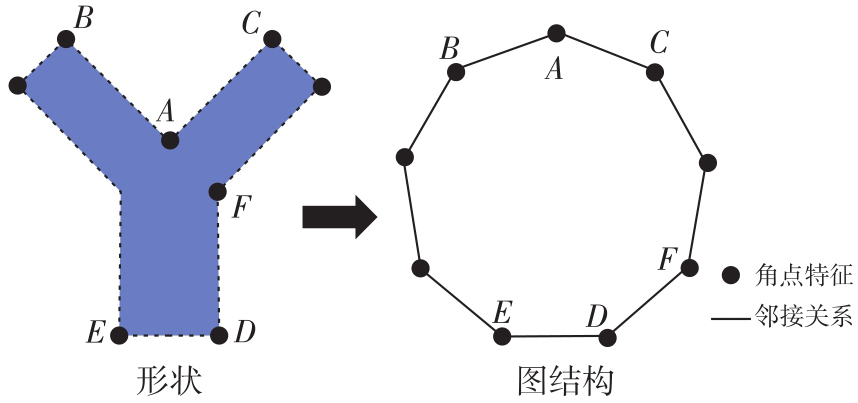
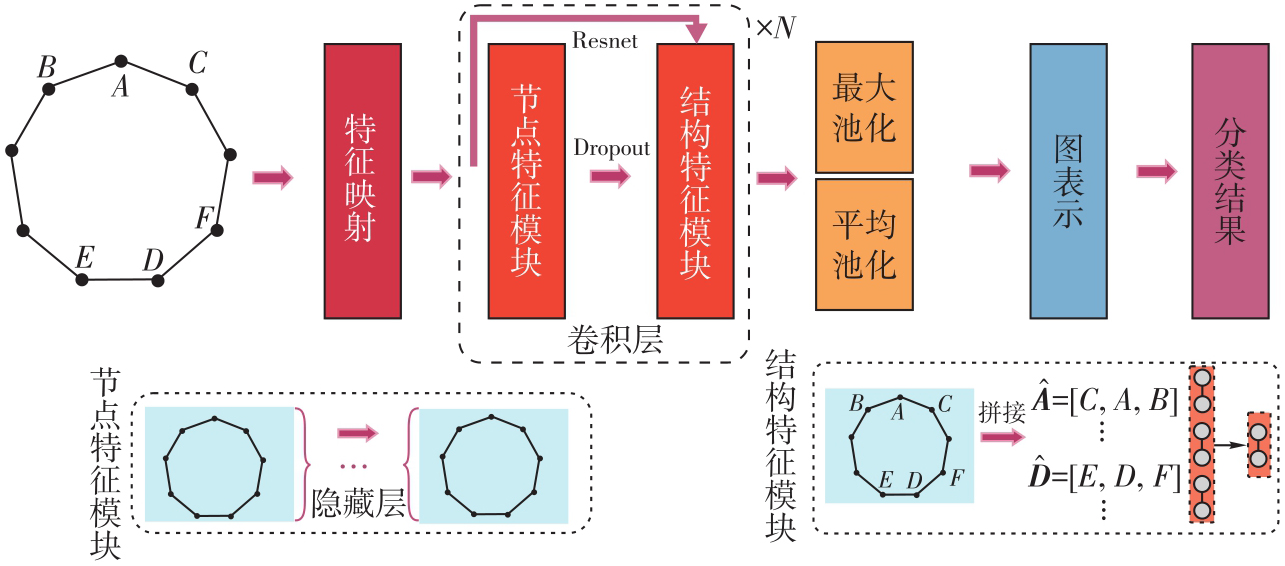
Fig. 4
Shape classification process of the improved GCN model"
Tab. 1
Composition of building shape categories in the extended dataset (including original and newly added classes)"
| 形状 | 数量 | 示例1 | 示例2 | 示例3 | 示例4 | 示例5 | 形状 | 数量 | 示例1 | 示例2 | 示例3 | 示例4 | 示例5 |
|---|---|---|---|---|---|---|---|---|---|---|---|---|---|
| E形 | 500 |  |  |  |  |  | U形 | 500 |  |  |  |  |  |
| F形 | 500 |  |  |  |  |  | Y形 | 500 |  |  |  |  |  |
| H形 | 500 |  |  |  |  |  | Z形 | 500 |  |  |  |  |  |
| I形 | 500 |  |  |  |  |  | K形 | 507 |  |  |  |  |  |
| L形 | 500 |  |  |  |  |  | X形 | 532 |  |  |  |  |  |
| O形 | 500 |  |  |  |  |  | ++形 | 500 |  |  |  |  |  |
| T形 | 500 |  |  |  |  |  |
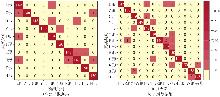
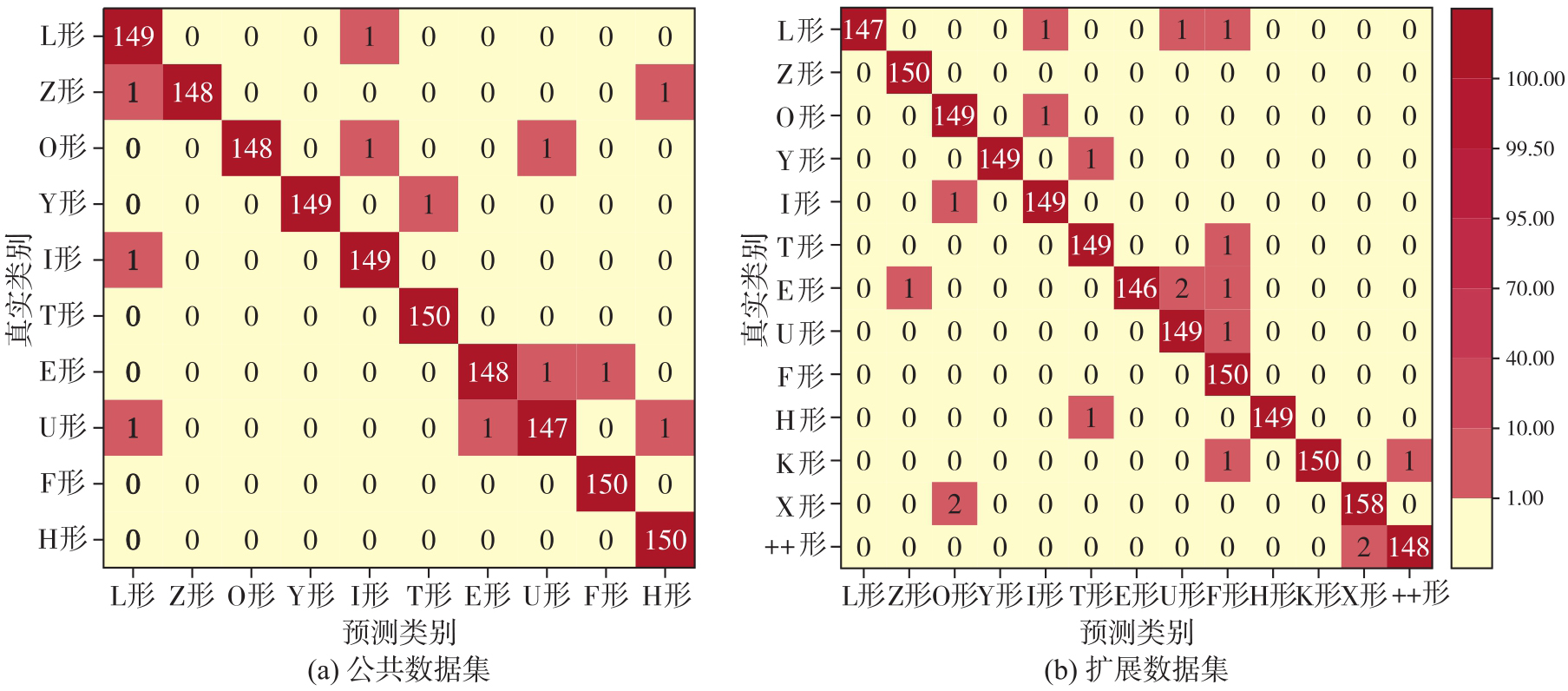
Fig. 5
Confusion matrices on the public and extended datasets"
Tab. 2
True and predicted classes of misclassified samples"
| 形状 | 真实 | 公共 | 扩展 | 形状 | 真实 | 公共 | 扩展 | 形状 | 真实 | 公共 | 扩展 |
|---|---|---|---|---|---|---|---|---|---|---|---|
 | L | I | \ |  | U | L | \ |  | K | \ | ++ |
 | E | F | U |  | E | \ | U |  | T | \ | F |
 | Z | L | \ |  | E | \ | U |  | Y | \ | T |
 | O | I | I |  | L | \ | F |  | H | \ | T |
 | O | U | \ |  | E | \ | Z |  | L | \ | U |
 | Y | H | \ |  | ++ | \ | X |  | X | \ | O |
 | Y | U | F |  | I | \ | O |  | K | \ | F |
 | U | E | \ |  | ++ | \ | X |  | L | \ | I |
 | I | L | \ |  | X | \ | O |  | E | \ | F |
Tab. 3
Performances comparison of different models on the building shape classification task"
| 模型 | 公共数据集 | 扩展数据集 | ||||||
|---|---|---|---|---|---|---|---|---|
| 准确率/(%) | 精确率/(%) | F1值/(%) | Kappa系数 | 准确率/(%) | 精确率/(%) | F1值/(%) | Kappa系数 | |
| 本文模型 | 99.20 | 99.20 | 99.20 | 0.991 1 | 99.03 | 99.05 | 99.03 | 0.989 5 |
| GCN[ | 92.13 | 92.15 | 92.12 | 0.912 6 | 95.11 | 95.18 | 95.12 | 0.947 0 |
| GAT[ | 93.21 | 93.26 | 93.20 | 0.922 8 | 94.58 | 94.63 | 94.59 | 0.939 8 |
| GraphSAGE[ | 94.33 | 94.34 | 94.32 | 0.937 0 | 95.77 | 95.87 | 95.78 | 0.954 2 |
| GIN[ | 94.07 | 94.10 | 94.07 | 0.934 1 | 95.72 | 95.78 | 95.73 | 0.953 6 |
| SGC[ | 91.27 | 91.40 | 91.25 | 0.903 0 | 92.81 | 92.83 | 92.80 | 0.922 1 |
| GFNN[ | 91.67 | 91.71 | 91.66 | 0.909 6 | 92.76 | 92.89 | 92.77 | 0.921 6 |
| DeepGCN[ | 93.60 | 93.69 | 93.60 | 0.928 9 | 94.70 | 94.71 | 94.68 | 0.942 6 |
| DisenSemi[ | 90.27 | 90.54 | 90.31 | 0.891 9 | 92.05 | 92.20 | 92.07 | 0.913 9 |
| DiffPool[ | 77.07 | 79.00 | 77.23 | 0.745 2 | 78.80 | 80.26 | 78.71 | 0.770 3 |
| SemiGraph[ | 91.20 | 91.24 | 91.17 | 0.902 2 | 94.70 | 94.78 | 94.71 | 0.942 6 |
| GIUnet[ | 80.87 | 81.02 | 80.85 | 0.787 4 | 85.98 | 86.16 | 85.96 | 0.848 2 |
| GMCAP[ | 87.33 | 87.27 | 87.22 | 0.859 3 | 91.08 | 91.16 | 91.08 | 0.903 4 |
| GCKM[ | 67.87 | 69.45 | 68.09 | 0.643 0 | 71.05 | 72.55 | 70.95 | 0.686 4 |
| MLP | 74.47 | 74.64 | 74.44 | 0.716 3 | 80.33 | 80.29 | 80.24 | 0.786 9 |
Tab. 4
Ablation study results of model components"
| 模块组合 | 公共数据集 | 扩展数据集 | ||||||
|---|---|---|---|---|---|---|---|---|
| 准确率/(%) | 精确率/(%) | F1值/(%) | Kappa系数 | 准确率/(%) | 精确率/(%) | F1值/(%) | Kappa系数 | |
| 本文模型 | 99.20 | 99.20 | 99.20 | 0.991 1 | 99.03 | 99.05 | 99.03 | 0.989 5 |
| 无特征映射 | 98.67 | 98.68 | 98.67 | 0.985 2 | 98.98 | 98.99 | 98.98 | 0.989 0 |
| 无节点特征 | 97.60 | 97.64 | 97.60 | 0.973 3 | 98.62 | 98.64 | 98.62 | 0.985 1 |
| 无结构特征 | 95.67 | 95.75 | 95.68 | 0.951 9 | 95.82 | 95.87 | 95.87 | 0.958 7 |
| 无平均聚合 | 98.73 | 98.74 | 98.73 | 0.985 9 | 98.83 | 98.84 | 98.83 | 0.987 3 |
| 无最大聚合 | 98.13 | 98.16 | 98.14 | 0.979 3 | 97.96 | 97.98 | 97.96 | 0.977 9 |
| 无ResNet | 97.00 | 97.05 | 97.00 | 0.966 7 | 97.60 | 97.61 | 97.61 | 0.974 0 |
Tab. 5
Parameter sensitivity analysis with respect to the number of convolution layers"
| 卷积层数 | 公共数据集 | 扩展数据集 | ||||||
|---|---|---|---|---|---|---|---|---|
| 准确率/(%) | 精确率/(%) | F1值/(%) | Kappa系数 | 准确率/(%) | 精确率/(%) | F1值/(%) | Kappa系数 | |
| 1 | 95.60 | 95.63 | 95.60 | 0.951 1 | 96.43 | 96.46 | 96.43 | 0.961 3 |
| 2 | 97.47 | 97.51 | 97.47 | 0.971 9 | 97.81 | 97.82 | 97.81 | 0.976 3 |
| 3 | 98.80 | 98.81 | 98.80 | 0.986 7 | 98.67 | 98.69 | 98.68 | 0.985 6 |
| 4 | 99.20 | 99.20 | 99.20 | 0.991 1 | 99.03 | 99.05 | 99.03 | 0.989 5 |
| 5 | 99.13 | 99.14 | 99.13 | 0.990 4 | 98.93 | 98.95 | 98.93 | 0.988 4 |
Tab. 6
Parameter sensitivity analysis with respect to convolution layer dimensions"
| 卷积层维度 | 公共数据集 | 扩展数据集 | ||||||
|---|---|---|---|---|---|---|---|---|
| 准确率/(%) | 精确率/(%) | F1值/(%) | Kappa系数 | 准确率/(%) | 精确率/(%) | F1值/(%) | Kappa系数 | |
| 32 | 91.33 | 91.51 | 91.31 | 0.903 7 | 93.27 | 93.33 | 93.25 | 0.927 1 |
| 64 | 98.27 | 98.28 | 98.27 | 0.980 7 | 98.52 | 98.54 | 98.53 | 0.984 0 |
| 128 | 99.20 | 99.20 | 99.20 | 0.991 1 | 99.03 | 99.05 | 99.03 | 0.989 5 |
| 256 | 98.87 | 98.87 | 98.87 | 0.987 4 | 98.93 | 98.94 | 98.93 | 0.988 4 |
| 512 | 99.07 | 99.07 | 99.07 | 0.989 6 | 98.47 | 98.48 | 98.47 | 0.983 4 |
Tab. 7
Comparison of performances metrics for field verification"
| 试验区 | 10类 | 13类 | ||||||
|---|---|---|---|---|---|---|---|---|
| 准确率/(%) | 精确率/(%) | F1值/(%) | Kappa系数 | 准确率/(%) | 精确率/(%) | F1值/(%) | Kappa系数 | |
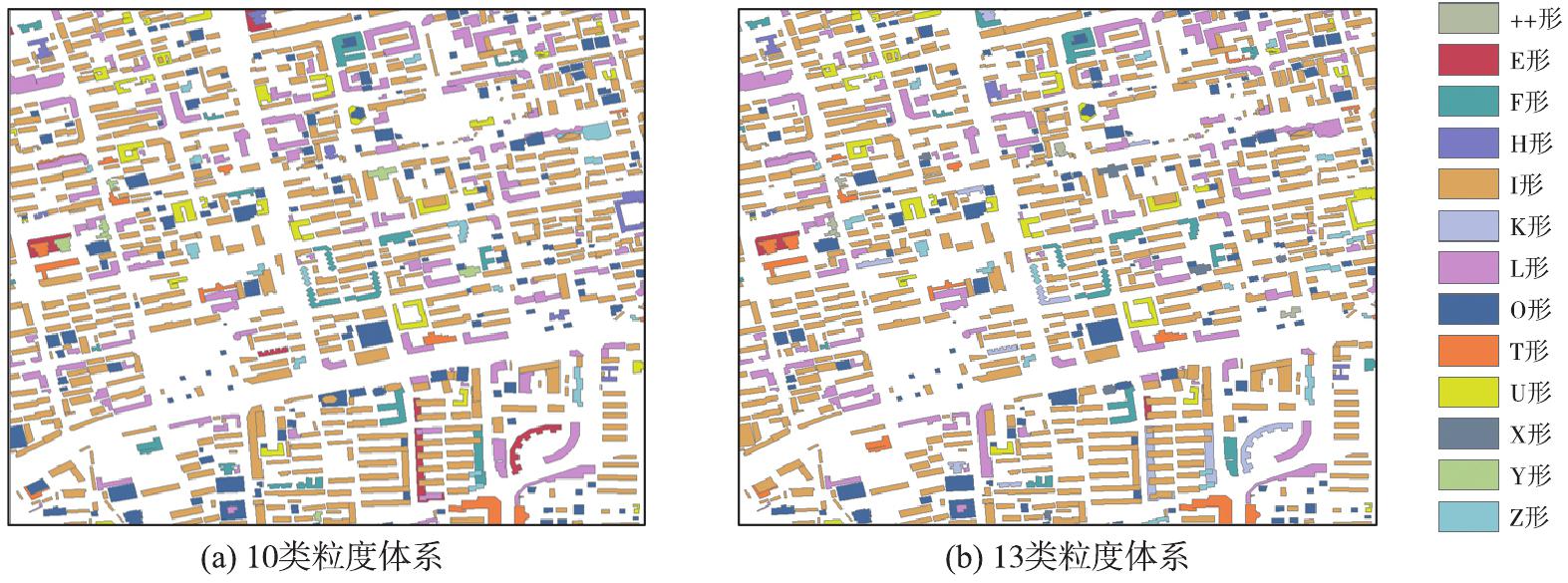
| 济南市中心区 | 93.78 | 93.89 | 93.46 | 0.882 6 | 94.56 | 94.73 | 94.27 | 0.897 2 |
| 厦门岛 | 93.58 | 93.67 | 93.48 | 0.899 6 | 95.45 | 95.55 | 95.32 | 0.928 5 |
Fig. 6
Example classification results for buildings on Xiamen island"
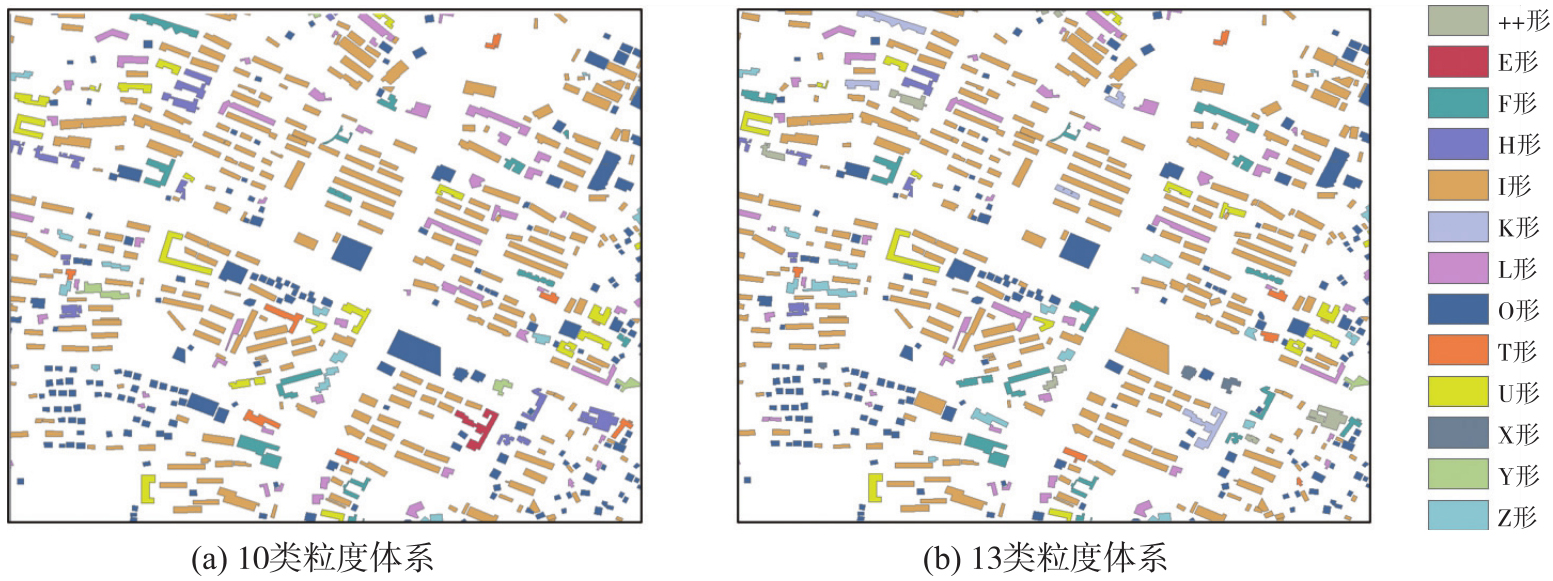
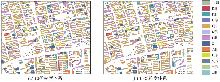
Fig. 7
Example classification results for buildings in Jinan"
| [1] |
晏雄锋, 袁拓, 杨敏, 等. 建筑物形状特征分析表达与自适应化简方法[J]. 测绘学报, 2022, 51(2): 269-278. DOI: .
doi: 10.11947/j.AGCS.2022.20210302 |
|
YAN Xiongfeng, YUAN Tuo, YANG Min, et al. An adaptive building simplification approach based on shape analysis and representation[J]. Acta Geodaetica et Cartographica Sinica, 2022, 51(2): 269-278. DOI: .
doi: 10.11947/j.AGCS.2022.20210302 |
|
| [2] |
苏友能, 徐青, 孙群, 等. 邻近边约束下的建筑物自动合并方法[J]. 测绘学报, 2025, 54(3): 563-576. DOI: .
doi: 10.11947/j.AGCS.2025.20240138 |
|
SU Youneng, XU Qing, SUN Qun, et al. A method for automatic buildings aggregation constrained by proximity edges[J]. Acta Geodaetica et Cartographica Sinica, 2025, 54(3): 563-576. DOI: .
doi: 10.11947/j.AGCS.2025.20240138 |
|
| [3] |
刘昌振, 马威, 马红, 等. 建筑物轮廓方向计算和规则化的向量重组算法[J]. 测绘学报, 2023, 52(9): 1584-1594. DOI: .
doi: 10.11947/j.AGCS.2023.20220082 |
|
LIU Changzhen, MA Wei, MA Hong, et al. Vector reconstruction algorithm for building footprints orientation calculation and regularization[J]. Acta Geodaetica et Cartographica Sinica, 2023, 52(9): 1584-1594. DOI: .
doi: 10.11947/j.AGCS.2023.20220082 |
|
| [4] | ZHUO Li, SHI Qingli, ZHANG Chenyang, et al. Identifying building functions from the spatiotemporal population density and the interactions of people among buildings[J]. ISPRS International Journal of Geo-Information, 2019, 8(6): 247. |
| [5] | DENG Yingbin, CHEN Renrong, YANG Ji, et al. Identify urban building functions with multisource data: a case study in Guangzhou, China[J]. International Journal of Geographical Information Science, 2022, 36(10): 2060-2085. |
| [6] | YAN Xiongfeng, AI Tinghua, YANG Min, et al. A graph convolutional neural network for classification of building patterns using spatial vector data[J]. ISPRS Journal of Photogrammetry and Remote Sensing, 2019, 150: 259-273. |
| [7] | WANG Chaofeng, YU Qian, LAW K H, et al. Machine learning-based regional scale intelligent modeling of building information for natural hazard risk management[J]. Automation in Construction, 2021, 122: 103474. |
| [8] | AFZAL S, ZIAPOUR B M, SHOKRI A, et al. Building energy consumption prediction using multilayer perceptron neural network-assisted models; comparison of different optimization algorithms[J]. Energy, 2023, 282: 128446. |
| [9] | CHEN Hongxing, WU Bin, YU Bailang, et al. A new method for building-level population estimation by integrating LiDAR, nighttime light, and POI data[J]. Journal of Remote Sensing, 2021, 2021: 9803796. |
| [10] | GARTNER G. Underpinning aspects of developing a cartographic curriculum[J]. Journal of Geodesy & Geoinformation Science, 2022, 5(3): e0001. |
| [11] | MENG L. Proliferation of cartographic education in the age of big data[J]. Journal of Geodesy and Geoinformation Science, 2022, 5(3): 7. |
| [12] | 张自强, 刘涛. 图注意力神经网络支持下的建筑物形状识别[J]. 测绘科学, 2024, 49(9): 125-133. |
| ZHANG Ziqiang, LIU Tao. Building shape recognition supported by graph attention networks[J]. Science of Surveying and Mapping, 2024, 49(9): 125-133. | |
| [13] |
晏雄锋, 艾廷华, 杨敏. 居民地要素化简的形状识别与模板匹配方法[J]. 测绘学报, 2016, 45(7): 874-882. DOI: .
doi: 10.11947/j.AGCS.2016.20150162 |
|
YAN Xiongfeng, AI Tinghua, YANG Min. A simplification of residential feature by the shape cognition and template matching method[J]. Acta Geodaetica et Cartographica Sinica, 2016, 45(7): 874-882. DOI: .
doi: 10.11947/j.AGCS.2016.20150162 |
|
| [14] | 李驿言. 顾及局部特征的大比例尺建筑物化简方法[D]. 兰州: 兰州交通大学, 2023. |
| LI Yiyan. Simplification methods for large-scale buildings considering local features[D]. Lanzhou: Lanzhou Jiatong University, 2023. | |
| [15] | 师尚杰, 李文德, 闫浩文, 等. 图对比学习支撑下的矢量建筑物形状相似性度量[J]. 地球信息科学学报, 2024, 26(12): 2659-2672. |
| SHI Shangjie, LI Wende, YAN Haowen, et al. Vector buildings shape similarity measure supported by graph contrastive learning[J]. Journal of Geo-information Science, 2024, 26(12): 2659-2672. | |
| [16] | LI Qingyu, MOU Lichao, SUN Yao, et al. A review of building extraction from remote sensing imagery: geometrical structures and semantic attributes[J]. IEEE Transactions on Geoscience and Remote Sensing, 2024, 62: 4702315. |
| [17] | ALIDOOST F, AREFI H. A CNN-based approach for automatic building detection and recognition of roof types using a single aerial image[J]. PFG-Journal of Photogrammetry, Remote Sensing and Geoinformation Science, 2018, 86(5): 235-248. |
| [18] | PARTOVI T, FRAUNDORFER F, AZIMI S, et al. Roof type selection based on patch-based classification using deep learning for high resolution satellite imagery[J]. The International Archives of the Photogrammetry, Remote Sensing and Spatial Information Sciences, 2017, XLII-1/W1: 653-657. |
| [19] | 焦洋洋, 刘平芝, 刘爱龙, 等. AlexNet支持下的地图建筑物形状分类方法[J]. 地球信息科学学报, 2022, 24(12): 2333-2341. |
| JIAO Yangyang, LIU Pingzhi, LIU Ailong, et al. Map building shape classification method based on AlexNet[J]. Journal of Geo-information Science, 2022, 24(12): 2333-2341. | |
| [20] | YAN Xiongfeng, AI Tinghua, YANG Min, et al. Graph convolutional autoencoder model for the shape coding and cognition of buildings in maps[J]. International Journal of Geographical Information Science, 2021, 35(3): 490-512. |
| [21] |
于洋洋, 贺康杰, 武芳, 等. 面状居民地形状分类的图卷积神经网络方法[J]. 测绘学报, 2022, 51(11): 2390-2402. DOI: .
doi: 10.11947/j.AGCS.2022.20210134 |
|
YU Yangyang, HE Kangjie, WU Fang, et al. Graph convolution neural network method for shape classification of areal settlements[J]. Acta Geodaetica et Cartographica Sinica, 2022, 51(11): 2390-2402. DOI: .
doi: 10.11947/j.AGCS.2022.20210134 |
|
| [22] | ZHANG Ya, LIU Jiping, WANG Yong, et al. Graph isomorphism network with weighted multi-aggregators for building shape classification[J]. Transactions in GIS, 2024, 28(6): 1883-1904. |
| [23] |
张付兵, 孙群, 马京振, 等. 融合全局和局部特征的建筑物形状智能分类方法[J]. 测绘学报, 2024, 53(9): 1842-1852. DOI: .
doi: 10.11947/j.AGCS.2024.20240040 |
|
ZHANG Fubing, SUN Qun, MA Jingzhen, et al. An intelligent classification method for building shape based on fusion of global and local features[J]. Acta Geodaetica et Cartographica Sinica, 2024, 53(9): 1842-1852. DOI: .
doi: 10.11947/j.AGCS.2024.20240040 |
|
| [24] | KIPF T N, WELLING M. Semi-supervised classification with graph convolutional networks[EB/OL]. [2025-10-29]. https://arxiv.org/abs/1609.02907. |
| [25] | HE Kaiming, ZHANG Xiangyu, REN Shaoqing, et al. Deep residual learning for image recognition[C]//Proceedings of 2016 IEEE Conference on Computer Vision and Pattern Recognition. Las Vegas: IEEE, 2016: 770-778. |
| [26] | VELICKOVIC P, CUCURULL G, CASANOVA A, et al. Graph attention networks[C]//Proceedings of 2018 International Conference on Learning Representations. [S.l.]: IEEE, 2018. |
| [27] | HAMILTON W L, YING R, LESKOVEC J. Inductive representation learning on large graphs[EB/OL]. [2025-10-29]. https://arxiv.org/abs/1706.02216. |
| [28] | XU K, HU Weihua, LESKOVEC J, et al. How powerful are graph neural networks?[EB/OL]. [2025-10-29]. https://arxiv.org/abs/1810.00826. |
| [29] | WU F, SOUZA A, ZHANG T, et al. Simplifying graph convolutional networks[C]//Proceedings of 2019 International Conference on Machine Learning. [S.l.]: PMLR, 2019: 6861-6871. |
| [30] | NT H, MAEHARA T, MURATA T. Revisiting graph neural networks: graph filtering perspective[C]//Proceedings of the 25th International Conference on Pattern Recognition. Milan: IEEE, 2021: 8376-8383. |
| [31] | LI Guohao, MULLER M, THABET A, et al. DeepGCNs: can GCNs go as deep as CNNs?[C]//Proceedings of 2019 IEEE/CVF International Conference on Computer Vision. Seoul: IEEE, 2019: 9266-9275. |
| [32] | WANG Yifan, LUO Xiao, CHEN Chong, et al. DisenSemi: semi-supervised graph classification via disentangled representation learning[J]. IEEE Transactions on Neural Networks and Learning Systems, 2025, 36(5): 8192-8204. |
| [33] | YING R, YOU Jiaxuan, MORRIS C, et al. Hierarchical graph representation learning with differentiable pooling[C]//Proceedings of 2018 Neural Information Processing Systems. [S.l.]: IEEE, 2018. |
| [34] | XIE Yu, LIANG Yanfeng, GONG Maoguo, et al. Semisupervised graph neural networks for graph classification[J]. IEEE Transactions on Cybernetics, 2023, 53(10): 6222-6235. |
| [35] | AMOUZAD A, DEHGHANIAN Z, SARAVANI S, et al. Graph isomorphism U-net[J]. Expert Systems with Applications, 2024, 236: 121280. |
| [36] | XU Yuhua, WANG Junli, GUANG Mingjian, et al. Graph multi-convolution and attention pooling for graph classification[J]. IEEE Transactions on Pattern Analysis and Machine Intelligence, 2024, 46(12): 10546-10557. |
| [37] | WU Z, ZHANG Z, FAN J. Graph convolutional kernel machine versus graph convolutional networks[J]. Advances in Neural Information Processing Systems, 2023, 36: 19650-19672. |
| [1] | Fubing ZHANG, Qun SUN, Qing XU, Jingzhen MA, Wenjun HUANG, Ruoxu CHEN. An automatic river classification and selection method supported by random forest and graph neural network [J]. Acta Geodaetica et Cartographica Sinica, 2025, 54(9): 1697-1711. |
| [2] | Zhekun HUANG, Haizhong QIAN, Zhongxiang CAI, Xiao WANG, Junwei WANG, Linghui KONG. A multi-scale mesh river system classification matching method based on graph neural network [J]. Acta Geodaetica et Cartographica Sinica, 2025, 54(2): 371-384. |
| [3] | Jiayi TANG, Xiaochong TONG, Chunping QIU, Yaxian LEI, Yi LEI, Haoshuai SONG. Remote sensing scene retrieval method based on scene graph [J]. Acta Geodaetica et Cartographica Sinica, 2025, 54(1): 123-135. |
| [4] | Fubing ZHANG, Qun SUN, Jingzhen MA, Shijie SUN, Bowei WEN. An intelligent classification method for building shape based on fusion of global and local features [J]. Acta Geodaetica et Cartographica Sinica, 2024, 53(9): 1842-1852. |
| [5] | Bo KONG, Tinghua AI, Min YANG, Hao WU, Huafei YU, Tianyuan XIAO. Identification of loess landform types jointly affected by contour morphological knowledge and the graph neural network [J]. Acta Geodaetica et Cartographica Sinica, 2024, 53(6): 1154-1164. |
| [6] | Zhanlong CHEN, Xiechun LU, Yongyang XU. A building aggregation method based on deep clustering of graph vertices [J]. Acta Geodaetica et Cartographica Sinica, 2024, 53(4): 736-749. |
| Viewed | ||||||
|
Full text |
|
|||||
|
Abstract |
|
|||||
