


测绘学报 ›› 2026, Vol. 55 ›› Issue (10): 1780-1796.doi: 10.11947/j.AGCS.2026.20260108
李坚1( ), 范洪冬1(), 高晓雄2, 王俊1
收稿日期:2026-03-26
修回日期:2026-09-14
出版日期:2026-11-16
发布日期:2026-11-16
通讯作者:
范洪冬
E-mail:ts24160020a31ld@cumt.edu.cn;cumtfanhd@163.com
作者简介:李坚(2002—),男,博士生,研究方向为InSAR数据处理及其在地表形变监测领域的应用。E-mail:ts24160020a31ld@cumt.edu.cn
基金资助:
Jian Li1(), Hongdong Fan1(), Xiaoxiong Gao2, Jun Wang1
Received:2026-03-26
Revised:2026-09-14
Online:2026-11-16
Published:2026-11-16
Contact:
Hongdong Fan
E-mail:ts24160020a31ld@cumt.edu.cn;cumtfanhd@163.com
About author:Li Jian (2002—), male, PhD candidate, majors in InSAR data processing and its application in surface deformation monitoring. E-mail: ts24160020a31ld@cumt.edu.cn
Supported by:摘要:
合成孔径雷达干涉测量(InSAR)在复杂地形起伏与低相干环境下易受强烈的散斑噪声干扰,导致干涉条纹拓扑结构破坏并诱发相位解缠误差传递。现有滤波算法在处理该类区域时,难以兼顾噪声抑制与干涉条纹恢复。针对上述问题,本文提出一种顾及频域量化误差补偿的圆方差迭代干涉相位滤波算法(QEC-CVIF)。该算法构建了一种干涉相位的非线性迭代演化模型:在每次迭代中,通过频域自适应阈值对频谱进行非线性加权以提取候选相位,并引入方向统计学的圆方差作为演化方程中迭代步长的非线性控制权重,驱动相位自适应更新,使噪声区域获得较大更新幅度而结构区域趋于保留,并在迭代完成后利用瞬时频率补偿修正像素级相位阶跃。通过多组典型拓扑特征的仿真数据,以及玛多地震、Etna火山和Aykol地震等真实InSAR数据开展滤波与解缠试验。定性与定量分析结果表明:在面临强噪声与复杂地形叠加的干涉场景下,与经典的非局部均值及三维协同滤波等基准算法相比,本文算法在结构相似度、均方根误差等指标上均取得较优结果;该算法通过包容局部微小自然纹理的适度弱化,换取了全局干涉相位的拓扑连续性,最大限度地消除了相位残差点,有效抑制了解缠误差的空间传递,为高精度的地形高程反演与地表形变提取提供了更为可靠的包裹相位基础。
中图分类号:
李坚, 范洪冬, 高晓雄, 王俊. 顾及频域量化误差补偿的圆方差迭代干涉相位滤波算法[J]. 测绘学报, 2026, 55(10): 1780-1796.
Jian Li, Hongdong Fan, Xiaoxiong Gao, Jun Wang. A circular variance iterative interferometric phase filtering algorithm with frequency-domain quantization error compensation[J]. Acta Geodaetica et Cartographica Sinica, 2026, 55(10): 1780-1796.
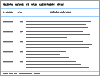
表1
分形相位与相干性物理模型参数设定"
| 参数类别 | 参数符号 | 参数含义 | 设定值 |
|---|---|---|---|
| 网格与坐标参量 | N | 图像尺寸 | 256 |
| (xc,yc) | 图像中心坐标 | (128,128) | |
| 分形相位参量 | α | 频谱衰减指数 | 1.8 |
| Ascale | 幅度缩放因子 | 4π | |
| 地形山脊参量 | θ | 旋转偏角 | 45° |
| Hmax | 山脊高度 | 25π | |
| σx | 山脊x方向标准差 | N/10 | |
| σy | 山脊y方向标准差 | N/1.5 | |
| 物理相干性参量 | ρtex | 植被/纹理去相干范围 | 区间[0.3,0.9]随机起伏 |
| Cgeom | 几何去相干敏感度调节因子 | 2.0 | |
| ρthermal | 热噪声起伏范围 | 区间[0.95,1.0] |
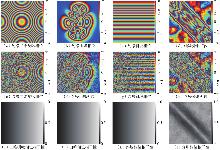
图1
仿真相位与相干性"
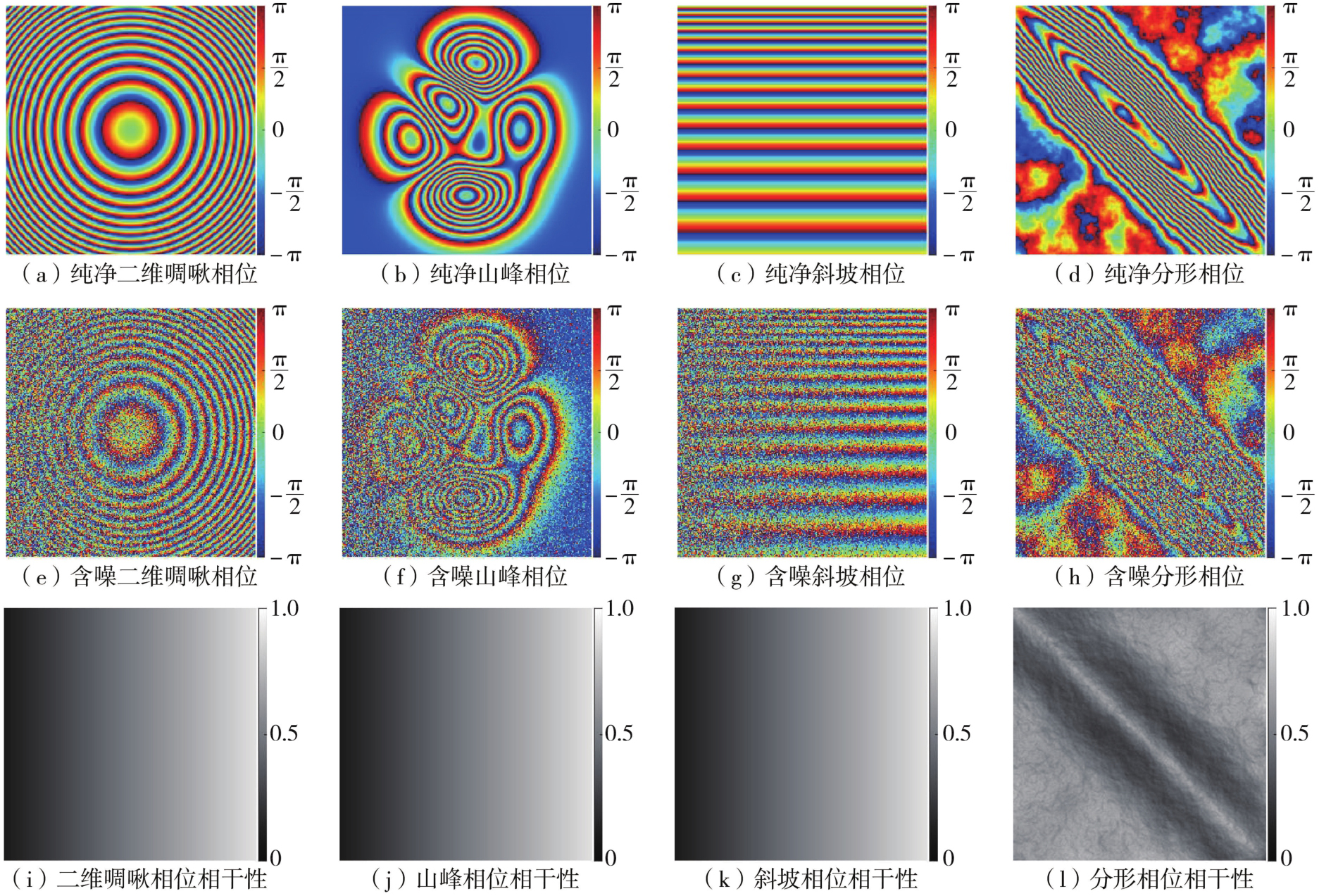
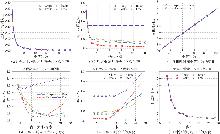
图2
QEC-CVIF算法收敛性与参数敏感性分析"
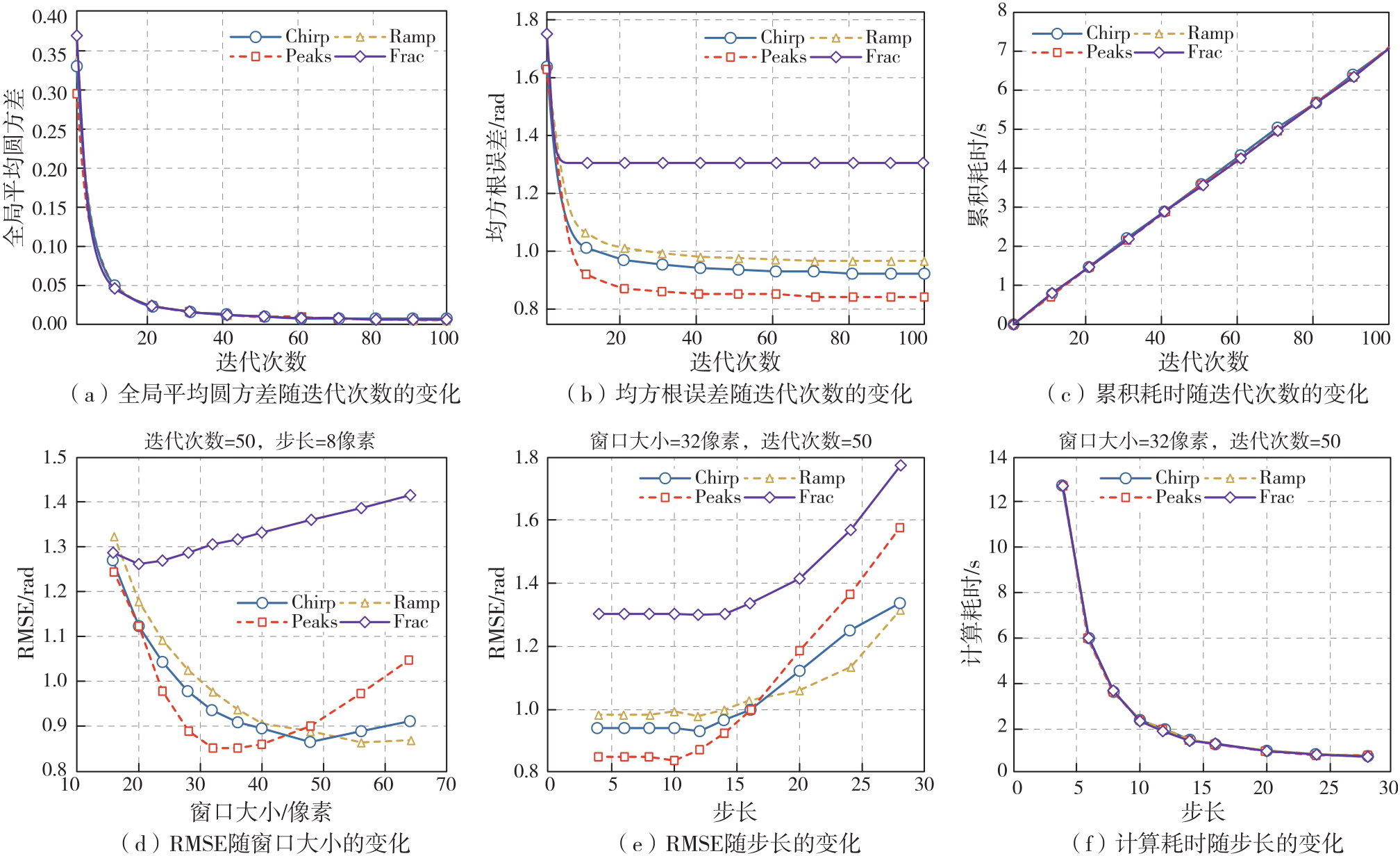
图3
二维啁啾相位滤波结果与对应的误差绝对值"
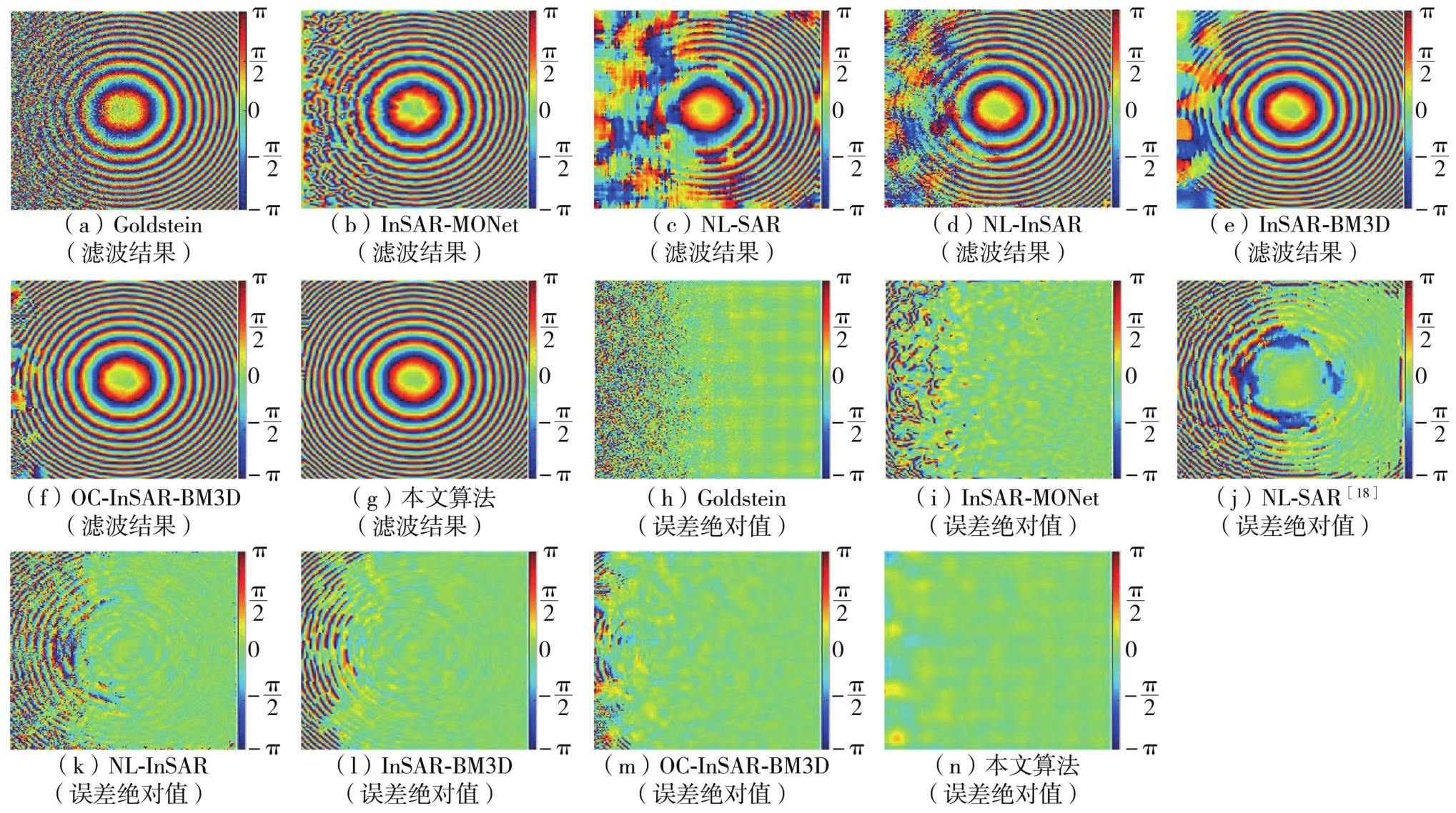
图4
山峰相位滤波结果与对应的误差绝对值"

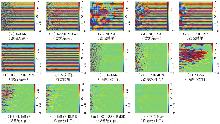
图5
斜坡相位滤波结果与对应的误差绝对值"

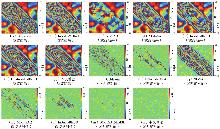
图6
分形相位滤波结果与对应误差绝对值"

表2
仿真数据定量评价指标统计结果"
| 模拟数据类型 | 指标 | Goldstein | InSAR-MONet | NL-SAR | NL-InSAR | InSAR-BM3D | OC-InSAR-BM3D | 本文算法 |
|---|---|---|---|---|---|---|---|---|
| 二维啁啾相位 | SSIM | 0.42 | 0.55 | 0.29 | 0.46 | 0.61 | 0.71 | 0.79 |
| RMSE | 1.68 | 1.39 | 1.91 | 1.62 | 1.32 | 1.11 | 0.88 | |
| PSNR | 5.43 | 7.07 | 4.33 | 5.75 | 7.51 | 9.00 | 11.10 | |
| RPN | 5904.00 | 438.00 | 713.00 | 2664.00 | 120.00 | 533.00 | 0.00 | |
| 山峰相位 | SSIM | 0.34 | 0.56 | 0.38 | 0.50 | 0.74 | 0.78 | 0.79 |
| RMSE | 1.83 | 1.32 | 1.84 | 1.30 | 1.01 | 0.96 | 0.85 | |
| PSNR | 4.70 | 7.52 | 4.64 | 7.66 | 9.84 | 10.33 | 11.33 | |
| RPN | 8346.00 | 308.00 | 466.00 | 768.00 | 10.00 | 4.00 | 2.00 | |
| 斜坡相位 | SSIM | 0.47 | 0.57 | 0.27 | 0.48 | 0.66 | 0.73 | 0.79 |
| RMSE | 1.59 | 1.36 | 2.17 | 1.61 | 1.34 | 1.11 | 0.95 | |
| PSNR | 5.91 | 7.30 | 3.22 | 5.80 | 7.42 | 9.02 | 10.39 | |
| RPN | 4466.00 | 292.00 | 472.00 | 1856.00 | 37.00 | 440.00 | 0.00 | |
| 分形相位 | SSIM | 0.23 | 0.45 | 0.18 | 0.36 | 0.46 | 0.52 | 0.50 |
| RMSE | 1.87 | 1.47 | 2.13 | 1.65 | 1.46 | 1.29 | 1.30 | |
| PSNR | 4.49 | 6.58 | 3.39 | 5.58 | 6.63 | 7.71 | 7.63 | |
| RPN | 7297.00 | 486.00 | 488.00 | 2369.00 | 220.00 | 105.00 | 10.00 |
表3
仿真数据解缠结果的均方根误差对比"
| 模拟数据类型 | Goldstein | InSAR-MONet | NL-SAR | NL-InSAR | InSAR-BM3D | OC-InSAR-BM3D | 本文算法 |
|---|---|---|---|---|---|---|---|
| 二维啁啾相位 | 7.75 | 5.63 | 19.65 | 8.97 | 8.05 | 2.21 | 0.20 |
| 山峰相位 | 2.97 | 1.23 | 9.35 | 1.59 | 0.31 | 0.23 | 0.24 |
| 斜坡相位 | 2.11 | 2.82 | 12.03 | 10.72 | 6.32 | 0.65 | 0.15 |
| 分形相位 | 11.64 | 6.20 | 24.17 | 6.48 | 10.44 | 1.45 | 0.34 |
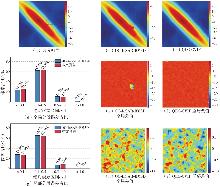
图7
不同算法对分形相位的解缠结果及与参考相位差值对比"
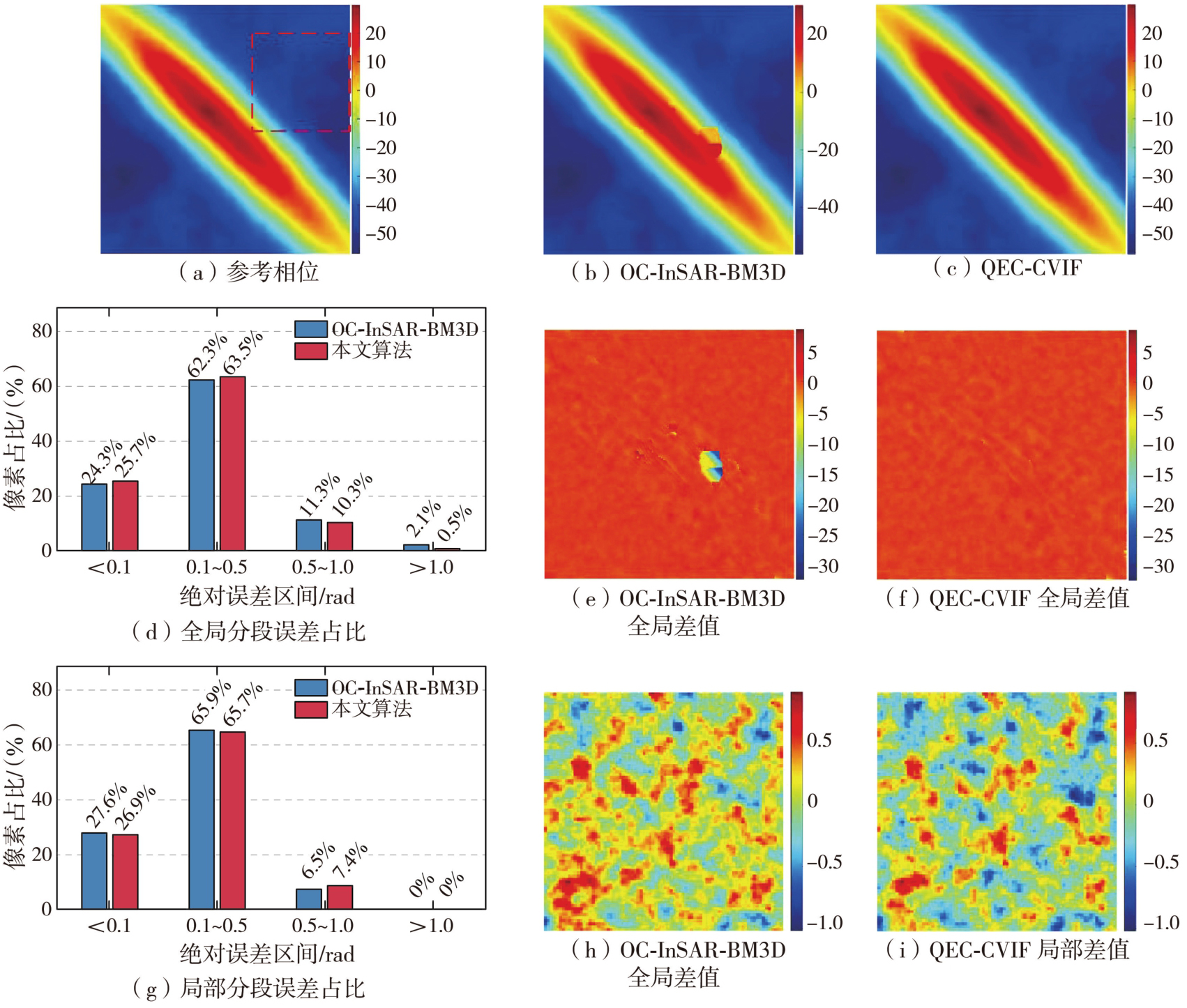
表4
仿真数据计算效率结果"
| 算法 | Goldstein | InSAR-MONet | NL-SAR | NL-InSAR | InSAR-BM3D | OC-InSAR-BM3D | 本文算法 |
|---|---|---|---|---|---|---|---|
| 运行耗时/s | 1.08 | 2.45 | 105.37 | 50.55 | 96.48 | 162.28 | 40.32 |
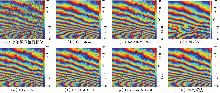
图8
玛多地震同震形变区滤波结果"
图9
Etna火山区域滤波结果"

图10
Aykol地震局部区域滤波结果"
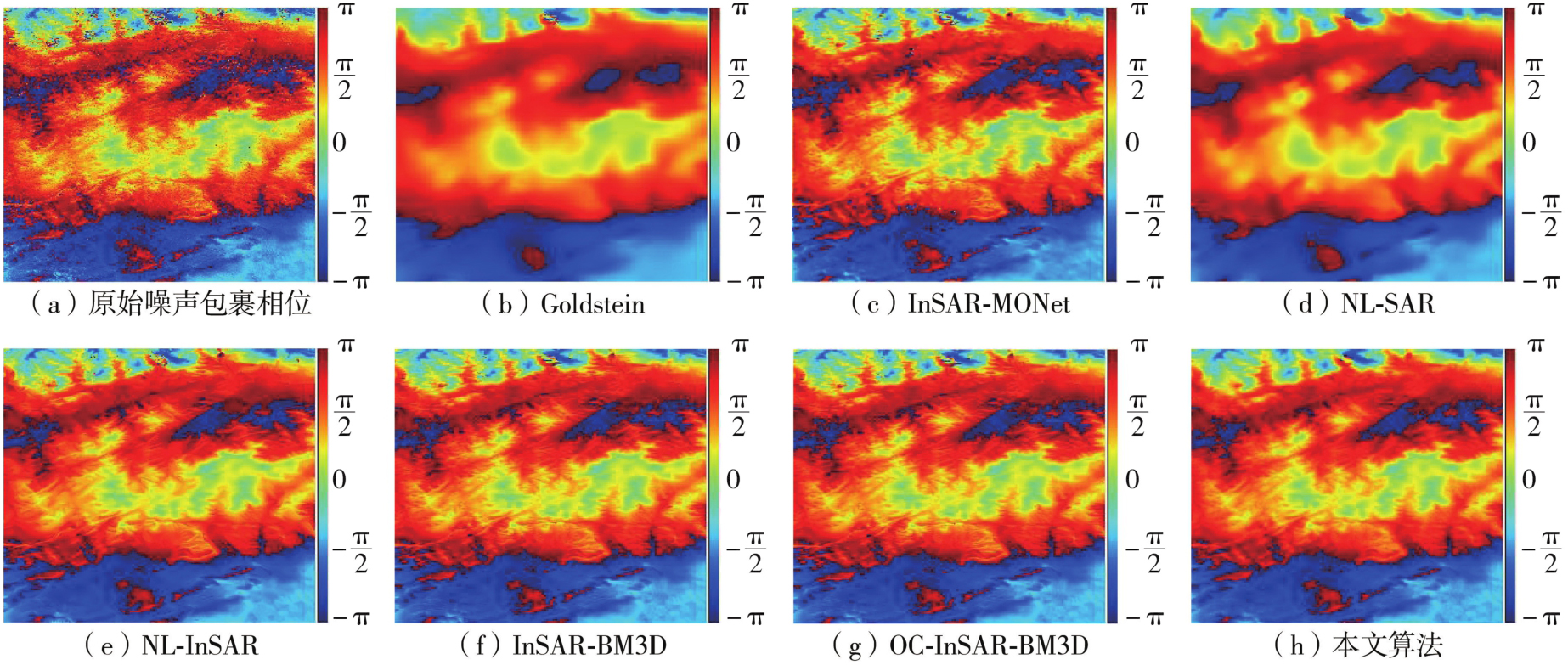
表5
真实干涉数据残差点数"
| 数据 | 原始总数 | Goldstein | InSAR-MONet | NL-SAR | NL-InSAR | InSAR-BM3D | OC-InSAR-BM3D | QEC-CVIF |
|---|---|---|---|---|---|---|---|---|
| 玛多地震 | 20 987 | 1257 | 209 | 274 | 1095 | 152 | 137 | 17 |
| Etna火山 | 26 276 | 12 232 | 1175 | 983 | 3793 | 340 | 464 | 12 |
| Aykol地震 | 671 | 53 | 61 | 4 | 58 | 24 | 26 | 8 |
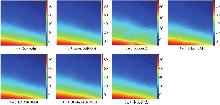
图11
玛多地震同震形变区解缠相位"

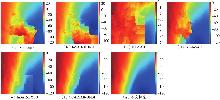
图12
Etna火山区域解缠相位"

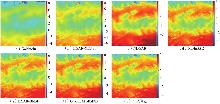
图13
Aykol地震局部区域解缠相位"

| [1] |
朱建军, 李志伟, 胡俊. InSAR变形监测方法与研究进展[J]. 测绘学报, 2017, 46(10): 1717-1733. DOI: .
doi: 10.11947/j.AGCS.2017.20170350 |
|
Zhu Jianjun, Li Zhiwei, Hu Jun. Research progress and methods of InSAR for deformation monitoring[J]. Acta Geodaetica et Cartographica Sinica, 2017, 46(10): 1717-1733. DOI: .
doi: 10.11947/j.AGCS.2017.20170350 |
|
| [2] |
路中, 赵金奇, 牛玉芬, 等. NISAR卫星对地观测革新及其在地表形变监测中的应用[J]. 测绘学报, 2026, 55(2): 261-274. DOI: .
doi: 10.11947/j.AGCS.2026.20250363 |
|
Lu Zhong, Zhao Jinqi, Niu Yufen, et al. The NISAR mission: innovations in earth observation and applications in surface deformation monitoring[J]. Acta Geodaetica et Cartographica Sinica, 2026, 55(2): 261-274. DOI: .
doi: 10.11947/j.AGCS.2026.20250363 |
|
| [3] | Gong Zhiqiang, Liao Mingsheng, Dong Jie, et al. Wide-area coastal deformation extraction using multi-path/frame InSAR: a case study of the Bohai Rim[J]. Remote Sensing of Environment, 2025, 330: 114988. |
| [4] |
向建冰, 吕孝雷, 付希凯, 等. 天绘二号双星InSAR成像与DSM生成技术[J]. 测绘学报, 2022, 51(12): 2493-2500. DOI: .
doi: 10.11947/j.AGCS.2022.20210323 |
|
Xiang Jianbing, Lü Xiaolei, Fu Xikai, et al. Bistatic InSAR interferometry imaging and DSM generation for TH-2[J]. Acta Geodaetica et Cartographica Sinica, 2022, 51(12): 2493-2500. DOI: .
doi: 10.11947/j.AGCS.2022.20210323 |
|
| [5] | Mao Wenfei, Ma Peifeng, Zheng Yi, et al. Ionospheric error correction methods for InSAR measurements: a systematic review[J]. IEEE Geoscience and Remote Sensing Magazine, 2025, 13(4): 142-173. |
| [6] | Xu Gang, Gao Yandong, Li Jinwei, et al. InSAR phase denoising: a review of current technologies and future directions[J]. IEEE Geoscience and Remote Sensing Magazine, 2020, 8(2): 64-82. |
| [7] |
何毅, 杨旺, 朱庆. 基于R2AU-Net的InSAR相位解缠方法[J]. 测绘学报, 2024, 53(3): 435-449. DOI: .
doi: 10.11947/j.AGCS.2024.20230305 |
|
He Yi, Yang Wang, Zhu Qing. An InSAR phase unwrapping method based on R2AU-Net[J]. Acta Geodaetica et Cartographica Sinica, 2024, 53(3): 435-449. DOI: .
doi: 10.11947/j.AGCS.2024.20230305 |
|
| [8] |
高延东, 贾义琨, 李世金, 等. InSAR相位解缠最大流/最小割权值改进算法[J]. 测绘学报, 2024, 53(4): 644-652. DOI: .
doi: 10.11947/j.AGCS.2024.20220633 |
|
Gao Yandong, Jia Yikun, Li Shijin, et al. The improved max-flow/min-cut weight algorithm for InSAR phase unwrapping[J]. Acta Geodaetica et Cartographica Sinica, 2024, 53(4): 644-652. DOI: .
doi: 10.11947/j.AGCS.2024.20220633 |
|
| [9] | 李鹏飞, 李志伟, 蒋弥, 等. 融合视觉特征增设虚拟残点的InSAR相位解缠方法[J]. 地球物理学报, 2025, 68(12): 4589-4604. |
| Li Pengfei, Li Zhiwei, Jiang Mi, et al. A phase unwrapping method for InSAR by fusing visual features to add virtual residues[J]. Chinese Journal of Geophysics, 2025, 68(12): 4589-4604. | |
| [10] | Lee J S, Hoppel K W, Mango S A, et al. Intensity and phase statistics of multilook polarimetric and interferometric SAR imagery[J]. IEEE Transactions on Geoscience and Remote Sensing, 1994, 32(5): 1017-1028. |
| [11] | Lee J S, Papathanassiou K P, Ainsworth T L, et al. A new technique for noise filtering of SAR interferometric phase images[J]. IEEE Transactions on Geoscience and Remote Sensing, 1998, 36(5): 1456-1465. |
| [12] | Goldstein R M, Werner C L. Radar interferogram filtering for geophysical applications[J]. Geophysical Research Letters, 1998, 25(21): 4035-4038. |
| [13] | 于晓歆, 杨红磊, 彭军还. 一种改进的Goldstein InSAR干涉图滤波算法[J]. 武汉大学学报(信息科学版), 2011, 36(9): 1051-1054. |
| Yu Xiaoxin, Yang Honglei, Peng Junhuan. A modified Goldstein algorithm for InSAR interferogram filtering[J]. Geomatics and Information Science of Wuhan University, 2011, 36(9): 1051-1054. | |
| [14] |
赵文胜, 蒋弥, 何秀凤. 干涉图像第二类统计Goldstein自适应滤波方法[J]. 测绘学报, 2016, 45(10): 1200-1209. DOI: .
doi: 10.11947/j.AGCS.2016.20150457 |
|
Zhao Wensheng, Jiang Mi, He Xiufeng. Improved adaptive Goldstein interferogram filter based on second kind statistics[J]. Acta Geodaetica et Cartographica Sinica, 2016, 45(10): 1200-1209. DOI: .
doi: 10.11947/j.AGCS.2016.20150457 |
|
| [15] | 张斌, 胡庆荣, 韦立登, 等. 改进的形态学干涉图滤波方法[J]. 系统工程与电子技术, 2018, 40(10): 2230-2236. |
| Zhang Bin, Hu Qingrong, Wei Lideng, et al. Improved morphological filtering algorithm of interferograms[J]. Systems Engineering and Electronics, 2018, 40(10): 2230-2236. | |
| [16] | Otsuka Y, Natsuaki R, Hirose A. Biquaternion Fourier domain filter for InSAR noise suppression by enhancing polarimetric-interferometric fringe patterns[J]. IEEE Transactions on Geoscience and Remote Sensing, 2024, 62: 5221913. |
| [17] | Deledalle C A, Denis L, Tupin F. NL-InSAR: nonlocal interferogram estimation[J]. IEEE Transactions on Geoscience and Remote Sensing, 2011, 49(4): 1441-1452. |
| [18] | Deledalle C A, Denis L, Tupin F, et al. NL-SAR: a unified nonlocal framework for resolution-preserving (pol) (In) SAR denoising[J]. IEEE Transactions on Geoscience and Remote Sensing, 2015, 53(4): 2021-2038. |
| [19] | 汪洋, 黄海风, 董臻, 等. 改进分块局部最佳维纳滤波算法的干涉相位滤波[J]. 国防科技大学学报, 2015, 37(4): 99-105. |
| Wang Yang, Huang Haifeng, Dong Zhen, et al. Modified patch-based locally optimal Wiener for interferometric phase filtering[J]. Journal of National University of Defense Technology, 2015, 37(4): 99-105. | |
| [20] | Sica F, Cozzolino D, Zhu Xiaoxiang, et al. InSAR-BM3D: a nonlocal filter for SAR interferometric phase restoration[J]. IEEE Transactions on Geoscience and Remote Sensing, 2018, 56(6): 3456-3467. |
| [21] | Liu Ziyang, Zhang Xiang, Fan Hongdong, et al. Improved InSAR-BM3D filtering algorithm based on noise variance estimation[J]. IEEE Geoscience and Remote Sensing Letters, 2026, 23: 4003305. |
| [22] | 王杰, 柳稼航, 凌信鹏, 等. 基于深度学习的InSAR影像局部与非局部联合相位滤波[J]. 武汉大学学报(信息科学版), 2026, 51(2): 367-379. |
| Wang Jie, Liu Jiahang, Ling Xinpeng, et al. Deep learning-based joint local and non-local phase filtering for InSAR images[J]. Geomatics and Information Science of Wuhan University, 2026, 51(2): 367-379. | |
| [23] | Sica F, Cozzolino D, Verdoliva L, et al. The offset-compensated nonlocal filtering of interferometric phase[J]. Remote Sensing, 2018, 10(9): 1359. |
| [24] | 沈中伟, 赵峰, 马占国, 等. INL-InSAR:改进的非局部均值InSAR相位滤波算法[J/OL]. 武汉大学学报(信息科学版), 1-17 [2026-10-13]. https://doi.org/10.13203/j.whugis20250258. |
| Shen Zhongwei, Zhao Feng, Ma Zhanguo, et al. INL-InSAR: an improved nonlocal means algorithm for InSAR phase filtering[J/OL]. Geomatics and Information Science of Wuhan University, 1-17 [2026-10-13]. https://doi.org/10.13203/j.whugis20250258. | |
| [25] | Vitale S, Ferraioli G, Pascazio V, et al. InSAR-MONet: interferometric SAR phase denoising using a multiobjective neural network[J]. IEEE Transactions on Geoscience and Remote Sensing, 2022, 60: 5239814. |
| [26] | Sica F, Gobbi G, Rizzoli P, et al. Φ-net: deep residual learning for InSAR parameters estimation[J]. IEEE Transactions on Geoscience and Remote Sensing, 2021, 59(5): 3917-3941. |
| [27] | Sun Xinyao, Zimmer A, Mukherjee S, et al. DeepInSAR: a deep learning framework for SAR interferometric phase restoration and coherence estimation[J]. Remote Sensing, 2020, 12(14): 2340. |
| [28] | 张安琪, 曹荣刚, 周宇, 等. 基于2D-FFT与2D-CFAR的调频引信快速高精度信号处理方法[J]. 北京航空航天大学学报, 2026, 52(3): 837-845. |
| Zhang Anqi, Cao Ronggang, Zhou Yu, et al. Fast and high precision signal processing method for frequency modulation fuze based on 2D-FFT and 2D-CFAR[J]. Journal of Beijing University of Aeronautics and Astronautics, 2026, 52(3): 837-845. | |
| [29] | 赵树杰, 赵建勋. 信号检测与估计理论[M]. 北京: 清华大学出版社, 2005: 150-157. |
| Zhao Shujie, Zhao Jianxun. Signal detection and estimation theory[M]. Beijing: Tsinghua University Press, 2005: 150-157. | |
| [30] | Oppenheim A V, Schafer R W. Discrete-time signal processing[M]. 3rd ed. Upper Saddle River: Prentice Hall Press, 2009. |
| [31] | Fisher R. Dispersion on a sphere[J]. Proceedings of the Royal Society A: Mathematical, Physical and Engineering Sciences, 1953, 217(1130): 295-305. |
| [32] | Wang Zhou, Bovik A C, Sheikh H R, et al. Image quality assessment: from error visibility to structural similarity[J]. IEEE Transactions on Image Processing, 2004, 13(4): 600-612. |
| [33] | Li Zhilin, Zou Weibao, Ding Xiaoli, et al. A quantitative measure for the quality of InSAR interferograms based on phase differences[J]. Photogrammetric Engineering & Remote Sensing, 2004, 70(10): 1131-1137. |
| [34] | Costantini M. A novel phase unwrapping method based on network programming[J]. IEEE Transactions on Geoscience and Remote Sensing, 1998, 36(3): 813-821. |
| [1] | 路浩, 冯伟, 王晓兵, 陈威, 钟敏. 基于SWOT卫星的中国地区河流观测能力分析与精度评估[J]. 测绘学报, 2026, 55(7): 1240-1253. |
| [2] | 刘骐, 余琛, 李振洪, 宋闯, 胡晓宁, 李杰, 胡腾辉. 超大型垃圾填埋场长时序不均匀沉降监测与风险预测[J]. 测绘学报, 2026, 55(6): 990-1002. |
| [3] | 路中, 赵金奇, 牛玉芬, 陈立权, 樊茜佑, 司锦钊, 王子璇, 高源, 王帅, 曲菲霏, 时洪涛, 闫世勇, 师芸, 赵争. NISAR卫星对地观测革新及其在地表形变监测中的应用[J]. 测绘学报, 2026, 55(2): 261-274. |
| [4] | 李鹏, 白建博, 李振洪, 王厚杰. 融合多轨道TS-InSAR的广域海岸带地面沉降监测及成因解析——以山东省为例[J]. 测绘学报, 2025, 54(7): 1178-1191. |
| [5] | 杜钊锋, 李国鹏, 刘站科, 尚夏明, 康胜军, 王晓强. 国家重点沉降区域多监测手段综合分析[J]. 测绘学报, 2025, 54(3): 481-492. |
| [6] | 陈海禄, 沈云中. GNSS辅助下的InSAR对流层延迟垂直分层与湍流分量联合改正模型[J]. 测绘学报, 2025, 54(10): 1786-1797. |
| [7] | 江利明, 邵益, 周志伟, 马培峰, 王腾. 智能化InSAR数据处理研究进展、挑战与展望[J]. 测绘学报, 2024, 53(6): 1037-1056. |
| [8] | 周苍海, 田镇, 石震, 托坎哈衣那尔·. 时序InSAR与GNSS联合约束下的亚东-谷露断裂运动特征[J]. 测绘学报, 2024, 53(5): 933-945. |
| [9] | 朱珺, 彭葳, 付海强, 欧蔓, 雷缮诚, 张石平. 观测信息不足条件下TanDEM-X InSAR的大范围林下地形反演[J]. 测绘学报, 2024, 53(5): 959-966. |
| [10] | 高延东, 贾义琨, 李世金, 陈宇, 李怀展, 郑南山, 张书毕. InSAR相位解缠最大流/最小割权值改进算法[J]. 测绘学报, 2024, 53(4): 644-652. |
| [11] | 何毅, 杨旺, 朱庆. 基于R2AU-Net的InSAR相位解缠方法[J]. 测绘学报, 2024, 53(3): 435-449. |
| [12] | 王媛, 徐华平, 李春升, 曾国兵, 刘爱芳, 葛仕奇. 星载分布式SAR双频乒乓模式测高精度分析[J]. 测绘学报, 2024, 53(3): 463-472. |
| [13] | 岳佳伟, 黄其欢, 刘辉, 马张烽. 离散优化框架下的多基线InSAR相位解缠方法[J]. 测绘学报, 2024, 53(3): 473-481. |
| [14] | 高延东, 郑南山, 张艳锁, 李世金, 杨化超, 卞和方, 张秋昭, 张书毕, 田雨. 基于相位质量融合估计与信息滤波的相位解缠方法[J]. 测绘学报, 2024, 53(10): 1910-1919. |
| [15] | 宋鑫友, 张磊, 李涛, 雷宝成, 宋瑞庆. 陆探一号干涉SAR在轨测试阶段基线精化与DEM精度分析[J]. 测绘学报, 2024, 53(10): 1920-1929. |
| 阅读次数 | ||||||
|
全文 |
|
|||||
|
摘要 |
|
|||||
