


测绘学报 ›› 2026, Vol. 55 ›› Issue (7): 1278-1292.doi: 10.11947/j.AGCS.2026.20250514
• 摄影测量学与遥感 • 上一篇
曾路兵1( ), 李建胜1,2,3(), 王安成1,2,3,4, 杨子迪1, 高宇宁1, 张嘉杰1
收稿日期:2025-12-05
修回日期:2026-07-18
发布日期:2026-08-18
通讯作者:
李建胜
E-mail:zlb17275600401@163.com;ljs2021@vip.henu.edu.cn
作者简介:曾路兵(2002—),男,硕士生,研究方向为计算机视觉、多源融合导航。 E-mail:zlb17275600401@163.com
基金资助:
Lubing Zeng1(), Jiansheng Li1,2,3(), Ancheng Wang1,2,3,4, Zidi Yang1, Yuning Gao1, Jiajie Zhang1
Received:2025-12-05
Revised:2026-07-18
Published:2026-08-18
Contact:
Jiansheng Li
E-mail:zlb17275600401@163.com;ljs2021@vip.henu.edu.cn
About author:Zeng Lubing (2002—), male, postgraduate, majors in computer vision and multi-source fusion navigation. E-mail: zlb17275600401@163.com
Supported by:摘要:
视觉同时定位与建图(SLAM)在低光照、高曝光等复杂光照下易因特征质量退化而跟踪失败。为此,本文提出一种基于轻量级光照增强网络的视觉SLAM方法。首先,设计了一种空间自适应的光照均衡(IE)曲线,通过逐像素空间趋势图实现低光照增强与高曝光抑制,同时维持正常光照区域的光度一致性。然后,通过提出一种基于图像均值驱动的自适应连续迭代策略,动态调整曲线阶数以适应不同曝光程度的图像,有效避免了固定迭代的局限性。最后,通过改进DCE-Net网络,采用深度可分离卷积(DSC)与末端批归一化实现在几乎同等参数量的情况下维持训练的稳定性。经测试,CPU端单帧处理仅需12 ms,满足SLAM前端实时性的要求。在EuRoC、TUM-VI及KITTI数据集的12个复杂光照序列上进行试验验证,并与多种传统和深度学习视觉增强算法对比分析,本文方法的绝对轨迹误差(ATE)的均方根误差(RMSE)比VINS-Fusion平均降低32.3%,在所有对比方法中性能最优,为视觉SLAM在复杂光照环境下的可靠部署提供了解决方案。
中图分类号:
曾路兵, 李建胜, 王安成, 杨子迪, 高宇宁, 张嘉杰. 复杂光照环境下融合轻量级光照增强网络的视觉SLAM方法[J]. 测绘学报, 2026, 55(7): 1278-1292.
Lubing Zeng, Jiansheng Li, Ancheng Wang, Zidi Yang, Yuning Gao, Jiajie Zhang. A visual SLAM method fusing lightweight illumination enhancement network in complex illumination environments[J]. Acta Geodaetica et Cartographica Sinica, 2026, 55(7): 1278-1292.
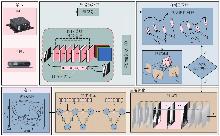
图1
本文方法框架"

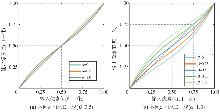
图2
光照均衡曲线"
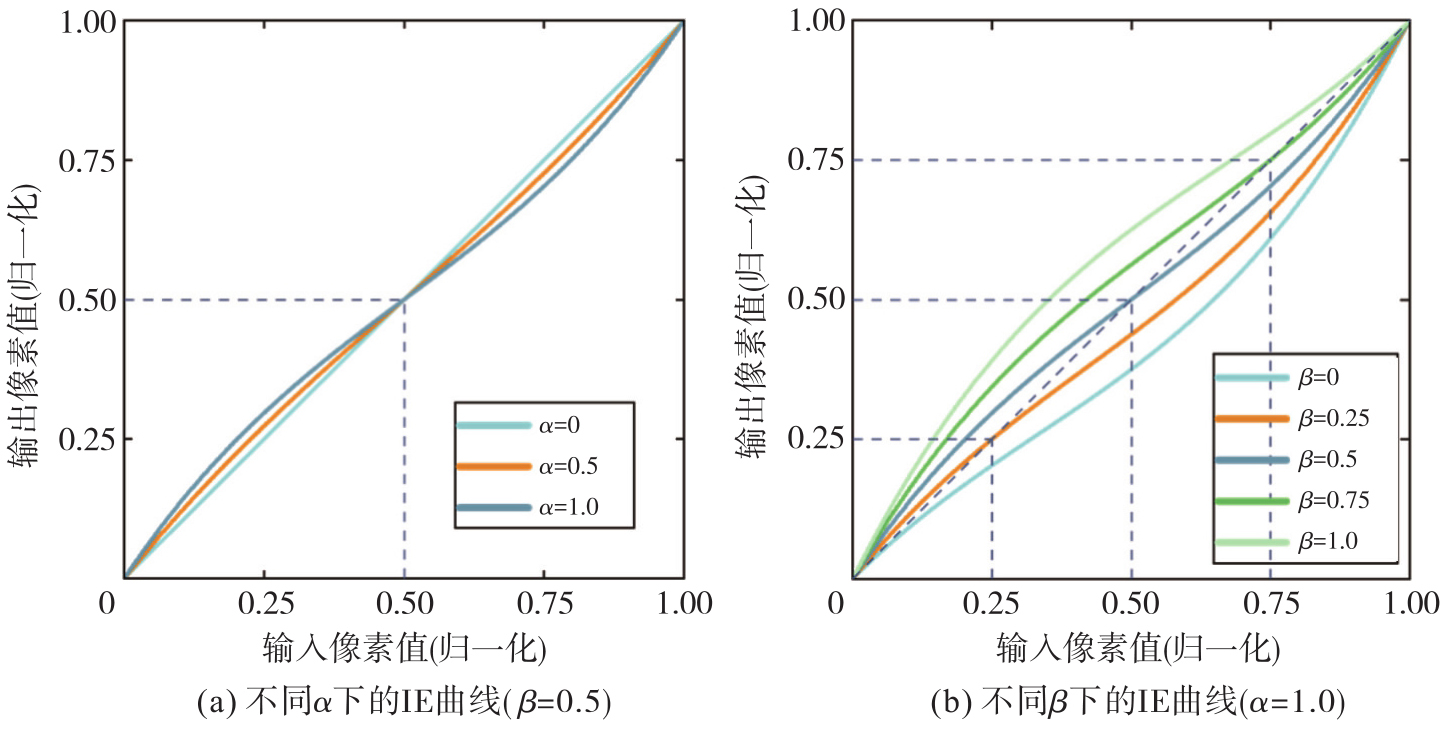
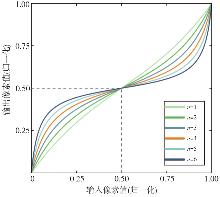
图3
不同迭代次数的IE曲线"
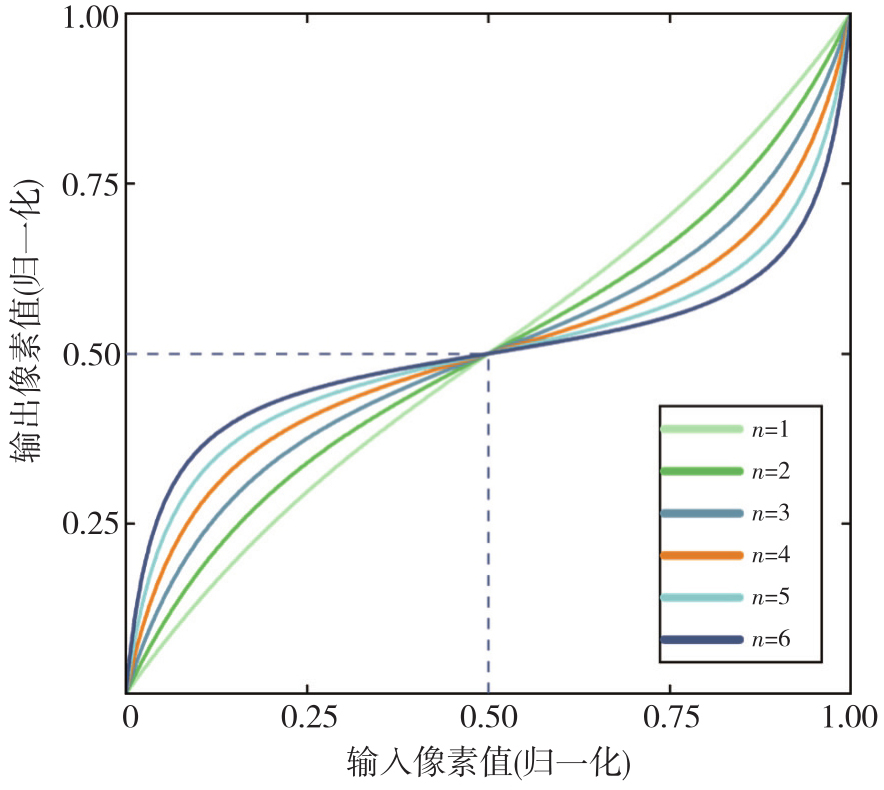
图4
曲线迭代流程"
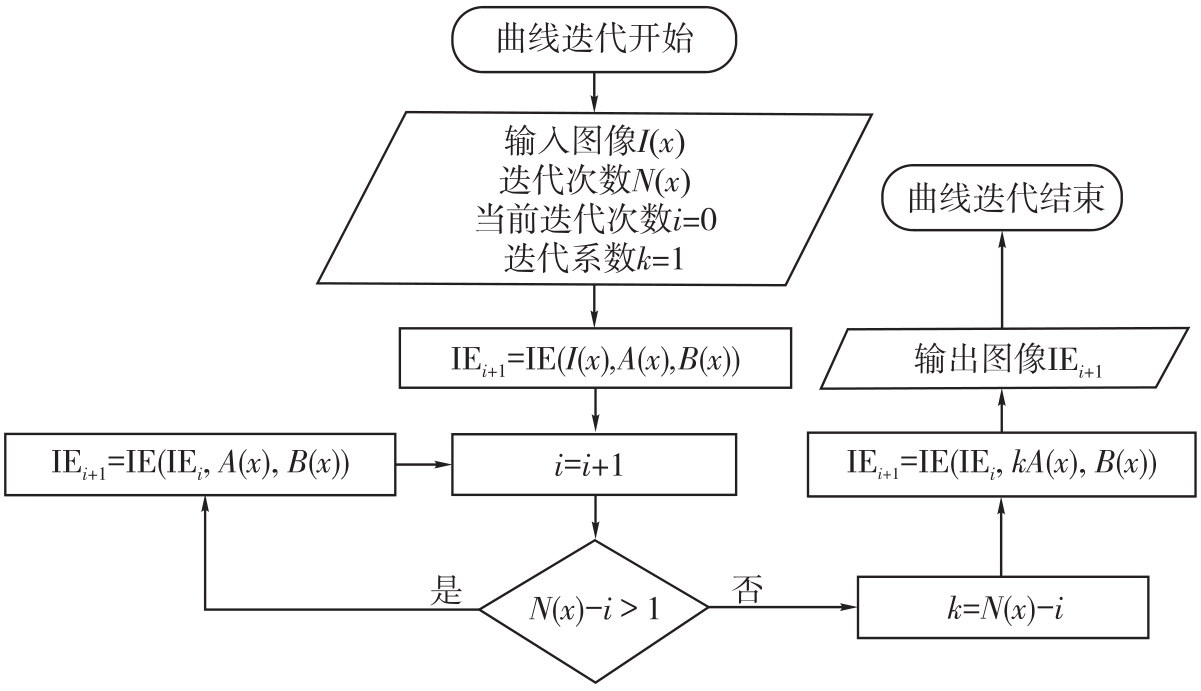
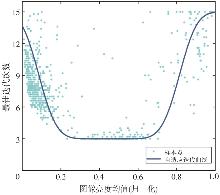
图5
自适应迭代曲线拟合结果"
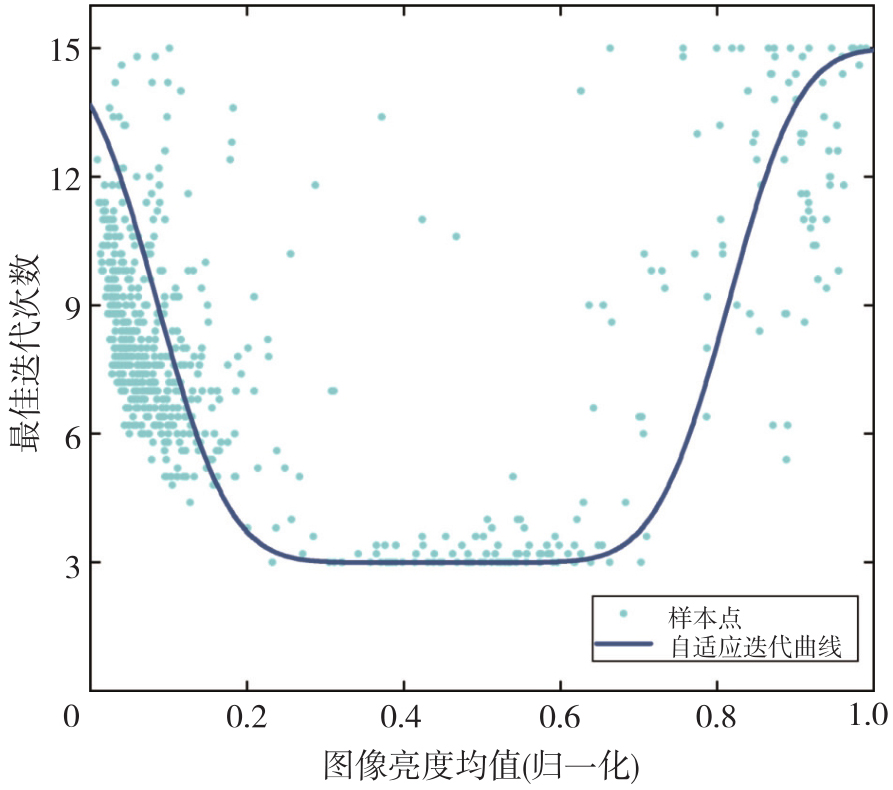
图6
网络结构"
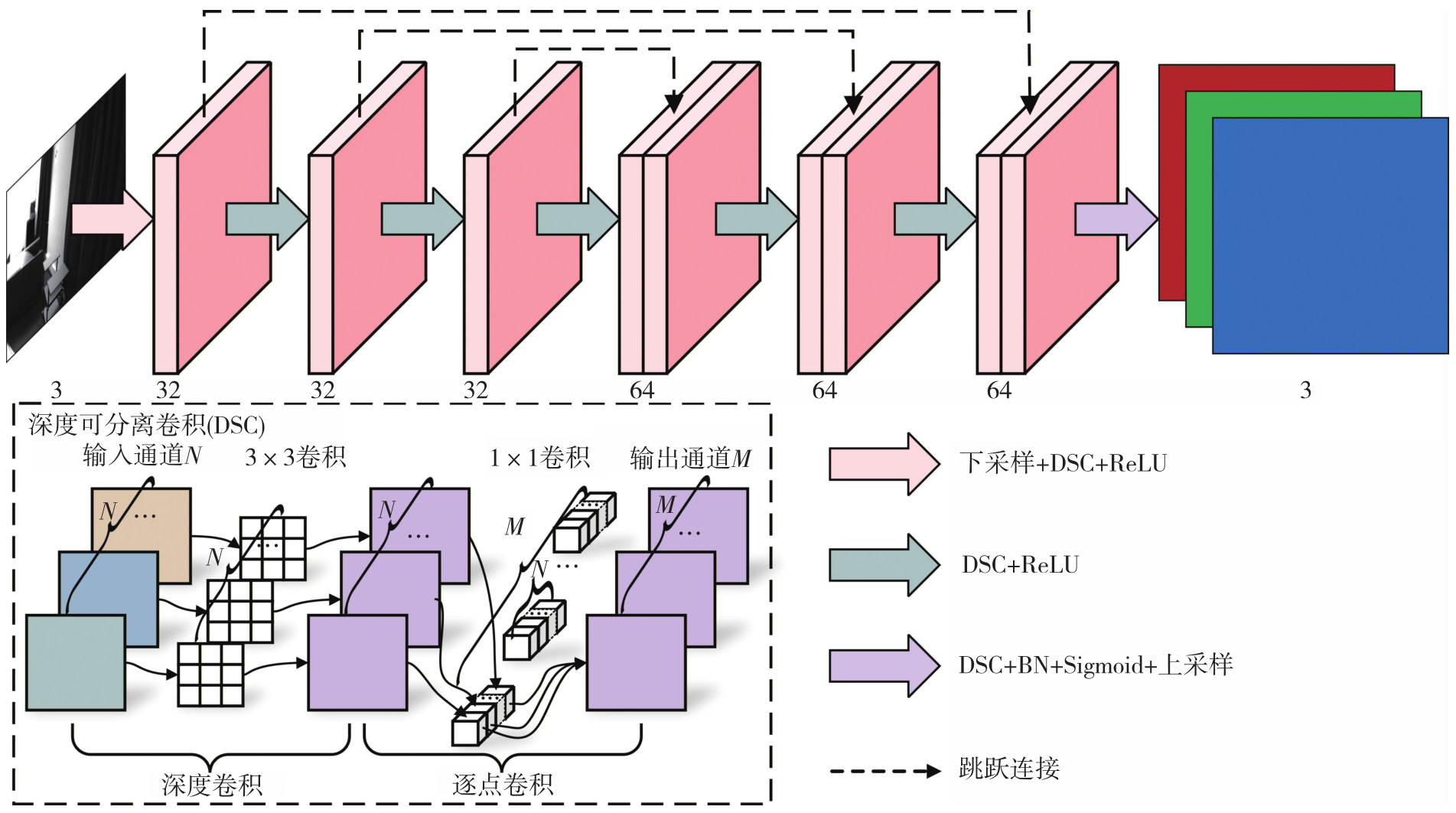
表1
网络各层详细结构"
| 层名 | 结构 |
|---|---|
| layer1 | 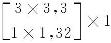 |
| layer2-4 | 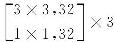 |
| layer5-6 | 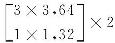 |
| layer7 | 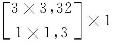 |
表2
模型效率评估指标对比"
| 方法 | FLOPs | 模型参数量 | 处理时间/ms | 计算平台 |
|---|---|---|---|---|
| CLAHE | — | — | 0.971 | CPU |
| MSRCR | — | — | 1 336.574 | CPU |
| Zero-DCE | 20 761 804 800 | 79 416 | 175.437 | CPU |
| 4.257 | GPU | |||
| Zero-DCE++ | 49 917 952 | 10 561 | 9.704 | CPU |
| 1.830 | GPU | |||
| CIDNet | 32 531 742 720 | 1 973 496 | 947.859 | CPU |
| 41.738 | GPU | |||
| 本文方法 | 49 967 104 | 10 567 | 12.679 | CPU |
| 1.453 | GPU |
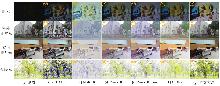
图7
不同算法的图像增强结果"
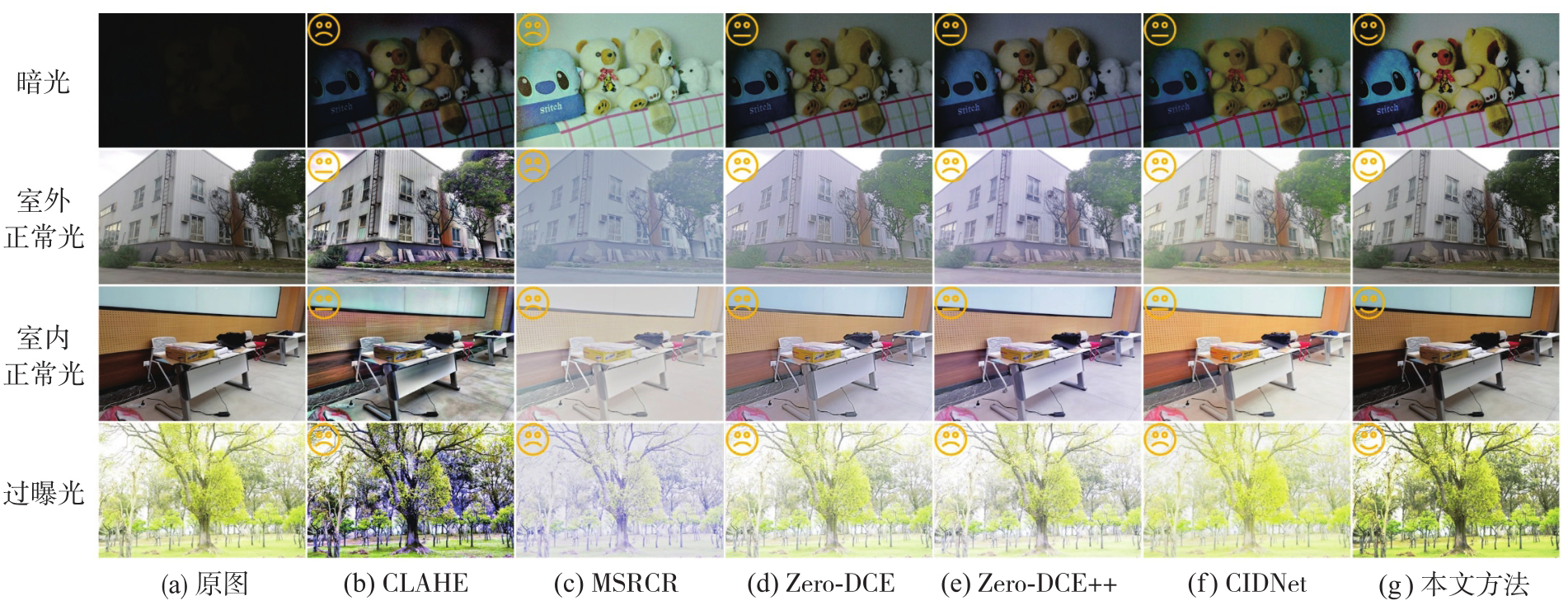
表3
低光照图像客观评价指标对比"
| 图像 | 均值 | 标准差 | 平均梯度 | 信息熵 | NIQE |
|---|---|---|---|---|---|
| 原始图像 | 14.338 1 | 8.022 5 | 5.182 0 | 4.897 1 | 7.207 5 |
| CLAHE结果 | 35.542 8 | 19.216 1 | 14.078 6 | 6.082 5 | 7.729 9 |
| MSRCR结果 | 165.257 6 | 37.994 8 | 28.678 1 | 6.908 2 | 7.977 6 |
| Zero-DCE结果 | 75.921 2 | 34.795 3 | 23.097 5 | 6.695 5 | 8.021 4 |
| Zero-DCE++结果 | 77.276 0 | 34.536 5 | 23.194 1 | 6.704 8 | 8.218 9 |
| CIDNet结果 | 68.344 6 | 40.698 7 | 21.632 7 | 6.493 9 | 6.409 4 |
| 本文方法结果 | 119.783 9 | 60.017 8 | 31.589 6 | 6.003 9 | 6.710 2 |
表4
室外正常光图像客观评价指标对比"
| 图像 | 均值 | 标准差 | 平均梯度 | 信息熵 | NIQE |
|---|---|---|---|---|---|
| 原始图像 | 124.830 3 | 60.627 8 | 31.971 9 | 7.474 5 | 3.788 9 |
| CLAHE结果 | 136.767 1 | 63.630 5 | 53.221 3 | 7.647 8 | 4.066 9 |
| MSRCR结果 | 174.830 5 | 19.451 1 | 21.402 6 | 6.244 7 | 4.029 6 |
| Zero-DCE结果 | 170.069 2 | 39.685 8 | 32.786 1 | 7.051 0 | 3.960 5 |
| Zero-DCE++结果 | 177.933 8 | 37.298 8 | 32.818 3 | 6.994 8 | 4.024 0 |
| CIDNet结果 | 178.311 7 | 44.844 0 | 29.506 4 | 7.229 7 | 4.089 8 |
| 本文方法结果 | 125.197 7 | 59.427 4 | 31.439 9 | 7.447 3 | 3.769 6 |
表5
室内正常光图像客观评价指标对比"
| 图像 | 均值 | 标准差 | 平均梯度 | 信息熵 | NIQE |
|---|---|---|---|---|---|
| 原始图像 | 134.376 7 | 65.374 0 | 22.437 3 | 7.690 9 | 3.870 4 |
| CLAHE结果 | 141.493 1 | 62.546 3 | 32.603 4 | 7.756 7 | 3.216 4 |
| MSRCR结果 | 205.829 7 | 22.048 6 | 13.681 0 | 5.769 1 | 3.960 9 |
| Zero-DCE结果 | 173.656 3 | 44.543 9 | 24.447 5 | 7.318 9 | 3.642 2 |
| Zero-DCE++结果 | 179.398 9 | 44.409 1 | 24.519 7 | 7.296 8 | 3.671 7 |
| CIDNet结果 | 187.037 6 | 54.634 6 | 22.166 5 | 7.143 2 | 3.606 7 |
| 本文方法结果 | 132.241 2 | 64.060 3 | 22.185 7 | 7.685 3 | 3.859 7 |
表6
过曝光图像客观评价指标对比"
| 图像 | 均值 | 标准差 | 平均梯度 | 信息熵 | NIQE |
|---|---|---|---|---|---|
| 原始图像 | 202.709 7 | 45.871 7 | 57.450 5 | 7.099 7 | 2.976 1 |
| CLAHE结果 | 169.854 7 | 62.755 1 | 101.586 7 | 7.635 1 | 4.211 1 |
| MSRCR结果 | 220.877 6 | 18.824 5 | 38.561 8 | 5.834 6 | 2.863 2 |
| Zero-DCE结果 | 220.220 8 | 30.939 0 | 44.316 4 | 6.547 2 | 2.852 2 |
| Zero-DCE++结果 | 220.815 7 | 30.356 7 | 45.868 2 | 6.519 0 | 2.869 0 |
| CIDNet结果 | 216.408 5 | 34.584 2 | 34.282 6 | 6.544 7 | 3.100 8 |
| 本文方法结果 | 140.392 7 | 69.858 5 | 104.129 0 | 7.375 0 | 2.750 4 |
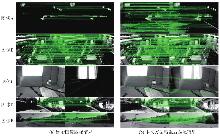
图8
增强前后特征匹配结果对比"
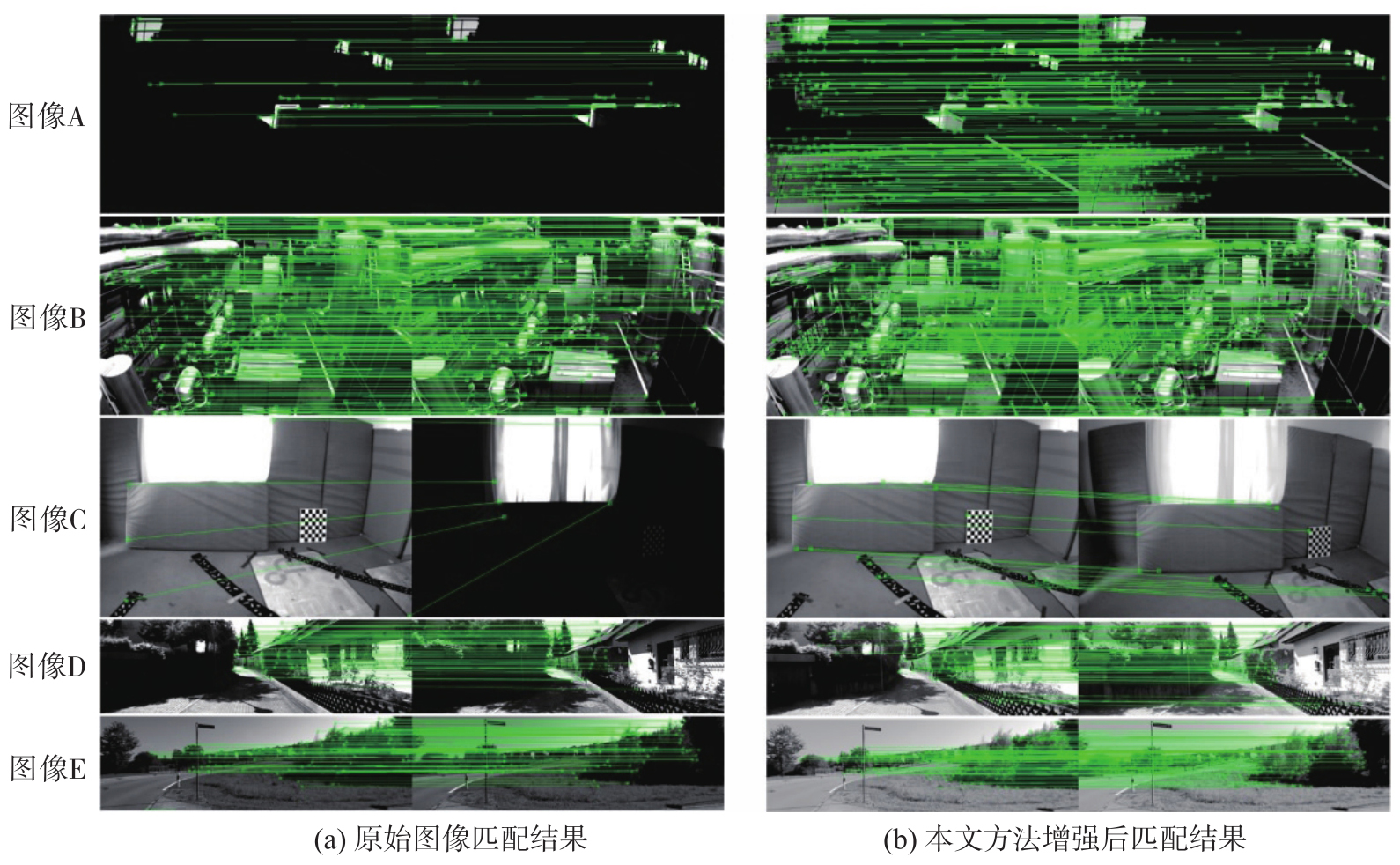
表7
图像增强前后特征匹配结果"
| 方法 | 匹配数量 | 匹配成功率/(%) | ||||||||
|---|---|---|---|---|---|---|---|---|---|---|
| 图像A | 图像B | 图像C | 图像D | 图像E | 图像A | 图像B | 图像C | 图像D | 图像E | |
| 原始图像 | 41 | 285 | 35 | 247 | 247 | 78.0 | 97.9 | 14.3 | 25.5 | 40.9 |
| CLAHE | 71 | 286 | 79 | 251 | 246 | 77.5 | 96.9 | 5.6 | 17.9 | 38.2 |
| MSRCR | 275 | 274 | 40 | 270 | 248 | 41.5 | 96.0 | 12.5 | 24.4 | 30.6 |
| Zero-DCE | 229 | 287 | 61 | 263 | 254 | 47.6 | 97.2 | 9.8 | 22.8 | 42.1 |
| Zero-DCE++ | 253 | 287 | 48 | 258 | 254 | 49.4 | 98.3 | 10.4 | 20.2 | 46.1 |
| CIDNet | 252 | 271 | 50 | 269 | 248 | 78.2 | 97.0 | 10.0 | 22.3 | 46.8 |
| 本文方法 | 279 | 289 | 85 | 272 | 258 | 86.4 | 99.3 | 18.8 | 31.2 | 48.8 |
表8
各模块对比试验结果"
| VINS-Fusion | LE曲线 | IE曲线 | 固定迭代 | 自适应迭代 | 匹配特征点平均数量 | 平均耗时/ms | ||||
|---|---|---|---|---|---|---|---|---|---|---|
| MH_04_difficult | room1 | 00 | MH_04_difficult | room1 | 00 | |||||
| √ | × | × | × | × | 196 | 75 | 212 | 1.0 | 1.0 | 1.5 |
| √ | √ | × | √ | × | 221 | 115 | 223 | 8.3 | 9.0 | 15.3 |
| √ | √ | × | × | √ | 231 | 117 | 225 | 7.8 | 8.6 | 12.5 |
| √ | × | √ | √ | × | 231 | 131 | 226 | 10.2 | 12.5 | 18.8 |
| √ | × | √ | × | √ | 234 | 152 | 227 | 9.7 | 10.4 | 15.8 |
表9
EuRoC数据集部分序列特点"
| 序列名称 | 长度/m | 特点 |
|---|---|---|
| V1_03_difficult | 78.982 | 室内环境,平台运动剧烈,光照变化明显,包含无纹理区域 |
| V2_03_difficult | 86.128 | 室内环境,平台运动剧烈,光照变化明显,包含无纹理区域,图像序列存在丢帧问题 |
| MH_04_difficult | 91.747 | 大型工业环境,存在光照变化,管道多,平台经过一段极端黑暗 |
| MH_05_difficult | 97.593 | 的区域 |
表10
TUM-VI数据集部分序列特点"
| 序列名称 | 长度/m | 特点 |
|---|---|---|
| room1 | 146.790 | 室内环境,平台运动剧烈,存在长时间绕圈行为,光照变化明显,包含无纹理区域,鱼眼相机视野范围广 |
| room2 | 141.598 | |
| room3 | 135.522 | |
| room4 | 68.698 |
表11
KITTI数据集部分序列特点"
| 序列名称 | 长度/m | 特点 |
|---|---|---|
| 00 | 3 724.187 | 住宅区场景,平台高速运动,转弯速度快,相机帧率低,视野内存在运动车辆和行人,光照分布不均,存在大量墙面反光、路面反光、镜头眩光和车窗玻璃反射光的强逆光场景 |
| 02 | 5 067.233 | |
| 03 | 560.888 | |
| 09 | 1 705.051 |
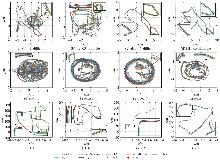
图9
本文方法与其他方法轨迹对比"

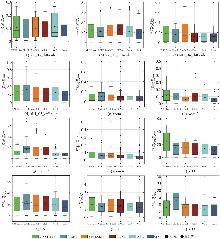
图10
本文方法与其他方法的误差分布"

表12
不同数据集绝对轨迹误差对比"
| 数据集 | 序列名称 | RMSE/m | |||||
|---|---|---|---|---|---|---|---|
| VINS-Fusion | CLAHE | Zero-DCE++ | CIDNet | Our-8 | Our-it | ||
| EuRoC | V1_03_difficult | 0.137 | 0.118 | 0.126 | 0.107 | 0.144 | 0.101 |
| V2_03_difficult | 0.293 | 0.255 | 0.300 | 0.294 | 0.259 | 0.228 | |
| MH_04_difficult | 0.244 | 0.209 | 0.282 | 0.165 | 0.157 | 0.146 | |
| MH_05_difficult | 0.343 | 0.409 | 0.302 | 0.295 | 0.317 | 0.238 | |
| TUM-VI | room1 | 0.117 | 0.140 | 0.112 | 0.092 | 0.085 | 0.086 |
| room2 | 0.141 | 0.122 | 0.071 | 0.117 | 0.103 | 0.066 | |
| room3 | 0.127 | 0.194 | 0.231 | 0.178 | 0.092 | 0.083 | |
| room4 | 0.081 | 0.088 | 0.072 | 0.064 | 0.066 | 0.051 | |
| KITTI | 00 | 29.214 | 17.082 | 18.494 | 15.739 | 15.546 | 13.261 |
| 02 | 25.777 | 29.256 | 27.202 | 25.873 | 22.630 | 19.916 | |
| 03 | 1.806 | 1.471 | 1.657 | 1.641 | 1.515 | 1.376 | |
| 09 | 9.224 | 14.643 | 8.644 | 8.880 | 7.769 | 7.753 | |
| [1] |
陈锐志, 王磊, 李德仁, 等. 导航与遥感技术融合综述[J]. 测绘学报, 2019, 48(12): 1507-1522. DOI: .
doi: 10.11947/j.AGCS.2019.20190446 |
|
Chen Ruizhi, Wang Lei, Li Deren, et al. A survey on the fusion of the navigation and the remote sensing techniques[J]. Acta Geodaetica et Cartographica Sinica, 2019, 48(12): 1507-1522. DOI: .
doi: 10.11947/j.AGCS.2019.20190446 |
|
| [2] |
王晨捷, 罗斌, 李成源, 等. 无人机视觉SLAM协同建图与导航[J]. 测绘学报, 2020, 49(6): 767-776. DOI: .
doi: 10.11947/j.AGCS.2020.20190145 |
|
Wang Chenjie, Luo Bin, Li Chengyuan, et al. The collaborative mapping and navigation based on visual SLAM in UAV platform[J]. Acta Geodaetica et Cartographica Sinica, 2020, 49(6): 767-776. DOI: .
doi: 10.11947/j.AGCS.2020.20190145 |
|
| [3] | Yuan Zikang, Lang Fengtian, Xu Tianle, et al. SR-LIO: LiDAR-inertial odometry with sweep reconstruction[C]//Proceedings of 2024 IEEE/RSJ International Conference on Intelligent Robots and Systems (IROS), 2024: 7862-7869. |
| [4] |
张继贤, 刘飞. 视觉SLAM环境感知技术现状与智能化测绘应用展望[J]. 测绘学报, 2023, 52(10): 1617-1630. DOI: .
doi: 10.11947/j.AGCS.2023.20220240 |
|
Zhang Jixian, Liu Fei. Review of visual SLAM environment perception technology and intelligent surveying and mapping application[J]. Acta Geodaetica et Cartographica Sinica, 2023, 52(10): 1617-1630. DOI: .
doi: 10.11947/j.AGCS.2023.20220240 |
|
| [5] | Pan Youqi, Zhou Wugen, Cao Yingdian, et al. Adaptive VIO: deep visual-inertial odometry with online continual learning[C]//Proceedings of 2024 IEEE/CVF Conference on Computer Vision and Pattern Recognition, 2024: 18019-18028. |
| [6] | Peng Xiongfeng, Liu Zhihua, Li Weiming, et al. DVI-SLAM: a dual visual inertial SLAM network[C]//Proceedings of 2024 IEEE International Conference on Robotics and Automation, 2024: 12020-12026. |
| [7] | Xu Kuan, Hao Yuefan, Yuan Shenghai, et al. AirSLAM: an efficient and illumination-robust point-line visual SLAM system[J]. IEEE Transactions on Robotics, 2025, 41: 1673-1692. |
| [8] | Hana F M, Maulida I D. Analysis of contrast limited adaptive histogram equalization (CLAHE) parameters on finger knuckle print identification[J]. Journal of Physics: Conference Series, 2021, 1764(1): 012049. |
| [9] | Jobson D J, Rahman Z, Woodell G A. A multiscale retinex for bridging the gap between color images and the human observation of scenes[J]. IEEE Transactions on Image Processing, 1997, 6(7): 965-976. |
| [10] | Jobson D J. Retinex processing for automatic image enhancement[J]. Journal of Electronic Imaging, 2004, 13(1): 100. |
| [11] | Petro A B, Sbert C, Morel J M. Multiscale retinex[J]. Image Processing on Line, 2014, 4: 71-88. |
| [12] | 李艳, 张科, 李明辉. 微光场景下基于改进自适应Retinex的视觉SLAM算法[J]. 计算机工程与应用, 2026, 62(6): 391-400. |
| Li Yan, Zhang Ke, Li Minghui. Visual SLAM algorithm based on improved adaptive Retinex in low-light scenarios[J]. Computer Engineering and Applications, 2026, 62(6): 391-400. | |
| [13] | 李雪强, 李建胜, 王安成, 等. 低光照条件下基于图像增强的视觉惯性组合导航方法[J]. 测绘科学技术学报, 2025, 41(1): 21-26. |
| Li Xueqiang, Li Jiansheng, Wang Ancheng, et al. Visual-inertial integrated navigation method based on image enhancement under low illumination conditions[J]. Journal of Geomatics Science and Technology, 2025, 41(1): 21-26. | |
| [14] |
蔺小虎, 杨鑫, 姚顽强, 等. 面向复杂地下空间的多源传感器数据动态加权融合SLAM方法[J]. 测绘学报, 2025, 54(3): 523-535. DOI: .
doi: 10.11947/j.AGCS.2025.20230586 |
|
Lin Xiaohu, Yang Xin, Yao Wanqiang, et al. A dynamic weighted fusion SLAM method using multi-source sensor data in complex underground spaces[J]. Acta Geodaetica et Cartographica Sinica, 2025, 54(3): 523-535. DOI: .
doi: 10.11947/j.AGCS.2025.20230586 |
|
| [15] | 王纪武, 万伟鹏, 尚学强, 等. 基于图像增强和自适应阈值的语义视觉SLAM系统[J]. 计算机集成制造系统, 2024, 30(12): 4217-4232. |
| Wang Jiwu, Wan Weipeng, Shang Xueqiang, et al. Semantic visual SLAM system based on image enhancement and adaptive thresholding[J]. Computer Integrated Manufacturing Systems, 2024, 30(12): 4217-4232. | |
| [16] | Chen Gang, Du Guoqiang, Yang Chenguang, et al. An underwater visual SLAM system with adaptive image enhancement[J]. Ocean Engineering, 2025, 326: 120896. |
| [17] | Wei Chen, Wang Wenjing, Yang Wenhan, et al. Deep retinex decomposition for low-light enhancement[PP/OL]. arXiv (2018-08-14) [2026-03-15]. https://doi.org/10.48550/arXiv.1808.04560. |
| [18] | Guo Chunle, Li Chongyi, Guo Jichang, et al. Zero-reference deep curve estimation for low-light image enhancement[C]//Proceedings of 2020 IEEE/CVF Conference on Computer Vision and Pattern Recognition, 2020: 1777-1786. |
| [19] | Shi Yiqi, Liu Duo, Zhang Liguo, et al. ZERO-IG: zero-shot illumination-guided joint denoising and adaptive enhancement for low-light images[C]//Proceedings of 2024 IEEE/CVF Conference on Computer Vision and Pattern Recognition, 2024: 3015-3024. |
| [20] | Yan Qingsen, Feng Yixu, Zhang Cheng, et al. HVI: a new color space for low-light image enhancement[C]//Proceedings of 2025 IEEE/CVF Conference on Computer Vision and Pattern Recognition, 2025: 5678-5687. |
| [21] | Li Yiyu, Xu Ke, Hancke G P, et al. Color shift estimation-and-correction for image enhancement[C]//Proceedings of 2024 IEEE/CVF Conference on Computer Vision and Pattern Recognition, 2024: 25389-25398. |
| [22] | 江松, 崔智翔, 代碧波, 等. 暗环境适应性的基于SLAM的煤矿井下机器人定位方法[J]. 煤炭科学技术, 2025, 53(5): 349-361. |
| Jiang Song, Cui Zhixiang, Dai Bibo, et al. SLAM-based localization method of coal mine underground robot with adaptability to dark illumination environment[J]. Coal Science and Technology, 2025, 53(5): 349-361. | |
| [23] | Jiang Kuosheng, Zhu Chengbing, Yang Jinbao. Research on low-light environment SLAM system via retinex enhancement and deep feature optimization[J]. IEEE Sensors Journal, 2025, 25(15): 29992-30004. |
| [24] | Liu Yanjie, Wu Heng, Zhang Weiwu, et al. Low-light enhancement visual SLAM via deep deformable power curve estimation[J]. IEEE Sensors Journal, 2025, 25(10): 17404-17412. |
| [25] | Qin Tong, Cao Shaozu, Pan Jie, et al. A general optimization-based framework for global pose estimation with multiple sensors[PP/OL]. arXiv (2019-01-11) [2026-03-15]. https://doi.org/10.48550/arXiv.1901.03642. |
| [26] | Li Chongyi, Guo Chunle, Loy C C. Learning to enhance low-light image via zero-reference deep curve estimation[J]. IEEE Transactions on Pattern Analysis and Machine Intelligence, 2022, 44(8): 4225-4238. |
| [27] | Cai Jianrui, Gu Shuhang, Zhang Lei. Learning a deep single image contrast enhancer from multi-exposure images[J]. IEEE Transactions on Image Processing, 2018, 27(4): 2049-2062. |
| [28] | Hai Jiang, Xuan Zhu, Yang Ren, et al. R2RNet: low-light image enhancement via real-low to real-normal network[J]. Journal of Visual Communication and Image Representation, 2023, 90: 103712. |
| [29] | Zhang Ru, Zhu Feng, Liu Jianyi, et al. Depth-wise separable convolutions and multi-level pooling for an efficient spatial CNN-based steganalysis[J]. IEEE Transactions on Information Forensics and Security, 2020, 15: 1138-1150. |
| [30] | Baker S, Matthews I. Lucas-kanade 20 years on: a unifying framework[J]. International Journal of Computer Vision, 2004, 56(3): 221-255. |
| [31] | Burri M, Nikolic J, Gohl P, et al. The EuRoC micro aerial vehicle datasets[J]. The International Journal of Robotics Research, 2016, 35(10): 1157-1163. |
| [32] | Geiger A, Lenz P, Stiller C, et al. Vision meets robotics: the KITTI dataset[J]. International Journal of Robotics Research, 2013, 32(11): 1231-1237. |
| [33] | Schubert D, Goll T, Demmel N, et al. The TUM VI benchmark for evaluating visual-inertial odometry[C]//Proceedings of 2018 IEEE/RSJ International Conference on Intelligent Robots and Systems, 2018: 1680-1687. |
| [34] | Hadjivelichkov D, Ægidius S, Modugno V, et al. Task-critical part alignment improves imitation of object interactions[C]//Proceedings of 2025 IEEE International Conference on Advanced Robotics, 2025: 329-334. |
| [35] | Qin Tong, Li Peiliang, Shen Shaojie. VINS-mono: a robust and versatile monocular visual-inertial state estimator[J]. IEEE Transactions on Robotics, 2018, 34(4): 1004-1020. |
| [1] | 李贺, 陈克杰, 崔文峰, 柴海山, 方荣新, 彭朝勇, 孙丽. 基于北斗三号PPP-B2b同震位移与深度学习的震级快速估算——以2025年定日Mw 7.1和曼德勒Mw 7.7地震为例[J]. 测绘学报, 2026, 55(7): 1171-1182. |
| [2] | 赵曦, 袁强强, 徐佳丹. 面向复杂海洋环境的侧扫声呐目标样本生成与增强方法[J]. 测绘学报, 2026, 55(7): 1229-1239. |
| [3] | 刘硕, 孙海丽, 钟若飞. 多尺度边缘信息融合的隧道渗漏水检测方法[J]. 测绘学报, 2026, 55(6): 1116-1127. |
| [4] | 时天东, 赵玲, 赵文豪, 齐霁, 崔浩, 彭程里, 张新长. 时空信息显式引导的高分光学遥感影像可控生成方法[J]. 测绘学报, 2026, 55(5): 894-908. |
| [5] | 王家耀, 陈琳, 程士源, 王利军, 熊思奇. 人工智能赋能地图科学数智化[J]. 测绘学报, 2026, 55(3): 381-389. |
| [6] | 禄小敏, 张志义, 闫浩文, 何毅, 苏小宁. 融合深度图信息最大化和多层感知机的建筑物群组模式识别方法[J]. 测绘学报, 2026, 55(3): 425-438. |
| [7] | 季顺平, 刘瑾, 高建, 龚健雅. 多视影像深度学习密集匹配三维重建智能框架[J]. 测绘学报, 2025, 54(9): 1633-1646. |
| [8] | 张继贤, 顾海燕, 倪欢, 李海涛, 杨懿, 丁少鹏, 隋淞蔓. 遥感智能变化检测的深度学习方法:演变与发展趋势[J]. 测绘学报, 2025, 54(8): 1347-1370. |
| [9] | 方帅, 刘加恩, 张晶. 自适应参考特征引入与多尺度特征聚合的时空融合算法[J]. 测绘学报, 2025, 54(8): 1476-1488. |
| [10] | 孟妮娜, 李凤梅, 周校东. 数据与认知双驱动的建筑物群制图综合结果与尺度一致性识别[J]. 测绘学报, 2025, 54(7): 1318-1331. |
| [11] | 王亚青, 王中辉. 异构图卷积网络支持下的河系自动选取方法[J]. 测绘学报, 2025, 54(7): 1332-1345. |
| [12] | 安晓亚, 郭伟茹, 张鹏鑫, 李欣欣, 石磊. 顾及几何位置和移动特征相似性的船舶轨迹聚类方法[J]. 测绘学报, 2025, 54(6): 1107-1121. |
| [13] | 王超, 陈天宇, 张同, AhmedTanvir, 纪立强, 谢涛, 杨佳俊, 王帅. 基于全局差分增强模块和平衡惩罚损失的多源光学遥感影像变化检测[J]. 测绘学报, 2025, 54(5): 873-887. |
| [14] | 罗卿莉, 李雪岩, 黄国满, 陈红辉, 薛铭龙, 李健. AOSN:α-最优网络模型的山区单通道SAR高程重建方法[J]. 测绘学报, 2025, 54(5): 888-898. |
| [15] | 蔺小虎, 杨鑫, 姚顽强, 马宏伟, 马柏林, 马雄伟. 面向复杂地下空间的多源传感器数据动态加权融合SLAM方法[J]. 测绘学报, 2025, 54(3): 523-535. |
| 阅读次数 | ||||||
|
全文 |
|
|||||
|
摘要 |
|
|||||
