


测绘学报 ›› 2025, Vol. 54 ›› Issue (8): 1347-1370.doi: 10.11947/j.AGCS.2025.20240417
• 综述 • 下一篇
张继贤1( ), 顾海燕2(), 倪欢3, 李海涛2, 杨懿2, 丁少鹏4, 隋淞蔓4
收稿日期:2024-10-10
修回日期:2025-07-26
出版日期:2025-09-16
发布日期:2025-09-16
通讯作者:
顾海燕
E-mail:zhangjx@casm.ac.cn;guhy@casm.ac.cn
作者简介:张继贤(1965—),男,博士,研究员,研究方向为摄影测量与遥感、地理信息系统、资源与环境遥感监测。E-mail:zhangjx@casm.ac.cn
基金资助:
Jixian ZHANG1(), Haiyan GU2(), Huan NI3, Haitao LI2, Yi YANG2, Shaopeng DING4, Songman SUI4
Received:2024-10-10
Revised:2025-07-26
Online:2025-09-16
Published:2025-09-16
Contact:
Haiyan GU
E-mail:zhangjx@casm.ac.cn;guhy@casm.ac.cn
About author:ZHANG Jixian (1965—), male, PhD, researcher, majors in photogrammetry and remote sensing, geographic information system, resources and environment remote sensing monitoring. E-mail: zhangjx@casm.ac.cn
Supported by:摘要:
多模态遥感对地观测和深度学习技术的快速发展,拓展了遥感变化检测的数据维度和方法维度,为更加自动化、精细化和智能化的变化检测奠定了基础。本文聚焦深度学习的变化检测,面向变化特征表达和网络学习策略两个基本科学问题,详细梳理了变化检测研究的演变过程。变化特征表达层面,呈现4个方面的研究趋势,即局部、全局到时空联合特征表达,单一模态到多模态特征表达,轻量级模型到大模型特征表达,以及二值到多类别语义特征表达;网络学习层面,呈现全监督、弱/半监督到无监督变化检测的发展趋势。在此基础上,探讨了当前基于深度学习的变化检测所面临的挑战,并结合当前人工智能技术的发展趋势,指出了图文融合、生成式、人机协同模式3个发展方向,以期为理论方法及应用研究提供方向及思路,助力提升遥感变化检测的智能化能力与应用水平。
中图分类号:
张继贤, 顾海燕, 倪欢, 李海涛, 杨懿, 丁少鹏, 隋淞蔓. 遥感智能变化检测的深度学习方法:演变与发展趋势[J]. 测绘学报, 2025, 54(8): 1347-1370.
Jixian ZHANG, Haiyan GU, Huan NI, Haitao LI, Yi YANG, Shaopeng DING, Songman SUI. Deep learning methods for remote sensing intelligent change detection: evolution and development[J]. Acta Geodaetica et Cartographica Sinica, 2025, 54(8): 1347-1370.

图1
遥感变化检测论文收录情况(2010年1月1日至2024年4月30日)"
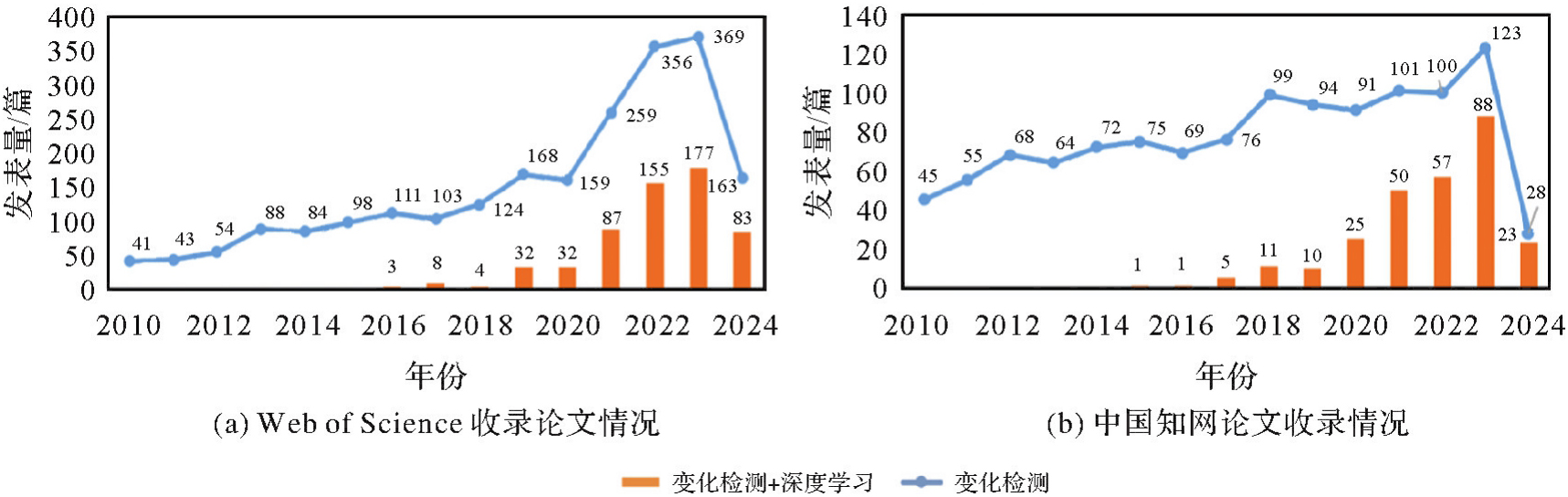
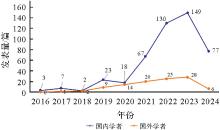
图2
国内外学者发表相关主题论文情况(2016年1月1日至2024年4月30日)"


图3
研究进展"

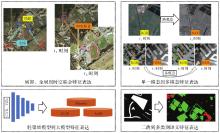
图4
变化特征表达"

表1
局部、全局到时空联合特征表达研究现状概况"
| 类型 | 含义 | 代表模型 | 优点 | 缺点 |
|---|---|---|---|---|
| 基于局部特征的变化检测 | 关注图像中的小区域或局部区域特征,捕捉细节和近邻像素的相互作用 | CNN VGG ResNet HRNet-V2 GCN | 对局部细微的变化敏感,不易受到整体图像的影响。对光照和视角变化不敏感,具有一定稳健性 | 缺乏对全局上下文和大范围结构的理解,易受到噪声干扰 |
| 基于全局特征的变化检测 | 关注图像的整体布局和特征,用于监测大范围的变化区域 | GAS-Net[ VGG16-Res Net18-Transformer[ CNN-Transformer[ ELGC-Net[ M AFGNet[ PGCFN[ CSAGC[ CSI-Net[ TCD-Net[ TransY-Net[ LAaI[ CF-GCN[ EATDer[ SLDDNet[ GLCL[ LGP-Net[ MSPSNet[ DESSN[ D2AGCN[ ICIF-Net[ HyperNet[ SNU-PS[ | 能捕获宽广的上下文信息,有助于理解整体结构 | 易忽略局部细节信息,导致对细微变化的检测效果不佳 |
| 基于时空联合特征的变化检测 | 不仅考虑空间上的特征组合,还结合了时间维度上的变化,适用于处理动态变化的数据 | AMTNet[ MSDFFN[ MTCD[ TriTF[ CCLNet[ L-UNet[ AMMF+谱约束策略[ LSTM+TGLSTM[ ML-EDAN[ FDINet[ CSDBF[ EGRCNN[ HMCNet[ | 时空联合模型擅长捕捉随时间变化的模式,有效去除伪变化,适合处理视频和多时相图像等数据 | 模型复杂度较高,训练和解释性方面存在挑战 |
表2
单模态到多模态特征表达研究现状"
| 模态类型 | 细分类型 | 含义 | 代表方法 | 优点 | 缺点 |
|---|---|---|---|---|---|
| 跨模态变化检测 | — | 变化前和变化后遥感图像之间存在成像模式、分辨率差异。挖掘不同模态图像间的结构关系,以发现变化信息 | SR-GCAE[ ESR-DMNet[ URCNet[ FD-MCD[ SDIR[ FD-MCD[ PRBCD-Net[ | 顾及了变化前后所获取的遥感图像潜在的模态差异问题 | 未充分利用多模态数据(遥感图像、三维数字表面模型、文本数据等)的协同表达优势 |
| 多模态融合变化检测 | 二维、三维信息融合变化检测 | 协同二维遥感图像与三维数字表面模型的变化特征表达 | 文献[ 文献[ 文献[ | 充分利用了遥感图像和三维数字表面模型的协同表达优势,有助于变化发现 | 未顾及变化前后可能出现的遥感图像模态差异问题 |
| 图文融合变化检测 | 协同遥感图像与文本、问答机制的变化特征表达 | ChangeCLIP[ CDVQA[ | 充分发挥了现有图文协同的大模型优势,有助于变化特征表达 | 预训练大模型的依赖程度高 |
表3
轻量级模型到大模型特征表达研究现状"
| 模型 | 类型 | 含义 | 代表方法 | 优点 | 缺点 |
|---|---|---|---|---|---|
| 轻量级模型 | 数据融合 | 融合双时相影像输入语义分割分类网络中,进行特征学习与分类 | 波段直接叠加波段差异增强 | 直接进行特征学习与分类 | 对影像匹配要求高 |
| 数据转换 | 通过域转换方法,将输入影像转换为特征描述相似的影像 | GAN[ 特征转换[ | 减少因影像差异造成的结果误差 | 过度依赖转换效果 | |
| 孪生组合 | 采用孪生网络实现变化检测 | Transformer | 共享权值,提取深度特征图 | 伪孪生网络不能共享特征,增加了特征获取难度 | |
| 大模型 | 提示学习 | 利用视觉编码器提取多尺度特征 | SAM[ | 提取多尺度特征,具有提取语义特征的能力 | 依赖提示信息等先验知识,全局学习能力弱 |
| 全局学习 | 充分挖掘全局空间上下文信息及时空关系 | Mamba[ Change Mamba[ | 具有全局特征建模能力,能够更加精确地检测时空变化 | 依赖时空建模方法,下游迁移速度慢 |
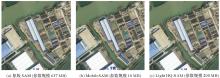
图5
SAM不同版本效果"

表4
二值到多类别语义特征表达研究现状"
| 语义变化检测 | 含义 | 优点 | 缺点 |
|---|---|---|---|
| 分类后比较 | 先利用深度学习网络对两期影像进行分类,再比较分类结果得到语义变化检测结果 | 没有变化样本的情况下,容易实现 | 依赖分类结果的误差传递 |
| 多任务学习 | 同时实现二值和语义变化检测 | 同时提取不同时相的语义特征,实现二值和语义变化检测 | 样本不平衡会降低性能 |
| 差异特征表达 | 利用两个结构不同的网络模型提取多尺度空间信息,精确识别和定位变化区域 | 能够提高模型对复杂变化场景的识别能力 | 挖掘复杂场景的差异特征是面临的挑战 |
| 语义推理 | 利用语义推理方法分析变化区域的语义信息 | 不仅可以定位变化发生的位置,还能提供变化的语义信息 | 依赖语义推理模块性能 |
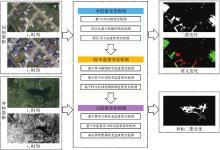
图6
网络学习方法"

表5
全监督变化检测研究现状"
| 类型 | 含义 | 代表模型 | 优点 | 缺点 |
|---|---|---|---|---|
| 卷积神经网络全监督变化检测 | 利用深度学习中的卷积神经网络结构,在有标签的训练数据上进行训练,实现对变化区域的准确检测和描述 | MSP-CD[ CNN[ ReCNN[ KPConv[ BEDRNet[ | 自动特征提取,泛化能力强,能进行多任务学习 | 有过拟合风险,模型解释性差,对变化类型敏感 |
| 注意力网络全监督变化检测 | 利用注意力机制进行训练,能自动识别并聚焦于变化区域,提高变化检测的精度和效率 | SEDANet[ WNet[ VcT[ GAS-Net[ GeoFormer[ MANet[ MSDFFN[ Conv TransNet[ DSAMNet[ ADHR-CDNet[ FSANet[ CBAMUNet+++[ | 注意力机制可以捕捉长距离依赖,能够适应不同场景和条件下的变化检测,提高模型的泛化能力 | 过度依赖注意力突出的区域,忽略了其他潜在重要的变化信号 |
| 语义变化网络全监督变化检测 | 不仅检测变化区域,还识别变化前后的语义类别 | SCanFormer[ DEFO-MT LSCD[ JFRNet[ SGSLN[ | 提供了变化区域的详细语义分析 | 在有限的变化样本条件下,语义信息的利用仍然是挑战 |
表6
弱/半监督变化检测研究现状"
| 类型 | 含义 | 代表方法 | 优点 | 缺点 |
|---|---|---|---|---|
| 半监督变化检测方法 | 设计有效的推理机制,利用标注数据获取高质量伪标签 | ISCDNet[ DCENet[ FPA[ ECPS[ Obj-SiamNet[ ICDA-CD[ | 利用样本共性特征提高对伪标签的判别能力 | 模型结构较复杂,难以通过训练准确进行特征迁移 |
| 生成式深度学习网络实现对未标注数据的泛化 | SemiBuildingChange[ SemiCDNet[ IAugCDNet[ MDF-LSR-Net[ | 利用生成对抗网络进行特征对齐,实现对未标注数据泛化 | 网络结构设计多为两阶段,需要进行过程控制,避免误差积累 | |
| 弱监督变化检测方法 | 利用模糊聚类,进行变化区域标注 | CS-WSCDNet[ WSLCD[ SDCDNet[ | 采用区域判别的方法进行精确的像素级标注标签 | 进行渐近迭代优化,但难以准确获得像素标注 |
表7
无监督变化检测研究现状"
| 类型 | 含义 | 代表方法 | 优点 | 缺点 |
|---|---|---|---|---|
| 基于聚类分析的无监督变化检测 | 利用深度学习网络提取高维度特征表达,引入传统的聚类分析方法,在特征空间进行二值聚类,以发现变化信息 | SGDNNs[ PSGM[ 文献[ 文献[ UCDFormer[ | 具备一定可解释性 | 传统聚类方法与深度学习网络的高效、协同优化过程方法仍有待探讨 |
| 基于自监督学习的无监督变化检测 | 将自监督学习思想引入变化检测研究的产物 | UA-GSSL[ TD-SSCD[ SRF[ 文献[ HyperNet[ 文献[ | 提升了无监督变化检测精度 | 训练过程复杂,难以实现端到端的训练 |
| 面向异构数据的无监督变化检测 | 面向变化前后数据模态存在差异情景,利用带有标签的源域数据以及不含有标签的目标域数据训练网络模型,实现目标域数据变化检测 | 文献[ GLCL[ HiCD[ 文献[ MDCTNet[ 文献[ BGAAEs[ CIT[ | 消除了变化前后数据异构现象的影响,拓展了变化检测方法的应用范围,保证了时效性 | 精度仍然无法与变化前后数据同质情景相比拟 |
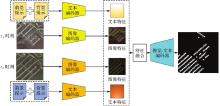
图7
遥感变化检测的图文融合模式"
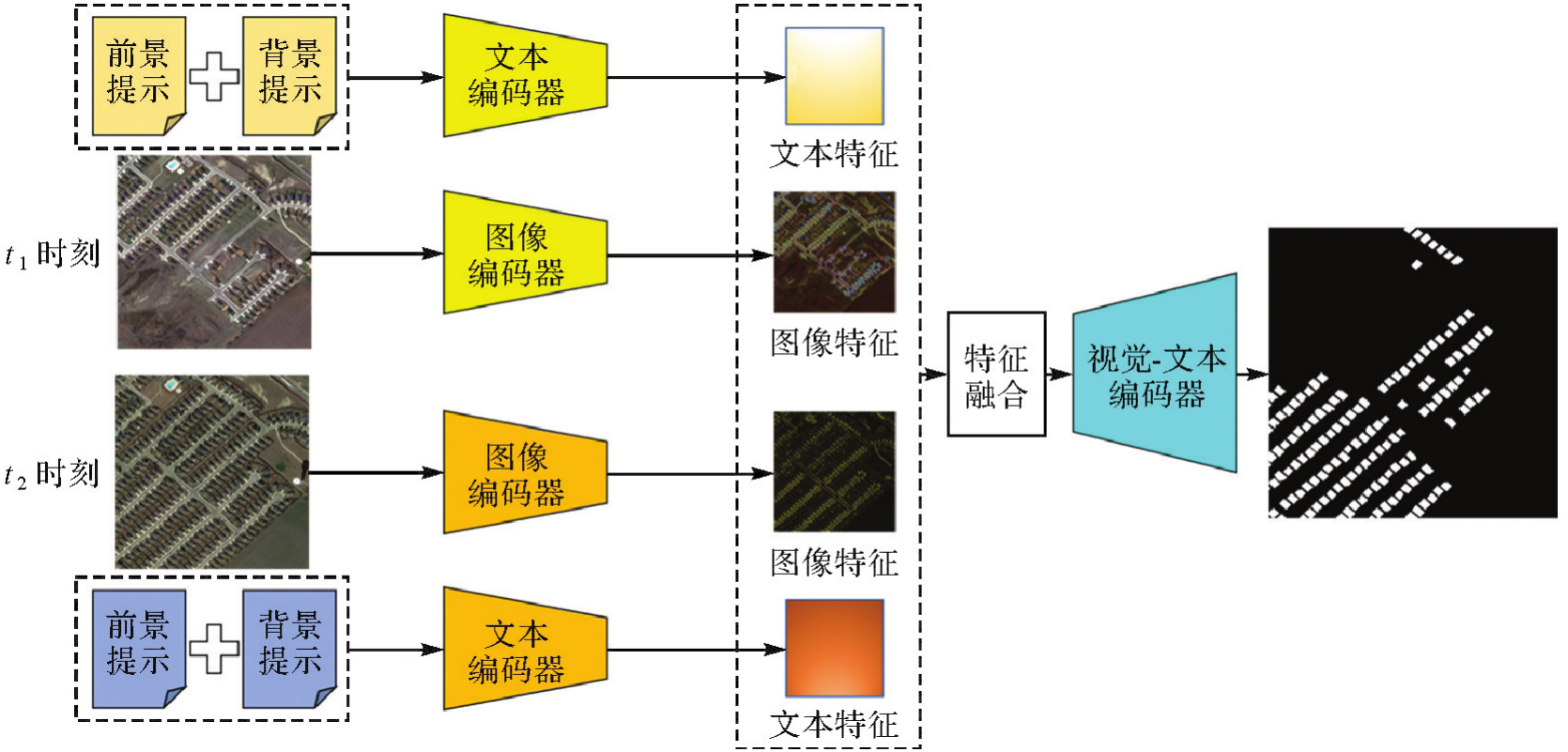

图8
ChangeCLIP在LEVIR-CD数据集上的变化检测可视化结果注:前景提示=“建筑物”,背景提示=“背景”。"

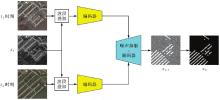
图9
生成式变化检测"

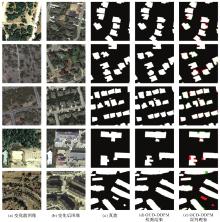
图10
GCD-DDPM在LEVIR-CD数据集上的变化检测可视化结果"


图11
人机协同变化检测"


图12
SAM地物提取效果注:蓝色区域表示SAM提示学习提取效果。"

| [1] | SUN Yuli, LEI Lin, LI Zhang, et al. Similarity and dissimilarity relationships based graphs for multimodal change detection[J]. ISPRS Journal of Photogrammetry and Remote Sensing, 2024, 208: 70-88. |
| [2] |
张祖勋, 姜慧伟, 庞世燕, 等. 多时相遥感影像的变化检测研究现状与展望[J]. 测绘学报, 2022, 51(7): 1091-1107. DOI: .
doi: 10.11947/j.AGCS.2022.20220070 |
|
ZHANG Zuxun, JIANG Huiwei, PANG Shiyan, et al. Review and prospect in change detection of multi-temporal remote sensing images[J]. Acta Geodaetica et Cartographica Sinica, 2022, 51(7): 1091-1107. DOI: .
doi: 10.11947/j.AGCS.2022.20220070 |
|
| [3] | 柳思聪, 都科丞, 郑永杰, 等. 人工智能时代的遥感变化检测技术:继承、发展与挑战[J]. 遥感学报, 2023, 27(9): 1975-1987. |
| LIU Sicong, DU Kecheng, ZHENG Yongjie, et al. Remote sensing change detection technology in the era of artificial intelligence: inheritance, development and challenges[J]. National Remote Sensing Bulletin, 2023, 27(9): 1975-1987. | |
| [4] | WEN Yihan, MA Xianping, ZHANG Xiaokang, et al. GCD-DDPM: a generative change detection model based on difference-feature-guided DDPM[J]. IEEE Transactions on Geoscience and Remote Sensing, 2024, 62: 5404416. |
| [5] | WU Haoran, GENG Jie, JIANG Wen. Multidomain constrained translation network for change detection in heterogeneous remote sensing images[J]. IEEE Transactions on Geoscience and Remote Sensing, 2024, 62: 5616916. |
| [6] | 朱传海, 陈学泓, 陈晋, 等. 基于分类后验概率空间的孪生Nested-UNet(SNU-PS)变化检测网络[J]. 遥感学报, 2023, 27(9): 2006-2023. |
| ZHU Chuanhai, CHEN Xuehong, CHEN Jin, et al. A Siamese Nested-UNet for change detection in posterior probability space(SNU-PS)[J]. National Remote Sensing Bulletin, 2023, 27(9): 2006-2023. | |
| [7] | 杨彬, 毛银, 陈晋, 等. 深度学习的遥感变化检测综述:文献计量与分析[J]. 遥感学报, 2023, 27(9): 1988-2005. |
| YANG Bin, MAO Yin, CHEN Jin, et al. Review of remote sensing change detection in deep learning: bibliometric and analysis[J]. National Remote Sensing Bulletin, 2023, 27(9): 1988-2005. | |
| [8] | ZHANG Ruiqian, ZHANG Hanchao, NING Xiaogang, et al. Global-aware Siamese network for change detection on remote sensing images[J]. ISPRS Journal of Photogrammetry and Remote Sensing, 2023, 199: 61-72. |
| [9] | ZHANG Haiming, MA Guorui, ZHANG Yongxian, et al. MCHA-Net: a multi-end composite higher-order attention network guided with hierarchical supervised signal for high-resolution remote sensing image change detection[J]. ISPRS Journal of Photogrammetry and Remote Sensing, 2023, 202: 40-68. |
| [10] | TANG Xu, ZHANG Tianxiang, MA Jingjing, et al. WNet: W-shaped hierarchical network for remote-sensing image change detection[J]. IEEE Transactions on Geoscience and Remote Sensing, 2023, 61: 3296383. |
| [11] | CHEN Yaxiong, ZHANG Zhipeng, DONG Le, et al. A joint saliency temporal-spatial-spectral information network for hyperspectral image change detection[J]. IEEE Transactions on Geoscience and Remote Sensing, 2024, 62: 3344583. |
| [12] | ZHANG Xiaofeng, WANG Liejun, CHENG Shuli. A multiscale cascaded cross-attention hierarchical network for change detection on bitemporal remote sensing images[J]. IEEE Transactions on Geoscience and Remote Sensing, 2024, 62: 3361847. |
| [13] | SHANGGUAN Yu, LI Jinjiang, LIU Yepeng, et al. Attention filtering network based on branch Transformer for change detection in remote sensing images[J]. IEEE Transactions on Geoscience and Remote Sensing, 2024, 62: 5901619. |
| [14] | NOMAN M, FIAZ M, CHOLAKKAL H, et al. ELGC-net: efficient local-global context aggregation for remote sensing change detection[J]. IEEE Transactions on Geoscience and Remote Sensing, 2024, 62: 4701611. |
| [15] | SHANGGUAN Yu, LI Jinjiang, CHEN Zheng, et al. Multiscale attention fusion graph network for remote sensing building change detection[J]. IEEE Transactions on Geoscience and Remote Sensing, 2024, 62: 3356711. |
| [16] | WANG Moyang, LI Xiang, TAN Kun, et al. Position-aware graph-CNN fusion network: an integrated approach combining geospatial information and graph attention network for multiclass change detection[J]. IEEE Transactions on Geoscience and Remote Sensing, 2024, 62: 4402016. |
| [17] | SONG Xinyang, HUA Zhen, LI Jinjiang. Context spatial awareness remote sensing image change detection network based on graph and convolution interaction[J]. IEEE Transactions on Geoscience and Remote Sensing, 2024, 62: 3357524. |
| [18] | LIU Yunlong, ZHANG Feng, ZHANG Shanxin, et al. Content-guided spatial-spectral integration network for change detection in HR remote sensing images[J]. IEEE Transactions on Geoscience and Remote Sensing, 2024, 62: 3352050. |
| [19] | XUE Dinghua, LEI Tao, YANG Shuangming, et al. Triple change detection network via joint multifrequency and full-scale swin-transformer for remote sensing images[J]. IEEE Transactions on Geoscience and Remote Sensing, 2023, 61: 4408415. |
| [20] | YAN Tianyu, WAN Zifu, ZHANG Pingping, et al. TransY-net: learning fully Transformer networks for change detection of remote sensing images[J]. IEEE Transactions on Geoscience and Remote Sensing, 2023, 61: 4410012. |
| [21] | LIU Fang, TANG Xu, ZHANG Xiangrong, et al. Large-scope PolSAR image change detection based on looking-around-and-into mode[J]. IEEE Transactions on Geoscience and Remote Sensing, 2021, 59(1): 363-378. |
| [22] | WANG Wei, LIU Cong, LIU Guanqun, et al. CF-GCN: graph convolutional network for change detection in remote sensing images[J]. IEEE Transactions on Geoscience and Remote Sensing, 2024, 62: 3357085. |
| [23] | MA Jingjing, DUAN Junyi, TANG Xu, et al. EATDer: edge-assisted adaptive Transformer detector for remote sensing change detection[J]. IEEE Transactions on Geoscience and Remote Sensing, 2024, 62: 3344083. |
| [24] | FU Zhaojin, LI Jinjiang, REN Lu, et al. SLDDNet: stagewise short and long distance dependency network for remote sensing change detection[J]. IEEE Transactions on Geoscience and Remote Sensing, 2023, 61: 3305554. |
| [25] | JIANG Fenlong, GONG Maoguo, ZHENG Hanhong, et al. Self-supervised global-local contrastive learning for fine-grained change detection in VHR images[J]. IEEE Transactions on Geoscience and Remote Sensing, 2023, 61: 4400613. |
| [26] | LIU Tongfei, GONG Maoguo, LU Di, et al. Building change detection for VHR remote sensing images via local-global pyramid network and cross-task transfer learning strategy[J]. IEEE Transactions on Geoscience and Remote Sensing, 2022, 60: 4704817. |
| [27] | GUO Qingle, ZHANG Junping, ZHU Shengyu, et al. Deep multiscale Siamese network with parallel convolutional structure and self-attention for change detection[J]. IEEE Transactions on Geoscience and Remote Sensing, 2022, 60: 3131993. |
| [28] | LEI Tao, WANG Jie, NING Hailong, et al. Difference enhancement and spatial-spectral nonlocal network for change detection in VHR remote sensing images[J]. IEEE Transactions on Geoscience and Remote Sensing, 2022, 60: 3134691. |
| [29] | QU Jiahui, XU Yunshuang, DONG Wenqian, et al. Dual-branch difference amplification graph convolutional network for hyperspectral image change detection[J]. IEEE Transactions on Geoscience and Remote Sensing, 2022, 60: 3135567. |
| [30] | FENG Yuchao, XU Honghui, JIANG Jiawei, et al. ICIF-net: intra-scale cross-interaction and inter-scale feature fusion network for bitemporal remote sensing images change detection[J]. IEEE Transactions on Geoscience and Remote Sensing, 2022, 60: 3168331. |
| [31] | HU Meiqi, WU Chen, ZHANG Liangpei. HyperNet: self-supervised hyperspectral spatial-spectral feature understanding network for hyperspectral change detection[J]. IEEE Transactions on Geoscience and Remote Sensing, 2022, 60: 3218795. |
| [32] | LIU Wei, LIN Yiyuan, LIU Weijia, et al. An attention-based multiscale Transformer network for remote sensing image change detection[J]. ISPRS Journal of Photogrammetry and Remote Sensing, 2023, 202: 599-609. |
| [33] | LUO Fulin, ZHOU Tianyuan, LIU Jiamin, et al. Multiscale diff-changed feature fusion network for hyperspectral image change detection[J]. IEEE Transactions on Geoscience and Remote Sensing, 2023, 61: 3241097. |
| [34] | TIAN Lingwen, MENG Yuanyuan, ZHU Lihong, et al. Graph-based spatial pattern multi-type change detection[J]. ISPRS Journal of Photogrammetry and Remote Sensing, 2023, 199: 258-271. |
| [35] | WANG Xianghai, ZHAO Keyun, ZHAO Xiaoyang, et al. TriTF: a triplet Transformer framework based on parents and brother attention for hyperspectral image change detection[J]. IEEE Transactions on Geoscience and Remote Sensing, 2023, 61: 5507213. |
| [36] | SONG Ze, WEI Xiaohui, KANG Xudong, et al. Toward efficient remote sensing image change detection via cross-temporal context learning[J]. IEEE Transactions on Geoscience and Remote Sensing, 2023, 61: 5404210. |
| [37] | PAPADOMANOLAKI M, VAKALOPOULOU M, KARANTZALOS K. A deep multitask learning framework coupling semantic segmentation and fully convolutional LSTM networks for urban change detection[J]. IEEE Transactions on Geoscience and Remote Sensing, 2021, 59(9): 7651-7668. |
| [38] | GUO Qingle, ZHANG Junping, ZHANG Ye. Multitemporal images change detection based on AMMF and spectral constraint strategy[J]. IEEE Transactions on Geoscience and Remote Sensing, 2021, 59(4): 3444-3457. |
| [39] | LATTARI F, RUCCI A, MATTEUCCI M. A deep learning approach for change points detection in InSAR time series[J]. IEEE Transactions on Geoscience and Remote Sensing, 2022, 60: 3155969. |
| [40] | QU Jiahui, HOU Shaoxiong, DONG Wenqian, et al. A multilevel encoder-decoder attention network for change detection in hyperspectral images[J]. IEEE Transactions on Geoscience and Remote Sensing, 2022, 60: 3130122. |
| [41] | TANG Yingjie, FENG Shou, ZHAO Chunhui, et al. An object fine-grained change detection method based on frequency decoupling interaction for high-resolution remote sensing images[J]. IEEE Transactions on Geoscience and Remote Sensing, 2024, 62: 3337816. |
| [42] | WANG Xianghai, ZHAO Keyun, ZHAO Xiaoyang, et al. CSDBF: dual-branch framework based on temporal-spatial joint graph attention with complement strategy for hyperspectral image change detection[J]. IEEE Transactions on Geoscience and Remote Sensing, 2022, 60: 5540118. |
| [43] | BAI Beifang, FU Wei, LU Ting, et al. Edge-guided recurrent convolutional neural network for multitemporal remote sensing image building change detection[J]. IEEE Transactions on Geoscience and Remote Sensing, 2022, 60: 3106697. |
| [44] | WANG Liejun, LI Haojin. HMCNet: hybrid efficient remote sensing images change detection network based on cross-axis attention MLP and CNN[J]. IEEE Transactions on Geoscience and Remote Sensing, 2022, 60: 5236514. |
| [45] | ZHANG Xueting, HUANG Xin, LI Jiayi. Semisupervised change detection with feature-prediction alignment[J]. IEEE Transactions on Geoscience and Remote Sensing, 2023, 61: 3247605. |
| [46] |
丁少鹏, 卢秀山, 刘如飞, 等. 联合目标特征引导与多重注意力的建筑物变化检测[J]. 测绘学报, 2024, 53(6): 1224-1235. DOI: .
doi: 10.11947/j.AGCS.2024.20230436 |
|
DING Shaopeng, LU Xiushan, LIU Rufei, et al. Building change detection method combining object feature guidance and multiple attention mechanism[J]. Acta Geodaetica et Cartographica Sinica, 2024, 53(6): 1224-1235. DOI: .
doi: 10.11947/j.AGCS.2024.20230436 |
|
| [47] |
姜明, 张新长, 孙颖, 等. 全尺度特征聚合的高分辨率遥感影像变化检测网络[J]. 测绘学报, 2023, 52(10): 1738-1748. DOI: .
doi: 10.11947/j.AGCS.2023.20220505 |
|
JIANG Ming, ZHANG Xinchang, SUN Ying, et al. Full-scale feature aggregation network for high-resolution remote sensing image change detection[J]. Acta Geodaetica et Cartographica Sinica, 2023, 52(10): 1738-1748. DOI: .
doi: 10.11947/j.AGCS.2023.20220505 |
|
| [48] | ZHANG Kai, ZHAO Xue, ZHANG Feng, et al. Relation changes matter: cross-temporal difference Transformer for change detection in remote sensing images[J]. IEEE Transactions on Geoscience and Remote Sensing, 2023, 61: 5611615. |
| [49] |
彭代锋, 翟晨晨, 周顶蔚, 等. 基于金字塔语义token全局信息增强的高分光学遥感影像变化检测[J]. 测绘学报, 2024, 53(6): 1195-1211. DOI: .
doi: 10.11947/j.AGCS.2024.20230415 |
|
PENG Daifeng, ZHAI Chenchen, ZHOU Dingwei, et al. High-resolution optical images change detection based on global information enhancement by pyramid semantic token[J]. Acta Geodaetica et Cartographica Sinica, 2024, 53(6): 1195-1211. DOI: .
doi: 10.11947/j.AGCS.2024.20230415 |
|
| [50] |
韦春桃, 龚成, 周永绪. 一种联合空间约束与差异特征聚合的变化检测网络[J]. 测绘学报, 2023, 52(9): 1538-1547. DOI: .
doi: 10.11947/j.AGCS.2023.20220345 |
|
WEI Chuntao, GONG Cheng, ZHOU Yongxu. A change detection network with joint spatial constraints and differential feature aggregation[J]. Acta Geodaetica et Cartographica Sinica, 2023, 52(9): 1538-1547. DOI: .
doi: 10.11947/j.AGCS.2023.20220345 |
|
| [51] |
梁哲恒, 黎宵, 邓鹏, 等. 融合多尺度特征注意力的遥感影像变化检测方法[J]. 测绘学报, 2022, 51(5): 668-676. DOI: .
doi: 10.11947/j.AGCS.2022.20200540 |
|
LIANG Zheheng, LI Xiao, DENG Peng, et al. Remote sensing image change detection fusion method integrating multi-scale feature attention[J]. Acta Geodaetica et Cartographica Sinica, 2022, 51(5): 668-676. DOI: .
doi: 10.11947/j.AGCS.2022.20200540 |
|
| [52] | HU Ling, LIU Qichao, LIU Jia, et al. PRBCD-net: predict-refining-involved bidirectional contrastive difference network for unsupervised change detection[J]. IEEE Transactions on Geoscience and Remote Sensing, 2023, 61: 3314217. |
| [53] | CHEN Yuxing, BRUZZONE L. A self-supervised approach to pixel-level change detection in bi-temporal RS images[J]. IEEE Transactions on Geoscience and Remote Sensing, 2022, 60: 3203897. |
| [54] | LI Xi, YAN Li, ZHANG Yi, et al. ESR-DMNet: enhanced super-resolution-based dual-path metric change detection network for remote sensing images with different resolutions[J]. IEEE Transactions on Geoscience and Remote Sensing, 2024, 62: 1-15. |
| [55] | ZHOU Rufan, QUAN Dou, WANG Shuang, et al. A unified deep learning network for remote sensing image registration and change detection[J]. IEEE Transactions on Geoscience and Remote Sensing, 2024, 62: 3344751. |
| [56] | CHEN H, YOKOYA N, CHINI M. Fourier domain structural relationship analysis for unsupervised multimodal change detection[J]. ISPRS Journal of Photogrammetry and Remote Sensing, 2023, 198: 99-114. |
| [57] | ZHANG Yuxiang, ZHAO Yang, DONG Yanni, et al. Self-supervised pretraining via multimodality images with Transformer for change detection[J]. IEEE Transactions on Geoscience and Remote Sensing, 2023, 61: 3271024. |
| [58] | XIE Yuxing, YUAN Xiangtian, ZHU Xiao xiang, et al. Multimodal co-learning for building change detection: a domain adaptation framework using VHR images and digital surface models[J]. IEEE Transactions on Geoscience and Remote Sensing, 2024, 62: 5402520. |
| [59] | FUENTES REYES M, XIE Yuxing, YUAN Xiangtian, et al. A 2D/3D multimodal data simulation approach with applications on urban semantic segmentation, building extraction and change detection[J]. ISPRS Journal of Photogrammetry and Remote Sensing, 2023, 205: 74-97. |
| [60] | DONG Sijun, WANG Libo, DU Bo, et al. ChangeCLIP: remote sensing change detection with multimodal vision-language representation learning[J]. ISPRS Journal of Photogrammetry and Remote Sensing, 2024, 208: 53-69. |
| [61] | YUAN Zhenghang, MOU Lichao, XIONG Zhitong, et al. Change detection meetsvisual question answering[J]. IEEE Transactions on Geoscience and Remote Sensing, 2022, 60: 5630613. |
| [62] | SUN Yuli, LEI Lin, LIU Li, et al. Structural regression fusion for unsupervised multimodal change detection[J]. IEEE Transactions on Geoscience and Remote Sensing, 2023, 61: 4504018. |
| [63] | XING Yinghui, ZHANG Qi, RAN Lingyan, et al. Progressive modality-alignment for unsupervised heterogeneous change detection[J]. IEEE Transactions on Geoscience and Remote Sensing, 2023, 61: 561461. |
| [64] | LIU Qiang, REN Kai, MENG Xiangchao, et al. Domain adaptive cross reconstruction for change detection of heterogeneous remote sensing images via a feedback guidance mechanism[J]. IEEE Transactions on Geoscience and Remote Sensing, 2023, 61: 3320805. |
| [65] | FANG Bo, CHEN Gang, OUYANG Guichong, et al. Content-invariant dual learning for change detection in remote sensing images[J]. IEEE Transactions on Geoscience and Remote Sensing, 2022, 60: 5603317. |
| [66] | CHEN Hao, SHI Zhenwei. A spatial-temporal attention-based method and a new dataset for remote sensing image change detection[J]. Remote Sensing, 2020, 12(10): 1662. |
| [67] | LIU Yi, PANG Chao, ZHAN Zongqian, et al. Building change detection for remote sensing images using a dual-task constrained deep Siamese convolutional network model[J]. IEEE Geoscience and Remote Sensing Letters, 2021, 18(5): 811-815. |
| [68] | WIRATAMA W, LEE J, PARK S E, et al. Dual-dense convolution network for change detection of high-resolution panchromatic imagery[J]. Applied Sciences, 2018, 8(10): 1785. |
| [69] | SONG Fei, ZHANG Sanxing, LEI Tao, et al. MSTDSNet-CD: multiscale swin Transformer and deeply supervised network for change detection of the fast-growing urban regions[J]. IEEE Geoscience and Remote Sensing Letters, 2022, 19: 3165885. |
| [70] | LI Qingyang, ZHONG Ruofei, DU Xin, et al. TransUNetCD: a hybrid Transformer network for change detection in optical remote-sensing images[J]. IEEE Transactions on Geoscience and Remote Sensing, 2022, 60: 3169479. |
| [71] | DING Lei, ZHANG Jing, GUO Haitao, et al. Joint spatio-temporal modeling for semantic change detection in remote sensing images[J]. IEEE Transactions on Geoscience and Remote Sensing, 2024, 62: 5610814. |
| [72] | TAN Xiaoliang, CHEN Guanzhou, WANG Tong, et al. Segment change model (SCM) for unsupervised change detection in VHR remote sensing images: a case study of buildings[C]//Proceedings of 2024 IEEE International Geoscience and Remote Sensing Symposium. Athens: IEEE, 2024: 8577-8580. |
| [73] | ZHAO Maofan, HU Xinli, ZHANG Linlin, et al. Beyond pixel-level annotation: exploring self-supervised learning for change detection with image-level supervision[J]. IEEE Transactions on Geoscience and Remote Sensing, 2024, 62: 3379431. |
| [74] | CHEN H, SONG Jian, HAN Chengxi, et al. ChangeMamba: remote sensing change detection with spatiotemporal state space model[J]. IEEE Transactions on Geoscience and Remote Sensing, 2024, 62: 4409720. |
| [75] | HOU Bin, LIU Qingjie, WANG Heng, et al. From W-net to CDGAN: bitemporal change detection via deep learning techniques[J]. IEEE Transactions on Geoscience and Remote Sensing, 2020, 58(3): 1790-1802. |
| [76] | ZHANG Chi, WEI Shiqing, JI Shunping, et al. Detecting large-scale urban land cover changes from very high resolution remote sensing images using CNN-based classification[J]. ISPRS International Journal of Geo-Information, 2019, 8(4): 189. |
| [77] | GHAZOUANI F, FARAH I R, SOLAIMAN B. A multi-level semantic scene interpretation strategy for change interpretation in remote sensing imagery[J]. IEEE Transactions on Geoscience and Remote Sensing, 2019, 57(11): 8775-8795. |
| [78] | CAYE DAUDT R, LE SAUX B, BOULCH A, et al. Multitask learning for large-scale semantic change detection[J]. Computer Vision and Image Understanding, 2019, 187: 102783. |
| [79] | XIA Hao, TIAN Yugang, ZHANG Lihao, et al. A deep Siamese postclassification fusion network for semantic change detection[J]. IEEE Transactions on Geoscience and Remote Sensing, 2022, 60: 5622716. |
| [80] | WANG Decheng, ZHAO Feng, WANG Chao, et al. Y-net: a multiclass change detection network for bi-temporal remote sensing images[J]. International Journal of Remote Sensing, 2022, 43(2): 565-592. |
| [81] | ZHOU Yuan, ZHU Jiahang, HUO Leigang, et al. Multi-task learning for semantic change detection on VHR remote sensing images[C]//Proceedings of 2022 IEEE International Geoscience and Remote Sensing Symposium. Kuala Lumpur: IEEE, 2022: 3247-3250. |
| [82] | CHEN H, YOKOYA N, WU Chen, et al. Unsupervised multimodal change detection based on structural relationship graph representation learning[J]. IEEE Transactions on Geoscience and Remote Sensing, 2022, 60: 5635318. |
| [83] | YANG Kunping, XIA Guisong, LIU Zicheng, et al. Asymmetric Siamese networks for semantic change detection in aerial images[J]. IEEE Transactions on Geoscience and Remote Sensing, 2022, 60: 3113912. |
| [84] | DING Lei, GUO Haitao, LIU Sicong, et al. Bi-temporal semantic reasoning for the semantic change detection in HR remote sensing images[J]. IEEE Transactions on Geoscience and Remote Sensing, 2022, 60: 5620014. |
| [85] | WANG Qi, YUAN Zhenghang, DU Qian, et al. GETNET: a general end-to-end 2-D CNN framework for hyperspectral image change detection[J]. IEEE Transactions on Geoscience and Remote Sensing, 2019, 57(1): 3-13. |
| [86] | MOU Lichao, BRUZZONE L, ZHU XIAO xiang. Learning spectral-spatial-temporal features via a recurrent convolutional neural network for change detection in multispectral imagery[J]. IEEE Transactions on Geoscience and Remote Sensing, 2019, 57(2): 924-935. |
| [87] | VINHOLI J G, PALM B G, SILVA D, et al. Change detection based on convolutional neural networks using stacks of wavelength-resolution synthetic aperture radar images[J]. IEEE Transactions on Geoscience and Remote Sensing, 2022, 60: 5236414. |
| [88] | NING Xiaogang, ZHANG Hanchao, ZHANG Ruiqian, et al. Multi-stage progressive change detection on high resolution remote sensing imagery[J]. ISPRS Journal of Photogrammetry and Remote Sensing, 2024, 207: 231-244. |
| [89] | DE GÉLIS I, CORPETTI T, LEFÈVRE S. Change detection needs change information: improving deep 3-D point cloud change detection[J]. IEEE Transactions on Geoscience and Remote Sensing, 2024, 62: 5701810. |
| [90] |
叶沅鑫, 孙苗苗, 周亮, 等. 面向建筑物变化检测的主体边缘分解与重组神经网络[J]. 测绘学报, 2023, 52(1): 71-81. DOI: .
doi: 10.11947/j.AGCS.2023.20210350 |
|
YE Yuanxin, SUN Miaomiao, ZHOU Liang, et al. Main body, edge decomposition and reorganization network for building change detection[J]. Acta Geodaetica et Cartographica Sinica, 2023, 52(1): 71-81. DOI: .
doi: 10.11947/j.AGCS.2023.20210350 |
|
| [91] | 徐俊峰, 张保明, 余东行, 等. 多特征融合的高分辨率遥感影像飞机目标变化检测[J]. 遥感学报, 2020, 24(1): 37-52. |
| XU Junfeng, ZHANG Baoming, YU Donghang, et al. Aircraft target change detection for high-resolution remote sensing images using multi-feature fusion[J]. Journal of Remote Sensing, 2020, 24(1): 37-52. | |
| [92] |
王超, 王帅, 陈晓, 等. 联合UNet++和多级差分模块的多源光学遥感影像对象级变化检测[J]. 测绘学报, 2023, 52(2): 283-296. DOI: .
doi: 10.11947/j.AGCS.2023.20220202 |
|
WANG Chao, WANG Shuai, CHEN Xiao, et al. Object-level change detection of multi-sensor optical remote sensing images combined with UNet++ and multi-level difference module[J]. Acta Geodaetica et Cartographica Sinica, 2023, 52(2): 283-296. DOI: .
doi: 10.11947/j.AGCS.2023.20220202 |
|
| [93] | YANG Yue, CHEN Tao, LEI Tao, et al. SEDANet: a new Siamese ensemble difference attention network for building change detection in remotely sensed images[J]. IEEE Transactions on Geoscience and Remote Sensing, 2024, 62: 3381751. |
| [94] | JIANG Bo, WANG Zitian, WANG Xixi, et al. VcT: visual change Transformer for remote sensing image change detection[J]. IEEE Transactions on Geoscience and Remote Sensing, 2023, 61: 2005214. |
| [95] | ZHAO Jiaxuan, JIAO Licheng, WANG Chao, et al. GeoFormer: a geometric representation transformer for change detection[J]. IEEE Transactions on Geoscience and Remote Sensing, 2023, 61: 3331751. |
| [96] | JIANG Kaixuan, LIU Jia, ZHANG Wenhua, et al. MANet: an efficient multidimensional attention-aggregated network for remote sensing image change detection[J]. IEEE Transactions on Geoscience and Remote Sensing, 2023, 61: 3328334. |
| [97] | LI Weiming, XUE Lihui, WANG Xueqian, et al. ConvTransNet: a CNN-Transformer network for change detection with multiscale global-local representations[J]. IEEE Transactions on Geoscience and Remote Sensing, 2023, 61: 3272694. |
| [98] | SHI Qian, LIU Mengxi, LI Shengchen, et al. A deeply supervised attention metric-based network and an open aerial image dataset for remote sensing change detection[J]. IEEE Transactions on Geoscience and Remote Sensing, 2022, 60: 3085870. |
| [99] | ZHANG Xiuwei, TIAN Mu, XING Yinghui, et al. ADHR-CDNet: attentive differential high-resolution change detection network for remote sensing images[J]. IEEE Transactions on Geoscience and Remote Sensing, 2022, 60: 3221492. |
| [100] | 刘英, 何雪, 李单阳, 等. 注意力引导全尺度连接网络的高分辨率影像变化检测[J]. 遥感学报, 2024, 28(4): 1052-1065. |
| LIU Ying, HE Xue, LI Danyang, et al. CBAM UNet+++: attention mechanism to guide change detection studies of full-scale connected networks[J]. National Remote Sensing Bulletin, 2024, 28(4): 1052-1065. | |
| [101] | 汤玉奇, 林泽锋, 韩特, 等. 基于对称网络的光学和SAR影像变化检测[J]. 遥感学报, 2024, 28(6): 1560-1575. |
| TANG Yuqi, LIN Zefeng, HAN Te, et al. Optical and SAR image change detection based on a symmetric network[J]. National Remote Sensing Bulletin, 2024, 28(6): 1560-1575. | |
| [102] | DING Lei, ZHU Kun, PENG Daifeng, et al. Adapting segment anything model for change detection in VHR remote sensing images[J]. IEEE Transactions on Geoscience and Remote Sensing, 2024, 62: 3368168. |
| [103] | LI Zhe, WANG Xiaoxin, FANG Sheng, et al. A decoder-focused multitask network for semantic change detection[J]. IEEE Transactions on Geoscience and Remote Sensing, 2024, 62: 3368168. |
| [104] | CHANG Hao, WANG Peijin, DIAO Wenhui, et al. A triple-branch hybrid attention network with bitemporal feature joint refinement for remote-sensing image semantic change detection[J]. IEEE Transactions on Geoscience and Remote Sensing, 2024, 62: 3376384. |
| [105] | ZHAO Sijie, ZHANG Xueliang, XIAO Pengfeng, et al. Exchanging dual-encoder-decoder: a new strategy for change detection with semantic guidance and spatial localization[J]. IEEE Transactions on Geoscience and Remote Sensing, 2023, 61: 4508016. |
| [106] | ZHANG Cong, LAM K M, LIU Tianshan, et al. Structured adversarial self-supervised learning for robust object detection in remote sensing images[J]. IEEE Transactions on Geoscience and Remote Sensing, 2024, 62: 4404815. |
| [107] | LUO Fulin, ZHOU Tianyuan, LIU Jiamin, et al. DCENet: diff-feature contrast enhancement network for semi-supervised hyperspectral change detection[J]. IEEE Transactions on Geoscience and Remote Sensing, 2024, 62: 3374600. |
| [108] | YANG Yuqun, TANG Xu, MA Jingjing, et al. ECPS: cross pseudo supervision based on ensemble learning for semi-supervised remote sensing change detection[J]. IEEE Transactions on Geoscience and Remote Sensing, 2024, 62: 5612317. |
| [109] | 刘宣广, 李蒙蒙, 汪小钦, 等. 基于面向对象孪生神经网络的高分辨率遥感影像建筑物变化检测[J]. 遥感学报, 2024, 28(2): 437-454. |
| LIU Xuanguang, LI Mengmeng, WANG Xiaoqin, et al. Use of object-based Siamese neural network to build change detection from very high resolution remote-sensing images[J]. National Remote Sensing Bulletin, 2024, 28(2): 437-454. | |
| [110] | 张奇, 路遥, 王飞, 等. 基于实例对比学习的遥感建筑物变化检测域适应算法[J]. 遥感学报, 2024, 28(7): 1771-1788. |
| ZHANG Qi, LU Yao, WANG Fei, et al. Domain-adaptation algorithm for remotely sensing building changes through instance contrast learning[J]. National Remote Sensing Bulletin, 2024, 28(7): 1771-1788. | |
| [111] | SUN Chengzhe, CHEN Hao, DU Chun, et al. SemiBuildingChange: a semi-supervised high-resolution remote sensing image building change detection method with a pseudo bitemporal data generator[J]. IEEE Transactions on Geoscience and Remote Sensing, 2023, 61: 56223. |
| [112] | PENG Daifeng, BRUZZONE L, ZHANG Yongjun, et al. SemiCDNet: a semisupervised convolutional neural network for change detection in high resolution remote-sensing images[J]. IEEE Transactions on Geoscience and Remote Sensing, 2021, 59(7): 5891-5906. |
| [113] |
鄢薪, 慎利, 潘俊杰, 等. 多尺度特征融合与空间优化的弱监督高分遥感建筑变化检测[J]. 测绘学报, 2024, 53(8): 1586-1597. DOI: .
doi: 10.11947/j.AGCS.2024.20230118 |
|
YAN Xin, SHEN Li, PAN Junjie, et al. Weakly supervised building change detection integrating multi-scale feature fusion and spatial refinement for high resolution remote sensing images[J]. Acta Geodaetica et Cartographica Sinica, 2024, 53(8): 1586-1597. DOI: .
doi: 10.11947/j.AGCS.2024.20230118 |
|
| [114] | WANG Lukang, ZHANG Min, SHI Wenzhong. CS-WSCDNet: class activation mapping and segment anything model-based framework for weakly supervised change detection[J]. IEEE Transactions on Geoscience and Remote Sensing, 2023, 61: 3330479. |
| [115] | WANG Jiahao, LIU Fang, WANG Hao, et al. SDCDNet: a semi-dual change detection network framework with super-weak label for remote sensing image[J]. IEEE Transactions on Geoscience and Remote Sensing, 2023, 61: 5612714. |
| [116] | YUAN Shiying, ZHONG Ruofei, YANG Cankun, et al. Dynamically updated semi-supervised change detection network combining cross-supervision and screening algorithms[J]. IEEE Transactions on Geoscience and Remote Sensing, 2024, 62: 3369059. |
| [117] | HAN Chengxi, WU Chen, HU Meiqi, et al. C2F-SemiCD: a coarse-to-fine semi-supervised change detection method based on consistency regularization in high-resolution remote sensing images[J]. IEEE Transactions on Geoscience and Remote Sensing, 2024, 62: 4702621. |
| [118] | JIANG Xiao, LI Gang, ZHANG Xiaoping, et al. A semisupervised siamese network for efficient change detection in heterogeneous remote sensing images[J]. IEEE Transactions on Geoscience and Remote Sensing, 2022, 60: 4700718. |
| [119] | YANG Meijuan, JIAO Licheng, HOU Biao, et al. Selective adversarial adaptation-based cross-scene change detection framework in remote sensing images[J]. IEEE Transactions on Geoscience and Remote Sensing, 2021, 59(3): 2188-2203. |
| [120] | LI Yangyang, PENG Cheng, CHEN Yanqiao, et al. A deep learning method for change detection in synthetic aperture radar images[J]. IEEE Transactions on Geoscience and Remote Sensing, 2019, 57(8): 5751-5763. |
| [121] | FLOREZ-OSPINA J F, JIMENEZ-SIERRA D A, BENITEZ-RESTREPO H D, et al. Exploiting variational inequalities for generalized change detection on graphs[J]. IEEE Transactions on Geoscience and Remote Sensing, 2023, 61: 3322377. |
| [122] | HANG Renlong, XU Siqi, YUAN Panli, et al. AANet: an ambiguity-aware network for remote-sensing image change detection[J]. IEEE Transactions on Geoscience and Remote Sensing, 2024, 62: 3371463. |
| [123] | GONG Maoguo, ZHAN Tao, ZHANG Puzhao, et al. Superpixel-based difference representation learning for change detection in multispectral remote sensing images[J]. IEEE Transactions on Geoscience and Remote Sensing, 2017, 55(5): 2658-2673. |
| [124] | LUPPINO L T, KAMPFFMEYER M, BIANCHI F M, et al. Deep image translation with an affinity-based change prior for unsupervised multimodal change detection[J]. IEEE Transactions on Geoscience and Remote Sensing, 2022, 60: 3056196. |
| [125] | GENG Jie, MA Xiaorui, ZHOU Xiaojun, et al. Saliency-guided deep neural networks for SAR image change detection[J]. IEEE Transactions on Geoscience and Remote Sensing, 2019, 57(10): 7365-7377. |
| [126] | SUN Yuli, LEI Lin, LI Xiao, et al. Patch similarity graph matrix-based unsupervised remote sensing change detection with homogeneous and heterogeneous sensors[J]. IEEE Transactions on Geoscience and Remote Sensing, 2021, 59(6): 4841-4861. |
| [127] | AMITRANO D, GUIDA R, IERVOLINO P. Semantic unsupervised change detection of natural land cover with multitemporal object-based analysis on SAR images[J]. IEEE Transactions on Geoscience and Remote Sensing, 2021, 59(7): 5494-5514. |
| [128] | XU Qingsong, SHI Yilei, GUO Jianhua, et al. UCDFormer: unsupervised change detection using a Transformer-driven image translation[J]. IEEE Transactions on Geoscience and Remote Sensing, 2023, 61: 5619917. |
| [129] | JIAN Ping, OU Yimin, CHEN Keming. Uncertainty-aware graph self-supervised learning for hyperspectral image change detection[J]. IEEE Transactions on Geoscience and Remote Sensing, 2024, 62: 5509019. |
| [130] | QU Yang, LI Jiayi, HUANG Xin, et al. TD-SSCD: a novel network by fusing temporal and differential information for self-supervised remote sensing image change detection[J]. IEEE Transactions on Geoscience and Remote Sensing, 2023, 61: 3319961. |
| [131] | YANG Meijuan, JIAO Licheng, LIU Fang, et al. Transferred deep learning-based change detection in remote sensing images[J]. IEEE Transactions on Geoscience and Remote Sensing, 2019, 57(9): 6960-6973. |
| [132] | PANG Chao, WENG Xingxing, WU Jiang, et al. HiCD: change detection in quality-varied images via hierarchical correlation distillation[J]. IEEE Transactions on Geoscience and Remote Sensing, 2024, 62: 5611861. |
| [133] | XING Yinghui, ZHANG Qi, RAN Lingyan, et al. Improving reliability of heterogeneous change detection by sample synthesis and knowledge transfer[J]. IEEE Transactions on Geoscience and Remote Sensing, 2024, 62: 4405511. |
| [134] | SAHA S, BOVOLO F, BRUZZONE L. Building change detection in VHR SAR images via unsupervised deep transcoding[J]. IEEE Transactions on Geoscience and Remote Sensing, 2021, 59(3): 1917-1929. |
| [135] | JIA Meng, ZHANG Cheng, ZHAO Zhiqiang, et al. Bipartite graph attention autoencoders for unsupervised change detection using VHR remote sensing images[J]. IEEE Transactions on Geoscience and Remote Sensing, 2022, 60: 5626215. |
| [136] | 刘秦森, 孙帮勇. 光学信号Token引导的异源遥感变化检测网络[J]. 遥感学报, 2024, 28(1): 88-104. |
| LIU Qinsen, SUN Bangyong. Optical-signal token guided change detection network for heterogeneous remote sensing image[J]. National Remote Sensing Bulletin, 2024, 28(1): 88-104. | |
| [137] | YANG Bin, MAO Yin, LIU Licheng, et al. From trained to untrained: a novel change detection framework using randomly initialized models with spatial-channel augmentation for hyperspectral images[J]. IEEE Transactions on Geoscience and Remote Sensing, 2023, 61: 3262928. |
| [138] | TANG Xu, ZHANG Huayu, MOU Lichao, et al. An unsupervised remote sensing change detection method based on multiscale graph convolutional network and metric learning[J]. IEEE Transactions on Geoscience and Remote Sensing, 2022, 60: 3106381. |
| [139] | HU Ling, LIU Jia, XIAO Liang. A total variation regularized bipartite network for unsupervised change detection[J]. IEEE Transactions on Geoscience and Remote Sensing, 2022, 60: 3224293. |
| [140] | LI Kaiyu, CAO Xiangyong, MENG Deyu. A new learning paradigm for foundation model-based remote-sensing change detection[J]. IEEE Transactions on Geoscience and Remote Sensing, 2024, 62: 5610112. |
| [141] | JI Shunping, WEI Shiqing, LU Meng. Fully convolutional networks for multisource building extraction from an open aerial and satellite imagery data set[J]. IEEE Transactions on Geoscience and Remote Sensing, 2019, 57(1): 574-586. |
| [142] | LEBEDEV M A, VIZILTER Y V, VYGOLOV O V, et al. Change detection in remote sensing images using conditional adversarial networks[J]. The International Archives of the Photogrammetry, Remote Sensing and Spatial Information Sciences, 2018, 422: 565-571. |
| [143] | JASCHA S D, ERIC W, NIRU M, et al. Deep unsupervised learning using nonequilibrium thermodynamics[J]. International conference on machine learning, 2015, 2256-2265. |
| [144] | JONATHAN H, AJAY N J, PIETER A. Denoising diffusion probabilistic models[J]. Advances in Neural Information Processing Systems, 2020, 33: 6840-6851. |
| [145] | ZHANG Xiaokang, YU Weikang, PUN M O, et al. Cross-domain landslide mapping from large-scale remote sensing images using prototype-guided domain-aware progressive representation learning[J]. ISPRS Journal of Photogrammetry and Remote Sensing, 2023, 197: 1-17. |
| [146] | ZHANG Chaoning, HAN Dongshen, QIAO Yu, et al. Faster segment anything: towards lightweight sam for mobile applications[EB/OL]. [2024-10-12]. http://arxiv.org/abs/2306.14289. |
| [147] | XIONG Yunyang, BALA Varadarajan, WU Lemeng, et al. EfficientSAM: leveraged masked image pretraining for efficient segment anything[C]//Proceedings of 2023 IEEE/CVF Conference on Computer Vision and Pattern Recognition. [S.l.]: IEEE, 2023. |
| [148] | ZOU Xueyan, YANG Jianwei, ZHANG Hao, et al. Segment everything everywhere all at once[J]. Advances in Neural Information Processing Systems, 2024, 36: 06718. |
| [149] | MARSOCCI V, COLETTA V, RAVANELLI R, et al. Inferring 3D change detection from bitemporal optical images[J]. ISPRS Journal of Photogrammetry and Remote Sensing, 2023, 196: 325-339. |
| [150] | MULVERHILL C, COOPS N C, ACHIM A. Continuous monitoring and sub-annual change detection in high-latitude forests using Harmonized Landsat Sentinel-2 data[J]. ISPRS Journal of Photogrammetry and Remote Sensing, 2023, 197: 309-319. |
| [151] | WANG Jue, ZHONG Yanfei, ZHANG Liangpei. Contrastive scene change representation learning for high-resolution remote sensing scene change detection[J]. IEEE Transactions on Geoscience and Remote Sensing, 2024, 62: 3370556. |
| [152] | YAN Yinglong, YUE Jun, LIN Jiaxing, et al. When vectorization meets change detection[J]. IEEE Transactions on Geoscience and Remote Sensing, 2024, 62: 3347661. |
| [1] | 吴岚昕, 彭江涛, 孙伟伟, 杨冰. 面向海岸带湿地高光谱遥感的欧拉映射与互补特征建模变化检测方法[J]. 测绘学报, 2026, 55(4): 618-631. |
| [2] | 王家耀, 陈琳, 程士源, 王利军, 熊思奇. 人工智能赋能地图科学数智化[J]. 测绘学报, 2026, 55(3): 381-389. |
| [3] | 禄小敏, 张志义, 闫浩文, 何毅, 苏小宁. 融合深度图信息最大化和多层感知机的建筑物群组模式识别方法[J]. 测绘学报, 2026, 55(3): 425-438. |
| [4] | 彭代锋, 刘雪莲, 鲁梦飞, 管海燕. 基于多尺度跨模态特征融合的异源遥感影像洪水变化检测[J]. 测绘学报, 2026, 55(2): 328-343. |
| [5] | 胡浩鹏, 吴杭彬, 战仕浩, 温在豪, 刘春. 视觉点云质量优化支持的道路杆状物变化检测[J]. 测绘学报, 2026, 55(2): 344-358. |
| [6] | 季顺平, 刘瑾, 高建, 龚健雅. 多视影像深度学习密集匹配三维重建智能框架[J]. 测绘学报, 2025, 54(9): 1633-1646. |
| [7] | 方帅, 刘加恩, 张晶. 自适应参考特征引入与多尺度特征聚合的时空融合算法[J]. 测绘学报, 2025, 54(8): 1476-1488. |
| [8] | 孟妮娜, 李凤梅, 周校东. 数据与认知双驱动的建筑物群制图综合结果与尺度一致性识别[J]. 测绘学报, 2025, 54(7): 1318-1331. |
| [9] | 王亚青, 王中辉. 异构图卷积网络支持下的河系自动选取方法[J]. 测绘学报, 2025, 54(7): 1332-1345. |
| [10] | 安晓亚, 郭伟茹, 张鹏鑫, 李欣欣, 石磊. 顾及几何位置和移动特征相似性的船舶轨迹聚类方法[J]. 测绘学报, 2025, 54(6): 1107-1121. |
| [11] | 王超, 陈天宇, 张同, AhmedTanvir, 纪立强, 谢涛, 杨佳俊, 王帅. 基于全局差分增强模块和平衡惩罚损失的多源光学遥感影像变化检测[J]. 测绘学报, 2025, 54(5): 873-887. |
| [12] | 罗卿莉, 李雪岩, 黄国满, 陈红辉, 薛铭龙, 李健. AOSN:α-最优网络模型的山区单通道SAR高程重建方法[J]. 测绘学报, 2025, 54(5): 888-898. |
| [13] | 赵一鸣, 胡克林, 涂可龙, 卿雅娴, 杨超, 祁昆仑, 吴华意. 基于SAR与光学遥感影像融合的多标签场景分类方法[J]. 测绘学报, 2025, 54(5): 911-923. |
| [14] | 涂伟, 池向沅, 赵天鸿, 杨剑, 朱世平, 陈德莉. 城市排水管网流量预测多视图时空图神经网络模型[J]. 测绘学报, 2025, 54(2): 334-344. |
| [15] | 张志力, 姜慧伟, 胡翔云. 面向极简交互的遥感地物精确批量提取框架[J]. 测绘学报, 2025, 54(10): 1863-1876. |
| 阅读次数 | ||||||
|
全文 |
|
|||||
|
摘要 |
|
|||||
