


测绘学报 ›› 2026, Vol. 55 ›› Issue (9): 1641-1652.doi: 10.11947/j.AGCS.2026.20260124
何占军( ), 胡依娜(), 孟万通
收稿日期:2026-04-03
修回日期:2026-08-24
出版日期:2026-10-28
发布日期:2026-10-28
通讯作者:
胡依娜
E-mail:hezj@cug.edu.cn;yinahu@cug.edu.cn
作者简介:何占军(1987—),男,博士,教授,研究方向为时空数据挖掘。 E-mail:hezj@cug.edu.cn
基金资助:
Zhanjun He(), Yina Hu(), Wantong Meng
Received:2026-04-03
Revised:2026-08-24
Online:2026-10-28
Published:2026-10-28
Contact:
Yina Hu
E-mail:hezj@cug.edu.cn;yinahu@cug.edu.cn
About author:He Zhanjun (1987—), male, PhD, professor, majors in spatio-temporal data mining. E-mail: hezj@cug.edu.cn
Supported by:摘要:
城市街面犯罪预测是犯罪地理分析领域中的核心任务,亦对城市公共安全有效治理具有重要指导意义。然而,现有犯罪空间预测模型大多从相关性分析视角建模环境特征与犯罪间的关系,缺乏对环境特征与犯罪间因果机制的深入探究。为此,本文提出一种融合因果发现与地理机器学习的犯罪空间预测框架。首先,基于贪婪等价搜索因果发现(GES)算法,从多类兴趣点(POI)数据中识别对抢劫犯罪具有因果影响的POI特征;然后,基于地理加权随机森林(GWRF)模型,建模环境特征与犯罪之间的非线性效应;最后,以曼哈顿地区街面抢劫犯罪为例,对所发展的犯罪预测框架进行论证分析。试验结果显示,GES算法可有效筛选具有因果意义的城市环境POI特征,而GWRF模型能够有效捕捉环境特征与犯罪间的空间异质性与复杂非线性关系。本文提出的融合因果推断的街面犯罪预测方法能有效提升犯罪空间预测的准确性,为犯罪防控策略提供更科学的决策依据。
中图分类号:
何占军, 胡依娜, 孟万通. 融合因果发现的街面犯罪空间预测方法[J]. 测绘学报, 2026, 55(9): 1641-1652.
Zhanjun He, Yina Hu, Wantong Meng. A spatial prediction method for street crimes by integrating causal discovery[J]. Acta Geodaetica et Cartographica Sinica, 2026, 55(9): 1641-1652.
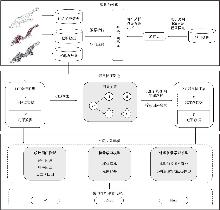
图1
本文研究技术路线"
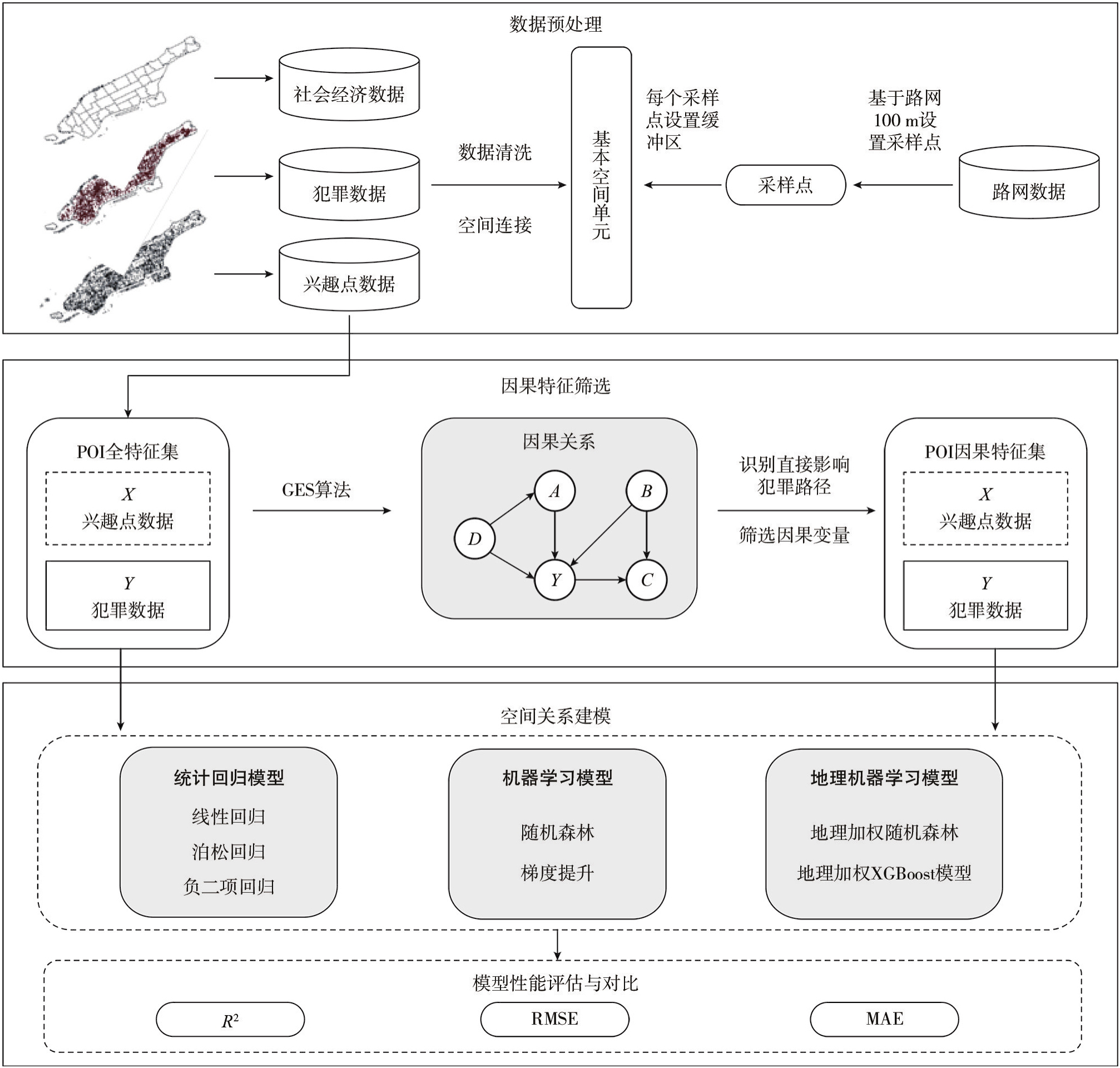
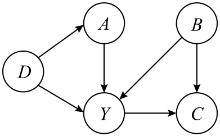
图2
完全部分有向无环图"
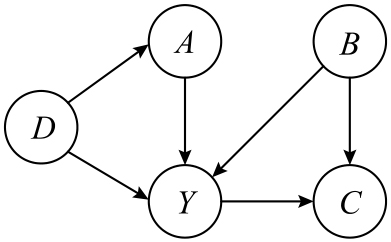
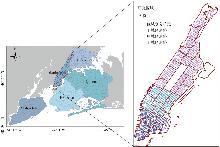
图3
研究区域:曼哈顿主半岛"

表1
研究数据说明"
| 数据名称 | 数据来源 | 数据内容 |
|---|---|---|
| 道路网络数据 | Open Street Map( | 研究区域的道路路网数据,包括道路等级,道路类别以及道路名称等信息 |
| 抢劫犯罪数据 | 纽约市公开数据平台( | 2022年纽约市记录的接警数据,包括犯罪地点、犯罪类别以及时间等信息 |
| 兴趣点数据 | Open Street Map | 研究区域的兴趣点数据,包括设施类型、设施位置以及设施名称等信息 |
| 社会人口统计数据 | 纽约市公开数据平台 | 纽约市的社会人口区域,包括人口数量、社区面积以及各种族占比等信息 |
| 社会经济数据 | 2020年美国人口普查( | 涉及就业状况、收入、家庭类型、住房和教育等诸多信息 |
表2
兴趣点数据描述"
| 兴趣点类 | 兴趣点子类 |
|---|---|
| Accomodation(住宿) | hostel、hotel、shelte |
| Leisure(休闲) | nightclub、sport_centre、tennis_court、cinema、theatre、pitch、ice_rink、park、playground |
| Miscpoi(其他) | tower_cooms、camera_surveillance、bench、toilet、fountain、drinking_water |
| Money(金融) | bank、ATM |
| Public(公共设施) | university、school、college、fire_station、police、library、post_box、courthouse、post_office、kindergarten、telephone、community_centre、arts_centre |
| Shopping(购物) | bakery、beverages、bookshop、butcher、car_dealership、car_rental、car_repair、chemist、clothes、convenience、department_store、florist、general、gift_shop、hair、jeweller、kiosk、laundry、mall、optician、shoes_shop、sports_shop、supermarket |
| Tourism(旅游) | museum、monument、attraction、memorial、ruins、viewpoint |
| Health(医疗) | doctors、veterinary、clinic、dentist、pharmacy、hospital |
| Catering(餐饮) | bar、fast-food、restaurant、food_court、pub、cafe |
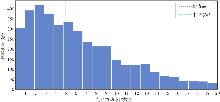
图4
街区抢劫案件数量分布"
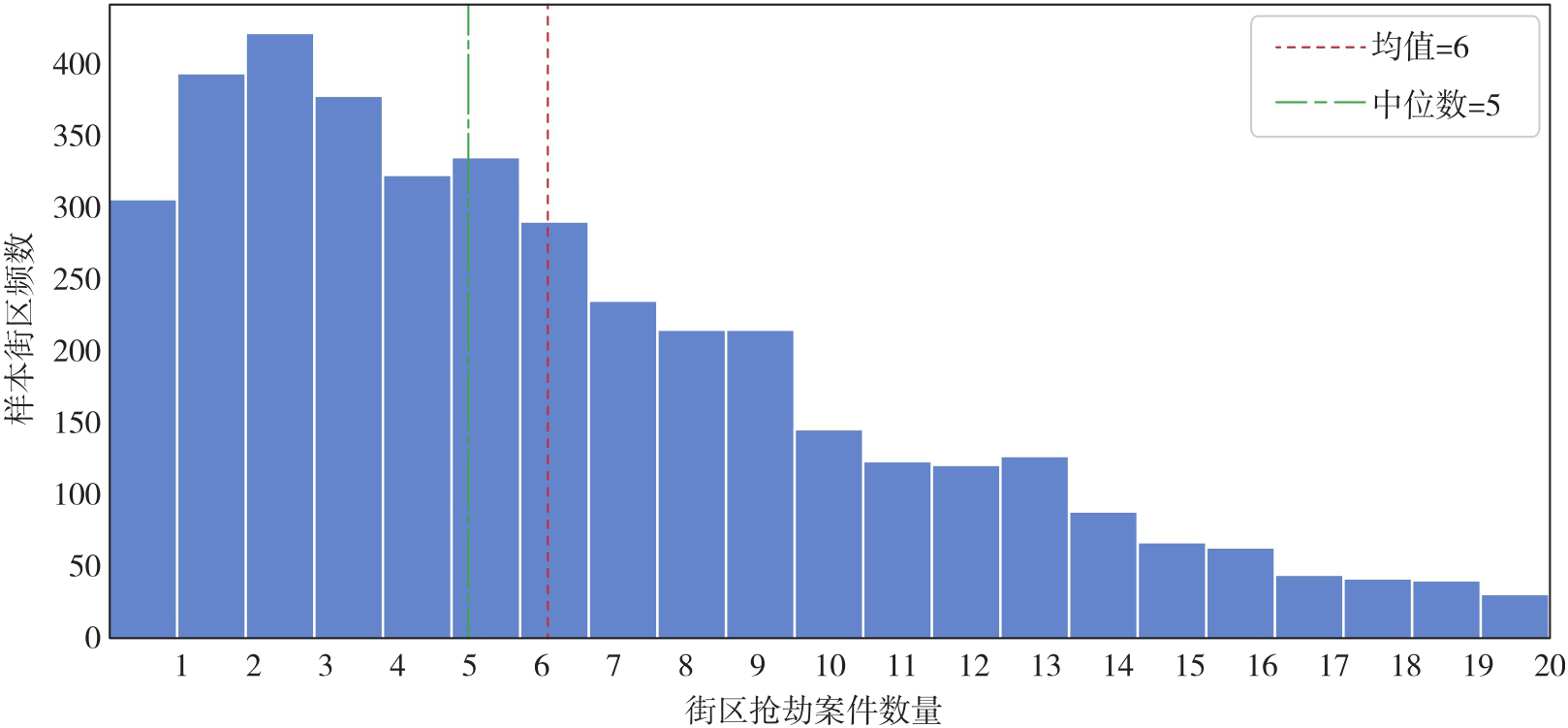
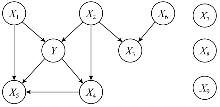
图5
休闲类兴趣点与街面抢劫犯罪的因果结构注:X1为夜总会;X2为体育中心;X3为网球场;X4为电影院;X5为剧院;X6为球场;X7为溜冰场;X8为公园;X9游乐场;Y为抢劫。"
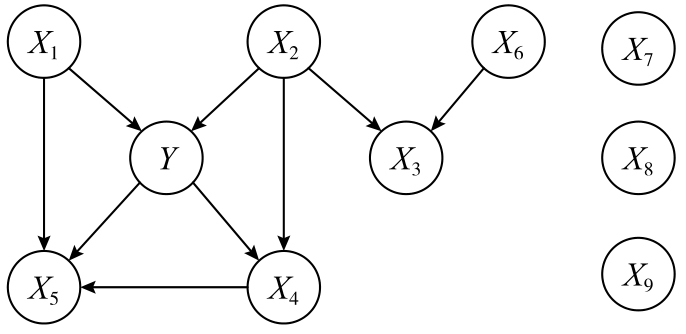
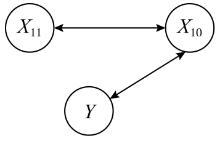
图6
金融类兴趣点与街面抢劫犯罪的因果结构注:X10为银行;X11为自动取款机。"
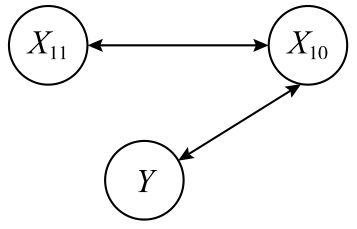
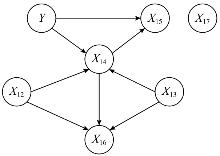
图7
医疗类兴趣点与街面抢劫犯罪的因果结构注:X12为诊所;X13为兽医部;X14为门诊部;X15为牙科诊所;X16为药店;X17为医院。"
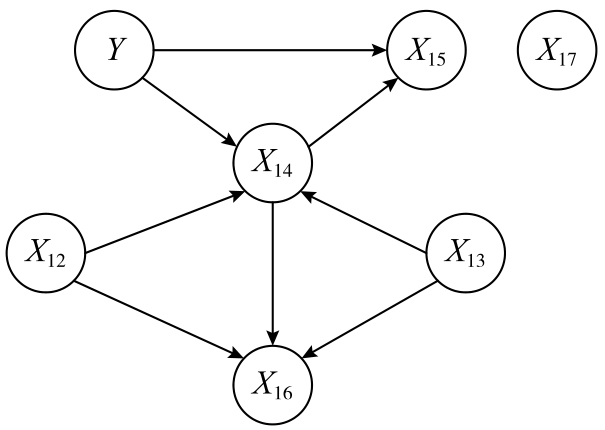
表3
因果POI类型"
| 兴趣点类 | 兴趣点子类 |
|---|---|
| Catering(餐饮) | bar、fast_food、restaurant |
| Leisure(休闲) | night_club、sport_centre |
| Miscpoi(其他) | bench、camera_surveillance、tower_rooms |
| Money(金融) | bank |
| Public(公共设施) | telephone、arts_center、post_office |
| Shopping(购物) | bakery、clothes、convenience、hairdresser、shoe_shop、departments |
| Tourism(旅游) | attraction、memorial |
表4
不同特征组合与模型架构下的性能评估结果"
| 算法类别 | 具体算法 | POI因果特征集 | POI因果特征集+社会经济指标 | POI全特征集 | POI全特征集+社会经济指标 | ||||||||
|---|---|---|---|---|---|---|---|---|---|---|---|---|---|
| MAE | RMSE | R2 | MAE | RMSE | R2 | MAE | RMSE | R2 | MAE | RMSE | R2 | ||
| 统计回归模型 | 线性回归 | 5.25 | 7.86 | 0.11 | 5.03 | 7.66 | 0.16 | 5.25 | 7.96 | 0.09 | 5.03 | 7.76 | 0.14 |
| 泊松回归 | 5.28 | 7.96 | 0.09 | 5.05 | 7.77 | 0.13 | 5.27 | 8.03 | 0.075 | 5.08 | 7.86 | 0.11 | |
| 负二项回归 | 5.32 | 8.06 | 0.06 | 5.18 | 8.08 | 0.06 | 5.29 | 8.13 | 0.051 | 5.32 | 8.16 | 0.04 | |
| 机器学习模型 | 随机森林 | 5.48 | 8.61 | -0.06 | 3.87 | 6.29 | 0.48 | 5.52 | 8.62 | -0.005 | 3.83 | 6.22 | 0.49 |
| 梯度提升 | 5.18 | 7.96 | 0.09 | 4.06 | 6.12 | 0.47 | 4.88 | 8.17 | 0.04 | 4.01 | 6.12 | 0.46 | |
| 地理机器学习模型 | 地理加权 | 2.88 | 4.41 | 0.72 | 3.18 | 4.87 | 0.65 | 2.91 | 4.61 | 0.69 | 3.01 | 4.73 | 0.67 |
| 随机森林 | |||||||||||||
| 地理加权 | 3.11 | 4.93 | 0.65 | 3.38 | 5.47 | 0.57 | 3.13 | 4.95 | 0.64 | 3.37 | 5.35 | 0.58 | |
| XGBoost | |||||||||||||
表5
不同特征集VIF多重共线性分析"
| 特征分组 | 最大VIF值 | 共线性程度 |
|---|---|---|
| 仅POI因果特征 | 1.749 | 无共线性 |
| POI+社会经济特征 | 12.522 | 严重多重共线性 |
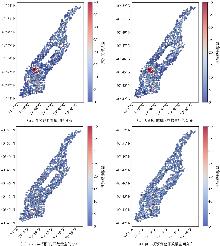
图8
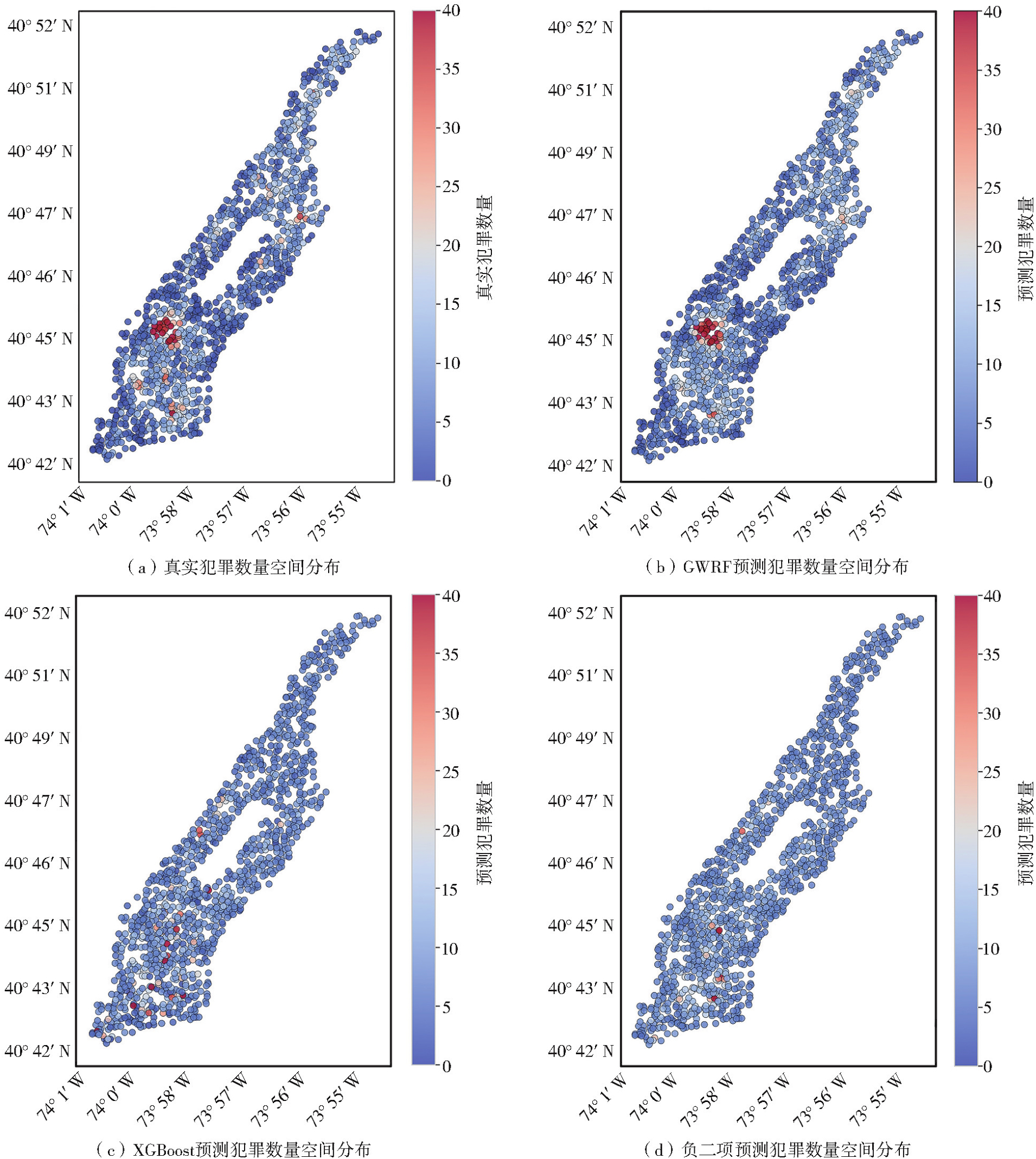
空间预测性能可视化对比"
| [1] | 毛媛媛, 戴慎志. 犯罪空间分布与环境特征:以上海市为例[J]. 城市规划学刊, 2006(3): 85-93. |
| Mao Yuanyuan, Dai Shenzhi. Research on spatial and environmental characters of crimes: case study of Shanghai[J]. Urban Planning Forum, 2006(3): 85-93. | |
| [2] | 王发曾. 城市空间环境对城市犯罪的影响[J]. 人文地理, 2001, 16(2): 1-6, 11. |
| Wang Fazeng. The urban spatial environment's influences on urban crime[J]. Human Geography, 2001, 16(2): 1-6, 11. | |
| [3] | Hipp J R, Lee S, Ki D, et al. Measuring the built environment with Google street view and machine learning: consequences for crime on street segments[J]. Journal of Quantitative Criminology, 2022, 38(3): 537-565. |
| [4] | 贺力, 陈晨, 王忠民, 等. 城市微环境与盗窃犯罪关系研究进展[J]. 地理研究, 2022, 41(11): 2912-2931. |
| He Li, Chen Chen, Wang Zhongmin, et al. A review on the relationship between urban micro-environment and theft[J]. Geographical Research, 2022, 41(11): 2912-2931. | |
| [5] | 张延吉, 秦波, 朱春武. 北京城市建成环境对犯罪行为和居住安全感的影响[J]. 地理学报, 2019, 74(2): 238-252. |
| Zhang Yanji, Qin Bo, Zhu Chunwu. The impact of urban built environment on criminal behavior and residential security in Beijing[J]. Acta Geographica Sinica, 2019, 74(2): 238-252. | |
| [6] | 顾海硕, 陈鹏, 李慧波. 犯罪时空预测方法研究综述与展望[J]. 地球信息科学学报, 2021, 23(1): 43-57. |
| Gu Haishuo, Chen Peng, Li Huibo. Overview and prospect for spatial-temporal prediction of crime[J]. Journal of Geo-information Science, 2021, 23(1): 43-57. | |
| [7] | Altman N, Krzywinski M. Simple linear regression[J]. Nature Methods, 2015, 12(11): 999-1000. |
| [8] | Nelder J A, Wedderburn R W M. Generalized linear models[J]. Journal of the Royal Statistical Society Series A (General), 1972, 135(3): 370. |
| [9] | Lawless J F. Negative binomial and mixed Poisson regression[J]. Canadian Journal of Statistics, 1987, 15(3): 209-225. |
| [10] | Luo Liang, Deng Min, Shi Yan, et al. Associating street crime incidences with geographical environment in space using a zero-inflated negative binomial regression model[J]. Cities, 2022, 129: 103834. |
| [11] | Chen Jianguo, Liu Lin, Zhou Suhong, et al. Modeling spatial effect in residential burglary: a case study from ZG city, China[J]. ISPRS International Journal of Geo-Information, 2017, 6(5): 138. |
| [12] | Xu Pengpeng, Huang Helai. Modeling crash spatial heterogeneity: random parameter versus geographically weighting[J]. Accident Analysis & Prevention, 2015, 75: 16-25. |
| [13] | O'Sullivan D. Geographically weighted regression: the analysis of spatially varying relationships, by A. S.fotheringham, C.brunsdon, and M.charlton[J]. Geographical Analysis, 2003, 35(3): 272-275. |
| [14] | Da Silva A R, Rodrigues T C V. Geographically weighted negative binomial regression: incorporating overdispersion[J]. Statistics and Computing, 2014, 24(5): 769-783. |
| [15] | 徐冲, 柳林, 周素红, 等. 微观空间因素对街头抢劫影响的空间异质性:以DP半岛为例[J]. 地理研究, 2017, 36(12): 2492-2504. |
| Xu Chong, Liu Lin, Zhou Suhong, et al. Spatial heterogeneity of micro-spatial factors'effects on street robberies: a case study of DP peninsula[J]. Geographical Research, 2017, 36(12): 2492-2504. | |
| [16] | Chen Jianguo, Liu Lin, Xiao Luzi, et al. Integrative analysis of spatial heterogeneity and overdispersion of crime with a geographically weighted negative binomial model[J]. ISPRS International Journal of Geo-Information, 2020, 9(1): 60. |
| [17] | Breiman L. Random forests[J]. Machine Learning, 2001, 45(1): 5-32. |
| [18] | Chen T Q, Guestrin C. XGBoost: a scalable tree boosting system[C]//Proceedings of the 22nd ACM SIGKDD International Conference on Knowledge Discovery and Data Mining. San Francisco: ACM Press, 2016: 785-794. |
| [19] | Zhang Zhongheng. Introduction to machine learning: k-nearest neighbors[J]. Annals of Translational Medicine, 2016, 4(11): 218. |
| [20] | De Maris A. A tutorial in logistic regression[J]. Journal of Marriage and the Family, 1995, 57(4): 956. |
| [21] | 孙菲菲, 曹卓, 肖晓雷. 基于随机森林的分类器在犯罪预测中的应用研究[J]. 情报杂志, 2014, 33(10): 148-152. |
| Sun Feifei, Cao Zhuo, Xiao Xiaolei. Application of an improved random forest based classifier in crime prediction domain[J]. Journal of Intelligence, 2014, 33(10): 148-152. | |
| [22] | 王梓蒙, 刘艳芳, 罗璇, 等. 基于多源数据的城市活力与建成环境非线性关系研究:以双休日武汉市主城区为例[J]. 地理科学进展, 2023, 42(4): 716-729. |
| Wang Zimeng, Liu Yanfang, Luo Xuan, et al. Nonlinear relationship between urban vitality and the built environment based on multi-source data: a case study of the main urban area of Wuhan city at the weekend[J]. Progress in Geography, 2023, 42(4): 716-729. | |
| [23] | 王为久, 徐敏亚, 徐博希, 等. 基于XGBoost算法的非法经营罪量刑预测模型构建及应用[J]. 情报探索, 2022(9): 20-28. |
| Wang Weijiu, Xu Minya, Xu Boxi, et al. Crime of illegal business operations sentencing prediction based on text mining and XGBoost model[J]. Information Research, 2022(9): 20-28. | |
| [24] | Xie Huafang, Liu Lin, Yue Han. Modeling the effect of streetscape environment on crime using street view images and interpretable machine-learning technique[J]. International Journal of Environmental Research and Public Health, 2022, 19(21): 13833. |
| [25] | Georganos S, Kalogirou S. A forest of forests: a spatially weighted and computationally efficient formulation of geographical random forests[J]. ISPRS International Journal of Geo-Information, 2022, 11(9): 471. |
| [26] | Khosravi Y, Ouarda T B M J. A geographically weighted XGBoost framework for pixel-level modeling of vegetation responses using multi-source Earth observation data[J]. ISPRS Journal of Photogrammetry and Remote Sensing, 2026, 235: 105-132. |
| [27] | Zhang Wantao, Ji Jingyi, Li Binbin, et al. Integrating genetic algorithm and geographically weighted approaches into machine learning improves soil pH prediction in China[J]. Remote Sensing, 2025, 17(6): 1086. |
| [28] | 李兰晖, 黄聪聪, 张镱锂, 等. 基于地理加权随机森林的青藏地区放牧强度时空格局模拟[J]. 地理科学, 2023, 43(3): 398-410. |
| Li Lanhui, Huang Congcong, Zhang Yili, et al. Mapping the multi-temporal grazing intensity on the Qinghai-Tibet Plateau using geographically weighted random forest[J]. Scientia Geographica Sinica, 2023, 43(3): 398-410. | |
| [29] | Gao B B, Wang J F, Stein A, et al. Causal inference in spatial statistics[J]. Spatial Statistics, 2022, 50: 100621. |
| [30] | Akbari K, Winter S, Tomko M. Spatial causality: a systematic review on spatial causal inference[J]. Geographical Analysis, 2023, 55(1): 56-89. |
| [31] | Pearl J. Causality: models, reasoning, and inference[M]. 2nd ed. Cambridge: Cambridge University Press, 2009. |
| [32] | 苏建宾, 陈都鑫, 郑东海, 等. 追索为什么?地球系统科学中的因果推理[J]. 中国科学:地球科学, 2023, 53(10): 2199-2216. |
| Su Jianbin, Chen Duxin, Zheng Donghai, et al. The insight of why: causal inference in Earth system science[J]. Science China Earth Sciences, 2023, 66(10): 2169-2186. | |
| [33] | 龙锦颖, 张春霞, 宋广文, 等. 警察盘查时空模式对街面盗窃的因果效应:以ZG市CBD为例[J]. 地理科学进展, 2024, 43(11): 2284-2297. |
| Long Jinying, Zhang Chunxia, Song Guangwen, et al. Causal effect of spatiotemporal patterns of police stops on street thefts: a case study of the central business district of ZG city[J]. Progress in Geography, 2024, 43(11): 2284-2297. | |
| [34] | He Zhanjun, Meng Wantong, Yao Jing, et al. Measuring the causal effect of urban environments on crime with street view images and points of interest[J]. Cities, 2026, 168: 106399. |
| [35] | Vachuska K. Urban mobility and crime: causal inference using street closures as an instrumental variable[J]. Frontiers in Big Data, 2025, 8: 1579332. |
| [36] | Chickering D M. Learning equivalence classes of Bayesian-network structures[J]. Journal of Machine Learning Research, 2002, 2: 445-498. |
| [37] | He Zhanjun, Deng Min, Xie Zhong, et al. Discovering the joint influence of urban facilities on crime occurrence using spatial co-location pattern mining[J]. Cities, 2020, 99: 102612. |
| [38] | Wang Wenji, Song Yang, Kong Jie, et al. Exploring the spatial relationship between crime and urban places in Austin: a geographically weighted regression approach[J]. Urban Science, 2025, 9(9): 359. |
| [39] | He Zhanjun, Gu Yu, Gong Yuejian, et al. Analyzing the joint influence of urban facilities and street perception characteristics on street robbery[J]. Journal of Geovisualization and Spatial Analysis, 2025, 9(1): 22. |
| [40] | Brantingham P L, Brantingham P J. Criminality of place[J]. European Journal on Criminal Policy and Research, 1995, 3(3): 5-26. |
| [41] | Hart T C, Miethe T D. Configural behavior settings of crime event locations: toward an alternative conceptualization of criminogenic microenvironments[J]. Journal of Research in Crime and Delinquency, 2015, 52(3): 373-402. |
| [42] | Kurland J, Johnson S D, Tilley N. Offenses around stadiums: a natural experiment on crime attraction and generation[J]. Journal of Research in Crime and Delinquency, 2014, 51(1): 5-28. |
| [43] | 黄邓楷, 赖文波, 薛蕊. 基于CPTED理论的大学校园环境安全评价研究:以华南理工大学五山校区为例[J]. 风景园林, 2018, 25(7): 36-41. |
| Huang Dengkai, Lai Wenbo, Xue Rui. Environmental safety evaluation of university campus based on CPTED theory: South China U-niversity of technology (Wushan) as an example[J]. Landscape Architecture, 2018, 25(7): 36-41. | |
| [44] | 张艺鸽, 杨芳绒, 王梦瑶. 基于CPTED理论和空间句法的城市公园犯罪防控分析:以郑州市人民公园、紫荆山公园为例[J]. 西南大学学报(自然科学版), 2022, 44(1): 202-212. |
| Zhang Yige, Yang Fangrong, Wang Mengyao. Investigation of urban park crime prevention based on CPTED theory and space syntax: taking People's park and Zijingshan park in Zhengzhou as examples[J]. Journal of Southwest University (Natural Science), 2022, 44(1): 202-212. | |
| [45] | Wang Tao, Chen Peng, Shan Miaoxuan. Crime spatiotemporal prediction through urban region representation by using building footprints[J]. Big Data and Cognitive Computing, 2025, 9(12): 301. |
| [46] | Yue Han, Chen Jianguo. Interpretable spatial machine learning for understanding spatial heterogeneity in factors affecting street theft crime[J]. Applied Geography, 2025, 175: 103503. |
| [47] | Yao Yao, Dong Anning, Liu Zhiqian, et al. Extracting the pickpocketing information implied in the built environment by treating it as the anomalies[J]. Cities, 2023, 143: 104575. |
| [48] | Zhang Xu, Liu Lin, Lan Minxuan, et al. Interpretable machine learning models for crime prediction[J]. Computers, Environment and Urban Systems, 2022, 94: 101789. |
| [49] | Tutak M, Brodny J. A smart city is a safe city: analysis and evaluation of the state of crime and safety in Polish cities[J]. Smart Cities, 2023, 6(6): 3359-3392. |
| [1] | 赵志刚, 江思瑶, 陈业滨, 陈永丽, 郭仁忠. 泛地图符号系统的概念框架及建构机制[J]. 测绘学报, 2026, 55(9): 1653-1665. |
| [2] | 鲁谢春, 侯培阳, 马凯, 陈占龙, 徐永洋. 融合骨架与轮廓特征的建筑物形状编码模型[J]. 测绘学报, 2026, 55(9): 1679-1694. |
| [3] | 柴润泽, 李精忠, 闫浩文, 王小龙, 刘振跃, 王灵. 融合三维地形特征的图Transformer河网模式识别方法[J]. 测绘学报, 2026, 55(9): 1695-1705. |
| [4] | 汤圣君, 李寒雨, 王伟玺, 谢林甫, 李晓明, 郭仁忠. 倾斜摄影三维Mesh模型无参考逐面片缺陷检测与质量评估方法[J]. 测绘学报, 2026, 55(8): 1382-1399. |
| [5] | 刘万增, 陈军, 任加新, 张丰, 黄丽娜, 王新鹏, 张晔, 梁福逊, 刘晓瑜. 时空场景认知的研究方向与核心任务[J]. 测绘学报, 2026, 55(8): 1465-1481. |
| [6] | 李雅丽, 郝悦竹, 向隆刚, 张彩丽, 刘茂华. 融合轨迹和遥感影像的立交桥精细结构提取方法[J]. 测绘学报, 2026, 55(8): 1482-1495. |
| [7] | 张柯, 郭文月, 陈欣, 任柳欣, 陈俊铭, 张政. 基于骨架点拓扑语义辨识的道路中心线修复方法[J]. 测绘学报, 2026, 55(8): 1496-1510. |
| [8] | 柳林, 裴冬梅, 李万武, 唐修涛, 武彬, 金岩. 顾及风险等级的消防站选址多目标层级模糊优化模型构建及求解[J]. 测绘学报, 2026, 55(7): 1293-1305. |
| [9] | 熊伟婷. 动态网络视角下城市阴影区的空间结构模式与消解机制研究[J]. 测绘学报, 2026, 55(7): 1322-1322. |
| [10] | 阳洁. 面向矿化三维空间结构分析的空间域复合变量理论与杨赤中法[J]. 测绘学报, 2026, 55(7): 1323-1323. |
| [11] | 曾帅. 长江平原湖泊颗粒磷浓度遥感反演与应用研究[J]. 测绘学报, 2026, 55(7): 1328-1328. |
| [12] | 郭庆华, 杨泽坤, 齐志勇, 张艺轩, 程芷信, 刘康, 程凯, 陈昂, 杨璐忆. 测绘地理信息驱动低空经济:关键技术突破与产业发展[J]. 测绘学报, 2026, 55(6): 975-989. |
| [13] | 韩冰. 基于多源数据的急救需求时空特征及院前急救设施布局研究——以南京市为例[J]. 测绘学报, 2026, 55(6): 1131-1131. |
| [14] | 时满星. 中国中部地区公里尺度雷暴时数影响因素与建模研究[J]. 测绘学报, 2026, 55(6): 1133-1133. |
| [15] | 刘万增, 陈军, 章炜. 论地理信息保密的技术逻辑[J]. 测绘学报, 2026, 55(5): 826-837. |
| 阅读次数 | ||||||
|
全文 |
|
|||||
|
摘要 |
|
|||||
