

Acta Geodaetica et Cartographica Sinica ›› 2026, Vol. 55 ›› Issue (10): 1814-1828.doi: 10.11947/j.AGCS.2026.20260182
• Marine Surveying and Mapping • Previous Articles Next Articles
Yinbo Zhang1( ), Shaobo Li1,2,3,4(), Yi Zhang4,5, Yunlong Wu1,4
Received:2026-05-12
Revised:2026-10-19
Online:2026-11-16
Published:2026-11-16
Contact:
Shaobo Li
E-mail:1202521367@cug.edu.cn;lishaobo@cug.edu.cn
About author:Zhang Yinbo (2002—), male, postgraduate, majors in seafloor sonar target detection. E-mail: 1202521367@cug.edu.cn
Supported by:CLC Number:
Yinbo Zhang, Shaobo Li, Yi Zhang, Yunlong Wu. Submarine pipeline detection using sub-bottom profiler guided by hyperbolic morphological priors[J]. Acta Geodaetica et Cartographica Sinica, 2026, 55(10): 1814-1828.
Fig. 1
Overall framework of the improved detection model"
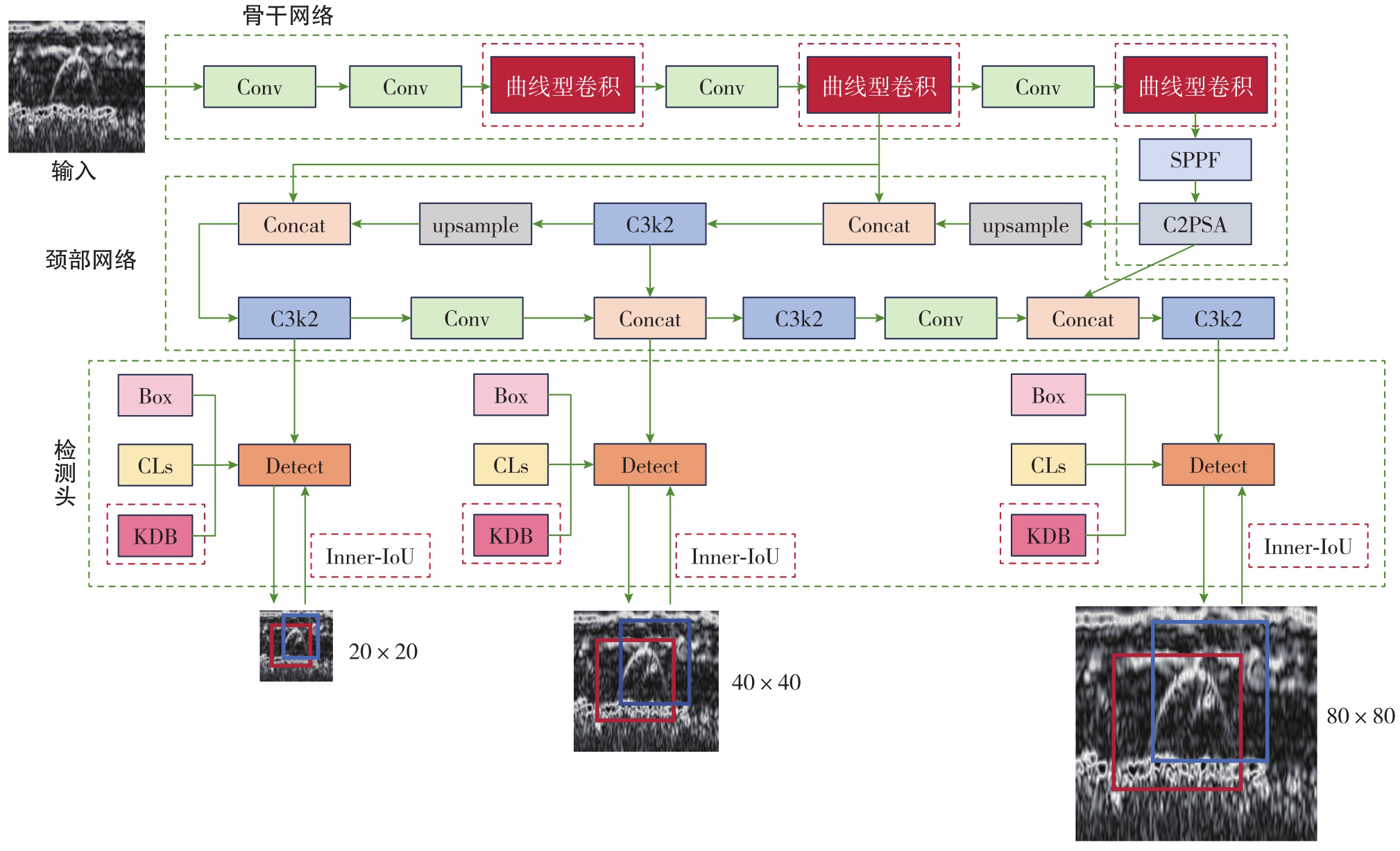
Fig. 2
Curve convolution iterative strategy"
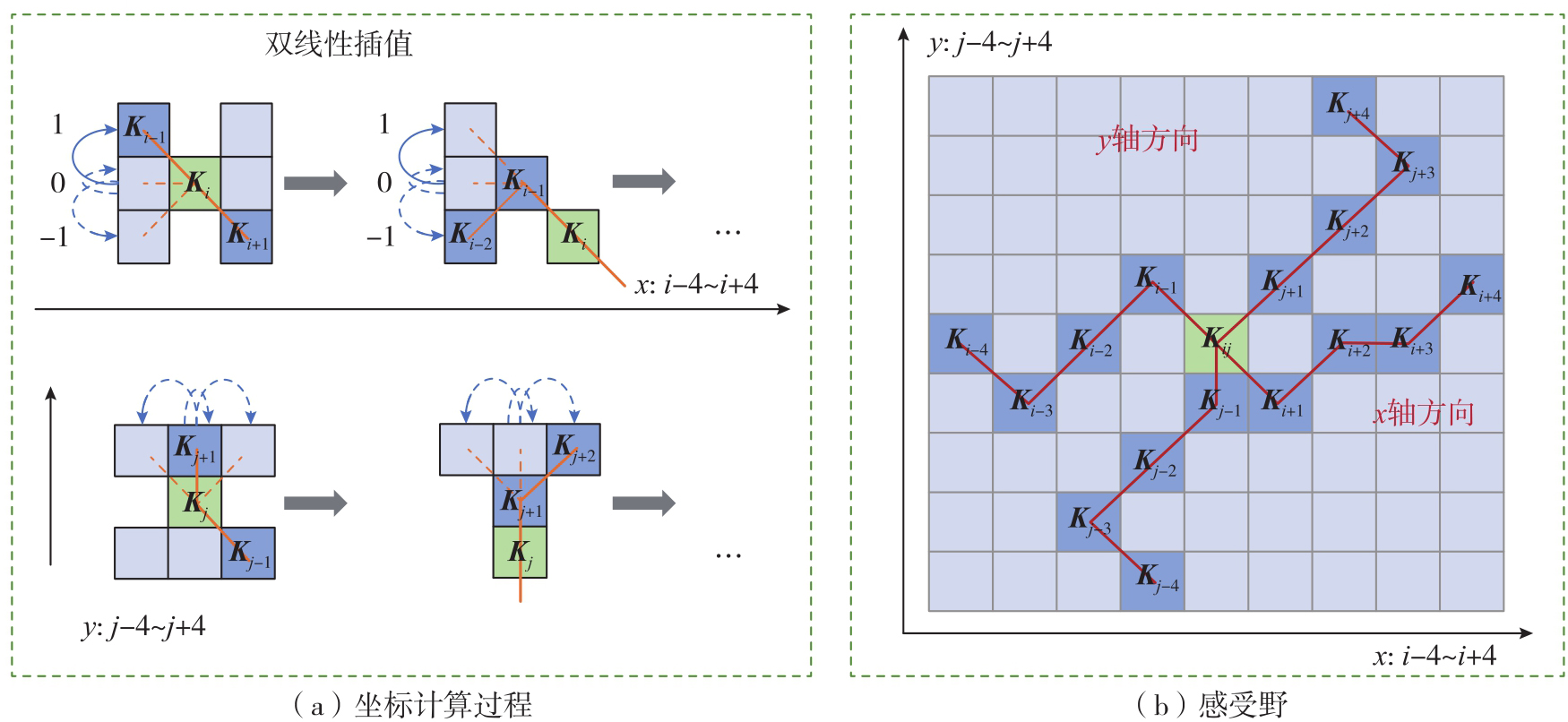
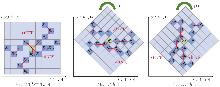
Fig. 3
Oblique convolution"

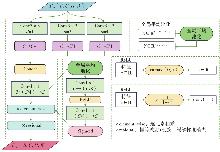
Fig. 4
Structure of MSFA module"
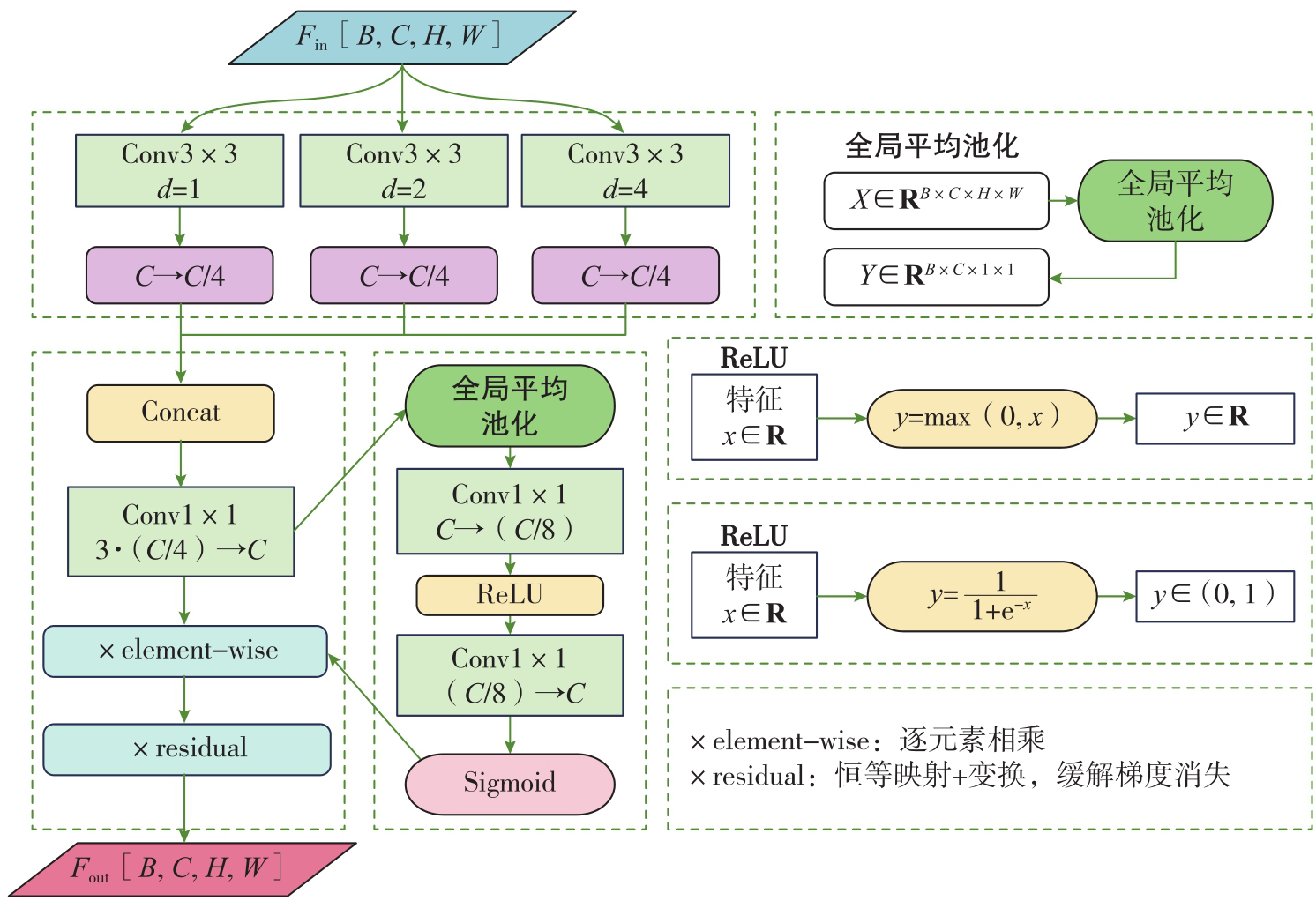
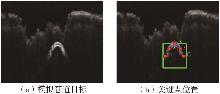
Fig. 5
Hyperbolic key points of the pipeline"
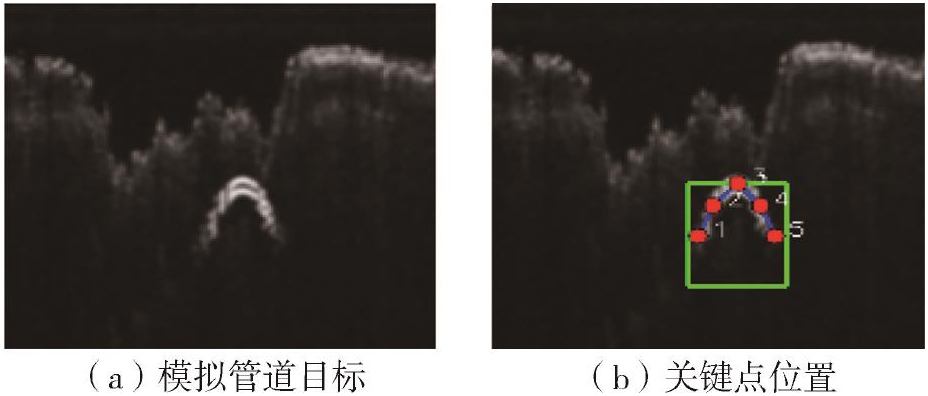
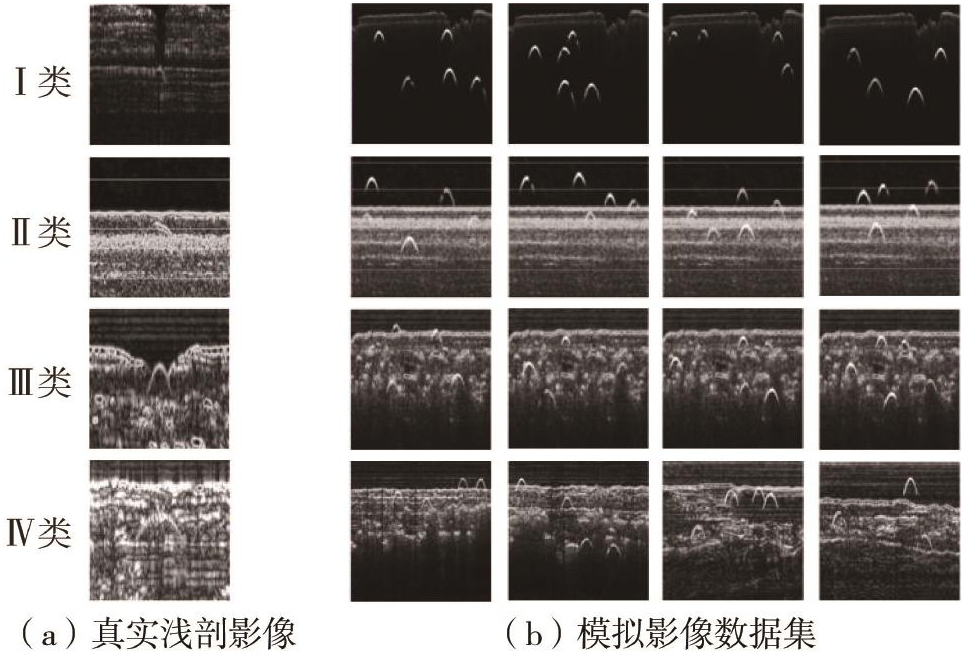
Fig. 6
Pipeline dataset"
Tab. 1
Experimental datasets"
| 数据集 | 类型 | 数量 |
|---|---|---|
| 训练集 | 模拟数据 | 620 |
| 验证集 | 模拟数据 | 200 |
| 测试集 | 真实数据 | 204 |
Fig. 7
Experimental results"
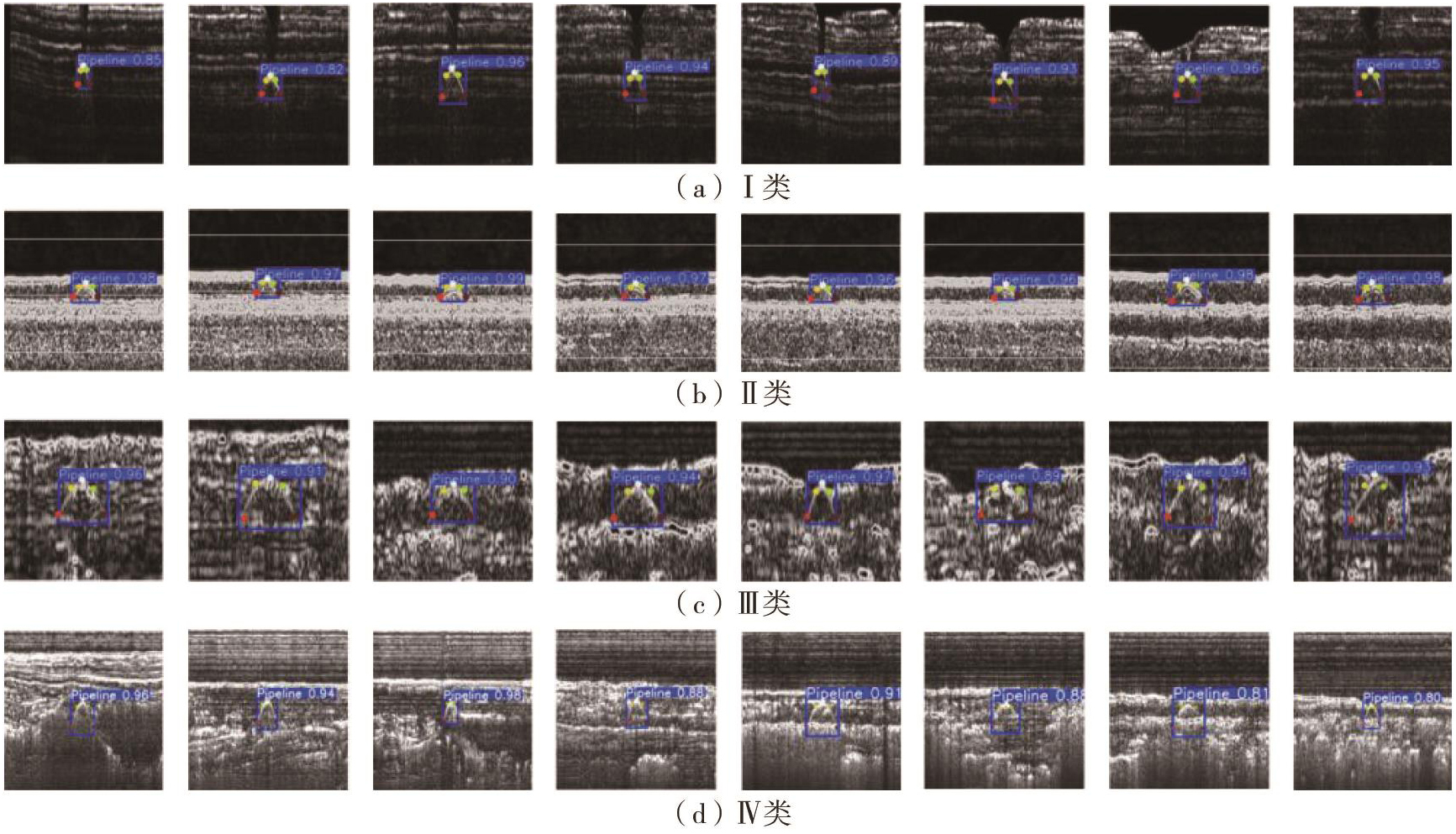
Fig. 8
Results of model ablation experiments"
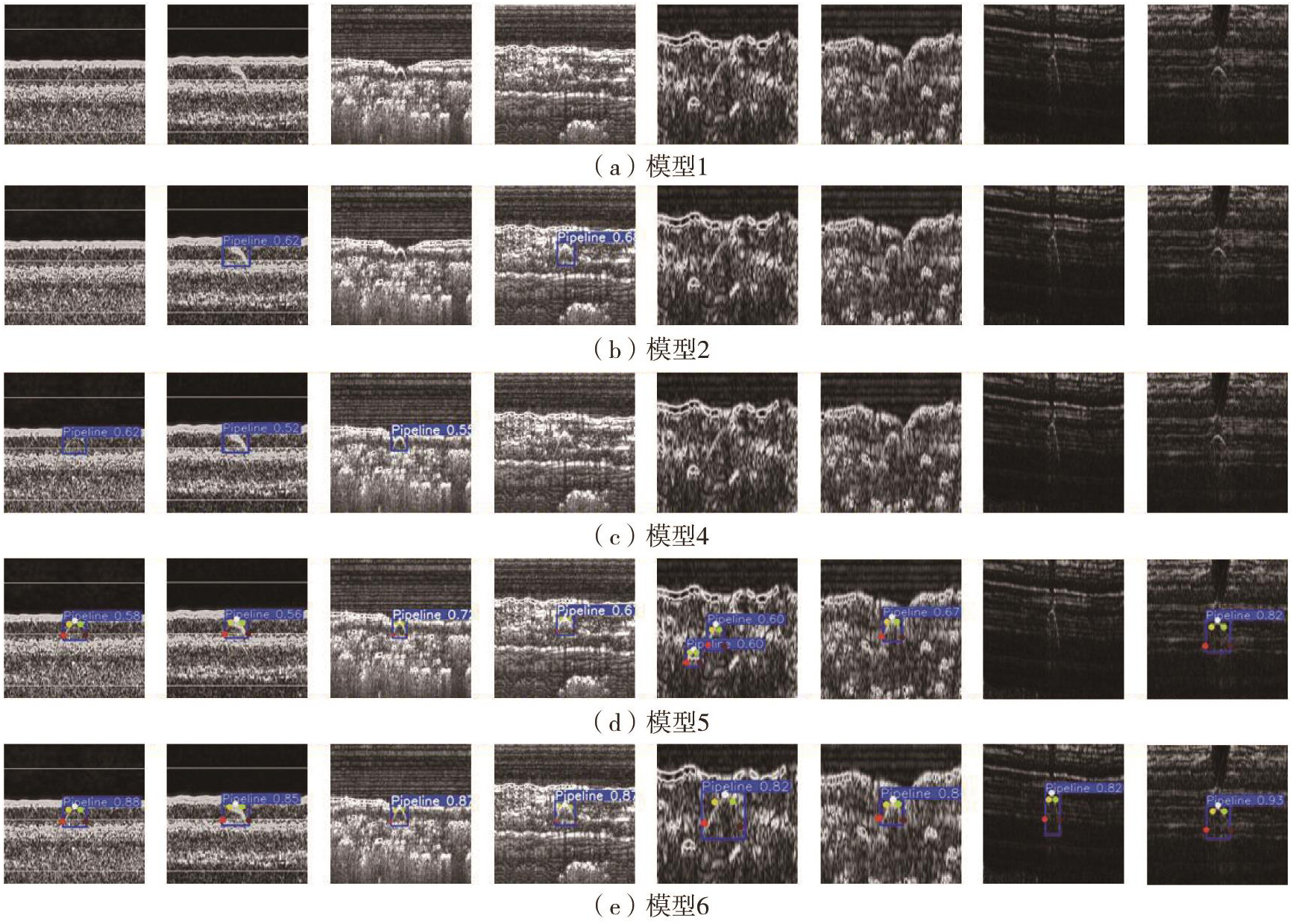
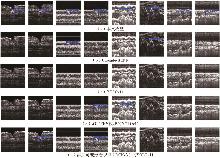
Fig. 9
Results of model comparison experiments"

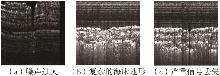
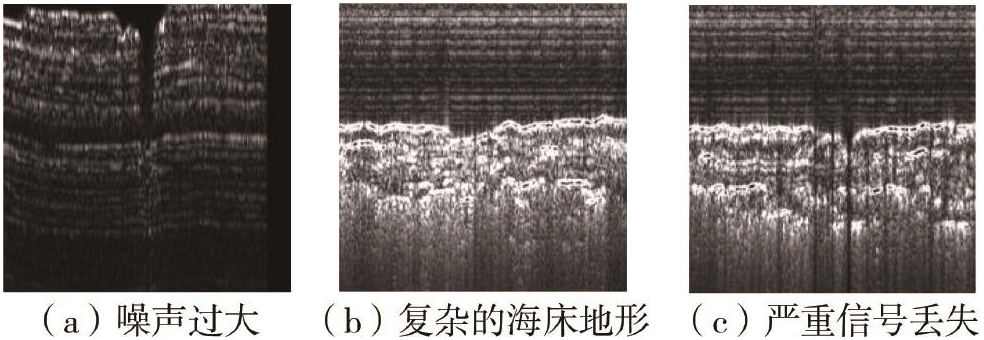
Fig. 10
Examples of misclassification"
Tab. 2
Results of the ablation experiments"
| 模型名称 | 召回率 | 精确率 | F1值 | mAP@0.5 | Params | FLOPs | 推理速度/(帧/s) |
|---|---|---|---|---|---|---|---|
| 模型1 | 0.578 4 | 0.967 2* | 0.723 9 | 0.720 8 | 2.59×10⁶ | 6.00×10⁹ | 96.89 |
| 模型2 | 0.666 7 | 0.918 9 | 0.772 7 | 0.784 1 | 2.63×10⁶ | 6.20×10⁹ | 84.56 |
| 模型3 | 0.686 3 | 0.952 4 | 0.797 7 | 0.799 5 | 2.70×10⁶ | 6.40×10⁹ | 76.08 |
| 模型4 | 0.705 9 | 0.935 1 | 0.804 5 | 0.813 0 | 2.85×10⁶ | 7.30×10⁹ | 74.15 |
| 模型5 | 0.754 9 | 0.870 1 | 0.808 4 | 0.822 5 | 3.05×10⁶ | 7.90×10⁹ | 61.50 |
| 模型6 | 0.813 7* | 0.834 2 | 0.823 8* | 0.826 0* | 3.09×10⁶ | 7.90×10⁹ | 59.98 |
Tab. 3
Ablation results of removing a single module from the full model"
| 模型名称 | 召回率 | 精确率 | F1值 | mAP@0.5 |
|---|---|---|---|---|
| 本文模型 | 0.813 7 | 0.834 2 | 0.823 8 | 0.826 0 |
| 去除斜向卷积 | 0.798 8 | 0.823 5 | 0.811 0 | 0.817 0 |
| 去除MSFA模块 | 0.781 5 | 0.832 0 | 0.806 0 | 0.813 5 |
| 去除关键点分支 | 0.722 0 | 0.931 0 | 0.813 3 | 0.816 5 |
| 去除Inner-IoU | 0.754 9 | 0.870 1 | 0.808 4 | 0.822 5 |
Tab. 4
Comparative experimental results"
| 模型名称 | 召回率 | 精确率 | F1值 | mAP@0.5 | Params | FLOPs | 推理速度/(帧/s) |
|---|---|---|---|---|---|---|---|
| YOLOv11 | 0.578 4 | 0.967 2 | 0.723 9 | 0.720 8 | 2.59×10⁶* | 6.00×10⁹* | 96.89* |
| Cascade-R-CNN[ | 0.558 8 | 0.982 8* | 0.712 5 | 0.727 1 | 6.92×10⁵ | 2.44×10⁷ | 8.50 |
| 基于形态特征的管道探测方法[ | 0.696 8 | 0.729 8 | 0.713 0 | 0.676 6 | - | - | - |
| 添加FEM模块的YOLOv11[ | 0.666 7 | 0.918 9 | 0.772 7 | 0.749 4 | 2.78×10⁶* | 6.80×10⁹ | 78.30 |
| 添加可变形卷积v3的YOLOv11[ | 0.612 7 | 0.947 0 | 0.744 0 | 0.729 6 | 2.85×10⁶ | 7.10×10⁹ | 72.50 |
| 本文模型 | 0.813 7* | 0.834 2 | 0.823 8* | 0.826 0* | 3.09×10⁶ | 7.90×10⁹ | 59.98 |
Tab. 5
Performances comparison of different YOLO versions"
| 模型名称 | 召回率 | 精确率 | F1值 | mAP@0.5 | Params | FLOPs | 推理速度/(帧/s) |
|---|---|---|---|---|---|---|---|
| YOLOv8 | 0.559 8 | 0.966 9 | 0.709 1 | 0.708 0 | 3.29×10⁶ | 8.90×10⁹ | 84.62 |
| YOLOv11(本文基线) | 0.578 4 | 0.967 2 | 0.723 9 | 0.720 8 | 2.59×10⁶ | 6.00×10⁹ | 96.89 |
| YOLOv12 | 0.584 2 | 0.959 8 | 0.726 3 | 0.722 5 | 2.61×10⁶ | 6.50×10⁹ | 92.54 |
| YOLO26 | 0.591 1 | 0.955 3 | 0.730 3 | 0.728 3 | 2.45×10⁶ | 5.50×10⁹ | 108.31 |
| [1] | 戴清清. 海底管道隐患检测:研究进展与未来展望[J]. 上海国土资源, 2024, 45(4): 197-202. |
| Dai Qingqing. Underwater pipeline hazard detection: research progress and future prospects[J]. Shanghai Land & Resources, 2024, 45(4): 197-202. | |
| [2] | 侯志民, 施健, 胡斌. 侧扫声纳和浅地层剖面仪在海管断裂点定位中的应用[J]. 海洋测绘, 2017, 37(1): 79-82. |
| Hou Zhimin, Shi Jian, Hu Bin. Application of side-scan sonar and sub-bottom profiler in locating fracture positions of submarine pipelines[J]. Hydrographic Surveying and Charting, 2017, 37(1): 79-82. | |
| [3] | Dondurur D. Acquisition and processing of marine seismic data[M]. Amsterdam: Elsevier, 2018. |
| [4] |
李邵波. 海底浅地层掩埋目标探测与底质声学分类方法研究[J]. 测绘学报, 2025, 54(10): 1911. DOI .
doi: 10.11947/j.AGCS.2025.20240074 |
|
Li Shaobo. Research on sub-bottom buried target detection and acoustic classification of sediment[J]. Acta Geodaetica et Cartographica Sinica, 2025, 54(10): 1911. DOI .
doi: 10.11947/j.AGCS.2025.20240074 |
|
| [5] | 王恒波. 综合地球物理方法在海底管道检测中的应用:以舟山大陆引水工程为例[J]. 海岸工程, 2020, 39(3): 169-178. |
| Wang Hengbo. Integrated application of multiple marine geophysical approaches in submarine pipeline detection: a case of Zhoushan continental water diversion project[J]. Coastal Engineering, 2020, 39(3): 169-178. | |
| [6] | Li Shaobo, Zhao Jianhu, Zhang Hongmei, et al. Automatic detection of pipelines from sub-bottom profiler sonar images[J]. IEEE Journal of Oceanic Engineering, 2022, 47(2): 417-432. |
| [7] | Chen Pengcheng, Lu Shaoping, Cai Chen. Automated detection of hyperbola-shaped signature in subbottom profiler sonar image with morphological processing[J]. IEEE Transactions on Geoscience and Remote Sensing, 2024, 62: 5924414. |
| [8] | 施健, 蔡春麟. 机器学习在海底管道信号识别中的探索[J]. 海洋石油, 2018, 38(1): 90-94. |
| Shi Jian, Cai Chunlin. Application of machine learning in the recognition of submarine pipeline signal[J]. Offshore Oil, 2018, 38(1): 90-94. | |
| [9] | Ruan Fengxue, Dang Lanxue, Ge Qiang, et al. Dual-path residual “shrinkage” network for side-scan sonar image classification[J]. Computational Intelligence and Neuroscience, 2022, 2022: 6962838. |
| [10] | Cho H, Gu J, Joe H, et al. Acoustic beam profile-based rapid underwater object detection for an imaging sonar[J]. Journal of Marine Science and Technology, 2015, 20(1): 180-197. |
| [11] | Luo Xiaowen, Qin Xiaoming, Wu Ziyin, et al. Sediment classification of small-size seabed acoustic images using convolutional neural networks[J]. IEEE Access, 2019, 7: 98331-98339. |
| [12] | Xie Yingchun, Xiao Yucheng, Liu Xuyan, et al. Time-frequency distribution map-based convolutional neural network (CNN) model for underwater pipeline leakage detection using acoustic signals[J]. Sensors, 2020, 20(18): 5040. |
| [13] | Hożyń S. A review of underwater mine detection and classification in sonar imagery[J]. Electronics, 2021, 10(23): 2943. |
| [14] | Valdenegro-Toro M. Submerged marine debris detection with autonomous underwater vehicles[C]//Proceedings of 2016 International Conference on Robotics and Automation for Humanitarian Applications. Amritapuri: IEEE, 2016: 1-7. |
| [15] | Cong Lingyi, Zheng Jianglong, Zhang Luotao, et al. Deep learning-based detection of buried objects in marine sediments using timefrequency spectrograms from sub-bottom profiling data[J]. Applied Ocean Research, 2026, 166: 104911. |
| [16] | 张浚丰, 许明, 余小越, 等. 挡墙异常体雷达图像的深度学习智能判译方法[J]. 地球物理学报, 2025, 68(5): 1970-1983. |
| Zhang Junfeng, Xu Ming, Yu Xiaoyue, et al. Intelligent interpretation method of retaining wall anomaly radar images based on deep learning[J]. Chinese Journal of Geophysics, 2025, 68(5): 1970-1983. | |
| [17] | Zheng Gen, Zhao Jianhu, Li Shaobo, et al. Zero-shot pipeline detection for sub-bottom profiler data based on imaging principles[J]. Remote Sensing, 2021, 13(21): 4401. |
| [18] | 郑根, 赵建虎, 苑明哲, 等. 基于浅剖图像的海底管线状态自动诊断方法[J]. 海洋测绘, 2024, 44(4): 16-20. |
| Zheng Gen, Zhao Jianhu, Yuan Mingzhe, et al. A real-time detection method for underwater pipeline in side scan sonar images based on semantic segmentation[J]. Hydrographic Surveying and Charting, 2024, 44(4): 16-20. | |
| [19] | 冷强奎, 卢建旭, 孟祥福. 基于等级残差与双向特征融合机制的检测算法[J]. 计算机工程与应用, 2025, 61(19): 179-189. |
| Leng Qiangkui, Lu Jianxu, Meng Xiangfu. Detection algorithm based on hierarchical residuals and bidirectional feature fusion mechanism[J]. Computer Engineering and Applications, 2025, 61(19): 179-189. | |
| [20] | Yu Hui, Liu Jun, Lin Mingwei. A comprehensive literature review on YOLO-based small object detection: methods, challenges, and future trends[J]. Computers, Materials & Continua, 2026, 87(1): 1-10. |
| [21] | Feng Kunwei, Zhao Yonghui, Wu Jiansheng, et al. Cross-correlation attribute analysis of GPR data for tunnel engineering[C]//Proceedings of the 15th International Conference on Ground Penetrating Radar. Brussels: IEEE, 2014: 435-440. |
| [22] | Yan Yu, Jiao Guangxuan, Cui Minxing, et al. The lightweight method of ground penetrating radar (GPR) hidden defect detection based on SESM-YOLO[J]. Buildings, 2025, 15(13): 2345. |
| [23] | 王惠琴, 罗佳, 何永强, 等. 改进YOLOv5的探地雷达常见地下管线识别[J]. 地球物理学报, 2024, 67(9): 3588-3604. |
| Wang Huiqin, Luo Jia, He Yongqiang, et al. Identification of common underground pipelines by ground penetrating radar based on improved YOLOv5[J]. Chinese Journal of Geophysics, 2024, 67(9): 3588-3604. | |
| [24] | Kaur P, Dana K J, Romero F A, et al. Automated GPR rebar analysis for robotic bridge deck evaluation[J]. IEEE Transactions on Cybernetics, 2016, 46(10): 2265-2276. |
| [25] | Giannakis I, Giannopoulos A, Warren C. A machine learning-based fast-forward solver for ground penetrating radar with application to full-waveform inversion[J]. IEEE Transactions on Geoscience and Remote Sensing, 2019, 57(7): 4417-4426. |
| [26] | Ren Qiuyang, Wang Yanhui, Xu Jie. A two-stage hyperbola localization method in GPR images based on frequency-domain feature aggregation[J]. IEEE Transactions on Geoscience and Remote Sensing, 2025, 63: 5108217. |
| [27] | 熊干, 陈慈发, 张上. QMDF-YOLO11:复杂场景下水稻害虫检测算法[J]. 计算机工程与应用, 2025, 61(13): 113-123. |
| Xiong Gan, Chen Cifa, Zhang Shang. QMDF-YOLO11: rice pests detection algorithm in complex scenarios[J]. Computer Engineering and Applications, 2025, 61(13): 113-123. | |
| [28] | Zhang Pengfei, Liu Jian, Zhang Jianqiang, et al. PAP-YOLOv8: hierarchical feature optimization with dual-stage attention for object detection in remote sensing scenes[J]. IET Image Processing, 2025, 19: e70177. |
| [29] | Qi Yaolei, He Yuting, Qi Xiaoming, et al. Dynamic snake convolution based on topological geometric constraints for tubular structure segmentation[C]//Proceedings of 2023 IEEE/CVF International Conference on Computer Vision. Paris: IEEE, 2023: 6047-6056. |
| [30] | 刘臻, 曹立华, 童思友, 等. 高频浅地层剖面技术在海底管道探测中的应用[J]. 海洋地质前沿, 2015, 31(7): 66-70. |
| Liu Zhen, Cao Lihua, Tong Siyou, et al. Problems of applications of high-frequency sub-bottom profiler technology to submarine pipeline inspection[J]. Marine Geology Frontiers, 2015, 31(7): 66-70. | |
| [31] | Hou Feifei, Zhang Yu, Dong Jian, et al. End-to-end model enabled GPR hyperbolic keypoint detection for automatic localization of underground targets[J]. Remote Sensing, 2025, 17(16): 2791. |
| [32] | Zhang Hao, Xu Cong, Zhang Shuaijie. Inner-IoU: more effective intersection over union loss with auxiliary bounding box[PP/OL]. V4. arXiv (2023-11-14) [2026-02-20]. https://doi.org/10.48550/arXiv.2311.02877. |
| [33] |
王晓. 侧扫声呐图像精处理及目标识别方法研究[J]. 测绘学报, 2021, 50(2): 282. DOI .
doi: 10.11947/j.AGCS.2021.20190517 |
|
Wang Xiao. Research on precise processing of side scan sonar image and object recognition methods[J]. Acta Geodaetica et Cartographica Sinica, 2021, 50(2): 282. DOI .
doi: 10.11947/j.AGCS.2021.20190517 |
|
| [34] | Zhang Yin, Ye Mu, Zhu Guiyi, et al. FFCA-YOLO for small object detection in remote sensing images[J]. IEEE Transactions on Geoscience and Remote Sensing, 2024, 62: 5611215. |
| [35] | Cai Zhaowei, Vasconcelos N. Cascade R-CNN: high quality object detection and instance segmentation[J]. IEEE Transactions on Pattern Analysis and Machine Intelligence, 2021, 43(5): 1483-1498. |
| [36] | Wang Wenhai, Dai Jifeng, Chen Zhe, et al. InternImage: exploring large-scale vision foundation models with deformable convolutions[C]//Proceedings of 2023 IEEE/CVF Conference on Computer Vision and Pattern Recognition. Vancouver: IEEE, 2023: 14408-14419. |
| [1] | Shaobo LI, Jianhu ZHAO, Aixue WANG, Dong DING, Yunlong WU. Three-dimensional sub-bottom profiler sonar horizon picking with structural feature constraints [J]. Acta Geodaetica et Cartographica Sinica, 2025, 54(2): 262-271. |
| [2] | JIANG Tingchen, MENG Haofan, WANG Xiao, WANG Chaojin, YANG Yi, NING Yaoyao, YAN Yuru. Intelligent identification of bottom layer boundaries in shallow sections of ocean waterways using improved region growth algorithm [J]. Acta Geodaetica et Cartographica Sinica, 2024, 53(3): 493-502. |
| Viewed | ||||||
|
Full text |
|
|||||
|
Abstract |
|
|||||
