

Acta Geodaetica et Cartographica Sinica ›› 2025, Vol. 54 ›› Issue (2): 221-232.doi: 10.11947/j.AGCS.2025.20240270
• Geodesy and Navigation • Previous Articles Next Articles
Jun LI( ), Huizhong ZHU(), Zhiqiang LIU
Received:2024-07-02
Online:2025-03-11
Published:2025-03-11
Contact:
Huizhong ZHU
E-mail:lijun_ch@lntu.edu.cn;zhuhuizhong@lntu.edu.cn
About author:LI Jun (1994—), male, PhD, lecturer, majors in GNSS ground-based enhanced positioning algorithm. E-mail: lijun_ch@lntu.edu.cn
Supported by:CLC Number:
Jun LI, Huizhong ZHU, Zhiqiang LIU. An optimization method for ionospheric parameters in ambiguity resolution of BDS long-range reference station network[J]. Acta Geodaetica et Cartographica Sinica, 2025, 54(2): 221-232.
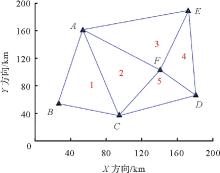
Fig. 1
The distribution of reference stations"
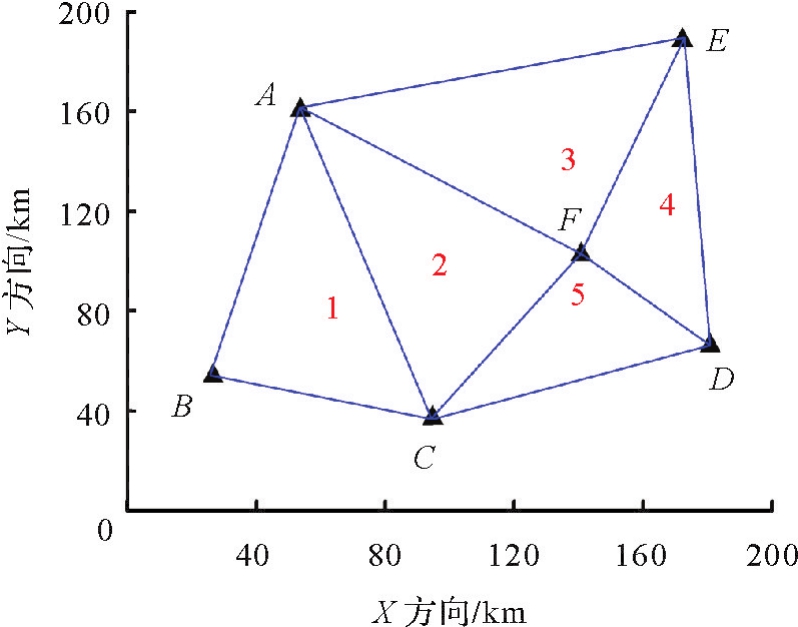
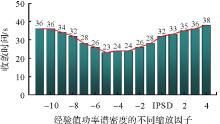
Fig. 2
The change of the first convergence time of ambiguity under different scaling factors"
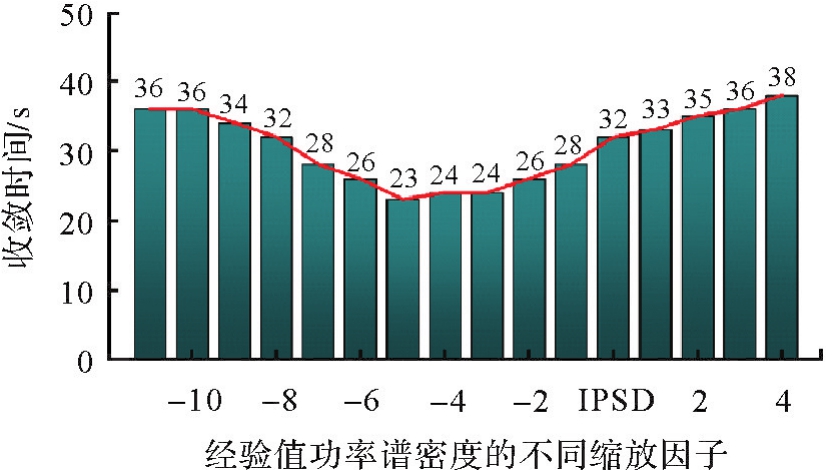
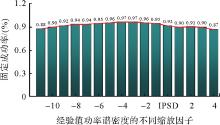
Fig. 3
The change of the ambiguity fixing success rate under different scaling factors"
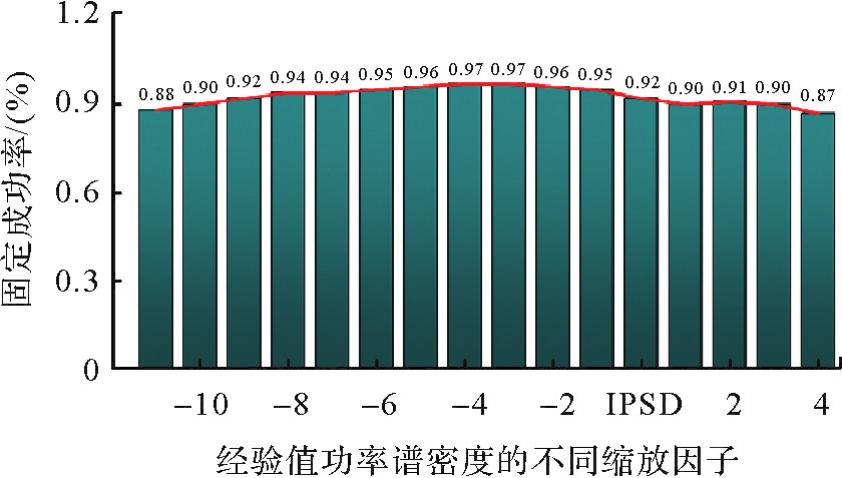
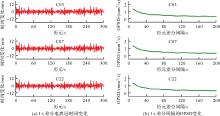
Fig. 4
Ionospheric variation and OPSD with 1 s differential interval"
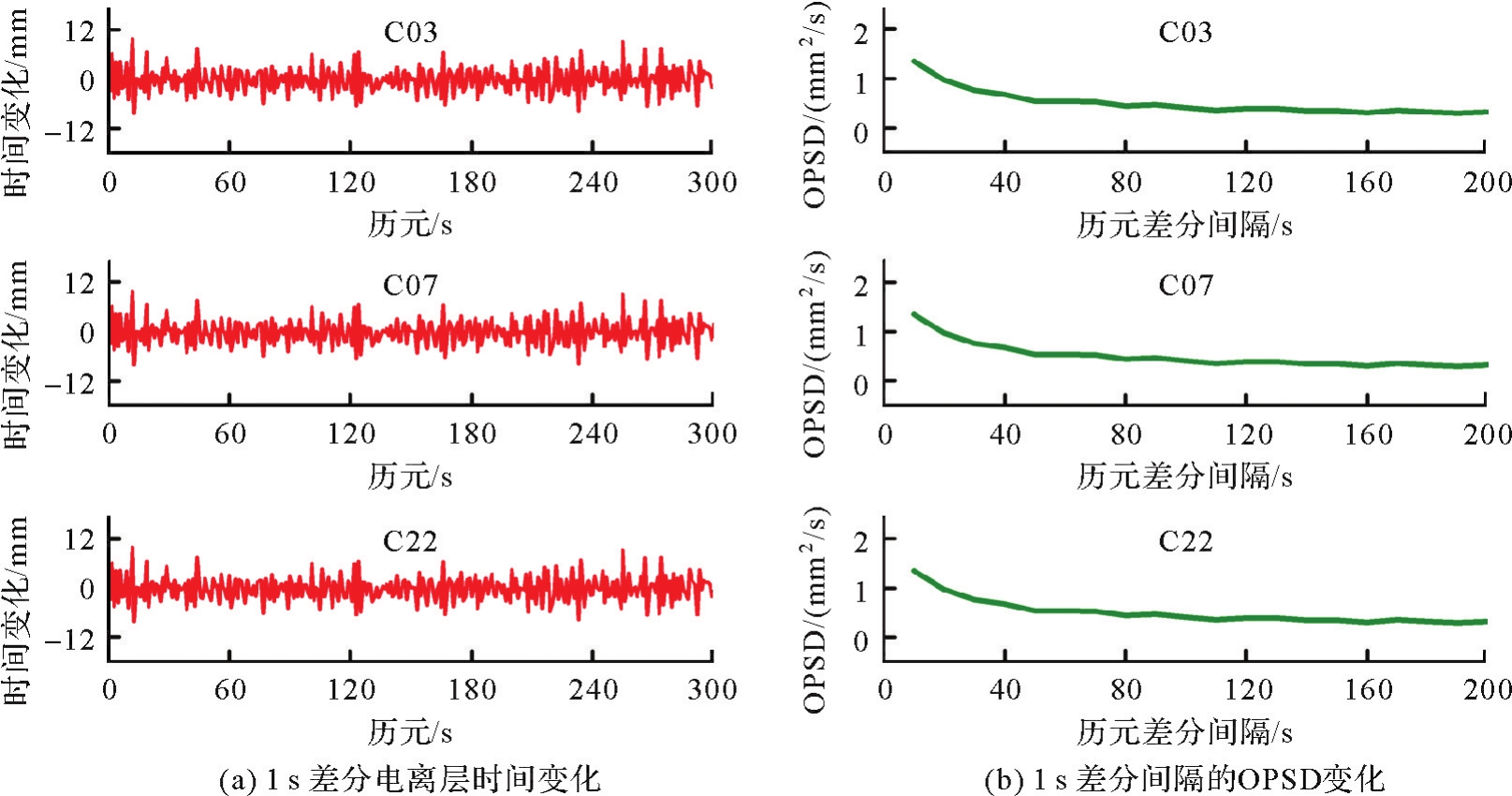
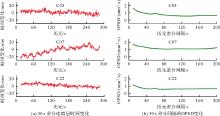
Fig. 5
Ionospheric variation and OPSD with 30 s differential interval"

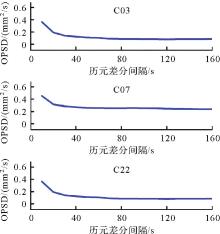
Fig. 6
The variation of OPSD with differential interval"
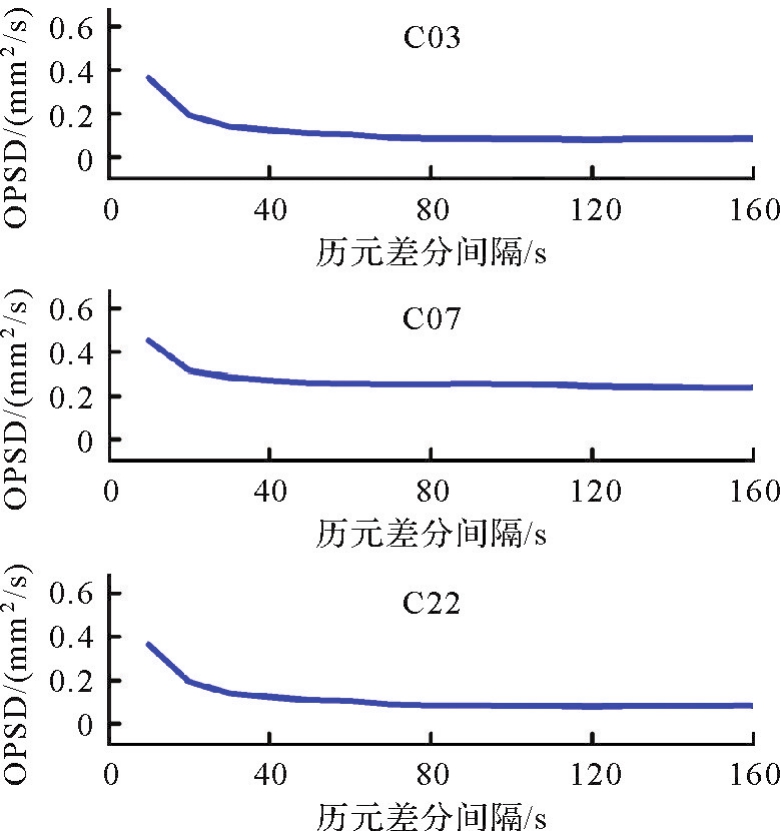
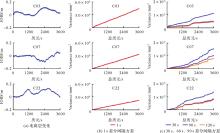
Fig. 7
Ionospheric variation and cumulative variance under different difference intervals"

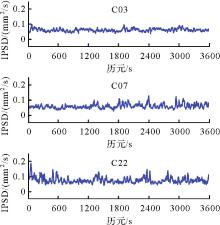
Fig. 8
The ionospheric power spectral density variation of different satellites"
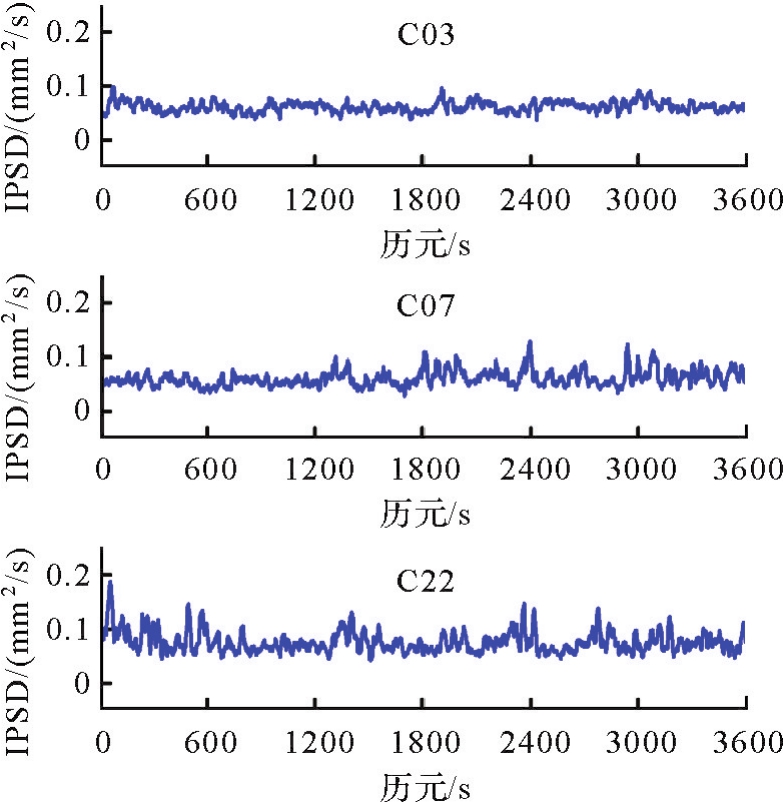
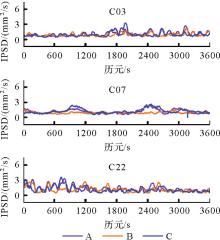
Fig. 9
The real-time adjustment of power spectral density time series of a period of time"
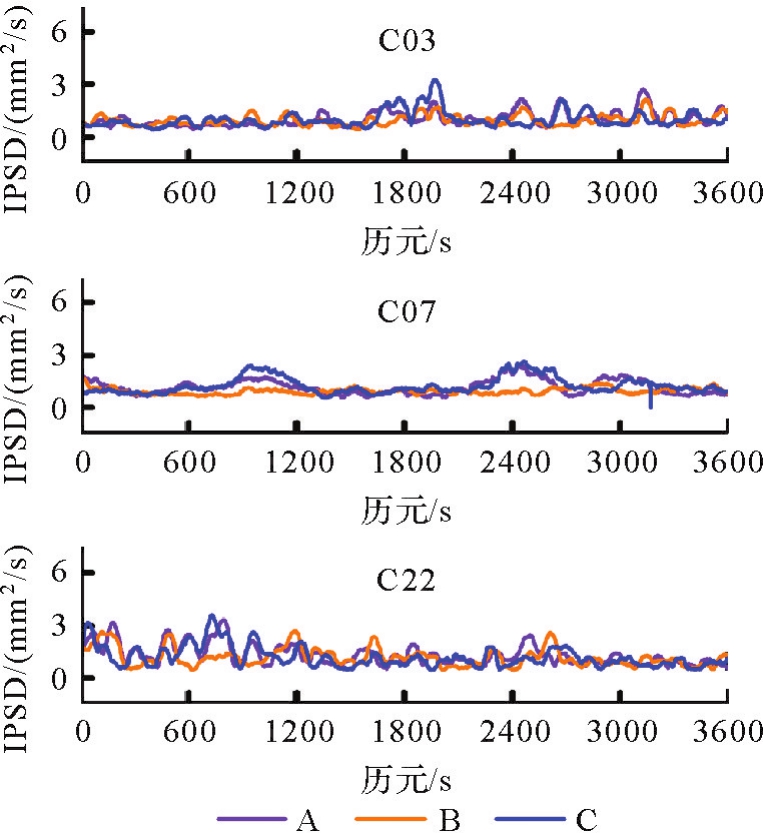
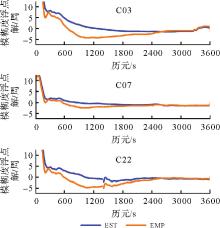
Fig. 10
The ambiguity floating solution time series of a period of time"
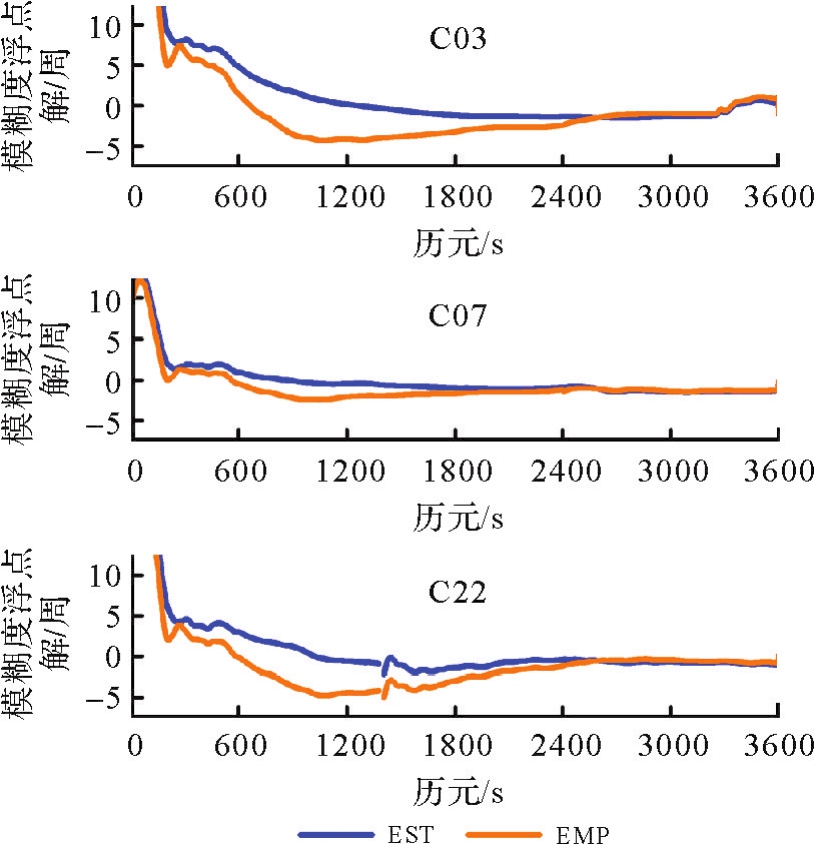
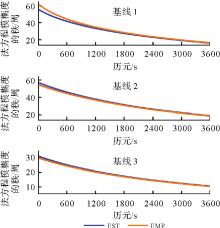
Fig. 11
The rank corresponding to ambiguity in the normal equation of a period of time"
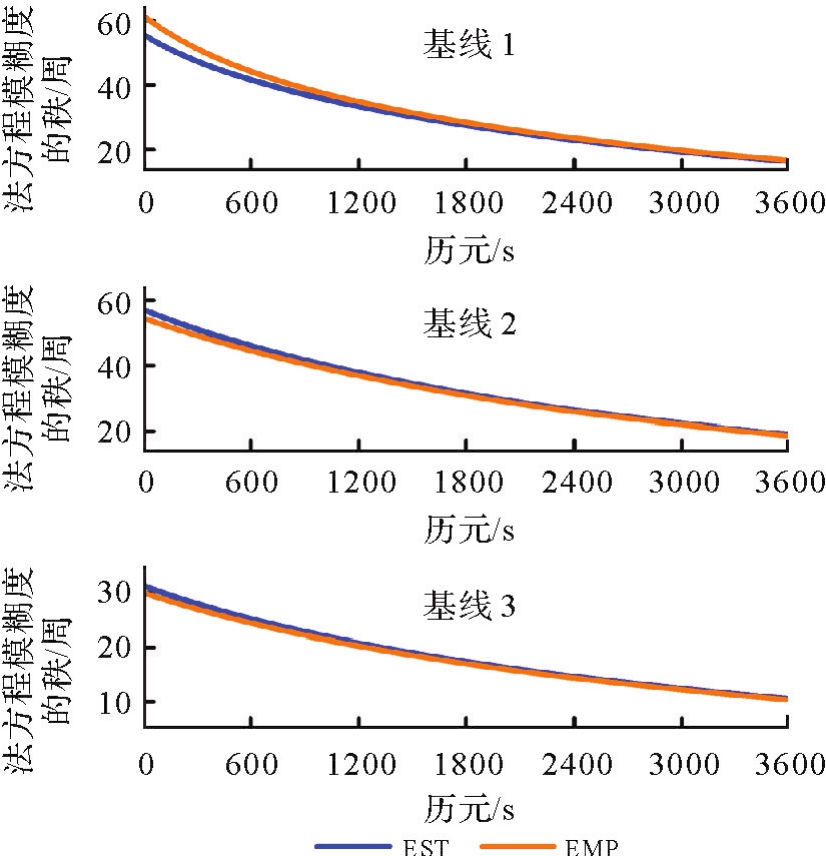
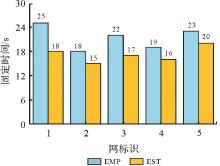
Fig. 12
Comparison of the first ambiguity fixing time of two different ways"
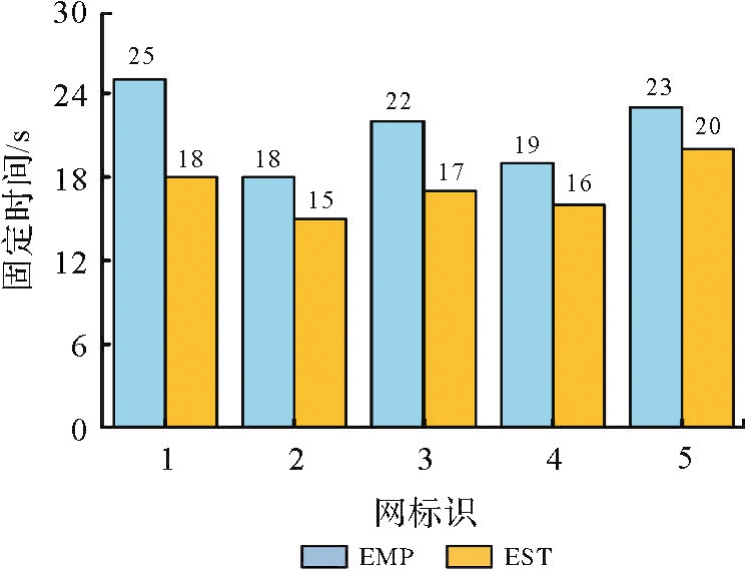
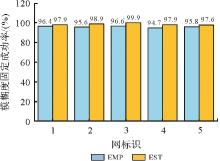
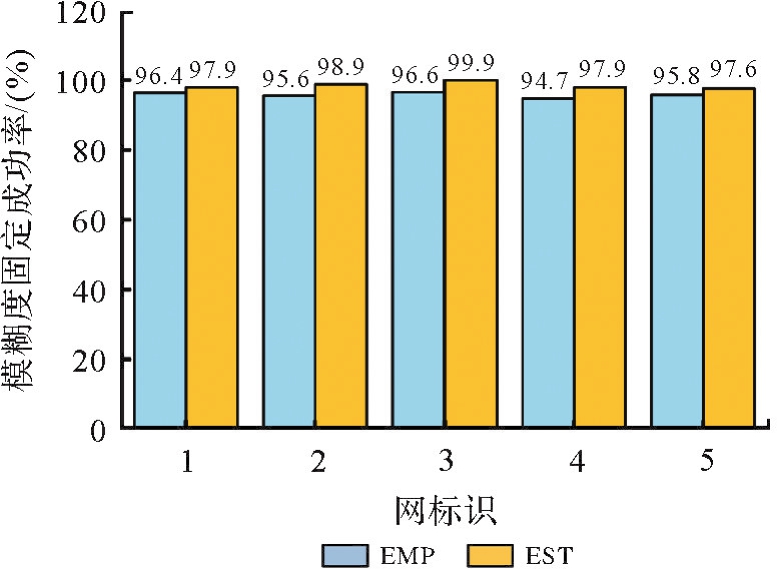
Fig. 13
Comparison of the ambiguity fixing success rate of two different ways"
| [1] |
李军, 祝会忠, 徐爱功, 等. 电离层时变特性约束的BDS长距离RTK定位算法[J]. 测绘学报, 2023, 52(3): 383-396. DOI:.
doi: 10.11947/j.AGCS.2023.20220283 |
|
LI Jun, ZHU Huizhong, XU Aigong, et al. BDS long-range RTK positioning algorithm considering the time-varying properties of ionosphere[J]. Acta Geodaetica et Cartographica Sinica, 2023, 52(3): 383-396. DOI:.
doi: 10.11947/j.AGCS.2023.20220283 |
|
| [2] | YUAN Yunbin, MI Xiaolong, ZHANG Baocheng. Initial assessment of single- and dual-frequency BDS-3 RTK positioning[J]. Satellite Navigation, 2020, 1: 31. |
| [3] | 唐卫明, 刘经南, 施闯, 等. 三步法确定网络RTK基准站双差模糊度[J]. 武汉大学学报(信息科学版), 2007, 32(4): 305-308. |
| TANG Weiming, LIU Jingnan, SHI Chuang, et al. Three steps method to determine double difference ambiguities resolution of network RTK reference station[J]. Geomatics and Information Science of Wuhan University, 2007, 32(4): 305-308. | |
| [4] | 周乐韬, 黄丁发, 袁林果, 等. 网络RTK参考站间模糊度动态解算的卡尔曼滤波算法研究[J]. 测绘学报, 2007, 36(1): 37-42. |
| ZHOU Letao, HUANG Dingfa, YUAN Linguo, et al. A Kalman filtering algorithm for online integer ambiguity resolution in reference station network[J]. Acta Geodaetica et Cartographica Sinica, 2007, 36(1): 37-42. | |
| [5] | LI Bofeng, SHEN Yunzhong, FENG Yanming, et al. GNSS ambiguity resolution with controllable failure rate for long baseline network RTK[J]. Journal of Geodesy, 2014, 88(2): 99-112. |
| [6] | 祝会忠. 基于非差误差改正数的长距离单历元GNSS网络RTK算法研究[J]. 测绘学报, 2015, 44(1): 116. |
| ZHU Huizhong. The study of GNSS network RTK algorithm between long range at single epoch using un-difference error corrections[J]. Acta Geodaetica et Cartographica Sinica, 2015, 44(1): 116. | |
| [7] |
高旺, 高成发, 潘树国, 等. 北斗三频宽巷组合网络RTK单历元定位方法[J]. 测绘学报, 2015, 44(6): 641-648. DOI:.
doi: 10.11947/.AGCS.2015.20140308 |
|
GAO Wang, GAO Chengfa, PAN Shuguo, et al. Single-epoch positioning method in network RTK with BDS triple-frequency widelane combinations[J]. Acta Geodaetica et Cartographica Sinica, 2015, 44(6): 641-648. DOI:.
doi: 10.11947/.AGCS.2015.20140308 |
|
| [8] | ODIJK D, VAN DER MAREL H, SONG I. Precise GPS positioning by applying ionospheric corrections from an active control network[J]. GPS Solutions, 2000, 3(3): 49-57. |
| [9] | ZHANG Baocheng, HOU Pengyu, ZHA Jiuping, et al. PPP-RTK functional models formulated with undifferenced and uncombined GNSS observations[J]. Satellite Navigation, 2022, 3: 3. |
| [10] | ZHANG Ming, LIU Hui, BAI Zhengdong, et al. Fast ambiguity resolution for long-range reference station networks with ionospheric model constraint method[J]. GPS Solutions, 2017, 21(2): 617-626. |
| [11] | TANG Weiming, LIU Wenjian, ZOU Xuan, et al. Improved ambiguity resolution for URTK with dynamic atmosphere constraints[J]. Journal of Geodesy, 2016, 90(12): 1359-1369. |
| [12] | ZOU Xuan, WANG Yawei, DENG Chenlong, et al. Instantaneous BDS+GPS undifferenced NRTK positioning with dynamic atmospheric constraints[J]. GPS Solutions, 2017, 22(1): 17. |
| [13] |
祝会忠, 雷啸挺, 徐爱功, 等. 顾及GEO卫星约束的长距离BDS三频整周模糊度解算[J]. 测绘学报, 2020, 49(9): 1222-1234. DOI:.
doi: 10.11947/j.AGCS.2020.20200263 |
|
ZHU Huizhong, LEI Xiaoting, XU Aigong, et al. The integer ambiguity resolution of BDS triple-frequency between long range stations with GEO satellite constraints[J]. Acta Geodaetica et Cartographica Sinica, 2020, 49(9): 1222-1234. DOI:.
doi: 10.11947/j.AGCS.2020.20200263 |
|
| [14] | 李博, 程鹏飞, 秘金钟, 等. 一种北斗非差非组合长距离基准站模糊度解算方法[J]. 武汉大学学报(信息科学版), 2023, 48(4): 593-603. |
| LI Bo, CHENG Pengfei, BEl Jinzhong, et al. A method for ambiguity resolution of BDS undifferenced and uncombined long-range reference stations[J]. Geomatics and Information Science of Wuhan University, 2023, 48(4): 593-603. | |
| [15] | ZHANG Xiaohong, REN Xiaodong, CHEN Jun, et al. Investigating GNSS PPP-RTK with external ionospheric constraints[J]. Satellite Navigation, 2022, 3: 6. |
| [16] | SHI Chuang, GU Shengfeng, LOU Yidong, et al. An improved approach to model ionospheric delays for single-frequency precise point positioning[J]. Advances in Space Research, 2012, 49(12): 1698-1708. |
| [17] | ZHAO Qile, WANG Yintong, GU Shengfeng, et al. Refining ionospheric delay modeling for undifferenced and uncombined GNSS data processing[J]. Journal of Geodesy, 2019, 93(4): 545-560. |
| [18] | LI Jun, ZHU Huizhong, XU Aigong, et al. Estimating ionospheric power spectral density for long-range RTK positioning using uncombined observations[J]. GPS Solutions, 2023, 27(3): 109. |
| [19] | LI Jun, ZHU Huizhong, LU Yangyang, et al. Performance analysis of undifferenced NRTK considering time-varying characteristics of atmosphere[J]. Remote Sensing, 2023, 15(19): 4784. |
| [20] | ALBER C, WARE R, ROCKEN C, et al. Obtaining single path phase delays from GPS double differences[J]. Geophysical Research Letters, 2000, 27(17): 2661-2664. |
| [21] | FAN Haopeng, SUN Zhongmiao, ZHANG Liping, et al. A two-step estimation method of troposphere delay with consideration of mapping function errors[J]. Journal of Geodesy and Geoinformation Science, 2020, 3(1): 76-84. |
| [22] |
毛健, 崔铁军, 李晓丽, 等. 融合大气数值模式的高精度对流层天顶延迟计算方法[J]. 测绘学报, 2019, 48(7): 862-870. DOI:.
doi: 10.11947/j.AGCS.2019.20190003 |
|
MAO Jian, CUI Tiejun, LI Xiaoli, et al. A hight-accuracy method for tropospheric zenith delay error correction by fusing atmospheric numerical models[J]. Acta Geodaetica et Cartographica Sinica, 2019, 48(7): 862-870. DOI:.
doi: 10.11947/j.AGCS.2019.20190003 |
|
| [23] | SAASTAMOINEN J. Atmospheric correction for the troposphere and stratosphere in radio ranging satellites[M]//The use of artificial satellites for geodesy. Washington, D. C.: American Geophysical Union, 2013: 247-251. |
| [24] | LIU Ying, LIU Wanke, ZHANG Xiaohong, et al. An improved GNSS ambiguity best integer equivariant estimation method with Laplacian distribution for urban low-cost RTK positioning[J]. Satellite Navigation, 2024, 5: 12. |
| [25] |
周锋, 徐天河. GPS/BDS/Galileo三频精密单点定位模型及性能分析[J]. 测绘学报, 2021, 50(1): 61-70. DOI:.
doi: 10.11947/j.AGCS.2021.20200146 |
|
ZHOU Feng, XU Tianhe. Modeling and assessment of GPS/BDS/Galileo triple-frequency precise point positioning[J]. Acta Geodaetica et Cartographica Sinica, 2021, 50(1): 61-70. DOI:.
doi: 10.11947/j.AGCS.2021.20200146 |
|
| [26] | LI Pan, ZHANG Xiaohong. Integrating GPS and GLONASS to accelerate convergence and initialization times of precise point positioning[J]. GPS Solutions, 2014, 18(3): 461-471. |
| [27] | 葛茂荣, 刘经南. GPS定位中对流层折射估计研究[J]. 测绘学报, 1996, 25(4): 285-291. |
| GE Maorong, LIU Jingnan. The estimation methods for tropospheric delays in global positioning system[J]. Acta Geodaetica et Cartographica Sinica, 1996, 25(4): 285-291. | |
| [28] | TEUNISSEN P J G. The least-squares ambiguity decorrelation adjustment: a method for fast GPS integer ambiguity estimation[J]. Journal of Geodesy, 1995(a), 70(1/2): 65-82. |
| [29] | TEUNISSEN P J G. Influence of ambiguity precision on the success rate of GNSS integer ambiguity bootstrapping[J]. Journal of Geodesy, 2007, 81(5): 351-358. |
| [30] |
张宝成, 柯成, 查九平, 等. 非差非组合PPP-RTK:模型算法、终端样机与实测结果[J]. 测绘学报, 2022, 51(8): 1725-1735. DOI:.
doi: 10.11947/j.AGCS.2022.20210465 |
|
ZHANG Baocheng, KE Cheng, ZHA Jiuping, et al. Undifferenced and uncombined PPP-RTK: algorithmic models, prototype terminals and field-test results[J]. Acta Geodaetica et Cartographica Sinica, 2022, 51(8): 1725-1735. DOI:.
doi: 10.11947/j.AGCS.2022.20210465 |
|
| [31] | VERHAGEN S, LI Bofeng, TEUNISSEN P J G. Ps-LAMBDA: ambiguity success rate evaluation software for interferometric applications[J]. Computers & Geosciences, 2013, 54: 361-376. |
| [1] | Yupeng GU, Wanke LIU, Xiaohong ZHANG, Jie HU, Shujie HU, Weihao LEI, Kai ZHENG. Neural network-based GNSS stochastic model generation method by fisheye images [J]. Acta Geodaetica et Cartographica Sinica, 2025, 54(12): 2206-2218. |
| [2] | Jianhua CHENG, Sicheng CHEN, Nan ZANG, Sixiang CHENG, Guojing ZHAO, Zifan MA. PPP/INS tightly integrated enhancement model considering adaptive short-term height variation rate constraint [J]. Acta Geodaetica et Cartographica Sinica, 2024, 53(9): 1761-1776. |
| [3] | Yingzong LIN, Xiaomin LUO, Junfeng DU. Fitting improvement of PPP receiver tracking error stochastic model for high latitudes [J]. Acta Geodaetica et Cartographica Sinica, 2024, 53(4): 666-676. |
| [4] | YANG Ling, ZHU Jincheng, SUN Nan, YU Yangkang, SHEN Yunzhong, LI Bofeng. Stochastic model refinement of GNSS advanced receiver autonomous integrity monitoring [J]. Acta Geodaetica et Cartographica Sinica, 2024, 53(2): 286-295. |
| [5] | LI Jun, ZHU Huizhong, XU Aigong, LU Yangyang, LEI Xiaoting. BDS long-range RTK positioning algorithm considering the time-varying properties of ionosphere [J]. Acta Geodaetica et Cartographica Sinica, 2023, 52(3): 383-396. |
| [6] | SHU Bao, LIU Hui, WANG Li, ZHANG Qin, HUANG Guanwen. PPP and RTK integrated service method and performance based on regional reference station network [J]. Acta Geodaetica et Cartographica Sinica, 2022, 51(9): 1870-1880. |
| [7] | PENG Zihan, GAO Chengfa, LIU Yongsheng, ZHANG Ruicheng, SHANG Rui. Variational mode decomposition method for estimation of GNSS data quality from a smartphone [J]. Acta Geodaetica et Cartographica Sinica, 2021, 50(4): 475-486. |
| [8] | GAO Weiguang, MIAO Weikai, CHEN Gucang, JIA Song. Evaluation and analysis of stochastic modeling of BeiDou GEO/IGSO/MEO satellite observation [J]. Acta Geodaetica et Cartographica Sinica, 2020, 49(12): 1511-1522. |
| [9] | ZHOU Letao, HUANG Dingfa, YUAN Linguo, FENG Wei, GONG Xiaoying, TIAN Yumiao, ZHANG Xi, ZHAO Yinghao. Expression and information hierarchical authorization of BDS reference station observation data based on states and residual [J]. Acta Geodaetica et Cartographica Sinica, 2020, 49(10): 1265-1274. |
| [10] | LÜ Daqian, ZENG Fangling, OUYANG Xiaofeng, YU Heli. Time and frequency transfer based on modified integer phase clock method [J]. Acta Geodaetica et Cartographica Sinica, 2019, 48(7): 889-897. |
| [11] | ZHAO Shuang, WANG Zhenjie, LIU Huimin. Investigation on Underwater Positioning Stochastic Model Based on Sound Ray Incidence Angle [J]. Acta Geodaetica et Cartographica Sinica, 2018, 47(9): 1280-1289. |
| [12] | YANG Yuanxi. Resilient PNT Concept Frame [J]. Acta Geodaetica et Cartographica Sinica, 2018, 47(7): 893-898. |
| [13] | FAN Diao, LI Shanshan, MENG Shuyu, XING Zhibin, FENG Jinkai, ZHANG Chi. Recovery of Bathymetry over Philippine Sea by Combination of Multi-source Gravity Data [J]. Acta Geodaetica et Cartographica Sinica, 2018, 47(10): 1307-1315. |
| [14] | GAO Meng, XU Aigong, ZHU Huizhong, GE Maorong, YANG Qiushi. The Algorithm of Triple-frequency Ambiguity Resolution between BDS Network RTK Reference Stations [J]. Acta Geodaetica et Cartographica Sinica, 2017, 46(4): 442-452. |
| [15] | HUANG Lingyong, LÜ Zhiping, LÜ Hao, GONG Yisong. The BDS Triple Frequency Pseudo-range Correlated Stochastic Model of Single Station Modeling Method [J]. Acta Geodaetica et Cartographica Sinica, 2016, 45(S2): 165-171. |
| Viewed | ||||||
|
Full text |
|
|||||
|
Abstract |
|
|||||
