

Acta Geodaetica et Cartographica Sinica ›› 2025, Vol. 54 ›› Issue (2): 321-333.doi: 10.11947/j.AGCS.2025.20240132
• Photogrammetry and Remote Sensing • Previous Articles Next Articles
Qifan YU1,2,3( ), Anmin FU2, Shaoning LI1(), Xiaotong LIU2
Received:2024-04-07
Online:2025-03-11
Published:2025-03-11
Contact:
Shaoning LI
E-mail:yqf@mail.hnust.edu.cn;lsn@hnust.edu.cn
About author:YU Qifan (1998—), male, master, majors in spaceborne LiDAR data processing. E-mail: yqf@mail.hnust.edu.cn
Supported by:CLC Number:
Qifan YU, Anmin FU, Shaoning LI, Xiaotong LIU. Preliminary verification and analysis of positioning accuracy of the satellite laser altimetry products[J]. Acta Geodaetica et Cartographica Sinica, 2025, 54(2): 321-333.
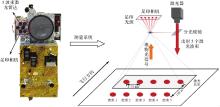
Fig. 1
Gou Mang satellite laser measurement system"

Tab. 1
Main technical indicators of multi-beam LiDAR"
| 指标 | 设计值 |
|---|---|
| 轨道高度/km | 506 |
| 激光波束数 | 5 |
| 波长/nm | 1064 |
| 发射频率/Hz | 40 |
| 采样频率/GHz | 1.2 |
| 光斑直径/m | 25 |
| 足印影像分辨率/m | 8 |
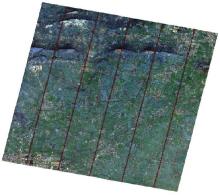
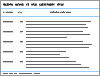
Fig. 2
Laser data distribution"
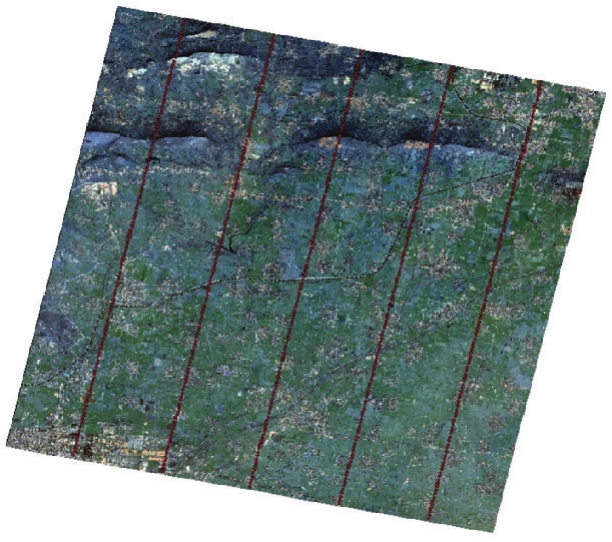
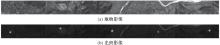
Fig. 3
Footprint camera image of the Gou Mang satellite"
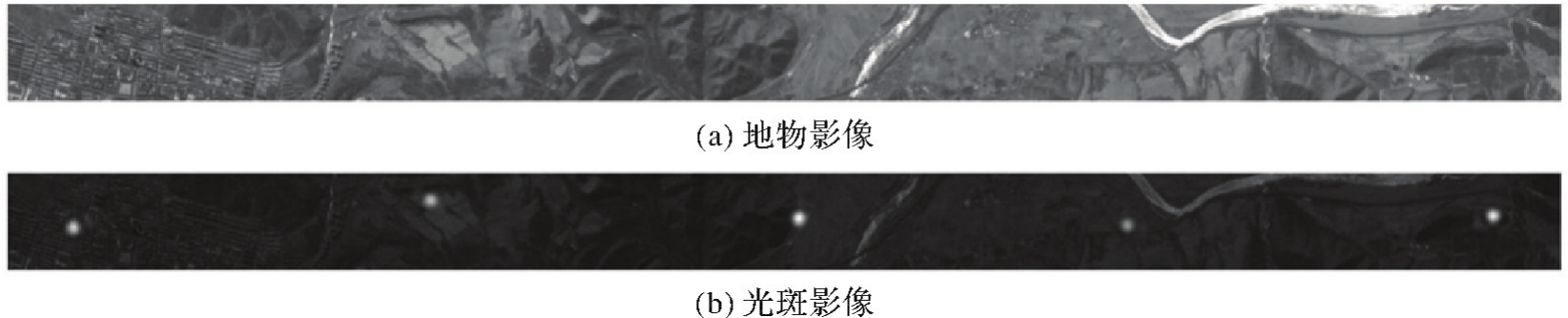
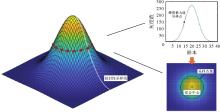
Fig. 4
The principle of MG-EFM"
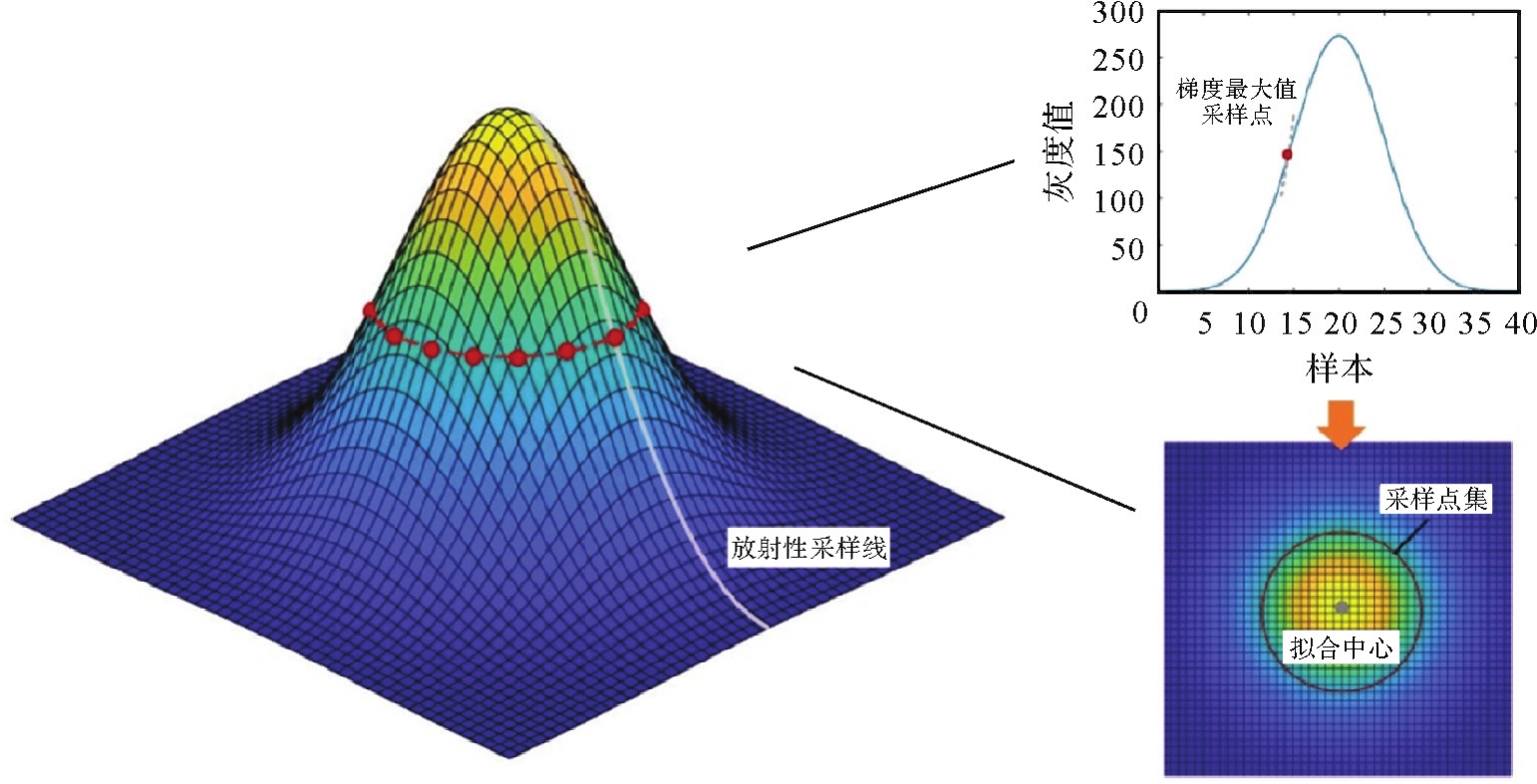
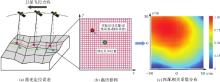
Fig. 5
The principle of laser footprint positioning based on terrain constraint"

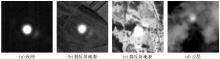
Fig. 6
Actual spot images"


Fig. 7
Simulated footprint image"

Tab. 2
Extraction results with different methods"
| 方法 | 平均误差 | 标准差 | 均方根误差 | ||||
|---|---|---|---|---|---|---|---|
| X | Y | X | Y | X | Y | 整体 | |
| GFM | 0.137 | 0.088 | 0.165 | 0.217 | 0.215 | 0.234 | 0.318 |
| GCM | 0.057 | -0.035 | 0.035 | 0.193 | 0.067 | 0.196 | 0.207 |
| MG-EFM | -0.003 | 0.001 | 0.052 | 0.068 | 0.053 | 0.068 | 0.086 |
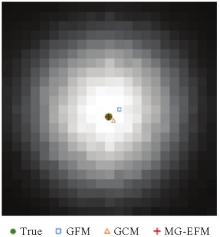
Fig. 8
Error comparison"
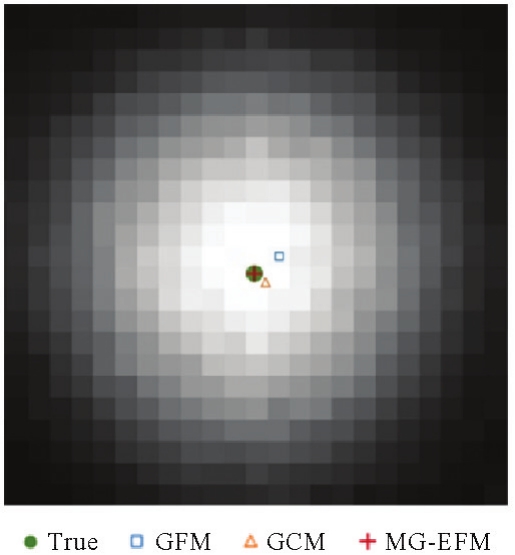
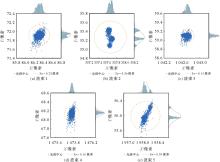
Fig. 9
Distribution of the center positions of 5 beam footprint spots in one orbital period"

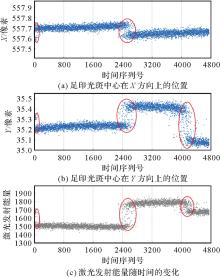
Fig. 10
The position of the center of the footprint spot in the X and Y directions and the laser emission energy change with time"

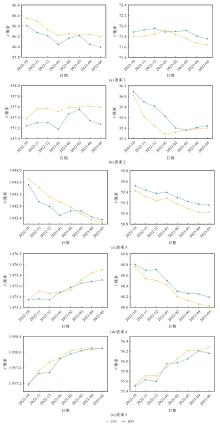
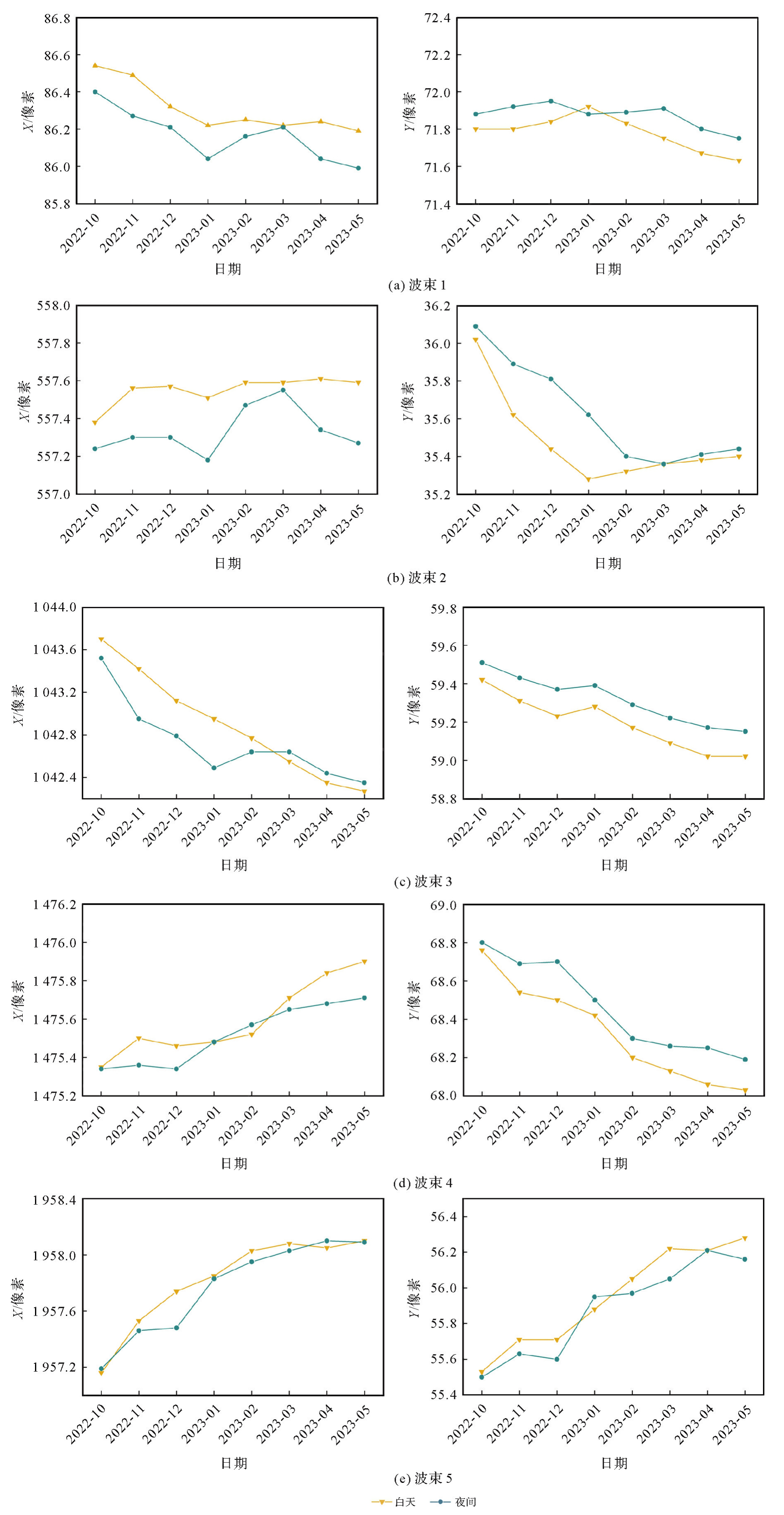
Fig. 11
Variation of the center of footprint spots in the X and Y directions"
Tab. 3
Monthly statistical results of the center position of footprint spots"
| 时段 | 波束 | 极差/像素 | 标准差/像素 | |||
|---|---|---|---|---|---|---|
| X | Y | X | Y | 整体 | ||
| 白天 | 1 | 0.346 | 0.286 | 0.132 | 0.094 | 0.162 |
| 2 | 0.227 | 0.742 | 0.076 | 0.243 | 0.255 | |
| 3 | 1.428 | 0.393 | 0.507 | 0.142 | 0.527 | |
| 4 | 0.547 | 0.730 | 0.197 | 0.263 | 0.329 | |
| 5 | 0.939 | 0.748 | 0.332 | 0.281 | 0.435 | |
| 夜间 | 1 | 0.406 | 0.205 | 0.137 | 0.067 | 0.153 |
| 2 | 0.377 | 0.732 | 0.123 | 0.275 | 0.301 | |
| 3 | 1.168 | 0.358 | 0.373 | 0.129 | 0.395 | |
| 4 | 0.363 | 0.610 | 0.155 | 0.243 | 0.288 | |
| 5 | 0.904 | 0.708 | 0.343 | 0.270 | 0.437 | |
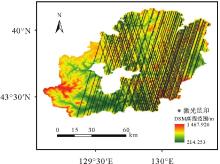
Fig. 12
Laser data and DSM data in the experimental area"
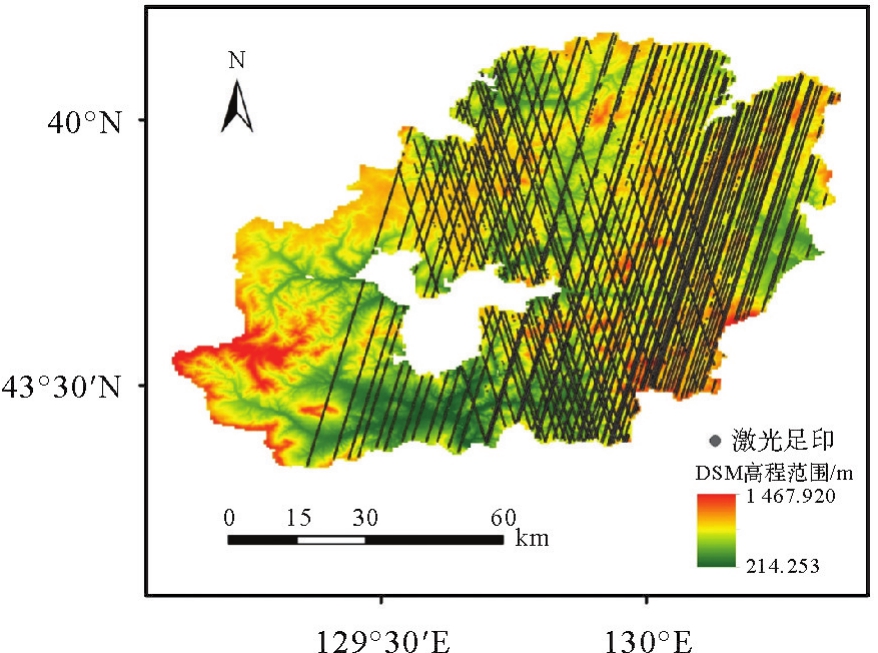
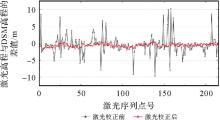
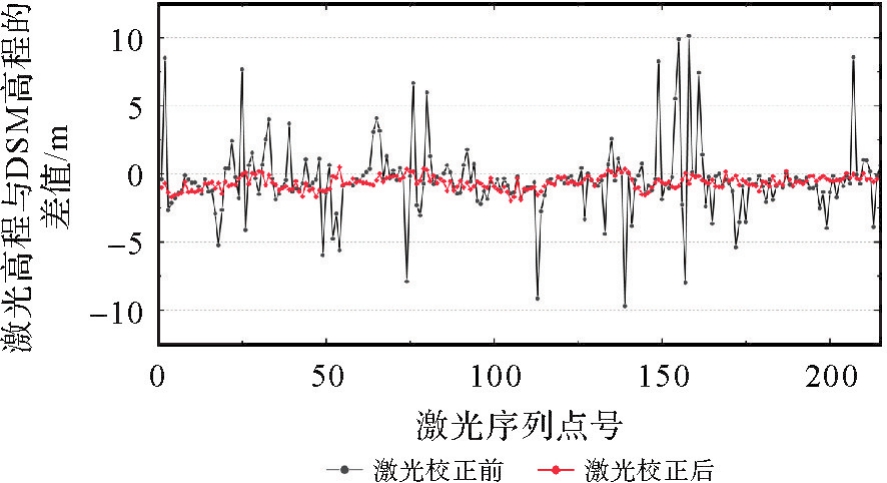
Fig. 13
Difference between laser point elevation and DSM elevation before and after plane position correction"
Tab. 4
Results of the Gou Mang satellite laser geometric positioning accuracy verification"
| 时段 | 激光波束 | 轨道数 | 激光点数 | 平面定位精度/m | 高程精度(均方根误差)/m | |||
|---|---|---|---|---|---|---|---|---|
| 平均误差 | 标准差 | 中误差 | 校正前 | 校正后 | ||||
| 白天 | 波束1 | 21 | 970 | 14.28 | 2.79 | 14.54 | 2.45 | 1.33 |
| 波束2 | 21 | 1122 | 17.21 | 3.18 | 17.49 | 2.94 | 1.38 | |
| 波束3 | 21 | 1183 | 14.31 | 2.53 | 14.52 | 2.87 | 1.31 | |
| 波束4 | 21 | 1122 | 13.47 | 3.14 | 13.81 | 2.54 | 1.48 | |
| 波束5 | 21 | 1061 | 12.86 | 2.44 | 13.08 | 2.78 | 1.61 | |
| 合计 | 105 | 5458 | 14.43 | 3.16 | 14.76 | 2.73 | 1.42 | |
| 夜间 | 波束1 | 6 | 371 | 23.81 | 3.32 | 24.00 | 3.68 | 1.53 |
| 波束2 | 6 | 455 | 24.74 | 4.18 | 25.03 | 3.87 | 1.39 | |
| 波束3 | 6 | 500 | 22.02 | 4.74 | 22.44 | 3.87 | 1.40 | |
| 波束4 | 6 | 423 | 22.37 | 4.76 | 22.79 | 3.19 | 1.45 | |
| 波束5 | 6 | 424 | 22.69 | 3.91 | 22.97 | 3.58 | 1.31 | |
| 合计 | 30 | 2173 | 23.12 | 4.05 | 23.46 | 3.66 | 1.41 | |
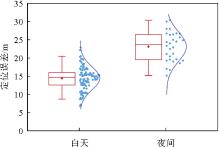
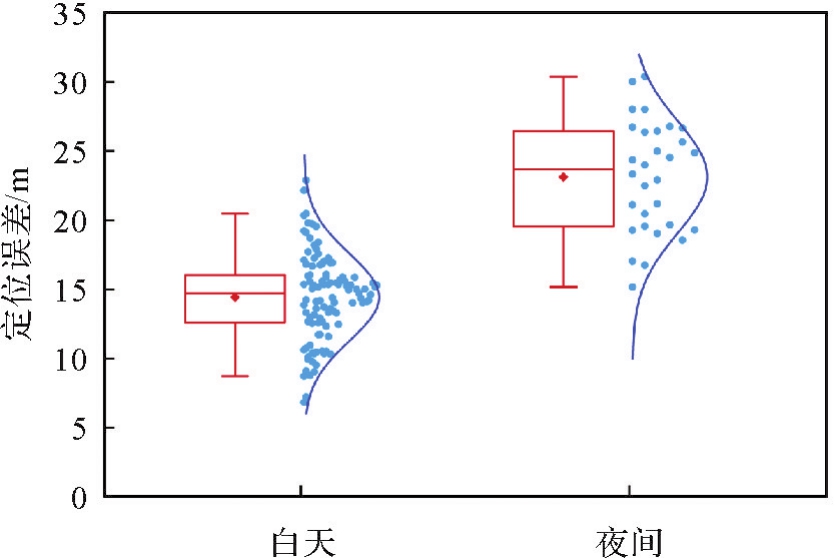
Fig. 14
Distribution of daytime and nighttime laser positioning errors"
Tab. 5
Plane offset of day time and night time laser data in the north-south (east-west) direction"
| 对比标识号 | 激光波束 | 白天 | 夜间 | ||
|---|---|---|---|---|---|
| 南北偏移/m | 东西偏移/m | 南北偏移/m | 东西偏移/m | ||
| 1 | 波束1 | -1.56 | 13.26 | 19.20 | 13.26 |
| 2 | 波束2 | -2.52 | 13.86 | 20.64 | 12.24 |
| 3 | 波束3 | -1.32 | 17.82 | 17.52 | 8.94 |
| 4 | 波束4 | 1.50 | 14.64 | 16.86 | 12.84 |
| 5 | 波束5 | 2.04 | 13.50 | 19.44 | 12.12 |
| 6 | 波束1 | -0.12 | 8.82 | 22.44 | 9.48 |
| 7 | 波束2 | -4.92 | 7.32 | 26.10 | 10.20 |
| 8 | 波束3 | -3.72 | 12.78 | 24.12 | 6.54 |
| 9 | 波束4 | 1.08 | 12.42 | 21.60 | 11.64 |
| 10 | 波束5 | 2.28 | 10.20 | 22.67 | 12.00 |
| 11 | 波束1 | -3.42 | 13.74 | 26.70 | 8.58 |
| 12 | 波束2 | -2.28 | 11.46 | 25.20 | 7.80 |
| 13 | 波束3 | -1.68 | 15.42 | 26.40 | 4.50 |
| 14 | 波束4 | -1.26 | 12.90 | 20.40 | 9.48 |
| 15 | 波束5 | 2.21 | 11.46 | 22.26 | 11.10 |
| 平均值 | -0.91 | 12.64 | 22.10 | 10.05 | |
| 标准差 | 2.32 | 2.59 | 3.15 | 2.49 | |
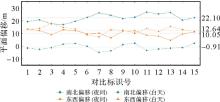
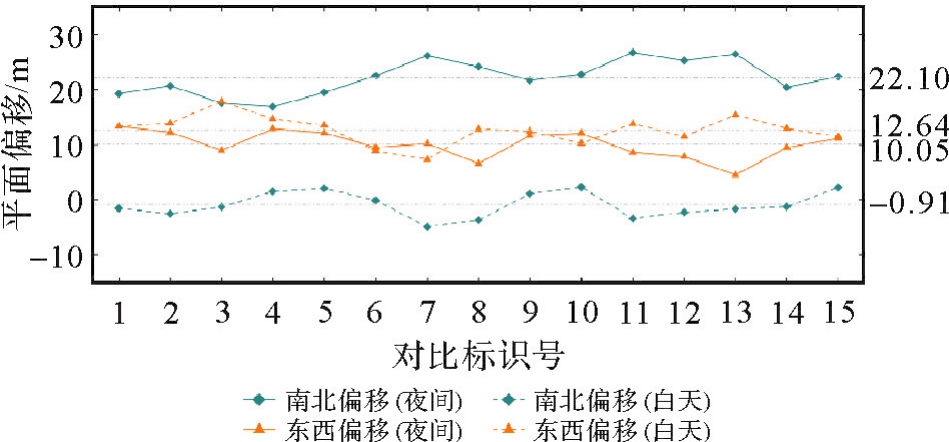
Fig. 15
Comparison of day time and night time laser plane offsets"
| [1] | 张新伟, 黄缙, 贺涛, 等. 陆地生态系统碳监测卫星总体设计[J]. 航天返回与遥感, 2022, 43(6): 16-26. |
| ZHANG Xinwei, HUANG Jin, HE Tao, et al. Overall design of terrestrial ecosystem carbon inventory satellite[J]. Spacecraft Recovery & Remote Sensing, 2022, 43(6): 16-26. | |
| [2] | WANG Xianwei, CHENG Xiao, GONG Peng, et al. Earth science applications of ICESat/GLAS: a review[J]. International Journal of Remote Sensing, 2011, 32(23): 8837-8864. |
| [3] | DUNCANSON L, KELLNER J R, ARMSTON J, et al. Aboveground biomass density models for NASA's global ecosystem dynamics investigation (GEDI) LiDAR mission[J]. Remote Sensing of Environment, 2022, 270: 112845. |
| [4] |
李国元, 唐新明. 资源三号02星激光测高精度分析与验证[J]. 测绘学报, 2017, 46(12): 1939-1949. DOI:.
doi: 10.11947/j.AGCS.2017.20170174 |
|
LI Guoyuan, TANG Xinming. Analysis and validation of ZY-3 02 satellite laser altimetry data[J]. Acta Geodaetica et Cartographica Sinica, 2017, 46(12): 1939-1949. DOI:.
doi: 10.11947/j.AGCS.2017.20170174 |
|
| [5] | 黄庚华, 丁宇星, 吴金才, 等. 高分七号卫星激光测高仪分系统关键技术设计与实现[J]. 航天器工程, 2020, 29(3): 68-73. |
| HUANG Genghua, DING Yuxing, WU Jincai, et al. Design and implementation of key technology of GF-7 satellite laser altimeter subsystem[J]. Spacecraft Engineering, 2020, 29(3): 68-73. | |
| [6] | 汤天瑾, 杨居奎, 伏瑞敏, 等. 陆地生态系统碳监测卫星多波束激光雷达光学系统设计[J]. 航天返回与遥感, 2022, 43(6): 36-49. |
| TANG Tianjin, YANG Jukui, FU Ruimin, et al. Optical design used in multi-beam LiDAR for monitoring of TECIS[J]. Spacecraft Recovery & Remote Sensing, 2022, 43(6): 36-49. | |
| [7] | 张鑫, 孟俊清, 刘经启, 等. 陆地生态系统碳监测卫星多波束激光雷达激光器设计[J]. 航天返回与遥感, 2022, 43(6): 59-67. |
| ZHANG Xin, MENG Junqing, LIU Jingqi, et al. Design of laser transmitter for terrestrial ecosystem carbon inventory satellite's multi-beam LiDAR[J]. Spacecraft Recovery & Remote Sensing, 2022, 43(6): 59-67. | |
| [8] | 王小燕, 吕争, 李俊杰, 等. 陆地生态系统碳监测卫星句芒号及其应用[J]. 卫星应用, 2023(7): 18-22. |
| WANG Xiaoyan, LÜ Zheng, LI Junjie, et al. Terrestrial ecosystem carbon inventory satellite “Gou Mang” and its applications[J]. Satellite Application, 2023(7): 18-22. | |
| [9] | 曹海翊, 张新伟, 黄缙, 等. 陆地生态系统碳监测卫星系统设计与技术创新[J]. 中国空间科学技术, 2023, 43(6): 112-124. |
| CAO Haiyi, ZHANG Xinwei, HUANG Jin, et al. System design and key technologies of terrestrial ecosystem carbon inventory satellite[J]. Chinese Space Science and Technology, 2023, 43(6): 112-124. | |
| [10] | LUTHCKE S B, ROWLANDS D D, MCCARTHY J J, et al. Spaceborne laser-altimeter-pointing bias calibration from range residual analysis[J]. Journal of Spacecraft and Rockets, 2000, 37(3): 374-384. |
| [11] | LUTHCKE S B, THOMAS T C, PENNINGTON T A, et al. ICESat-2 pointing calibration and geolocation performance[J]. Earth and Space Science, 2021, 8(3): e2020EA001494. |
| [12] | 范春波, 李建成, 王丹, 等. ICESAT/GLAS激光脚点定位及误差分析[J]. 大地测量与地球动力学, 2007, 27(1): 104-106. |
| FAN Chunbo, LI Jiancheng, WANG Dan, et al. ICESAT/GLAS laser footprint geolocation and error analysis[J]. Journal of Geodesy and Geodynamics, 2007, 27(1): 104-106. | |
| [13] | 马跃, 阳凡林, 卢秀山, 等. 对地观测星载激光测高系统高程误差分析[J]. 红外与激光工程, 2015, 44(3): 1042-1047. |
| MA Yue, YANG Fanlin, LU Xiushan, et al. Elevation error analysis of spaceborne laser altimeter for earth observation[J]. Infrared and Laser Engineering, 2015, 44(3): 1042-1047. | |
| [14] |
唐新明, 李国元, 高小明, 等. 卫星激光测高严密几何模型构建及精度初步验证[J]. 测绘学报, 2016, 45(10): 1182-1191. DOI:.
doi: 10.11947/j.AGCS.2016.20150357 |
|
TANG Xinming, LI Guoyuan, GAO Xiaoming, et al. The rigorous geometric model of satellite laser altimeter and preliminarily accuracy validation[J]. Acta Geodaetica et Cartographica Sinica, 2016, 45(10): 1182-1191. DOI:.
doi: 10.11947/j.AGCS.2016.20150357 |
|
| [15] | 唐新明, 陈继溢, 李国元, 等. 资源三号02星激光测高误差分析与指向角粗标定[J]. 武汉大学学报(信息科学版), 2018, 43(11): 1611-1619. |
| TANG Xinming, CHEN Jiyi, LI Guoyuan, et al. Error analysis and preliminary pointing angle calibration of laser altimeter on Ziyuan-3 02 satellite[J]. Geomatics and Information Science of Wuhan University, 2018, 43(11): 1611-1619. | |
| [16] | 王欢, 李松, 周辉. 地球科学激光测高系统大气延迟修正算法[J]. 激光技术, 2007, 31(2): 169-171. |
| WANG Huan, LI Song, ZHOU Hui. Correction of atmosphere delay for geoscience laser altimeter system[J]. Laser Technology, 2007, 31(2): 169-171. | |
| [17] | 张过, 李少宁, 黄文超, 等. 资源三号02星对地激光测高系统几何检校及验证[J]. 武汉大学学报(信息科学版), 2017, 42(11): 1589-1596. |
| ZHANG Guo, LI Shaoning, HUANG Wenchao, et al. Geometric calibration and validation of ZY3-02 satellite laser altimeter system[J]. Geomatics and Information Science of Wuhan University, 2017, 42(11): 1589-1596. | |
| [18] |
唐新明, 谢俊峰, 莫凡, 等. 高分七号卫星双波束激光测高仪在轨几何检校与试验验证[J]. 测绘学报, 2021, 50(3): 384-395. DOI:.
doi: 10.11947/j.AGCS.2021.20200397 |
|
TANG Xinming, XIE Junfeng, MO Fan, et al. GF-7 dual-beam laser altimeter on-orbit geometric calibration and test verification[J]. Acta Geodaetica et Cartographica Sinica, 2021, 50(3): 384-395. DOI:.
doi: 10.11947/j.AGCS.2021.20200397 |
|
| [19] | 伍煜, 王恒, 韩启金, 等. 基于波形匹配的高分七号星载激光测高仪山地区域脚点定位方法研究[J]. 红外与毫米波学报, 2022, 41(6): 1051-1061. |
| WU Yu, WANG Heng, HAN Qijin, et al. A waveform matching-based method of improving laser footprint geolocation for GaoFen-7 spaceborne laser altimeter in mountainous areas[J]. Journal of Infrared and Millimeter Waves, 2022, 41(6): 1051-1061. | |
| [20] | 李国元, 高小明, 陈继溢, 等. 资源三号02星激光测高数据质量分析[J]. 遥感学报, 2019, 23(6): 1159-1166. |
| LI Guoyuan, GAO Xiaoming, CHEN Jiyi, et al. Data quality analysis of ZY-3 02 satellite laser altimeter[J]. National Remote Sensing Bulletin, 2019, 23(6): 1159-1166. | |
| [21] | SCHENK T, CSATHO B, NEUMANN T. Assessment of ICESat-2's horizontal accuracy using precisely surveyed terrains in Mcmurdo Dry Valleys, Antarctica[J]. IEEE Transactions on Geoscience and Remote Sensing, 2022, 60: 1-11. |
| [22] |
杨雄丹, 李国元, 王佩贤, 等. 星载激光光斑影像激光指向变化探测法[J]. 测绘学报, 2020, 49(12): 1591-1599. DOI:.
doi: 10.11947/j.AGCS.2020.201904 |
|
YANG Xiongdan, LI Guoyuan, WANG Peixian, et al. Laser pointing changes detection method for space-borne laser spot image[J]. Acta Geodaetica et Cartographica Sinica, 2020, 49(12): 1591-1599. DOI:.
doi: 10.11947/j.AGCS.2020.201904 |
|
| [23] | 陈新阳, 龙小祥, 李庆鹏, 等. 陆地生态系统碳监测卫星激光数据处理与精度验证[J/OL]. 武汉大学学报(信息科学版). [2024-01-03]. https://doi.org/10.13203/j.whugis20230110. |
| CHEN Xinyang, LONG Xiaoxiang, LI Qingpeng, et al. Data proccing and accuracy verification for laser altimeter of terrestrial ecosystem carbon inventory satellite[J]. Geomatics and Information Science of Wuhan University. [2024-01-03]. https://doi.org/10.13203/j.whugis20230110. | |
| [24] | YAO Jiaqi, LI Guoyuan, CHEN Jiyi, et al. Cloud detection and centroid extraction of laser footprint image of GF-7 satellite laser altimetry[J]. Journal of Geodesy and Geoinformation Science, 2021, 4(3): 1-12. |
| [25] | 王丽丽, 胡中文, 季杭馨. 基于高斯拟合的激光光斑中心定位算法[J]. 应用光学, 2012, 33(5): 985-990. |
| WANG Lili, HU Zhongwen, JI Hangxin. Laser spot center location algorithm based on Gaussian fitting[J]. Journal of Applied Optics, 2012, 33(5): 985-990. | |
| [26] |
袁小棋, 李国元, 唐新明, 等. 星载激光光斑影像质心自动提取方法[J]. 测绘学报, 2018, 47(2): 135-141. DOI:.
doi: 10.11947/j.AGCS.2018.20170517 |
|
YUAN Xiaoqi, LI Guoyuan, TANG Xinming, et al. Centroid automatic extraction of spaceborne laser spot image[J]. Acta Geodaetica et Cartographica Sinica, 2018, 47(2): 135-141. DOI:.
doi: 10.11947/j.AGCS.2018.20170517 |
|
| [27] | LI Shaoning, ZHANG Guo, FAN Xiufang. Rigorous sensor model of Gaofen-7 satellite laser altimeter based on coupled footprint camera[J]. IEEE Journal of Selected Topics in Applied Earth Observations and Remote Sensing, 2023, 16: 1815-1826. |
| [1] | LI Zhen, GUO Jinyun, SUN Zhongmiao, JIA Yongjun, HUANG Lingyong, SUN Heping. Global marine gravity anomalies recovered from multi-beam laser altimeter data of ICESat-2 [J]. Acta Geodaetica et Cartographica Sinica, 2024, 53(2): 252-262. |
| [2] | SHAN Jie, TIAN Xiangxi, LI Shuang, LI Renfei. Advances of spaceborne laser altimetry technology [J]. Acta Geodaetica et Cartographica Sinica, 2022, 51(6): 964-982. |
| [3] | LI Guoyuan, TANG Xinming, CHEN Jiyi, YAO Jiaqi, LIU Zhao, GAO Xiaoming, ZUO Zhiqiang, ZHOU Xiaoqing. Processing and preliminary accuracy validation of the GF-7 satellite laser altimetry data [J]. Acta Geodaetica et Cartographica Sinica, 2021, 50(10): 1338-1348. |
| [4] | YANG Xiongdan, LI Guoyuan, WANG Peixian, CHEN Jiyi, MO Fan, ME Jiaqi, JIN Zelin. Laser pointing changes detection method for space-borne laser spot image [J]. Acta Geodaetica et Cartographica Sinica, 2020, 49(12): 1591-1599. |
| [5] | LI Guoyuan, TANG Xinming. Analysis and Validation of ZY-3 02 Satellite Laser Altimetry Data [J]. Acta Geodaetica et Cartographica Sinica, 2017, 46(12): 1939-1949. |
| Viewed | ||||||
|
Full text |
|
|||||
|
Abstract |
|
|||||
