

Acta Geodaetica et Cartographica Sinica ›› 2026, Vol. 55 ›› Issue (8): 1382-1399.doi: 10.11947/j.AGCS.2026.20250517
• Photogrammetry and Remote Sensing • Previous Articles
Shengjun Tang1,2( ), Hanyu Li2, Weixi Wang1,2, Linfu Xie1,2, Xiaoming Li1,2, Renzhong Guo1,2()
Received:2025-12-09
Revised:2026-08-10
Published:2026-09-09
Contact:
Renzhong Guo
E-mail:shengjuntang@szu.edu.cn;guorz@szu.edu.cn
About author:Tang Shengjun (1991—), male, PhD, associate professor, majors in urban 3D element structured reconstruction and multi-sensor fusion mapping. E-mail: shengjuntang@szu.edu.cn
Supported by:CLC Number:
Shengjun Tang, Hanyu Li, Weixi Wang, Linfu Xie, Xiaoming Li, Renzhong Guo. A no-reference method for face-level defect detection and quality assessment of oblique photogrammetric 3D mesh models[J]. Acta Geodaetica et Cartographica Sinica, 2026, 55(8): 1382-1399.
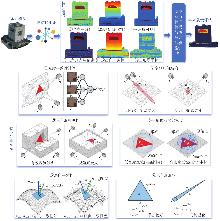
Fig. 1
Overall framework of the proposed method"

Tab. 1
Multiple feature representation"
| 特征名称 | 符号 | 数据源 | 物理含义 | 针对的主要缺陷类型 |
|---|---|---|---|---|
| 光度一致性 | xphoto | 影像+网格 | 多视纹理匹配的置信度 | 几何噪声、模糊、错位 |
| 多视几何结构 | xgeo | 影像+网格 | 空间前方交会的几何稳定性 | 深度误差大、几何噪点 |
| 三角形可见性 | xvis | 影像+网格 | 参与重建的观测冗余度 | 边缘悬浮物、虚假几何 |
| 局部点云密度 | xden | 网格 | 原始测量数据的支持程度 | 平面大孔洞填充、非真实表面 |
| 法向一致性 | xnorm | 网格 | 网格面与原始流形的拟合度 | 表面凹凸不平、拓扑翻转 |
| 三角形形状 | xshape | 网格 | 网格单元的几何健康度 | 狭长三角形、退化网格 |
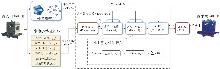
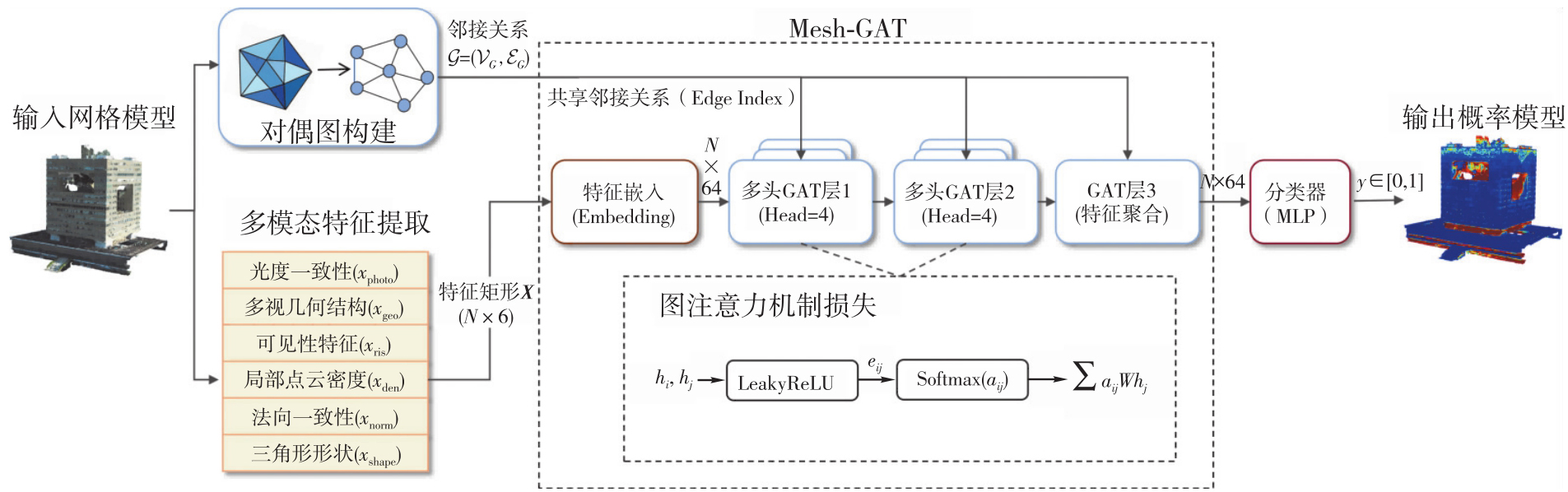
Fig. 2
Mesh-GAT model and training framework"
Tab. 2
Experimental data description"
| 数据集名称 | 场景描述 | 待检测模型 | 真值模型 | 主要质量挑战 |
|---|---|---|---|---|
| 数据集1:ISPRS多特蒙德数据集 | 包含同步采集的机载倾斜与地面影像 | 机载影像重建 | 空地融合高质量Mesh模型 | 待检测模型在建筑立面、底部及遮挡区域存在明显的结构缺失和纹理变形 |
| 数据集2:复杂单体建筑数据集 | 具有显著特殊几何特征的单体建筑 | 机载影像重建 | 人工精细化建模得到的高精度模型 | 考验方法针对特定复杂几何结构的检测能力,模型易出现几何粘连或结构错误 |
| 数据集3:复杂建筑群数据集 | 大范围、高密度的城市建筑群体场景 | 机载影像重建 | 人工精细化建模完成的高精度模型 | 考察方法在大规模场景、严重相互遮挡条件下,对多样化建筑形态质量问题的稳健性 |
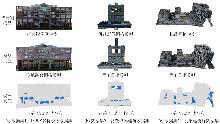
Fig. 3
Experimental area and data"
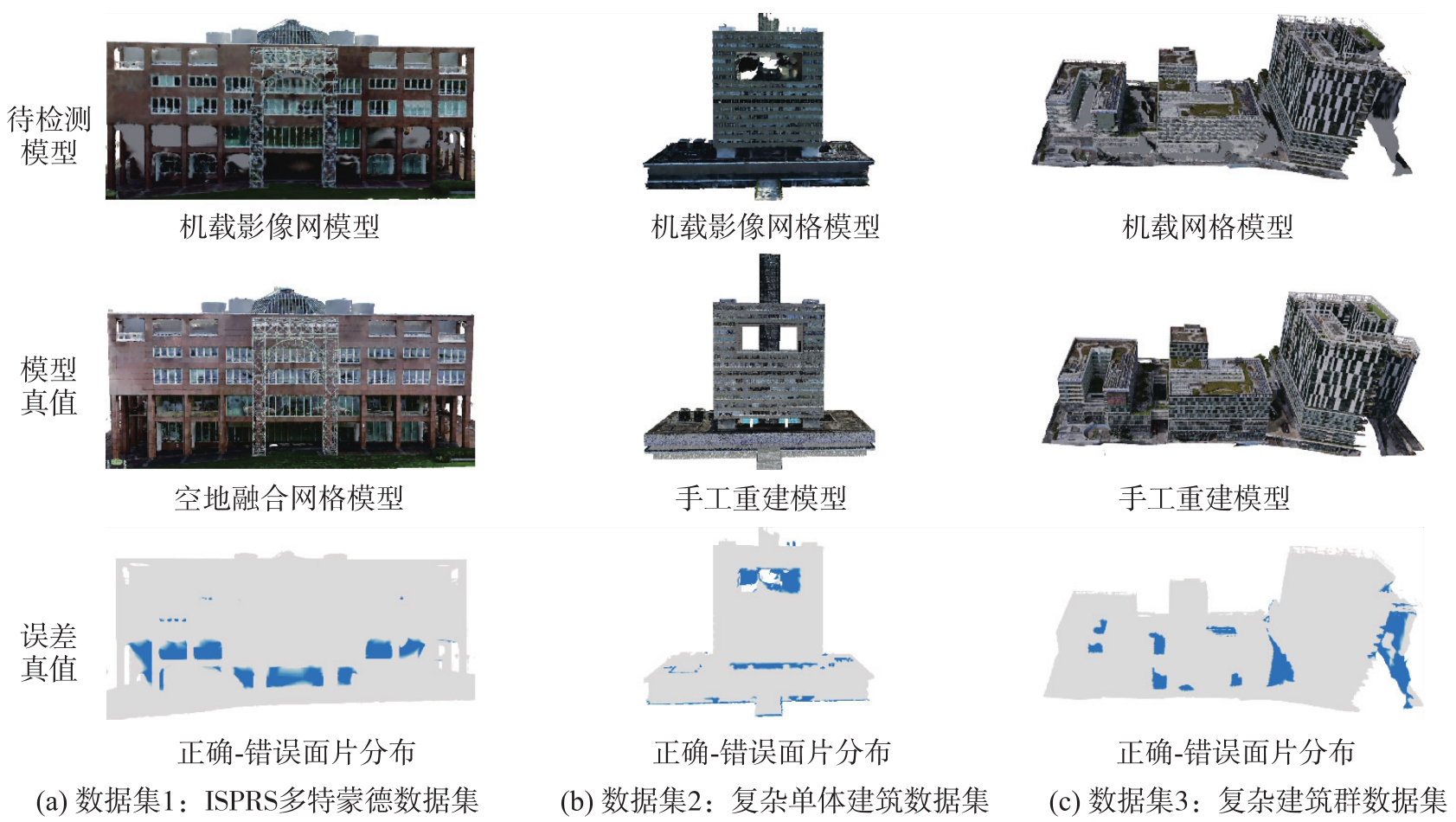
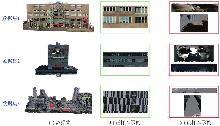
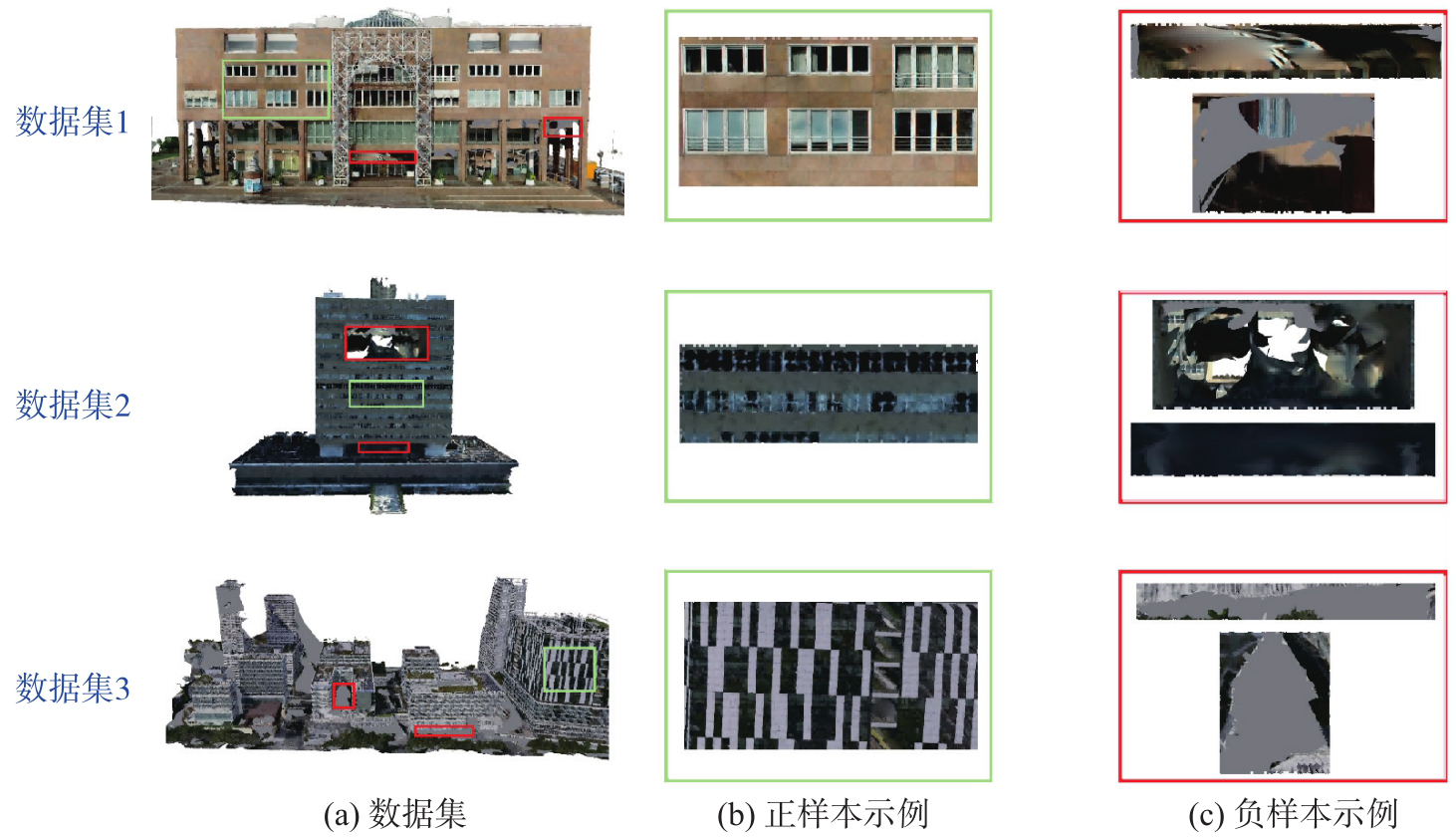
Fig. 4
Visualization of training sample selection strategy and typical positive and negative samples"
Tab. 3
Detailed statistics of annotated training samples for experimental datasets"
| 数据集名称 | 总网格数 | 正样本网格数 | 负样本网格数 | 训练集总数 | 训练集占比 |
|---|---|---|---|---|---|
| 数据集1 | 1 242 784 | 70 330 | 2 874 | 73 204 | 1/17 |
| 数据集2 | 944 524 | 145 600 | 5 775 | 151 375 | 1/6 |
| 数据集3 | 6 642 898 | 496 822 | 15 076 | 511 898 | 1/13 |
Tab. 4
Accuracy and efficiency of quality assessment"
| 试验方法 | 数据集场景 | 数据规模 | 检测精度指标 | 效率指标 | |||||
|---|---|---|---|---|---|---|---|---|---|
| 测试网格数 | 辅助影像数 | Precision/(%) | Recall/(%) | F1值/(%) | IoU/(%) | 训练时间/s | 推理时间/s | ||
| Mesh-GAT | 数据集1 | 1 242 784 | 444 | 78.1 | 84.5 | 81.2 | 68.3 | 40 | 50 |
| 数据集2 | 944 524 | 337 | 71.5 | 81.2 | 76.0 | 61.3 | 23 | 40 | |
| 数据集3 | 6 642 898 | 235 | 76.7 | 89.4 | 82.6 | 70.3 | 130 | 319 | |
| 随机森林 | 数据集1 | 1 242 784 | 444 | 73.3 | 76.7 | 75.0 | 60.0 | 3 | 2 |
| 数据集2 | 944 524 | 337 | 63.4 | 72.1 | 67.5 | 50.9 | 2 | 2 | |
| 数据集3 | 6 642 898 | 235 | 64.2 | 78.5 | 70.6 | 54.6 | 12 | 6 | |
Fig. 5
Detection accuracy and result discrepancy"
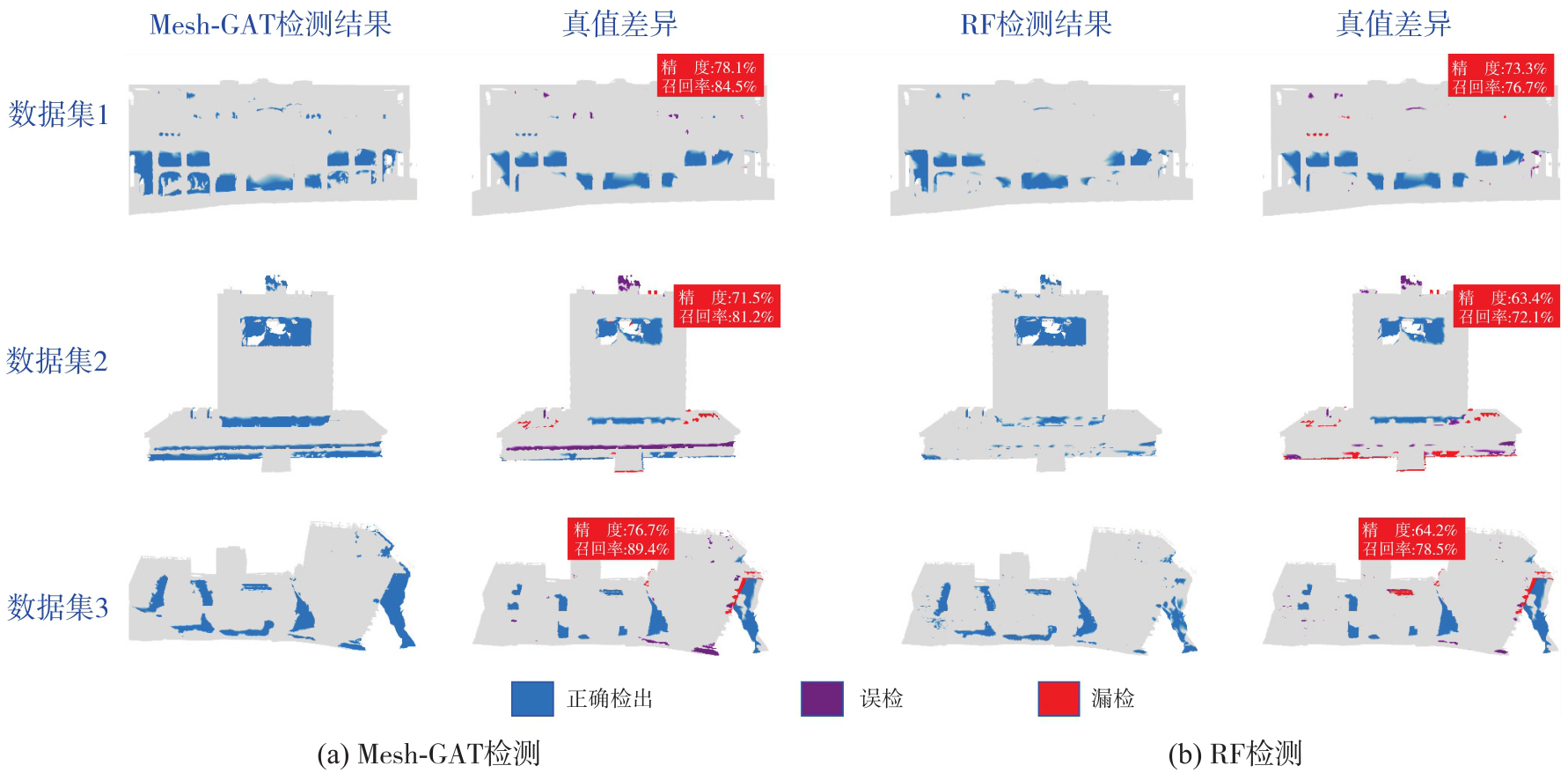
Fig. 6
Visualization of detection results"
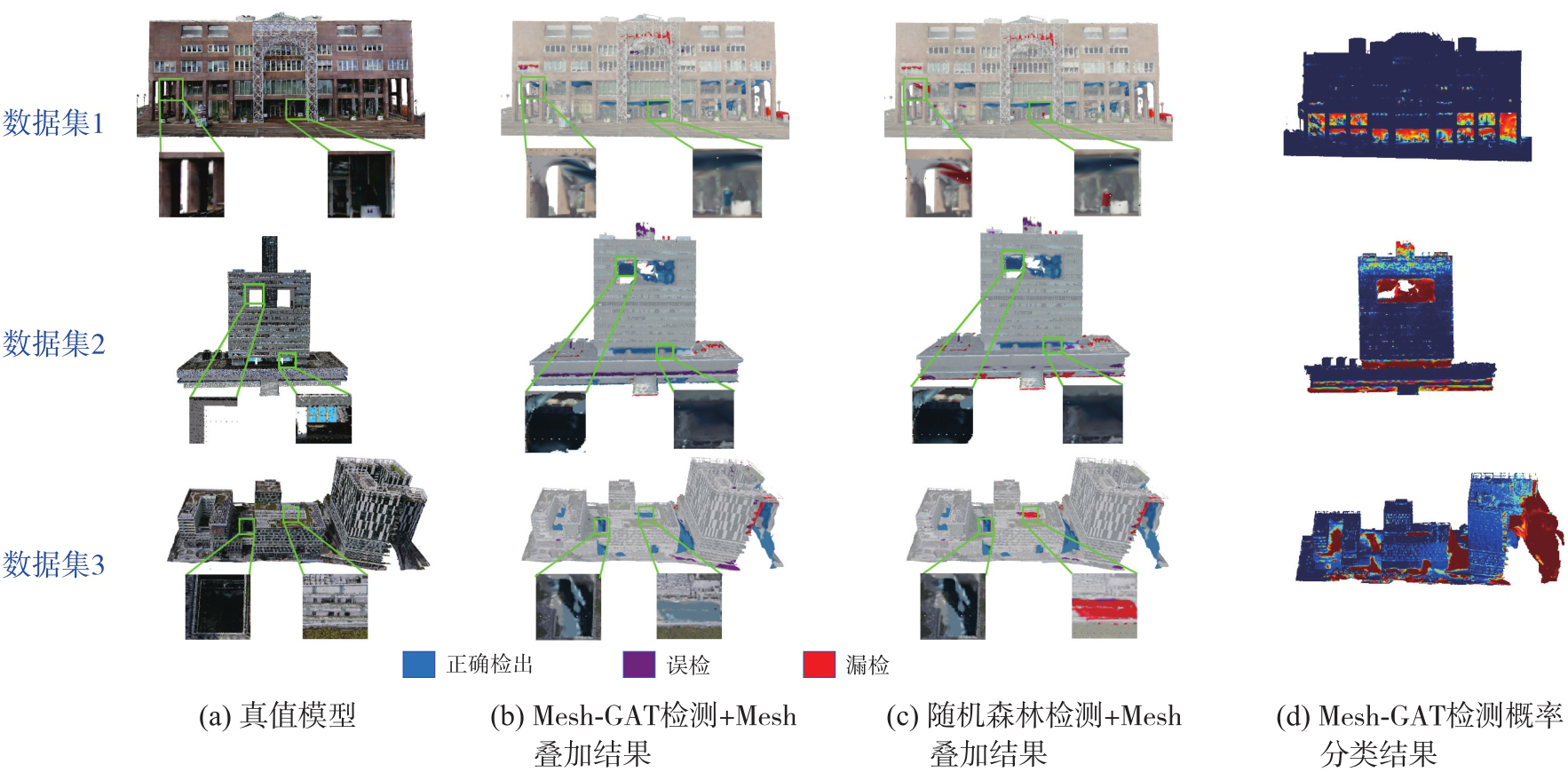
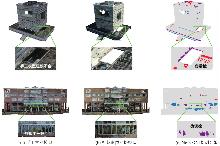
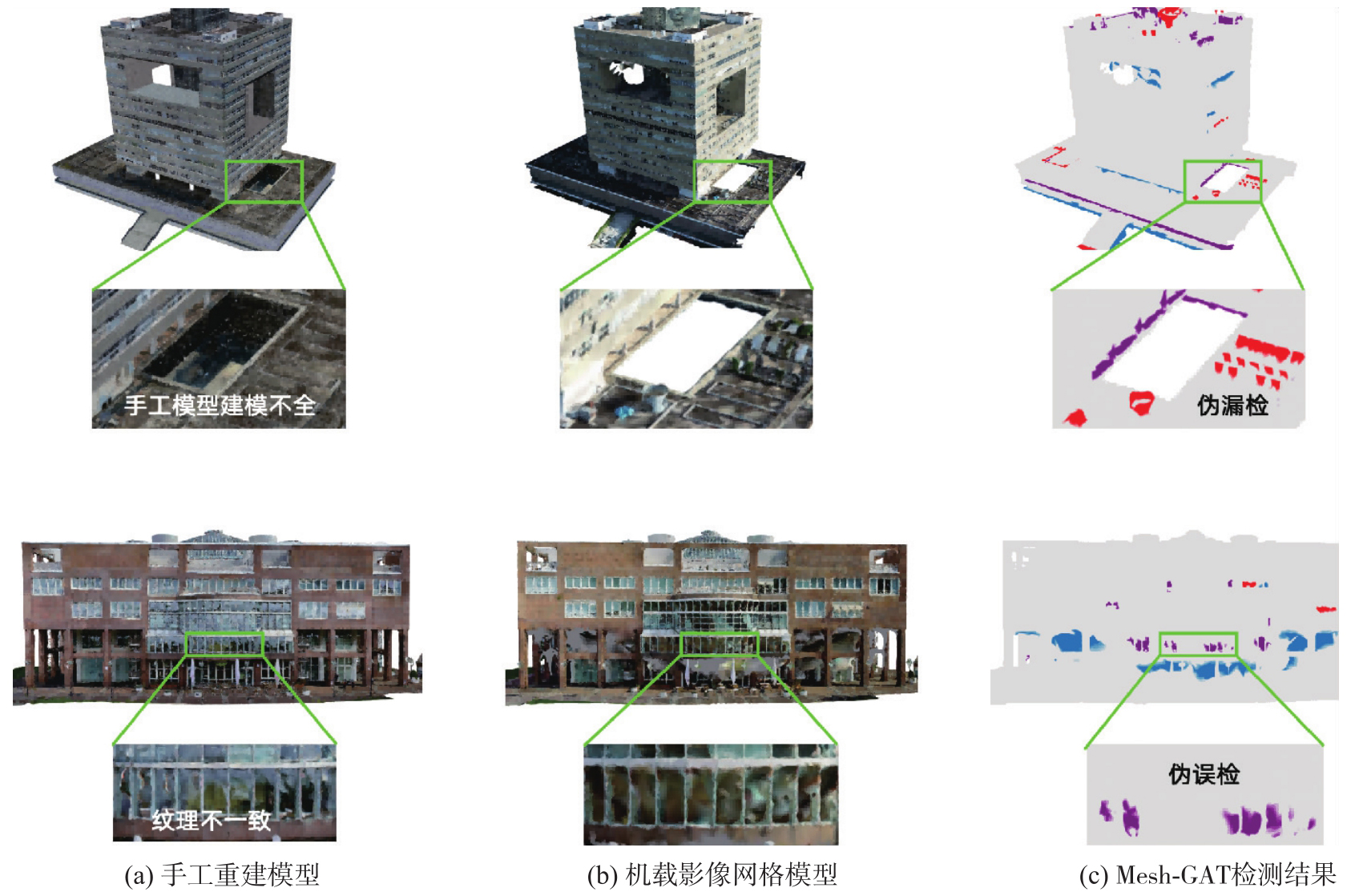
Fig. 7
False positives and false negatives"
Tab. 5
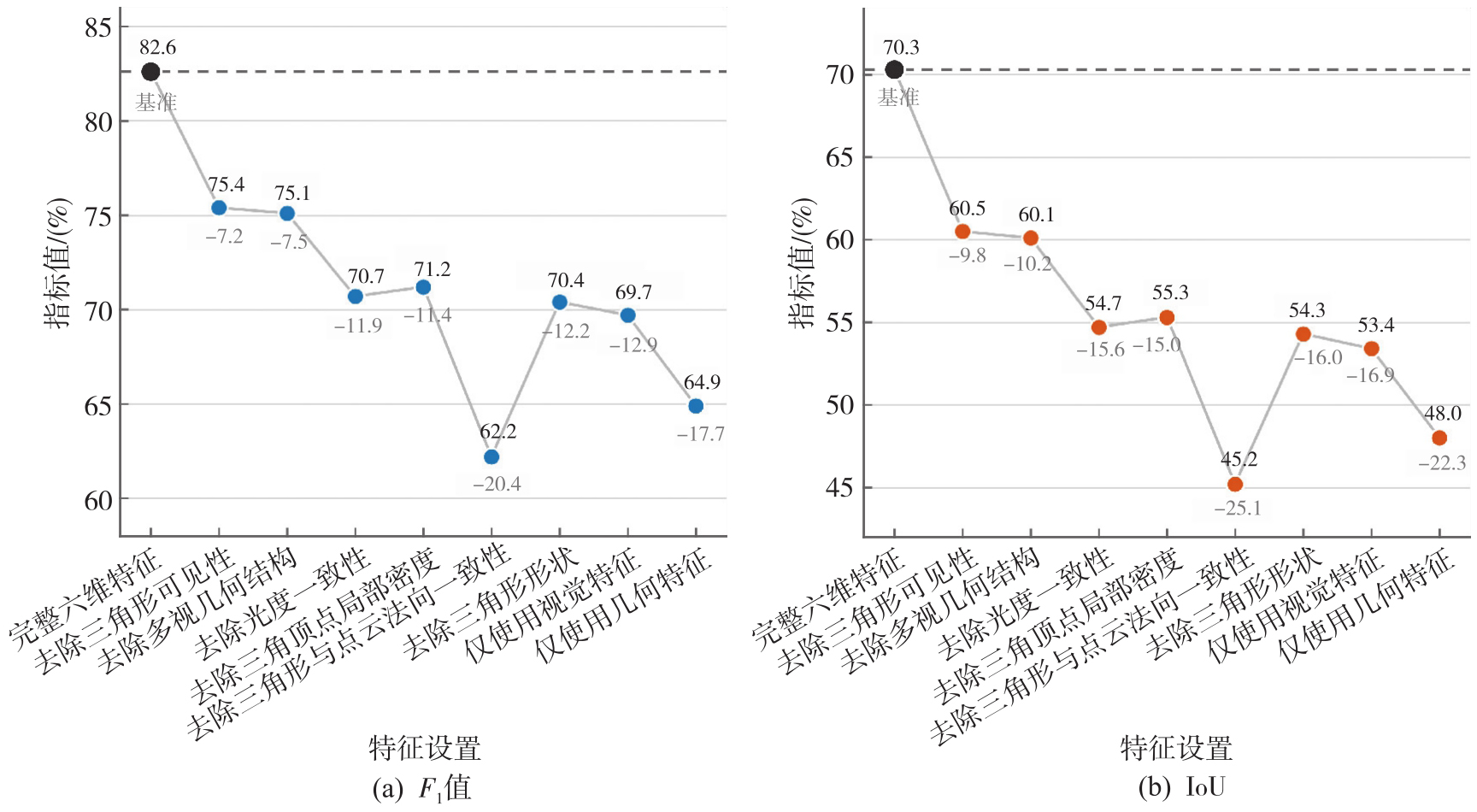
Ablation results with different feature combinations on dataset 3"
| 特征设置 | Precision | Recall | F1值 | IoU |
|---|---|---|---|---|
| 完整六维特征 | 76.7 | 89.4 | 82.6 | 70.3 |
| 去除三角形可见性 | 72.4 | 78.6 | 75.4 | 60.5 |
| 去除多视几何结构 | 63.8 | 91.2 | 75.1 | 60.1 |
| 去除光度一致性 | 68.5 | 73.1 | 70.7 | 54.7 |
| 去除三角顶点局部密度 | 74.2 | 68.4 | 71.2 | 55.3 |
| 去除三角形与点云法向一致性 | 64.9 | 59.8 | 62.2 | 45.2 |
| 去除三角形形状 | 70.6 | 70.2 | 70.4 | 54.3 |
| 仅使用视觉特征 | 80.3 | 61.5 | 69.7 | 53.4 |
| 仅使用几何特征 | 82.1 | 53.6 | 64.9 | 48.0 |
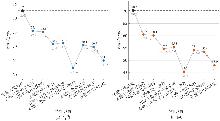
Fig. 8
Ablation comparison of F1 score and IoU under different feature combinations"
Tab. 6
Comparison of defect detection results under different models on dataset 3"
| 模型 | Precision | Recall | F1分数 | IoU |
|---|---|---|---|---|
| Mesh-GAT | 76.7 | 89.4 | 82.6 | 70.3 |
| MLP | 54.8 | 86.2 | 67.0 | 50.4 |
| 随机森林 | 64.2 | 78.5 | 70.6 | 54.6 |
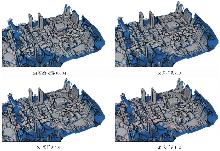
Fig. 9
Analysis of scene generalization capability"

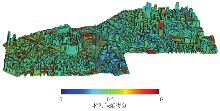
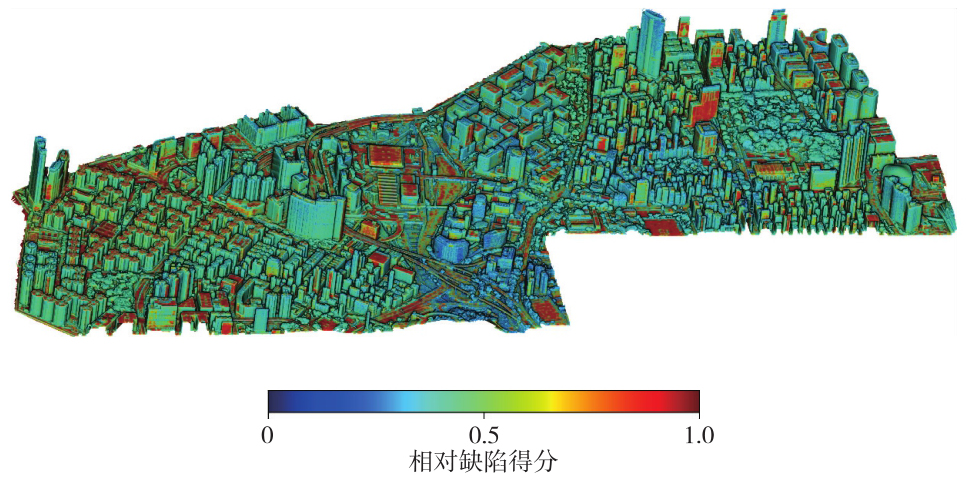
Fig. 10
Visualization of defect detection results for large-scale 3D mesh models at the block level"
Tab. 7
Runtime analysis of downsampling strategies"
| 面片保留率/(%) | 数据规模 | 效率指标 | ||
|---|---|---|---|---|
| 测试网格数 | 辅助影像数 | 特征提取时间/min | 推理时间/s | |
| 100 | 17 560 000 | 428 | 148 | 867 |
| 70 | 12 210 000 | 428 | 102 | 698 |
| 40 | 6 960 000 | 428 | 58 | 302 |
| 10 | 1 760 000 | 428 | 18 | 152 |
| [1] |
杨必胜, 陈驰, 董震. 面向智能化测绘的城市地物三维提取[J]. 测绘学报, 2022, 51(7): 1476-1484. DOI: .
doi: 10.11947/j.AGCS.2022.20220183 |
|
Yang Bisheng, Chen Chi, Dong Zhen. 3D geospatial information extraction of urban objects for smart surveying and mapping[J]. Acta Geodaetica et Cartographica Sinica, 2022, 51(7): 1476-1484. DOI: .
doi: 10.11947/j.AGCS.2022.20220183 |
|
| [2] | 陈军, 刘建军, 田海波. 实景三维中国建设的基本定位与技术路径[J]. 武汉大学学报(信息科学版), 2022, 47(10): 1568-1575. |
| Chen Jun, Liu Jianjun, Tian Haibo. Basic directions and technological path for building 3D realistic geospatial scene in China[J]. Geomatics and Information Science of Wuhan University, 2022, 47(10): 1568-1575. | |
| [3] | 顾建祥, 董震, 郭王. 面向上海城市数字化转型的新型测绘[J]. 测绘通报, 2021(7): 131-134, 139. |
| Gu Jianxiang, Dong Zhen, Guo Wang. New surveying and mapping for the urban digital transformation of Shanghai[J]. Bulletin of Surveying and Mapping, 2021(7): 131-134, 139. | |
| [4] | 肖建华, 李海亭, 李鹏鹏, 等. 实景三维的内涵与分类分级[J]. 城市勘测, 2021(5): 5-10. |
| Xiao Jianhua, Li Haiting, Li Pengpeng, et al. Connotation, classification and grading of 3D real scene[J]. Urban Geotechnical Investigation & Surveying, 2021(5): 5-10. | |
| [5] | 朱庆, 朱军, 黄华平, 等. 实景三维空间信息平台与数字孪生川藏铁路[J]. 高速铁路技术, 2020, 11(2): 46-53. |
| Zhu Qing, Zhu Jun, Huang Huaping, et al. Real scene 3D spatial information platform and digital twin Sichuan-Tibet railway[J]. High Speed Railway Technology, 2020, 11(2): 46-53. | |
| [6] | 李清泉, 邵成立, 万剑华, 等. 优视摄影测量与泛在实景三维数据采集:以实景三维青岛为例[J]. 武汉大学学报(信息科学版), 2022, 47(10): 1587-1597. |
| Li Qingquan, Shao Chengli, Wan Jianhua, et al. Optimized views photogrammetry and ubiquitous real 3D data acquisition with the application case in Qingdao[J]. Geomatics and Information Science of Wuhan University, 2022, 47(10): 1587-1597. | |
| [7] |
肖雄武. 具备结构感知功能的倾斜摄影测量场景三维重建[J]. 测绘学报, 2019, 48(6): 802. DOI: .
doi: 10.11947/j.AGCS.2019.20180319 |
|
Xiao Xiongwu. Oblique photogrammetry based scene 3D reconstruction with structure sensing functions[J]. Acta Geodaetica et Cartographica Sinica, 2019, 48(6): 802. DOI: .
doi: 10.11947/j.AGCS.2019.20180319 |
|
| [8] | 李德仁, 肖雄武, 郭丙轩, 等. 倾斜影像自动空三及其在城市真三维模型重建中的应用[J]. 武汉大学学报(信息科学版), 2016, 41(6): 711-721. |
| Li Deren, Xiao Xiongwu, Guo Bingxuan, et al. Oblique image based automatic aerotriangulation and its application in 3D city model reconstruction[J]. Geomatics and Information Science of Wuhan University, 2016, 41(6): 711-721. | |
| [9] |
魏东, 刘欣怡, 张永军. 多视影像三维线云重建技术及其智能化发展展望[J]. 测绘学报, 2024, 53(6): 1025-1036. DOI: .
doi: 10.11947/j.AGCS.2024.20230447 |
|
Wei Dong, Liu Xinyi, Zhang Yongjun. The technology and intelligent development of 3D line cloud reconstruc-tion from multiple images[J]. Acta Geodaetica et Cartographica Sinica, 2024, 53(6): 1025-1036. DOI: .
doi: 10.11947/j.AGCS.2024.20230447 |
|
| [10] | 肖勇, 王成, 习晓环, 等. 机载激光雷达数据的建筑物三维模型重建[J]. 测绘科学, 2014, 39(11): 37-41. |
| Xiao Yong, Wang Cheng, Xi Xiaohuan, et al. 3D building model reconstruction from airborne LiDAR data[J]. Science of Surveying and Mapping, 2014, 39(11): 37-41. | |
| [11] | 刘欣怡, 张永军, 范伟伟, 等. 无人机倾斜摄影三维建模技术研究现状及展望[J]. 时空信息学报, 2023, 30(1): 41-48. |
| Liu Xinyi, Zhang Yongjun, Fan Weiwei, et al. 3D modeling based on UAV oblique photogrammetry: research status and prospect[J]. Journal of Spatio-Temporal Information, 2023, 30(1): 41-48. | |
| [12] |
朱庆, 张利国, 丁雨淋, 等. 从实景三维建模到数字孪生建模[J]. 测绘学报, 2022, 51(6): 1040-1049. DOI: .
doi: 10.11947/j.AGCS.2022.20210640 |
|
Zhu Qing, Zhang Liguo, Ding Yulin, et al. From real 3D modeling to digital twin modeling[J]. Acta Geodaetica et Cartographica Sinica, 2022, 51(6): 1040-1049. DOI: .
doi: 10.11947/j.AGCS.2022.20210640 |
|
| [13] |
单杰, 李志鑫, 张文元. 大规模三维城市建模进展[J]. 测绘学报, 2019, 48(12): 1523-1541. DOI: .
doi: 10.11947/j.AGCS.2019.20190471 |
|
Shan Jie, Li Zhixin, Zhang Wenyuan. Recent progress in large-scale 3D city modeling[J]. Acta Geodaetica et Cartographica Sinica, 2019, 48(12): 1523-1541. DOI: .
doi: 10.11947/j.AGCS.2019.20190471 |
|
| [14] | 王丙涛, 王继. 基于倾斜摄影技术的三维建模生产与质量分析[J]. 城市勘测, 2015(5): 80-82, 85. |
| Wang Bingtao, Wang Ji. Production and quality analysis of 3D city modeling using oblique photogrametric technology[J]. Urban Geotechnical Investigation & Surveying, 2015(5): 80-82, 85. | |
| [15] | Verdie Y, Lafarge F, Alliez P. LOD generation for urban scenes[J]. ACM Transactions on Graphics, 2015, 34(3): 1-14. |
| [16] |
李清泉, 黄惠, 姜三, 等. 优视摄影测量方法及精度分析[J]. 测绘学报, 2022, 51(6): 996-1007. DOI: .
doi: 10.11947/j.AGCS.2022.20210685 |
|
Li Qingquan, Huang Hui, Jiang San, et al. Optimized views photogrammetry and its precision analysis[J]. Acta Geodaetica et Cartographica Sinica, 2022, 51(6): 996-1007. DOI: .
doi: 10.11947/j.AGCS.2022.20210685 |
|
| [17] | 赵建春. 基于倾斜摄影测量技术的实景三维建模及精度分析[J]. 科学技术创新, 2022(7): 127-130. |
| Zhao Jianchun. 3D modeling and precision analysis of real scene based on oblique photogrammetry technology[J]. Scientific and Technological Innovation, 2022(7): 127-130. | |
| [18] | Sorgente T, Biasotti S, Manzini G, et al. A survey of indicators for mesh quality assessment[J]. Computer Graphics Forum, 2023, 42(2): 461-483. |
| [19] | 杨斌, 李晓强, 李伟, 等. 基于表面粗糙度的三维模型质量评价研究[J]. 计算机科学, 2011, 38(1): 276-278, 285. |
| Yang Bin, Li Xiaoqiang, Li Wei, et al. Quality assessment for 3D model based on surface roughness[J]. Computer Science, 2011, 38(1): 276-278, 285. | |
| [20] | 张号, 王炜, 邓强, 等. 倾斜摄影实景三维模型质量评价[J]. 北京测绘, 2020, 34(1): 56-60. |
| Zhang Hao, Wang Wei, Deng Qiang, et al. The quality evaluation of 3D model of tilt photography reality[J]. Beijing Surveying and Mapping, 2020, 34(1): 56-60. | |
| [21] | 张雯, 程亮, 张群, 等. 三维模型几何质量评价方法[J]. 测绘通报, 2014(7): 44-47. |
| Zhang Wen, Cheng Liang, Zhang Qun, et al. An evaluation method for the geometry quality of three-dimensional models[J]. Bulletin of Surveying and Mapping, 2014(7): 44-47. | |
| [22] | 钟炜, 郭丽. 城市级实景三维单体化模型质检方法研究[J]. 地理空间信息, 2025, 23(7): 133-136. |
| Zhong Wei, Guo Li. Research on quality inspection method for urban 3D real scene monolithic model[J]. Geospatial Information, 2025, 23(7): 133-136. | |
| [23] | Maraş E E, Nasery N. Investigating the length, area and volume measurement accuracy of UAV-Based oblique photogrammetry models produced with and without ground control points[J]. International Journal of Engineering and Geosciences, 2023, 8(1): 32-51. |
| [24] | Xu Y M, Zhang J X, Zhao H T, et al. Research on quality framework of real scene 3D model based on oblique photogrammetry[J]. The International Archives of the Photogrammetry, Remote Sensing and Spatial Information Sciences, 2021, XLIII-B3-2021: 791-796. |
| [25] | Abouelaziz I, El Hassouni M, Cherifi H. No-reference 3D mesh quality assessment based on dihedral angles model and support vector regression[C]//Proceedings of 2016 Image and Signal Processing. Cham: Springer International Publishing, 2016: 369-377. |
| [26] | Nouri A, Charrier C, Lézoray O. 3D blind mesh quality assessment index[C]//Proceedings of 2017 IS&T International Symposium on Electronic Imaging. Burlingame: Society for Imaging Science and Technology, 2017: 9-26. |
| [27] | Nehmé Y, Delanoy J, Dupont F, et al. Textured mesh quality assessment: large-scale dataset and deep learning-based quality metric[J]. ACM Transactions on Graphics, 2023, 42(3): 1-20. |
| [28] | Zhang Zicheng, Sun Wei, Min Xiongkuo, et al. No-reference quality assessment for 3D colored point cloud and mesh models[J]. IEEE Transactions on Circuits and Systems for Video Technology, 2022, 32(11): 7618-7631. |
| [29] | Dong Lu, Fang Yuming, Lin Weisi, et al. Perceptual quality assessment for 3D triangle mesh based on curvature[J]. IEEE Transactions on Multimedia, 2015, 17(12): 2174-2184. |
| [30] | Ibork Z, Nouri A, Lézoray O, et al. No reference 3D mesh quality assessment using deep convolutional features[C]//Proceedings of 2023 International Symposium on Image and Signal Processing and Analysis. Rome: IEEE, 2023: 1-6. |
| [31] | Liu Qi, Yuan Hui, Su Honglei, et al. PQA-net: deep no reference point cloud quality assessment via multi-view projection[J]. IEEE Transactions on Circuits and Systems for Video Technology, 2021, 31(12): 4645-4660. |
| [32] | Dong S, Yan Q, Xu Y, et al. Quality inspection and analysis of three-dimensional geographic information model based on oblique photogrammetry[C]//Proceedings of 2018 International Archives of the Photogrammetry, Remote Sensing and Spatial Information Sciences. Beijing: Copernicus Publications, 2018: 299-302. |
| [1] | Chenming YE, Zhizhong KANG, Jinhao CAI, Bingzheng ZUO, Shuai SHAO, Yan LI. A morphology-guided real-scene 3D modeling method of lunar geo-entities [J]. Acta Geodaetica et Cartographica Sinica, 2026, 55(3): 525-535. |
| [2] | Shunping JI, Jin LIU, Jian GAO, Jianya GONG. An intelligent 3D reconstruction framework via deep learning based multi-view image matching [J]. Acta Geodaetica et Cartographica Sinica, 2025, 54(9): 1633-1646. |
| [3] | Haojia LIN, Renzhong GUO, Biao HE, Xi KUAI, Ding MA, Chengpeng LI. Visual-perception-oriented LOD adaptive visualization for realistic 3D building scenes [J]. Acta Geodaetica et Cartographica Sinica, 2025, 54(6): 1054-1070. |
| Viewed | ||||||
|
Full text |
|
|||||
|
Abstract |
|
|||||
