


测绘学报 ›› 2025, Vol. 54 ›› Issue (7): 1305-1317.doi: 10.11947/j.AGCS.2025.20240448
邓敏( ), 彭翀, 谌恺祺()
收稿日期:2024-11-01
修回日期:2025-06-18
出版日期:2025-08-18
发布日期:2025-08-18
通讯作者:
谌恺祺
E-mail:dengmin@csu.edu.cn;chenkaiqi@csu.edu.cn
作者简介:邓敏(1974—),男,博士,教授,研究方向为时空大数据挖掘与智能服务。E-mail:dengmin@csu.edu.cn
基金资助:
Min DENG(), Chong PENG, Kaiqi CHEN()
Received:2024-11-01
Revised:2025-06-18
Online:2025-08-18
Published:2025-08-18
Contact:
Kaiqi CHEN
E-mail:dengmin@csu.edu.cn;chenkaiqi@csu.edu.cn
About author:DENG Min (1974—), male, PhD, professor, majors in spatio-temporal big data mining and intelligent services. E-mail: dengmin@csu.edu.cn
Supported by:摘要:
空间面板数据具有空间和时间维度信息规整的特点,常用于地理现象时空演化过程的记录,是时空预测研究的主流数据结构。特别是在以神经网络为核心的人工智能时代,空间面板数据无须额外处理,便可输入卷积网络、循环网络等智能化模型,具有信息无损与计算便捷的优势,常用于人类活动、交通出行等领域的预测研究。然而,现有研究聚焦模型方法的提升,忽视了空间面板数据可预测性的理论研究。统计学等领域有基于熵的可预测性理论,广泛用于时间序列分析,但忽视了空间面板数据中空间依赖、空间异质与地理相似等地理空间特性的影响,导致评估结果不准。对此,本文顾及地理空间特性,提出邻域转移熵、交叉空间熵与交叉区域熵在内的地理熵理论与方法,从特征学习、参数训练、应用测试的不同环节,定量评估空间面板数据的可预测性,为时空预测研究中空间邻域学习、局部模型构建与迁移泛化策略提供理论依据。
中图分类号:
邓敏, 彭翀, 谌恺祺. 顾及地理空间特性的空间面板数据可预测性评估理论与方法[J]. 测绘学报, 2025, 54(7): 1305-1317.
Min DENG, Chong PENG, Kaiqi CHEN. A predictability measurement methodology for spatial panel data considering geo-spatial effects[J]. Acta Geodaetica et Cartographica Sinica, 2025, 54(7): 1305-1317.

图1
空间面板数据"
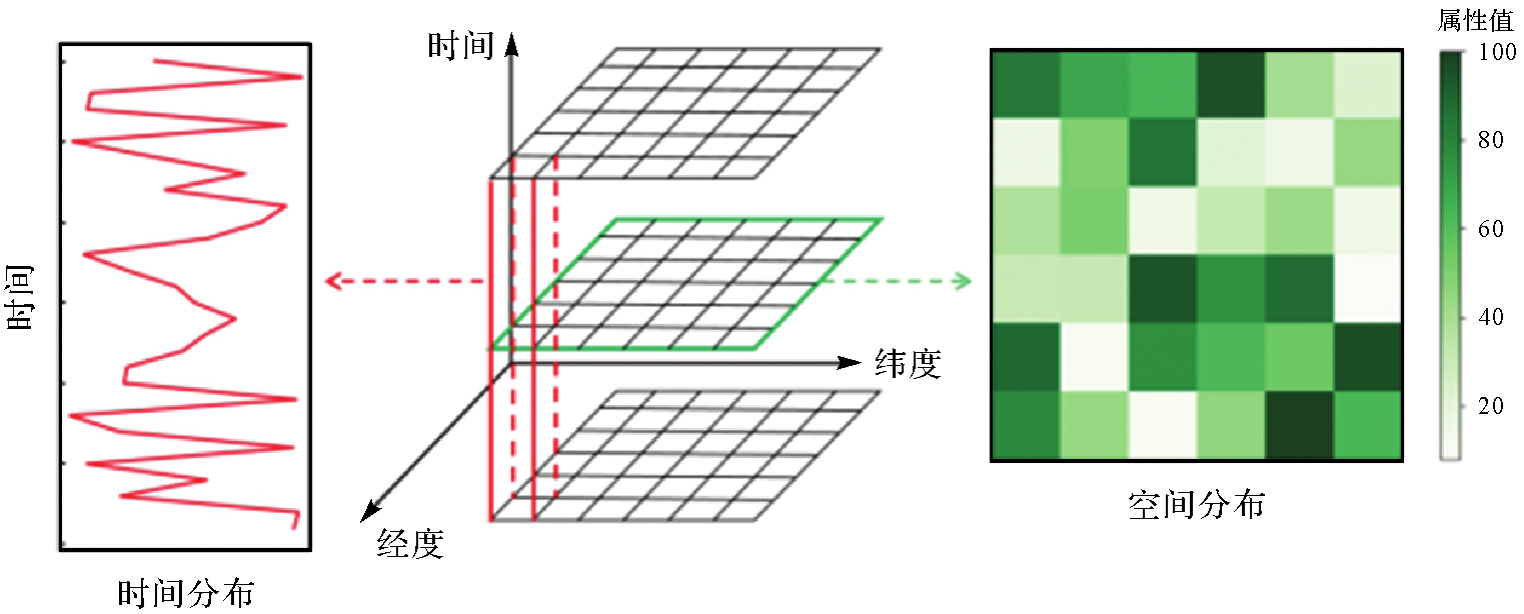
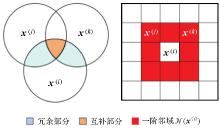
图2
空间邻域单元数据的信息关系"

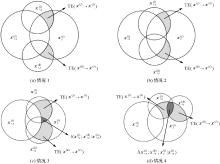
图3
邻域单元数据(x(j)和x(k))对中心单元数据(x(i))的不同信息关系"

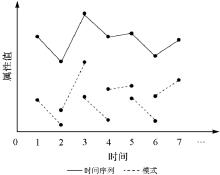
图4
模式划分(m=2)"
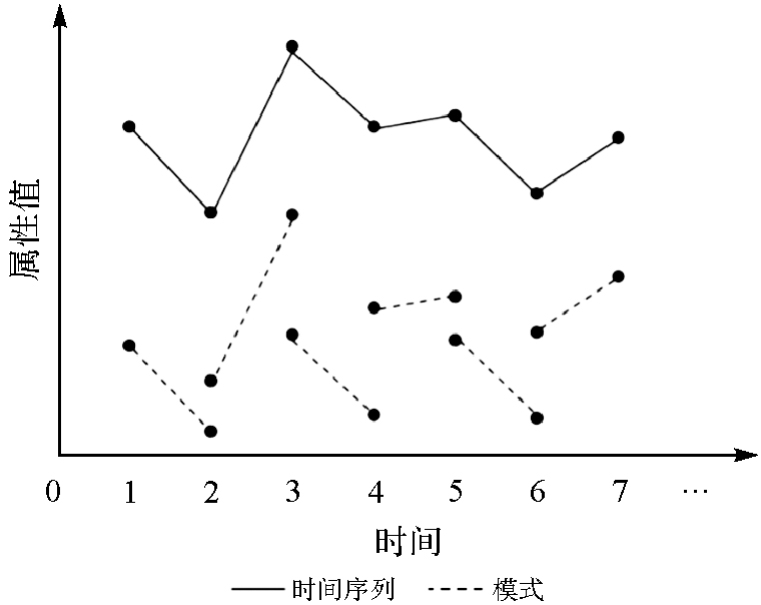
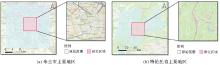
图5
研究区域"

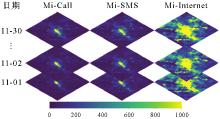
图6
空间面板数据Mi-Call、Mi-SMS和Mi-Internet的部分可视化"


图7
空间面板数据Te-Call、Te-SMS和Te-Internet的部分可视化"
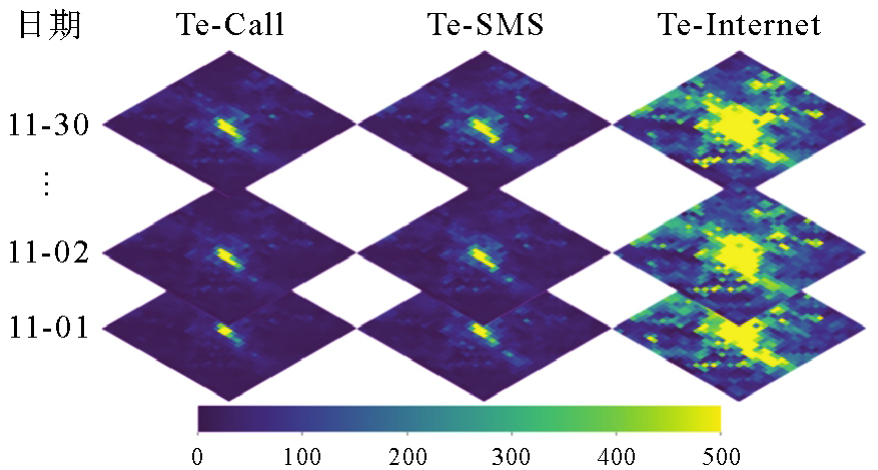
表1
邻域转移熵计算结果"
| 研究区域 | 空间面板数据 | 邻域转移熵 | 具有显著增益的邻域单元数占比(一阶邻域)/(%) | ||||
|---|---|---|---|---|---|---|---|
| 平均值 | 最大值 | 0个单元 | 1~3个单元 | 4~6个单元 | 7~8个单元 | ||
| 米兰 | Mi-Call | 0.078 | 0.421 | 0.19 | 34.62 | 61.94 | 3.25 |
| Mi-SMS | 0.056 | 0.238 | 0.68 | 52.25 | 45.94 | 1.13 | |
| Mi-Internet | 0.060 | 0.290 | 0.25 | 46.56 | 50.94 | 2.25 | |
| 特伦托 | Te-Call | 0.076 | 0.303 | 0.22 | 51.00 | 47.78 | 1.00 |
| Te-SMS | 0.054 | 0.193 | 0.78 | 67.78 | 31.22 | 0.22 | |
| Te-Internet | 0.044 | 0.206 | 1.33 | 71.11 | 26.67 | 0.89 | |
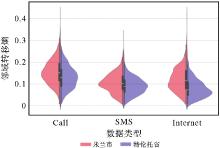
图8
两研究区域邻域转移熵数值分布"
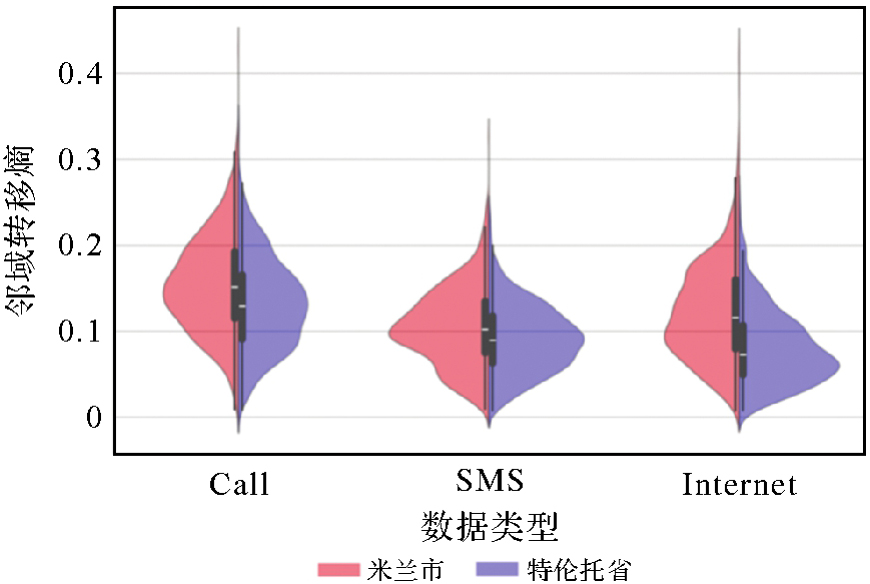
表2
预测精度变化与邻域转移熵变化间的对比分析"
| 顾及邻域单元个数 | Mi-Call | Mi-SMS | Mi-Internet | Te-Call | Te-SMS | Te-Internet |
|---|---|---|---|---|---|---|
| 0 | 23.09 | 29.81 | 155.99 | 5.24 | 8.56 | 26.86 |
| 1 | 21.45(0.046) | 28.98(0.034) | 151.38(0.039) | 4.94(0.063) | 8.28(0.05) | 26.4(0.038) |
| 2 | 18.92(0.106) | 27.35(0.069) | 149.88(0.077) | 4.84(0.100) | 8.12(0.075) | 26.15(0.060) |
| 3 | 18.13(0.132) | 25.81(0.099) | 145.92(0.106) | 4.57(0.123) | 7.15(0.091) | 24.55(0.087) |
| 4 | 16.69(0.154) | 24.91(0.120) | 137.55(0.132) | 4.05(0.134) | 6.92(0.110) | 23.51(0.100) |
| 5 | 14.69(0.179) | 22.68(0.135) | 136.16(0.16) | 3.62(0.169) | 5.69(0.130) | 17.97(0.131) |
| 6 | 14.57(0.198) | 22.67(0.155) | 130.03(0.177) | 2.22(0.184) | 4.83(0.156) | 14.96(0.151) |
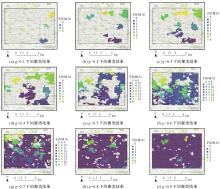
图9
基于交叉空间熵的Mi-Internet数据聚类结果"

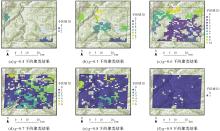
图10
基于交叉空间熵的Te-Internet数据聚类结果"

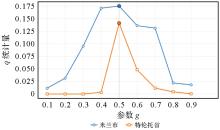
图11
两研究区域参数g与q统计量关系"

表3
Mi-Internet数据集预测精度验证结果"
| 参与训练的子区域ID | 参与测试的子区域ID | 预测精度(MAE) | 参与训练的子区域ID | 参与测试的子区域ID | 预测精度(MAE) |
|---|---|---|---|---|---|
| 5 | 5 | 96.99 | 10 | 50.34 | |
| 2 | 321.30 | 2 | 352.85 | ||
| 6 | 299.28 | 10 | 6 | 484.02 | |
| 8 | 346.80 | 8 | 305.05 | ||
| 13 | 174.68 | 13 | 168.96 |
表4
Te-Internet数据集预测精度验证结果"
| 参与训练的子区域ID | 参与测试的子区域ID | 预测精度(MAE) | 参与训练的子区域ID | 参与测试的子区域ID | 预测精度(MAE) |
|---|---|---|---|---|---|
| 4 | 4 | 11.67 | 5 | 9.22 | |
| 2 | 127.33 | 2 | 154.97 | ||
| 3 | 46.98 | 3 | 52.32 | ||
| 5 | 12.18 | 5 | 4 | 21.15 | |
| 6 | 106.35 | 6 | 117.24 | ||
| 7 | 28.66 | 7 | 31.67 |
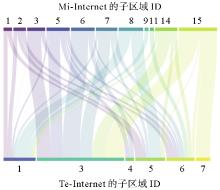
图12
跨城市间的交叉区域熵计算结果"
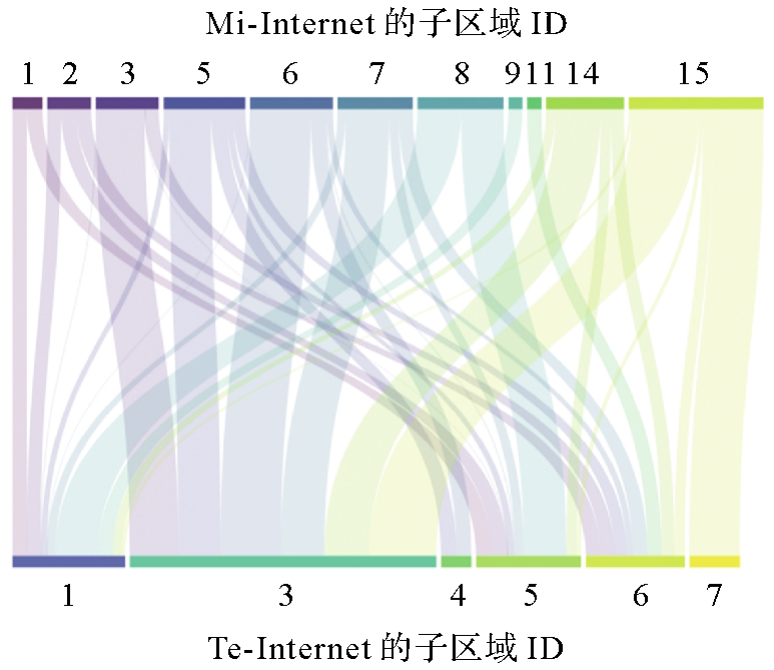
表5
以Mi-Internet数据集中子区域2为源区域的泛化性能测试结果"
| 源区域 | 目标区域 | 交叉区域熵 | 预测精度(MAE) |
|---|---|---|---|
| Mi-Internet的子区域2 | Te-Internet的子区域1 | 0.385 | 6.79 |
| Te-Internet的子区域5 | 0.400 | 11.77 | |
| Te-Internet的子区域4 | 0.408 | 17.60 | |
| Te-Internet的子区域7 | 0.489 | 28.78 | |
| Te-Internet的子区域3 | 0.574 | 47.61 |
表6
以Mi-Internet数据集中的子区域5为源区域的泛化性能测试结果"
| 源区域 | 目标区域 | 交叉区域熵 | 预测精度(MAE) |
|---|---|---|---|
| Mi-Internet的子区域5 | Te-Internet的子区域1 | 0.325 | 6.28 |
| Te-Internet的子区域5 | 0.331 | 11.30 | |
| Te-Internet的子区域4 | 0.398 | 17.61 | |
| Te-Internet的子区域7 | 0.515 | 30.37 | |
| Te-Internet的子区域3 | 0.602 | 46.54 |
表7
以Te-Internet数据集中的子区域2为源区域的泛化性能测试结果"
| 源区域 | 目标区域 | 交叉区域熵 | 预测精度(MAE) |
|---|---|---|---|
| Te-Internet的子区域2 | Mi-Internet的子区域12 | 0.442 | 15.71 |
| Mi-Internet的子区域11 | 0.449 | 69.50 | |
| Mi-Internet的子区域4 | 0.450 | 128.77 | |
| Mi-Internet的子区域13 | 0.453 | 169.16 | |
| Mi-Internet的子区域8 | 0.462 | 326.74 | |
| Mi-Internet的子区域6 | 0.519 | 525.57 |
表8
以Te-Internet数据集中的子区域5为源区域的泛化性能测试结果"
| 源区域 | 目标区域 | 交叉区域熵 | 预测精度(MAE) |
|---|---|---|---|
| Te-Internet的子区域5 | Mi-Internet的子区域3 | 0.281 | 88.04 |
| Mi-Internet的子区域9 | 0.402 | 147.81 | |
| Mi-Internet的子区域4 | 0.426 | 152.05 | |
| Mi-Internet的子区域16 | 0.482 | 159.23 | |
| Mi-Internet的子区域13 | 0.521 | 218.63 | |
| Mi-Internet的子区域3 | 0.606 | 421.04 |

图13
交叉区域熵-MAE回归方程"

| [1] | 李龙飞, 虞吉海. 空间面板数据模型:基于空间计量的文献综述[J]. 经济管理学刊, 2024(1): 83-114. |
| LI Longfei, YU Jihai. Spatial panel data models: a survey[J]. Quarterly Journal of Economics and Management, 2024(1): 83-114. | |
| [2] | TAN Xiaoyong, DENG Min, CHEN Kaiqi, et al. A spatial hierarchical learning module based cellular automata model for simulating urban expansion: case studies of three Chinese urban areas[J]. GIScience & Remote Sensing, 2024, 61(1): 2290352. |
| [3] |
刘慧敏, 张陈为, 谌恺祺, 等. 基于深度学习的城市PM2.5浓度时空分布预测及不确定性评估[J]. 测绘学报, 2024, 53(4): 750-760. DOI: .
doi: 10.11947/j.AGCS.2024.20230071 |
|
LIU Huimin, ZHANG Chenwei, CHEN Kaiqi, et al. Deep learning-based spatio-temporal prediction and uncertainty assessment of urban PM2.5 distribution[J]. Acta Geodaetica et Cartographica Sinica, 2024, 53(4): 750-760. DOI: .
doi: 10.11947/j.AGCS.2024.20230071 |
|
| [4] | CHEN Kaiqi, LIU Enbo, DENG Min, et al. DKNN: deep Kriging neural network for interpretable geospatial interpolation[J]. International Journal of Geographical Information Science, 2024, 38(8): 1486-1530. |
| [5] | DENG Min, CHEN Kaiqi, LEI Kaiyuan, et al. MVCV-Traffic: multiview road traffic state estimation via cross-view learning[J]. International Journal of Geographical Information Science, 2023, 37(10): 2205-2237. |
| [6] | XIE Yiqun, JIA Xiaowei, BAO Han, et al. Spatial-Net: a self-adaptive and model-agnostic deep learning framework for spatially heterogeneous datasets[C]//Proceedings of the 29th International Conference on Advances in Geographic Information Systems. Beijing: ACM Press, 2021: 313-323. |
| [7] | LI Xia, LIU Yilun, LIU Xiaoping, et al. Knowledge transfer and adaptation for land-use simulation with a logistic cellular automaton[J]. International Journal of Geographical Information Science, 2013, 27(10): 1829-1848. |
| [8] | XU Lei, CHEN Nengcheng, CHEN Zeqiang, et al. Spatiotemporal forecasting in earth system science: methods, uncertainties, predictability and future directions[J]. Earth-Science Reviews, 2021, 222: 103828. |
| [9] | RICHMAN J S, MOORMAN J R. Physiological time-series analysis using approximate entropy and sample entropy[J]. American Journal of Physiology Heart and Circulatory Physiology, 2000, 278(6): H2039-H2049. |
| [10] | KOSKO B. Fuzzy entropy and conditioning[J]. Information Sciences, 1986, 40(2): 165-174. |
| [11] | ZHOU Xuan, ZHAO Zhifeng, LI Rongpeng, et al. The predictability of cellular networks traffic[C]//Proceedings of 2012 International Symposium on Communications and Information Technologies. Gold Coast: IEEE, 2012: 973-978. |
| [12] | SONG Chaoming, QU Zehui, BLUMM N, et al. Limits of predictability in human mobility[J]. Science, 2010, 327(5968): 1018-1021. |
| [13] | DIVILOV S, ECKERT H, HICKS D, et al. Disordered enthalpy-entropy descriptor for high-entropy ceramics discovery[J]. Nature, 2024, 625(7993): 66-73. |
| [14] | WU Jingyou. An information fractal dimensional relative entropy[J]. AIP Advances, 2024, 14(2): 025249. |
| [15] | YE Xiaojiang, TANG Yanjie, MA Dongkui. Correlation entropy of free semigroup actions[J]. Journal of Statistical Physics, 2024, 191(10): 122. |
| [16] | LI Zhenpeng, YAN Zhihua, YANG Jian, et al. The structure entropy of social networks[J]. Journal of Systems Science and Complexity, 2024, 37(3): 1147-1162. |
| [17] | TAYLOR K E, STOUFFER R J, MEEHL G A. An overview of CMIP5 and the experiment design[J]. Bulletin of the American Meteorological Society, 2012, 93(4): 485-498. |
| [18] | KIRTMAN B P, MIN D, INFANTI J M, et al. The North American multimodel ensemble: phase-1 seasonal-to-interannual prediction; phase-2 toward developing intraseasonal prediction[J]. Bulletin of the American Meteorological Society, 2014, 95(4): 585-601. |
| [19] | VITART F, ARDILOUZE C, BONET A, et al. The subseasonal to seasonal (S2S) prediction project database[J]. Bulletin of the American Meteorological Society, 2017, 98(1): 163-173. |
| [20] | CHEN Kaiqi, CHU Guowei, LEI Kaiyuan, et al. A multiview representation learning framework for large-scale urban road networks[J]. Applied Sciences, 2022, 12(13): 6301. |
| [21] | 刘瑜, 汪珂丽, 邢潇月, 等. 地理分析中的空间效应[J]. 地理学报, 2023, 78(3): 517-531. |
| LIU Yu, WANG Keli, XING Xiaoyue, et al. On spatial effects in geographical analysis[J]. Acta Geographica Sinica, 2023, 78(3): 517-531. | |
| [22] | DIOGO V, BÜRGI M, DEBONNE N, et al. Geographic similarity analysis for land system science: opportunities and tools to facilitate knowledge integration and transfer[J]. Journal of Land Use Science, 2023, 18(1): 227-248. |
| [23] | CHEN Kaiqi, DENG Min, SHI Yan. A temporal directed graph convolution network for traffic forecasting using taxi trajectory data[J]. ISPRS International Journal of Geo-Information, 2021, 10(9): 624. |
| [24] | 刘恩博, 谌恺祺, 石岩, 等. 数据不确定性下的犯罪事件热点探测方法[J]. 武汉大学学报(信息科学版), 2024, 49(12): 2342-2354. |
| LIU Enbo, CHEN Kaiqi, SHI Yan, et al. A hot spot detection method of criminal events under data uncertainty[J]. Geomatics and Information Science of Wuhan University, 2024, 49(12): 2342-2354. | |
| [25] | ZHUANG Fuzhen, QI Zhiyuan, DUAN Keyu, et al. A comprehensive survey on transfer learning[J]. Proceedings of the IEEE, 2021, 109(1): 43-76. |
| [26] | TOBLER W R. A computer movie simulating urban growth in the Detroit region[J]. Economic Geography, 1970, 46: 234-240. |
| [27] | SCHREIBER T. Measuring information transfer[J]. Physical Review Letters, 2000, 85(2): 461-464. |
| [28] | VICENTE R, WIBRAL M, LINDNER M, et al. Transfer entropy: a model-free measure of effective connectivity for the neurosciences[J]. Journal of Computational Neuroscience, 2011, 30(1): 45-67. |
| [29] | MAO Xuegeng, SHANG Pengjian. Transfer entropy between multivariate time series[J]. Communications in Nonlinear Science and Numerical Simulation, 2017, 47: 338-347. |
| [30] | LEE J, NEMATI S, SILVA I, et al. Transfer entropy estimation and directional coupling change detection in biomedical time series[J]. BioMedical Engineering OnLine, 2012, 11(1): 19. |
| [31] | WANG Jinfeng, ZHANG Tonglin, FU Bojie. A measure of spatial stratified heterogeneity[J]. Ecological Indicators, 2016, 67: 250-256. |
| [32] | 朱阿兴, 闾国年, 周成虎, 等. 地理相似性:地理学的第三定律?[J]. 地球信息科学学报, 2020, 22(4): 673-679. |
| ZHU Axing, LÜ Guonian, ZHOU Chenghu, et al. Geographic similarity: third law of geography?[J]. Journal of Geo-information Science, 2020, 22(4): 673-679. | |
| [33] | KINGMA D P, BA J. Adam: a method for stochastic optimization[EB/OL]. [2024-10-10]. https://arxiv.org/abs/1412.6980. |
| [34] | 王劲峰, 徐成东. 地理探测器:原理与展望[J]. 地理学报, 2017, 72(1): 116-134. |
| WANG Jinfeng, XU Chengdong. Geodetector: principle and prospective[J]. Acta Geographica Sinica, 2017, 72(1): 116-134. | |
| [35] | WANG Jinfeng, HAINING R, ZHANG Tonglin, et al. Statistical modeling of spatially stratified heterogeneous data[J]. Annals of the American Association of Geographers, 2024, 114(3): 499-519. |
| [1] | 严清赟, 郭紫璇, 潘元进, 贾燕, 金双根. GNSS-R陆表反射率空间分异驱动因子定量分析与分区模式[J]. 测绘学报, 2026, 55(2): 315-327. |
| [2] | 孙启钤, 贾帅东, 梁志诚, 刘现鹏, 宋浩石. 顾及众源水深数据特征的海峡通道DDM构建方法[J]. 测绘学报, 2026, 55(1): 90-100. |
| [3] | 杨军, 解恒静, 范红超, 闫浩文. 遥感影像目标检测多尺度熵神经网络架构搜索[J]. 测绘学报, 2024, 53(7): 1384-1400. |
| [4] | 刘雅婷, 陈传法. 顾及空间异质性和特征优选的滑坡易发性评价方法[J]. 测绘学报, 2024, 53(7): 1417-1428. |
| [5] | 赵金奇, 李宇轩, 刘子蓉, 安庆, 宋时雨, 牛玉芬. 基于相似性衡量函数优化的SAR时空极化信息一体化洪涝变化检测方法[J]. 测绘学报, 2024, 53(12): 2375-2390. |
| [6] | 皮新宇, 曾永年, 王盼成. 面向非均质区域的空间增强型时空融合模型研究[J]. 测绘学报, 2023, 52(10): 1714-1723. |
| [7] | 程结海, 黄中意, 王建如, 何湜. 高空间分辨率遥感影像最优分割结果自动确定方法[J]. 测绘学报, 2022, 51(5): 658-667. |
| [8] | 张红, 吴智伟, 王继成, 高培超. 高光谱图像分类的Wasserstein配置熵非监督波段选择方法[J]. 测绘学报, 2021, 50(3): 405-415. |
| [9] | 王旭, 柴洪洲, 王昶, 种洋. 优选小波函数的小波神经网络预报GPS卫星钟差[J]. 测绘学报, 2020, 49(8): 983-992. |
| [10] | 尚戴雨, 丁雨淋, 朱庆, 吴林宝. 顾及地理矢量场空间变化特征的多分辨率纹理可视化方法[J]. 测绘学报, 2020, 49(5): 656-666. |
| [11] | 肖佳, 田沁, 何宗宜. 地理信息数据分级评价的相对指数熵模型[J]. 测绘学报, 2020, 49(11): 1497-1505. |
| [12] | 秦毅坤, 王泽根, 范东明. 青藏高原区域水储量变化的GRACE RL06和TRMM联合反演[J]. 测绘学报, 2020, 49(10): 1285-1294. |
| [13] | 时春霖, 张超, 陈长远, 杜兰, 叶凯, 韩忠. 测量机器人小视场星图一维最大熵星点图像分割算法[J]. 测绘学报, 2018, 47(4): 446-454. |
| [14] | 岳春宇, 邢坤, 鲍云飞, 周楠, 何红艳. 以交叉累积剩余熵为准则的星载激光测高仪大光斑波形数据与地形匹配法[J]. 测绘学报, 2017, 46(3): 346-352. |
| [15] | 蔡建南, 刘启亮, 徐枫, 邓敏, 何占军, 唐建波. 多层次空间同位模式自适应挖掘方法[J]. 测绘学报, 2016, 45(4): 475-485. |
| 阅读次数 | ||||||
|
全文 |
|
|||||
|
摘要 |
|
|||||
