

Acta Geodaetica et Cartographica Sinica ›› 2026, Vol. 55 ›› Issue (3): 477-489.doi: 10.11947/j.AGCS.2026.20250346
• Geodesy and Navigation • Previous Articles Next Articles
Jingxuan LIU1( ), Xuexi LIU1,2(), Kefei ZHANG1, Chao YANG3, Suqin WU1, Shouqing ZHU1, Fudong GUO1
Received:2025-08-26
Revised:2026-03-17
Online:2026-04-16
Published:2026-04-16
Contact:
Xuexi LIU
E-mail:TS24160026A31@cumt.edu.cn;xuexiliu@cumt.edu.cn
About author:LIU Jingxuan (2001—), female, postgraduate, majors in calculation and prediction of Earth orientation parameters. E-mail: TS24160026A31@cumt.edu.cn
Supported by:CLC Number:
Jingxuan LIU, Xuexi LIU, Kefei ZHANG, Chao YANG, Suqin WU, Shouqing ZHU, Fudong GUO. A prediction method for LOD based on combined LSTM and WLS[J]. Acta Geodaetica et Cartographica Sinica, 2026, 55(3): 477-489.
Fig. 1
Principle of LSTM model"
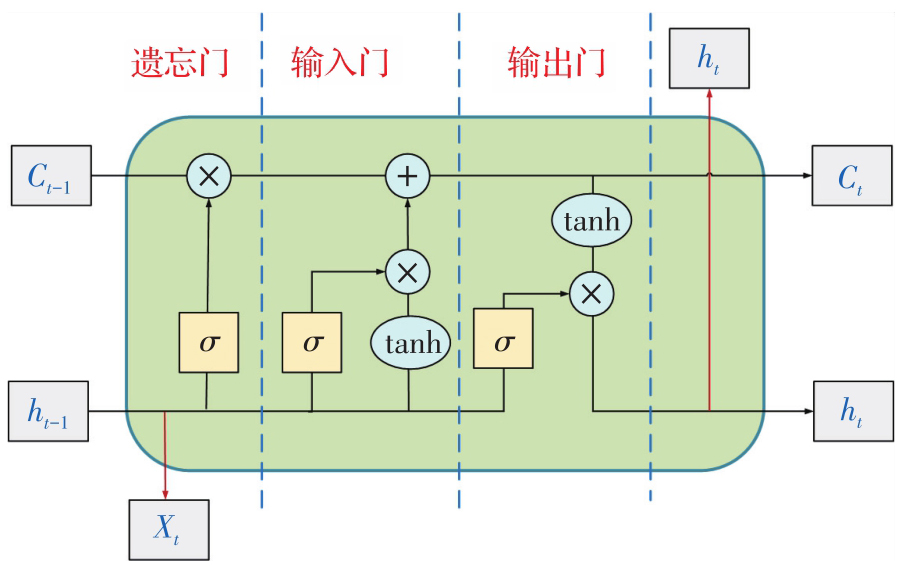
Fig. 2
Solid Earth tides correction for LOD series"
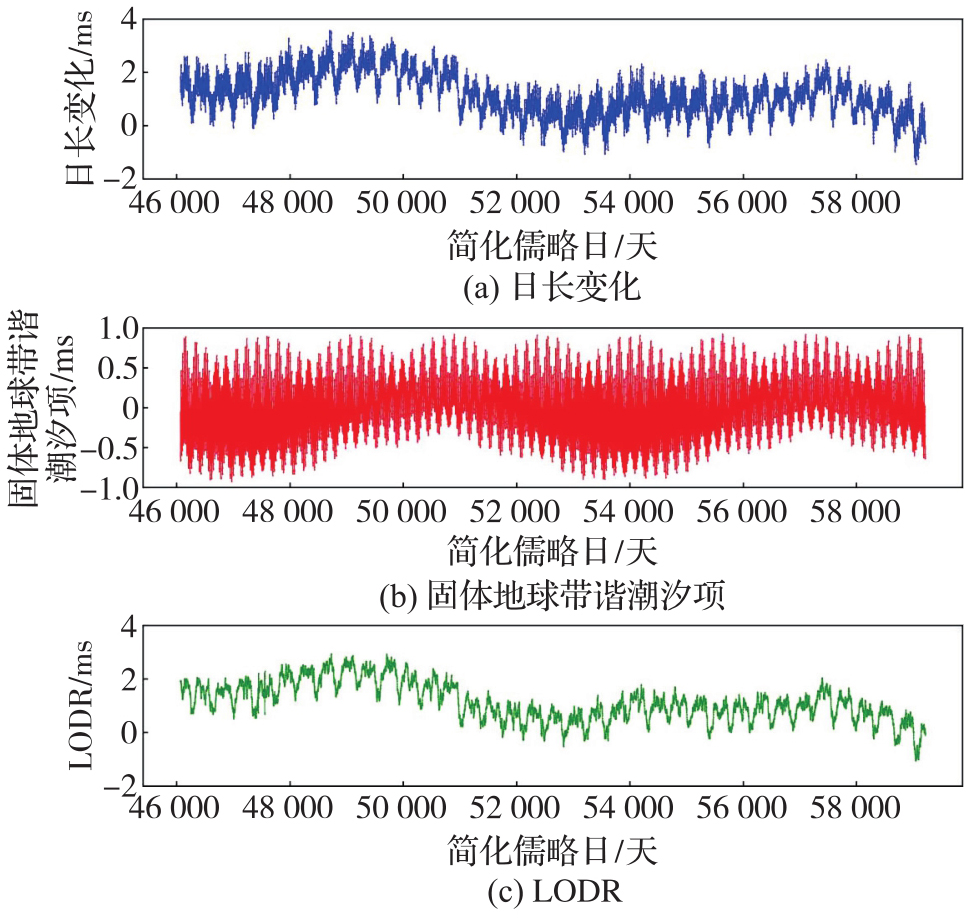
Fig. 3
Spectral analysis results of LODR and EAM series"
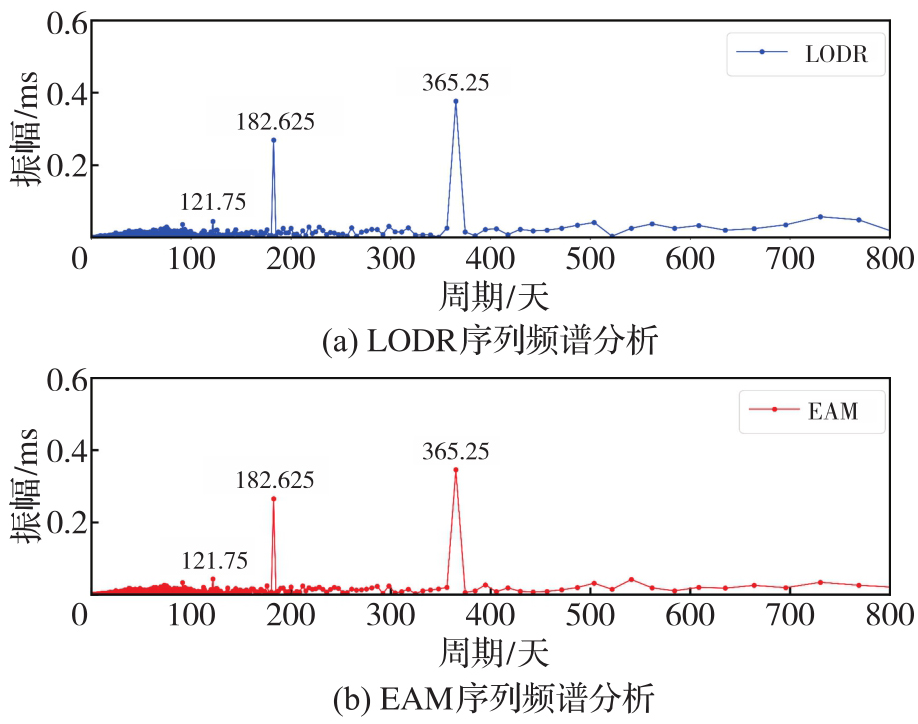
Fig. 4
Results of fitting trend terms to the LODR series using the SG filter method and removing the trend terms"
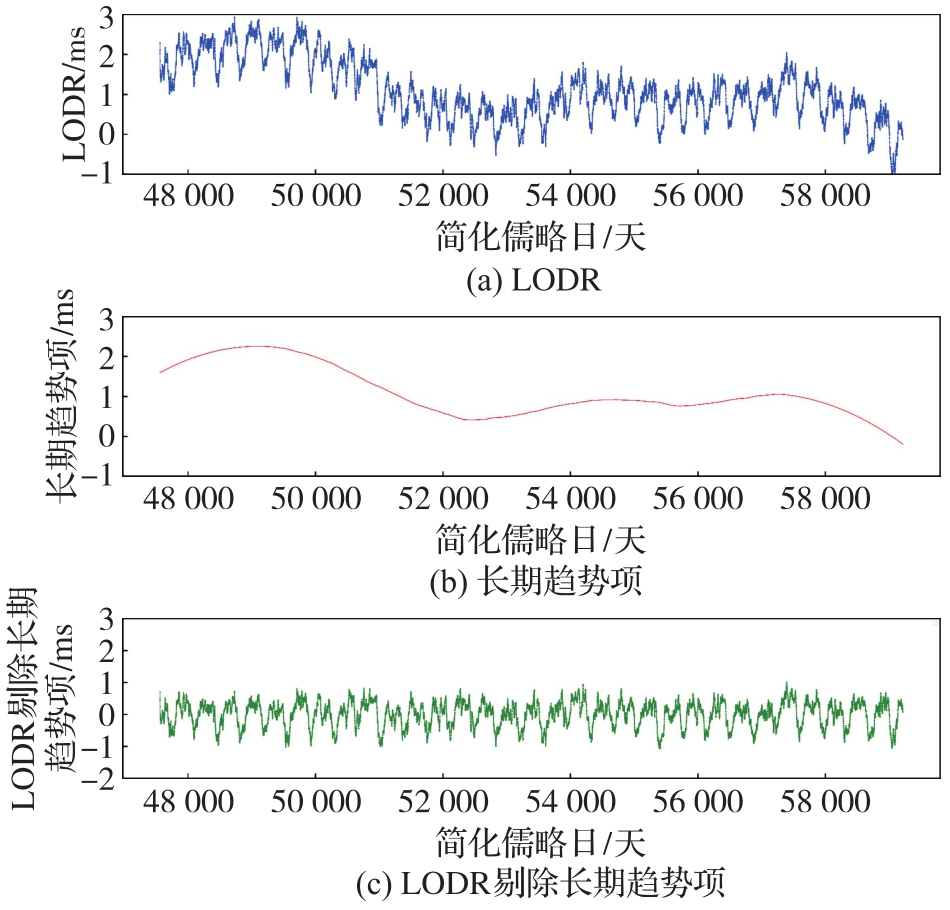
Fig. 5
Results of fitting periodic components to the LODR series after trend removal using the least squares harmonic regression method and subsequently removing the periodic components"
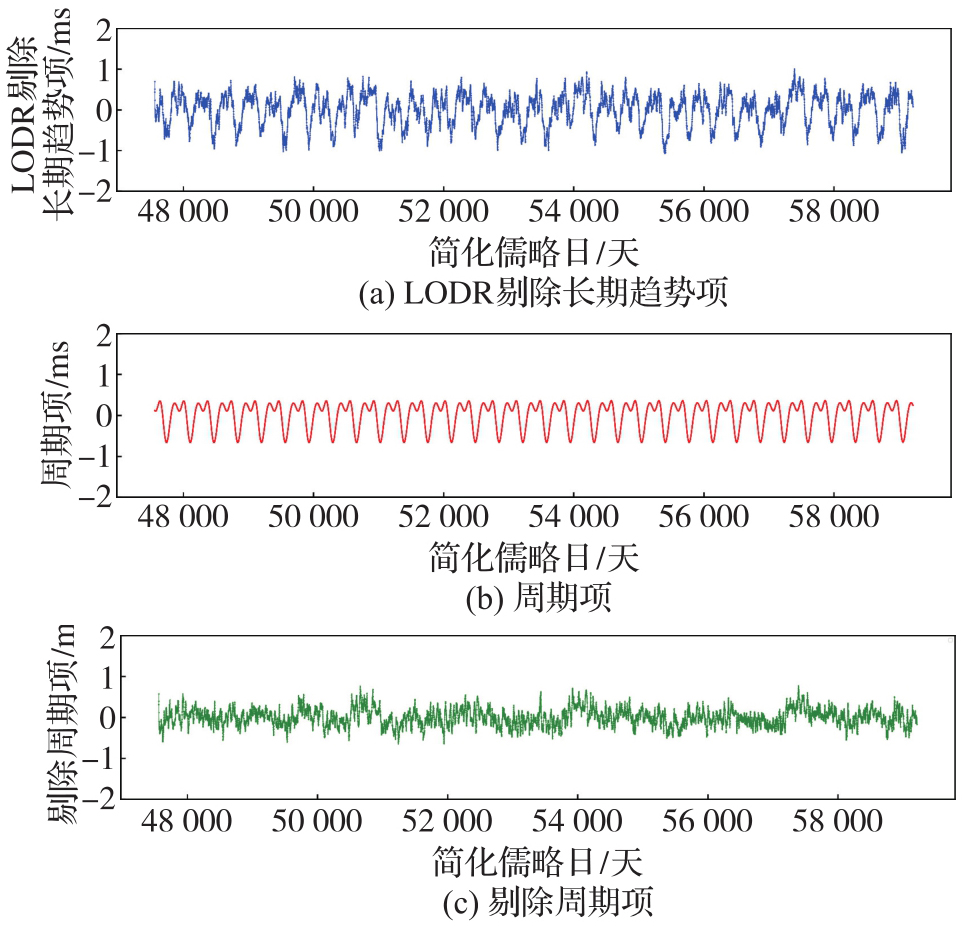
Fig. 6
Results of (weighted) least squares fitting and removal of periodic trends in LODR series"
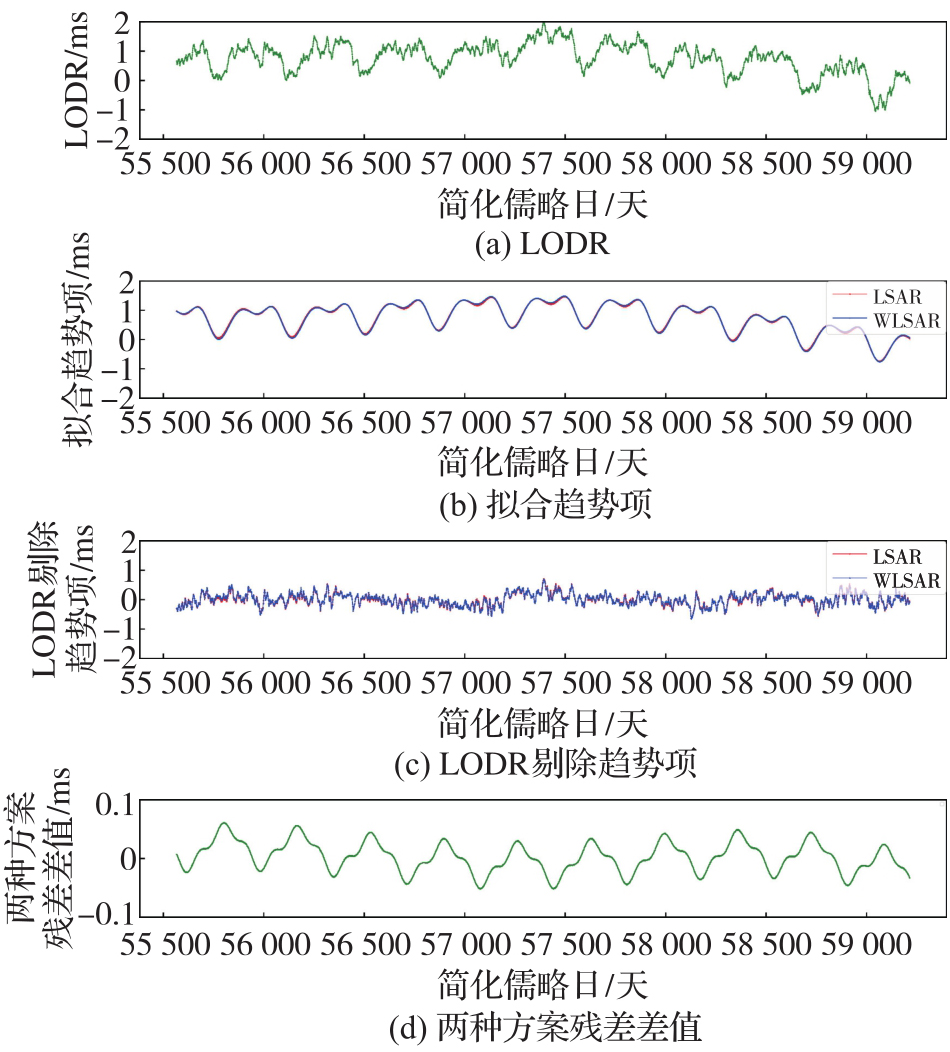
Fig. 7
Results of fitting periodic components to the EAM series after trend removal using the least squares harmonic regression method and subsequently removing the periodic components"
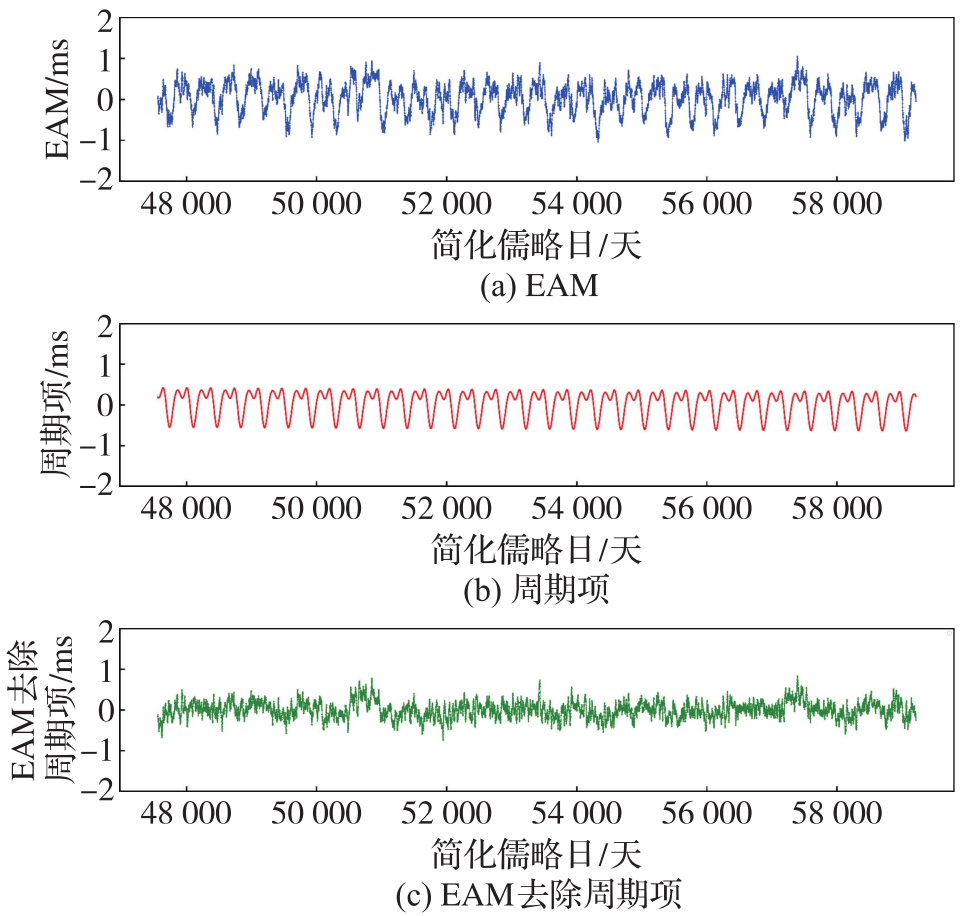
Fig. 8
Data processing flowchart of scheme 3"
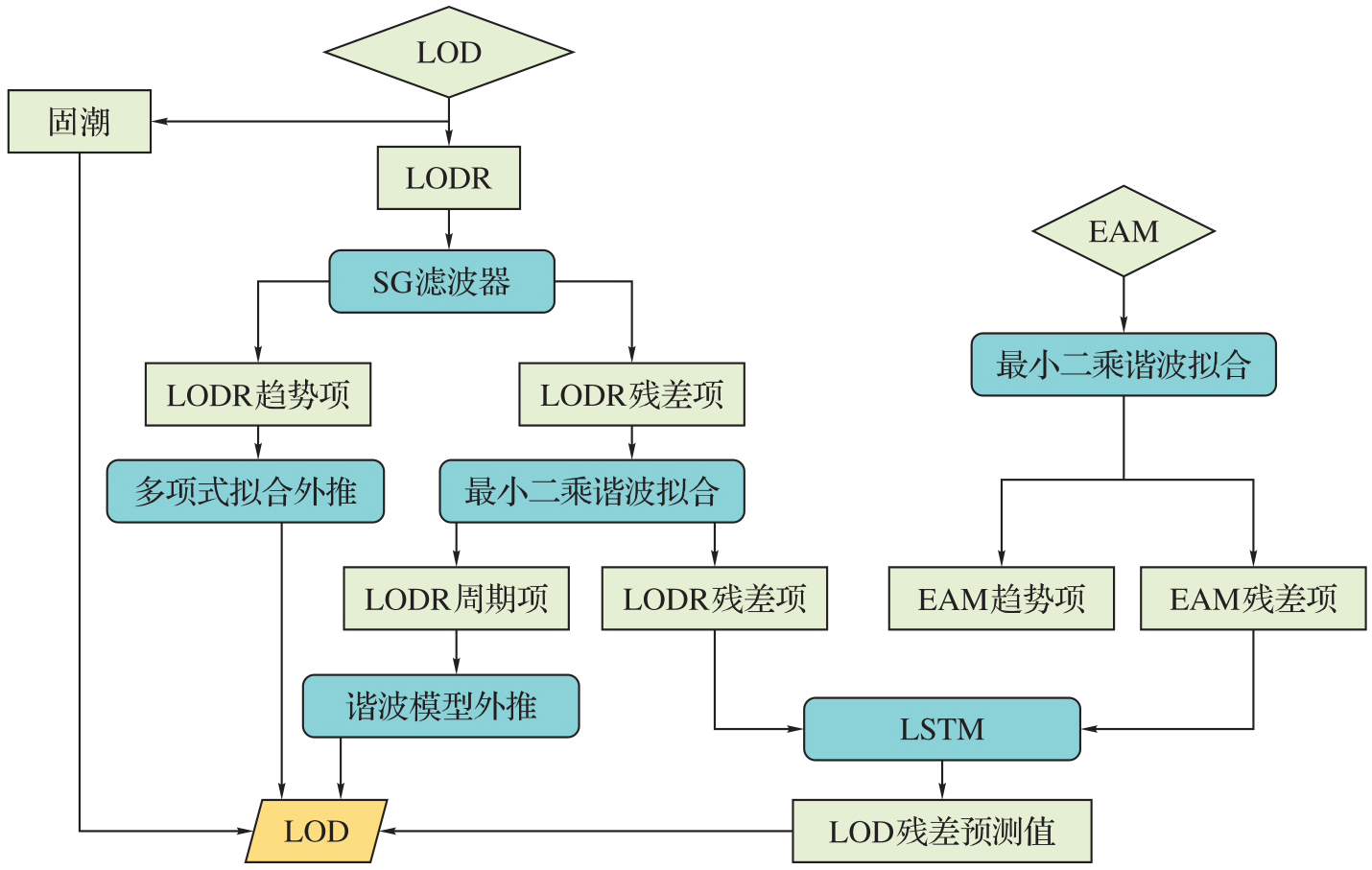
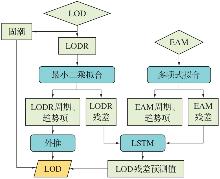
Fig. 9
Data processing flowchart of scheme 4"
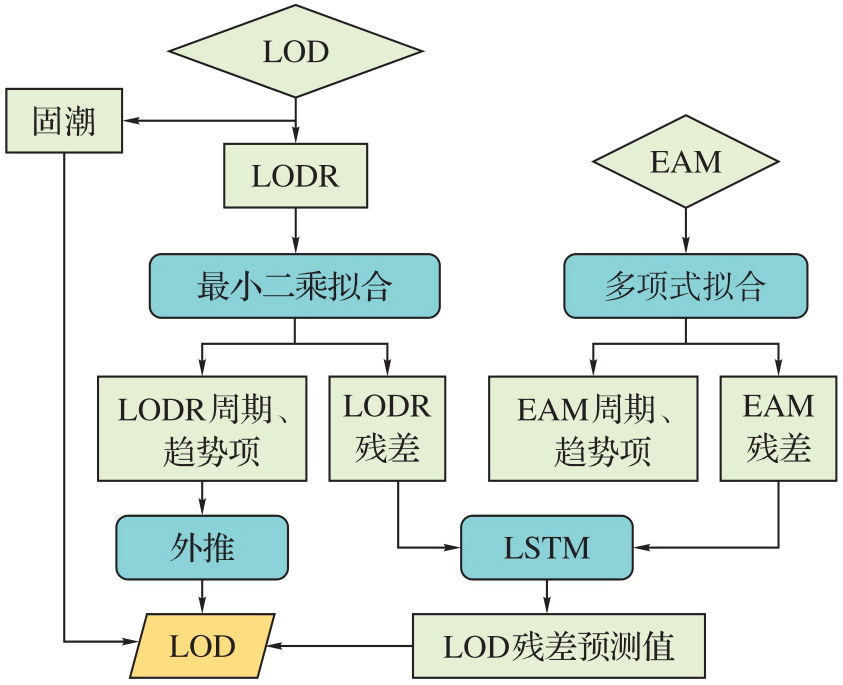
Fig. 10
Extrapolation errors of trend components in LODR series by PCF method in scheme 3 (LSTM+PCF+LS)"
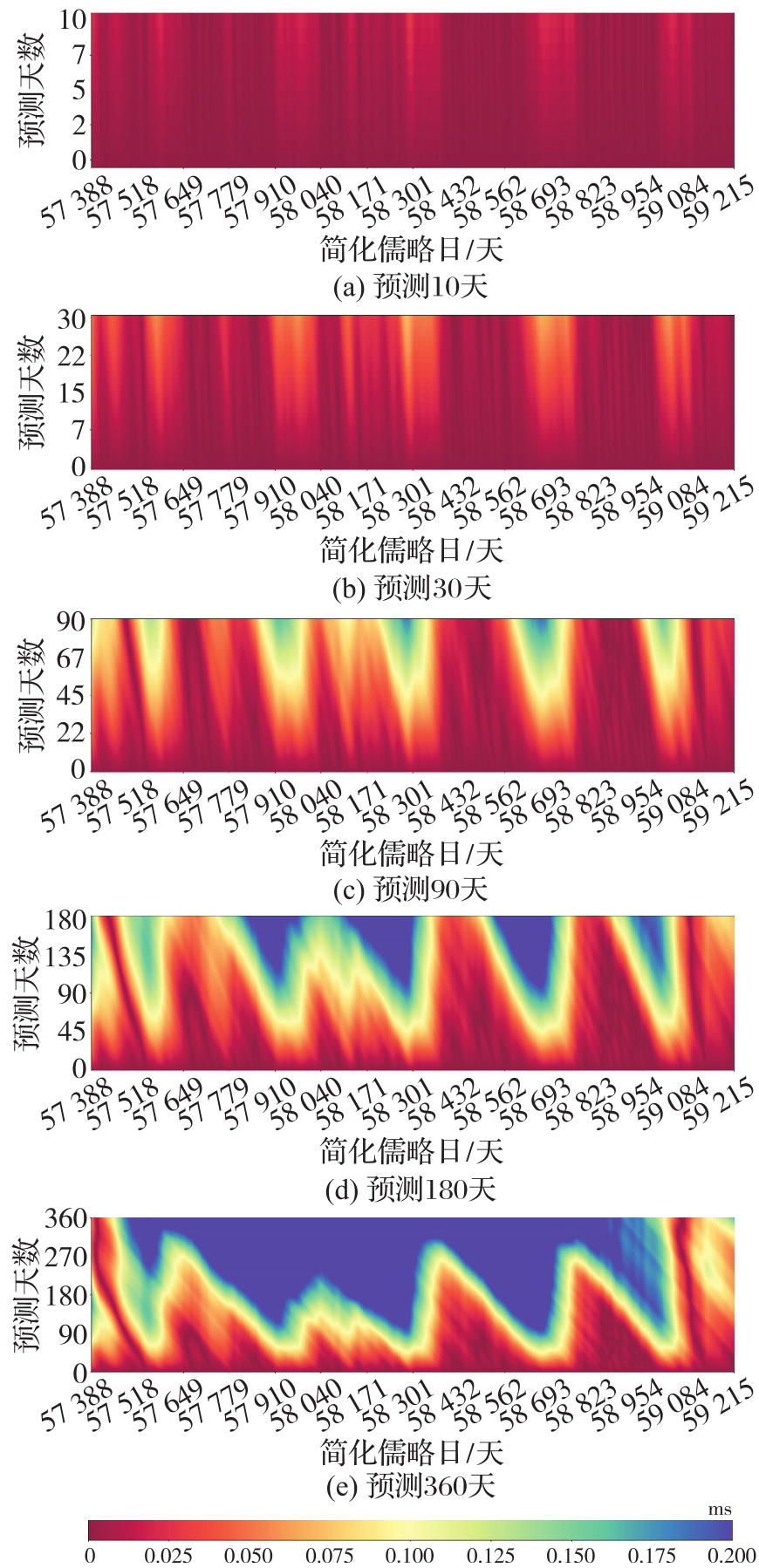
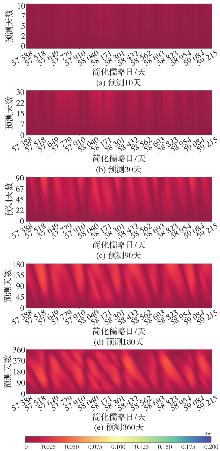
Fig. 11
Extrapolation errors of periodic term in LODR series by LS method in scheme 3 (LSTM+PCF+LS)"
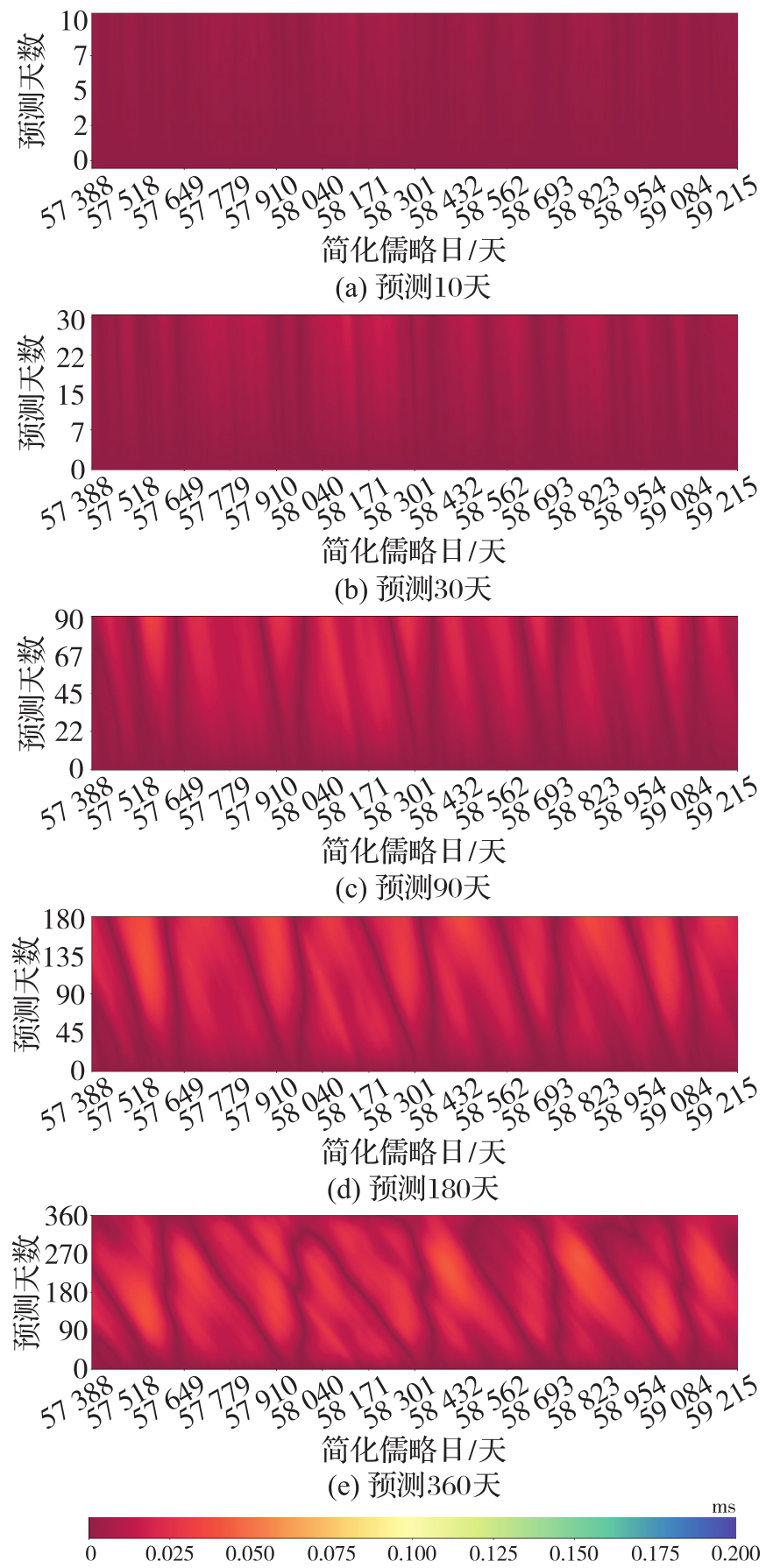
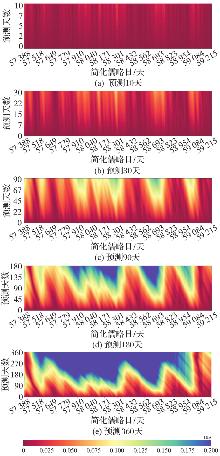
Fig. 12
Total extrapolation errors of periodic and trend components in LODR series using PCF+LS method"
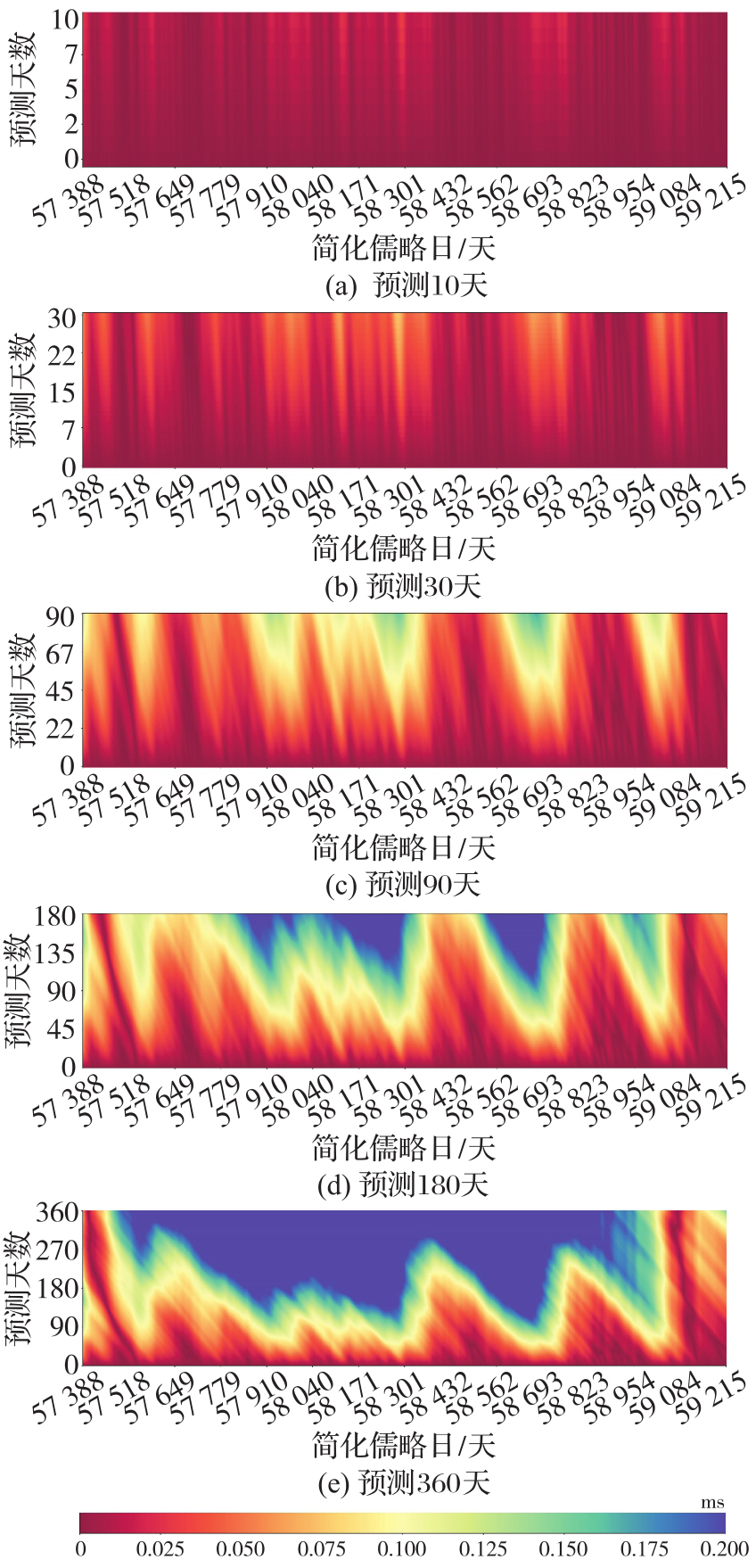
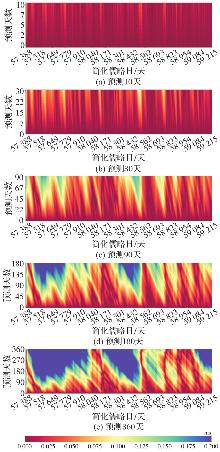
Fig. 13
Extrapolation errors of periodic and trend components in LODR series using least squares fitting"
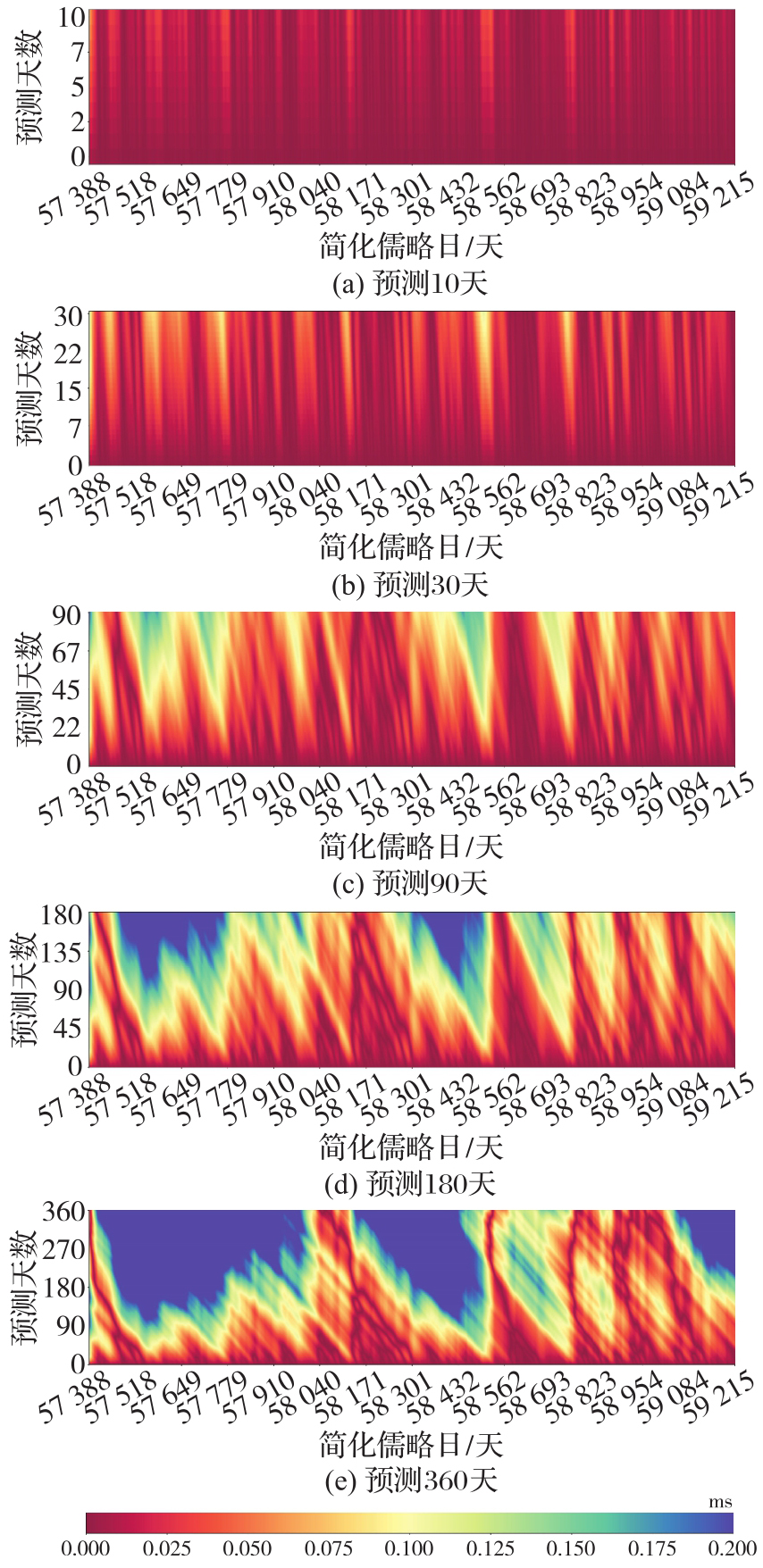
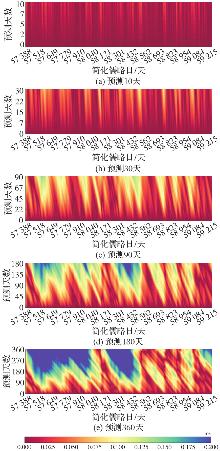
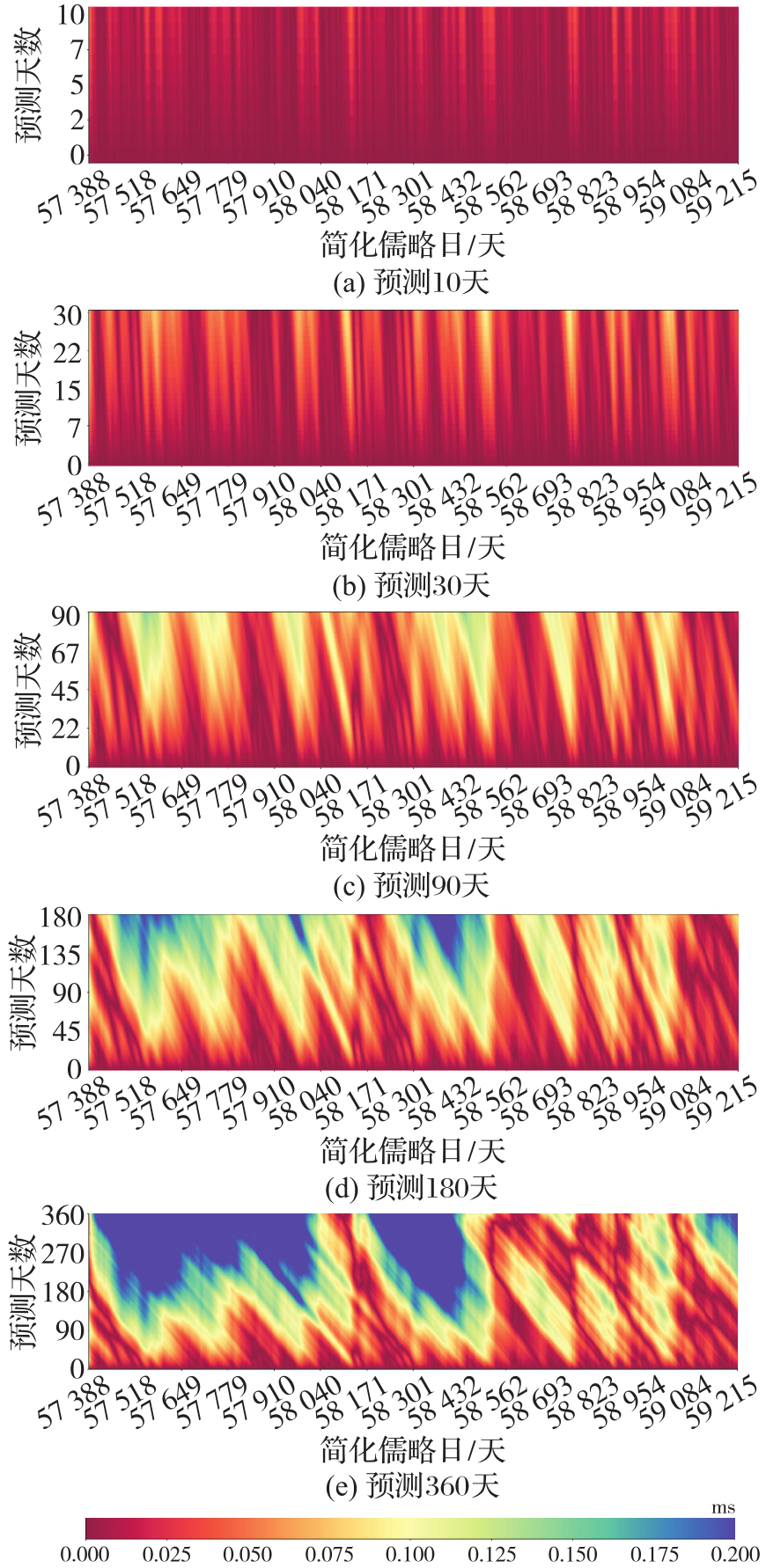
Fig. 14
Extrapolation errors of periodic and trend components in LODR series using weighted least squares fitting"

Tab. 1
Errors for extrapolation of periodic and trend components in LODR series using three different methods"
| 外推天数 | PCF+LS | LS | WLS |
|---|---|---|---|
| 10天 | 0.010 2 | 0.012 3 | 0.013 0 |
| 30天 | 0.028 9 | 0.029 8 | 0.032 2 |
| 90天 | 0.073 2 | 0.071 3 | 0.065 2 |
| 180天 | 0.140 7 | 0.132 0 | 0.109 1 |
| 360天 | 0.292 2 | 0.251 3 | 0.188 7 |
Tab. 2
LSTM model configuration comparison"
| 参数 | 10天 | 30天 | 90天 | 180天 | 360天 |
|---|---|---|---|---|---|
| 编码器 | 10 | 10 | 512 | 256 | 256 |
| 128 | 128 | ||||
| 256 | 256 | ||||
| 解码器 | 14 | 14 | 256 | 128 | 128 |
| 7 | 7 | 256 | 64 | 64 | |
| 全连接层数 | 无 | 无 | 无 | Dense(128,ReLU) | Dense(128,ReLU) |
| Dense(128,ReLU) | Dense(128,ReLU) | ||||
| 优化器 | Adam | Adam | Adam | Adam | Adam |
| 损失函数 | MSE | MSE | MSE | MSE | MSE |
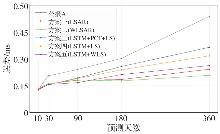
Fig. 15
Errors of LOD prediction with six schemes with different forecast durations"
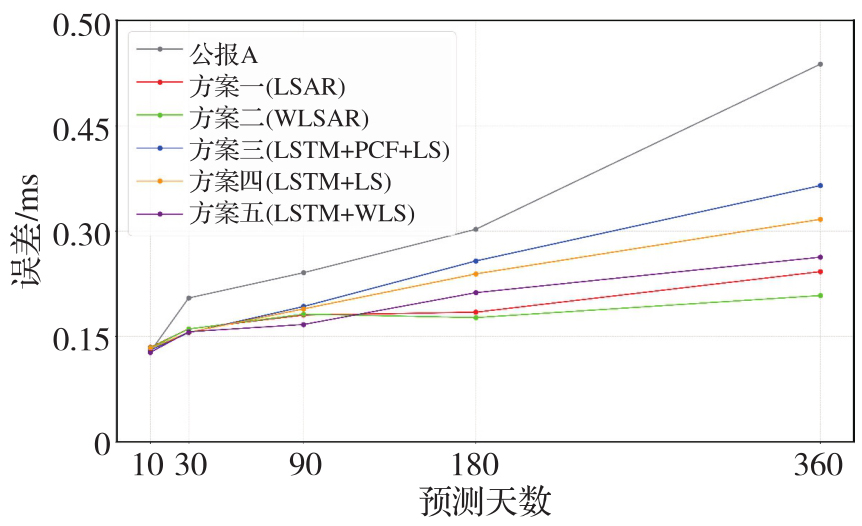
Tab. 3
Errors of LOD prediction with six schemes with different forecast durations"
| 预测天数 | 公报A | 方案一 | 方案二 | 方案三 | 方案四 | 方案五 | 方案五相对于其他方案预报精度的提升 | ||||
|---|---|---|---|---|---|---|---|---|---|---|---|
| 公报A | 方案一 | 方案二 | 方案三 | 方案四 | |||||||
| 10天 | 0.128 4 | 0.134 5 | 0.133 7 | 0.130 6 | 0.133 1 | 0.127 3 | 0.9% | 5.7% | 5.0% | 2.6% | 4.6% |
| 30天 | 0.204 7 | 0.160 7 | 0.160 6 | 0.155 3 | 0.155 8 | 0.156 7 | 30.6% | 2.6% | 2.5% | -0.9% | -0.6% |
| 90天 | 0.240 7 | 0.180 4 | 0.181 7 | 0.192 6 | 0.189 2 | 0.167 0 | 44.1% | 8.0% | 8.8% | 15.3% | 13.3% |
| 180天 | 0.302 5 | 0.184 5 | 0.176 8 | 0.257 4 | 0.239 0 | 0.212 3 | 42.5% | -13.1% | -16.7% | 21.2% | 12.6% |
| 360天 | 0.537 5 | 0.242 2 | 0.208 2 | 0.364 7 | 0.316 7 | 0.262 8 | 104.5% | -7.8% | -20.8% | 38.8% | 20.5% |
| [1] |
吴飞. 几种改进的地球自转参数预报方法[J]. 测绘学报, 2023, 52(7): 1229. DOI: .
doi: 10.11947/j.AGCS.2023.20210716 |
|
WU Fei. Several improved methods for prediction of Earth rotation parameters[J]. Acta Geodaetica et Cartographica Sinica, 2023, 52(7): 1229. DOI: .
doi: 10.11947/j.AGCS.2023.20210716 |
|
| [2] | DOBSLAW H, DILL R. Predicting Earth orientation changes from global forecasts of atmosphere-hydrosphere dynamics[J]. Advances in Space Research, 2018, 61(4): 1047-1054. |
| [3] | KIANI SHAHVANDI M, ADHIKARI S, DUMBERRY M, et al. Contributions of core, mantle and climatological processes to Earth's polar motion[J]. Nature Geoscience, 2024, 17(7): 705-710. |
| [4] | 张永浩, 成英燕, 王虎, 等. BDS与GPS数据解算地球自转参数精度分析[J]. 测绘科学, 2018, 43(12): 13-16, 33. |
| ZHANG Yonghao, CHENG Yingyan, WANG Hu, et al. Analysis of Earth rotation parameters accuracy based on BDS and GPS data[J]. Science of Surveying and Mapping, 2018, 43(12): 13-16, 33. | |
| [5] | NASTULA J, CHIN T M, GROSS R, et al. Smoothing and predicting celestial pole offsets using a Kalman filter and smoother[J]. Journal of Geodesy, 2020, 94(3): 29. |
| [6] | ANDERSON J M, BEYERLE G, GLASER S, et al. Simulations of VLBI observations of a geodetic satellite providing co-location in space[J]. Journal of Geodesy, 2018, 92(9): 1023-1046. |
| [7] | GAMBIS D, BIANCALE R, CARLUCCI T, et al. Combination of Earth orientation parameters and terrestrial frame at the observation level[M]//Geodetic reference frames. Berlin: Springer, 2009: 3-9. |
| [8] | GUESSOUM S, BELDA S, FERRANDIZ J M, et al. The short-term prediction of length of day using 1D convolutional neural networks (1D CNN)[J]. Sensors, 2022, 22(23): 9517. |
| [9] |
俞克豪, 王小亚, 李丽华, 等. 顾及地球流体有效角动量信息的UT1-UTC中长期预报新方法[J]. 武汉大学学报(信息科学版), 2026, 51(1): 191-198. DOI: .
doi: 10.13203/j.whugis20240263 |
|
YU Kehao, WANG Xiaoya, LI Lihua, et al. Incorporating Earth's fluid effective angular momentum information for medium-and long-term UT1-UTC prediction[J]. Geomatics and Information Science of Wuhan University, 2026, 51(1): 191-198. DOI: .
doi: 10.13203/j.whugis20240263 |
|
| [10] | XU Cancan, HUANG Chengli, ZHOU Yonghong, et al. A new approach to improve the Earth's polar motion prediction: on the deconvolution and convolution methods[J]. Journal of Geodesy, 2024, 98(11): 92. |
| [11] | SCHUH H, ULRICH M, EGGER D, et al. Prediction of Earth orientation parameters by artificial neural networks[J]. Journal of Geodesy, 2002, 76(5): 247-258. |
| [12] | 王西龙. 基于BDS/GNSS的ERP解算及其短期预报算法研究[D]. 武汉: 武汉大学, 2021. |
| WANG Xilong. The research on calculation of ERP based on BDS/GNSS and short-term forecast algorithm[D]. Wuhan: Wuhan University, 2021. | |
| [13] | GOU Junyang, KIANI SHAHVANDI M, HOHENSINN R, et al. Ultra-short-term prediction of LOD using LSTM neural networks[J]. Journal of Geodesy, 2023, 97(5): 52. |
| [14] | WU Fei, CHANG Guobin, DENG Kazhong. One-step method for predicting LOD parameters based on LS+AR model[J]. Journal of Spatial Science, 2021, 66(2): 317-328. |
| [15] | XU Xueqing, ZHOU Yonghong, XU Cancan. Earth rotation parameters prediction and climate change indicators in it[J]. Artificial Satellites, 2022, 57(S1): 262-273. |
| [16] | MICHALCZAK M, LIGAS M, KUDRYS J. Prediction of Earth rotation parameters with the use of rapid products from IGS, code and GFZ data centres using ARIMA and Kriging-a comparison[J]. Artificial Satellites, 2022, 57(S1): 274-289. |
| [17] | DHAR S, HEINKELMANN R, BELDA S, et al. Combining evolutionary computation with machine learning technique for improved short-term prediction of UT1-UTC and length-of-day[J]. Earth, Planets and Space, 2024, 76(1): 111. |
| [18] | LI Xishun, YANG Xuhai, YE Renyin, et al. Research on methods to improve length of day precision by combining with effective angular momentum[J]. Remote Sensing, 2024, 16(4): 722. |
| [19] | DILL R, STUMPE L, SAYNISCH-WAGNER J, et al. Benefits of refined 10-day effective angular momentum forecasts for Earth rotation parameter prediction[J]. Journal of Geodesy, 2025, 99(2): 15. |
| [20] | LI Xishun, WU Yuanwei, YAO Dang, et al. Research on UT1-UTC and LOD prediction algorithm based on denoised EAM dataset[J]. Remote Sensing, 2023, 15(19): 4654. |
| [21] | 王乐洋, 苗威. 顾及有效角动量信息的地球自转参数中长期预报方法[J]. 武汉大学学报(信息科学版), 2024, 49(10): 1846-1855. |
| WANG Leyang, MIAO Wei. Medium-long term forecasting method for Earth rotation parameters considering effective angular momentum information[J]. Geomatics and Information Science of Wuhan University, 2024, 49(10): 1846-1855. | |
| [22] | 徐海龙, 乔书波, 林家乐. 利用长短时记忆网络的日长变化预报[J]. 测绘科学技术学报, 2020, 37(5): 474-478. |
| XU Hailong, QIAO Shubo, LIN Jiale. Prediction of length-of-day variations by long short-term memory network[J]. Journal of Geomatics Science and Technology, 2020, 37(5): 474-478. | |
| [23] | ZHAO Pengfei. Optimization of LSTM ship trajectory prediction based on hybrid genetic algorithm[J]. Journal of Geodesy and Geoinformation Science, 2024, 7(3): 89-102. |
| [24] |
范昊鹏, 张博骄, 孙中苗, 等. 基于ConvLSTM网络的区域对流层湿延迟预报方法[J]. 测绘学报, 2025, 54(5): 795-804. DOI: .
doi: 10.11947/j.AGCS.2025.20240108 |
|
FAN Haopeng, ZHANG Bojiao, SUN Zhongmiao, et al. Prediction method of regional tropospheric wet delay based on Conv LSTM network[J]. Acta Geodaetica et Cartographica Sinica, 2025, 54(5): 795-804. DOI: .
doi: 10.11947/j.AGCS.2025.20240108 |
|
| [25] | PETIT G, LUZUM B. The International Earth Rotation Service conventions (2010)[R]. Frankfurt am Main: Verlag des Bundesamts für Kartographie und Geodäsie, 2011. |
| [26] | 闫昊明, 钟敏, 朱耀仲. 日长季节振荡的振幅变化与南方涛动现象[J]. 测绘学报, 2000, 29(S1): 103-106. |
| YAN Haoming, ZHONG Min, ZHU Yaozhong. Correlation of amplitude change in LOD seasonal oscillations with ENSO[J]. Acta Geodaetica et Cartographica Sinica, 2000, 29(S1): 103-106. | |
| [27] |
章传银, 王伟, 蒋涛. 地球质心、形状极与多种自转动力学参数联动的监测方法[J]. 测绘学报, 2025, 54(7): 1157-1169. DOI: .
doi: 10.11947/j.AGCS.2025.20250141 |
|
ZHANG Chuanyin, WANG Wei, JIANG Tao. Monitoring method of Earth's center of mass, figure pole and various rotational dynamics parameters[J]. Acta Geodaetica et Cartographica Sinica, 2025, 54(7): 1157-1169. DOI: .
doi: 10.11947/j.AGCS.2025.20250141 |
|
| [28] | 杨新宇. 基于地球流体有效角动量函数的UT1-UTC预报[D]. 西安: 中国科学院大学(中国科学院国家授时中心), 2022. |
| YANG Xinyu. UT1-UTC prediction based on the Earth's fluid effective angular momentum function[D]. Xi'an: National Time Service Center, Chinese Academy of Sciences, 2022. | |
| [29] |
加松, 徐天河, 杨红雷. LS+AR极移预报模型的两种修正算法[J]. 测绘学报, 2018, 47(S1): 71-77. DOI: .
doi: 10.11947/j.AGCS.2018.20180296 |
|
JIA Song, XU Tianhe, YANG Honglei. Two improved algorithms for LS+AR prediction model of the polar motion[J]. Acta Geodaetica et Cartographica Sinica, 2018, 47(S1): 71-77. DOI: .
doi: 10.11947/j.AGCS.2018.20180296 |
| [1] | Wenyuan ZHANG, Jinsong PENG, Nadu WEI, Yu GAO, Shubi ZHANG. A short-term prediction method for Earth's polar motion using cascaded LSTM networks based on SSA denoising [J]. Acta Geodaetica et Cartographica Sinica, 2026, 55(1): 46-58. |
| [2] | Ziqing WEI. Talk about X-ray pulsar navigation [J]. Acta Geodaetica et Cartographica Sinica, 2025, 54(2): 207-212. |
| [3] | XIANG Deliang, DING Huaiyue, GUAN Dongdong, CHENG Jianda, SUN Xiaokun. PolSAR image registration combining polarization whitening filtering and SimSD-CapsuleNet [J]. Acta Geodaetica et Cartographica Sinica, 2024, 53(3): 450-462. |
| [4] | PAN Xiong, HUANG Weikai, ZHAO Wanzhuo, ZHANG Siying, ZHANG Longjie, JIN Lihong. Research on short-term prediction accuracy of BDS-3 clock bias based on BiLSTM model [J]. Acta Geodaetica et Cartographica Sinica, 2024, 53(1): 65-78. |
| [5] | LIU Qinghao, ZHANG Yonghong, DENG Min, WU Hongan, KANG Yonghui, WEI Jujie. Time series prediction method of large-scale surface subsidence based on deep learning [J]. Acta Geodaetica et Cartographica Sinica, 2021, 50(3): 396-404. |
| [6] | LI Mingxiao, ZHANG Hengcai, QIU Peiyuan, CHENG Shifen, CHEN Jie, LU Feng. Predicting Future Locations with Deep Fuzzy-LSTM Network [J]. Acta Geodaetica et Cartographica Sinica, 2018, 47(12): 1660-1669. |
| [7] | ZHAO Quanhua, GUO Shibo, LI Xiaoli, LI Yu. Polarimetric SAR Sea Ice Classification Based on Target Decompositional Features [J]. Acta Geodaetica et Cartographica Sinica, 2018, 47(12): 1609-1620. |
| [8] | ZHANG Haibo, WANG Changcheng, ZHU Jianjun, FU Haiqiang. Forest Above-ground Biomass Estimation for Rugged Terrain by Using ESAR Polarization Data [J]. Acta Geodaetica et Cartographica Sinica, 2018, 47(10): 1353-1362. |
| [9] | WANG Qing, ZENG Qiming, ZHANG Haizhen, JIAO Jian. Edge Detection of PolSAR Image Based on Stochastic Distance [J]. Acta Geodaetica et Cartographica Sinica, 2015, 44(7): 753-760. |
| [10] | REN Hongfei WEI Ziqing. The 2PN Observation Equation for Pulsar Navigation in Framework of General Relativity [J]. Acta Geodaetica et Cartographica Sinica, 2014, 43(10): 1025-1031. |
| [11] | . The timing equation of pulsar navigation in 1PN approximation and accuracy analysis [J]. Acta Geodaetica et Cartographica Sinica, 2012, 41(1): 41-0. |
| [12] | . Arithmetic of frequency drift and time delay between pulse profiles in XNAV [J]. Acta Geodaetica et Cartographica Sinica, 2011, 40(Sup.): 126-132. |
| Viewed | ||||||
|
Full text |
|
|||||
|
Abstract |
|
|||||
