

Acta Geodaetica et Cartographica Sinica ›› 2026, Vol. 55 ›› Issue (1): 10-24.doi: 10.11947/j.AGCS.2026.20250267
• Geodesy and Navigation • Previous Articles Next Articles
Wei LI1,2( ), Xiangyi HE1, Ling YANG1(), Yunri FU1, Liping FU3,4,5
Received:2025-07-03
Revised:2026-01-01
Online:2026-02-13
Published:2026-02-13
Contact:
Ling YANG
E-mail:13681868995@139.com;lingyang@tongji.edu.cn
About author:LI Wei (1982—), male, PhD, researcher, majors in spatial situational awareness. E-mail: 13681868995@139.com
Supported by:CLC Number:
Wei LI, Xiangyi HE, Ling YANG, Yunri FU, Liping FU. Validation of TEC data from the ionospheric photometer[J]. Acta Geodaetica et Cartographica Sinica, 2026, 55(1): 10-24.
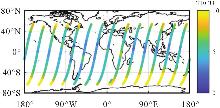
Fig. 1
Distribution of IPM-TEC data for one day"
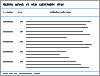
Tab. 1
Parameter settings for Kriging interpolation method"
| 参数 | 设置 |
|---|---|
| 最小搜索半径Rmin/km | 800 |
| 最大搜索半径Rmin/km | 2100 |
| 最小有效IPP数量Nmin | 10 |
| 目标IPP数量Ntarget | 60 |
| 基台值C0/m | 1.25 |
| 块金值C1/m | 0.45 |
| 去相关距离ddecorr/km | 8000 |
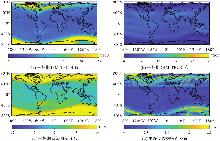
Fig. 2
Spatio-temporal distribution data of TEC during one year of ionospheric calm period"
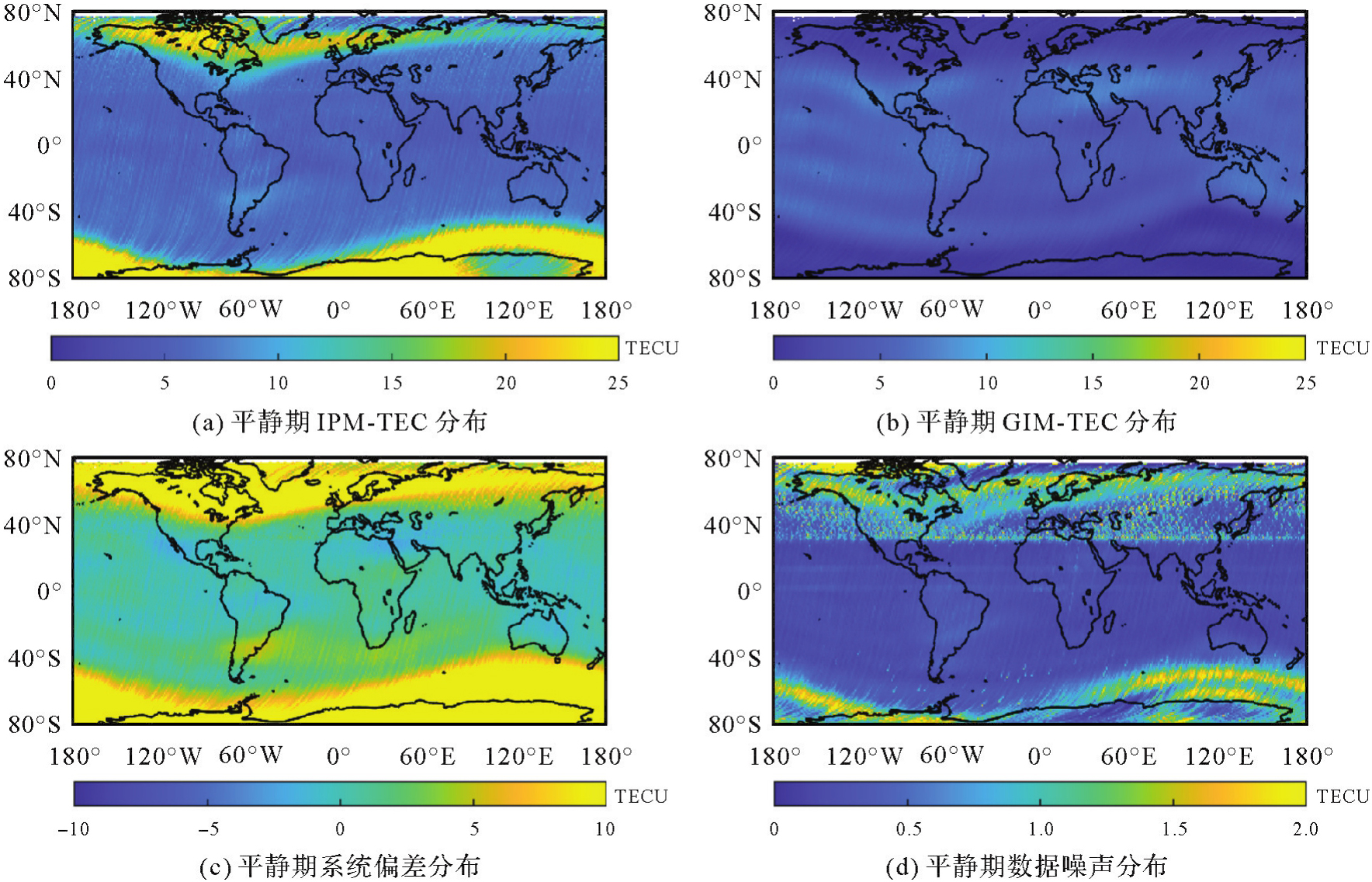
Fig. 3
Data of ionospheric calm period evaluation factors with latitude variation"
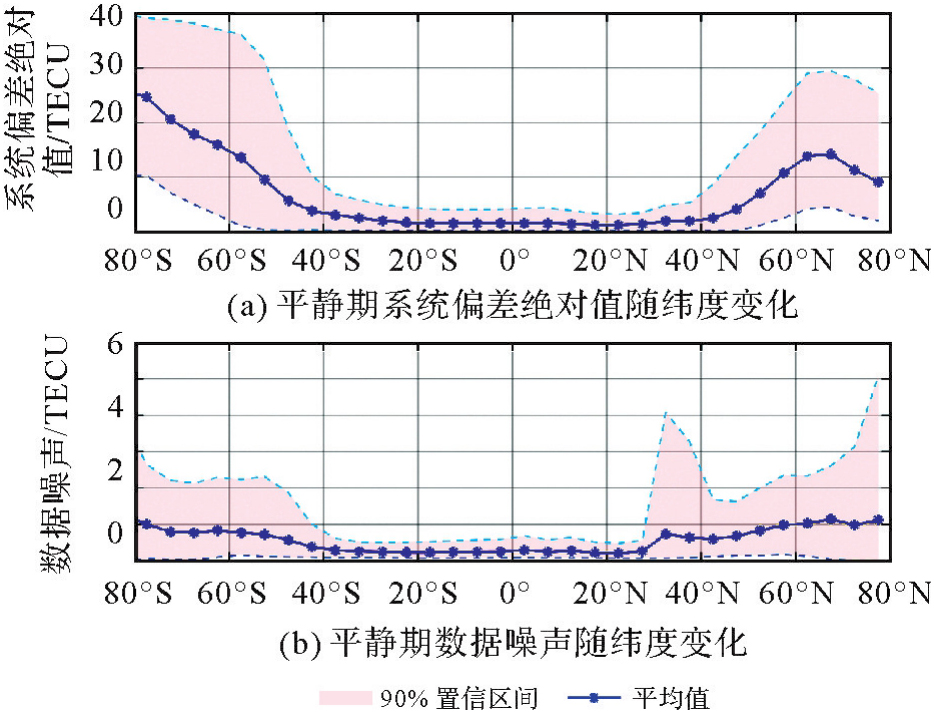
Fig. 4
Magnetic perturbations over the globe"
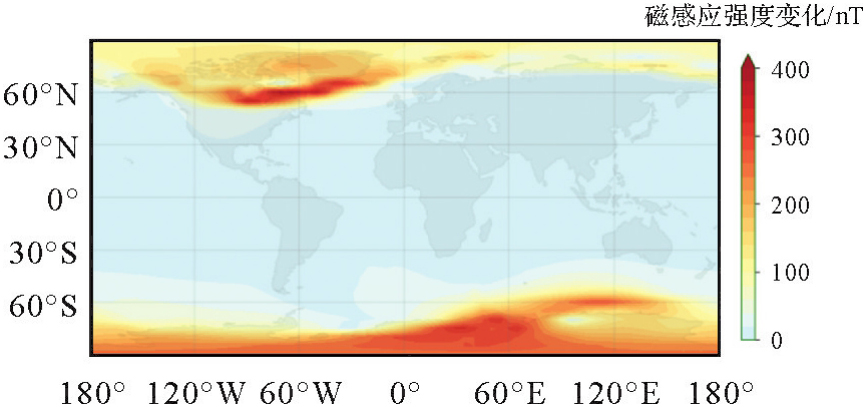
Fig. 5
Spatio-temporal distribution of TEC during one year of ionospheric active period"
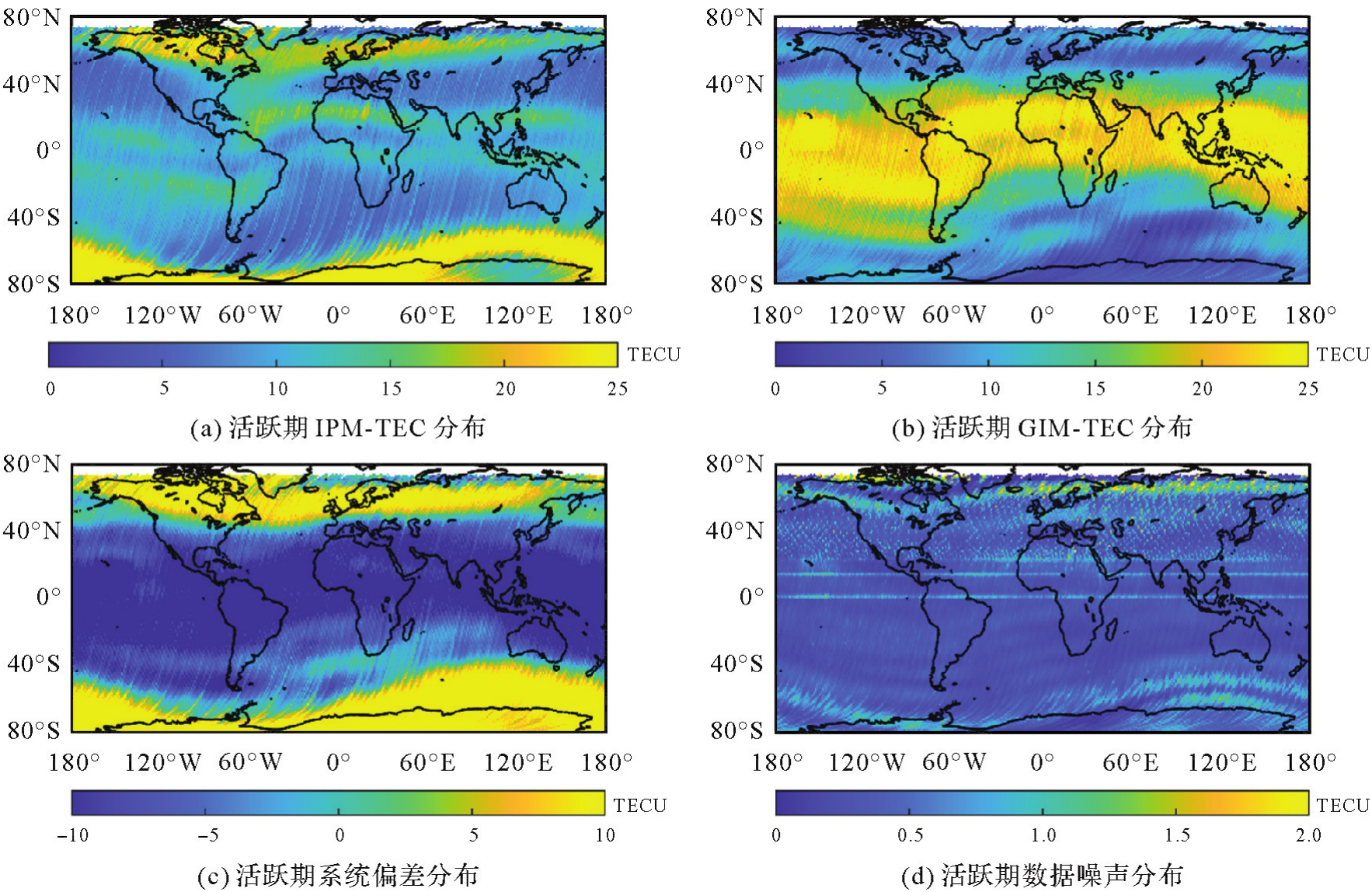
Fig. 6
Data of ionospheric active period evaluation factors with latitude variation"

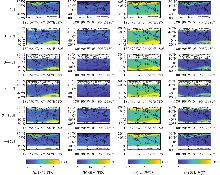
Fig. 7
Spatio-temporal distribution of TEC in different time periods during ionospheric calm period"

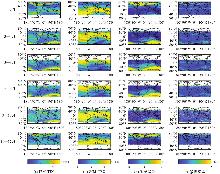
Fig. 8
Spatio-temporal distribution of TEC in different time periods during ionospheric active period"

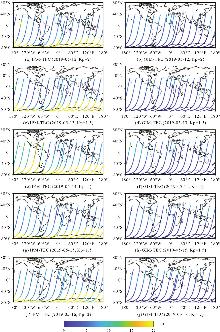
Fig. 9
Daily spatio-temporal distribution of IPM-TEC and GIM-TEC from May 12—16, 2019"

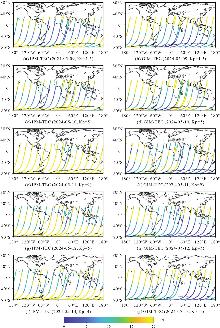
Fig. 10
Daily spatio-temporal distribution of IPM-TEC and GIM-TEC from May 9—13, 2024"

Fig. 11
Ten days spatio-temporal distribution of IPM-TEC, CORS-TEC and GIM-TEC in the European region"
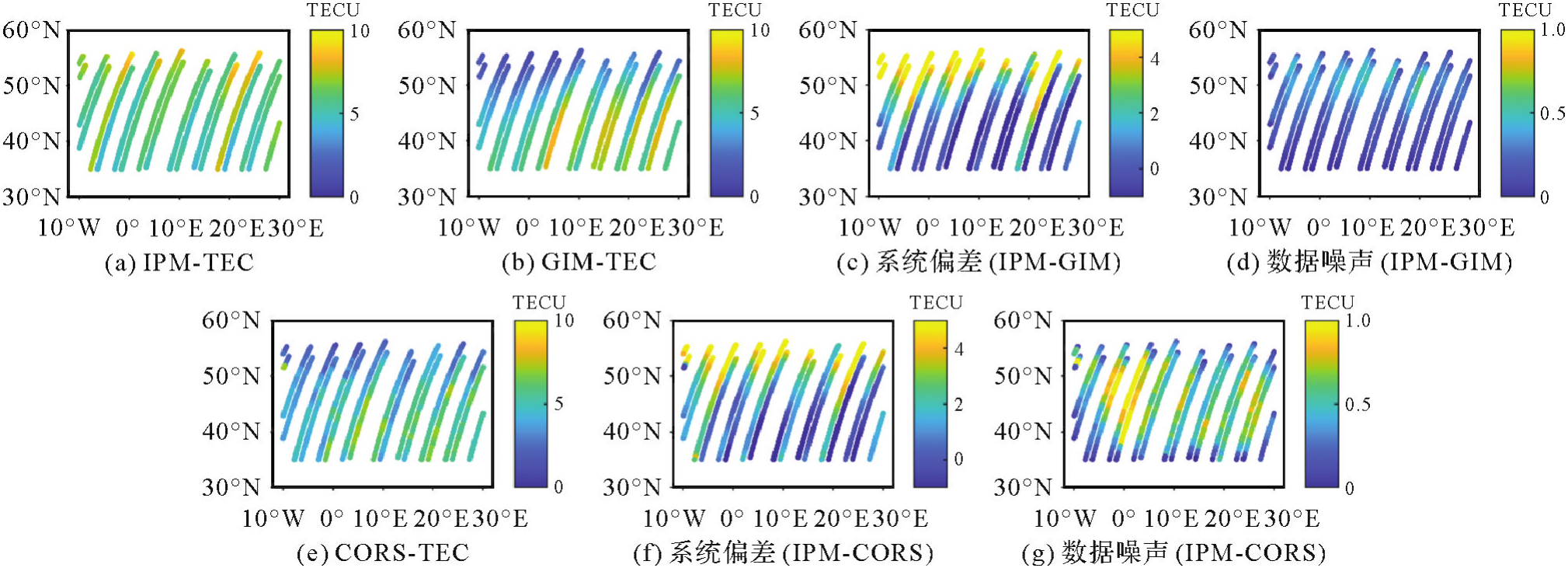
Fig. 12
Ten days spatio-temporal distribution of IPM-TEC, CORS-TEC and GIM-TEC in China region"

| [1] | WENG Duojie, JI Shengyue, CHEN Wu, et al. Assessment and mitigation of ionospheric disturbance effects on GPS accuracy and integrity[J]. The Journal of Navigation, 2014, 67(3): 371-384. |
| [2] | 甄卫民, 欧明, 朱庆林, 等. 电离层探测及模化技术研究综述[J]. 电波科学学报, 2023, 38(4): 625-645. |
| ZHEN Weimin, OU Ming, ZHU Qinglin, et al. Review on ionospheric sounding and modeling[J]. Chinese Journal of Radio Science, 2023, 38(4): 625-645. | |
| [3] | ALIZADEH M M, SCHUH H, TODOROVA S, et al. Global ionosphere maps of VTEC from GNSS, satellite altimetry, and Formosat-3/COSMIC data[J]. Journal of Geodesy, 2011, 85(12): 975-987. |
| [4] | HERNÁNDEZ-PAJARES M, JUAN J M, SANZ J, et al. The IGS VTEC maps: a reliable source of ionospheric information since 1998[J]. Journal of Geodesy, 2009, 83(3): 263-275. |
| [5] | AURIOL A, TOURAIN C. DORIS system: the new age[J]. Advances in Space Research, 2010, 46(12): 1484-1496. |
| [6] | 刘经南, 赵莹, 张小红. GNSS无线电掩星电离层反演技术现状与展望[J]. 武汉大学学报(信息科学版), 2010, 35(6): 631-635. |
| LIU Jingnan, ZHAO Ying, ZHANG Xiaohong. Current situation and expectation of inversion of ionospheric GNSS occultation[J]. Geomatics and Information Science of Wuhan University, 2010, 35(6): 631-635. | |
| [7] | 付利平, 贾楠, 胡秀清, 等. 远紫外光学遥感载荷在轨定标技术研究进展[J]. 光谱学与光谱分析, 2019, 39(12): 3673-3680. |
| FU Liping, JIA Nan, HU Xiuqing, et al. Research progress on on-orbit calibration technology for far ultraviolet payload[J]. Spectroscopy and Spectral Analysis, 2019, 39(12): 3673-3680. | |
| [8] | STRICKLAND D J, EVANS J S, PAXTON L J. Satellite remote sensing of thermospheric O/N2 and solar EUV: 1.theory[J]. Journal of Geophysical Research: Space Physics, 1995, 100(A7): 12217-12226. |
| [9] | PAXTON L J, SCHAEFER R K, ZHANG Yongliang, et al. Far ultraviolet instrument technology[J]. Journal of Geophysical Research: Space Physics, 2017, 122(2): 2706-2733. |
| [10] | DYMOND K F, BUDZEN S A, COKER C, et al. The tiny ionospheric photometer (TIP) on the constellation observing system for meteorology, ionosphere, and climate (COSMIC/FORMOSAT-3)[J]. Journal of Geophysical Research: Space Physics, 2016, 121(10): 10614-10622. |
| [11] | 于磊, 王淑荣, 林冠宇. 星载电离层探测成像光谱技术发展综述[J]. 地球物理学进展, 2012, 27(6): 2308-2315. |
| YU Lei, WANG Shurong, LIN Guanyu. Review of space-based imaging spectrum technique development for Ionosphere observations[J]. Progress in Geophysics, 2012, 27(6): 2308-2315. | |
| [12] | 付利平, 彭如意. “风云三号”D星电离层光度计[J]. 航天器环境工程, 2021, 38(3): 305-310. |
| FU Liping, PENG Ruyi. The ionosphere photometer (IPM) onboard China's meteorological satellite FY-3D[J]. Spacecraft Environment Engineering, 2021, 38(3): 305-310. | |
| [13] | 王大鑫, 付利平, 江芳, 等. 利用FY-3(D)卫星电离层光度计数据反演电离层O/N2[J]. 光谱学与光谱分析, 2021, 41(4): 1004-1010. |
| WANG Daxin, FU Liping, JIANG Fang, et al. Inversion of ionospheric O/N2 by using FY-3D ionospheric photometer data[J]. Spectroscopy and Spectral Analysis, 2021, 41(4): 1004-1010. | |
| [14] | DETTMERING D, LIMBERGER M, SCHMIDT M. Using DORIS measurements for modeling the vertical total electron content of the Earth's ionosphere[J]. Journal of Geodesy, 2014, 88(12): 1131-1143. |
| [15] | CHEN Peng, CHEN Jiajun. The multi-source data fusion global ionospheric modeling software: IonoGim[J]. Advances in Space Research, 2014, 53(11): 1610-1622. |
| [16] | DETTMERING D, HEINKELMANN R, SCHMIDT M. Systematic differences between VTEC obtained by different space-geodetic techniques during CONT08[J]. Journal of Geodesy, 2011, 85(7): 443-451. |
| [17] | TODOROVA S, HOBIGER T, SCHUH H. Using the global navigation satellite system and satellite altimetry for combined global ionosphere maps[J]. Advances in Space Research, 2008, 42(4): 727-736. |
| [18] | FU Yunri, YANG Ling, FU Liping, et al. Global and regional consistency of VTECs inversed by IPM and GNSS[J]. Journal of Global Positioning Systems, 2023, 19(1/2): 99-112. |
| [19] | 江芳, 毛田, 李小银, 等. 利用OI 135.6 nm夜气辉辐射探测电离层峰值电子密度及电子总含量的研究[J]. 地理物理学报, 57(11): 3679-3687. |
| JIANG Fang, MAO Tian, LI Xiaoyin, et al. The research on NmF2 and TEC derived from nighttime OI 135.6 nm emission measurement[J]. Chinese Journal Geophysics, 57(11): 3679-3687. | |
| [20] | 江芳, 毛田, 付利平, 等. 基于FY-3D电离层光度计数据开展夜间135.6 nm辉光辐射强度对赤道环电流指数Dst的响应特性研究[J]. 地球物理学报, 2024, 67(7): 2496-2505. |
| JIANG Fang, MAO Tian, FU Liping, et al. The research on the response characteristic of nighttime 135.6 nm airglow emission intensity to Dst index based on the data of the ionosphere photometer (IPM) on FY-3D satellite[J]. Chinese Journal of Geophysics, 2024, 67(7): 2496-2505. | |
| [21] | JIANG Weiping, ZHAO Qile, LI Min, et al. The progress of IGS analysis center at Wuhan University[J]. Journal of Geodesy and Geoinformation Science, 2023, 6(3): 46-57. |
| [22] | SCHAER S. Mapping and predicting the Earth's ionosphere using the global positioning system[M]. Zürich: Institut für Geod ä sie und Photogrammetrie, Eidg. Technische Hochschule, 1999. |
| [23] | 刘经南, 刘晖. 连续运行卫星定位服务系统:城市空间数据的基础设施[J]. 武汉大学学报(信息科学版), 2003, 28(3): 259-264. |
| LIU Jingnan, LIU Hui. Continuous operational reference system: infrastructure of urban spatial data[J]. Geomatics and Information Science of Wuhan University, 2003, 28(3): 259-264. | |
| [24] | 张宝成, 欧吉坤, 袁运斌, 等. 利用非组合精密单点定位技术确定斜向电离层总电子含量和站星差分码偏差[J]. 测绘学报, 2011, 40(4): 447-453. |
| ZHANG Baocheng, OU Jikun, YUAN Yunbin, et al. Calibration of slant total electron content and satellite-receiver's differential code biases with uncombined precise point positioning technique[J]. Acta Geodaetica et Cartographica Sinica, 2011, 40(4): 447-453. | |
| [25] | 张宝成, 欧吉坤, 李子申, 等. 利用精密单点定位求解电离层延迟[J]. 地球物理学报, 2011, 54(4): 950-957. |
| ZHANG Baocheng, OU Jikun, LI Zishen, et al. Determination of ionospheric observabies with precise point positioning[J]. Chinese Journal of Geophysics, 2011, 54(4): 950-957. | |
| [26] | 高广杰, 郜尧, 赵海山, 等. 电离层层析VTEC投影函数模型[J]. 测绘科学技术学报, 2018, 35(1): 1-5. |
| GAO Guangjie, GAO Yao, ZHAO Haishan, et al. A VTEC projection function based on ionospheric tomography[J]. Journal of Geomatics Science and Technology, 2018, 35(1): 1-5. | |
| [27] | 张强, 赵齐乐. 武汉大学IGS电离层分析中心全球电离层产品精度评估与分析[J]. 地球物理学报, 2019, 62(12): 4493-4505. |
| ZHANG Qiang, ZHAO Qile. Evaluation and analysis of the global ionosphere maps from Wuhan University IGS Ionosphere Associate Analysis Center[J]. Chinese Journal of Geophysics, 2019, 62(12): 4493-4505. | |
| [28] | HE Rong, LI Min, ZHANG Qiang, et al. A comparison of a GNSS-GIM and the IRI-2020 model over China under different ionospheric conditions[J]. Space Weather, 2023, 21(10): e2023SW003646. |
| [29] | LI Zishen, WANG Ningbo, LIU Ang, et al. Progress of geodesy related ionosphere from Chinese scientists in the period of 2019—2023[J]. Journal of Geodesy and Geoinformation Science, 2023, 6(3): 115-123. |
| [30] | YANG Ling, FU Yunri, ZHU Jincheng, et al. GNSS ionospheric integrity monitoring based on RBF-NN: constructing single-epoch snapshot GIVD and GIVE maps[J]. Journal of Geodesy, 2024, 98(4): 31. |
| [31] | OLIVER M A, WEBSTER R. Kriging: a method of interpolation for geographical information systems[J]. International Journal of Geographical Information Systems, 1990, 4(3): 313-332. |
| [32] | LOCKWOOD M, MILAN S E. Universal time variations in the magnetosphere[J]. Frontiers in Astronomy and Space Sciences, 2023, 10: 1139295. |
| [33] | 江芳, 毛田, 付利平, 等. FY-3D电离层光度计IPM对2024年5月11日特大磁暴的响应研究[J]. 空间科学学报, 2025, 45(4): 950-959. |
| JIANG Fang, MAO Tian, FU Liping, et al. Study of FY-3D ionospheric photometer (IPM) response to the extreme magnetic storm on 11 may 2024[J]. Chinese Journal of Space Science, 2025, 45(4): 950-959. | |
| [34] | IDOSA UGA C, PRASAD GAUTAM S, BESHIR SEBA E. Impact of geomagnetic storms on ionospheric TEC at high latitude stations: a comparative analysis of GPS observations and the IRI-2016 model[J]. Astrophysics and Space Science, 2023, 368(10): 85. |
| [35] | 郭兵. 电离层扩展F不规则体及赤道异常驼峰区波状结构的研究[D]. 北京: 中国科学院大学(中国科学院国家空间科学中心), 2020. |
| GUO Bing. Study on ionospheric spread-F at low-and mid-latitude and wavelike structure in equatorial ionization anomaly crests[D]. Beijing: National Space Science Center, Chinese Academy of Sciences, 2020. | |
| [36] | IMMEL T J, SAGAWA E, ENGLAND S L, et al. Control of equatorial ionospheric morphology by atmospheric tides[J]. Geophysical Research Letters, 2006, 33(15): 2006GL026161. |
| [37] | REDDYBATTULA K D, PANDA S K, ANSARI K, et al. Analysis of ionospheric TEC from GPS, GIM and global ionosphere models during moderate, strong, and extreme geomagnetic storms over Indian region[J]. Acta Astronautica, 2019, 161: 283-292. |
| [1] | Ziqing WEI. Talk about X-ray pulsar navigation [J]. Acta Geodaetica et Cartographica Sinica, 2025, 54(2): 207-212. |
| [2] | LI Peng. Interseismic Strain Accumulation Across the Western Altyn Tagh Fault from Wide-swath InSAR Observations [J]. Acta Geodaetica et Cartographica Sinica, 2018, 47(12): 1694-1694. |
| [3] | LI Kai, ZHANG Yongsheng, TONG Xiaochong, SHEN Erhua. Positioning Model and Accuracy Evaluation of Conical Scanning Airborne Laser Bathymetry System [J]. Acta Geodaetica et Cartographica Sinica, 2016, 45(4): 425-433. |
| [4] | WEN Yangmao, XU Caijun, LIU Yang, FENG Wanpeng, LI Zhicai. The 2007 Ali Earthquake Inversion from Ascending and Descending InSAR Observations [J]. Acta Geodaetica et Cartographica Sinica, 2015, 44(6): 649-654. |
| [5] | ZHAO Qunhe, WANG Xiaoya, HE Bing, ZHANG Zhongping, CHEN Wanzhen, CHEN Hongyu, JIANG Hu, HU Xiaogong. Probability Model of Center-of-mass Calibration of Satellites' Retro-reflectors Used for Laser Ranging [J]. Acta Geodaetica et Cartographica Sinica, 2015, 44(4): 370-376. |
| [6] | LI Peng. Key issues on coastal geographical environment monitoring with radar remote sensing [J]. Acta Geodaetica et Cartographica Sinica, 2021, 50(4): 565-565. |
| Viewed | ||||||
|
Full text |
|
|||||
|
Abstract |
|
|||||
