


测绘学报 ›› 2025, Vol. 54 ›› Issue (3): 432-447.doi: 10.11947/j.AGCS.2025.20240248
刘学习1( ), 朱守庆1(), 陈国2, 张克非1, 郑南山1, 刘婧璇1
收稿日期:2024-06-19
出版日期:2025-04-11
发布日期:2025-04-11
通讯作者:
朱守庆
E-mail:xuexiliu@cumt.edu.cn;TB23160012A51@cumt.edu.cn
作者简介:刘学习(1992—),男,博士,副教授,研究方向为北斗/GNSS高精度定位理论与方法。 E-mail:xuexiliu@cumt.edu.cn
基金资助:
Xuexi LIU1(), Shouqing ZHU1(), Guo CHEN2, Kefei ZHANG1, Nanshan ZHENG1, Jingxuan LIU1
Received:2024-06-19
Online:2025-04-11
Published:2025-04-11
Contact:
Shouqing ZHU
E-mail:xuexiliu@cumt.edu.cn;TB23160012A51@cumt.edu.cn
About author:LIU Xuexi (1992—), male, PhD, associate professor, majors in GNSS high-precision positioning theory and methods. E-mail: xuexiliu@cumt.edu.cn
Supported by:摘要:
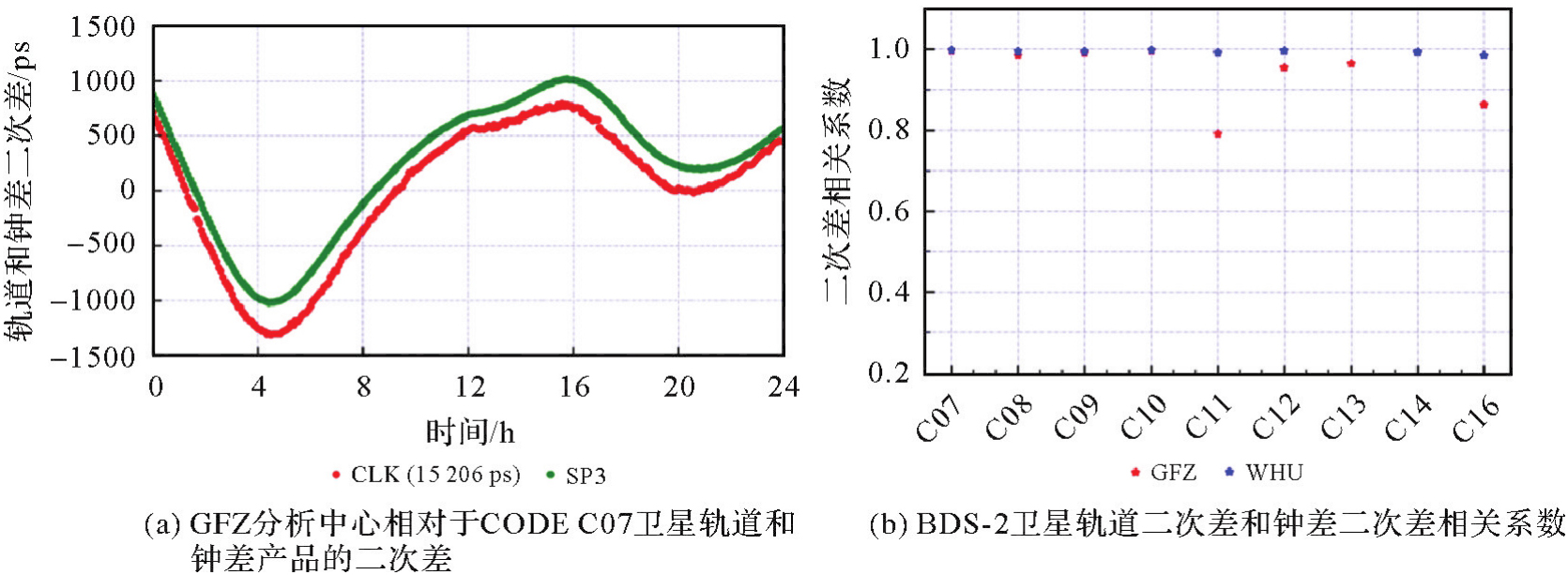
精密卫星轨道和钟差是实现非差模糊度快速固定及高精度位置服务的关键,轨道和钟差产品综合需要统一不同分析中心产品间的时空基准。本文首先求解布尔莎坐标转换参数,比较了不同分析中心精密轨道之间相似变换参数的差异,并统计各系统相似变换参数间的相关系数。其次,分析了精密钟差产品的基准差异,发现使用所有卫星钟差估计一组线性变换参数进行线性变换有较大常偏量,GPS和Galileo的常偏量最大为200 ps,而GLONASS和BDS的常偏量分别达到1000 ps和2400 ps。本文提出一种对每颗卫星钟差估计一组线性变换参数的方法来消除此常偏量。然后,分析了轨道、站坐标及地球自转参数产品间的基准一致性,多数旋转分量相关系数超过0.5,表明各分析中心之间的定向基准差异较为一致。最后,通过轨道和钟差二次差分析了轨道和钟差的一致性,除去钟差常偏量后,GPS和Galileo轨道和钟差二次差的相关系数多数超过0.9,GLONASS和BDS稍差,但相关系数也大都超过0.6,说明精密卫星轨道与钟差产品二次差的非线性部分较为吻合,轨道变化与钟差变化非常一致。
中图分类号:
刘学习, 朱守庆, 陈国, 张克非, 郑南山, 刘婧璇. 基于全球统一坐标框架的GNSS精密轨道与钟差产品一致性分析[J]. 测绘学报, 2025, 54(3): 432-447.
Xuexi LIU, Shouqing ZHU, Guo CHEN, Kefei ZHANG, Nanshan ZHENG, Jingxuan LIU. Consistency analysis of GNSS precise orbit and clock products based on globally unified coordinate frame[J]. Acta Geodaetica et Cartographica Sinica, 2025, 54(3): 432-447.
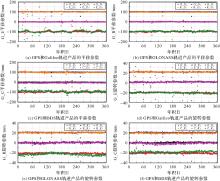
图1
GFZ分析中心多系统轨道产品的平移参数和旋转参数"

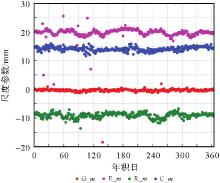
图2
GFZ分析中心多系统轨道产品的尺度参数"

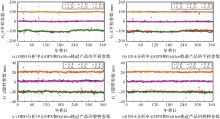
图3
GRG和ESA分析中心Galileo与GPS轨道产品的平移参数和旋转参数"

表1
其他系统相对GPS系统的相似变换参数的相关系数"
| 分析中心 | 系统 | Dx | Dy | Dz | Rx | Ry | Rz | m |
|---|---|---|---|---|---|---|---|---|
| GFZ-CODE | E-G | 0.203 | 0.205 | 0.590 | 0.712 | 0.664 | 0.642 | 0.190 |
| GFZ-CODE | R-G | 0.172 | 0.012 | 0.393 | 0.523 | 0.465 | 0.467 | 0.260 |
| GFZ-CODE | C-G | 0.023 | 0.097 | 0.143 | 0.488 | 0.359 | -0.020 | 0.217 |
| GRG-CODE | E-G | 0.621 | 0.630 | 0.873 | 0.767 | 0.668 | 0.683 | 0.756 |
| GRG-CODE | R-G | 0.379 | 0.447 | 0.332 | 0.557 | 0.363 | 0.504 | 0.603 |
| WHU-CODE | E-G | 0.309 | 0.295 | 0.747 | 0.823 | 0.747 | 0.684 | 0.629 |
| WHU-CODE | R-G | 0.230 | 0.063 | 0.214 | 0.265 | 0.269 | 0.402 | 0.348 |
| WHU-CODE | C-G | 0.014 | 0.104 | 0.180 | 0.247 | 0.227 | 0.075 | 0.302 |
| ESA-CODE | E-G | 0.252 | 0.305 | 0.749 | 0.856 | 0.764 | 0.630 | 0.608 |
| ESA-CODE | R-G | 0.205 | 0.015 | 0.173 | 0.408 | 0.433 | 0.402 | 0.550 |
| MIT-CODE | E-G | 0.022 | 0.161 | 0.642 | 0.794 | 0.619 | 0.881 | 0.157 |
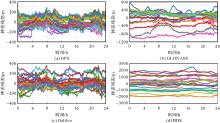
图4
GFZ钟差产品相对于CODE产品的残差"

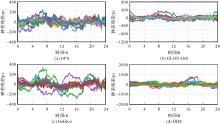
图5
基于单卫星线性变换之后的钟差残差"

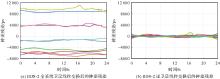
图6
GFZ钟差产品相对于CODE产品BDS-2的残差"

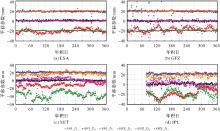
图7
4个分析中心站坐标和轨道产品平移参数"

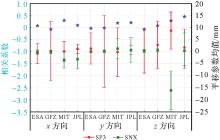
图8
4个分析中心站坐标和轨道产品平移参数统计结果"
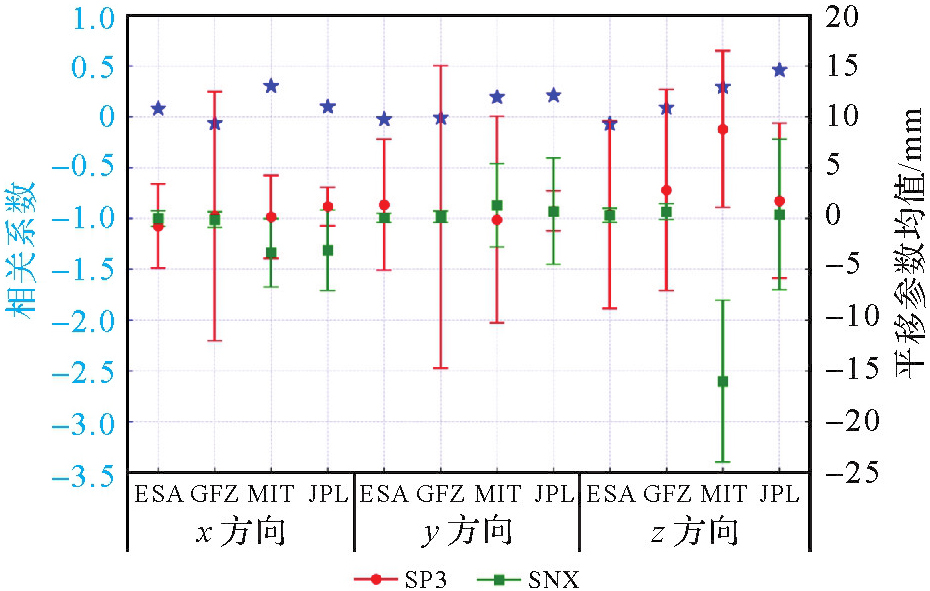
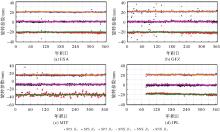
图9
4个分析中心站坐标和轨道产品旋转参数"
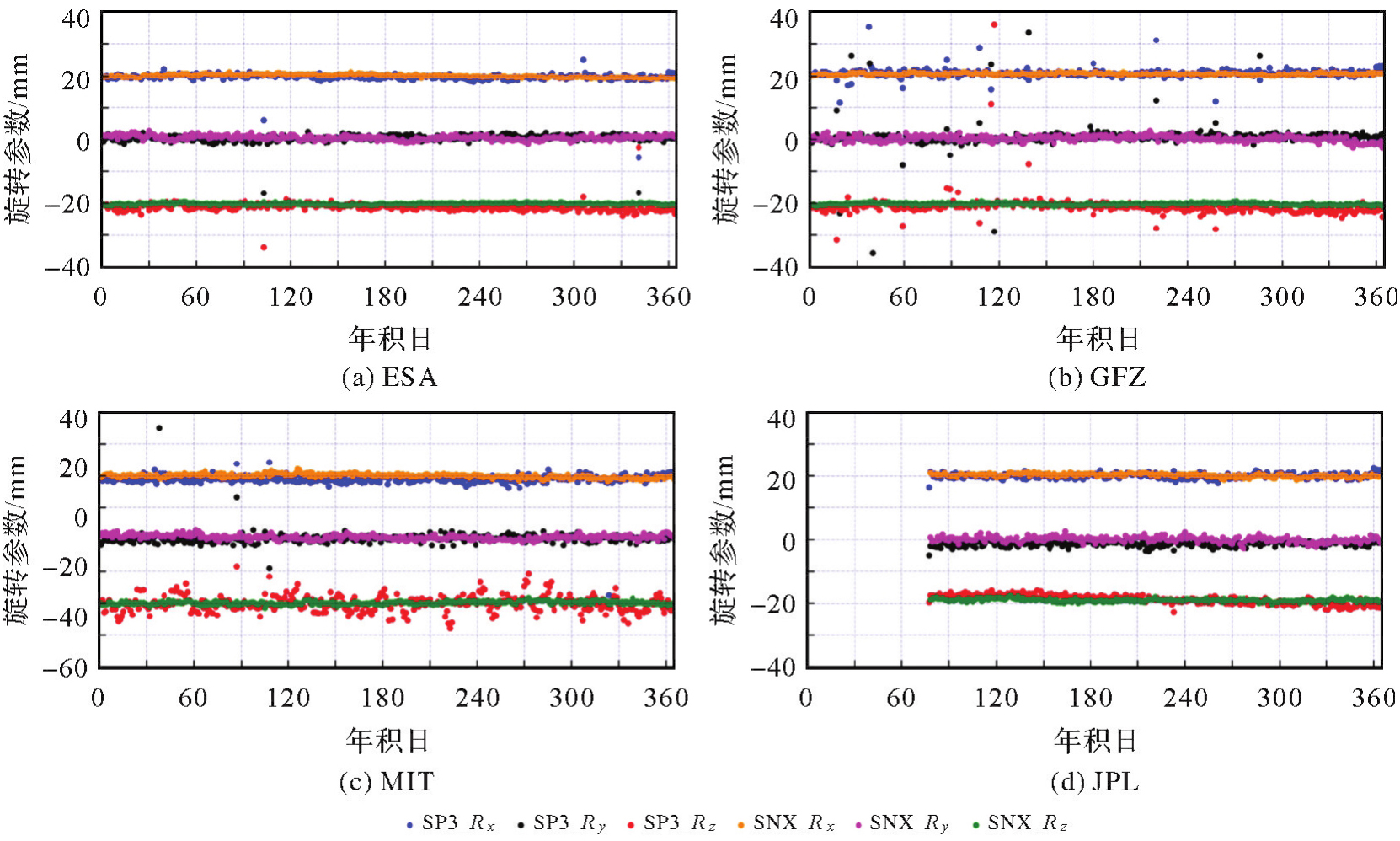
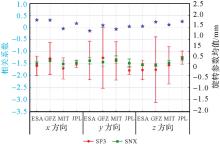
图10
4个分析中心站坐标和轨道产品旋转参数统计结果"

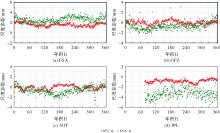
图11
4个分析中心站坐标和轨道产品尺度参数"
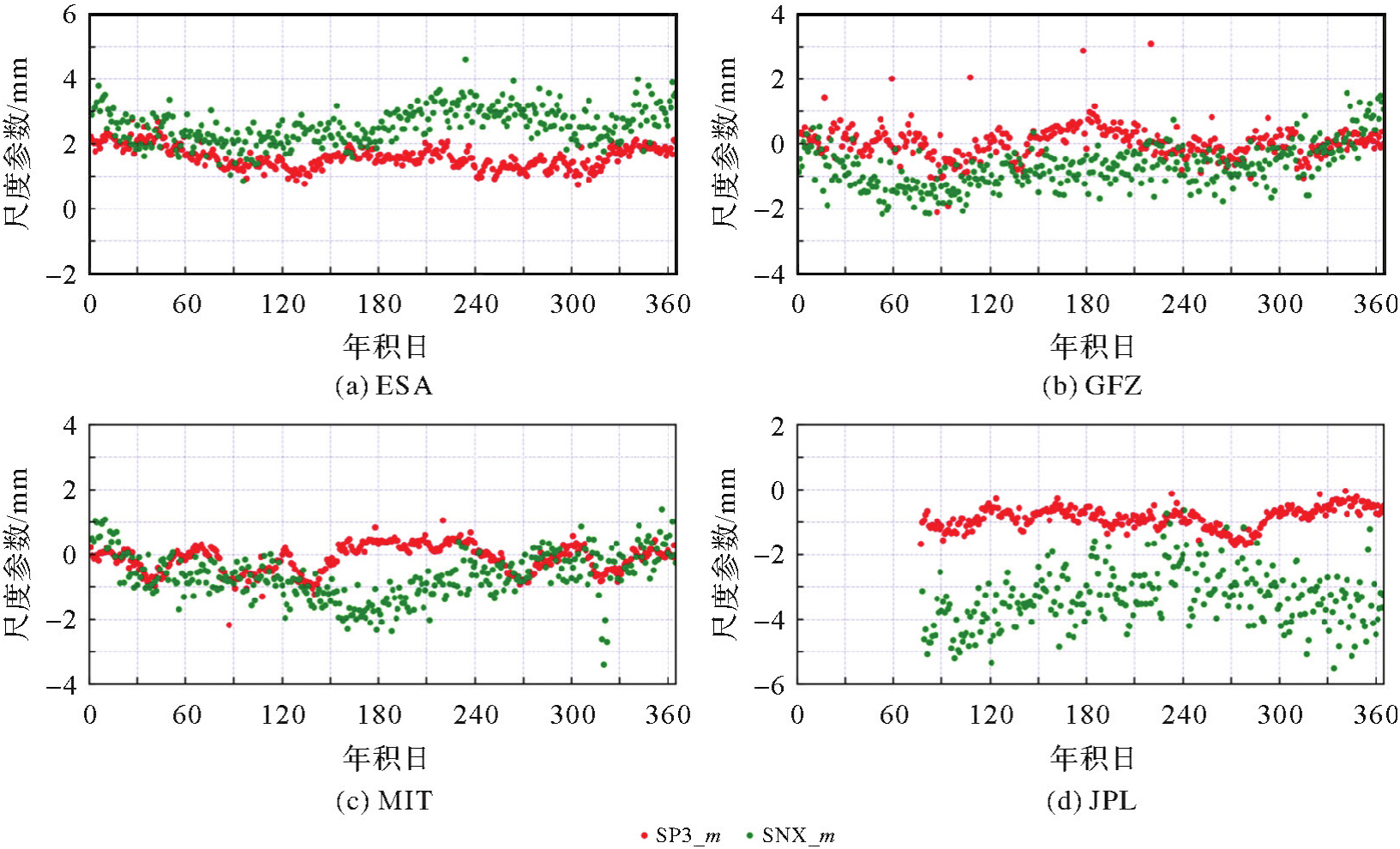
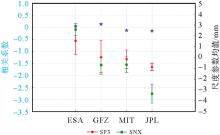
图12
4个分析中心站坐标和轨道产品尺度参数统计结果"
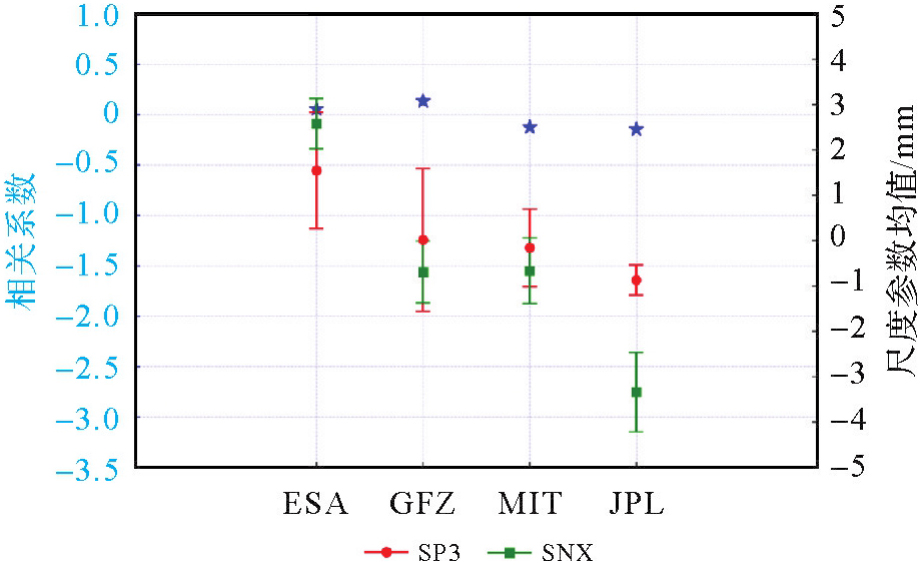
图13
4个分析中心轨道产品旋转参数和地球自转参数"
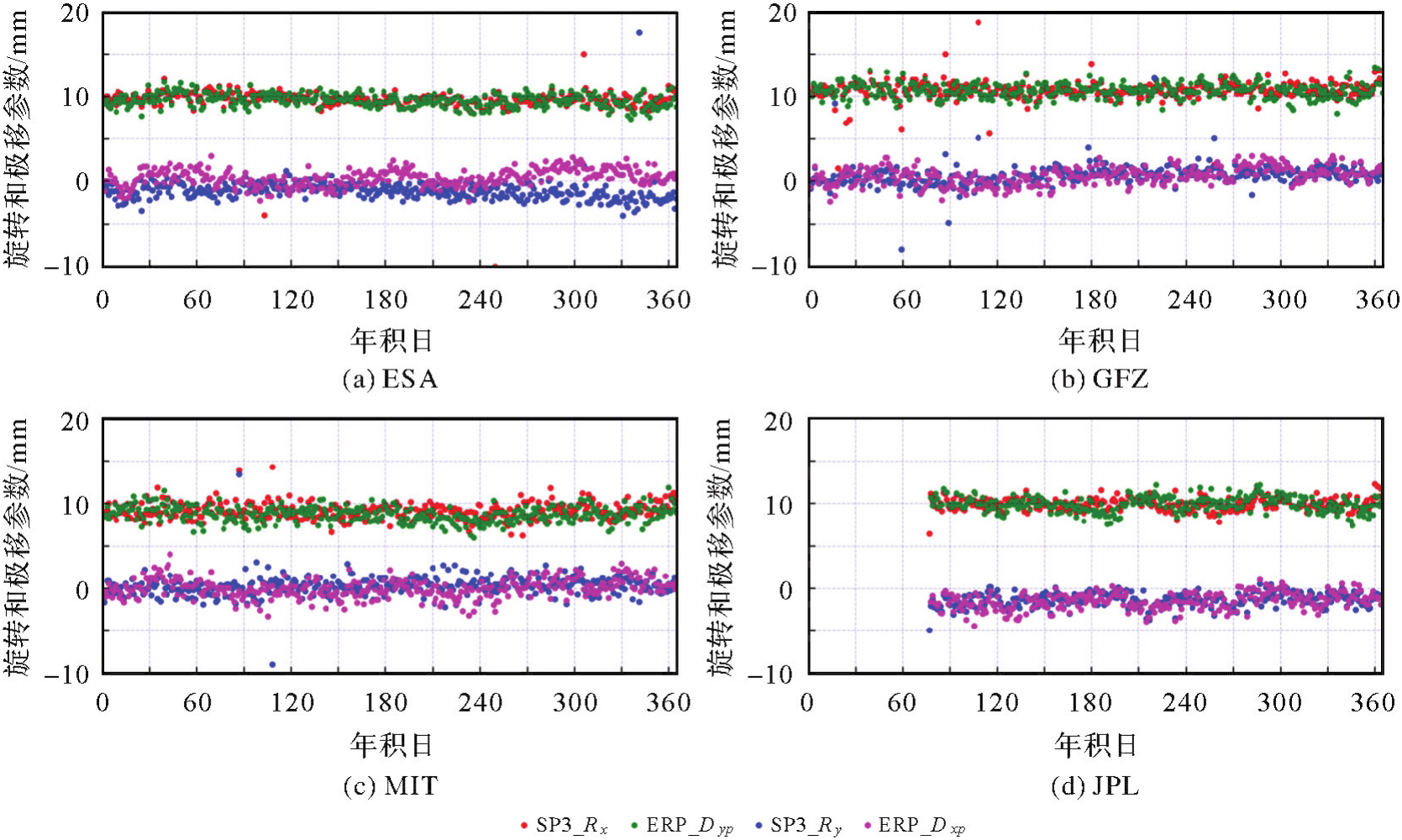
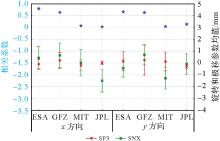
图14
4个分析中心轨道产品旋转参数和地球自转参数统计结果"

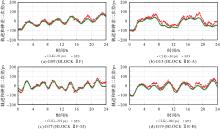
图15
GFZ不同类型GPS卫星轨道和钟差产品的二次差"

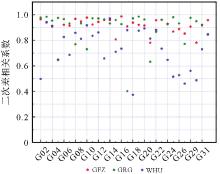
图16
不同分析中心GPS卫星轨道二次差和钟差二次差相关系数"

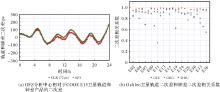
图17
不同分析中心Galileo卫星轨道二次差和钟差二次差相关系数"
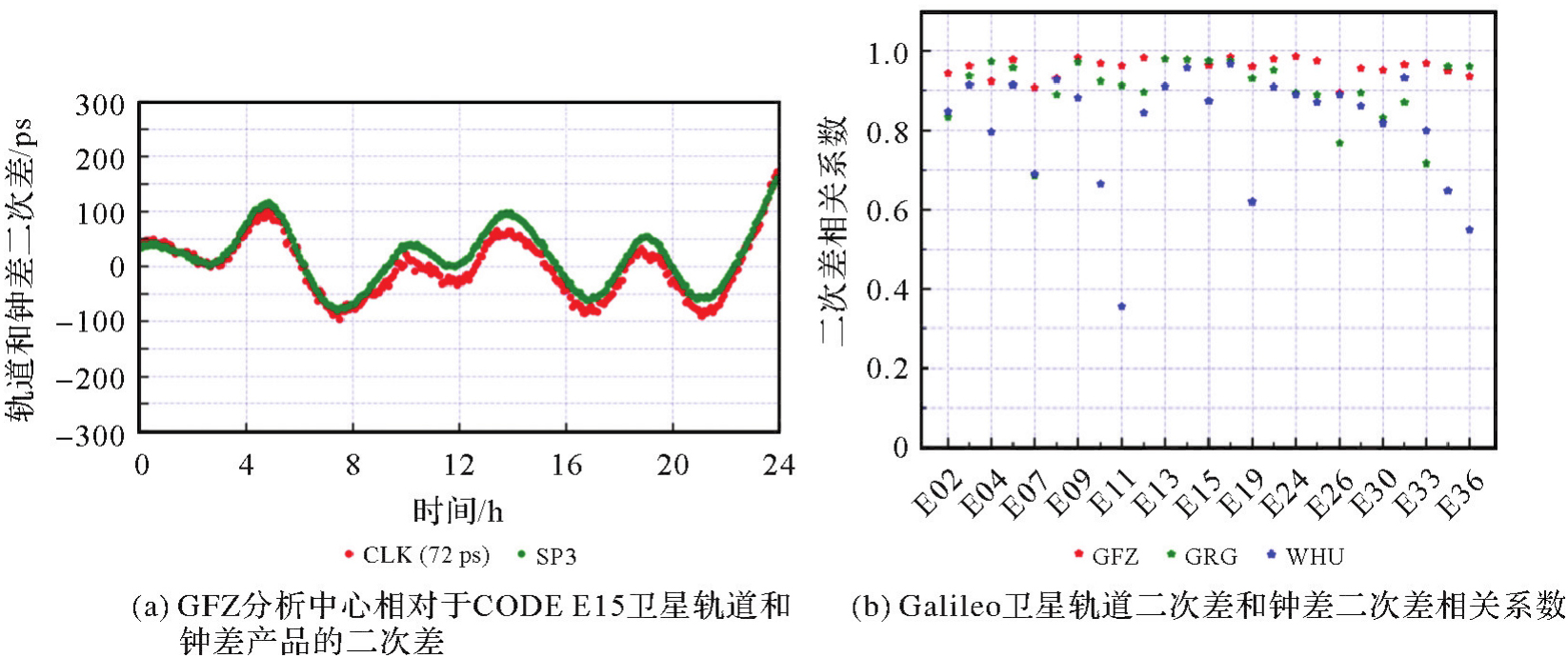
图18
不同分析中心GLONASS卫星轨道二次差和钟差二次差相关系数"
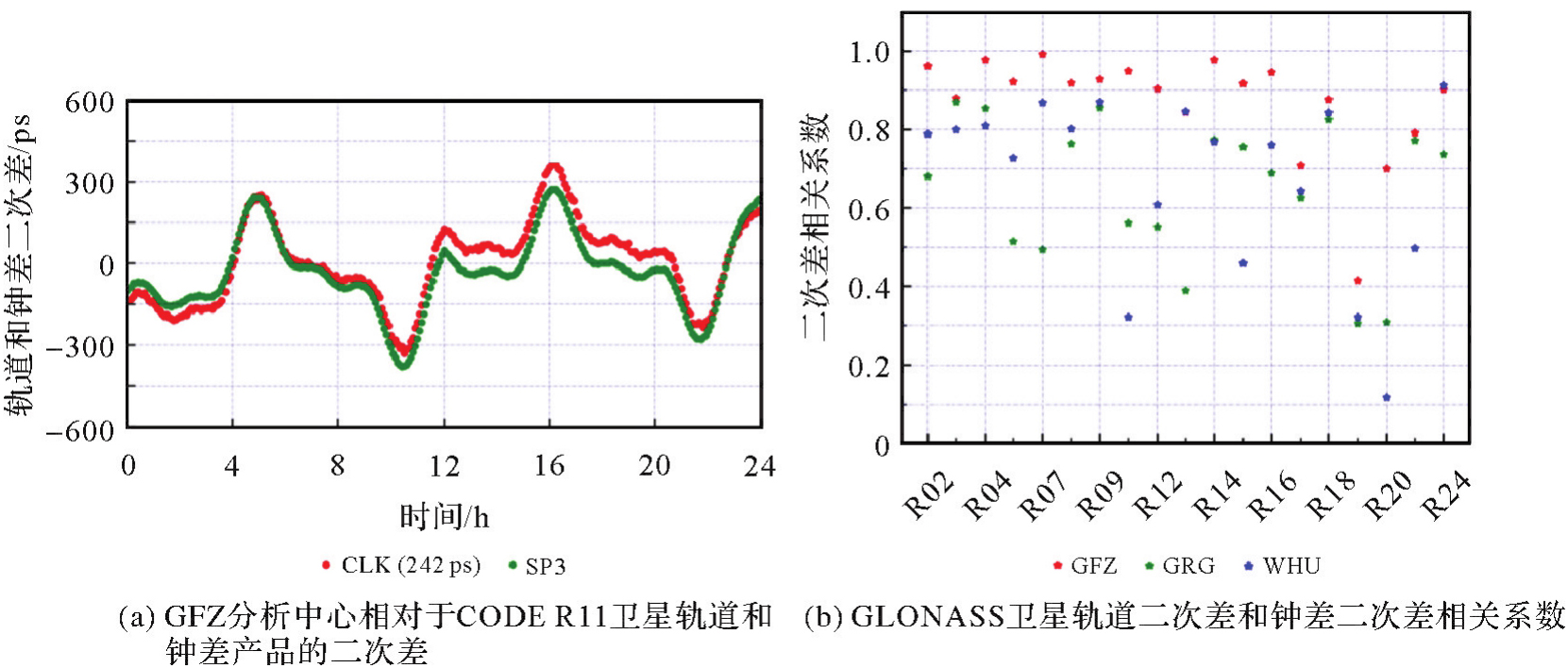
图19
不同分析中心BDS-3卫星轨道二次差和钟差二次差相关系数"
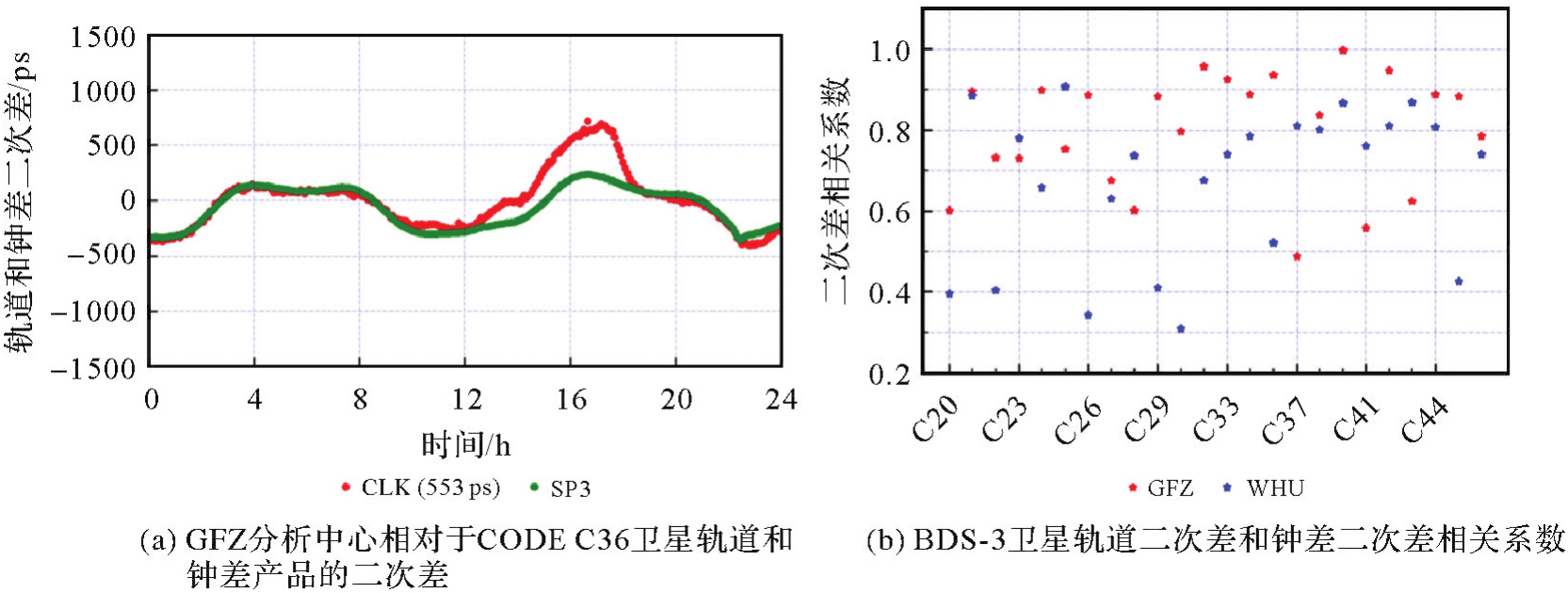
图20
不同分析中心BDS-2卫星轨道二次差和钟差二次差相关系数"
| [1] | LIU Weiping, LIU Jing, XIE Jiantao, et al. Signal-in-space range error of the global BeiDou navigation satellite system and comparison with GPS, GLONASS, Galileo, and QZSS[J]. Journal of Surveying Engineering, 2023, 149(1): 04022013. |
| [2] | DACH R, BROCKMANN E. International GNSS Service: technical report 2023[R/OL]. [2024-04-13]. https://igs.org/news/igs-technical-report-2023/. |
| [3] | WEISS J P, STEIGENBERGER P, SPRINGER T. Orbit and clock product generation[M]//Springer handbook of global navigation satellite systems. Cham: Springer International Publishing, 2017: 983-1010. |
| [4] | STEIGENBERGER P, HUGENTOBLER U, LOYER S, et al. Galileo orbit and clock quality of the IGS multi-GNSS experiment[J]. Advances in Space Research, 2015, 55(1): 269-281. |
| [5] | 朱红玉, 陈俊平, 张益泽. GNSS轨道钟差产品综合综述[J]. 世界科技研究与发展, 2023, 45(3): 306-316. |
| ZHU Hongyu, CHEN Junping, ZHANG Yize. Review of GNSS orbits and clocks products combination[J]. World Sci-Tech R&D, 2023, 45(3): 306-316. | |
| [6] | BEUTLER G, MOORE A W, MUELLER I I. The International Global Navigation Satellite Systems Service (IGS): development and achievements[J]. Journal of Geodesy, 2009, 83(3/4): 297-307. |
| [7] |
陈康慷, 徐天河, 杨玉国, 等. iGMAS GNSS钟差产品综合与评估[J]. 测绘学报, 2016, 45(S2): 46-53. DOI:.
doi: 10.11947/j.AGCS.2016.F025 |
|
CHEN Kangkang, XU Tianhe, YANG Yuguo, et al. Synthesis and evaluation of iGMAS GNSS clock difference products[J]. Acta Geodaetica et Cartographica Sinica, 2016, 45(S2): 46-53. DOI:.
doi: 10.11947/j.AGCS.2016.F025 |
|
| [8] | 李博峰, 苗维凯, 陈广鄂. 多频多模GNSS高精度定位关键技术与挑战[J]. 武汉大学学报(信息科学版), 2023, 48(11): 1769-1783. |
| LI Bofeng, MIAO Weikai, CHEN Guang'e. Key technologies and challenges of multi-frequency and multi-GNSS high-precision positioning[J]. Geomatics and Information Science of Wuhan University, 2023, 48(11): 1769-1783. | |
| [9] |
蔡洪亮, 孟轶男, 耿长江, 等. 北斗三号全球导航卫星系统服务性能评估:定位导航授时、星基增强、精密单点定位、短报文通信与国际搜救[J]. 测绘学报, 2021, 50(4): 427-435. DOI:.
doi: 10.11947/j.AGCS.2021.20200549 |
|
CAI Hongliang, MENG Yinan, GENG Changjiang, et al. BDS-3 performance assessment: PNT, SBAS, PPP, SMC and SAR[J]. Acta Geodaetica et Cartographica Sinica, 2021, 50(4): 427-435. DOI:.
doi: 10.11947/j.AGCS.2021.20200549 |
|
| [10] |
刘伟平, 郝金明, 吕志伟, 等. 北斗三号空间信号测距误差评估与对比分析[J]. 测绘学报, 2020, 49(9): 1213-1221. DOI:.
doi: 10.11947/j.AGCS.2020.20200266 |
|
LIU Weiping, HAO Jinming, LÜ Zhiwei, et al. Evaluation and comparative analysis of BDS-3 signal-in-space range error[J]. Acta Geodaetica et Cartographica Sinica, 2020, 49(9): 1213-1221. DOI:.
doi: 10.11947/j.AGCS.2020.20200266 |
|
| [11] | 耿涛, 徐夏炎. IGS分析中心轨道综合算法实现及精度分析[J]. 大地测量与地球动力学, 2017, 37(4): 369-373,384. |
| GENG Tao, XU Xiayan. Orbit combination algorithm and accuracy analysis of IGS analysis center[J]. Journal of Geodesy and Geodynamics, 2017, 37(4): 369-373,384. | |
| [12] | STEIGENBERGER P, MONTENBRUCK O. Consistency of MGEX orbit and clock products[J]. Engineering, 2020, 6(8): 898-903. |
| [13] | STEIGENBERGER P, DENG Zhiguo, GUO Jing, et al. BeiDou-3 orbit and clock quality of the IGS Multi-GNSS pilot project[J]. Advances in Space Research, 2023, 71(1): 355-368. |
| [14] | 毛姝尹, 魏娜, 温强, 等. 顾及卫星姿态的多系统精密钟差产品综合[J]. 全球定位系统, 2022, 47(2): 13-20. |
| MAO Shuyin, WEI Na, WEN Qiang, et al. Multi-GNSS clock combination with satellite attitude correction[J]. GNSS World of China, 2022, 47(2): 13-20. | |
| [15] | 陈国. GNSS产品综合方法及在iGMAS中的应用[D]. 武汉: 武汉大学, 2019. |
| CHEN Guo. Research on the methods for multi-GNSS products combination and its application in iGMAS activities[D]. Wuhan: Wuhan University, 2019. | |
| [16] |
党亚民, 蒋涛, 杨元喜, 等. 中国大地测量研究进展(2019—2023)[J]. 测绘学报, 2023, 52(9): 1419-1436. DOI:.
doi: 10.11947/j.AGCS.2023.20230343 |
|
DANG Yamin, JIANG Tao, YANG Yuanxi, et al. Research progress of geodesy in China (2019—2023)[J]. Acta Geodaetica et Cartographica Sinica, 2023, 52(9): 1419-1436. DOI:.
doi: 10.11947/j.AGCS.2023.20230343 |
|
| [17] | 李敏, 施闯, 赵齐乐, 等. 多模GNSS融合精密定轨[EB/OL]. [2024-04-13]. https://kns.cnki.net/kcms2/article/abstract?v=YHRUfPYi6NMwhjaSqK0OEeT3zCTTcIhIiFLlSO09T2DBG76TZ9seaXhFqmB5BH8xyQjBWucLA2cgXrGo7lCdkgI_h9nxDjenE_yDEOaTWsyNVE--1Y2pOTgrPGgnX7HuIcvJ8XLWrMJgvB33KGG7tQYx_5kLDjBwozCqSDOQ9Ep6H6OpZLIZrID-OtAIP09YnjejlS1RvRI=&uniplat-form=NZKPT&language=CHS. |
| LI Min, SHI Chuang, ZHAO Qile, et al. Multi-GNSS precision orbit determination[EB/OL]. [2024-04-13]. https://kns.cnki.net/kcms2/article/abstract?v=YHRUfPYi6NMwhjaSqK0OEeT3zCTTcIhIiFLlSO09T2DBG76TZ9seaXhFqmB5BH8xyQjBWucLA2cgXrGo7lCdkgI_h9nxDj-enE_yDEOaTWsyNVE--1Y2pOTgrPGgnX7HuIcvJ8XLWrMJgvB33KGG7tQYx_5kLDjBwozCqSDOQ9Ep6H6OpZLIZrID-OtAIP09YnjejlS1RvRI=&uniplatform=NZKPT&language=CHS. | |
| [18] | 屈利忠, 杜明义, 王坚, 等. 多模GNSS精密卫星钟差估计与分析[J]. 武汉大学学报(信息科学版), 2018, 43(1): 107-111. |
| QU Lizhong, DU Mingyi, WANG Jian, et al. Multi-GNSS satellites clock estimation and analysis[J]. Geomatics and Information Science of Wuhan University, 2018, 43(1): 107-111. | |
| [19] | DUAN Pengshuo, LIU Genyou, GONG Youliang, et al. The functional gradient description method of space coordinate transformation[J]. Journal of Geodesy and Geoinformation Science, 2019, 2(1): 66-71. |
| [20] | 陈义, 陆珏. 以三维坐标转换为例解算稳健总体最小二乘方法[J]. 测绘学报, 2012, 41(5): 715-722. |
| CHEN Yi, LU Jue. Performing 3D similarity transformation by robust total least squares[J]. Acta Geodaetica et Cartographica Sinica, 2012, 41(5): 715-722. | |
| [21] | 张小红, 李盼, 李星星, 等. 天线相位中心改正模型对PPP参数估计的影响[J]. 武汉大学学报(信息科学版), 2011, 36(12): 1470-1473. |
| ZHANG Xiaohong, LI Pan, LI Xingxing, et al. Influence of antenna phase center correction model on precise point positioning[J]. Geomatics and Information Science of Wuhan University, 2011, 36(12): 1470-1473. | |
| [22] | PıRTı A, YÜCEL A M. Evaluation of the accuracy and performance of multi-GNSS (MGEX) positioning for long baselines by using different software[J]. Journal of Geodesy and Geoinformation Science, 2023, 6(4): 79-92. |
| [23] |
舒宝, 王利, 张勤, 等. SSR延迟下的轨道钟差外推误差及其对多GNSS实时精密单点定位的影响评估[J]. 测绘学报, 2021, 50(12): 1738-1750. DOI:.
doi: 10.11947/j.AGCS.2021.20200580 |
|
SHU Bao, WANG Li, ZHANG Qin, et al. Evaluation of multi-GNSS orbit and clock extrapolating error and their influence on real-time PPP during outages of SSR correction[J]. Acta Geodaetica et Cartographica Sinica, 2021, 50(12): 1738-1750. DOI:.
doi: 10.11947/j.AGCS.2021.20200580 |
|
| [24] | 陈国, 魏娜, 赵齐乐, 等. 多分析中心站坐标产品的综合方法研究[J]. 武汉大学学报(信息科学版), 2019, 44(9): 1289-1295. |
| CHEN Guo, WEI Na, ZHAO Qile, et al. Research on the combination of station coordinate products derived from multiple analysis centers[J]. Geomatics and Information Science of Wuhan University, 2019, 44(9): 1289-1295. | |
| [25] | WEIß T, FINCKE T. SenSARP: a pipeline to pre-process Sentinel-1 SLC data by using ESA SNAP Sentinel-1 toolbox[J]. Journal of Open Source Software, 2022, 7(69): 3337. |
| [26] | ROVER S, VITTI A. GNSS-R with low-cost receivers for retrieval of antenna height from snow surfaces using single-frequency observations[J]. Sensors, 2019, 19(24): 5536. |
| [27] | HERRING T A, KING R W, MCCLUSKY S C. Introduction to GAMIT/GLOBK[M]. Cambridge, Massachusetts: Massachusetts Institute of Technology, 2010. |
| [28] | HA J, CHUN S, PARK K D. Precise orbit estimation of GPS using GIPSY-OASIS[J]. Journal of Advanced Navigation Technology, 2019, 23(6): 535-541. |
| [29] | COLLILIEUX X, ALTAMIMI Z, COULOT D, et al. Comparison of very long baseline interferometry, GPS, and satellite laser ranging height residuals from ITRF2005 using spectral and correlation methods[J]. Journal of Geophysical Research: Solid Earth, 2007, 112(B12): 2007JB004933. |
| [30] | LI Min, ZHANG Jiangnan, CHEN Guo, et al. Study on systematic errors of BDS-3 broadcast ephemeris and their effects with Helmert transformation[J]. Satellite Navigation, 2023, 4(1): 16. |
| [31] | 姜卫平, 王锴华, 李昭, 等. GNSS坐标时间序列分析理论与方法及展望[J]. 武汉大学学报(信息科学版), 2018, 43(12): 2112-2123. |
| JIANG Weiping, WANG Kaihua, LI Zhao, et al. Prospect and theory of GNSS coordinate time series analysis[J]. Geomatics and Information Science of Wuhan University, 2018, 43(12): 2112-2123. | |
| [32] | 刘经南, 赵齐乐, 张小红. CHAMP卫星的纯几何定轨及动力平滑中的动力模型补偿研究[J]. 武汉大学学报(信息科学版), 2004, 29(1): 1-6. |
| LIU Jingnan, ZHAO Qile, ZHANG Xiaohong. Geometric orbit determination of CHAMP satellite and dynamic models' compensation during orbit smoothing[J]. Geomatics and Information Science of Wuhan University, 2004, 29(1): 1-6. | |
| [33] |
闫志闯, 徐新强, 赵德军, 等. 低轨卫星约化动力法定轨参数变换的高效算法[J]. 测绘学报, 2018, 47(S1): 28-37. DOI:.
doi: 10.11947/j.AGCS.2018.20180307 |
|
YAN Zhichuang, XU Xinqiang, ZHAO Dejun, et al. An efficient algorithm with reduced dynamic orbit determination for LEOs based on parameter transforming[J]. Acta Geodaetica et Cartographica Sinica, 2018, 47(S1): 28-37. DOI:.
doi: 10.11947/j.AGCS.2018.20180307 |
|
| [34] | 陈俊平, 周建华, 严宇, 等. GNSS数据处理时空参数的相关性[J]. 武汉大学学报(信息科学版), 2017, 42(11): 1649-1657. |
| CHEN Junping, ZHOU Jianhua, YAN Yu, et al. Correlation of spatial and temporal parameters in GNSS data analysis[J]. Geomatics and Information Science of Wuhan University, 2017, 42(11): 1649-1657. |
| [1] | 布金伟, 刘淑慧, 徐顺双, 向彤粟, 汪秋兰, 籍超颖, 左小清. 星载GNSS-R全球海浪波周期估计的经验模型构建[J]. 测绘学报, 2026, 55(4): 684-697. |
| [2] | 吴汤婷, 罗馨语, 卢立果, 刘站科, 超能芳. 基于GNSS和GRACE/GRACE-FO的陕甘宁地区水资源与水文干旱特征时空变化评价[J]. 测绘学报, 2026, 55(3): 439-450. |
| [3] | 马中民, 张双成, 周昕, 刘奇, 刘宁, 王恒利. 顾及地表反射率不确定性的风云三号GNSS-R洪涝监测方法:以8·2广东极端暴雨灾害为例[J]. 测绘学报, 2026, 55(3): 451-464. |
| [4] | 严清赟, 郭紫璇, 潘元进, 贾燕, 金双根. GNSS-R陆表反射率空间分异驱动因子定量分析与分区模式[J]. 测绘学报, 2026, 55(2): 315-327. |
| [5] | 赵庆志, 蒋朵朵, 姚宜斌, 马智, 马永杰, 李浩杰, 薛瑞瑞. 一种GNSS卫星信号自适应优选的水汽层析方法[J]. 测绘学报, 2026, 55(1): 25-35. |
| [6] | 余德荧, 李厚朴, 刘一, 武曙光, 李得宴, 李明超, 李文魁, 边少锋. 基于DBSCAN的多粗差识别RAIM算法[J]. 测绘学报, 2026, 55(1): 59-72. |
| [7] | 程栋梁, 陈灵秋, 黄志勇, 乔书波, 王丹丹, 闫亚明. 基于COATS的多模多频iGNSS-R测高性能评估[J]. 测绘学报, 2026, 55(1): 73-89. |
| [8] | 罗亚荣, 卢文韬, 郭迟, 刘经南. GNSS/INS组合导航左手对称性等变滤波模型及算法[J]. 测绘学报, 2025, 54(8): 1389-1403. |
| [9] | 陈洋溢, 郑凯, 张小红, 吴明魁, 王鹏旭, 付文举, 刘克中. GPS/Galileo/BDS重叠频率多路径误差分析及建模[J]. 测绘学报, 2025, 54(8): 1427-1438. |
| [10] | 李建章, 闫浩文, 杨维芳, 苏小宁. GNSS伪三角高程测量方法[J]. 测绘学报, 2025, 54(7): 1170-1177. |
| [11] | 王潜心, 胡超, 程彤. 基于GNSS钟差参数先验信息的超快速轨道钟差估计方法[J]. 测绘学报, 2025, 54(6): 982-994. |
| [12] | 沈洋, 李广云, 陈明剑, 李林阳, 施星宇, 蔡巍, 郝卫峰. 基于风云三号TEC的极区GNSS电离层模型精度评估[J]. 测绘学报, 2025, 54(6): 995-1008. |
| [13] | 胡顺强, 陈克杰, 贺小星, 朱海, 王坦. 环境负载对川滇地区GNSS观测站三维坐标时间序列非线性变化的影响[J]. 测绘学报, 2025, 54(5): 805-818. |
| [14] | 杨文涛, 郭斐, 张小红, 张治宇, 朱逸凡, 李政, 吴子恒. 利用GNSS反射计和SMAP辐射计反演青藏高原土壤湿度和冻融状态[J]. 测绘学报, 2025, 54(4): 725-735. |
| [15] | 路阳阳, 祝会忠, 李博, 李军, 徐爱功. IFCB时变特性约束的多频GPS/Galileo/BDS-3的PPP算法[J]. 测绘学报, 2025, 54(2): 233-247. |
| 阅读次数 | ||||||
|
全文 |
|
|||||
|
摘要 |
|
|||||
