


测绘学报 ›› 2025, Vol. 54 ›› Issue (9): 1647-1663.doi: 10.11947/j.AGCS.2025.20240463
瞿伟( ), 徐荣堂, 李久元, 唐兴友, 陈沛男
收稿日期:2024-11-14
修回日期:2025-07-30
出版日期:2025-10-10
发布日期:2025-10-10
作者简介:瞿伟(1982—),男,博士,教授,博士生导师,主要从事地质灾害大地测量高精度监测与灾害成因机理研究。E-mail:quwei@chd.edu.cn
基金资助:
Wei QU(), Rongtang XU, Jiuyuan LI, Xingyou TANG, Peinan CHEN
Received:2024-11-14
Revised:2025-07-30
Online:2025-10-10
Published:2025-10-10
About author:QU Wei (1982—), male, PhD, professor, PhD supervisor, majors in geological disaster high-precision geodetic monitoring and disaster mechanism. E-mail: quwei@chd.edu.cn
Supported by:摘要:
滑坡位移高精度预测模型的合理建立对滑坡灾害防灾预警具有重要的参考价值。本文针对当前数据驱动型滑坡位移预测模型对数据量有较强依赖性,以及在处理非平稳性滑坡位移监测数据具有的分布漂移特性上的局限性,发展了一种基于奇异值分解且结构简单的归一化方法。该方法通过分段归一化滑坡位移监测数据,结合统计特性的外推模型进行反归一化处理,可有效解决非平稳滑坡位移数据的分布漂移问题,且无须依赖大规模数据训练,可显著提升预测模型对非平稳滑坡位移的预测能力。以我国典型滑坡域甘肃黑方台滑坡实测数据进行测试,结果表明,与传统z-score归一化方法及无归一化相比,本文方法可显著提升多类模型(如多层感知器(multi-layer perceptron,MLP)、长短期记忆神经网络(long short-term memory,LSTM)、门控循环单元(gated recurrent unit,GRU)、时序卷积网络(temporal convolutional network,TCN))的预测精度,均方根误差(root mean square error,RMSE)和平均绝对误差(mean absolute error,MAE)平均提升率均超过50%。本文方法能够显著提升模型训练过程中的稳定性,有效预测出滑坡位移的突变情况,具有较高的实际推广应用价值。
中图分类号:
瞿伟, 徐荣堂, 李久元, 唐兴友, 陈沛男. 非平稳滑坡位移的奇异值分解归一化预测方法[J]. 测绘学报, 2025, 54(9): 1647-1663.
Wei QU, Rongtang XU, Jiuyuan LI, Xingyou TANG, Peinan CHEN. Singular value decomposition normalization prediction method for non-steady landslide displacement[J]. Acta Geodaetica et Cartographica Sinica, 2025, 54(9): 1647-1663.
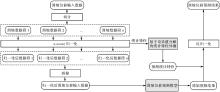
图1
基于奇异值分解的归一化方法算法"
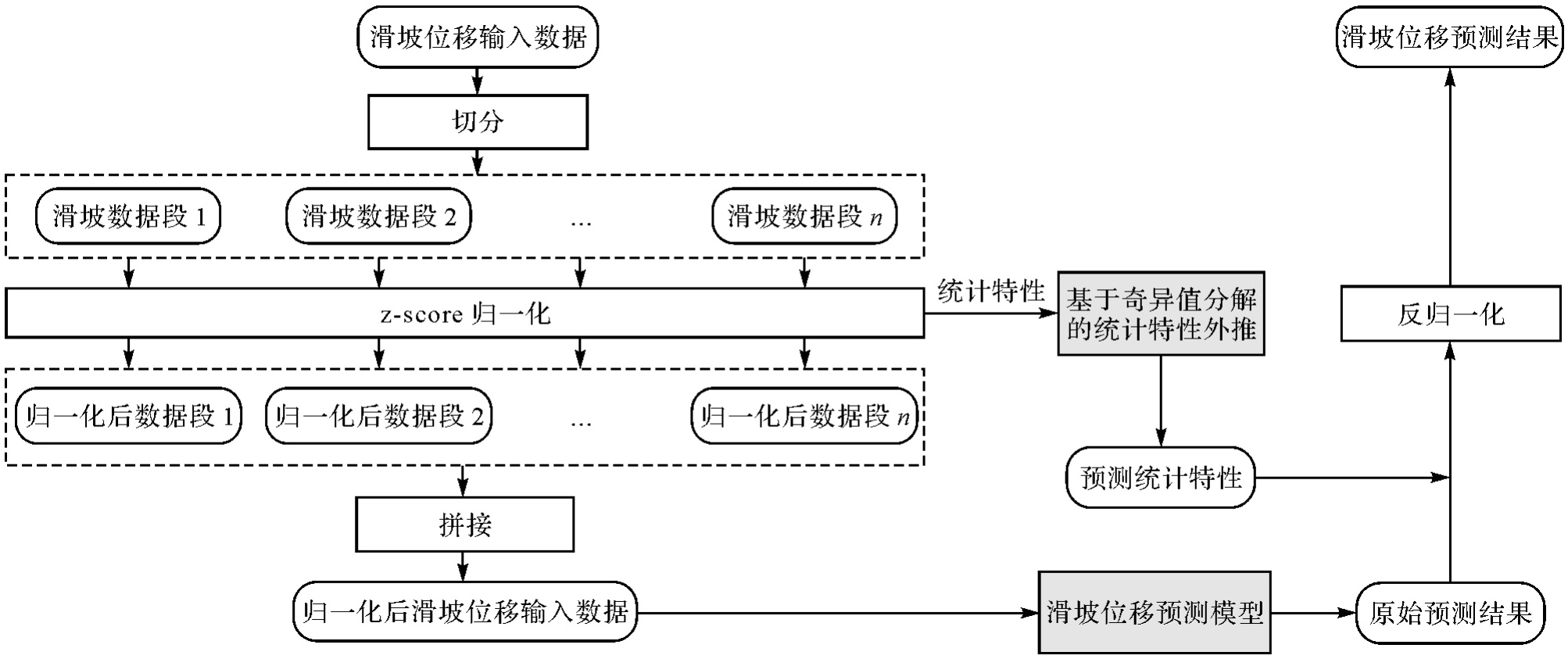
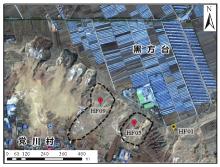
图2
甘肃黑方台党川区域滑坡北斗/GNSS监测站点位置分布"

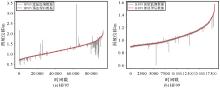
图3
数据预处理前后对比"
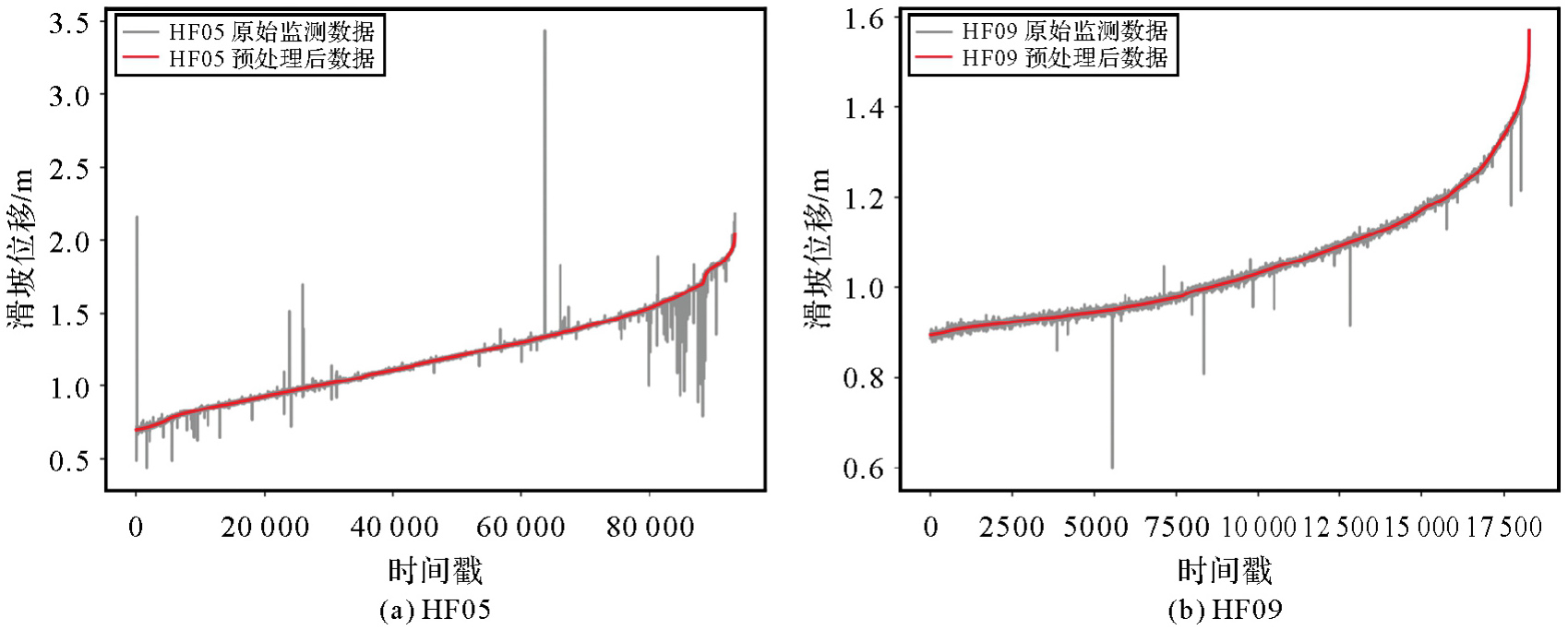
图4
经预处理后的典型滑坡体位移时序监测数据"
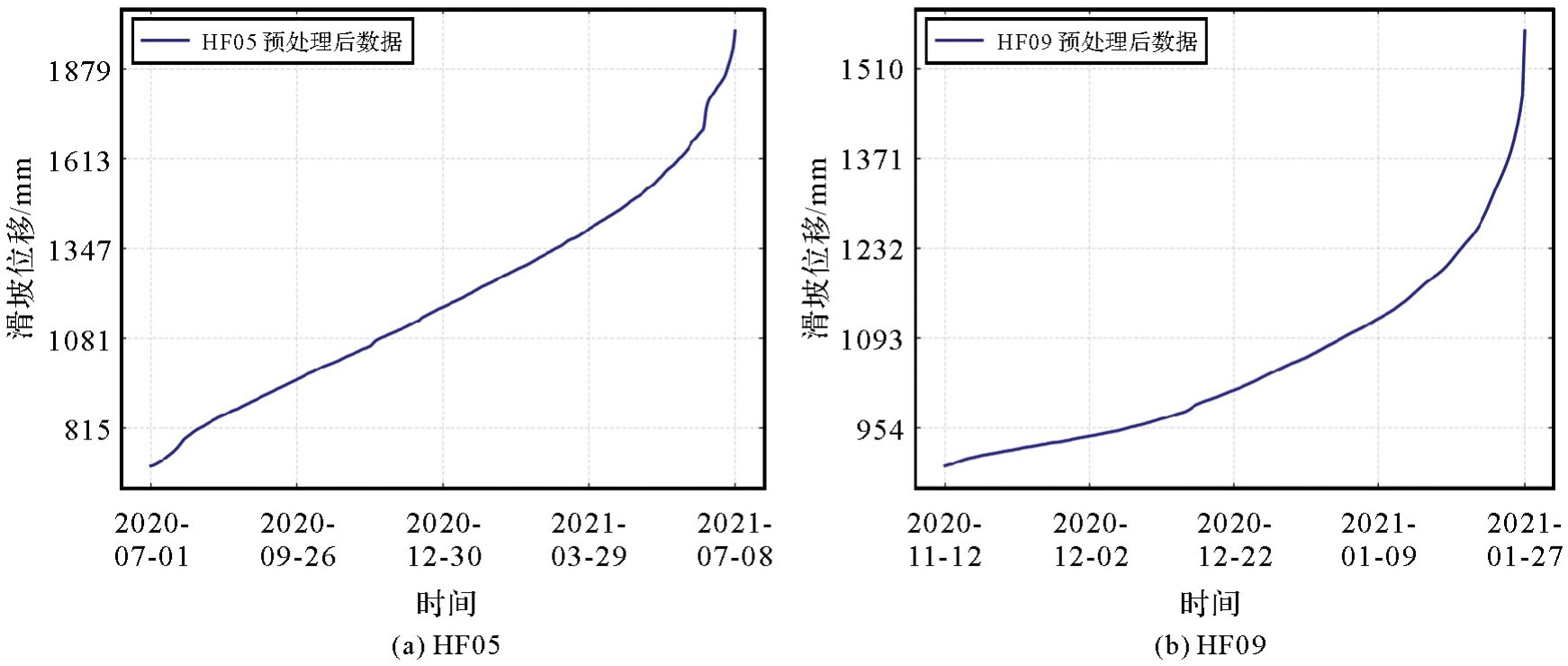

表1
不同模型试验参数"
| 基础模型 | 归一化策略 | 基础配置(模型结构) | 额外配置参数 | 模型编号 |
|---|---|---|---|---|
| MLP | - | (12-64-Re LU-4),MSE | - | M-1 |
| z-score | (z-score)-(12-64-ReLU-4),MSE | - | M-2 | |
| svd_norm | (svd_norm)-(12-64-Re LU-4),MSE | svd_norm(4) | M-3 | |
| LSTM | - | (12-128*2-4),MSE | - | L-1 |
| z-score | (z-score)-(12-128*2-4),MSE | - | L-2 | |
| svd_norm | (svd_norm)-(12-128*2-4),MSE | svd_norm(4) | L-3 | |
| GRU | - | (12-128*2-4),MSE | - | G-1 |
| z-score | (z-score)-(12-128*2-4),MSE | - | G-2 | |
| svd_norm | (svd_norm)-(12-128*2-4),MSE | svd_norm(4) | G-3 | |
| TCN | - | (1,4,[16,32,16]),MSE | - | T-1 |
| z-score | (z-score)-(1,4,[16,32,16]),MSE | - | T-2 | |
| svd_norm | (svd_norm)-(1,4,[16,32,16]),MSE | svd_norm(4) | T-3 |
表2
不用模型采用不用归一化方法在HF05、HF09测试集上的测试结果"
| 模型 | HF05 | HF09 | ||||
|---|---|---|---|---|---|---|
| RMSE/m | MAE/m | R2 | RMSE/m | MAE/m | R2 | |
| M-1 | 0.030 | 0.025 | 0.989 | 0.085 | 0.077 | 0.975 |
| M-2 | 0.021 | 0.016 | 0.987 | 0.046 | 0.038 | 0.973 |
| M-3 | 0.007 | 0.004 | 0.996 | 0.025 | 0.018 | 0.978 |
| L-1 | 0.047 | 0.040 | 0.986 | 0.066 | 0.059 | 0.968 |
| L-2 | 0.132 | 0.116 | 0.976 | 0.158 | 0.149 | 0.962 |
| L-3 | 0.008 | 0.004 | 0.997 | 0.019 | 0.011 | 0.975 |
| G-1 | 0.035 | 0.029 | 0.987 | 0.096 | 0.090 | 0.965 |
| G-2 | 0.085 | 0.074 | 0.983 | 0.159 | 0.149 | 0.961 |
| G-3 | 0.007 | 0.004 | 0.997 | 0.019 | 0.011 | 0.975 |
| T-1 | 0.500 | 0.494 | 0.994 | 0.312 | 0.306 | 0.972 |
| T-2 | 0.150 | 0.142 | 0.993 | 0.161 | 0.150 | 0.971 |
| T-3 | 0.008 | 0.005 | 0.996 | 0.042 | 0.033 | 0.974 |
图5
MLP模型在HF05数据集上不同归一化方案下预测后4个滑坡位移结果对比"

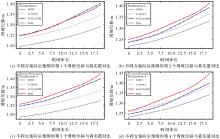
图6
MLP模型在HF09数据集上不同归一化方案下预测后4个滑坡位移结果对比"
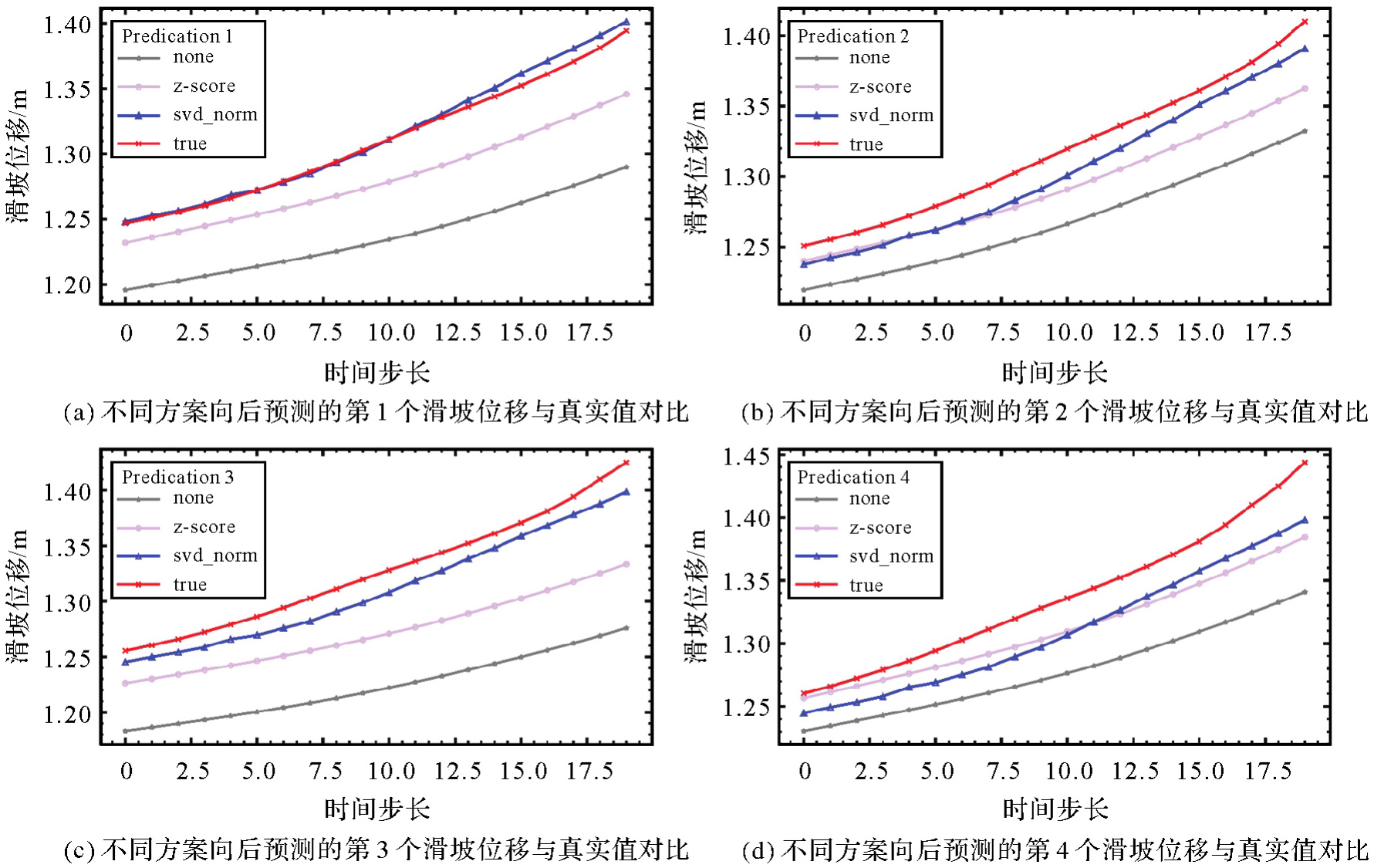
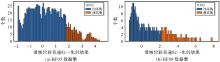
图7
z-score归一化后训练集测试集统计分布"
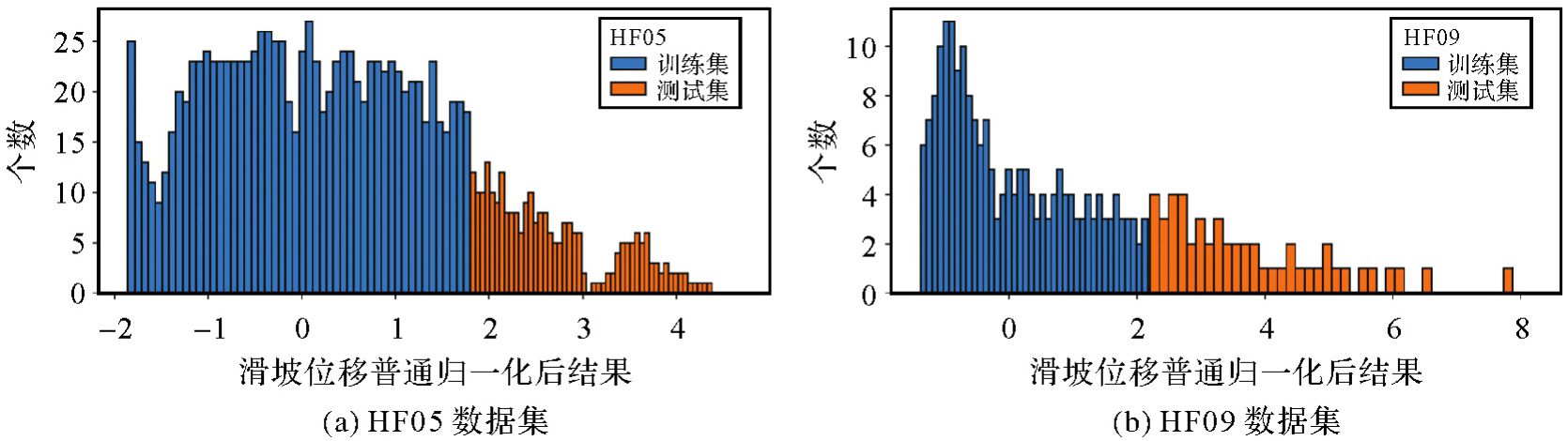
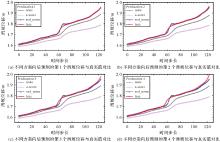
图8
GRU模型在HF05数据集上不同归一化方案下预测后4个滑坡位移结果对比"

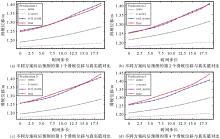
图9
GRU模型在HF09数据集上不同归一化方案下预测后4个滑坡位移结果对比"

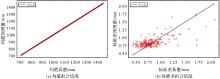
图10
HF05站点监测数据统计特征拟合情况"
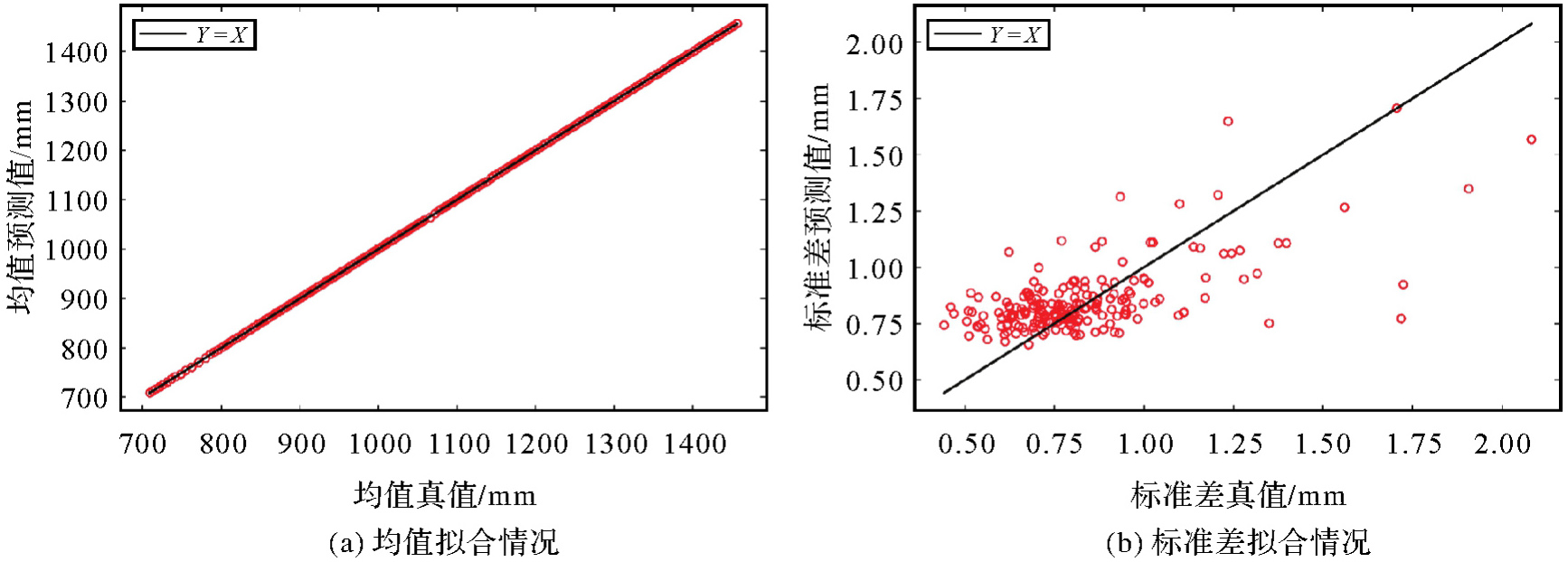
图11
HF09站点监测数据统计特征拟合情况"
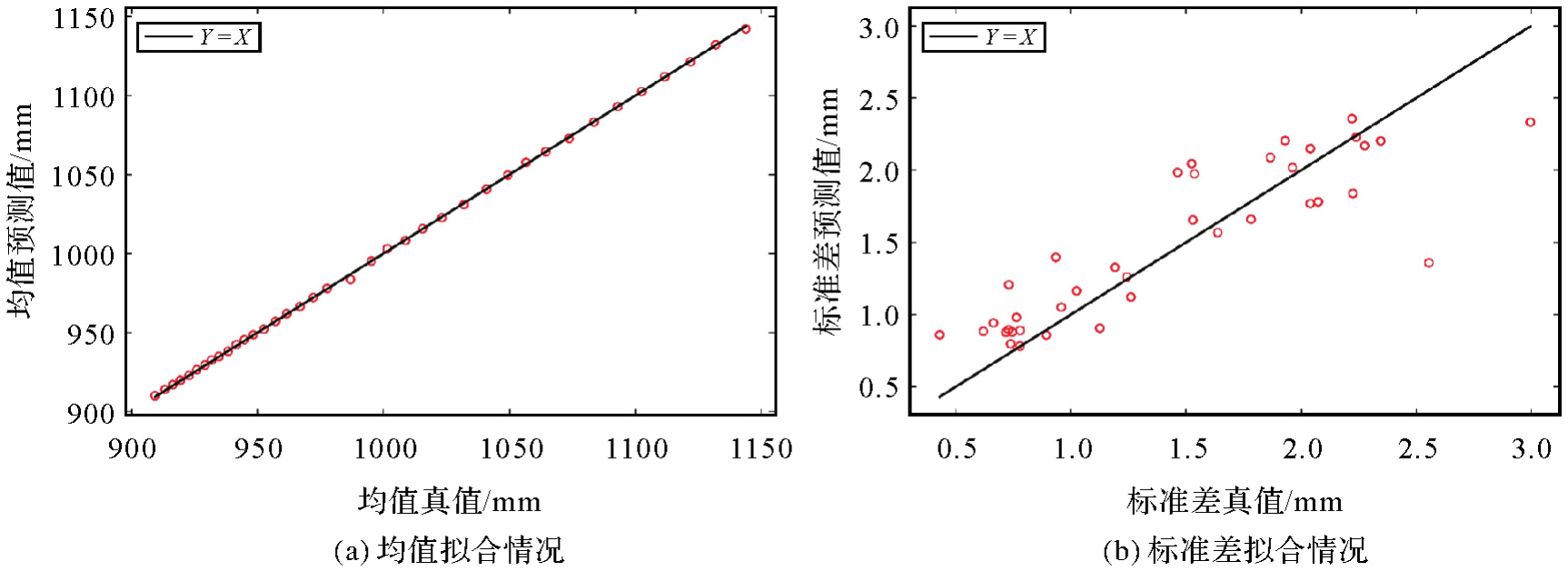
图12
相同模型结构不同归一化方法的滑坡预测模型训练误差曲线对比"
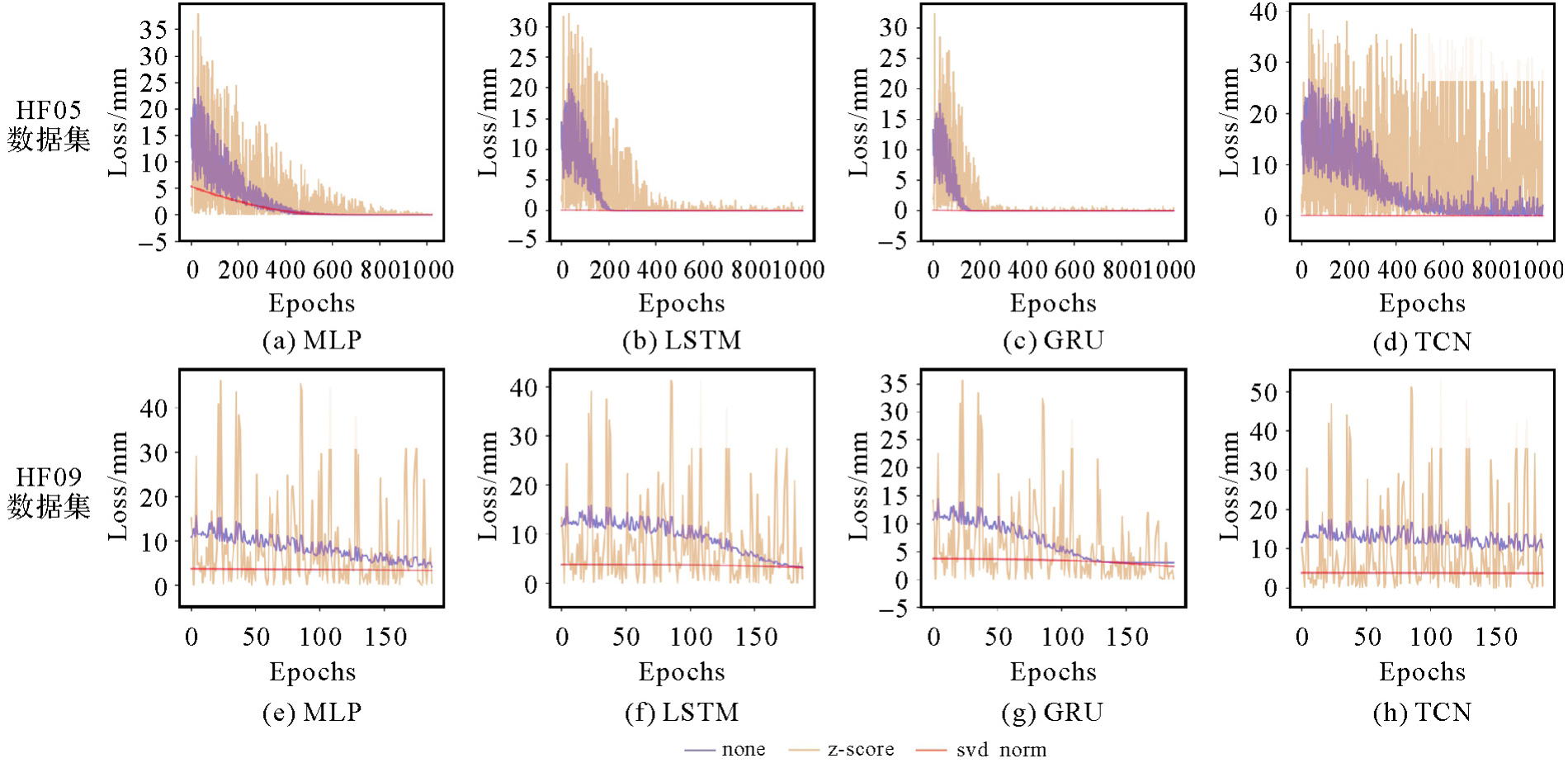
表3
不同分割方案下不同归一化方法在HF05、HF09数据集测试集上的测试RMSE"
| 模型 | 数据分割方案 | |||||||
|---|---|---|---|---|---|---|---|---|
| (12,3,4) | (9,3,3) | (6,3,2) | (8,4,2) | (6,2,3) | (8,2,4) | (10,2,5) | (12,2,6) | |
| HF05_M-1 | 0.024 7 | 0.031 6 | 0.015 7 | 0.025 8 | 0.041 7 | 0.026 3 | 0.030 5 | 0.023 0 |
| HF05_L-1 | 0.046 9 | 0.034 8 | 0.017 3 | 0.018 4 | 0.010 7 | 0.012 8 | 0.029 8 | 0.029 9 |
| HF05_G-1 | 0.026 6 | 0.020 7 | 0.019 8 | 0.025 6 | 0.011 1 | 0.018 0 | 0.022 9 | 0.032 6 |
| HF05_T-1 | 0.459 5 | 0.538 8 | 0.517 8 | 0.545 9 | 0.521 8 | 0.520 8 | 0.462 8 | 0.493 5 |
| HF05_M-2 | 0.019 1 | 0.023 3 | 0.034 1 | 0.018 7 | 0.014 4 | 0.012 9 | 0.028 8 | 0.024 3 |
| HF05_L-2 | 0.124 4 | 0.116 5 | 0.081 3 | 0.112 1 | 0.082 9 | 0.105 5 | 0.115 4 | 0.129 9 |
| HF05_G-2 | 0.087 3 | 0.070 2 | 0.060 4 | 0.071 7 | 0.062 8 | 0.069 4 | 0.078 1 | 0.093 6 |
| HF05_T-2 | 0.089 2 | 0.234 2 | 0.206 5 | 0.357 6 | 0.171 2 | 0.189 3 | 0.209 4 | 0.331 1 |
| HF05_M-3 | 0.006 5 | 0.006 3 | 0.006 3 | 0.008 2 | 0.004 7 | 0.004 9 | 0.004 8 | 0.005 0 |
| HF05_L-3 | 0.006 5 | 0.006 3 | 0.006 2 | 0.008 0 | 0.004 7 | 0.004 8 | 0.004 8 | 0.005 0 |
| HF05_G-3 | 0.006 5 | 0.006 3 | 0.006 3 | 0.008 0 | 0.004 8 | 0.004 9 | 0.004 7 | 0.004 9 |
| HF05_T-3 | 0.006 6 | 0.006 2 | 0.006 4 | 0.008 4 | 0.004 6 | 0.004 8 | 0.004 7 | 0.004 9 |
| HF09_M-1 | 0.084 9 | 0.060 6 | 0.124 5 | 0.105 0 | 0.058 2 | 0.115 0 | 0.097 3 | 0.063 6 |
| HF09_L-1 | 0.049 1 | 0.055 7 | 0.081 1 | 0.072 6 | 0.069 9 | 0.046 9 | 0.040 5 | 0.049 3 |
| HF09_G-1 | 0.086 6 | 0.069 4 | 0.071 0 | 0.084 6 | 0.097 7 | 0.080 4 | 0.073 9 | 0.093 9 |
| HF09_T-1 | 0.295 6 | 0.311 5 | 0.315 1 | 0.288 9 | 0.323 7 | 0.329 4 | 0.323 0 | 0.302 0 |
| HF09_M-2 | 0.024 9 | 0.049 8 | 0.062 3 | 0.043 4 | 0.027 0 | 0.042 8 | 0.059 1 | 0.037 6 |
| HF09_L-2 | 0.150 0 | 0.150 7 | 0.166 7 | 0.163 2 | 0.151 6 | 0.156 1 | 0.157 6 | 0.153 2 |
| HF09_G-2 | 0.152 6 | 0.144 7 | 0.141 0 | 0.148 4 | 0.142 3 | 0.138 6 | 0.156 9 | 0.159 8 |
| HF09_T-2 | 0.149 3 | 0.173 4 | 0.114 0 | 0.128 3 | 0.125 9 | 0.346 0 | 0.191 6 | 0.338 8 |
| HF09_M-3 | 0.046 4 | 0.039 3 | 0.031 4 | 0.052 3 | 0.105 1 | 0.101 0 | 0.028 2 | 0.041 5 |
| HF09_L-3 | 0.018 0 | 0.018 3 | 0.022 1 | 0.023 0 | 0.019 6 | 0.017 3 | 0.017 1 | 0.016 7 |
| HF09_G-3 | 0.017 8 | 0.018 2 | 0.022 1 | 0.022 9 | 0.019 6 | 0.017 2 | 0.017 1 | 0.015 8 |
| HF09_T-3 | 0.021 3 | 0.016 9 | 0.019 2 | 0.034 0 | 0.019 4 | 0.016 3 | 0.020 8 | 0.019 7 |
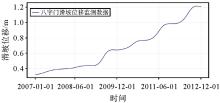
图13
八字门滑坡位移监测数据展示"
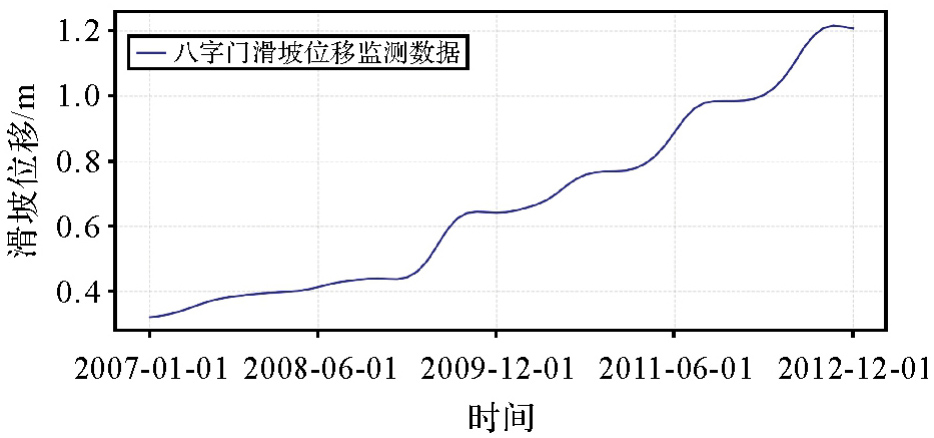
表4
不同分割方案下不同归一化方法在八字门数据集测试集上的测试RMSE"
| 模型 | 数据分割方案 | ||||||||
|---|---|---|---|---|---|---|---|---|---|
| (12,4,3) | (12,3,4) | (9,3,3) | (6,3,2) | (8,4,2) | (6,2,3) | (8,2,4) | (10,2,5) | (12,2,6) | |
| Bazimen_M-1 | 0.334 3 | 0.366 6 | 0.337 5 | 0.447 9 | 0.629 5 | 0.330 1 | 0.245 3 | 0.211 6 | 0.162 4 |
| Bazimen_L-1 | 0.136 1 | 0.103 6 | 0.132 3 | 0.224 8 | 0.187 2 | 0.196 6 | 0.135 1 | 0.1193 | 0.090 9 |
| Bazimen_G-1 | 0.136 4 | 0.154 0 | 0.152 5 | 0.202 3 | 0.142 8 | 0.202 3 | 0.169 9 | 0.171 7 | 0.096 9 |
| Bazimen_T-1 | 0.582 4 | 0.718 5 | 0.582 9 | 0.583 4 | 0.602 5 | 0.583 1 | 0.567 8 | 0.578 6 | 0.538 8 |
| Bazimen_M-2 | 0.485 3 | 0.329 4 | 0.416 5 | 0.372 7 | 0.392 | 0.315 3 | 0.226 2 | 0.301 2 | 0.369 7 |
| Bazimen_L-2 | 0.228 8 | 0.215 9 | 0.234 3 | 0.237 1 | 0.230 3 | 0.19 9 | 0.169 9 | 0.176 2 | 0.140 7 |
| Bazimen_G-2 | 0.136 2 | 0.111 3 | 0.140 1 | 0.129 2 | 0.168 4 | 0.116 7 | 0.118 8 | 0.099 9 | 0.116 4 |
| Bazimen_T-2 | 0.609 5 | 0.596 7 | 0.611 7 | 0.619 2 | 0.605 9 | 0.625 7 | 0.608 2 | 0.605 8 | 0.578 3 |
| Bazimen_M-3 | 0.055 9 | 0.045 3 | 0.029 2 | 0.047 7 | 0.052 2 | 0.034 3 | 0.024 8 | 0.029 8 | 0.027 5 |
| Bazimen_L-3 | 0.074 4 | 0.044 6 | 0.040 5 | 0.047 7 | 0.074 2 | 0.034 2 | 0.025 7 | 0.029 9 | 0.032 7 |
| Bazimen_G-3 | 0.044 8 | 0.032 7 | 0.039 7 | 0.046 8 | 0.075 6 | 0.034 8 | 0.021 4 | 0.029 8 | 0.027 2 |
| Bazimen_T-3 | 0.058 2 | 0.046 2 | 0.0650 | 0.047 8 | 0.069 1 | 0.034 2 | 0.026 4 | 0.030 1 | 0.027 0 |
表5
Non-Stationary Transformer模型在HF05、HF09数据集测试集上的测试结果"
| 数据集站点 | 模型 | RMSE/m | MAE/m | R2 |
|---|---|---|---|---|
| HF05 | M-3 | 0.007 | 0.004 | 0.996 |
| L-3 | 0.008 | 0.004 | 0.997 | |
| G-3 | 0.007 | 0.004 | 0.997 | |
| T-3 | 0.008 | 0.005 | 0.996 | |
| Non-Stationary Transformer | 0.007 73 | 0.005 33 | 0.996 92 | |
| HF09 | M-3 | 0.025 | 0.018 | 0.978 |
| L-3 | 0.019 | 0.011 | 0.975 | |
| G-3 | 0.019 | 0.011 | 0.975 | |
| T-3 | 0.042 | 0.033 | 0.974 | |
| Non-Stationary Transformer | 0.022 42 | 0.014 9 | 0.970 93 |
| [1] | 陈宁生, 吴铭洋, 李安辉, 等. 云南镇雄“1·22”山体滑坡灾害调查[J]. 山地学报, 2024, 42(3): 422-430. |
| CHEN Ningsheng, WU Mingyang, LI Anhui, et al. Field survey of the Zhengxiong landslide on January 22, 2024 in Yunnan province, China[J]. Mountain Research, 2024, 42(3): 422-430. | |
| [2] |
白正伟, 张勤, 黄观文, 等. “轻终端+行业云”的实时北斗滑坡监测技术[J]. 测绘学报, 2019, 48(11): 1424-1429. DOI: .
doi: 10.11947/j.AGCS.2019.20190167 |
|
BAI Zhengwei, ZHANG Qin, HUANG Guanwen, et al. Real-time BeiDou landslide monitoring technology of “light terminal plus industry cloud”[J]. Acta Geodaetica et Cartographica Sinica, 2019, 48(11): 1424-1429. DOI: .
doi: 10.11947/j.AGCS.2019.20190167 |
|
| [3] |
王晨辉, 赵贻玖, 郭伟, 等. 滑坡位移EEMD-SVR预测模型[J]. 测绘学报, 2022, 51(10): 2196-2204. DOI: .
doi: 10.11947/j.AGCS.2022.20220291 |
|
WANG Chenhui, ZHAO Yijiu, GUO Wei, et al. Displacement prediction model of landslide based on ensemble empirical mode decomposition and support vector regression[J]. Acta Geodaetica et Cartographica Sinica, 2022, 51(10): 2196-2204. DOI: .
doi: 10.11947/j.AGCS.2022.20220291 |
|
| [4] | 张振坤, 张冬梅, 李江, 等. 基于多头自注意力机制的LSTM-MH-SA滑坡位移预测模型研究[J]. 岩土力学, 2022, 43(S2): 477-486, 507. |
| ZHANG Zhenkun, ZHANG Dongmei, LI Jiang, et al. Study on LSTM-MH-SA landslide displacement prediction model based on multi-head self-attention mechanism[J]. Rock and Soil Mechanics, 2022, 43(S2): 477-486, 507. | |
| [5] | MA Siyuan, SHAO Xiaoyi, XU Chong. Landslide susceptibility mapping in terms of the slope-unit or raster-unit, which is better?[J]. Journal of Earth Science, 2023, 34(2): 386-397. |
| [6] | LONG Yujie, LI Weile, HUANG Runqiu, et al. A comparative study of supervised classification methods for investigating landslide evolution in the Mianyuan River Basin, China[J]. Journal of Earth Science, 2023, 34(2): 316-329. |
| [7] | 唐菲菲, 唐天俊, 朱洪洲, 等. 结合注意力机制和Bi-LSTM的降雨型滑坡位移预测[J]. 测绘通报, 2022(9): 74-79, 104. |
| TANG Feifei, TANG Tianjun, ZHU Hongzhou, et al. Rainfall landslide deformation prediction based on attention mechanism and Bi-LSTM[J]. Bulletin of Surveying and Mapping, 2022(9): 74-79, 104. | |
| [8] | HUANG Da, HE Jun, SONG Yixiang, et al. Displacement prediction of the muyubao landslide based on a GPS time-series analysis and temporal convolutional network model[J]. Remote Sensing, 2022, 14(11): 2656. |
| [9] | 杨背背, 殷坤龙, 杜娟. 基于时间序列与长短时记忆网络的滑坡位移动态预测模型[J]. 岩石力学与工程学报, 2018, 37(10): 2334-2343. |
| YANG Beibei, YIN Kunlong, DU Juan. A model for predicting landslide displacement based on time series and long and short term memory neural network[J]. Chinese Journal of Rock Mechanics and Engineering, 2018, 37(10): 2334-2343. | |
| [10] | 张泰丽, 吴廷尧, 王鲁琦, 等. 基于Box-Jenkins随机模型的滑坡稳定性预测模型[J]. 地球科学, 2023, 48(5): 1989-1999. |
| ZHANG Taili, WU Tingyao, WANG Luqi, et al. Landslide stability prediction model based on Box-Jenkins stochastic model[J]. Earth Science, 2023, 48(5): 1989-1999. | |
| [11] | 蒋平. 基于回归神经网络的滑坡位移时间序列预测研究[D]. 武汉: 华中科技大学, 2017. |
| JIANG Ping. Research on prediction of landslide displacement time series based on recurrent neural network[D]. Wuhan: Huazhong University of Science and Technology, 2017. | |
| [12] | 谭龙, 陈冠, 曾润强, 等. 人工神经网络在滑坡敏感性评价中的应用[J]. 兰州大学学报(自然科学版), 2014, 50(1): 15-20. |
| TAN Long, CHEN Guan, ZENG Runqiang, et al. Application of artificial neural network in landslide susceptibility assessment[J]. Journal of Lanzhou University (Natural Sciences), 2014, 50(1): 15-20. | |
| [13] | KUMAR P, PRIYANKA P, DHANYA J, et al. Analyzing the performance of univariate and multivariate machine learning models in soil movement prediction: a comparative study[J]. IEEE Access, 2023, 11: 62368-62381. |
| [14] | 杜岩, 宁利泽, 谢谟文, 等. 考虑时间滞后效应的库岸滑坡位移预测[J]. 武汉大学学报(信息科学版), 2024, 49(8): 1347-1355. |
| DU Yan, NING Lize, XIE Mowen, et al. A prediction model of landslide displacement in reservoir area considering time lag effect[J]. Geomatics and Information Science of Wuhan University, 2024, 49(8): 1347-1355. | |
| [15] |
高雅萍, 陈曦, 涂锐. 顾及降雨影响的动态优化时滞时序GM(1, 2)模型在滑坡位移预测中的应用[J]. 测绘学报, 2022, 51(10): 2183-2195. DOI: .
doi: 10.11947/j.AGCS.2022.20220290 |
|
GAO Yaping, CHEN Xi, TU Rui. Application of dynamic optimization time-delay GM(1, 2) model in landslide displacement prediction considering the influence of rainfall[J]. Acta Geodaetica et Cartographica Sinica, 2022, 51(10): 2183-2195. DOI: .
doi: 10.11947/j.AGCS.2022.20220290 |
|
| [16] | 刘艳辉, 方然可, 苏永超, 等. 基于机器学习的区域滑坡灾害预警模型研究[J]. 工程地质学报, 2021, 29(1): 116-124. |
| LIU Yanhui, FANG Ranke, SU Yongchao, et al. Machine learning based model for warning of regional landslide disasters[J]. Journal of Engineering Geology, 2021, 29(1): 116-124. | |
| [17] | MA Junwei, XIA Ding, GUO Haixiang, et al. Metaheuristic-based support vector regression for landslide displacement prediction: a comparative study[J]. Landslides, 2022, 19(10): 2489-2511. |
| [18] | XU Jiancong, JIANG Yu, YANG Chengbin. Landslide displacement prediction during the sliding process using XGBoost, SVR and RNNs[J]. Applied Sciences, 2022, 12(12): 6056. |
| [19] | YANG Beibei, YIN Kunlong, LACASSE S, et al. Time series analysis and long short-term memory neural network to predict landslide displacement[J]. Landslides, 2019, 16(4): 677-694. |
| [20] | ZHANG Yonggang, TANG Jun, CHENG Yunming, et al. Prediction of landslide displacement with dynamic features using intelligent approaches[J]. International Journal of Mining Science and Technology, 2022, 32(3): 539-549. |
| [21] | ZHOU Chao, YIN Kunlong, CAO Ying, et al. Displacement prediction of step-like landslide by applying a novel kernel extreme learning machine method[J]. Landslides, 2018, 15(11): 2211-2225. |
| [22] | MA Junwei, TANG Huiming, LIU Xiao, et al. Probabilistic forecasting of landslide displacement accounting for epistemic uncertainty: a case study in the Three Gorges Reservoir area, China[J]. Landslides, 2018, 15(6): 1145-1153. |
| [23] | MENG Shaoqiang, SHI Zhenming, PENG Ming, et al. Landslide displacement prediction with step-like curve based on convolutional neural network coupled with bi-directional gated recurrent unit optimized by attention mechanism[J]. Engineering Applications of Artificial Intelligence, 2024, 133: 108078. |
| [24] | QIAN Guoqi, TORDESILLAS A, ZHENG Hangfei. Landslide forecast by time series modeling and analysis of high-dimensional and non-stationary ground motion data[J]. Forecasting, 2021, 3(4): 850-867. |
| [25] |
HUANG Faming, YIN Kunlong, ZHANG Guirong, et al. Landslide displacement prediction using discrete wavelet transform and extreme learning machine based on chaos theory[J]. Environmental Earth Sciences, 2016, 75(20): 1376. DOI: .
doi: 10.1007/s12665-016-6133-0 |
| [26] |
LI Yuanyao, SUN Ronglin, YIN Kunlong, et al. Forecasting of landslide displacements using a chaos theory based wavelet analysis-Volterra filter model[J]. Scientific Reports, 2019, 9: 19853. DOI: .
doi: 10.1038/s41598-019-56405-y |
| [27] | SHEN Li, WEI Yuning, WANG Yangzhu. GBT: two-stage transformer framework for non-stationary time series forecasting[J]. Neural Networks, 2023, 165: 953-970. |
| [28] | KIM T, KIM J, TAE Y, et al. Reversible instance normalization for accurate time-series forecasting against distribution shift[C]//Proceedings of 2021 International Conference on Learning Representations. [S.l.]: IEEE, 2021. |
| [29] | LIU Yong, WU Haixu, WANG Jianmin, et al. Non-stationary transformers: exploring the stationarity in time series forecasting[J]. Advances in Neural Information Processing Systems, 2022, 35: 9881-9893. |
| [30] | DU Yuntao, WANG Jindong, FENG Wenjie, et al. AdaRNN: adaptive learning and forecasting of time series[C]//Proceedings of the 30th ACM International Conference on Information & Knowledge Management. Queensland: ACM Press, 2021: 402-411. |
| [31] | KOTSIANTIS S B, KANELLOPOULOS D, PINTELAS P E. Data preprocessing for supervised leaning[J]. International journal of computer science, 2006, 1(2): 111-117. |
| [32] | 李国栋, 沈桂莹, 李珊珊, 等. 基于LS-SVM的侧堰泄流能力预测模型[J]. 应用基础与工程科学学报, 2023, 31(4): 843-851. |
| LI Guodong, SHEN Guiying, LI Shanshan, et al. Prediction model of side weir discharge capacity based on LS-SVM[J]. Journal of Basic Science and Engineering, 2023, 31(4): 843-851. | |
| [33] |
张勤, 白正伟, 黄观文, 等. GNSS滑坡监测预警技术进展[J]. 测绘学报, 2022, 51(10): 1985-2000. DOI: .
doi: 10.11947/j.AGCS.2022.20220299 |
|
ZHANG Qin, BAI Zhengwei, HUANG Guanwen, et al. Review of GNSS landslide monitoring and early warning[J]. Acta Geodaetica et Cartographica Sinica, 2022, 51(10): 1985-2000. DOI: .
doi: 10.11947/j.AGCS.2022.20220299 |
|
| [34] | MUNIR M, SIDDIQUI S A, DENGEL A, et al. DeepAnT: a deep learning approach for unsupervised anomaly detection in time series[J]. IEEE Access, 2019, 7: 1991-2005. |
| [35] | WANG Yankun, TANG Huiming, HUANG Jinsong, et al. A comparative study of different machine learning methods for reservoir landslide displacement prediction[J]. Engineering Geology, 2022, 298: 106544. |
| [1] | 王惠琴, 李佳豪, 刘鑫, 何永强, 罗佳, 刘宾灿. 基于DnNet的探地雷达地下管线数据降噪方法[J]. 测绘学报, 2025, 54(8): 1464-1475. |
| [2] | 朱博, 李厚朴, 朱立波, 边少锋, 陈成. 基于Swarm卫星数据与三维勒让德多项式的中国区域地磁场模型[J]. 测绘学报, 2025, 54(3): 461-472. |
| [3] | 祝传广, 张继贤, 龙四春, 杨容华, 吴文豪, 张立亚. 分布式散射体相位估计奇异值分解法[J]. 测绘学报, 2024, 53(7): 1308-1320. |
| [4] | 布金伟, 余科根, 韩帅. 星载GNSS-R海浪有效波高反演模型构建[J]. 测绘学报, 2022, 51(9): 1920-1930. |
| [5] | 王晨辉, 赵贻玖, 郭伟, 孟庆佳, 李滨. 滑坡位移EEMD-SVR预测模型[J]. 测绘学报, 2022, 51(10): 2196-2204. |
| [6] | 高雅萍, 陈曦, 涂锐. 顾及降雨影响的动态优化时滞时序GM(1,2)模型在滑坡位移预测中的应用[J]. 测绘学报, 2022, 51(10): 2183-2195. |
| [7] | 张春森, 张萌萌, 郭丙轩. 影像信息驱动的三角网格模型优化方法[J]. 测绘学报, 2018, 47(7): 959-967. |
| [8] | 董杨, 范大昭, 纪松, 雷蓉. 主成分分析的匹配点对提纯方法[J]. 测绘学报, 2017, 46(2): 228-236. |
| [9] | 谢东海, 钟若飞, 吴俣, 符晗, 黄小川, 孙振兴. 球面全景影像相对定向与精度验证[J]. 测绘学报, 2017, 46(11): 1822-1829. |
| [10] | 姚宜斌, 熊朝晖, 张豹, 张良, 孔建. 顾及设计矩阵误差的AR模型新解法[J]. 测绘学报, 2017, 46(11): 1795-1801. |
| [11] | 王亚超, 张继贤, 黄国满, 卢丽君, 丁昊. SAR立体影像匹配的视差图融合方法[J]. 测绘学报, 2016, 45(7): 818-824. |
| [12] | 丁昊, 张继贤, 黄国满, 朱建军. 多基线机载合成孔径雷达影像匹配的SANCC法[J]. 测绘学报, 2015, 44(3): 274-281. |
| [13] | 罗楠 孙权森 耿蕾蕾 李辉 夏德深. 一种扩展SURF描述符及其在遥感图像配准中的应用[J]. , 2013, 42(3): 0-0. |
| [14] | 徐丽燕,陈允杰,邱军,史栋林,夏德深. 基于B样条的云图非刚性配准方法研究[J]. 测绘学报, 2011, 40(3): 326-331. |
| [15] | 杨化超,张书毕,张秋昭. 基于SIFT的宽基线立体影像最小二乘匹配方法[J]. 测绘学报, 2010, 39(2): 0-145. |
| 阅读次数 | ||||||
|
全文 |
|
|||||
|
摘要 |
|
|||||
