

Acta Geodaetica et Cartographica Sinica ›› 2026, Vol. 55 ›› Issue (2): 275-286.doi: 10.11947/j.AGCS.2026.20250512
• Geodesy and Navigation • Previous Articles Next Articles
Shuqiang XUE1( ), Jinlai GAO1(), Shuang ZHAO2, Baojin LI2, Yunhao FAN1, Bingqian LIU1
Received:2025-12-02
Revised:2026-01-23
Online:2026-03-13
Published:2026-03-13
Contact:
Jinlai GAO
E-mail:xuesq@casm.ac.cn;1073649120@qq.com
About author:XUE Shuqiang (1980—), male, PhD, researcher, majors in marine geodesy. E-mail: xuesq@casm.ac.cn
Supported by:CLC Number:
Shuqiang XUE, Jinlai GAO, Shuang ZHAO, Baojin LI, Yunhao FAN, Bingqian LIU. A static acoustic delay compensation positioning model[J]. Acta Geodaetica et Cartographica Sinica, 2026, 55(2): 275-286.
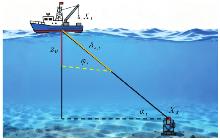
Fig. 1
Static acoustic delay compensation"
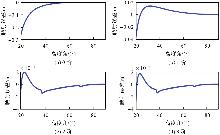
Fig. 2
Mapping errors of continued fractions of orders 0~3"
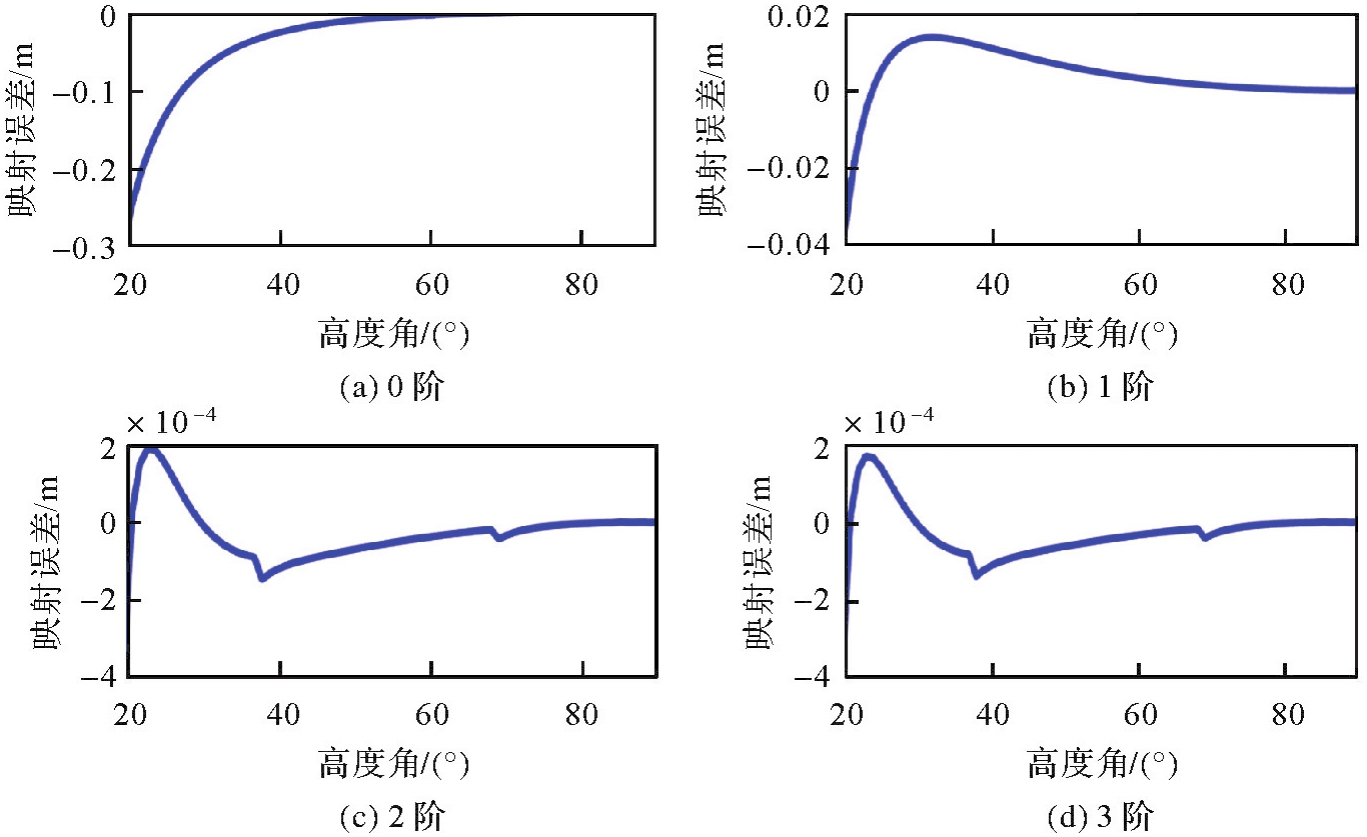
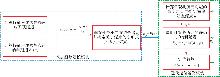
Fig. 3
Flowchart of the static sonar delay compensation positioning model"
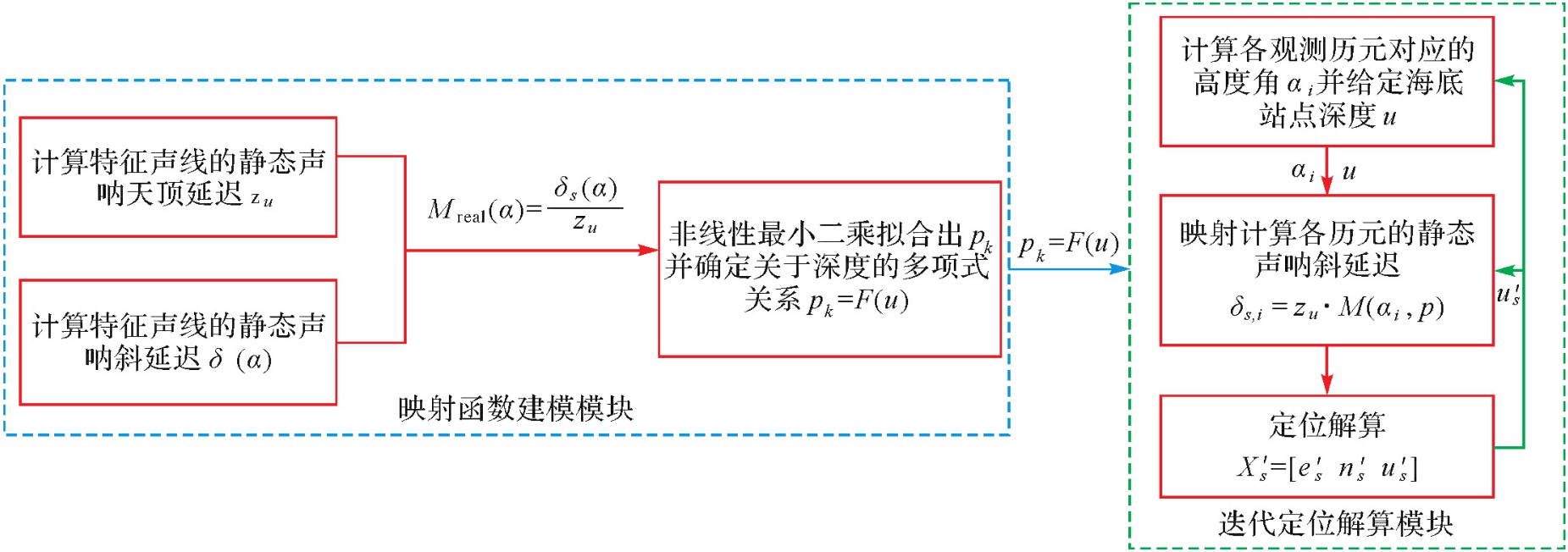
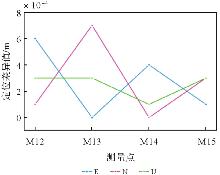
Fig. 4
The positioning differences between the two methods at each point"
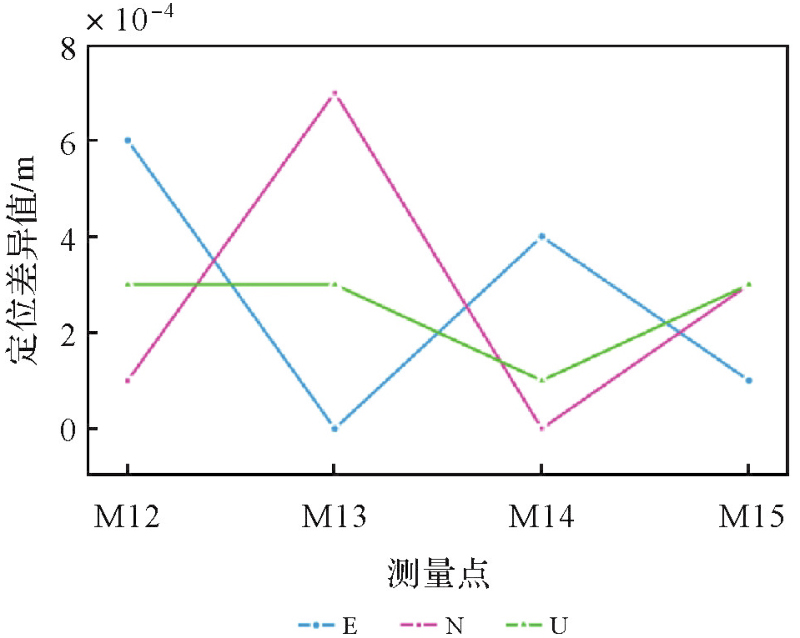
Fig. 5
Track and sound speed profile (dataset 1)"
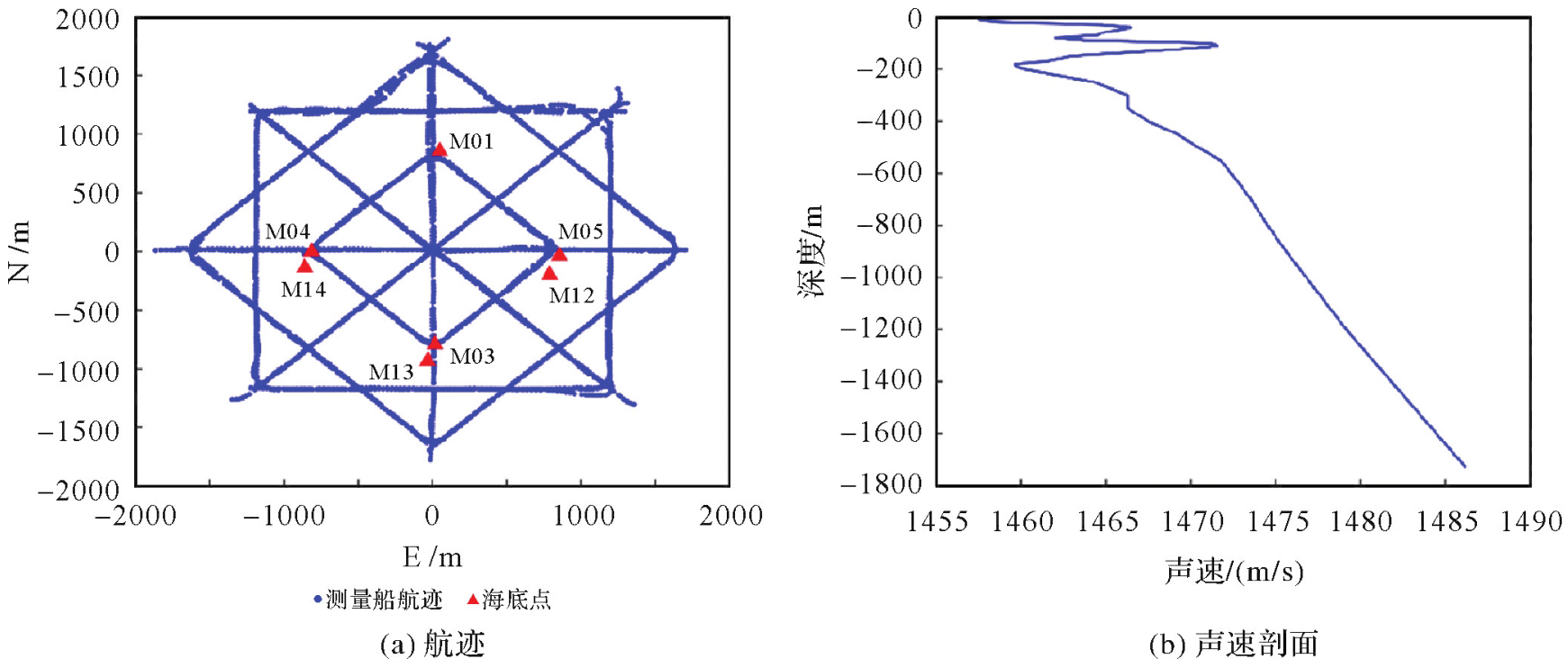
Fig. 6
Track and sound speed profile (dataset 2)"
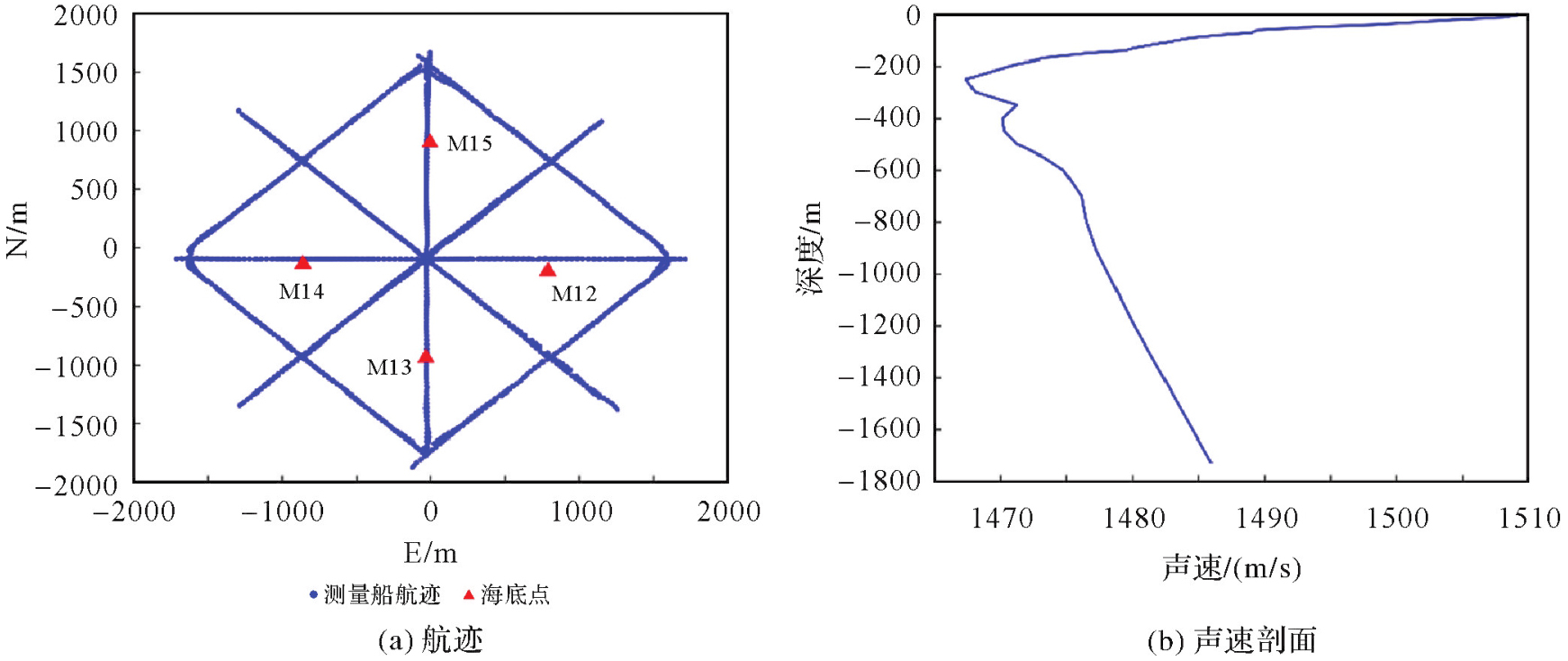
Fig. 7
Observed travel times for each transponder (dataset 1)"
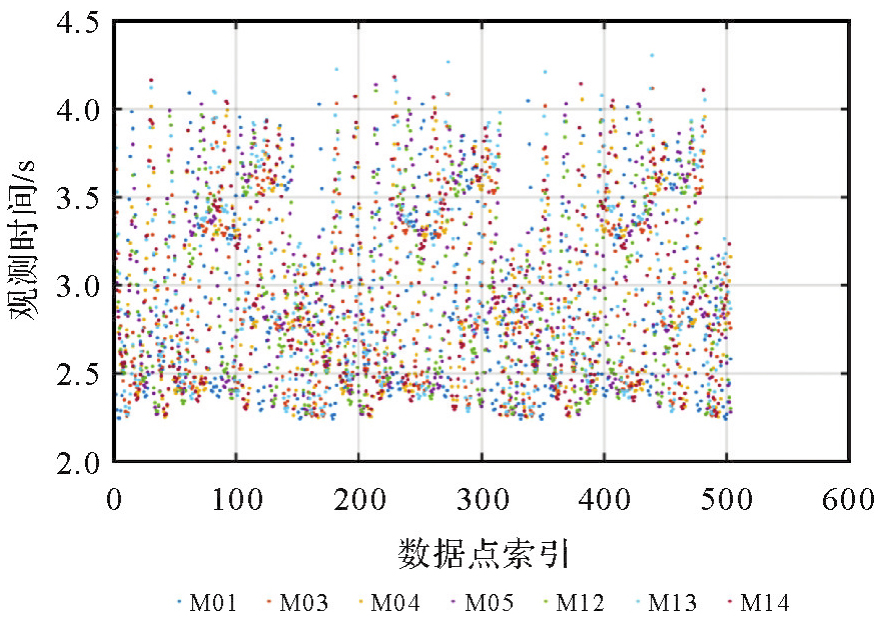
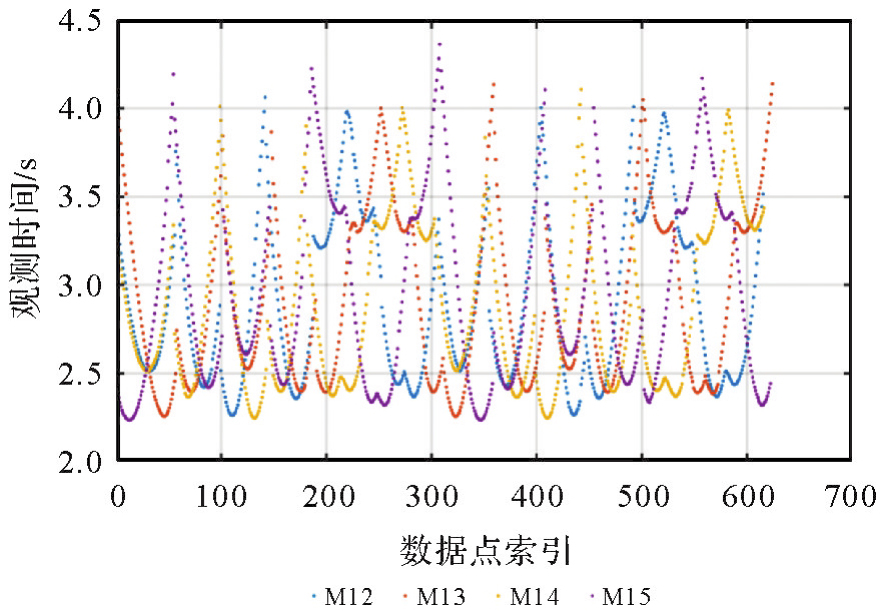
Fig. 8
Observed travel times for each transponder (dataset 2)"
Tab. 1
Positioning results of different methods (dataset 1)"
| 点位 | 算法 | E | N | U |
|---|---|---|---|---|
| M01 | 标准声线跟踪法 | 49.425 0 | 853.876 9 | -1 659.760 4 |
| 声线入射角推估法 | 49.425 0 | 853.876 8 | -1 659.760 4 | |
| 声线传播时间推估法 | 49.425 0 | 853.876 9 | -1 659.760 4 | |
| 静态天顶延迟补偿法 | 49.425 0 | 853.876 9 | -1 659.760 4 | |
| M03 | 标准声线跟踪法 | 16.575 3 | -792.193 6 | -1 673.885 8 |
| 声线入射角推估法 | 16.575 3 | -792.193 2 | -1 673.886 1 | |
| 声线传播时间推估法 | 16.575 3 | -792.193 3 | -1 673.886 1 | |
| 静态天顶延迟补偿法 | 16.575 3 | -792.193 3 | -1 673.886 2 | |
| M04 | 标准声线跟踪法 | -814.347 5 | -1.862 5 | -1 667.060 1 |
| 声线入射角推估法 | -814.347 4 | -1.862 5 | -1 667.060 3 | |
| 声线传播时间推估法 | -814.347 4 | -1.862 5 | -1 667.060 3 | |
| 静态天顶延迟补偿法 | -814.347 4 | -1.862 5 | -1 667.060 3 | |
| M05 | 标准声线跟踪法 | 855.385 6 | -34.426 2 | -1 678.097 2 |
| 声线入射角推估法 | 855.385 3 | -34.426 2 | -1 678.097 4 | |
| 声线传播时间推估法 | 855.385 3 | -34.426 2 | -1 678.097 4 | |
| 静态天顶延迟补偿法 | 855.385 3 | -34.426 2 | -1 678.097 5 | |
| M12 | 标准声线跟踪法 | 788.746 8 | -199.970 8 | -1 676.716 0 |
| 声线入射角推估法 | 788.746 5 | -199.970 7 | -1 676.716 2 | |
| 声线传播时间推估法 | 788.746 6 | -199.970 7 | -1 676.716 2 | |
| 静态天顶延迟补偿法 | 788.746 6 | -199.970 7 | -1 676.716 3 | |
| M13 | 标准声线跟踪法 | -31.177 8 | -933.264 8 | -1 675.404 8 |
| 声线入射角推估法 | -31.177 8 | -933.264 5 | -1 675.405 1 | |
| 声线传播时间推估法 | -31.177 8 | -933.264 5 | -1 675.405 1 | |
| 静态天顶延迟补偿法 | -31.177 9 | -933.264 5 | -1 675.405 1 | |
| M14 | 标准声线跟踪法 | -859.881 4 | -138.981 3 | -1 668.389 9 |
| 声线入射角推估法 | -859.881 3 | -138.981 3 | -1 668.390 1 | |
| 声线传播时间推估法 | -859.881 3 | -138.981 3 | -1 668.390 1 | |
| 静态天顶延迟补偿法 | -859.881 3 | -138.981 3 | -1 668.390 1 |
Tab. 2
Positioning results of different methods (dataset 2)"
| 点位 | 算法 | E | N | U |
|---|---|---|---|---|
| M12 | 标准声线跟踪法 | 788.289 0 | -199.529 7 | -1 677.361 6 |
| 声线入射角推估法 | 788.288 6 | -199.529 6 | -1 677.362 0 | |
| 声线传播时间推估法 | 788.288 6 | -199.529 6 | -1 677.362 0 | |
| 静态天顶延迟补偿法 | 788.288 5 | -199.529 6 | -1 677.361 9 | |
| M13 | 标准声线跟踪法 | -31.792 3 | -932.981 2 | -1 676.212 9 |
| 声线入射角推估法 | -31.792 3 | -932.980 7 | -1 676.213 3 | |
| 声线传播时间推估法 | -31.792 3 | -932.980 7 | -1 676.213 3 | |
| 静态天顶延迟补偿法 | -31.792 3 | -932.980 6 | -1 676.213 2 | |
| M14 | 标准声线跟踪法 | -860.668 1 | -138.568 7 | -1 669.111 0 |
| 声线入射角推估法 | -860.667 7 | -138.568 7 | -1 669.111 3 | |
| 声线传播时间推估法 | -860.667 8 | -138.568 7 | -1 669.111 3 | |
| 静态天顶延迟补偿法 | -860.667 7 | -138.568 7 | -1 669.111 2 | |
| M15 | 标准声线跟踪法 | -4.581 7 | 898.430 1 | -1 660.459 1 |
| 声线入射角推估法 | -4.581 7 | 898.429 7 | -1 660.459 4 | |
| 声线传播时间推估法 | -4.581 7 | 898.429 7 | -1 660.459 4 | |
| 静态天顶延迟补偿法 | -4.581 8 | 898.429 7 | -1 660.459 4 |
Tab. 3
Unit weight RMS of different methods"
| 数据 | 标准声线跟踪法 | 声线入射角推估法 | 声线传播时间推估法 | 静态天顶延迟补偿法 |
|---|---|---|---|---|
| 数据1 | 0.760 428 | 0.760 426 | 0.760 428 | 0.760 435 |
| 数据2 | 0.328 908 | 0.328 894 | 0.328 905 | 0.328 871 |
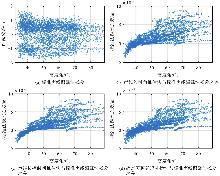
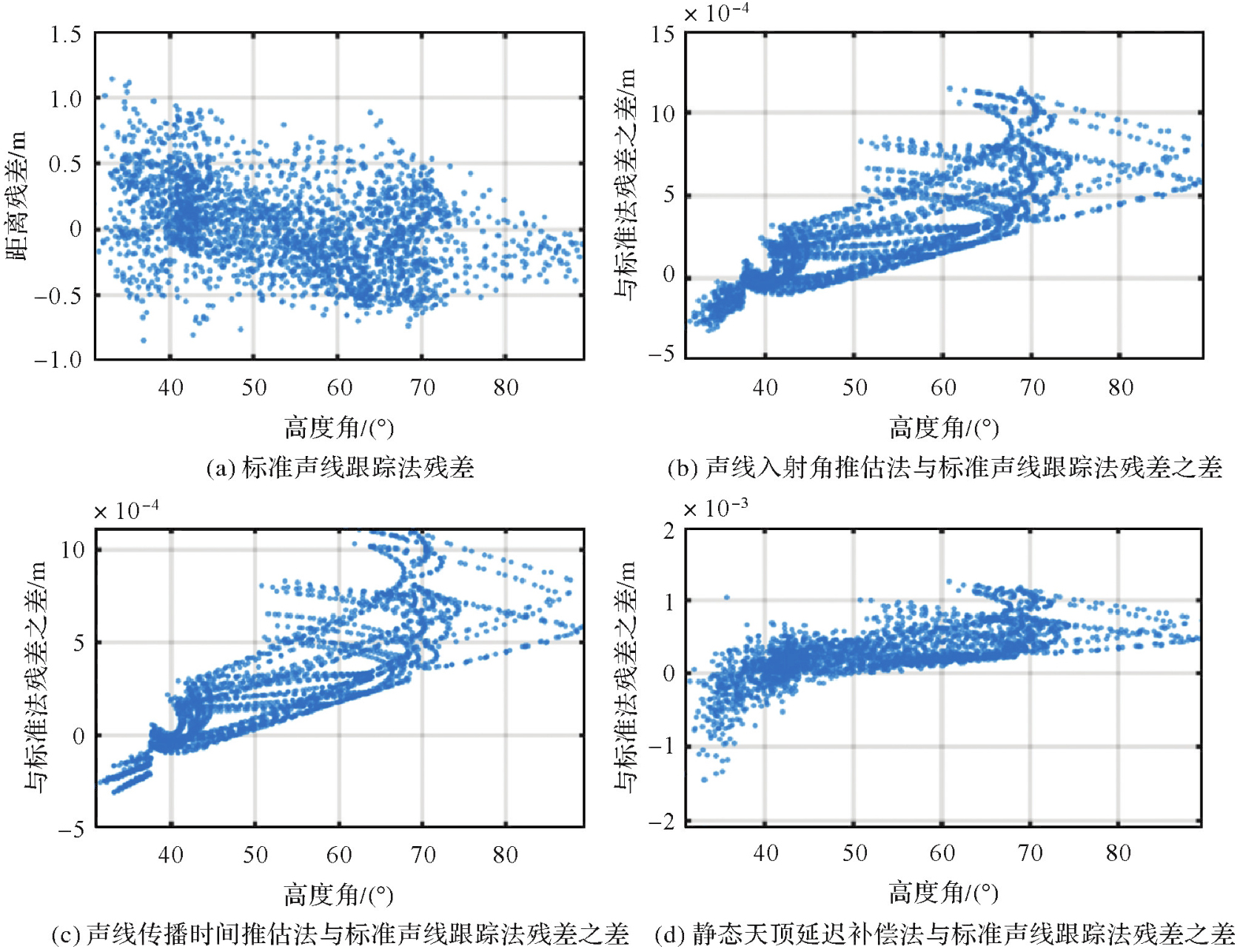
Fig. 9
Residuals of different methods versus elevation angle (dataset 1)"
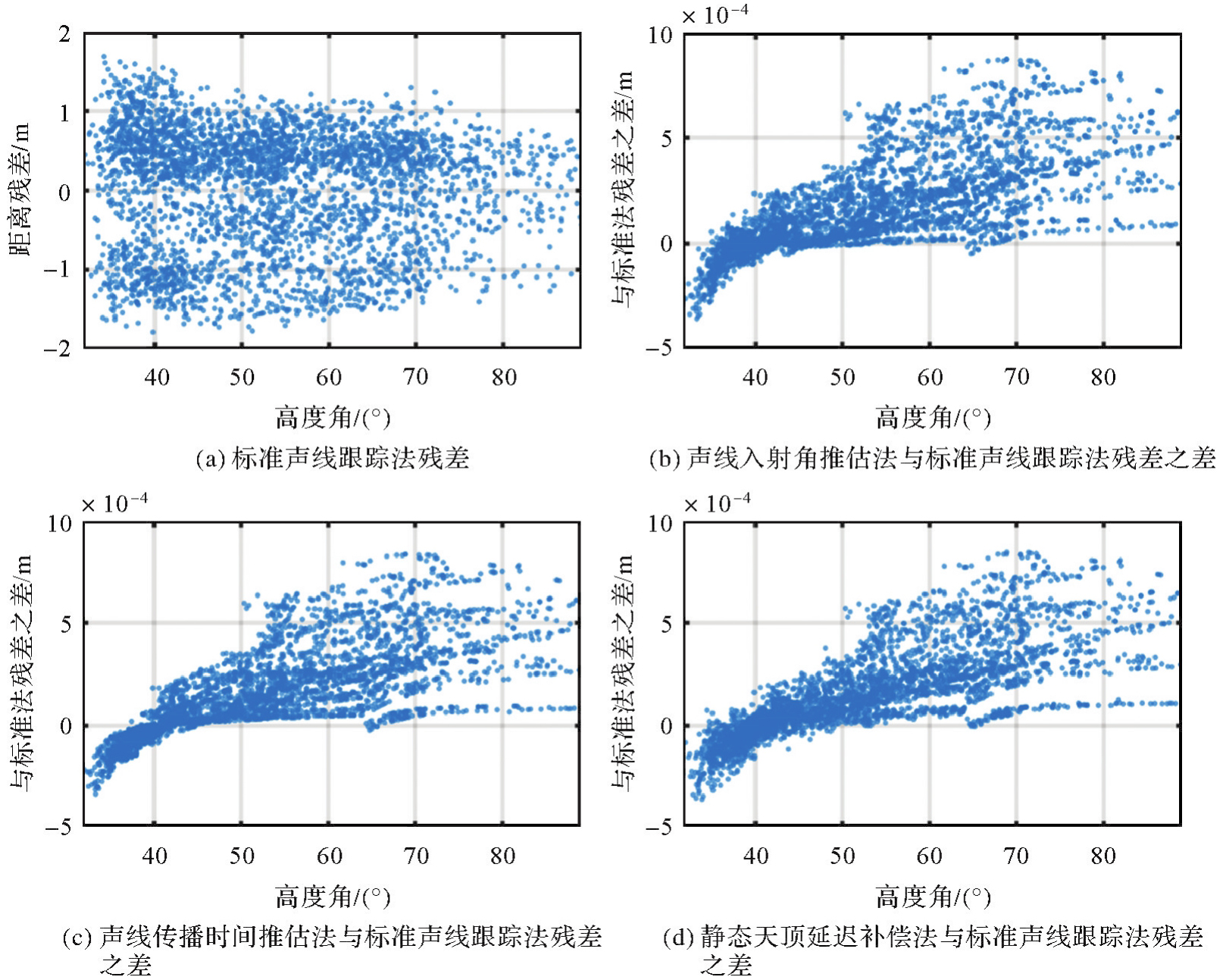
Fig. 10
Residuals of different methods versus elevation angle (dataset 2)"
Tab. 4
Computational efficiency of different methods"
| 数据 | 标准声线跟踪法 | 声线入射角推估法 | 声线传播时间推估法 | 静态天顶延迟补偿法 |
|---|---|---|---|---|
| 数据1 | 31.905 3 | 18.283 3 | 12.909 6 | 6.562 6 |
| 数据2 | 21.543 2 | 9.096 0 | 6.483 2 | 2.606 4 |
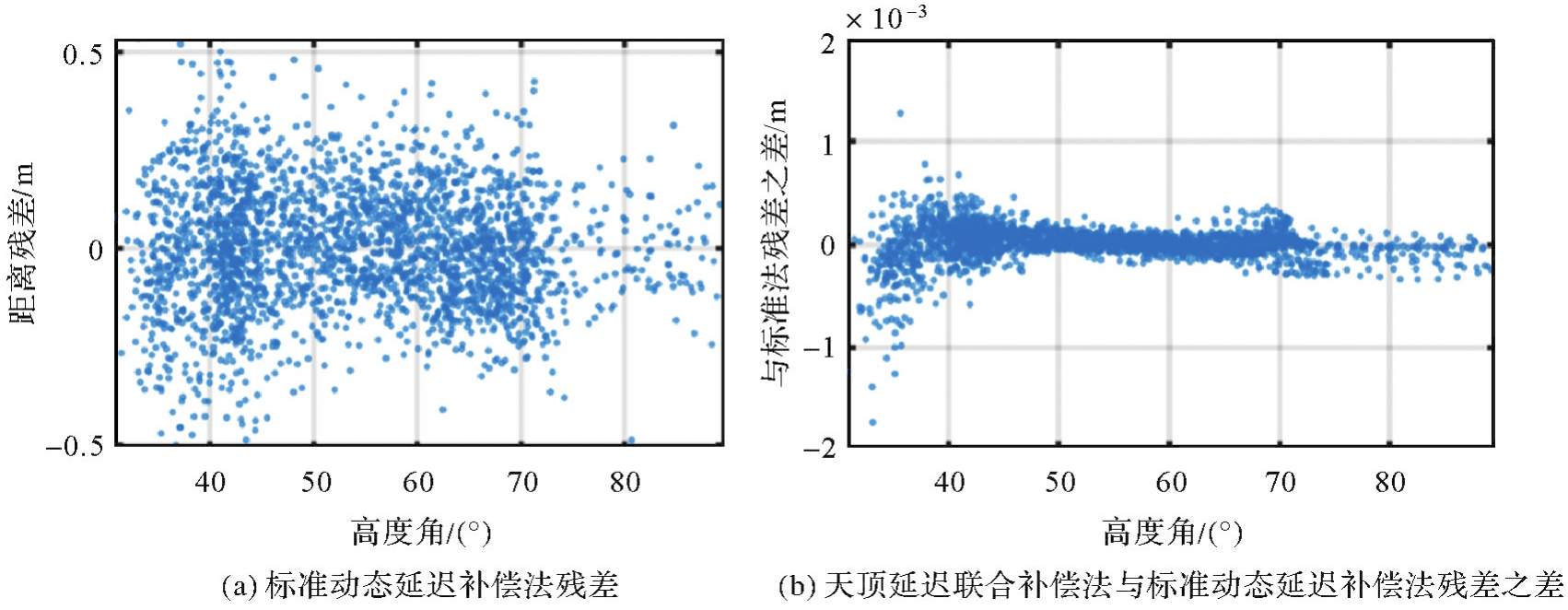
Fig. 11
Residuals versus elevation angle (dataset 1)"
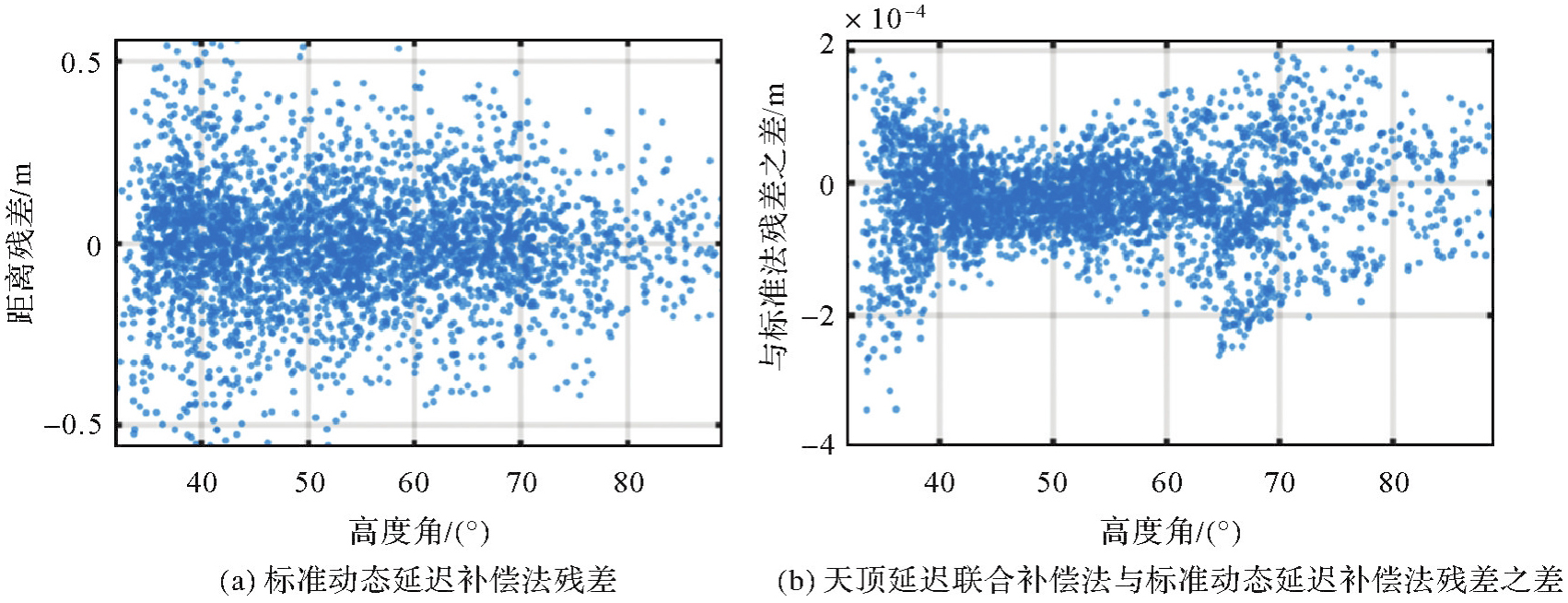
Fig. 12
Residuals versus elevation angle (dataset 2)"
Tab. 5
Positioning results of two methods (dataset 1)"
| 点位 | 算法 | E | N | U |
|---|---|---|---|---|
| M01 | 标准动态延迟补偿法 | 49.326 9 | 854.168 3 | -1 659.449 2 |
| 天顶延迟联合补偿法 | 49.326 7 | 854.168 5 | -1 659.449 1 | |
| M03 | 标准动态延迟补偿法 | 16.489 8 | -791.672 2 | -1 673.877 8 |
| 天顶延迟联合补偿法 | 16.489 6 | -791.672 0 | -1 673.877 9 | |
| M04 | 标准动态延迟补偿法 | -814.317 9 | -1.435 2 | -1 666.874 0 |
| 天顶延迟联合补偿法 | -814.318 1 | -1.435 1 | -1 666.873 9 | |
| M05 | 标准动态延迟补偿法 | 855.188 4 | -33.998 5 | -1 677.983 5 |
| 天顶延迟联合补偿法 | 855.188 2 | -33.998 4 | -1 677.983 6 | |
| M12 | 标准动态延迟补偿法 | 788.560 2 | -199.523 1 | -1 676.627 8 |
| 天顶延迟联合补偿法 | 788.560 0 | -199.523 0 | -1 676.627 8 | |
| M13 | 标准动态延迟补偿法 | -31.264 9 | -932.712 9 | -1675.437 6 |
| 天顶延迟联合补偿法 | -31.265 1 | -932.712 7 | -1 675.437 6 | |
| M14 | 标准动态延迟补偿法 | -859.849 4 | -138.528 0 | -1 668.231 3 |
| 天顶延迟联合补偿法 | -859.849 6 | -138.527 8 | -1 668.231 2 |
Tab. 6
Positioning results of two methods (dataset 2)"
| 点位 | 算法 | E | N | U |
|---|---|---|---|---|
| M12 | 标准动态延迟补偿法 | 787.720 1 | -199.343 6 | -1 676.948 4 |
| 天顶延迟联合补偿法 | 787.720 2 | -199.343 5 | -1 676.948 4 | |
| M13 | 标准动态延迟补偿法 | -32.016 3 | -932.472 6 | -1 675.770 1 |
| 天顶延迟联合补偿法 | -32.016 1 | -932.472 4 | -1 675.770 3 | |
| M14 | 标准动态延迟补偿法 | -860.530 1 | -138.398 9 | -1 668.527 8 |
| 天顶延迟联合补偿法 | -860.530 0 | -138.398 7 | -1 668.527 9 | |
| M15 | 标准动态延迟补偿法 | -4.836 3 | 898.151 5 | -1 659.923 8 |
| 天顶延迟联合补偿法 | -4.826 1 | 898.151 8 | -1 659.923 8 |
Tab. 7
Unit weight RMS of two methods"
| 数据 | 标准动态延迟补偿法 | 天顶延迟联合补偿法 |
|---|---|---|
| 数据1 | 0.166 707 | 0.166 707 |
| 数据2 | 0.154 763 | 0.154 755 |
| [1] |
杨元喜, 徐天河, 薛树强. 我国海洋大地测量基准与海洋导航技术研究进展与展望[J]. 测绘学报, 2017, 46(1): 1-8. DOI: .
doi: 10.11947/j.AGCS.2017.20160519 |
|
YANG Yuanxi, XU Tianhe, XUE Shuqiang. Progresses and prospects in developing marine geodetic datum and marine navigation of China[J]. Acta Geodaetica et Cartographica Sinica, 2017, 46(1): 1-8. DOI: .
doi: 10.11947/j.AGCS.2017.20160519 |
|
| [2] | 陈冠旭, 刘杨, 李梦昊, 等. GNSS-声学海底定位的声速误差处理方法综述[J]. 武汉大学学报(信息科学版), 2022, 47(9): 1349-1363. |
| CHEN Guanxu, LIU Yang, LI Menghao, et al. Review on the processing methods of sound speed errors in GNSS-acoustic seafloor positioning[J]. Geomatics and Information Science of Wuhan University, 2022, 47(9): 1349-1363. | |
| [3] | 孙大军, 郑翠娥, 张居成, 等. 水声定位导航技术的发展与展望[J]. 中国科学院院刊, 2019, 34(3): 331-338. |
| SUN Dajun, ZHENG Cui'e, ZHANG Jucheng, et al. Development and prospect for underwater acoustic positioning and navigation technology[J]. Bulletin of the Chinese Academy of Sciences, 2019, 34(3): 331-338. | |
| [4] | 李景森, 薛树强, 肖圳, 等. GNSS/A组合观测臂长改正不确定度评估[J]. 武汉大学学报(信息科学版), 2025, 50(3): 535-544. |
| LI Jingsen, XUE Shuqiang, XIAO Zhen, et al. Uncertainty evaluation on arm length correction of GNSS/A combined observation[J]. Geomatics and Information Science of Wuhan University, 2025, 50(3): 535-544. | |
| [5] |
闫凤池, 王振杰, 赵爽, 等. 顾及双程声径的常梯度声线跟踪水下定位算法[J]. 测绘学报, 2022, 51(1): 31-40. DOI: .
doi: 10.11947/j.AGCS.2022.20210234 |
|
YAN Fengchi, WANG Zhenjie, ZHAO Shuang, et al. A layered constant gradient acoustic ray tracing underwater positioning algorithm considering round-trip acoustic path[J]. Acta Geodaetica et Cartographica Sinica, 2022, 51(1): 31-40. DOI: .
doi: 10.11947/j.AGCS.2022.20210234 |
|
| [6] |
辛明真, 阳凡林, 薛树强, 等. 顾及波束入射角的常梯度声线跟踪水下定位算法[J]. 测绘学报, 2020, 49(12): 1535-1542. DOI: .
doi: 10.11947/j.AGCS.2020.20190518 |
|
XIN Mingzhen, YANG Fanlin, XUE Shuqiang, et al. A constant gradient sound ray tracing underwater positioning algorithm considering incident beam angle[J]. Acta Geodaetica et Cartographica Sinica, 2020, 49(12): 1535-1542. DOI: .
doi: 10.11947/j.AGCS.2020.20190518 |
|
| [7] | 李景森, 薛树强, 徐莹, 等. 声速剖面测量误差对水下定位的影响[J]. 哈尔滨工程大学学报, 2023, 44(11): 2062-2070. |
| LI Jingsen, XUE Shuqiang, XU Ying, et al. Effects of sound speed profile measurement error on underwater positioning[J]. Journal of Harbin Engineering University, 2023, 44(11): 2062-2070. | |
| [8] |
周杰, 薛树强, 肖圳, 等. 海洋声速场水平梯度对海底大地测量定位的影响[J]. 测绘学报, 2024, 53(12): 2328-2337. DOI: .
doi: 10.11947/j.AGCS.2024.20230551 |
|
ZHOU Jie, XUE Shuqiang, XIAO Zhen, et al. Impact of the horizontal gradient of sound speed on seafloor geodetic positioning[J]. Acta Geodaetica et Cartographica Sinica, 2024, 53(12): 2328-2337. DOI: .
doi: 10.11947/j.AGCS.2024.20230551 |
|
| [9] | 李保金, 薛树强, 肖圳, 等. 附加先验声速结构约束的GNSS-A观测反演声速剖面[J/OL]. 武汉大学学报(信息科学版), 1-14 [2025-11-29]. https://doi.org/10.13203/j.whugis20240005. |
| LI Baojin, XUE Shuqiang, XIAO Zhen, et al. Inversion of sound speed profile using GNSS-A observations with prior sound speed structure constraint[J]. Geomatics and Information Science of Wuhan University, 1-14 [2025-11-29]. https://doi.org/10.13203/j.whugis20240005. | |
| [10] | 沈远海, 马远良, 屠庆平, 等. 浅水声速剖面的反演方法与实验验证[J]. 西北工业大学学报, 2000, 18(2): 212-215. |
| SHEN Yuanhai, MA Yuanliang, TU Qingping, et al. Inversion of sound speed profile for shallow-water environment with experimental verification[J]. Journal of Northwestern Polytechnical University, 2000, 18(2): 212-215. | |
| [11] | 贾雨晴, 苏林, 莫亚枭, 等. 浅海复杂环境下等效声速剖面的构建方法[J]. 应用声学, 2019, 38(4): 623-634. |
| JIA Yuqing, SU Lin, MO Yaxiao, et al. A method of constructing equivalent sound speed profile in complex shallow water[J]. Applied Acoustics, 2019, 38(4): 623-634. | |
| [12] |
朱冀星, 薛树强, 李保金, 等. GNSS-声呐观测反演双指数温度剖面[J]. 测绘学报, 2025, 54(2): 286-296. DOI: .
doi: 10.11947/j.AGCS.2025.20240065 |
|
ZHU Jixing, XUE Shuqiang, LI Baojin, et al. GNSS-acoustic inversion of double-exponential temperature profile[J]. Acta Geodaetica et Cartographica Sinica, 2025, 54(2): 286-296. DOI: .
doi: 10.11947/j.AGCS.2025.20240065 |
|
| [13] | 张盛秋, 杨元喜, 徐天河. 基于GNSS-A的海洋声速变化估计及其对定位的影响[J]. 地球物理学报, 2023, 66(3): 961-972. |
| ZHANG Shengqiu, YANG Yuanxi, XU Tianhe. Estimation of ocean sound velocity variation based on GNSS-A and its influence on positioning[J]. Chinese Journal of Geophysics, 2023, 66(3): 961-972. | |
| [14] |
赵爽, 王振杰, 聂志喜, 等. 顾及声速结构时域变化的海底基准站高精度定位方法[J]. 测绘学报, 2023, 52(1): 41-50. DOI: .
doi: 10.11947/j.AGCS.2023.20210326 |
|
ZHAO Shuang, WANG Zhenjie, NIE Zhixi, et al. Precise positioning method for seafloor geodetic stations based on the temporal variation of sound speed structure[J]. Acta Geodaetica et Cartographica Sinica, 2023, 52(1): 41-50. DOI: .
doi: 10.11947/j.AGCS.2023.20210326 |
|
| [15] | XUE Shuqiang, YANG Yuanxi, YANG Wenlong, et al. GNSS-A network solution with zenith acoustic delay estimation[J]. Marine Geodesy, 2024, 47(3): 237-268. |
| [16] |
赵爽, 王振杰, 刘慧敏. 顾及声线入射角的水下定位随机模型[J]. 测绘学报, 2018, 47(9): 1280-1289. DOI: .
doi: 10.11947/j.AGCS.2018.20170026 |
|
ZHAO Shuang, WANG Zhenjie, LIU Huimin. Investigation on underwater positioning stochastic model based on sound ray incidence angle[J]. Acta Geodaetica et Cartographica Sinica, 2018, 47(9): 1280-1289. DOI: .
doi: 10.11947/j.AGCS.2018.20170026 |
|
| [17] | 段中华, 刘新, 张慧莹, 等. 顾及行程时间的水下声学定位分段指数随机模型[J/OL]. 武汉大学学报(信息科学版), 2025: 1-17 [2025-11-29]. https://doi.org/10.13203/j.whugis20240437. |
| DUAN Zhonghua, LIU Xin, ZHANG Huiying, et al. Segmented exponential stochastic model for underwater acoustic positioning based on travel time[J]. Geomatics and Information Science of Wuhan University, 2025: 1-17 [2025-11-29]. https://doi.org/10.13203/j.whugis20240437. | |
| [18] | 刘以旭, 薛树强, 卢秀山, 等. 顾及声线高度角的水下定位随机模型优化[J]. 海洋测绘, 2021, 41(5): 21-25. |
| LIU Yixu, XUE Shuqiang, LU Xiushan, et al. Optimization on underwater positioning stochastic model based on sound ray elevation angle[J]. Hydrographic Surveying and Charting, 2021, 41(5): 21-25. | |
| [19] | 肖圳, 薛树强, 杨文龙, 等. 声线跟踪反问题的可解析性及数值计算[J]. 全球定位系统, 2025, 50(4): 3-11. |
| XIAO Zhen, XUE Shuqiang, YANG Wenlong, et al. Analytical solvability and numerical calculation of acoustic ray tracing inverse problems[J]. GNSS World of China, 2025, 50(4): 3-11. | |
| [20] | 樊曌, 刘晓东. 多项式拟合的自适应声线跟踪算法[J/OL]. 应用声学, 1-12 [2025-11-29]. https://link.cnki.net/urlid/11.2121.o4.20250328.1620.004. |
| FAN Zhao, LIU Xiaodong. Adaptive sound ray tracking algorithm based on polynomial fitting[J/OL]. Journal of Applied Acoustics, 1-12 [2025-11-29]. https://link.cnki.net/urlid/11.2121.o4.20250328.1620.004. | |
| [21] | 冯国君, 单志龙, 项婉. 基于最小方差的声线跟踪自适应分层算法[J]. 声学技术, 2020, 39(4): 511-516. |
| FENG Guojun, SHAN Zhilong, XIANG Wan. An adaptive stratification algorithm for acoustic ray tracking based on minimum variance[J]. Technical Acoustics, 2020, 39(4): 511-516. | |
| [22] | YANG Wenlong, XUE Shuqiang, LIU Yixu. P-order secant method for rapidly solving the ray inverse problem of underwater acoustic positioning[J]. Marine Geodesy, 2023, 46(1): 3-15. |
| [23] | YANG Wenlong, XUE Shuqiang, MA Yueyuan, et al. An ultra-efficient ray-tracing method based on a precomputed full-element ray grid for underwater acoustic positioning[J]. Measurement, 2026, 258: 119546. |
| [24] | 高金来, 薛树强, 肖圳, 等. 声线传播时间近似公式及适用条件[J]. 全球定位系统, 2025, 50(4): 12-19. |
| GAO Jinlai, XUE Shuqiang, XIAO Zhen, et al. Approximate formulas for acoustic ray-travel time and applicable conditions[J]. GNSS World of China, 2025, 50(4): 12-19. | |
| [25] | LUZUM B, PETIT G. The IERS Conventions (2010): reference systems and new models[J]. Proceedings of the International Astronomical Union, 2012, 10(H16): 227-228. |
| [26] | XUE Shuqiang, LI Baojin, XIAO Zhen, et al. Centimeter-level-precision seafloor geodetic positioning model with self-structured empirical sound speed profile[J]. Satellite Navigation, 2023, 4(1): 30. |
| [27] | DEL GROSSO V A. New equation for the speed of sound in natural waters (with comparisons to otherequations)[J]. The Journal of the Acoustical Society of America, 1974, 56(4): 1084-1091. |
| [28] |
章迪. GNSS对流层天顶延迟模型及映射函数研究[J]. 测绘学报, 2022, 51(9): 1984. DOI: .
doi: 10.11947/j.AGCS.2022.20210100 |
|
ZHANG Di. The study of the GNSS tropospheric zenith delay model and mapping function[J]. Acta Geodaetica et Cartographica Sinica, 2022, 51(9): 1984. DOI: .
doi: 10.11947/j.AGCS.2022.20210100 |
| [1] | CHEN Guanxu, GAO Kefu, ZHAO Jianhu, LIU Jingnan, LIU Yanxiong, LIU Yang, LI Menghao. The method of sound speed errors correction in GNSS-acoustic location service [J]. Acta Geodaetica et Cartographica Sinica, 2023, 52(4): 536-549. |
| [2] | YAN Fengchi, WANG Zhenjie, ZHAO Shuang, NIE Zhixi, SUN Zhen, LI Weijia. A layered constant gradient acoustic ray tracing underwater positioning algorithm considering round-trip acoustic path [J]. Acta Geodaetica et Cartographica Sinica, 2022, 51(1): 31-40. |
| [3] | XIN Mingzhen, YANG Fanlin, XUE Shuqiang, WANG Zhenjie, HAN Yunfeng. A constant gradient sound ray tracing underwater positioning algorithm considering incident beam angle [J]. Acta Geodaetica et Cartographica Sinica, 2020, 49(12): 1535-1542. |
| [4] | MAO Jian, CUI Tiejun, LI Xiaoli, CHEN Li, SUN Yanling, GAO Shuang, ZHANG Hui. A hight-accuracy method for tropospheric zenith delay error correction by fusing atmospheric numerical models [J]. Acta Geodaetica et Cartographica Sinica, 2019, 48(7): 862-870. |
| [5] | FAN Haopeng, SUN Zhongmiao, ZHANG Liping, LIU Xiaogang. A two-step estimation method of troposphere delay with consideration of mapping function errors [J]. Acta Geodaetica et Cartographica Sinica, 2019, 48(3): 286-294. |
| [6] | DONG Yang, FAN Dazhao, JI Song, LEI Rong. A Rapid Adaptive Reconstruction Method for Stereoscopic Images [J]. Acta Geodaetica et Cartographica Sinica, 2016, 45(10): 1241-1249. |
| Viewed | ||||||
|
Full text |
|
|||||
|
Abstract |
|
|||||
