

Acta Geodaetica et Cartographica Sinica ›› 2026, Vol. 55 ›› Issue (7): 1266-1277.doi: 10.11947/j.AGCS.2026.20260050
• Photogrammetry and Remote Sensing • Previous Articles
Jun Gong1( ), Jianjun Luo1, Shengnan Ke1, Shibin Li2, Weicong Chen2, Le Qin1, Shengjun Tang2()
Received:2026-02-02
Revised:2026-06-23
Published:2026-08-18
Contact:
Shengjun Tang
E-mail:gongjunbox@163.com;shengjuntang@szu.edu.cn
About author:Gong Jun (1978—), male, PhD, professor, majors in 3D city modeling. E-mail: gongjunbox@163.com
Supported by:CLC Number:
Jun Gong, Jianjun Luo, Shengnan Ke, Shibin Li, Weicong Chen, Le Qin, Shengjun Tang. An adaptive-pruning 3D Gaussian SLAM method for real-time high-fidelity indoor scene modeling[J]. Acta Geodaetica et Cartographica Sinica, 2026, 55(7): 1266-1277.
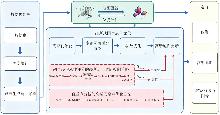
Fig. 1
Framework of the adaptive-pruning 3DGS-SLAM method for real-time, high-fidelity modeling"

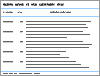
Tab. 1
TUM trajectory accuracy"
| 方法 | fr1/desk | fr2/xyz | fr3/Office | Avg |
|---|---|---|---|---|
| SplaTAM | 3.38 | 1.29 | 5.14 | 3.27 |
| Photo-SLAM | 1.52 | 0.34 | 1.23 | 1.03 |
| MonoGS-SLAM | 1.47 | 1.54 | 1.41 | 1.47 |
| GS-ICP SLAM | 2.54 | 1.78 | 3.32 | 2.55 |
| 本文方法 | 1.57 | 0.43 | 1.21 | 1.07 |
Tab. 2
Replica trajectory accuracy"
| 方法 | Room0 | Room1 | Room2 | Office0 | Office1 | Office2 | Office3 | Office4 | Avg |
|---|---|---|---|---|---|---|---|---|---|
| SplaTAM | 0.31 | 0.39 | 0.29 | 0.48 | 0.25 | 0.28 | 0.32 | 0.56 | 0.36 |
| Photo-SLAM | 0.59 | 0.51 | 0.32 | 0.45 | 0.46 | 0.48 | 0.61 | 0.87 | 0.54 |
| MonoGS SLAM | 0.48 | 0.34 | 0.29 | 0.46 | 0.49 | 0.22 | 0.46 | 2.43 | 0.64 |
| GS-ICP SLAM | 0.15 | 0.16 | 0.11 | 0.18 | 0.12 | 0.17 | 0.16 | 0.21 | 0.16 |
| 本文方法 | 0.14 | 0.16 | 0.11 | 0.18 | 0.13 | 0.17 | 0.16 | 0.21 | 0.16 |
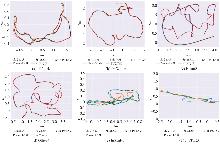
Fig. 2
Trajectory comparison of different methods on various datasets"

Tab. 3
Quantitative analysis results on TUM"
| 方法 | 指标 | fr1/desk | fr2/xyz | fr3/Office | Avg |
|---|---|---|---|---|---|
| SplaTAM | PSNR/dB↑ | 21.03 | 23.03 | 20.63 | 21.56 |
| SSIM↑ | 0.75 | 0.79 | 0.73 | 0.76 | |
| LPIPS↓ | 0.23 | 0.20 | 0.21 | 0.21 | |
| Photo-SLAM | PSNR/dB↑ | 19.45 | 21.45 | 22.63 | 21.18 |
| SSIM↑ | 0.70 | 0.73 | 0.76 | 0.73 | |
| LPIPS↓ | 0.25 | 0.16 | 0.15 | 0.19 | |
| MonoGS-SLAM | PSNR/dB↑ | 18.66 | 15.81 | 19.11 | 17.86 |
| SSIM↑ | 0.70 | 0.72 | 0.97 | 0.80 | |
| LPIPS↓ | 0.33 | 0.25 | 0.32 | 0.30 | |
| GS-ICP SLAM(限制帧率25帧/s) | PSNR/dB↑ | 17.42 | 18.43 | 20.01 | 18.62 |
| SSIM↑ | 0.64 | 0.68 | 0.73 | 0.68 | |
| LPIPS↓ | 0.37 | 0.30 | 0.27 | 0.31 | |
| 本文方法 | PSNR/dB↑ | 20.54 | 22.71 | 21.95 | 21.73 |
| SSIM↑ | 0.72 | 0.76 | 0.74 | 0.74 | |
| LPIPS↓ | 0.27 | 0.19 | 0.18 | 0.21 |
Tab. 4
Quantitative analysis results on Replica"
| 方法 | 指标 | Room0 | Room1 | Room2 | Office0 | Office1 | Office2 | Office3 | Office4 | Avg |
|---|---|---|---|---|---|---|---|---|---|---|
| SplaTAM | PSNR/dB↑ | 32.81 | 33.55 | 34.83 | 38.09 | 39.02 | 31.95 | 29.53 | 31.55 | 33.89 |
| SSIM↑ | 0.975 | 0.969 | 0.982 | 0.982 | 0.982 | 0.966 | 0.949 | 0.951 | 0.970 | |
| LPIPS↓ | 0.070 | 0.097 | 0.074 | 0.088 | 0.093 | 0.098 | 0.119 | 0.150 | 0.099 | |
| Photo-SLAM | PSNR/dB↑ | 33.38 | 34.10 | 36.32 | 38.72 | 39.31 | 34.22 | 34.10 | 34.82 | 35.62 |
| SSIM↑ | 0.979 | 0.977 | 0.985 | 0.985 | 0.987 | 0.962 | 0.963 | 0.981 | 0.977 | |
| LPIPS↓ | 0.097 | 0.115 | 0.101 | 0.089 | 0.110 | 0.152 | 0.119 | 0.131 | 0.114 | |
| MonoGS-SLAM | PSNR/dB↑ | 31.56 | 32.86 | 32.59 | 38.70 | 41.17 | 32.36 | 32.03 | 32.92 | 34.27 |
| SSIM↑ | 0.968 | 0.973 | 0.971 | 0.986 | 0.993 | 0.978 | 0.970 | 0.968 | 0.975 | |
| LPIPS↓ | 0.094 | 0.075 | 0.093 | 0.050 | 0.033 | 0.094 | 0.110 | 0.112 | 0.082 | |
| GS-ICP SLAM | PSNR/dB↑ | 35.43 | 37.46 | 38.33 | 43.00 | 43.32 | 36.90 | 36.94 | 38.71 | 38.76 |
| SSIM↑ | 0.962 | 0.969 | 0.973 | 0.985 | 0.984 | 0.973 | 0.969 | 0.972 | 0.973 | |
| LPIPS↓ | 0.049 | 0.047 | 0.050 | 0.027 | 0.031 | 0.044 | 0.042 | 0.046 | 0.042 | |
| 本文方法 | PSNR/dB↑ | 36.12 | 38.10 | 39.45 | 43.52 | 44.13 | 37.58 | 37.34 | 39.19 | 39.44 |
| SSIM↑ | 0.967 | 0.974 | 0.978 | 0.9870 | 0.987 | 0.977 | 0.972 | 0.975 | 0.977 | |
| LPIPS↓ | 0.042 | 0.040 | 0.041 | 0.022 | 0.021 | 0.037 | 0.037 | 0.040 | 0.034 |
Tab. 5
Quantitative analysis results on InSTaR"
| 方法 | 指标 | InSTaR0 | InSTaR1 | InSTaR2 | Avg |
|---|---|---|---|---|---|
| SplaTAM | PSNR/dB↑ | 19.69 | 21.54 | 19.82 | 20.35 |
| SSIM↑ | 0.70 | 0.72 | 0.76 | 0.73 | |
| LPIPS↓ | 0.37 | 0.29 | 0.33 | 0.33 | |
| Photo-SLAM | PSNR/dB↑ | 23.62 | 22.47 | 22.27 | 22.79 |
| SSIM↑ | 0.85 | 0.81 | 0.78 | 0.81 | |
| LPIPS↓ | 0.18 | 0.21 | 0.28 | 0.22 | |
| MonoGS-SLAM | PSNR/dB↑ | 20.04 | 19.21 | 18.23 | 19.16 |
| SSIM↑ | 0.78 | 0.76 | 0.72 | 0.75 | |
| LPIPS↓ | 0.42 | 0.25 | 0.52 | 0.40 | |
| GS-ICP SLAM | PSNR/dB↑ | 21.06 | 20.21 | 19.71 | 20.33 |
| SSIM↑ | 0.89 | 0.81 | 0.82 | 0.84 | |
| LPIPS↓ | 0.19 | 0.31 | 0.39 | 0.30 | |
| 本文方法 | PSNR↑ | 24.31 | 22.31 | 23.43 | 23.35 |
| SSIM↑ | 0.82 | 0.79 | 0.83 | 0.81 | |
| LPIPS↓ | 0.17 | 0.25 | 0.32 | 0.25 |
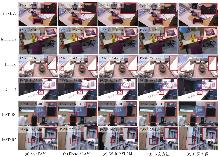
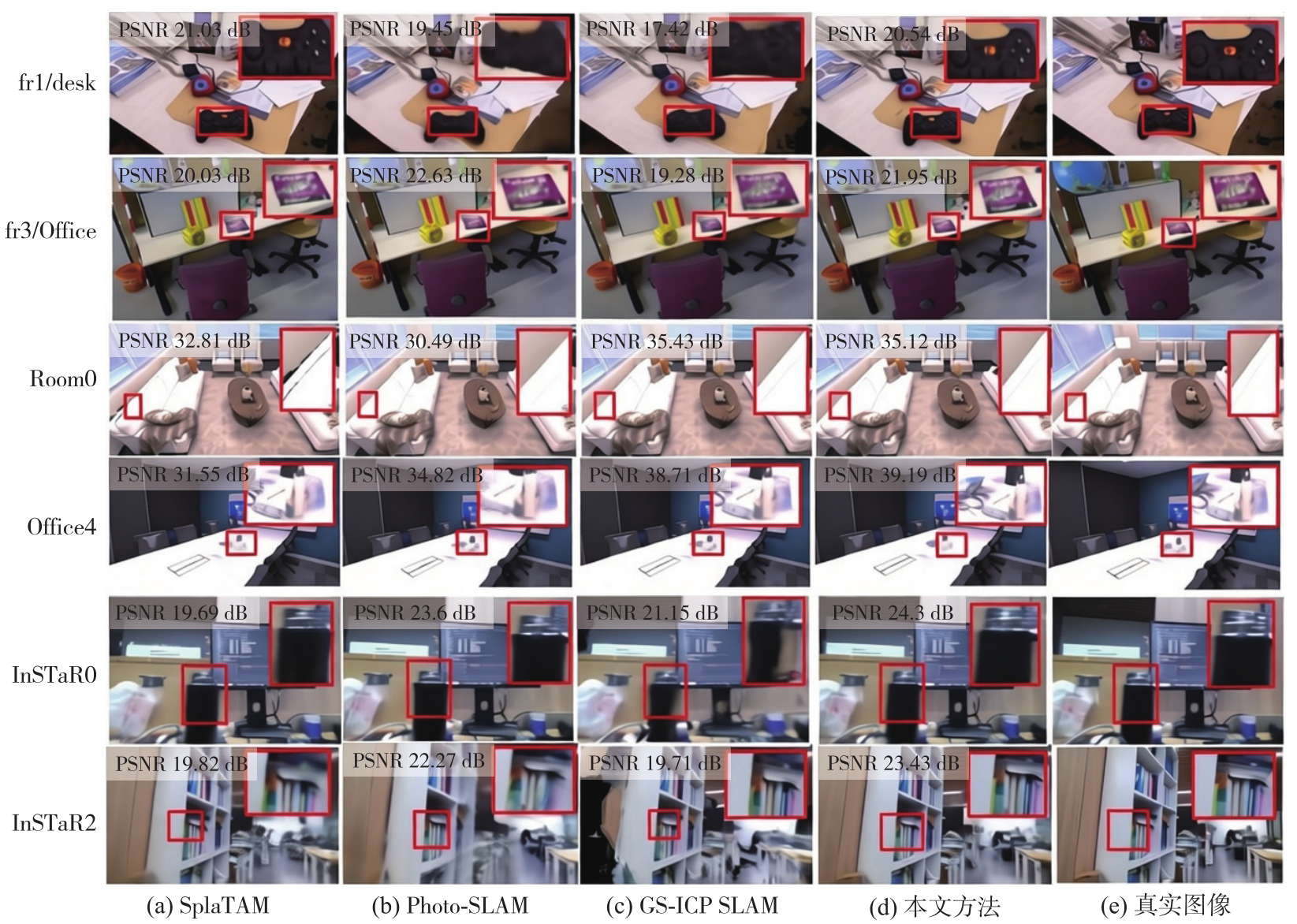
Fig. 3
Rendering results comparison of different methods"
Tab. 6
Runtime comparison of different methods"
| 方法 | Track/Frame/s↓ | Map/Frame/s↓ | Render FPS↑ |
|---|---|---|---|
| SplaTAM | 2.045 | 1.461 | 189.77 |
| MonoGS-SLAM | 1.433 | 1.764 | 339.68 |
| Photo-SLAM | 0.046 | - | 364.51 |
| GS-ICP SLAM | 0.040 | - | 354.62 |
| 本文方法 | 0.039 | - | 392.74 |
Tab. 7
Keyframe selection strategy"
| 关键帧选择策略 | PSNR/dB↑ | SSIM↑ | LPIPS↓ |
|---|---|---|---|
| 顺序选择 | 27.02 | 0.881 | 0.212 |
| 动态选择 | 27.35 | 0.884 | 0.132 |
| 随机选择 | 36.12 | 0.967 | 0.042 |
Tab. 8
Ablation study results"
| 致密化 | 剪枝 | PSNR/dB↑ | SSIM↑ | LPIPS↓ | Points↓ |
|---|---|---|---|---|---|
| × | × | 35.43 | 0.962 | 0.049 | 1 511 241 |
| × | √ | 31.26 | 0.925 | 0.149 | 161 370 |
| √ | × | 36.14 | 0.968 | 0.041 | 1 602 214 |
| √ | √ | 36.12 | 0.967 | 0.042 | 1 101 801 |
Tab. 9
Ablation results of multi-attribute scoring mechanism"
| 方法 | PSNR/dB↑ | SSIM↑ | LPIPS↓ | Points↓ |
|---|---|---|---|---|
| 随机剪枝 | 34.43 | 0.952 | 0.074 | 991 732 |
| 单属性评分 | 35.48 | 0.959 | 0.066 | 1 402 103 |
| 无可视性评分 | 35.97 | 0.966 | 0.043 | 1 216 370 |
| 无图像结构评分 | 35.82 | 0.966 | 0.055 | 1 202 214 |
| 本文方法 | 36.08 | 0.964 | 0.041 | 1 032 312 |
Tab. 10
Impact of pruning parameters on map reconstruction quality"
| λ取值 | PSNR/dB↑ | SSIM↑ | LPIPS↓ | Points↓ |
|---|---|---|---|---|
| 0 | 36.14 | 0.968 | 0.041 | 1 511 241 |
| 0.05 | 35.90 | 0.964 | 0.081 | 780 392 |
| 0.1 | 35.59 | 0.963 | 0.054 | 528 946 |
| 0.2 | 34.54 | 0.956 | 0.072 | 336 440 |
| 1.0 | 32.30 | 0.941 | 0.116 | 163 330 |
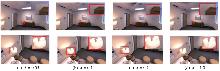
Fig. 4
Rendering results comparison of different pruning ratios"

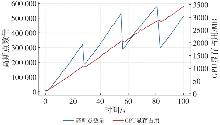
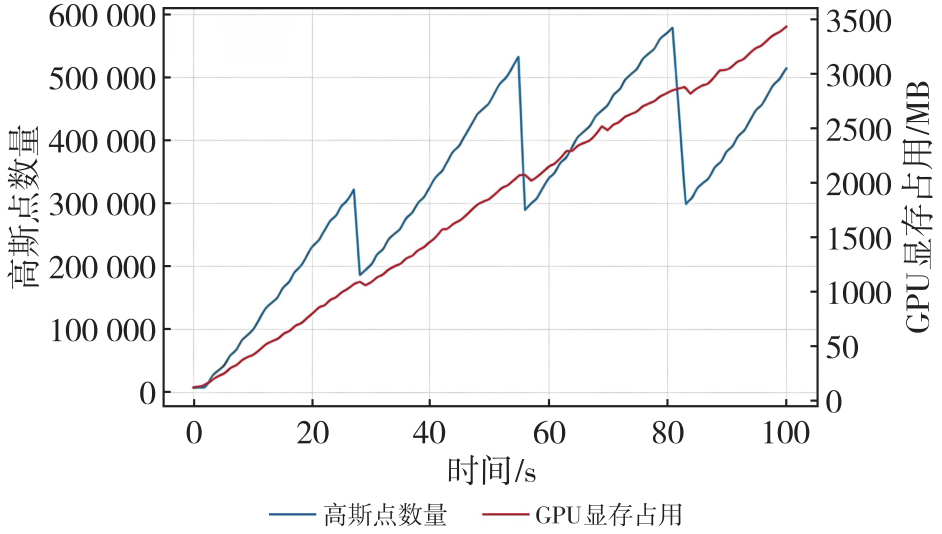
Fig. 5
Evolution of Gaussian point count and GPU memory usage"
Tab. 11
Adaptability analysis results under different typical scenes"
| 场景 | PSNR/dB↑ | SSIM↑ | LPIPS↓ | Points | 帧率/(帧/s)↑ |
|---|---|---|---|---|---|
| large_with_loop | 19.5 | 0.78 | 0.33 | 993 494 | 25.34 |
| large_no_loop | 19.28 | 0.73 | 0.38 | 536 032 | 24.21 |
| fr3/Office | 21.95 | 0.74 | 0.18 | 1 869 276 | 26.98 |
| [1] |
张继贤, 刘飞. 视觉SLAM环境感知技术现状与智能化测绘应用展望[J]. 测绘学报, 2023, 52(10): 1617-1630. DOI: .
doi: 10.11947/j.AGCS.2023.20220240 |
|
Zhang Jixian, Liu Fei. Review of visual SLAM environment perception technology and intelligent surveying and mapping application[J]. Acta Geodaetica et Cartographica Sinica, 2023, 52(10): 1617-1630. DOI: .
doi: 10.11947/j.AGCS.2023.20220240 |
|
| [2] | Mur-Artal R, Montiel J M M, Tardos J D. ORB-SLAM: a versatile and accurate monocular SLAM system[J]. IEEE transactions on robotics, 2015, 31(5): 1147-1163. |
| [3] | Newcombe R A, Fox D, Seitz S M. DynamicFusion: reconstruction and tracking of non-rigid scenes in real-time[C]//Proceedings of 2015 IEEE Conference on Computer Vision and Pattern Recognition. Boston: IEEE, 2015: 343-352. |
| [4] | 刘佳, 张增伟, 陈大鹏. 基于VSLAM的室内场景重建与虚实遮挡的边缘优化方法[J]. 计算机辅助设计与图形学学报, 2025, 37(5): 744-752. |
| Liu Jia, Zhang Zengwei, Chen Dapeng. The method of edge optimization for indoor scene reconstruction and virtual-real occlusion based on VSLAM[J]. Journal of Computer-Aided Design & Computer Graphics, 2025, 37(5): 744-752. | |
| [5] |
马威, 涂强, 潘建平, 等. 桥梁实景三维高斯辐射场建模[J]. 测绘学报, 2024, 53(9): 1694-1705. DOI: .
doi: 10.11947/j.AGCS.2024.20240071 |
|
Ma Wei, Tu Qiang, Pan Jianping, et al. 3D Gaussian radiation field modeling for real-scene bridges[J]. Acta Geodaetica et Cartographica Sinica, 2024, 53(9): 1694-1705. DOI: .
doi: 10.11947/j.AGCS.2024.20240071 |
|
| [6] | 谭臻, 牛中颜, 张津浦, 等. SLAM新机遇—高斯溅射技术[J]. 中国图象图形学报, 2025, 30(6): 1792-1807. |
| Tan Zhen, Niu Zhongyan, Zhang Jinpu, et al. New opportunities in SLAM—Gaussian splatting technology[J]. Journal of Image and Graphics, 2025, 30(6): 1792-1807. | |
| [7] | Yan Chi, Qu Delin, Xu Dan, et al. GS-SLAM: dense visual SLAM with 3D Gaussian splatting[C]//Proceedings of 2024 IEEE/CVF Conference on Computer Vision and Pattern Recognition. Seattle: IEEE, 2024: 19595-19604. |
| [8] | Keetha N, Karhade J, Jatavallabhula K M, et al. SplaTAM: splat, track & map 3D Gaussians for dense RGB-D SLAM[C]//Proceedings of 2024 IEEE/CVF Conference on Computer Vision and Pattern Recognition. Seattle: IEEE, 2024: 21357-21366. |
| [9] | Matsuki H, Murai R, Kelly P H J, et al. Gaussian splatting SLAM[C]//Proceedings of 2024 IEEE/CVF Conference on Computer Vision and Pattern Recognition. Seattle: IEEE, 2024: 18039-18048. |
| [10] | Ha S, Yeon J, Yu H. RGBD GS-ICP SLAM[C]//Proceedings of 2024 European Conference on Computer Vision. Cham: Springer Nature Switzerland, 2024: 180-197. |
| [11] | Huang Huajian, Li Longwei, Cheng Hui, et al. Photo-SLAM: real-time simultaneous localization and photorealistic mapping for monocular, stereo, and RGB-D cameras[C]//Proceedings of 2024 IEEE/CVF Conference on Computer Vision and Pattern Recognition. Seattle: IEEE, 2024: 21584-21593. |
| [12] | Liu Yang, Luo Chuanchen, Fan Lue, et al. CityGaussian: real-time high-quality large-scale scene rendering with Gaussians[C]//Proceedings of 2024 European Conference on Computer Vision. Cham: Springer Nature Switzerland, 2024: 265-282. |
| [13] | Kerbl B, Kopanas G, Leimkühler T, et al. 3D Gaussian splatting for real-time radiance field rendering[J]. ACM Transactions on Graphics, 2023, 42(4): 139:1-139:14. |
| [14] | Liu Shiyong, Tang Xiao, Li Zhihao, et al. OccluGaussian: occlusion-aware Gaussian splatting for large scene reconstruction and rendering[C]//Proceedings of 2025 IEEE/CVF International Conference on Computer Vision. Honolulu: IEEE, 2025: 26643-26652. |
| [15] | Deng Tianchen, Chen Yaohui, Yang Jianfei, et al. CGS-SLAM: compact 3D Gaussian splatting for dense visual SLAM[C]//Proceedings of 2025 IEEE/RSJ International Conference on Intelligent Robots and Systems. Hangzhou: IEEE, 2025: 1606-1613. |
| [16] | Zhao Jie, Zhu Yongjian, Zhao Ruodeng. Large-scale compact 3D Gaussian splatting SLAM[J]. Applied Optics, 2025, 64(31): 9185-9195. |
| [17] | Zhang Zhaoliang, Song Tianchen, Lee Y, et al. LP-3DGS: learning to prune 3D Gaussian splatting[J]. Advances in Neural Information Processing Systems, 2024, 37: 122434-122457. |
| [18] | Hanson A, Tu A, Singla V, et al. PUP 3D-GS: principled uncertainty pruning for 3D Gaussian splatting[C]//Proceedings of 2025 Computer Vision and Pattern Recognition Conference. Nashville: IEEE, 2025: 5949-5958. |
| [19] | 钱虞杰, 丁丹丹. 基于帧间自适应预测的动态点云压缩[J]. 中国图象图形学报, 2025, 30(11): 3535-3546. |
| Qian Yujie, Ding Dandan. Dynamic point cloud compression method based on inter frame adaptive prediction[J]. Journal of Image and Graphics, 2025, 30(11): 3535-3546. | |
| [20] | Mallick S S, Goel R, Kerbl B, et al. Taming 3DGS: high-quality radiance fields with limited resources[C]//Proceedings of 2024 SIGGRAPH Asia. Tokyo: ACM Press, 2024: 1-11. |
| [21] | Fan Zhiwen, Wang K, Wen Kairun, et al. LightGaussian: unbounded 3D Gaussian compression with 15x reduction and 200+FPS[J]. Advances in neural information processing systems, 2024, 37: 140138-140158. |
| [22] | Niedermayr S, Stumpfegger J, Westermann R. Compressed 3D Gaussian splatting for accelerated novel view synthesis[C]//Proceedings of 2024 IEEE/CVF Conference on Computer Vision and Pattern Recognition. Seattle: IEEE, 2024: 10349-10358. |
| [23] | Navaneet K L, Pourahmadi Meibodi K, Abbasi Koohpayegani S, et al. CompGS: smaller and faster Gaussian splatting with vector quantization[C]//Proceedings of 2024 European Conference on Computer Vision. Cham: Springer Nature Switzerland, 2024: 330-349. |
| [24] | Lee J C, Rho D, Sun Xiangyu, et al. Compact 3D Gaussian representation for radiance field[C]//Proceedings of 2024 IEEE/CVF Conference on Computer Vision and Pattern Recognition. Seattle: IEEE, 2024: 21719-21728. |
| [25] | Yan Ke, Wang Hui, Li Zhuxin, et al. A Large-scale 3D Gaussian reconstruction method for optimized adaptive density control in training resource scheduling[J]. Remote Sensing, 2025, 17(23): 3868. |
| [26] | Guo Xinli, Zhang Weidong, Liu Ruonan, et al. Motiongs: compact Gaussian splatting SLAM by motion filter[C]//Proceedings of 2024 International Conference on Robotics, Control and Automation Engineering. Wuhu: IEEE, 2024: 685-692. |
| [27] | Morgenstern W, Barthel F, Hilsmann A, et al. Compact 3D scene representation via self-organizing Gaussian grids[C]//Proceedings of 2024 European Conference on Computer Vision. Cham: Springer Nature Switzerland, 2024: 18-34. |
| [28] | Girish S, Gupta K, Shrivastava A. EAGLES: efficient accelerated 3D Gaussians with lightweight encodings[C]//Proceedings of 2024 European Conference on Computer Vision. Cham: Springer Nature Switzerland, 2024: 54-71. |
| [29] | Liu Yifei, Zhong Zhihang, Zhan Yifan, et al. MaskGaussian: adaptive 3D Gaussian representation from probabilistic masks[C]//Proceedings of 2025 Computer Vision and Pattern Recognition Conference. Nashville:. IEEE, 2025: 681-690. |
| [30] | Lu Tao, Yu Mulin, Xu Linning, et al. Scaffold-GS: structured 3D Gaussians for view-adaptive rendering[C]//Proceedings of 2024 IEEE/CVF Conference on Computer Vision and Pattern Recognition. Seattle: IEEE, 2024: 20654-20664. |
| [1] | Zhipeng CHEN, Shiwang LÜ, Xinyi WANG. Error simulation and accuracy evaluation method for integrated inertial alignment measurement [J]. Acta Geodaetica et Cartographica Sinica, 2026, 55(6): 1087-1100. |
| [2] | Xini HU, Mengjun KANG, Liang GE, Shiliang SU, Min WENG. Intelligent design of terrain visualization for online maps [J]. Acta Geodaetica et Cartographica Sinica, 2026, 55(4): 739-752. |
| [3] | Xiaoqiang CHENG, Jiawei ZHAO, Pengcheng LIU. Spatial interaction visualization based on the distance-similarity metaphor [J]. Acta Geodaetica et Cartographica Sinica, 2026, 55(3): 536-547. |
| [4] | Weitong WU, Chi CHEN, Bisheng YANG, Xiufeng HE. Robust multi-sensor fusion-based odometry method of LiDAR, millimeter-wave radar and IMU in degraded scenes [J]. Acta Geodaetica et Cartographica Sinica, 2025, 54(9): 1677-1686. |
| [5] | Haojia LIN, Renzhong GUO, Biao HE, Xi KUAI, Ding MA, Chengpeng LI. Visual-perception-oriented LOD adaptive visualization for realistic 3D building scenes [J]. Acta Geodaetica et Cartographica Sinica, 2025, 54(6): 1054-1070. |
| [6] | Luguang LAI, Dongqing ZHAO, Linyang LI, Wenzhe FAN, Xiongqing LI, Pengfei LI. A thermal-inertial odometry with point and line fusion for the weak textured dark scenes [J]. Acta Geodaetica et Cartographica Sinica, 2025, 54(3): 448-460. |
| [7] | Deren LI, Mi WANG, Wenbin SHEN, Qingyun DU, Shuo WANG. On the development of surveying and mapping in the era of artificial intelligence [J]. Acta Geodaetica et Cartographica Sinica, 2025, 54(12): 2107-2115. |
| [8] | Kefan SHAO, Zengke LI, Meng SUN, Zhenbin LIU, Qi WU. A geomagnetic SLAM method enhanced by multi-source data fusion based on smartphones [J]. Acta Geodaetica et Cartographica Sinica, 2025, 54(10): 1812-1825. |
| [9] | Chi GUO, Yang LIU, Yarong LUO, Jingnan LIU, Quan ZHANG. Research progress in the application of image semantic information in visual SLAM [J]. Acta Geodaetica et Cartographica Sinica, 2024, 53(6): 1057-1076. |
| [10] | ZHANG Jixian, LIU Fei. Review of visual SLAM environment perception technology and intelligent surveying and mapping application [J]. Acta Geodaetica et Cartographica Sinica, 2023, 52(10): 1617-1630. |
| [11] | WANG Xuanbin, LI Xingxing, LIAO Jianchi, FENG Shaoquan, LI Shengyu, ZHOU Yuxuan. Tightly-coupled stereo visual-inertial-LiDAR SLAM based on graph optimization [J]. Acta Geodaetica et Cartographica Sinica, 2022, 51(8): 1744-1756. |
| [12] | LIU Xiaobo, TU Jianguang, ZHANG Haifeng, LI Zhijiang. Optimization and scheduling of tile loading for three-dimensional model of land consolidation [J]. Acta Geodaetica et Cartographica Sinica, 2022, 51(4): 522-533. |
| [13] | SHAO Xiaohang, WU Hangbin, LIU Chun, CHEN Chen, CAI Tianchi, CHENG Fanjin. Visual odometry optimizing bounded with semantic elements association in dynamic scenes [J]. Acta Geodaetica et Cartographica Sinica, 2021, 50(11): 1478-1486. |
| [14] | LI Shuaixin, LI Jiuren, TIAN Bin, CHEN Long, WANG Li, LI Guangyun. A laser SLAM method for unmanned vehicles in point cloud degenerated tunnel environments [J]. Acta Geodaetica et Cartographica Sinica, 2021, 50(11): 1487-1499. |
| [15] | XU Zhibin, LI Hongwei, ZHANG Bin, XIAO Zhiyuan, DENG Chen. Localization method of mobile robot based on binocular vision and inertial navigation [J]. Acta Geodaetica et Cartographica Sinica, 2021, 50(11): 1512-1521. |
| Viewed | ||||||
|
Full text |
|
|||||
|
Abstract |
|
|||||
