

Acta Geodaetica et Cartographica Sinica ›› 2026, Vol. 55 ›› Issue (4): 721-738.doi: 10.11947/j.AGCS.2026.20260016
• Geodesy and Navigation • Previous Articles Next Articles
Yang LI1,2,3( ), Haijun HUANG1, Sulan LIU1, Xiaohui WU1, Qi LIU1, Qipei PANG1, Yunlong WU1,2,3()
Received:2026-01-14
Revised:2026-03-16
Online:2026-05-11
Published:2026-05-11
Contact:
Yunlong WU
E-mail:liyang1105@cug.edu.cn;wuyunlong@cug.edu.cn
About author:LI Yang (2002—), male, postgraduate, majors in intelligent processing of geodetic data. E-mail: liyang1105@cug.edu.cn
Supported by:CLC Number:
Yang LI, Haijun HUANG, Sulan LIU, Xiaohui WU, Qi LIU, Qipei PANG, Yunlong WU. Century-scale projection of terrestrial water storage anomaly and drought risk in the Poyang Lake Basin using a CMIP6-driven Transformer-GRU model[J]. Acta Geodaetica et Cartographica Sinica, 2026, 55(4): 721-738.
Fig. 1
Location and topography of the Poyang Lake Basin"
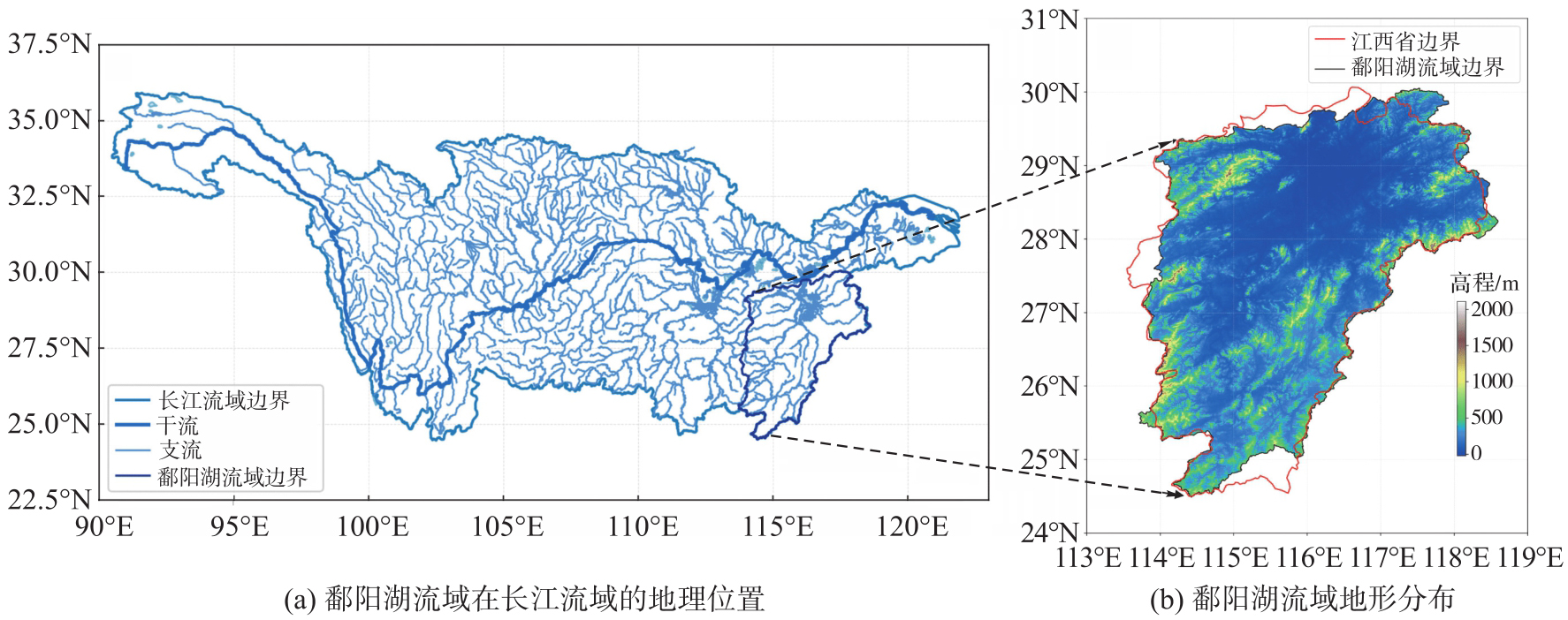
Fig. 2
Weighted average time series of the Poyang Lake Basin before and after TWSA supplementation"
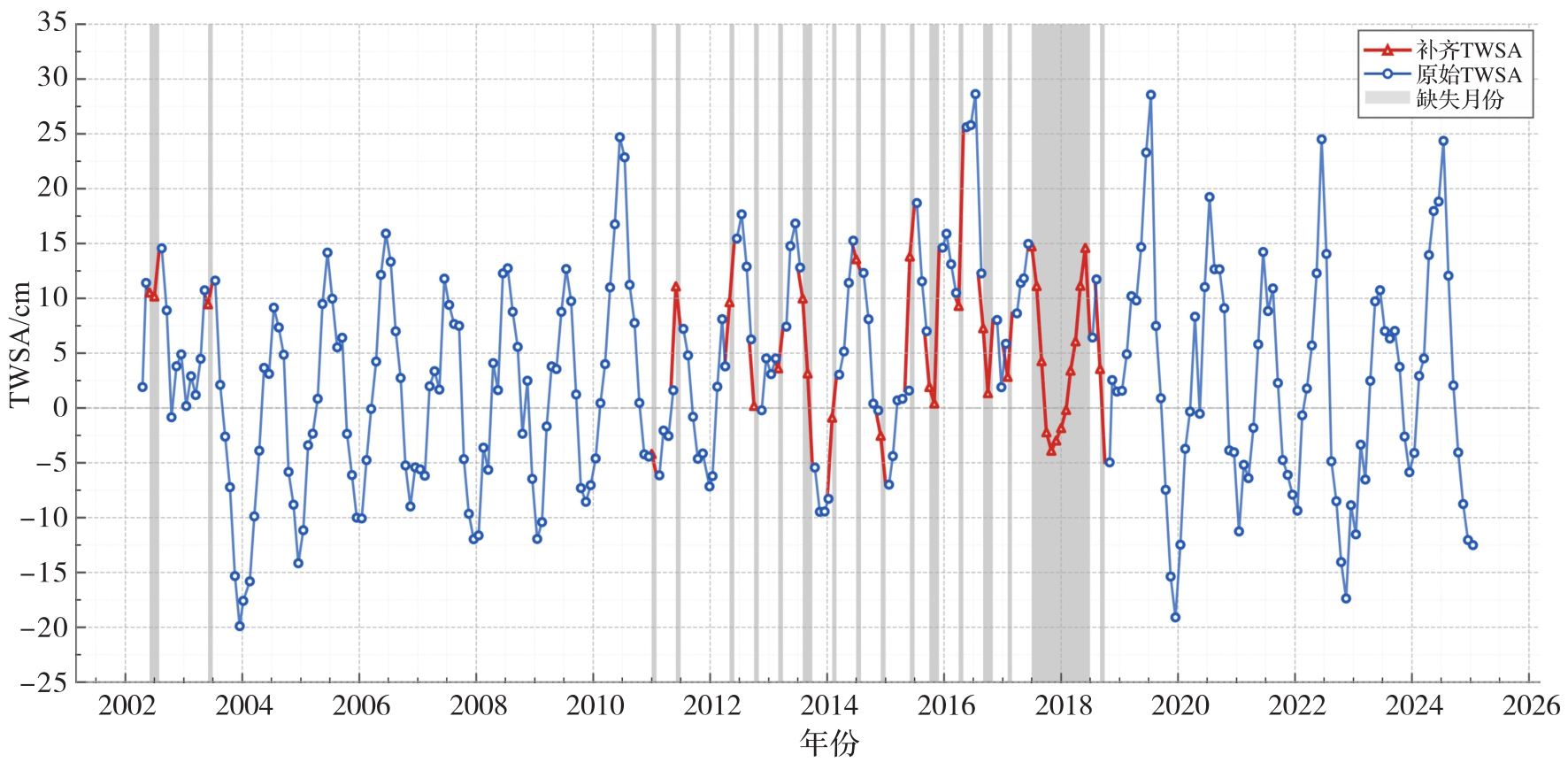
Fig. 3
Time series of precipitation, temperature, and potential evapotranspiration from 2002 to 2100 under SSP2-4.5 and SSP5-8.5 scenarios"
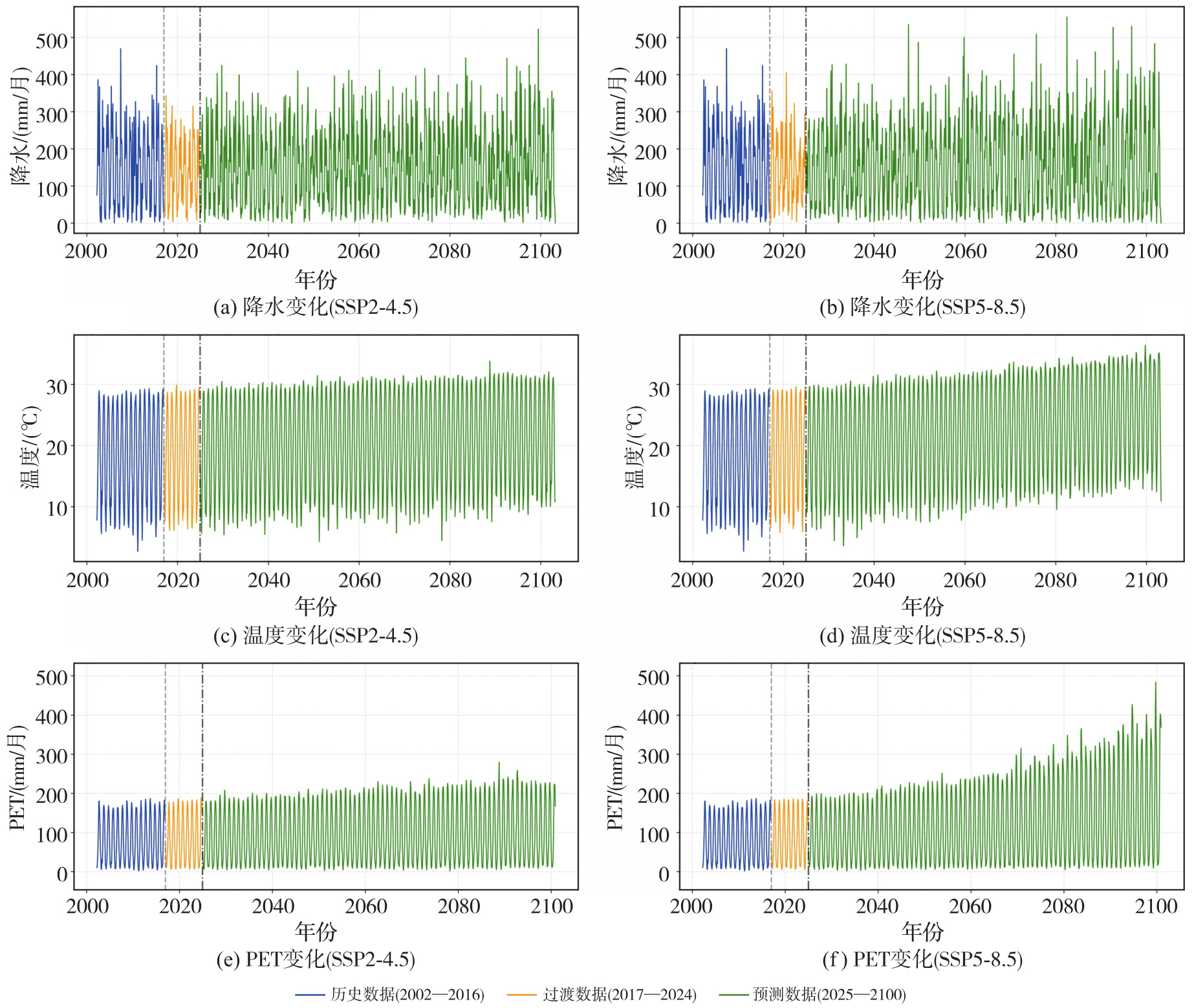
Fig. 4
Research framework"
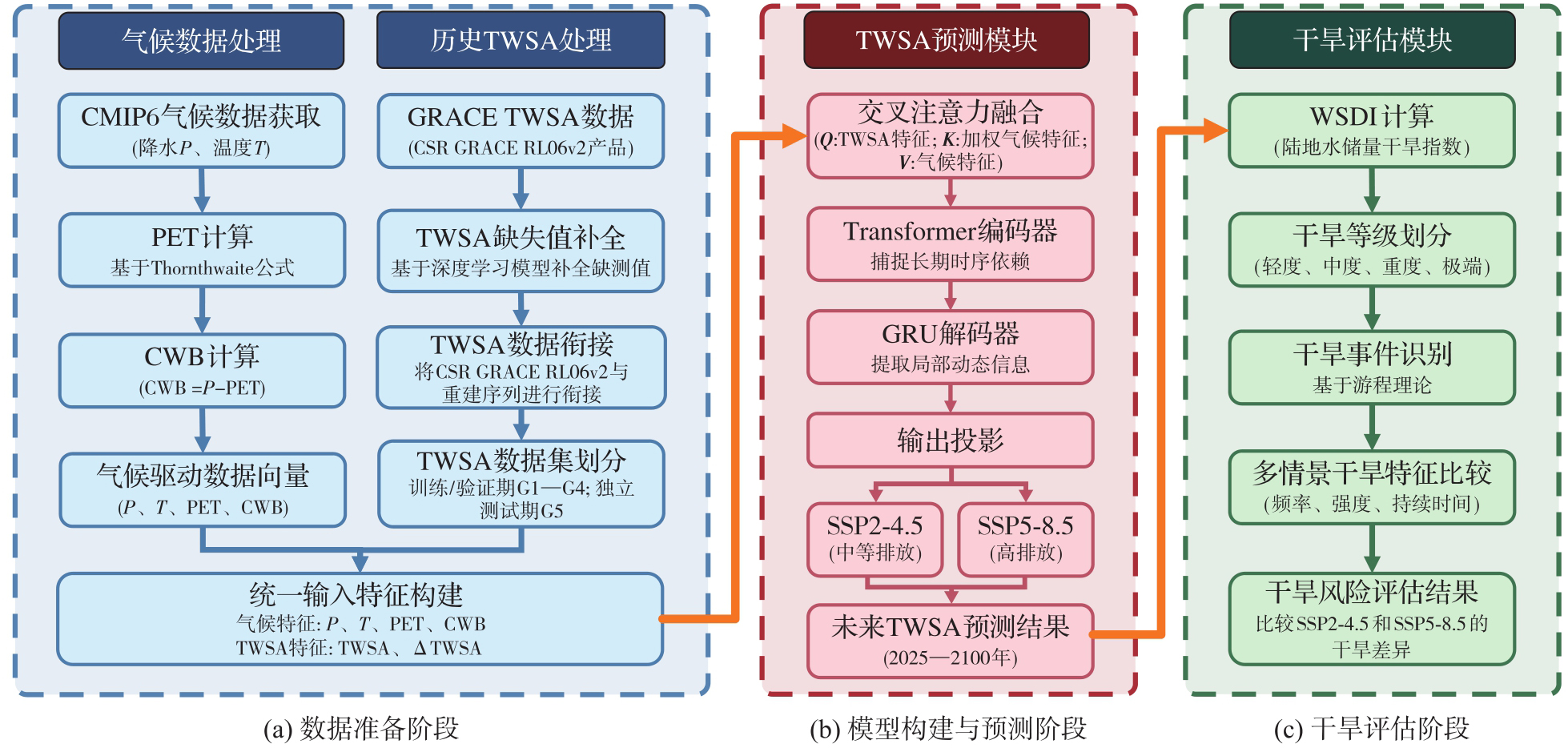
Fig. 5
Data feature processing"
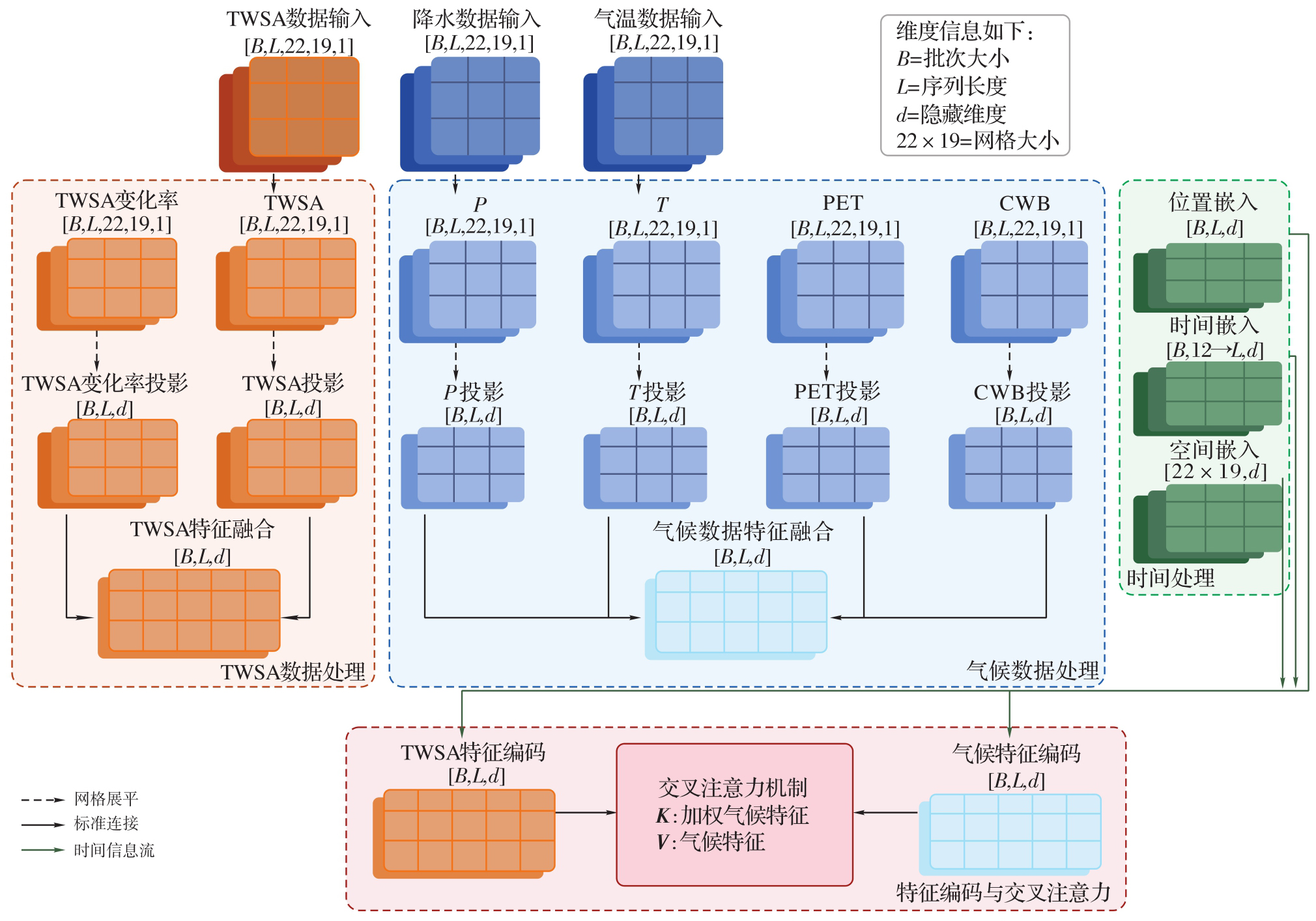
Fig. 6
Transformer-GRU model structure and parameter"
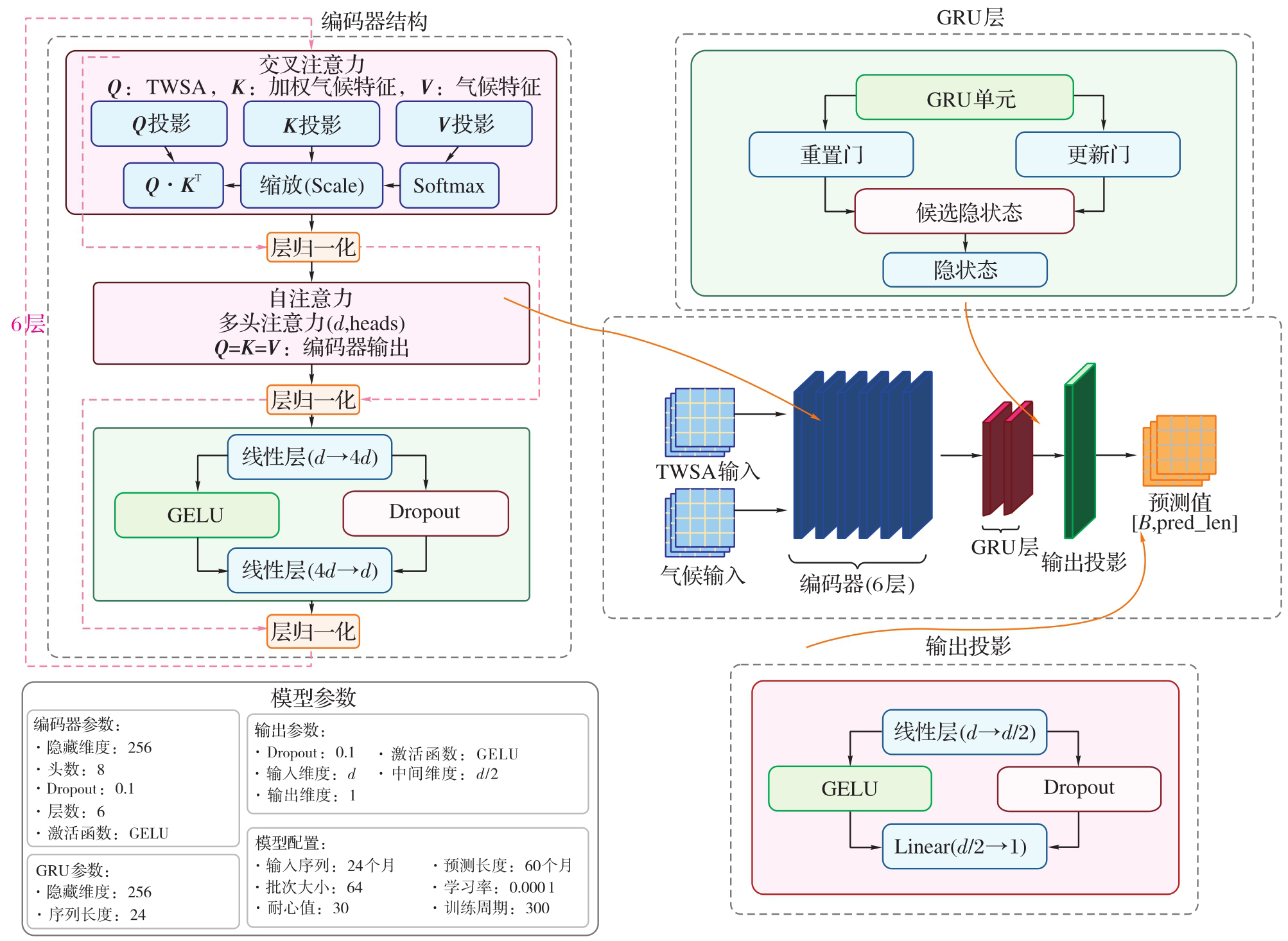
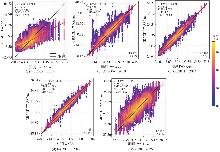
Fig. 7
Scatter plot evaluation of roll-forward cross-validation (G1—G4) and independent testing (G5)"
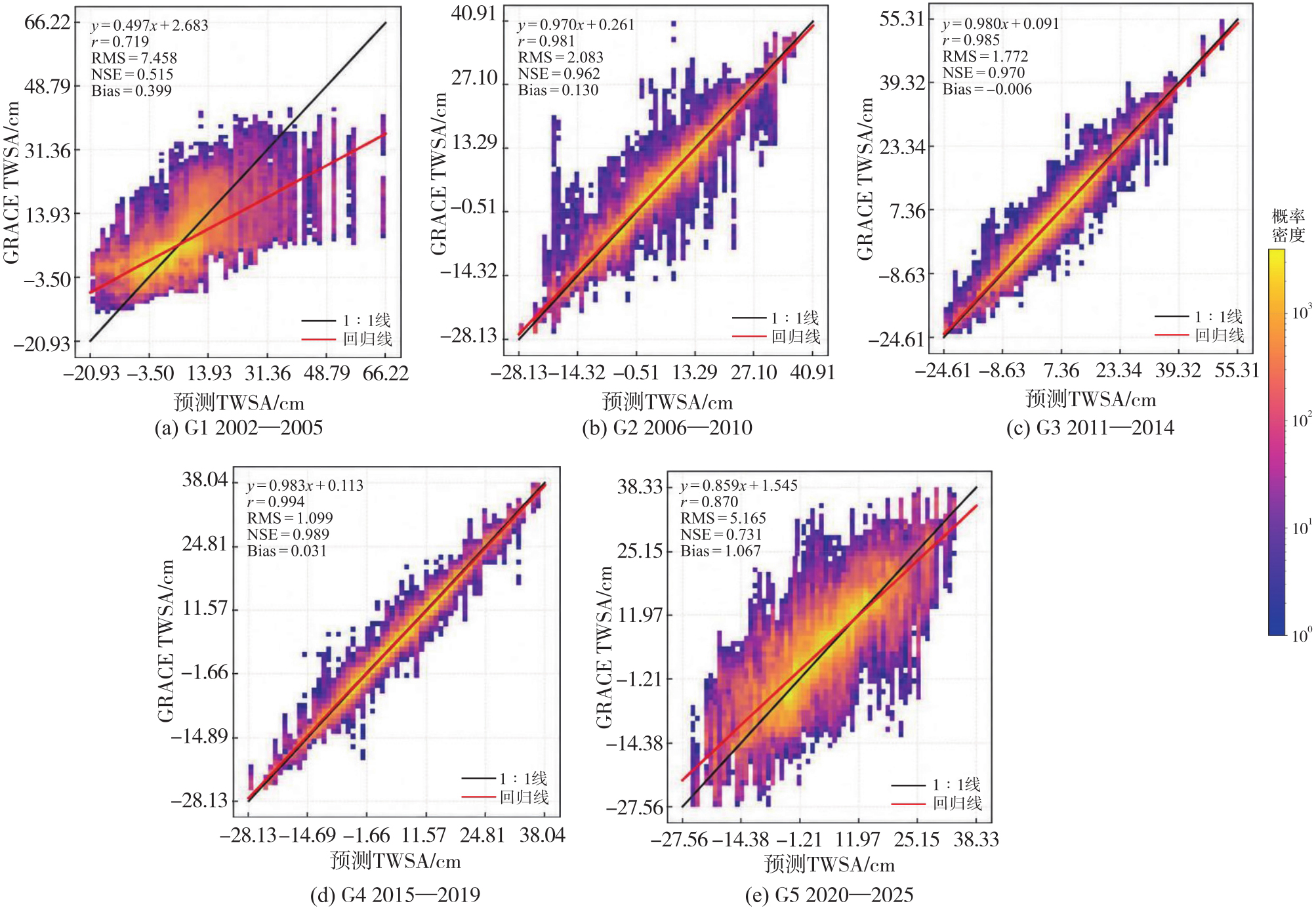
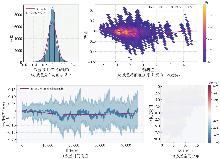
Fig. 8
Residual diagnostics during the independent testing period (G5)"
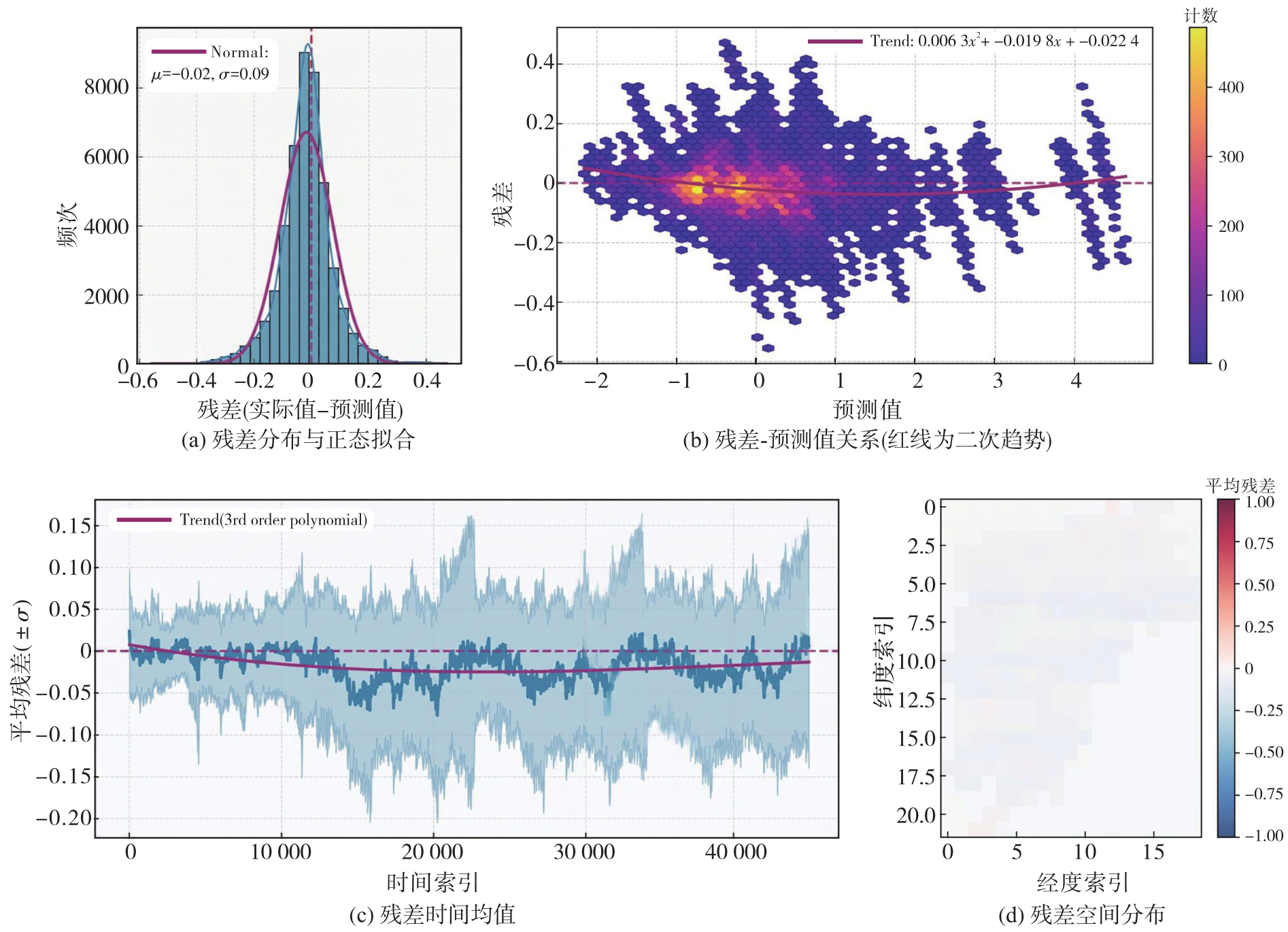
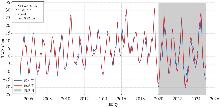
Fig. 9
Time series of actual and predicted values for TWSA from 2005 to 2025"
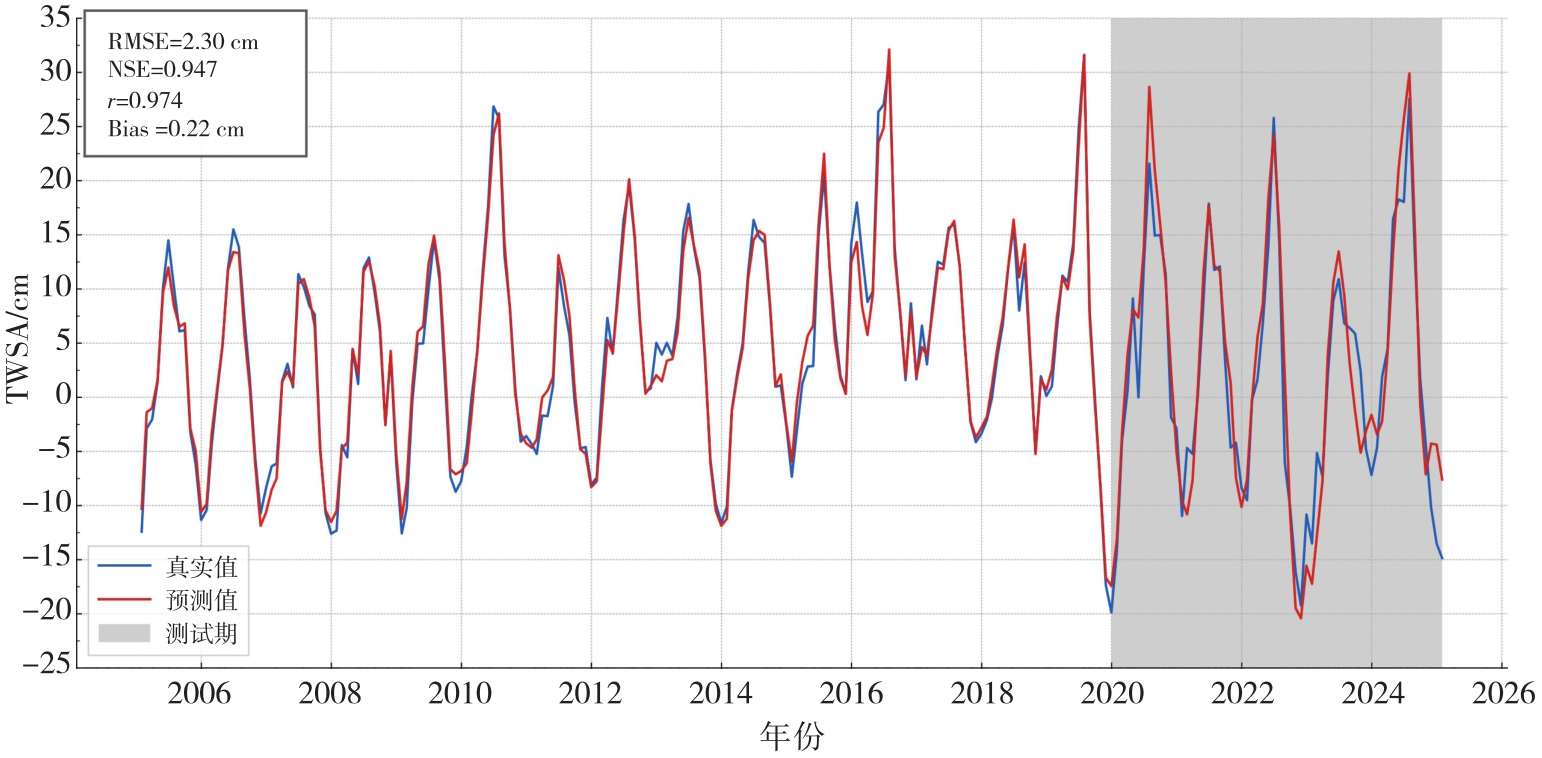
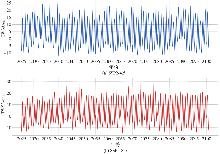
Fig. 10
Time series prediction of TWSA from 2025 to 2100 under SSP2-4.5 and SSP5-8.5 scenarios"
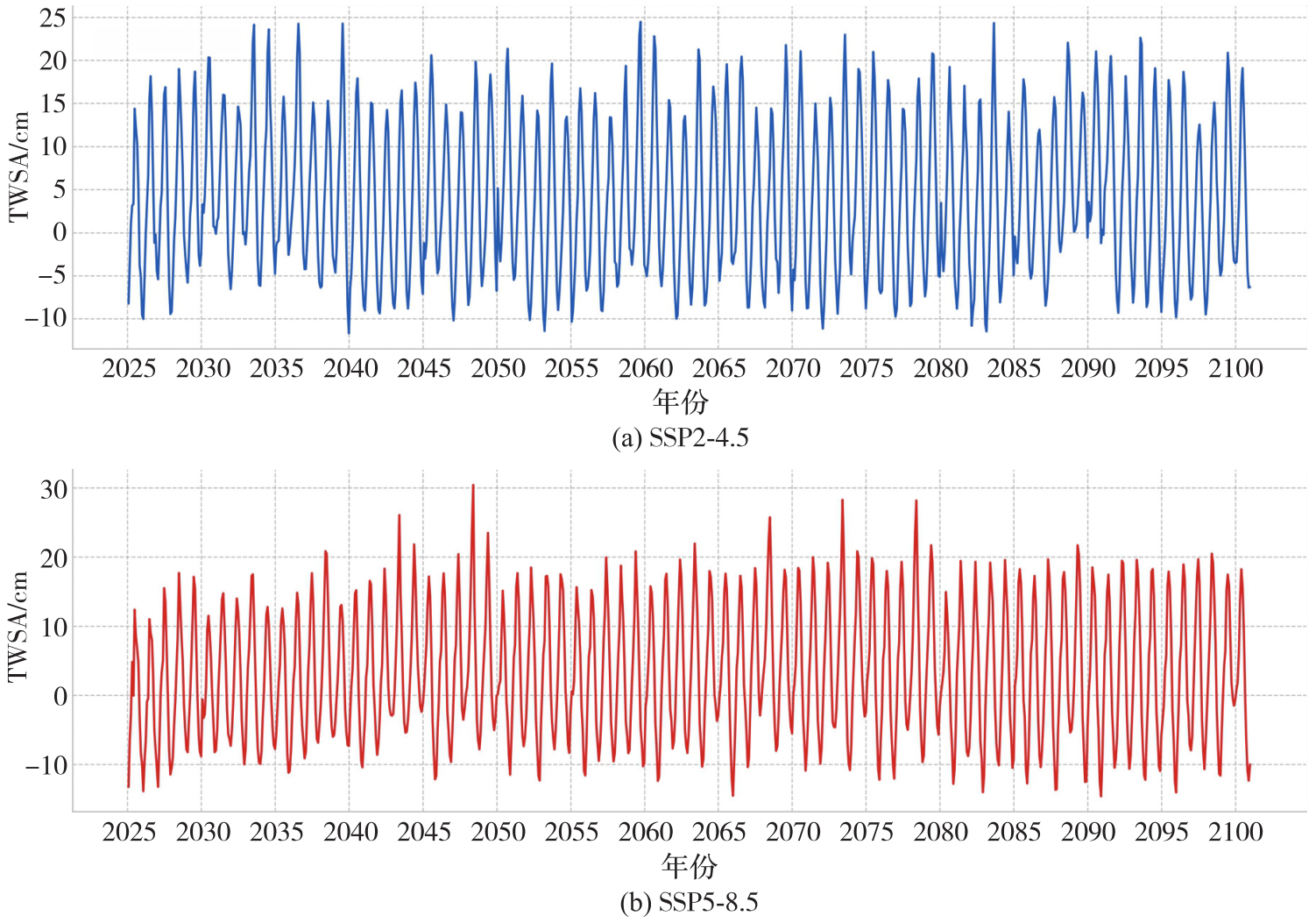
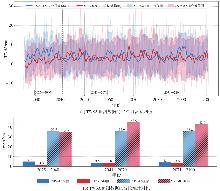
Fig. 11
Comparison of projected TWSA under SSP2-4.5 and SSP5-8.5 scenarios form 2025 to 2100"
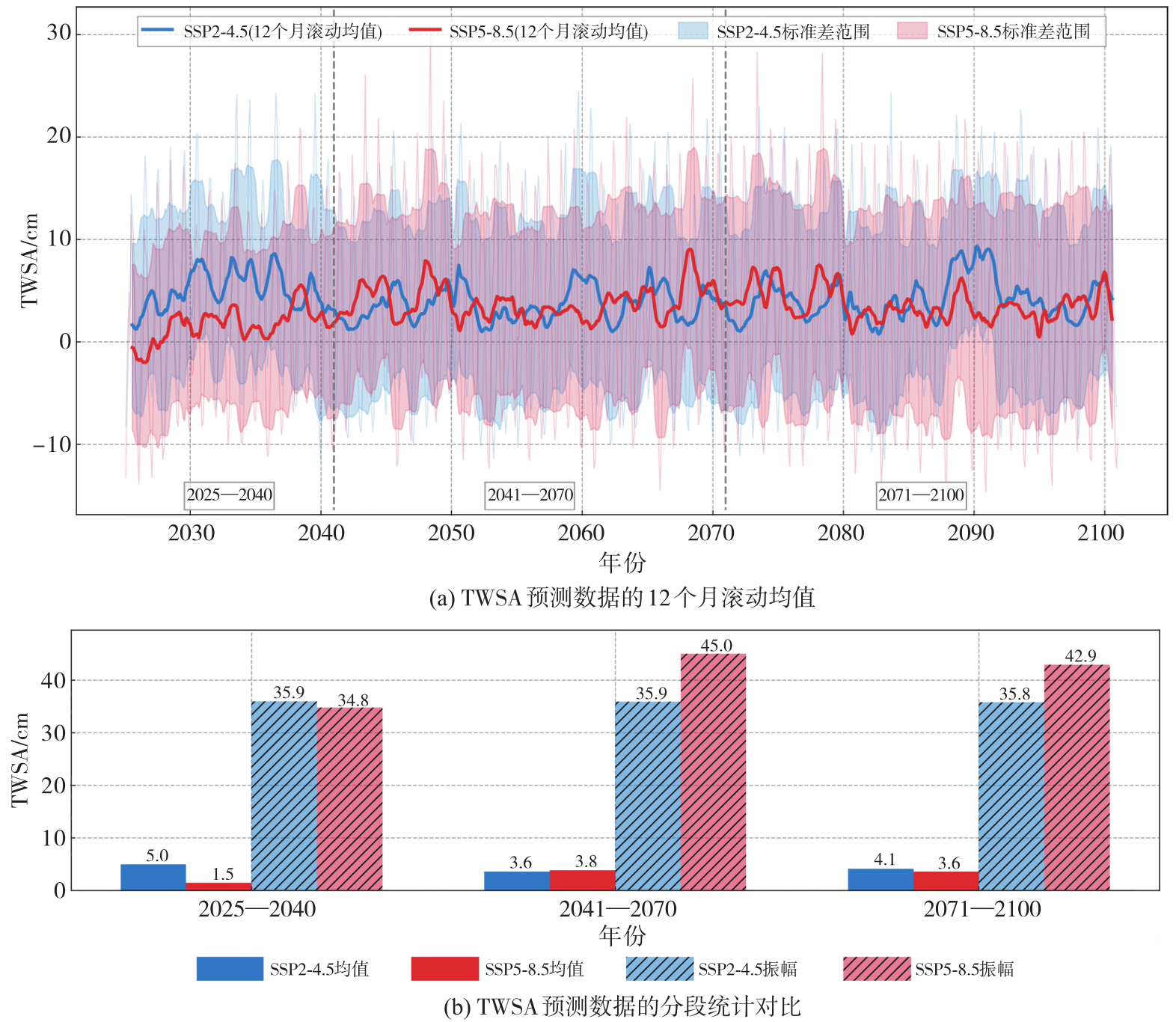
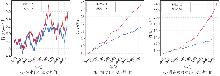
Fig. 12
Rolling 10-year average of precipitation, temperature, and potential evapotranspiration from 2002 to 2100 under SSP2-4.5 and SSP5-8.5 scenarios"
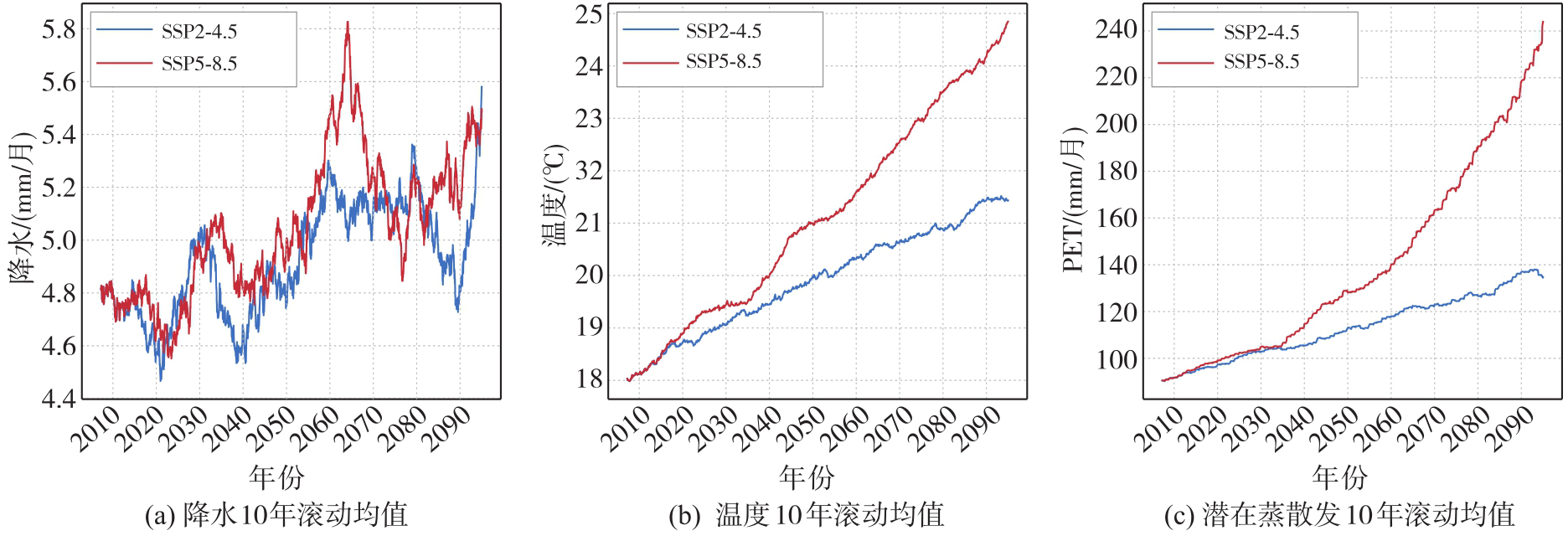
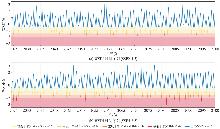
Fig. 13
Time series of WSDI from 2002 to 2100 under SSP2-4.5 and SSP5-8.5 scenarios"
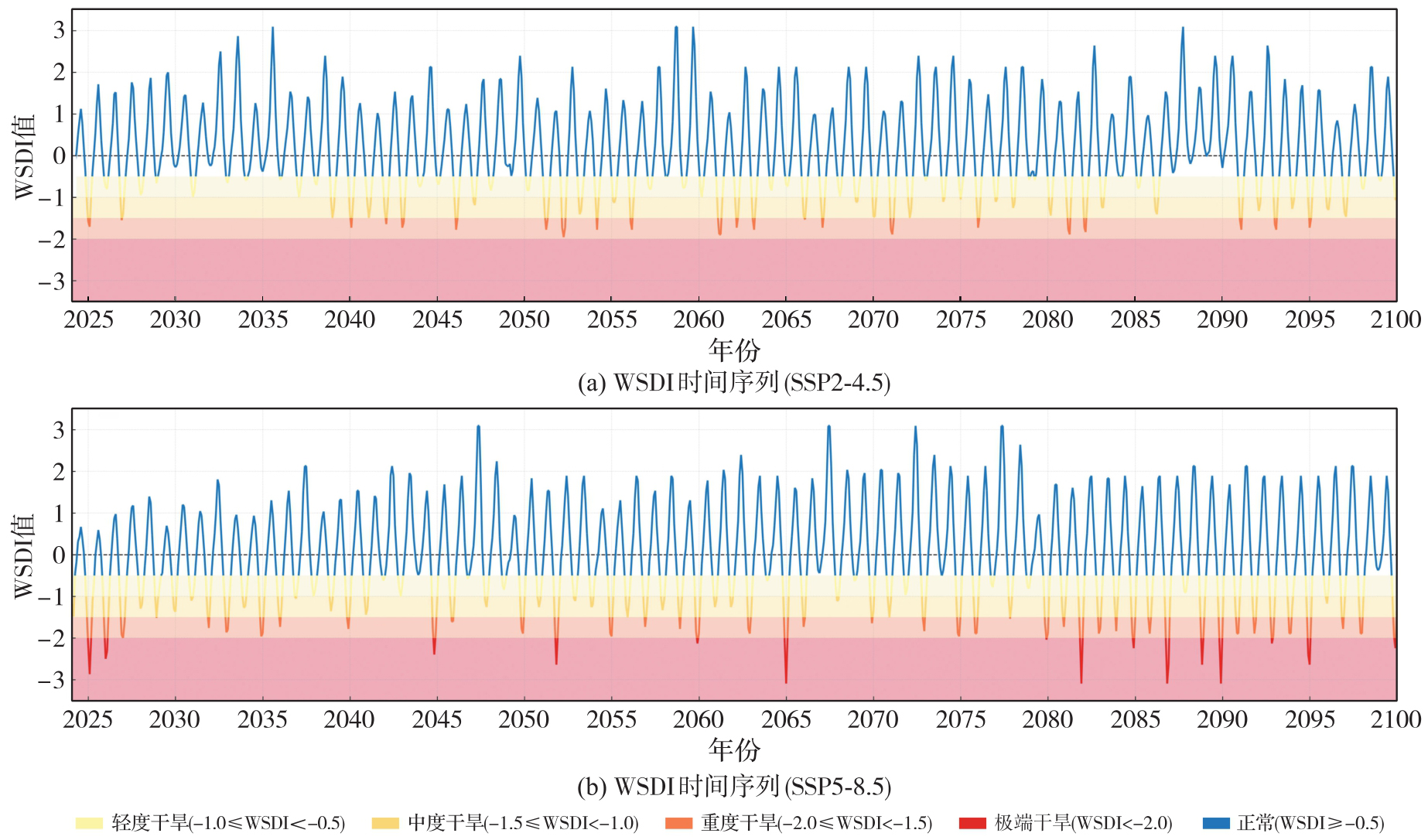
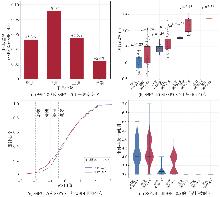
Fig. 14
Comparison of drought characteristics under SSP2-4.5 and SSP5-8.5 scenarios"

| [1] | RAHMAN G, JUNG M K, KIM T W, et al. Drought impact, vulnerability, risk assessment, management and mitigation under climate change: a comprehensive review[J]. KSCE Journal of Civil Engineering, 2025, 29(1): 100120. |
| [2] | LIU Sulan, WU Yunlong, XU Guodong, et al. Revealing the spatiotemporal evolution of the 2024 extreme flood in Guangdong province: insights from GRACE-FO and in situ measurements[J]. Journal of Hydrology: Regional Studies, 2025, 59: 102451. |
| [3] | DAI Aiguo. Drought under global warming: a review[J]. WIREs Climate Change, 2011, 2(1): 45-65. |
| [4] | PIZZORNI M, INNOCENTI A, TOLLIN N. Droughts and floods in a changing climate and implications for multi-hazard urban planning: a review[J]. City and Environment Interactions, 2024, 24: 100169. |
| [5] | XU Guodong, WU Yunlong, LIU Sulan, et al. How 2022 extreme drought influences the spatiotemporal variations of terrestrial water storage in the Yangtze River catchment: insights from GRACE-based drought severity index and in-situ measurements[J]. Journal of Hydrology, 2023, 626: 130245. |
| [6] | ZHANG Qiang, YAO Yubi, LI Yaohui, et al. Causes and changes of drought in China: research progress and prospects[J]. Journal of Meteorological Research, 2020, 34(3): 460-481. |
| [7] | SU Buda, HUANG Jinlong, FISCHER T, et al. Drought losses in China might double between the 1.5℃and 2.0℃warming[J]. Proceedings of the National Academy of Sciences of the United States of America, 2018, 115(42): 10600-10605. |
| [8] | XUE Chenyang, ZHANG Qi, JIA Yuxue, et al. Intensifying drought of Poyang Lake and potential recovery approaches in the dammed middle Yangtze River catchment[J]. Journal of Hydrology: Regional Studies, 2023, 50: 101548. |
| [9] | CHEN Hexiang, JIN Guangqiu, TANG Hongwu, et al. Spatiotemporal variations of water levels and river-lake interaction in the Poyang Lake basin under the extreme drought[J]. Journal of Hydrology: Regional Studies, 2025, 57: 102165. |
| [10] | KRABBENHOFT C A, ALLEN G H, LIN Peirong, et al. Assessing placement bias of the global river gauge network[J]. Nature Sustainability, 2022, 5(7): 586-592. |
| [11] |
王权, 尤淑撑. 陆地卫星遥感监测体系及应用前景[J]. 测绘学报, 2022, 51(4): 534-543. DOI: .
doi: 10.11947/j.AGCS.2022.20210714 |
|
WANG Quan, YOU Shucheng. Research and application outlook of land satellite remote sensing monitoring system[J]. Acta Geodaetica et Cartographica Sinica, 2022, 51(4): 534-543. DOI: .
doi: 10.11947/j.AGCS.2022.20210714 |
|
| [12] | FENG Lian, HU Chuanmin, CHEN Xiaoling, et al. Assessment of inundation changes of Poyang Lake using MODIS observations between 2000 and 2010[J]. Remote Sensing of Environment, 2012, 121: 80-92. |
| [13] | WANG Yingbing, MA Jun, XIAO Xiangming, et al. Long-term dynamic of Poyang Lake surface water: a mapping work based on the Google Earth Engine cloud platform[J]. Remote Sensing, 2019, 11(3): 313. |
| [14] | 张鹏, 陆建忠, 陈晓玲, 等. MODIS遥感数据辅助的鄱阳湖水体范围变化数值模拟[J]. 武汉大学学报(信息科学版), 2012, 37(9): 1087-1091. |
| ZHANG Peng, LU Jianzhong, CHEN Xiaoling, et al. Hydrodynamic simulation of water extend change in Poyang Lake with aid of MODIS remote sensing data[J]. Geomatics and Information Science of Wuhan University, 2012, 37(9): 1087-1091. | |
| [15] | WEST H, QUINN N, HORSWELL M. Remote sensing for drought monitoring & impact assessment: progress, past challenges and future opportunities[J]. Remote Sensing of Environment, 2019, 232: 111291. |
| [16] | ADAMS K H, REAGER J T, ROSEN P, et al. Remote sensing of groundwater: current capabilities and future directions[J]. Water Resources Research, 2022, 58(10): e2022WR032219. |
| [17] |
姚朝龙, 陈涌鑫, 罗志才, 等. GNSS/GRACE/GRACE-FO/气象数据结合反演干旱指数[J]. 测绘学报, 2023, 52(11): 1883-1891. DOI: .
doi: 10.11947/j.AGCS.2023.20220484 |
|
YAO Chaolong, CHEN Yongxin, LUO Zhicai, et al. A drought index derived from a combination of GNSS GRACE/GRACE-FO and meteorological data[J]. Acta Geodaetica et Cartographica Sinica, 2023, 52(11): 1883-1891. DOI: .
doi: 10.11947/j.AGCS.2023.20220484 |
|
| [18] | 熊景华, 郭生练, 王俊, 等. 长江流域陆地水储量变化及归因研究[J]. 武汉大学学报(信息科学版), 2024, 49(12): 2241-2248. |
| XIONG Jinghua, GUO Shenglian, WANG Jun, et al. Variation and attribution of terrestrial water storage in the Yangtze River Basin[J]. Geomatics and Information Science of Wuhan University, 2024, 49(12): 2241-2248. | |
| [19] | YIRDAW S Z, SNELGROVE K R, AGBOMA C O. GRACE satellite observations of terrestrial moisture changes for drought characterization in the Canadian Prairie[J]. Journal of Hydrology, 2008, 356(1/2): 84-92. |
| [20] | MO Shaoxing, SCHUMACHER M, VAN DIJK A I J M, et al. Near-real-time monitoring of global terrestrial water storage anomalies and hydrological droughts[J]. Geophysical Research Letters, 2025, 52(7): e2024GL112677. |
| [21] | KASHANI A, SAFAVI H R. Assessing groundwater drought in Iran using GRACE data and machine learning[J]. Scientific Reports, 2025, 15(1): 14671. |
| [22] | XU Guodong, LIU Sulan, CHENG Siyu, et al. Quantifying the 2022 drought and spatiotemporal evolution of TWSA in the Dongting Lake Basin over the past two decades[J]. Geodesy and Geodynamics, 2024, 15(5): 516-527. |
| [23] |
赵庆志, 常璐璐, 姚宜斌, 等. 一种联合GNSS和气象数据的水文干旱指数构建方法[J]. 测绘学报, 2025, 54(7): 1192-1205. DOI: .
doi: 10.11947/j.AGCS.2025.20250119 |
|
ZHAO Qingzhi, CHANG Lulu, YAO Yibin, et al. A method for constructing a hydrological drought index integrated with GNSS and meteorological data[J]. Acta Geodaetica et Cartographica Sinica, 2025, 54(7): 1192-1205. DOI: .
doi: 10.11947/j.AGCS.2025.20250119 |
|
| [24] | WU Xiaohui, WU Yunlong, LIU Sulan, et al. Synergistic architecture of conventional GRACE filters: global generality to region-specific optimal filtering via multiscale hydrologic validation[J]. Journal of Hydrology: Regional Studies, 2026, 64: 103180. |
| [25] | WU Xiaohui, WU Yunlong, XU Chuang, et al. A physically informed spatial filter for destriping GRACE time-variable gravity fields[J]. Geophysical Journal International, 2026, 245: ggag048. |
| [26] | CHANG Yuwen, SUN Wei, KOW P Y, et al. Advanced groundwater level forecasting with hybrid deep learning model: tackling water challenges in Taiwan's largest alluvial fan[J]. Journal of Hydrology, 2025, 655: 132887. |
| [27] | PALAZZOLI I, CEOLA S, GENTINE P. GRAiCE: reconstructing terrestrial water storage anomalies with recurrent neural networks[J]. Scientific Data, 2025, 12(1): 146. |
| [28] | VASWANI A, SHAZEER N, PARMAR N, et al. Attention is all you need[C]//Proceedings of the 31st Conference on Neural Information Processing Systems. Long Beach: IEEE, 2017: 5998-6008. |
| [29] | 成思雨, 吴云龙, 刘素兰, 等. 融合注意力机制的水储量异常重构与干旱识别[J]. 武汉大学学报(信息科学版), 2025, 50(7): 1382-1392. |
| CHENG Siyu, WU Yunlong, LIU Sulan, et al. Reconstruction of water storage anomalies and drought identification using integrated attention mechanism[J]. Geomatics and Information Science of Wuhan University, 2025, 50(7): 1382-1392. | |
| [30] | SU L, ZUO Xumin, LI Rui, et al. A systematic review for transformer-based long-term series forecasting[J]. Artificial Intelligence Review, 2025, 58(3): 80. |
| [31] | LIU J, SHEN C, O'DONNCHA F, et al. From RNNs to Transformers: benchmarking deep learning architectures for hydrologic prediction[J]. Hydrology and Earth System Sciences, 2025, 29(23): 6811-6828. |
| [32] | POKHREL Y, FELFELANI F, SATOH Y, et al. Global terrestrial water storage and drought severity under climate change[J]. Nature Climate Change, 2021, 11(3): 226-233. |
| [33] | KIM H, VILLARINI G, MAEBIUS S. Changes in the frequency of flood events across the United States detectable by the middle of this century[J]. Earth's Future, 2025, 13(12): e2025EF006677. |
| [34] | RIAHI K, VAN VUUREN D P, KRIEGLER E, et al. The shared socioeconomic pathways and their energy, land use, and greenhouse gas emissions implications: an overview[J]. Global Environmental Change, 2017, 42: 153-168. |
| [35] | EYRING V, BONY S, MEEHL G A, et al. Overview of the Coupled Model Intercomparison Project Phase 6 (CMIP6) experimental design and organization[J]. Geoscientific Model Development, 2016, 9(5): 1937-1958. |
| [36] | O'NEILL B C, KRIEGLER E, EBI K L, et al. The roads ahead: narratives for shared socioeconomic pathways describing world futures in the 21st century[J]. Global Environmental Change, 2017, 42: 169-180. |
| [37] | XIA Yang, LIU Yue, WANG Zhichao, et al. Damage inflicted by extreme drought on Poyang Lake delta wetland and the establishment of countermeasures[J]. Water, 2024, 16(16): 2292. |
| [38] | LI Xianghu, ZHANG Qi, ZHANG Dan, et al. Investigation of the drought-flood abrupt alternation of streamflow in Poyang Lake catchment during the last 50 years[J]. Hydrology Research, 2017, 48(5): 1402-1417. |
| [39] | ZHANG Qi, YE Xuchun, WERNER A D, et al. An investigation of enhanced recessions in Poyang Lake: comparison of Yangtze River and local catchment impacts[J]. Journal of Hydrology, 2014, 517: 425-434. |
| [40] | ALAERTS G J, KASPERSMA J M. Facing global transitions in water management: advances in knowledge and capacity development and towards adaptive approaches[J]. Water Policy, 2022, 24(5): 685-707. |
| [41] | WANG Jida, SHENG Yongwei, WADA Y. Little impact of the Three Gorges Dam on recent decadal lake decline across China's Yangtze Plain[J]. Water Resources Research, 2017, 53(5): 3854-3877. |
| [42] | ZHANG Q, LI L, WANG Y G, et al. Has the Three-Gorges Dam made the Poyang Lake wetlands wetter and drier?[J]. Geophysical Research Letters, 2012, 39(20): 2012GL053431. |
| [43] | MEI Xuefei, DAI Zhijun, DU Jinzhou, et al. Linkage between Three Gorges Dam impacts and the dramatic recessions in China's largest freshwater lake, Poyang Lake[J]. Scientific Reports, 2015, 5: 18197. |
| [44] | LIU Sulan, WU Yunlong, XU Guodong, et al. Characterizing the 2022 extreme drought event over the Poyang Lake Basin using multiple satellite remote sensing observations and in situ data[J]. Remote Sensing, 2023, 15(21): 5125. |
| [45] | LIU Weilin, ZHU Shengnan, HUANG Yipeng, et al. Spatiotemporal variations of drought and their teleconnections with large-scale climate indices over the Poyang Lake Basin, China[J]. Sustainability, 2020, 12(9): 3526. |
| [46] | 孙芳蒂, 马荣华. 鄱阳湖水文特征动态变化遥感监测[J]. 地理学报, 2020, 75(3): 544-557. |
| SUN Fangdi, MA Ronghua. Hydrologic changes of Poyang Lake based on radar altimeter and optical sensor[J]. Acta Geographica Sinica, 2020, 75(3): 544-557. | |
| [47] | MAO Hairu, WANG Guangcai, SHI Zheming, et al. Spatiotemporal variation of groundwater recharge in the lower reaches of the Poyang Lake Basin, China: insights from stable hydrogen and oxygen isotopes[J]. Journal of Geophysical Research: Atmospheres, 2021, 126(6): e2020JD033760. |
| [48] | 郭华, HU Qi, 张奇, 等. 鄱阳湖流域水文变化特征成因及旱涝规律[J]. 地理学报, 2012, 67(5): 699-709. |
| GUO Hua, HU Qi, ZHANG Qi, et al. Annual variations in climatic and hydrological processes and related flood and drought occurrences in the Poyang Lake Basin[J]. Acta Geographica Sinica, 2012, 67(5): 699-709. | |
| [49] | WANG Longhao, ZHANG Yongqiang. Filling GRACE data gap using an innovative transformer-based deep learning approach[J]. Remote Sensing of Environment, 2024, 315: 114465. |
| [50] | 邹贤才, 金涛勇, 朱广彬. 卫星跟踪卫星技术反演局部地表物质迁移的MASCON方法研究[J]. 地球物理学报, 2016, 59(12): 4623-4632. |
| ZOU Xiancai, JIN Taoyong, ZHU Guangbin. Research on the MASCON method for the determination of local surface mass flux with satellite-satellite tracking technique[J]. Chinese Journal of Geophysics, 2016, 59(12): 4623-4632. | |
| [51] | ZHOU Jiayue, LU Hui, YANG Kun, et al. Projection of China's future runoff based on the CMIP6 mid-high warming scenarios[J]. Science China Earth Sciences, 2023, 66(3): 528-546. |
| [52] | YAN Yuhan, ZHU Congwen, LIU Boqi, et al. Annual cycle of East Asian precipitation simulated by CMIP6 models[J]. Atmosphere, 2020, 12(1): 24. |
| [53] | ZHU Yuyao, YANG Saini. Evaluation of CMIP6 for historical temperature and precipitation over the Tibetan Plateau and its comparison with CMIP5[J]. Advances in Climate Change Research, 2020, 11(3): 239-251. |
| [54] | PAN Hong, JIN Youjie, ZHU Xiaochen. Comparison of projections of precipitation over Yangtze River Basin of China by different climate models[J]. Water, 2022, 14(12): 1888. |
| [55] | CHEN Chaoan, HSU H H, LIANG H C. Evaluation and comparison of CMIP6 and CMIP5 model performance in simulating the seasonal extreme precipitation in the Western North Pacific and East Asia[J]. Weather and Climate Extremes, 2021, 31: 100303. |
| [56] | THORNTHWAITE C W. An approach toward a rational classification of climate[J]. Geographical Review, 1948, 38(1): 55-94. |
| [57] | KUMAR MASANTA S, SRINIVAS V V. Proposal and evaluation of nonstationary versions of SPEI and SDDI based on climate covariates for regional drought analysis[J]. Journal of Hydrology, 2022, 610: 127808. |
| [58] | SRIVASTAVA N, HINTON G, KRIZHEVSKY A, et al. Dropout: a simple way to prevent neural networks from overfitting[J]. Journal of Machine Learning Research, 2014, 15(1): 1929-1958. |
| [59] | CIPOLLA R, GAL Y, KENDALL A. Multi-task learning using uncertainty to weigh losses for scene geometry and semantics[C]//Proceedings of 2018 IEEE/CVF Conference on Computer Vision and Pattern Recognition. Salt Lake City: IEEE, 2018: 7482-7491. |
| [60] | HUANG Haijun, FENG Guanbin, CAO Yeer, et al. Simulation and driving factor analysis of satellite-observed terrestrial water storage anomaly in the Pearl River Basin using deep learning[J]. Remote Sensing, 2023, 15(16): 3983. |
| [61] | NASER M Z, ALAVI A H. Error metrics and performance fitness indicators for artificial intelligence and machine learning in engineering and sciences[J]. Architecture, Structures and Construction, 2023, 3(4): 499-517. |
| [62] | DRACUP J A, LEE K S, PAULSON E G Jr. On the definition of droughts[J]. Water Resources Research, 1980, 16(2): 297-302. |
| [63] | PAN X, ZHU L, CHAN K T F, et al. Human-induced water loss potentially threatens sustainable development of sandy regions in China[J]. Communications Earth & Environment, 2025, 6(1): 68. |
| [64] | REZAEI A, KARAMI K, TILMES S, et al. Future water storage changes over the Mediterranean, Middle East, and North Africa in response to global warming and stratospheric aerosol intervention[J]. Earth System Dynamics, 2024, 15(1): 91-108. |
| [65] | Intergovernmental Panel On Climate Change (IPCC). Climate change 2021-the physical science basis: working group I contribution to the sixth assessment report of the intergovernmental panel on climate change[M]. 1st ed. Cambridge: Cambridge University Press, 2023. |
| [66] | RODELL M, FAMIGLIETTI J S, WIESE D N, et al. Emerging trends in global freshwater availability[J]. Nature, 2018, 557(7707): 651-659. |
| [67] | ZENG Zhaoqi, WU Wenxiang, LI Yamei, et al. Increasing meteorological drought under climate change reduces terrestrial ecosystem productivity and carbon storage[J]. One Earth, 2023, 6(10): 1326-1339. |
| [68] | VAN LOON A F. Hydrological drought explained[J]. WIREs Water, 2015, 2(4): 359-392. |
| [69] | GREVE P, ORLOWSKY B, MUELLER B, et al. Global assessment of trends in wetting and drying over land[J]. Nature Geoscience, 2014, 7(10): 716-721. |
| [70] | MILLY P C D, DUNNE K A. Potential evapotranspiration and continental drying[J]. Nature Climate Change, 2016, 6(10): 946-949. |
| [71] | YUAN Wenping, ZHENG Yi, PIAO Shilong, et al. Increased atmospheric vapor pressure deficit reduces global vegetation growth[J]. Science Advances, 2019, 5(8): eaax1396. |
| [72] | SCANLON B R, ZHANG Zizhan, SAVE H, et al. Global models underestimate large decadal declining and rising water storage trends relative to GRACE satellite data[J]. Proceedings of the National Academy of Sciences of the United States of America, 2018, 115(6): 1080-1089. |
| [73] | SCHEFF J, FRIERSON D M W. Scaling potential evapotranspiration with greenhouse warming[J]. Journal of Climate, 2014, 27(4): 1539-1558. |
| [1] | Pengcheng LIU, Xiaoqiang CHENG, Tianyuan XIAO, Min YANG, Tinghua AI. A Transformer model for building polygon simplification in map generalization [J]. Acta Geodaetica et Cartographica Sinica, 2026, 55(1): 124-137. |
| [2] | Qing CHENG, Boxuan WANG, Hongyan ZHANG. DRformer: a progressive coupled multiscale CNN and condensed attention Transformer method for hyperspectral image super-resolution [J]. Acta Geodaetica et Cartographica Sinica, 2025, 54(7): 1230-1242. |
| [3] | Chao WANG, Tianyu CHEN, Tong ZHANG, Tanvir AHMED, Liqiang JI, Tao XIE, Jiajun YANG, Shuai WANG. Multi-sensor optical remote sensing images change detection based on global differential enhancement module and balance penalty loss [J]. Acta Geodaetica et Cartographica Sinica, 2025, 54(5): 873-887. |
| [4] | Quanyi ZHAO, Fujian ZHENG, Bo XIA, Zhengying LI, Hong HUANG. Hyperspectral remote sensing image scene classification method based on deep manifold distillation network [J]. Acta Geodaetica et Cartographica Sinica, 2024, 53(12): 2404-2415. |
| [5] | Shiyan PANG, Jingjing HAO, Zhiqi ZUO, Jingjing LAN, Xiangyun HU. A high-resolution remote sensing images change detection method via the integration of dense connections and self-attention mechanisms [J]. Acta Geodaetica et Cartographica Sinica, 2024, 53(12): 2244-2253. |
| [6] | Huafei YU, Tianqi QIU, Zhe ZHOU, Chongya GONG, Tianyuan XIAO, Min YANG, Tinghua AI. Drainage pattern recognition supported by graph Transformer [J]. Acta Geodaetica et Cartographica Sinica, 2024, 53(11): 2075-2085. |
| [7] | ZHANG Yichao, ZHENG Xiangtao, LU Xiaoqiang. Hyperspectral image classification method based on hierarchical transformer network [J]. Acta Geodaetica et Cartographica Sinica, 2023, 52(7): 1139-1147. |
| [8] | WU Chenhao, XIANG Longgang, ZHANG Yeting, WU Huayi. Geography-aware representation learning for trajectory similarity computation [J]. Acta Geodaetica et Cartographica Sinica, 2023, 52(4): 670-678. |
| [9] | WANG Wei, DENG Jiwei, WANG Xin, LI Zhiyong, YUAN Ping. GLFFNet model for remote sensing image scene classification [J]. Acta Geodaetica et Cartographica Sinica, 2023, 52(10): 1693-1702. |
| Viewed | ||||||
|
Full text |
|
|||||
|
Abstract |
|
|||||
