

Acta Geodaetica et Cartographica Sinica ›› 2026, Vol. 55 ›› Issue (9): 1542-1554.doi: 10.11947/j.AGCS.2026.20260104
• Geodesy and Navigation • Previous Articles Next Articles
Yanyan Li( ), Ao Wang, Rui Tu()
Received:2026-04-07
Revised:2026-09-08
Online:2026-10-28
Published:2026-10-28
Contact:
Rui Tu
E-mail:yylee@sdust.edu.cn;turui-2004@126.com
About author:Li Yanyan (1987—), female, associate professor, majors in high-precision GNSS data processing, spatio-temporal data quality enhancement, and crustal deformation monitoring. E-mail: yylee@sdust.edu.cn
Supported by:CLC Number:
Yanyan Li, Ao Wang, Rui Tu. Great earthquake magnitude estimation using HR-GNSS with epicentral-distance geometric auxiliary information and attention mechanisms[J]. Acta Geodaetica et Cartographica Sinica, 2026, 55(9): 1542-1554.
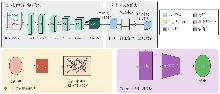
Fig. 1
Overall architecture of the proposed EDGSA-CNN model"
Tab. 1
Key structural parameters of the EDGSA-CNN model"
| 模块 | 参数 |
|---|---|
| 输入波形 | Case Ⅰ:3×181×3;Case Ⅱ:7×181×3 Case Ⅲ:7×501×3 |
| 波形CNN卷积核 | 6层Conv2D,通道数12、24、36、64、128、256(1,3) |
| 池化 | Conv1、Conv3、Conv5后设置最大池化层,池化窗口为(1,2) |
| 注意力 |  |
| 震中距编码分支 | 32→64→128 |
| 特征拼接 | 256维波形特征+128维震中距特征=384维 |
| 回归网络 | 256→128→32→1 |
| 损失函数 | 均方误差 |
| 优化器 | Adam |
| 批次大小 | 128 |
| 最大训练轮数 | 200 |
| 提前停止 | 验证集损失连续20轮无改善停止 |
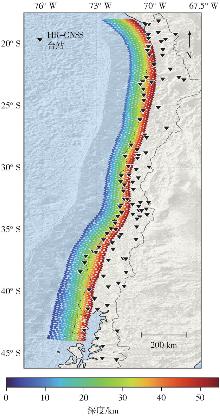
Fig. 2
Map of the study area for synthetic dataset in the Chile subduction zone and distribution of HR-GNSS stations"

Tab. 2
Input configurations for the three experimental scenarios"
| 实验场景 | 每个地震所选台站数(Δ:震中距) | 时间序列窗口长度/s | 输入数据维度(台站数,时长,通道数) |
|---|---|---|---|
| Case Ⅰ | 3个台站,Δ≤3° | 181 | (3,181,3) |
| Case Ⅱ | 7个台站,Δ≤3° | 181 | (7,181,3) |
| Case Ⅲ | 7个台站:其中3~5个Δ≤3°,其余台站Δ>3° | 501 | (7,501,3) |
Tab. 3
Ablation RMSE results of different model structures under the three input scenarios"
| 模型 | Case Ⅰ | Case Ⅱ | Case Ⅲ | Case Ⅲ(Mw≥8.5) |
|---|---|---|---|---|
| CNN | 0.104 | 0.093 | 0.075 | 0.082 |
| CNN-Attn | 0.100 | 0.098 | 0.054 | 0.057 |
| CNN-MLP | 0.084 | 0.078 | 0.042 | 0.045 |
| EDGSA-CNN | 0.080 | 0.078 | 0.044 | 0.050 |
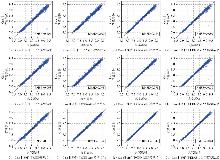
Fig. 3
Magnitude estimation results of different model structures under three input scenarios"
Tab. 4
Comparison of magnitude-estimation accuracy between the PGD empirical model and EDGSA-CNN on the test set"
| 事件 | 方法 | RMSE/Mw | MAE/Mw |
|---|---|---|---|
| Case Ⅰ | PGD经验模型 | 0.232 | 0.150 |
| Case Ⅰ | EDGSA-CNN | 0.080 | 0.046 |
| Case Ⅱ | PGD经验模型 | 0.227 | 0.138 |
| Case Ⅱ | EDGSA-CNN | 0.078 | 0.039 |
| Case Ⅲ | PGD经验模型 | 0.173 | 0.135 |
| Case Ⅲ | EDGSA-CNN | 0.044 | 0.034 |
Tab. 5
RMSE under different epicentral-location perturbations"
| 扰动幅度/km | Case Ⅰ | Case Ⅱ | Case Ⅲ |
|---|---|---|---|
| 0 | 0.080 | 0.078 | 0.044 |
| 10 | 0.081 | 0.078 | 0.045 |
| 30 | 0.082 | 0.081 | 0.048 |
| 50 | 0.084 | 0.085 | 0.054 |
Fig. 4
Distribution of magnitude estimation errors for the Mw 8.7 synthetic earthquake under different scenarios"
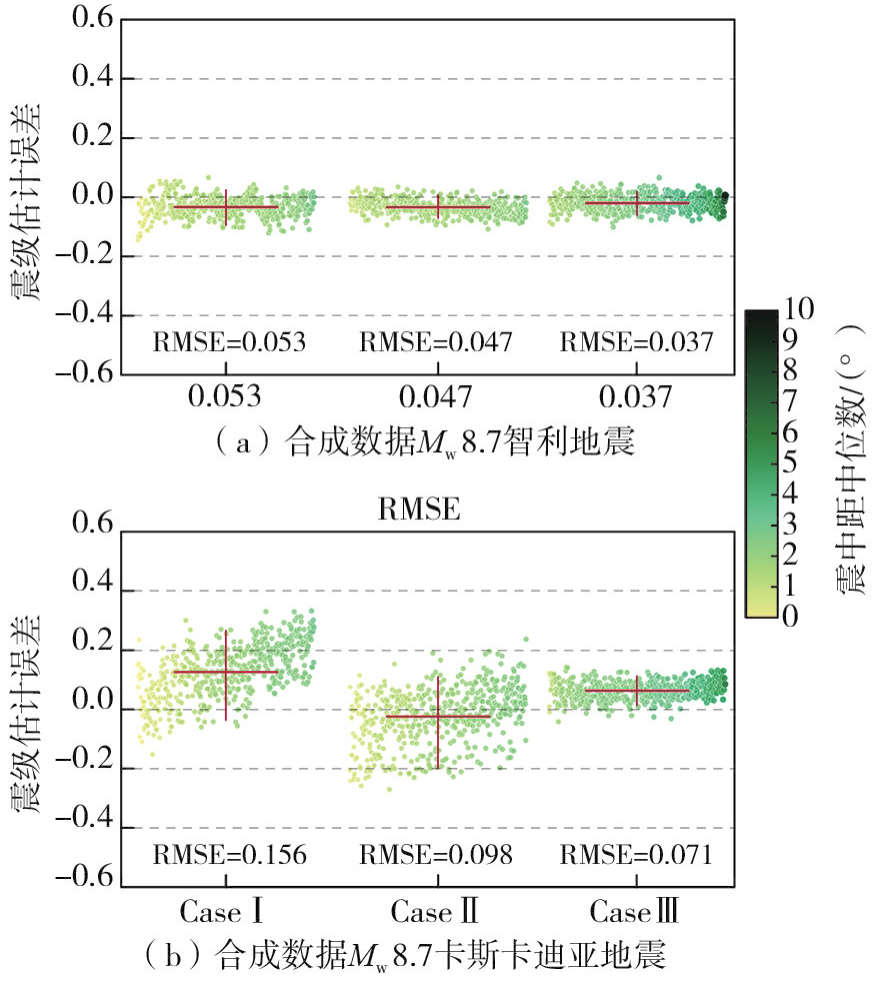
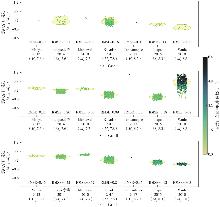
Fig. 5
Magnitude estimation error distributions for real earthquake events under different input cases"

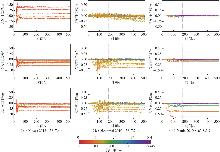
Fig. 6
Three-component HR-GNSS displacement waveforms of representative real earthquake events"
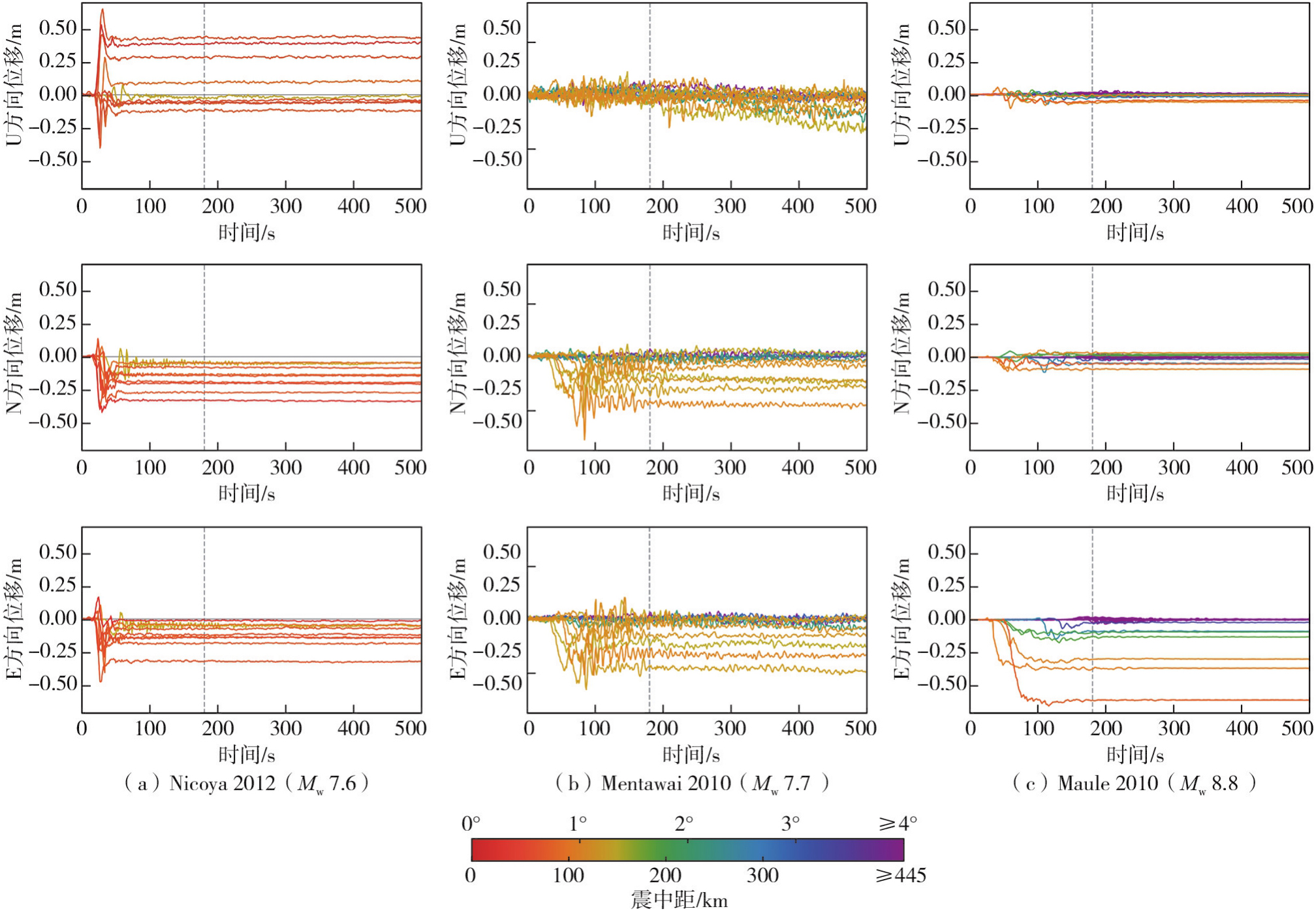
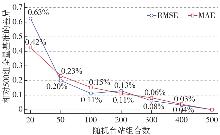
Fig. 7
Stability test of the number of random station combinations for real earthquake events"

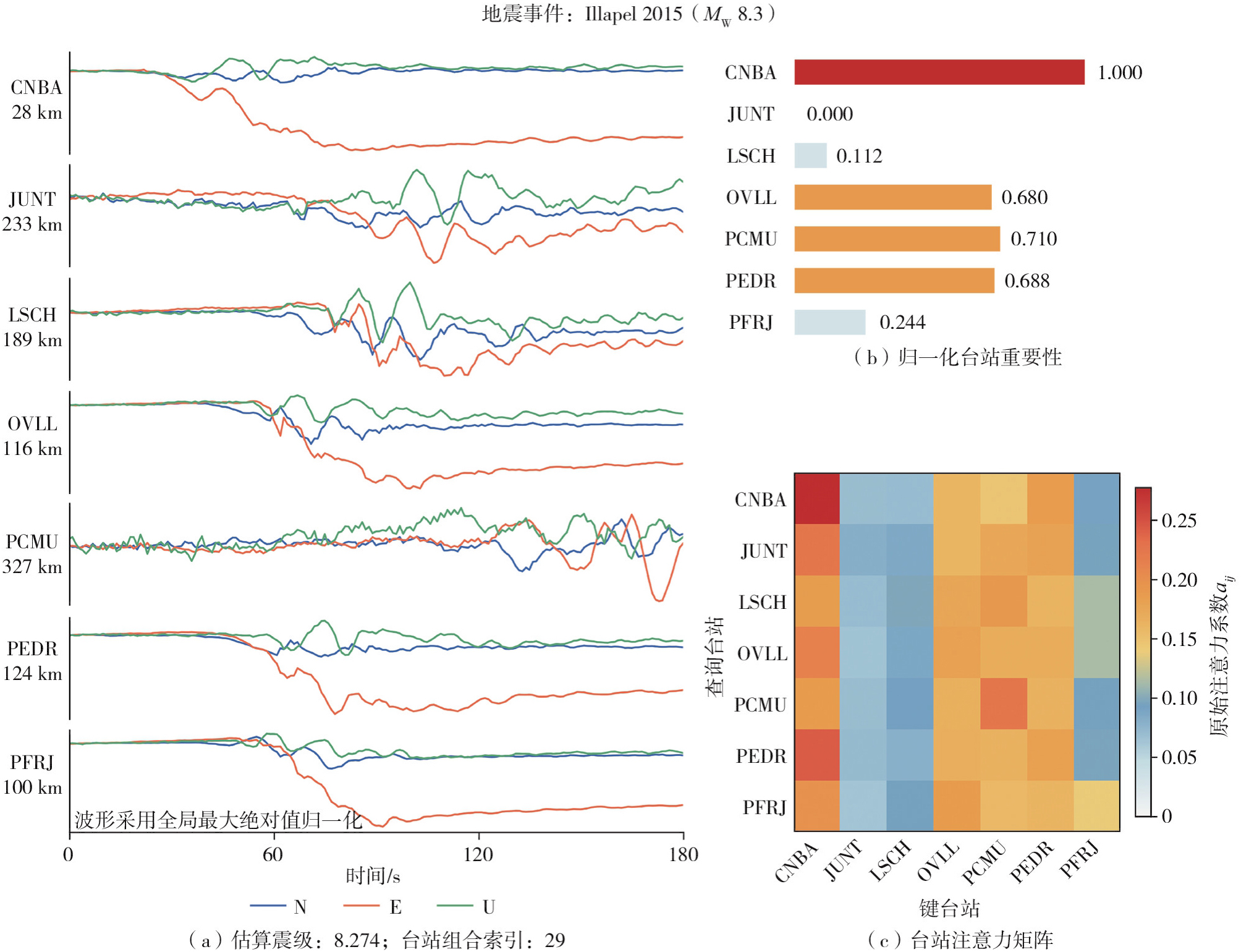
Fig. 8
Station waveforms, importance, and attention matrix for the 2015Mw8.3 Illapel earthquake"
Tab. 6
Station importance and masking sensitivity for the fixed station combination"
| 台站 | 归一化台站重要性 | 震中距/km | 方位角/(°) | PGD/m | 幅值—初始波动比 | 低频能量占比 | 屏蔽后|ΔMw| |
|---|---|---|---|---|---|---|---|
| CNBA | 1.000 | 27.7 | 46.5 | 1.183 2 | 219.22 | 0.961 | 0.042 |
| JUNT | 0.000 | 232.5 | 40.8 | 0.263 1 | 41.48 | 0.849 | 0.003 |
| LSCH | 0.112 | 189.2 | 12.5 | 0.257 4 | 81.44 | 0.843 | 0.015 |
| OVLL | 0.680 | 116.2 | 22.6 | 0.785 0 | 298.38 | 0.956 | 0.008 |
| PCMU | 0.710 | 326.5 | 184.7 | 0.048 8 | 20.52 | 0.777 | 0.047 |
| PEDR | 0.688 | 123.7 | 49.2 | 0.575 6 | 228.68 | 0.955 | 0.011 |
| PFRJ | 0.244 | 99.6 | 1.9 | 1.437 1 | 259.00 | 0.972 | 0.036 |
| [1] |
刘学习, 刘广涵, 杨超, 等. 顾及GNSS卫星姿态的相位缠绕及精密单点定位[J]. 测绘学报, 2026, 55(6): 1018-1030. DOI: .
doi: 10.11947/j.AGCS.2026.20260051 |
|
Liu Xuexi, Liu Guanghan, Yang Chao, et al. Phase wind-up and precise point positioning considering GNSS satellite attitude[J]. Acta Geodaetica et Cartographica Sinica, 2026, 55(6): 1018-1030. DOI: .
doi: 10.11947/j.AGCS.2026.20260051 |
|
| [2] |
李博峰, 章浙涛. 非模型化误差实时处理:探测、补偿及控制[J]. 测绘学报, 2026, 55(5): 776-786. DOI: .
doi: 10.11947/j.AGCS.2026.20250501 |
|
Li Bofeng, Zhang Zhetao. Real-time processing of unmodeled errors: detection, compensation, and control[J]. Acta Geodaetica et Cartographica Sinica, 2026, 55(5): 776-786. DOI: .
doi: 10.11947/j.AGCS.2026.20250501 |
|
| [3] |
党亚民, 蒋涛, 杨元喜, 等. 中国大地测量研究进展(2019—2023)[J]. 测绘学报, 2023, 52(9): 1419-1436. DOI: .
doi: 10.11947/j.AGCS.2023.20230343 |
|
Dang Yamin, Jiang Tao, Yang Yuanxi, et al. Research progress of geodesy in China (2019—2023)[J]. Acta Geodaetica et Cartographica Sinica, 2023, 52(9): 1419-1436. DOI: .
doi: 10.11947/j.AGCS.2023.20230343 |
|
| [4] | 许才军, 贺克锋. 地震周期形变的大地测量研究进展和展望[J]. 武汉大学学报(信息科学版), 2023, 48(11): 1736-1755. |
| Xu Caijun, He Kefeng. Advancements in earthquake cycle deformation research based on geodetic observations[J]. Geomatics and Information Science of Wuhan University, 2023, 48(11): 1736-1755. | |
| [5] | 单新建, 尹昊, 刘晓东, 等. 高频GNSS实时地震学与地震预警研究现状[J]. 地球物理学报, 2019, 62(8): 3043-3052. |
| Shan Xinjian, Yin Hao, Liu Xiaodong, et al. High-rate real-time GNSS seismology and early warning of earthquakes[J]. Chinese Journal of Geophysics, 2019, 62(8): 3043-3052. | |
| [6] | Colombelli S, Allen R M, Zollo A. Application of real-time GPS to earthquake early warning in subduction and strike-slip environments[J]. Journal of Geophysical Research: Solid Earth, 2013, 118(7): 3448-3461. |
| [7] | Grapenthin R, Johanson I A, Allen R M. Operational real-time GPS-enhanced earthquake early warning[J]. Journal of Geophysical Research: Solid Earth, 2014, 119(10): 7944-7965. |
| [8] | Crowell B W, Melgar D, Bock Y, et al. Earthquake magnitude scaling using seismogeodetic data[J]. Geophysical Research Letters, 2013, 40(23): 6089-6094. |
| [9] | Melgar D, Crowell B W, Geng Jianghui, et al. Earthquake magnitude calculation without saturation from the scaling of peak ground displacement[J]. Geophysical Research Letters, 2015, 42(13): 5197-5205. |
| [10] | Ruhl C J, Melgar D, Geng Jianghui, et al. A global database of strong-motion displacement GNSS recordings and an example application to PGD scaling[J]. Seismological Research Letters, 2019, 90(1): 271-279. |
| [11] | Melgar D, LeVeque R J, Dreger D S, et al. Kinematic rupture scenarios and synthetic displacement data: an example application to the Cascadia subduction zone[J]. Journal of Geophysical Research: Solid Earth, 2016, 121(9): 6658-6674. |
| [12] | Lin J T, Melgar D, Thomas A M, et al. Early warning for great earthquakes from characterization of crustal deformation patterns with deep learning[J]. Journal of Geophysical Research: Solid Earth, 2021, 126(10): e2021JB022703. |
| [13] | Satriano C, Wu Y M, Zollo A, et al. Earthquake early warning: concepts, methods and physical grounds[J]. Soil Dynamics and Earthquake Engineering, 2011, 31(2): 106-118. |
| [14] | Cremen G, Galasso C. Earthquake early warning: recent advances and perspectives[J]. Earth-Science Reviews, 2020, 205: 103184. |
| [15] | Wu Y M, Zhao Li. Magnitude estimation using the first three seconds P-wave amplitude in earthquake early warning[J]. Geophysical Research Letters, 2006, 33(16): L16312. |
| [16] | Allen R M, Kanamori H. The potential for earthquake early warning in southern California[J]. Science, 2003, 300(5620): 786-789. |
| [17] | Wu Y M, Kanamori H. Experiment on an onsite early warning method for the Taiwan early warning system[J]. Bulletin of the Seismological Society of America, 2005, 95(1): 347-353. |
| [18] | Wu Y M, Kanamori H, Allen R M, et al. Determination of earthquake early warning parameters, τ c and Pd, for southern California[J]. Geophysical Journal International, 2007, 170(2): 711-717. |
| [19] | Kuyuk H S, Allen R M. A global approach to provide magnitude estimates for earthquake early warning alerts[J]. Geophysical Research Letters, 2013, 40(24): 6329-6333. |
| [20] | Goldberg D E, Melgar D, Hayes G P, et al. A ground-motion model for GNSS peak ground displacement[J]. Bulletin of the Seismological Society of America, 2021, 111(5): 2393-2407. |
| [21] | Mousavi S M, Beroza G C. A machine-learning approach for earthquake magnitude estimation[J]. Geophysical Research Letters, 2020, 47(1): e2019GL085976. |
| [22] | Lomax A, Michelini A, Jozinović D. An investigation of rapid earthquake characterization using single-station waveforms and a convolutional neural network[J]. Seismological Research Letters, 2019, 90(2A): 517-529. |
| [23] | Münchmeyer J, Bindi D, Leser U, et al. Earthquake magnitude and location estimation from real time seismic waveforms with a transformer network[J]. Geophysical Journal International, 2021, 226(2): 1086-1104. |
| [24] | 林彬华, 金星, 康兰池, 等. 基于卷积神经网络的地震震级测定研究[J]. 地球物理学报, 2021, 64(10): 3600-3611. |
| Lin Binhua, Jin Xing, Kang Lanchi, et al. The research of earthquake magnitude determination based on convolutional neural networks[J]. Chinese Journal of Geophysics, 2021, 64(10): 3600-3611. | |
| [25] | 位栋梁, 王延伟, 王自法, 等. 基于卷积神经网络的地震震级快速估算方法[J]. 地震学报, 2022, 44(2): 316-326. |
| Wei Dongliang, Wang Yanwei, Wang Zifa, et al. A fast estimation method of earthquake magnitude based on convolutional neural networks[J]. Acta Seismologica Sinica, 2022, 44(2): 316-326. | |
| [26] | Quinteros-Cartaya C, Köhler J, Li Wei, et al. Exploring a CNN model for earthquake magnitude estimation using HR-GNSS data[J]. Journal of South American Earth Sciences, 2024, 136: 104815. |
| [27] | Cui Wenfeng, Chen Kejie, Wei Guoguang, et al. Simultaneous magnitude and slip distribution characterization from high-rate GNSS using deep learning: case studies of the 2021 Mw 7.4 Maduo and 2023 Turkey doublet events[J]. Geophysical Journal International, 2024, 238(1): 91-108. |
| [28] | Navarro-Rodríguez A, Castro-Artola O A, García-Guerrero E E, et al. Recent advances in early earthquake magnitude estimation by using machine learning algorithms: a systematic review[J]. Applied Sciences, 2025, 15(7): 3492. |
| [29] | 钟波, 胡星辉, 方荣新, 等. 基于高频GNSS和端到端深度学习的大地震震级估计[J]. 地球物理学报, 2026, 69(1): 97-112. |
| Zhong Bo, Hu Xinghui, Fang Rongxin, et al. Magnitude estimation of large earthquakes based on high-rate GNSS and end-to-end deep learning[J]. Chinese Journal of Geophysics, 2026, 69(1): 97-112. | |
| [30] | Melgar D, Crowell B W, Melbourne T I, et al. Noise characteristics of operational real-time high-rate GNSS positions in a large aperture network[J]. Journal of Geophysical Research: Solid Earth, 2020, 125(7): e2019JB019197. |
| [1] | Tengfeng Tang, Renyuan Liu, Chang Liu, Yangang Zhao, Dan Pan, Yuanxin Ye. Multi-modal image matching based on modality reconstruction and feature perturbation learning [J]. Acta Geodaetica et Cartographica Sinica, 2026, 55(8): 1343-1356. |
| [2] | Xijiang Chen, Minkun Zeng, Wei Xuan, Jingui Zou, Xianghong Hua. Multi-scale supervoxel feature aggregation network for three-dimensional point cloud semantic segmentation [J]. Acta Geodaetica et Cartographica Sinica, 2026, 55(8): 1414-1424. |
| [3] | Han Zhu, Chenguang Dai, Zhenchao Zhang, Xuanguang Liu, Jinhao Lu. Point cloud change detection with geometric structure refinement and entropy-attention mechanism [J]. Acta Geodaetica et Cartographica Sinica, 2026, 55(8): 1439-1451. |
| [4] | He Li, Kejie Chen, Wenfeng Cui, Haishan Chai, Rongxin Fang, Chaoyong Peng, Li Sun. Rapid magnitude estimation based on BDS-3 PPP-B2b coseismic displacement and deep learning: a case study of the 2025 Tingri Mw 7.1 and Mandalay Mw 7.7 earthquakes [J]. Acta Geodaetica et Cartographica Sinica, 2026, 55(7): 1171-1182. |
| [5] | Xi Zhao, Qiangqiang Yuan, Jiadan Xu. A sample generation and enhancement method for side-scan sonar targets in complex marine environments [J]. Acta Geodaetica et Cartographica Sinica, 2026, 55(7): 1229-1239. |
| [6] | Lubing Zeng, Jiansheng Li, Ancheng Wang, Zidi Yang, Yuning Gao, Jiajie Zhang. A visual SLAM method fusing lightweight illumination enhancement network in complex illumination environments [J]. Acta Geodaetica et Cartographica Sinica, 2026, 55(7): 1278-1292. |
| [7] | Tiandong SHI, Ling ZHAO, Wenhao ZHAO, Ji QI, Hao CUI, Chengli PENG, Xinchang ZHANG. Controllable generation of high-resolution optical remote sensing image explicitly guided by spatio-temporal information [J]. Acta Geodaetica et Cartographica Sinica, 2026, 55(5): 894-908. |
| [8] | Jiayao WANG, Lin CHEN, Shiyuan CHENG, Lijun WANG, Siqi XIONG. Artificial intelligence empowering the digital-intelligent transformation of cartographic science [J]. Acta Geodaetica et Cartographica Sinica, 2026, 55(3): 381-389. |
| [9] | Xiaomin LU, Zhiyi ZHANG, Haowen YAN, Yi HE, Xiaoning SU. A recognition method for building group pattern integrating deep graph infomax and multilayer perceptron [J]. Acta Geodaetica et Cartographica Sinica, 2026, 55(3): 425-438. |
| [10] | Zhuang SUN, Po LIU, Liang ZHAI, Yu HE, Zutao ZHANG. A self-supervised matching method for polygonal geographic entity based on a three-branch attention network [J]. Acta Geodaetica et Cartographica Sinica, 2026, 55(1): 169-180. |
| [11] | Shunping JI, Jin LIU, Jian GAO, Jianya GONG. An intelligent 3D reconstruction framework via deep learning based multi-view image matching [J]. Acta Geodaetica et Cartographica Sinica, 2025, 54(9): 1633-1646. |
| [12] | Jixian ZHANG, Haiyan GU, Huan NI, Haitao LI, Yi YANG, Shaopeng DING, Songman SUI. Deep learning methods for remote sensing intelligent change detection: evolution and development [J]. Acta Geodaetica et Cartographica Sinica, 2025, 54(8): 1347-1370. |
| [13] | Shuai FANG, Jiaen LIU, Jing ZHANG. Spatio-temporal fusion algorithm based on adaptive reference feature incorporation and multi-scale feature aggregation [J]. Acta Geodaetica et Cartographica Sinica, 2025, 54(8): 1476-1488. |
| [14] | Qing CHENG, Boxuan WANG, Hongyan ZHANG. DRformer: a progressive coupled multiscale CNN and condensed attention Transformer method for hyperspectral image super-resolution [J]. Acta Geodaetica et Cartographica Sinica, 2025, 54(7): 1230-1242. |
| [15] | Nina MENG, Fengmei LI, Xiaodong ZHOU. Data and cognition dual-driven building group generalization results and scale consistency assessment [J]. Acta Geodaetica et Cartographica Sinica, 2025, 54(7): 1318-1331. |
| Viewed | ||||||
|
Full text |
|
|||||
|
Abstract |
|
|||||
