

Acta Geodaetica et Cartographica Sinica ›› 2026, Vol. 55 ›› Issue (3): 425-438.doi: 10.11947/j.AGCS.2026.20250348
• New Theories and Methods of Cartography in the Digital and Intelligent Era • Previous Articles Next Articles
Xiaomin LU1,2,3( ), Zhiyi ZHANG1,2,3, Haowen YAN1,2,3, Yi HE1,2,3, Xiaoning SU1,2,3
Received:2025-08-28
Revised:2026-03-03
Online:2026-04-16
Published:2026-04-16
About author:LU Xiaomin (1982—), female, PhD, professor, majors in map generalization, spatial pattern recognition and intelligent computing for spatial relationships. E-mail: xiaominlu08@mail.lzjtu.cn
Supported by:CLC Number:
Xiaomin LU, Zhiyi ZHANG, Haowen YAN, Yi HE, Xiaoning SU. A recognition method for building group pattern integrating deep graph infomax and multilayer perceptron[J]. Acta Geodaetica et Cartographica Sinica, 2026, 55(3): 425-438.
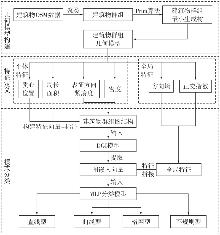
Fig. 1
Integration of DGI and MLP models for typical building group pattern recognition method flowchart"
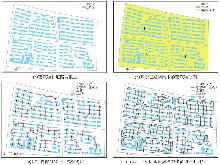
Fig. 2
Building groups and their geometric model construction"
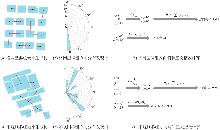
Fig. 3
Calculation of directional entropy and orthogonal index for building groups"
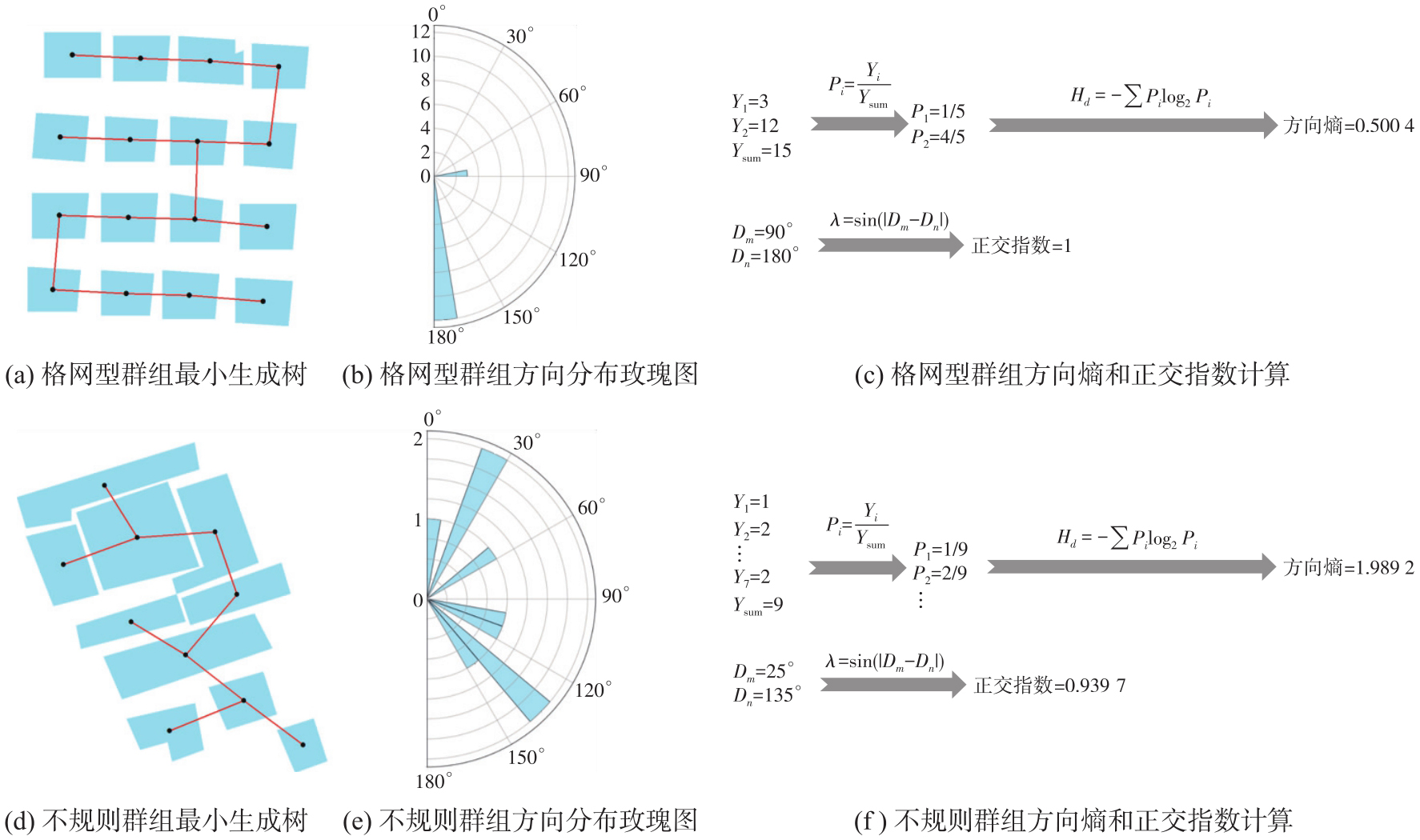
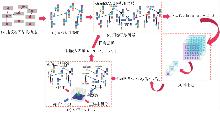
Fig. 4
The DGI model"
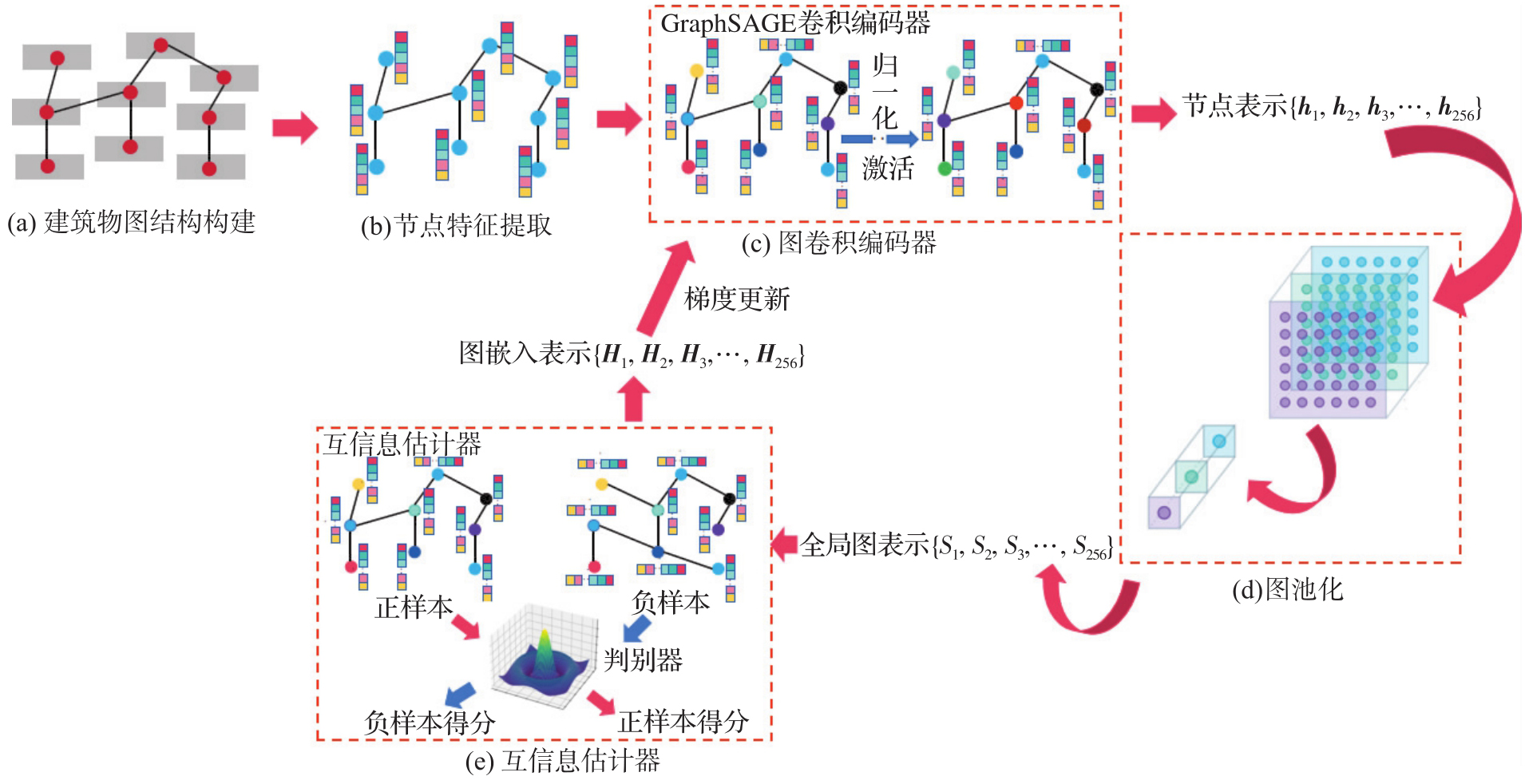
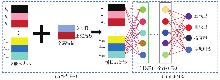
Fig. 5
Classification flowchart of MLP"
Fig. 6
Buildings and road networks in Shanghai and Shenzhen"
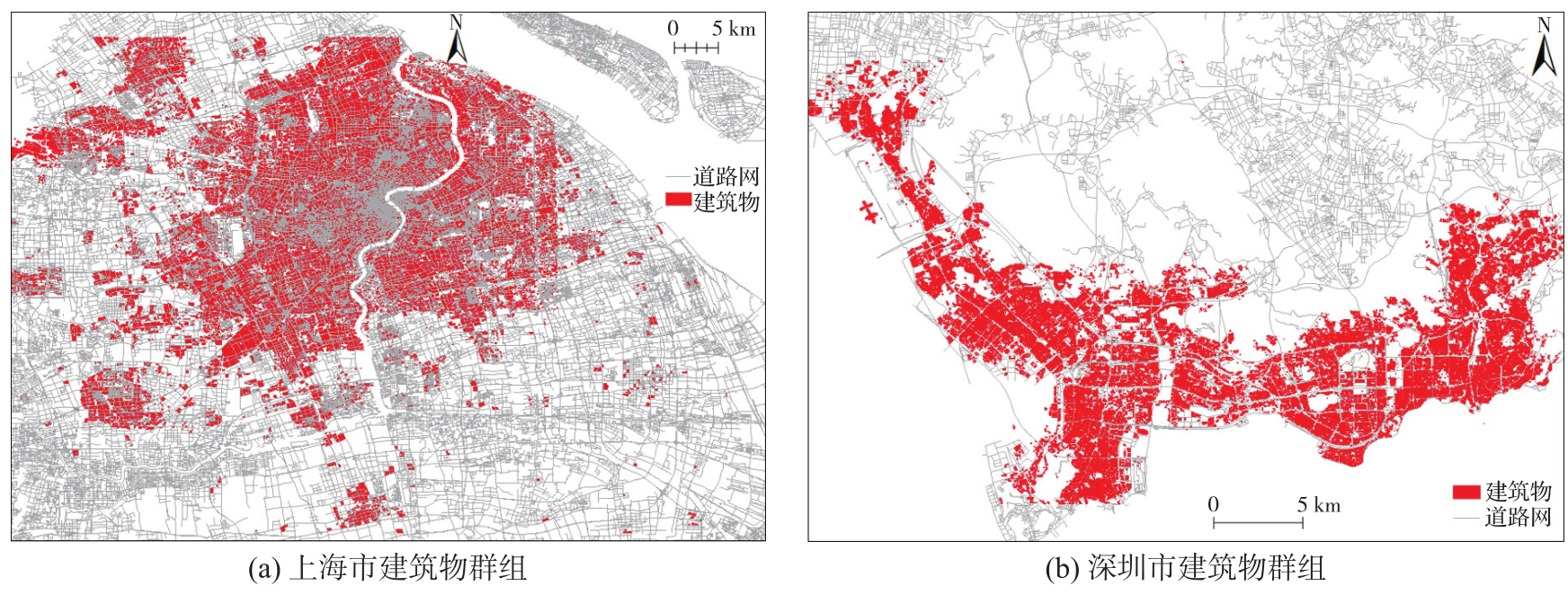
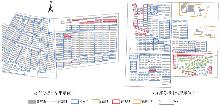
Fig. 7
Partially annotated results of building groups"
Tab. 1
Precision and recall for test set classification at different split ratios"
| 精度 | 建筑物群组模型分类 | |||
|---|---|---|---|---|
| 直线型 | 曲线型 | 格网型 | 不规则型 | |
| 精确率(8∶1∶1) | 99.00 | 99.20 | 99.80 | 99.60 |
| 召回率(8∶1∶1) | 96.19 | 99.05 | 99.00 | 99.26 |
| 精确率(6∶2∶2) | 99.40 | 99.20 | 99.70 | 99.12 |
| 召回率(6∶2∶2) | 98.10 | 99.05 | 99.36 | 99.63 |
| 精确率(4∶3∶3) | 98.80 | 98.80 | 99.60 | 99.60 |
| 召回率(4∶3∶3) | 96.51 | 97.78 | 99.14 | 99.51 |
| 精确率(2∶4∶4) | 98.35 | 98.50 | 98.95 | 99.30 |
| 召回率(2∶4∶4) | 94.76 | 97.86 | 98.71 | 98.15 |
Tab. 2
Classification accuracy of training, testing, and validation sets at different split ratios"
| 样本集划分 | 8∶1∶1 | 6∶2∶2 | 4∶3∶3 | 2∶4∶4 |
|---|---|---|---|---|
| 训练集 | 99.83 | 99.07 | 99.95 | 99.50 |
| 测试集 | 99.20 | 98.90 | 98.34 | 97.85 |
| 验证集 | 98.80 | 99.10 | 98.40 | 97.55 |
Tab. 3
Classification confusion matrix of the DGI+MLP model on the Shanghai sample test set (2∶4∶4)"
| 标注的建筑群组模型分类 | 预测建筑物群组模型分类 | |||
|---|---|---|---|---|
| 曲线型 | 直线型 | 格网型 | 不规则型 | |
| 曲线型 | 411 | 10 | 6 | 0 |
| 直线型 | 11 | 398 | 0 | 2 |
| 格网型 | 0 | 0 | 613 | 13 |
| 不规则型 | 4 | 2 | 0 | 531 |
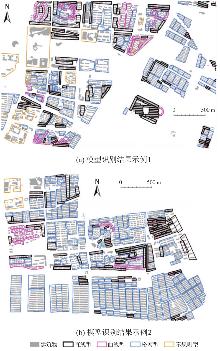
Fig. 8
Partial recognition results"
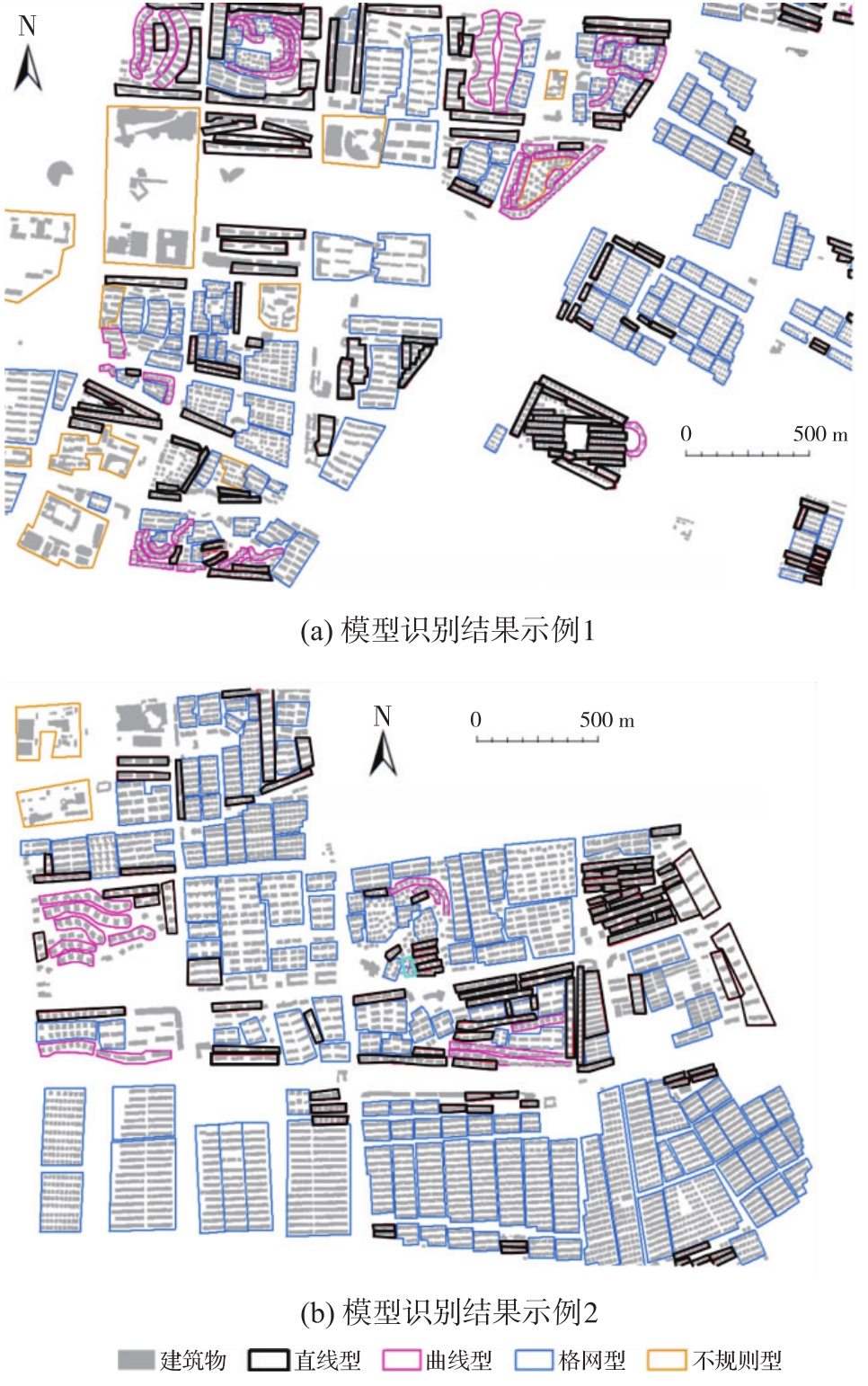
Fig. 9
Model identification sample"
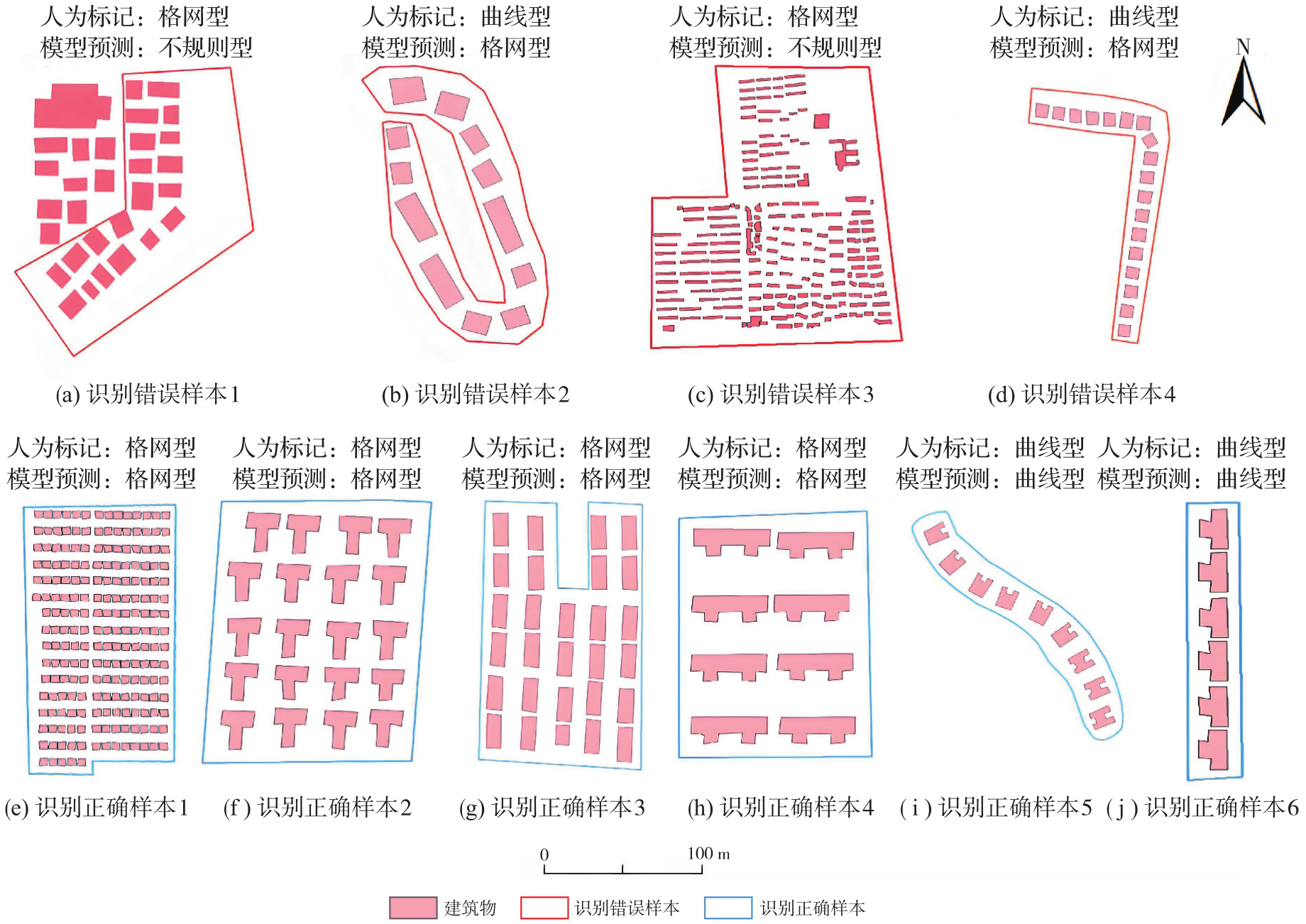
Fig. 10
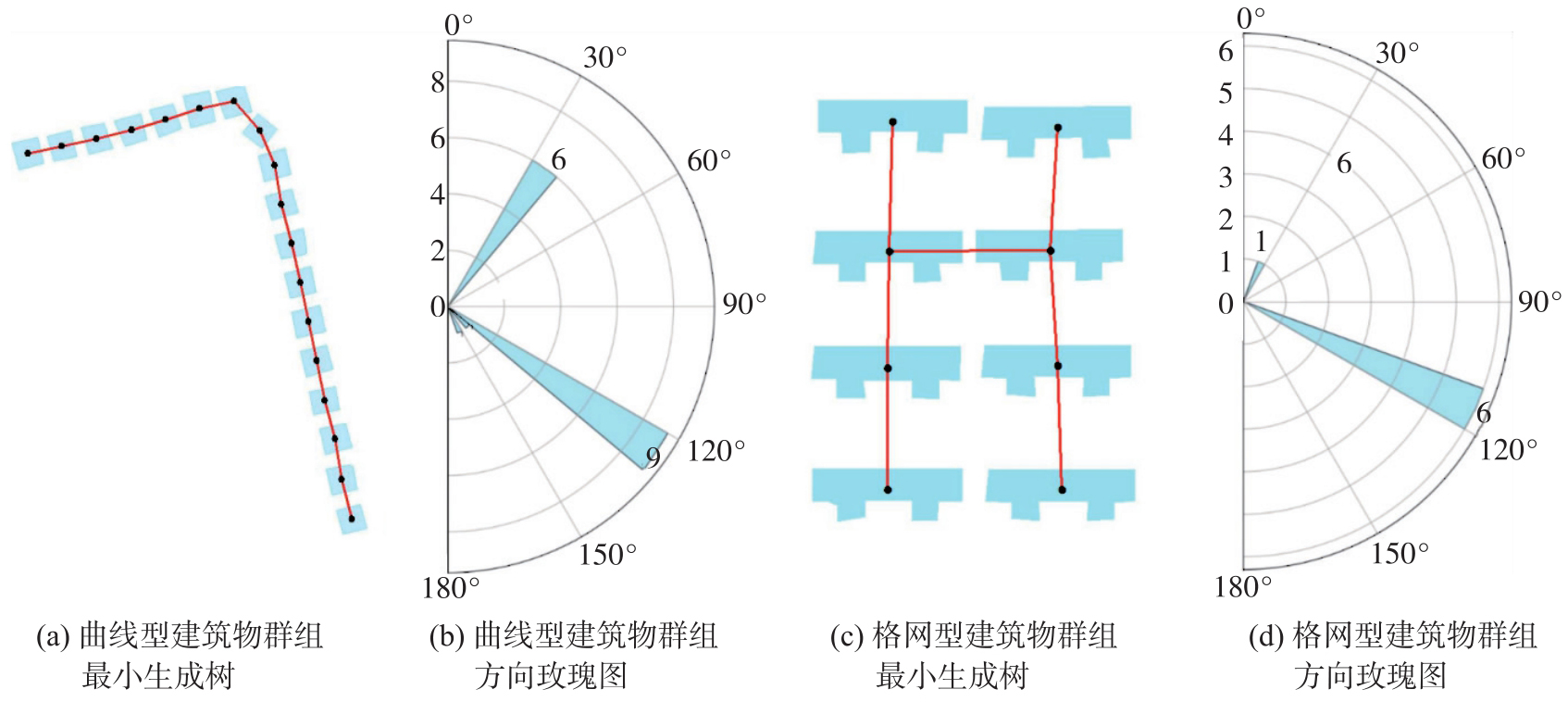
Misrecognized curved sample and its comparison"
Tab. 4
Classification confusion matrix for building cluster samples in Shenzhen"
| 标注的建筑物群组模型分类 | 预测建筑物群组模型分类 | |||
|---|---|---|---|---|
| 曲线型 | 直线型 | 格网型 | 不规则型 | |
| 曲线型 | 194 | 1 | 5 | 0 |
| 直线型 | 10 | 190 | 0 | 0 |
| 格网型 | 6 | 0 | 191 | 3 |
| 不规则型 | 0 | 2 | 0 | 198 |
Tab. 5
Classification accuracy for building cluster samples in Shenzhen"
| 建筑物群组模型分类 | 精确率 | 召回率 |
|---|---|---|
| 曲线型 | 95.38 | 97.00 |
| 直线型 | 97.44 | 95.00 |
| 格网型 | 97.42 | 94.50 |
| 不规则型 | 98.51 | 99.00 |
Tab. 6
Classification precision and recall of GCN based model"
| 样本划分比例 | 建筑物群组模型分类 | 精确率 | 召回率 |
|---|---|---|---|
| (8∶1∶1) | 直线型 | 92.38 | 92.38 |
| 曲线型 | 88.04 | 77.14 | |
| 格网型 | 87.57 | 94.87 | |
| 不规则型 | 95.96 | 93.28 | |
| (2∶4∶4) | 直线型 | 82.21 | 86.90 |
| 曲线型 | 83.29 | 75.36 | |
| 格网型 | 82.13 | 88.08 | |
| 不规则型 | 95.96 | 96.67 |
Tab. 7
Classification precision and recall of MLP model"
| 样本划分比例 | 建筑物群组模型分类 | 精确率 | 召回率 |
|---|---|---|---|
| (8∶1∶1) | 直线型 | 86.00 | 81.90 |
| 曲线型 | 80.65 | 71.43 | |
| 格网型 | 82.40 | 87.82 | |
| 不规则型 | 94.81 | 97.71 | |
| (2∶4∶4) | 直线型 | 86.39 | 65.00 |
| 曲线型 | 79.18 | 82.38 | |
| 格网型 | 76.69 | 87.92 | |
| 不规则型 | 94.60 | 93.90 |
Tab. 8
Classification precision and recall of DGCNN based model"
| 样本划分比例 | 建筑物群组模型分类 | 精确率 | 召回率 |
|---|---|---|---|
| (8∶1∶1) | 直线型 | 88.66 | 81.90 |
| 曲线型 | 95.19 | 94.29 | |
| 格网型 | 90.30 | 95.51 | |
| 不规则型 | 99.20 | 98.71 | |
| (2∶4∶4) | 直线型 | 96.07 | 93.10 |
| 曲线型 | 74.02 | 80.71 | |
| 格网型 | 87.27 | 83.90 | |
| 不规则型 | 98.70 | 98.52 |
Tab. 9
Analysis of feature importance for buildings"
| 移除类型 | 指标 | 测试集精度 |
|---|---|---|
| 移除个体特征值 | 面积 | 92.91 |
| 周长 | 95.17 | |
| 密度 | 94.23 | |
| 紧凑度 | 93.88 | |
| 表征方向 | 95.17 | |
| 移除全局特征值 | 方向熵 | 88.80 |
| 正交指数 | 92.59 |
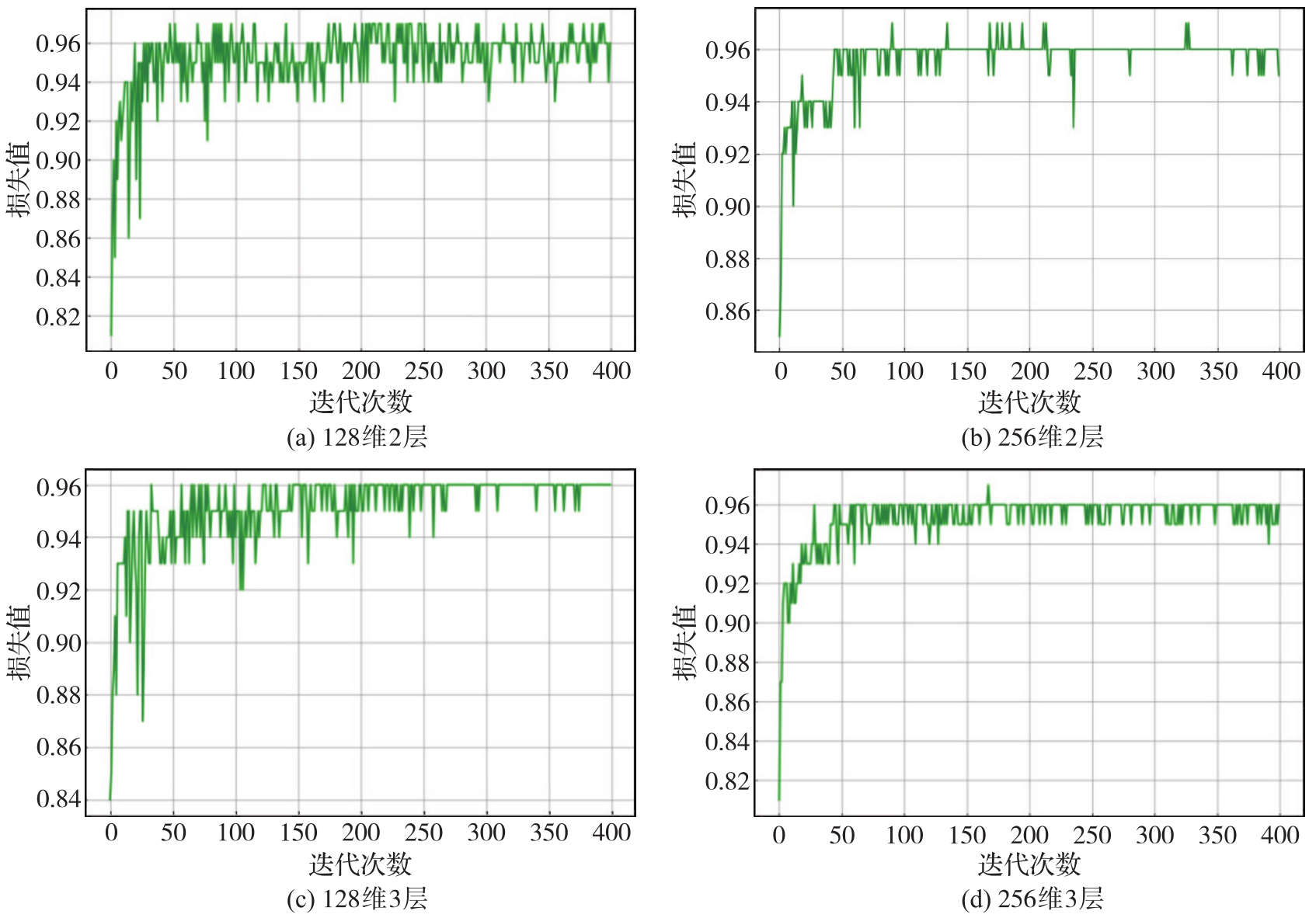
Fig. 11
Performance evaluation of the DGI+MLP model under different parameters"
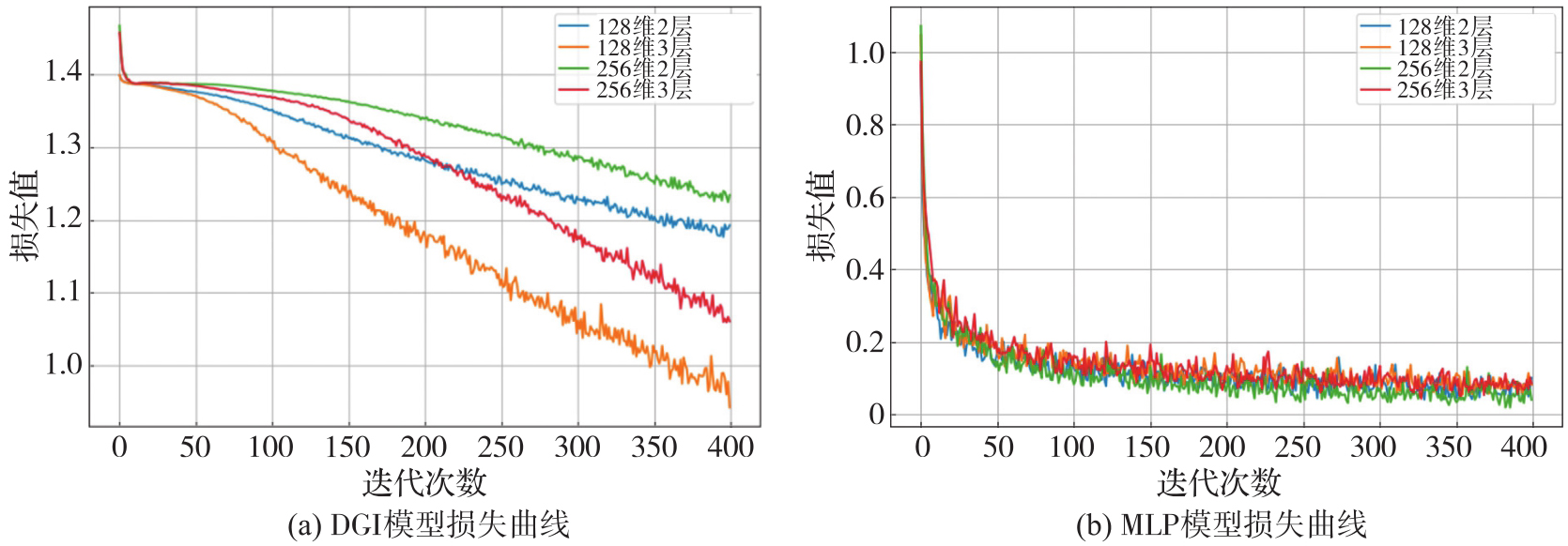
Fig. 12
Classification accuracy performance evaluation of the DGI+MLP model under different parameters"
| [1] | 武芳, 钱海忠, 邓红艳, 等. 面向地图自动综合的空间信息智能处理[M]. 北京: 科学出版社, 2008. |
| WU Fang, QIAN Haizhong, DENG Hongyan. et al. Intelligent spatial information processing for automated map generalization[M]. Beijing: Science Press, 2008. | |
| [2] | 李志林, 王继成, 谭诗腾, 等. 地理信息科学中尺度问题的30年研究现状[J]. 武汉大学学报(信息科学版), 2018, 43(12): 2233-2242. |
| LI Zhilin, WANG Jicheng, TAN Shiteng, et al. Scale in geo-information science: an overview of thirty-year development[J]. Geomatics and Information Science of Wuhan University, 2018, 43(12): 2233-2242. | |
| [3] | DU S H, SHU M, FENG C C. Representation and discovery of building patterns: a three-level relational approach[J]. International Journal of Geographical Information Science, 2015, 30(6): 1161-1186. |
| [4] | STEINIGER S. Enabling pattern-aware automated map gener alization[D]. Zurich: University of Zurich, 2007. |
| [5] | BRASSEL K E, WEIBEL R. A review and conceptual framework of automated map generalization[J]. International Journal of Geographical Information Systems, 1988, 2(3): 229-244. |
| [6] | MACKANESS W, EDWARDS G. The importance of modeling pattern and structure in automated map generalization[J]. Journal of Geographical Systems, 2007, 9(2): 147-164. |
| [7] | VANDERHAEGEN S, CANTERS F. Mapping urban form and function at city block level using spatial metrics[J]. Landscape and Urban Planning, 2017, 167: 399-409. |
| [8] | RIEDL A, KAINZ W, ELMES G A. Progress in spatial data handling: 12th International Symposium on spatial data handling[M]. Berlin: Springer, 2006: 25-26. |
| [9] | PILEHFOROOSHHA P, KARIMI M. An integrated framework for linear pattern extraction in the building group generalization process[J]. Geocarto International, 2018, 34(9): 1000-1021. |
| [10] |
行瑞星, 武芳, 巩现勇, 等. 建筑群组合直线模式识别的模板匹配方法[J]. 测绘学报, 2021, 50(6): 800-811. DOI: .
doi: 10.11947/j.AGCS.2021.20200298 |
|
XING Ruixing, WU Fang, GONG Xianyong, et al. The template matching approach to combined collinear pattern recognition in building groups[J]. Acta Geodaetica et Cartographica Sinica, 2021, 50(6): 800-811. DOI: .
doi: 10.11947/j.AGCS.2021.20200298 |
|
| [11] | CHRISTOPHE S, RUAS A. Detecting building alignments for generalisation purposes[C]//Proceedings of 2002 Advances in Spatial Data Handling. Berlin: Springer, 2002: 419-432. |
| [12] | 张志义, 禄小敏, 闫浩文, 等. 引入方向熵的建筑物群组模式识别方法[J]. 地球信息科学学报, 2024, 26(9): 2077-2092. |
| ZHANG Zhiyi, LU Xiaomin, YAN Haowen, et al. Building group pattern recognition based on directional entropy[J]. Journal of Geo-information Science, 2024, 26(9): 2077-2092. | |
| [13] | 巩现勇, 武芳. 基于图匹配的城市建筑群典型字母型分布的识别[J]. 武汉大学学报(信息科学版), 2018, 43(1): 159-166. |
| GONG Xianyong, WU Fang. A graph match approach to typical letter-like pattern recognition in urban building groups[J]. Geomatics and Information Science of Wuhan University, 2018, 43(1): 159-166. | |
| [14] |
刘慧敏, 胡文柯, 唐建波, 等. 顾及功能语义特征的建筑物空间分布模式识别方法[J]. 测绘学报, 2020, 49(5): 622-631. DOI: .
doi: 10.11947/j.AGCS.2020.20190222 |
|
LIU Huimin, HU Wenke, TANG Jianbo, et al. A method for recognizing building clusters by considering functional features of buildings[J]. Acta Geodaetica et Cartographica Sinica, 2020, 49(5): 622-631. DOI: .
doi: 10.11947/j.AGCS.2020.20190222 |
|
| [15] | ZHANG Liqiang, DENG Hao, CHEN Dong, et al. A spatial cognition-based urban building clustering approach and its applications[J]. International Journal of Geographical Information Science, 2013, 27(4): 721-740. |
| [16] | HE Xianjin, ZHANG Xinchang, XIN Qinchuan. Recognition of building group patterns in topographic maps based on graph partitioning and random forest[J]. ISPRS Journal of Photogrammetry and Remote Sensing, 2018, 136: 26-40. |
| [17] | 张自强, 刘涛, 杜萍, 等. 典型建筑物群组模式的空间图卷积模型DGCNN识别方法[J]. 武汉大学学报(信息科学版), 2024, 49(5): 868-878. |
| ZHANG Ziqiang, LIU Tao, DU Ping, et al. Recognition of typical building group patterns using spatial graph convolutional model DGCNN[J]. Geomatics and Information Science of Wuhan University, 2024, 49(5): 868-878. | |
| [18] | YAN Xiongfeng, AI Tinghua, ZHANG Xiang. Template matching and simplification method for building features based on shape cognition[J]. ISPRS International Journal of Geo-Information, 2017, 6(8): 250. |
| [19] | 孟妮娜, 王安东, 周校东. 建筑物线型排列模式识别的图卷积神经网络方法[J]. 测绘科学技术学报, 2019, 36(6): 627-631. |
| MENG Nina, WANG Andong, ZHOU Xiaodong. A graph convolutional neural network method for pattern recognition of linear building alignment[J]. Journal of Geomatics Science and Technology, 2019, 36(6): 627-631. | |
| [20] |
于洋洋, 贺康杰, 武芳, 等. 面状居民地形状分类的图卷积神经网络方法[J]. 测绘学报, 2022, 51(11): 2390-2402. DOI: .
doi: 10.11947/j.AGCS.2022.20210134 |
|
YU Yangyang, HE Kangjie, WU Fang, et al. Graph convolution neural network method for shape classification of areal settlements[J]. Acta Geodaetica et Cartographica Sinica, 2022, 51(11): 2390-2402. DOI: .
doi: 10.11947/j.AGCS.2022.20210134 |
|
| [21] | 令振飞, 刘涛, 杜萍, 等. 样本数量不平衡下的建筑群模式识别方法研究[J]. 地球信息科学学报, 2022, 24(1): 63-73. |
| LING Zhenfei, LIU Tao, DU Ping, et al. Pattern recognition of regular buildings with unbalanced sample size[J]. Journal of Geo-information Science, 2022, 24(1): 63-73. | |
| [22] | ZHAO Wenting, XU Gongping, CUI Zhen, et al. Deep graph structural infomax[C]//Proceedings of 2023 AAAI Conference on Artificial Intelligence. Washington DC: AAAI Press, 2023: 4920-4928. |
| [23] | YANG Shantian, YANG Bo. An inductive heterogeneous graph attention-based multi-agent deep graph infomax algorithm for adaptive traffic signal control[J]. Information Fusion, 2022, 88: 249-262. |
| [24] | 周智超. 基于对比学习的多视图图表示学习方法研究[D]. 广州: 华南理工大学, 2022. |
| ZHOU Zhichao. Multi-view graph representation learning algorithm based on contrastive learning[D]. Guangzhou: South China University of Technology, 2022. | |
| [25] | PINKUS A. Approximation theory of the MLP model in neural networks[J]. Acta Numerica, 1999, 8: 143-195. |
| [26] | BELLILI A, GILLOUX M, GALLINARI P. An MLP-SVM combination architecture for offline handwritten digit recognition[J]. Document Analysis and Recognition, 2003, 5(4): 244-252. |
| [27] | BANERJEE M, MITRA S, PAL S K. Rough fuzzy MLP: knowledge encoding and classification[J]. IEEE Transactions on Neural Networks, 1998, 9(6): 1203-1216. |
| [28] | 晏雄锋. 深度卷积学习支持下的建筑物模式分析[D]. 武汉: 武汉大学, 2019. |
| YAN Xiongfeng. Building pattern analysis supported by deep convolutional learning[D]. Wuhan: Wuhan University, 2019. |
| [1] | Jiayao WANG, Lin CHEN, Shiyuan CHENG, Lijun WANG, Siqi XIONG. Artificial intelligence empowering the digital-intelligent transformation of cartographic science [J]. Acta Geodaetica et Cartographica Sinica, 2026, 55(3): 381-389. |
| [2] | Shunping JI, Jin LIU, Jian GAO, Jianya GONG. An intelligent 3D reconstruction framework via deep learning based multi-view image matching [J]. Acta Geodaetica et Cartographica Sinica, 2025, 54(9): 1633-1646. |
| [3] | Jixian ZHANG, Haiyan GU, Huan NI, Haitao LI, Yi YANG, Shaopeng DING, Songman SUI. Deep learning methods for remote sensing intelligent change detection: evolution and development [J]. Acta Geodaetica et Cartographica Sinica, 2025, 54(8): 1347-1370. |
| [4] | Shuai FANG, Jiaen LIU, Jing ZHANG. Spatio-temporal fusion algorithm based on adaptive reference feature incorporation and multi-scale feature aggregation [J]. Acta Geodaetica et Cartographica Sinica, 2025, 54(8): 1476-1488. |
| [5] | Nina MENG, Fengmei LI, Xiaodong ZHOU. Data and cognition dual-driven building group generalization results and scale consistency assessment [J]. Acta Geodaetica et Cartographica Sinica, 2025, 54(7): 1318-1331. |
| [6] | Yaqing WANG, Zhonghui WANG. River network automated selection method based on heterogeneous graph convolutional networks [J]. Acta Geodaetica et Cartographica Sinica, 2025, 54(7): 1332-1345. |
| [7] | Xiaoya AN, Weiru GUO, Pengxin ZHANG, Xinxin LI, Lei SHI. Ship trajectories clustering method considering similarity in geometric position and mobility features [J]. Acta Geodaetica et Cartographica Sinica, 2025, 54(6): 1107-1121. |
| [8] | Chao WANG, Tianyu CHEN, Tong ZHANG, Tanvir AHMED, Liqiang JI, Tao XIE, Jiajun YANG, Shuai WANG. Multi-sensor optical remote sensing images change detection based on global differential enhancement module and balance penalty loss [J]. Acta Geodaetica et Cartographica Sinica, 2025, 54(5): 873-887. |
| [9] | Qingli LUO, Xueyan LI, Guoman HUANG, Honghui CHEN, Minglong XUE, Jian LI. AOSN: alpha optimal structure network for height estimation from a single SAR image in mountain areas [J]. Acta Geodaetica et Cartographica Sinica, 2025, 54(5): 888-898. |
| [10] | Wei TU, Xiangyuan CHI, Tianhong ZHAO, Jian YANG, Shiping ZHU, Deli CHEN. Multi-view spatio-temporal graph convolutional networks model for urban drainage networks flow prediction [J]. Acta Geodaetica et Cartographica Sinica, 2025, 54(2): 334-344. |
| [11] | Zhili ZHANG, Huiwei JIANG, Xiangyun HU. A minimal-interaction framework for accurate and batch extraction of geospatial objects from remote sensing imagery [J]. Acta Geodaetica et Cartographica Sinica, 2025, 54(10): 1863-1876. |
| [12] | Zhenghua ZHANG, Guoliang CHEN. A lightweight rotation-invariant network for LiDAR-based place recognition [J]. Acta Geodaetica et Cartographica Sinica, 2025, 54(1): 90-103. |
| [13] | Yan SHI, Da WANG, Min DENG, Xuexi YANG. Spatio-temporal anomaly detection: connotation transformation and implementation path from data-driven to knowledge-driven modeling [J]. Acta Geodaetica et Cartographica Sinica, 2024, 53(8): 1493-1504. |
| [14] | Xin YAN, Li SHEN, Junjie PAN, Yanshuai DAI, Jicheng WANG, Xiaoli ZHENG, Zhi-lin LI. Weakly supervised building change detection integrating multi-scale feature fusion and spatial refinement for high resolution remote sensing images [J]. Acta Geodaetica et Cartographica Sinica, 2024, 53(8): 1586-1597. |
| [15] | Jinwei BU, Kegen YU, Qiulan WANG, Linghui LI, Xinyu LIU, Xiaoqing ZUO, Jun CHANG. Deep learning retrieval method for global ocean significant wave height by integrating spaceborne GNSS-R data and multivariable parameters [J]. Acta Geodaetica et Cartographica Sinica, 2024, 53(7): 1321-1335. |
| Viewed | ||||||
|
Full text |
|
|||||
|
Abstract |
|
|||||
