

Acta Geodaetica et Cartographica Sinica ›› 2025, Vol. 54 ›› Issue (2): 308-320.doi: 10.11947/j.AGCS.2025.20240094
• Photogrammetry and Remote Sensing • Previous Articles Next Articles
Yating LIU( ), Chuanfa CHEN(), Qingxin HE, Kunyu LI
Received:2024-03-08
Online:2025-03-11
Published:2025-03-11
Contact:
Chuanfa CHEN
E-mail:chlyt2017@163.com;chencf@sdust.edu.cn
About author:LIU Yating (1998—), female, postgraduate, majors in early identification and risk analysis of geological hazards. E-mail: chlyt2017@163.com
Supported by:CLC Number:
Yating LIU, Chuanfa CHEN, Qingxin HE, Kunyu LI. Landslide susceptibility evaluation considering positive and negative sample optimization[J]. Acta Geodaetica et Cartographica Sinica, 2025, 54(2): 308-320.
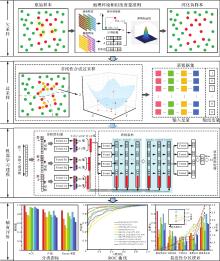
Fig. 1
Flowchart of the proposed method"

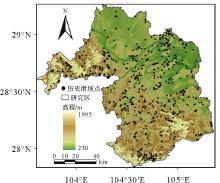
Fig. 2
Distribution of landslide disaster points in the study area"

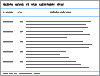
Tab. 1
Introduction of data"
| 分类 | 特征因子 | 分辨率 | 数据源 |
|---|---|---|---|
| 地形地貌 | 高程、坡度、坡向、平面曲率、剖面曲率、TWI | 30 m | |
| 地质因子 | 岩性 | 1∶50 000 | |
| 断层距离 | 1∶50 000 | ||
| PGA | 1∶4 000 000 | ||
| 水文环境 | NDVI | 30 m | |
| 年降雨量 | 30 m | ||
| 河流距离 | 1∶500 000 | ||
| 土地利用 | 10 m | ||
| 人类工程 | 道路距离 | 1∶500 000 | |
| POI密度 | 1∶50 000 |
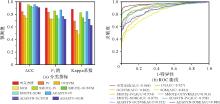
Fig. 3
Precision evaluation"

Tab. 2
Comparison of the accuracy of ensemble learning algorithms"
| 算法 | ACC | F1值 | Kappa系数 | AUC |
|---|---|---|---|---|
| gcForest | 0.989 | 0.903 | 0.882 | 0.968 |
| LightGBM | 0.973 | 0.748 | 0.734 | 0.947 |
| XGBoost | 0.980 | 0.804 | 0.794 | 0.957 |
| RF | 0.984 | 0.838 | 0.829 | 0.953 |
Fig. 4
Model accuracy under different sample deletion rates"
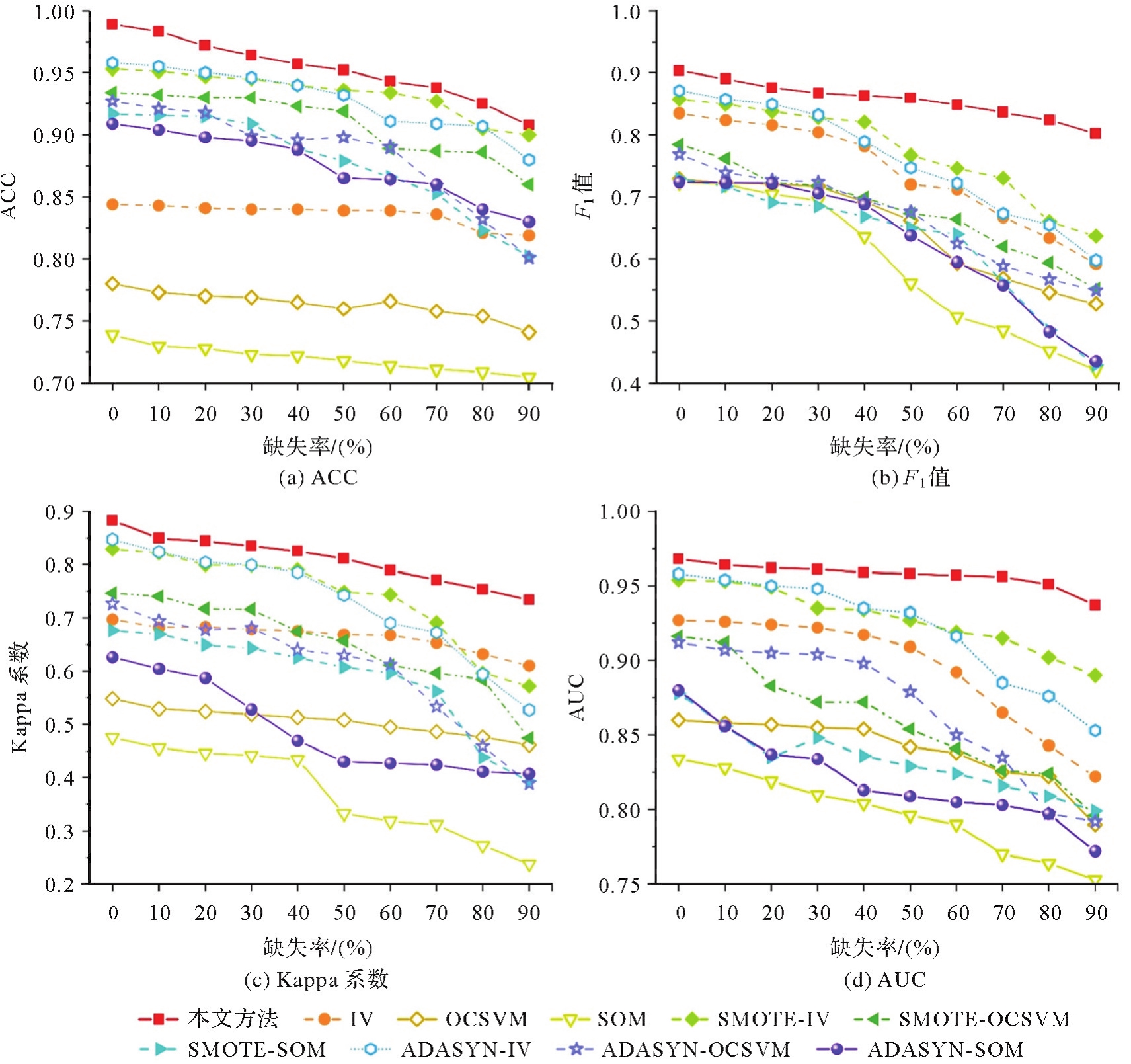
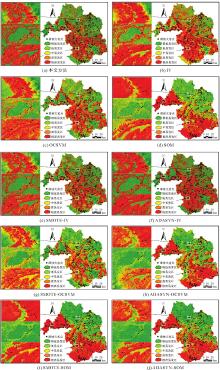
Fig. 5
Vulnerability zoning map of different methods"

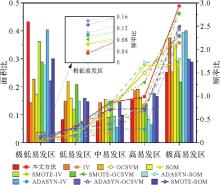
Fig. 6
Statistical analysis of frequency ratio of landslide susceptibility grade"

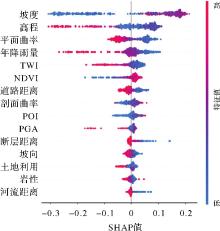
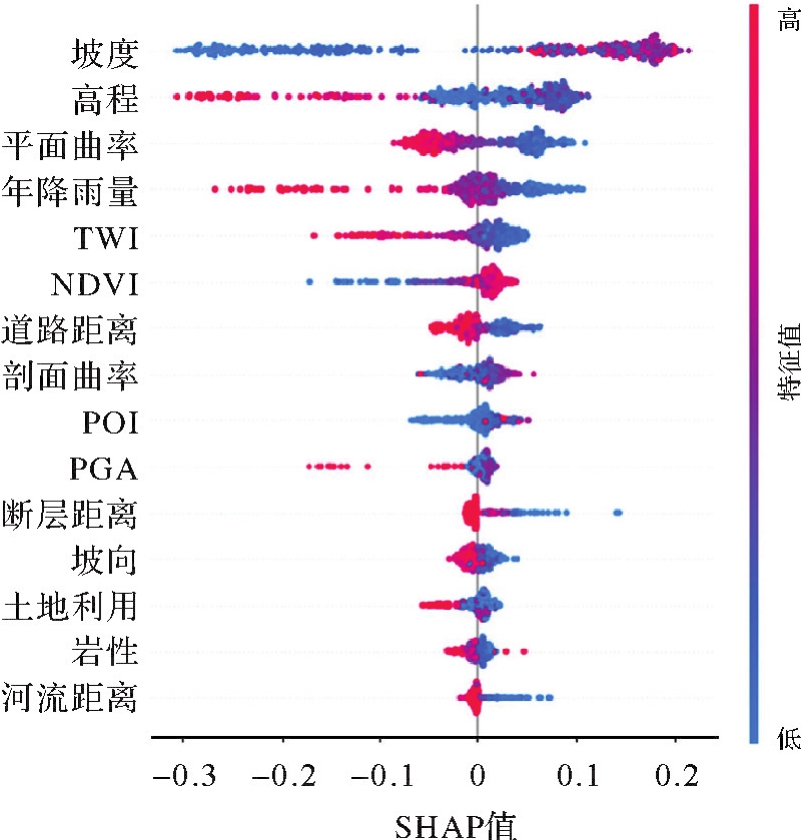
Fig. 7
Summary plot of SHAP values of landslide characteristic factors"
| [1] |
吴琼, 葛大庆, 于峻川, 等. 广域滑坡灾害隐患InSAR显著性形变区深度学习识别技术[J]. 测绘学报, 2022, 51(10): 2046-2055. DOI:.
doi: 10.11947/j.AGCS.2022.20220303 |
|
WU Qiong, GE Daqing, YU Junchuan, et al. Deep learning identification technology of InSAR significant deformation zone of potential landslide hazard at large scale[J]. Acta Geodaetica et Cartographica Sinica, 2022, 51(10): 2046-2055. DOI:.
doi: 10.11947/j.AGCS.2022.20220303 |
|
| [2] | 中华人民共和国自然资源部. 全国地质灾害防治“十四五”规划[EB/OL]. [2024-02-02]. http://gi.mnr.gov.cn/202301/t20230103_2772003.html. |
| Ministry of Natural Resources of the People's Republic of China. The 14th five-year plan for geological disaster prevention and control[EB/OL]. [2024-02-02]. http://gi.mnr.gov.cn/202301/t20230103_2772003.html. | |
| [3] |
许强, 朱星, 李为乐, 等. “天-空-地”协同滑坡监测技术进展[J]. 测绘学报, 2022, 51(7): 1416-1436. DOI:.
doi: 10.11947/j.AGCS.2022.20220320 |
|
XU Qiang, ZHU Xing, LI Weile, et al. Technical progress of space-air-ground collaborative monitoring of landslide[J]. Acta Geodaetica et Cartographica Sinica, 2022, 51(7): 1416-1436. DOI:.
doi: 10.11947/j.AGCS.2022.20220320 |
|
| [4] | 朱庆, 张曼迪, 丁雨淋, 等. 环境因子空间特征约束的区域滑坡敏感性模糊逻辑分析方法[J]. 武汉大学学报(信息科学版), 2021, 46(10): 1431-1440. |
| ZHU Qing, ZHANG Mandi, DING Yulin, et al. Fuzzy logic approach for regional landslide susceptibility analysis constrained by spatial characteristics of environmental factors[J]. Geomatics and Information Science of Wuhan University, 2021, 46(10): 1431-1440. | |
| [5] | 朱阿兴, 裴韬, 乔建平, 等. 基于专家知识的滑坡危险性模糊评估方法[J]. 地理科学进展, 2006, 25(4): 1-12. |
| ZHU Axing, PEI Tao, QIAO Jianping, et al. A landslide susceptibility mapping approach using expert knowledge and fuzzy logic under GIS[J]. Progress in Geography, 2006, 25(4): 1-12. | |
| [6] | ZHU Axing, MIAO Yamin, WANG Rongxun, et al. A comparative study of an expert knowledge-based model and two data-driven models for landslide susceptibility mapping[J]. CATENA, 2018, 166: 317-327. |
| [7] | REICHENBACH P, ROSSI M, MALAMUD B D, et al. A review of statistically-based landslide susceptibility models[J]. Earth-Science Reviews, 2018, 180: 60-91. |
| [8] | ACHU A L, AJU C D, DI NAPOLI M, et al. Machine-learning based landslide susceptibility modelling with emphasis on uncertainty analysis[J]. Geoscience Frontiers, 2023, 14(6): 101657. |
| [9] | GOETZ J N, BRENNING A, PETSCHKO H, et al. Evaluating machine learning and statistical prediction techniques for landslide susceptibility modeling[J]. Computers & Geosciences, 2015, 81: 1-11. |
| [10] | CHANG Zhilu, HUANG Jinsong, HUANG Faming, et al. Uncertainty analysis of non-landslide sample selection in landslide susceptibility prediction using slope unit-based machine learning models[J]. Gondwana Research, 2023, 117: 307-320. |
| [11] |
朱庆, 曾浩炜, 丁雨淋, 等. 重大滑坡隐患分析方法综述[J]. 测绘学报, 2019, 48(12): 1551-1561. DOI:.
doi: 10.11947/j.AGCS.2019.20190452 |
|
ZHU Qing, ZENG Haowei, DING Yulin, et al. A review of major potential landslide hazards analysis[J]. Acta Geodaetica et Cartographica Sinica, 2019, 48(12): 1551-1561. DOI:.
doi: 10.11947/j.AGCS.2019.20190452 |
|
| [12] | HU Xudong, ZHANG Han, MEI Hongbo, et al. Landslide susceptibility mapping using the stacking ensemble machine learning method in Lushui, Southwest China[J]. Applied Sciences, 2020, 10(11): 4016. |
| [13] | 童莹萍, 冯伟, 宋怡佳, 等. 面向不平衡高光谱遥感分类的SMOTE和旋转森林动态集成算法[J]. 遥感学报, 2022, 26(11): 2369-2381. |
| TONG Yingping, FENG Wei, SONG Yijia, et al. Dynamic ensemble algorithm of SMOTE and rotation forest for imbalanced hyperspectral remote sensing classification[J]. National Remote Sensing Bulletin, 2022, 26(11): 2369-2381. | |
| [14] | ZHAO Zhongguo, XU Zhangyan, HU Chuli, et al. Geographically weighted neural network considering spatial heterogeneity for landslide susceptibility mapping: a case study of Yichang city, China[J]. CATENA, 2024, 234: 107590. |
| [15] | 陈飞, 蔡超, 李小双, 等. 基于信息量与神经网络模型的滑坡易发性评价[J]. 岩石力学与工程学报, 2020, 39(S1): 2859-2870. |
| CHEN Fei, CAI Chao, LI Xiaoshuang, et al. Evaluation of landslide susceptibility based on information volume and neural network model[J]. Chinese Journal of Rock Mechanics and Engineering, 2020, 39(S1): 2859-2870. | |
| [16] | 李梦. 基于SOM-CNN的陕西省滑坡易发性分析[D]. 武汉: 武汉大学, 2020. |
| LI Meng. Analysis of landslide susceptibility in Shaanxi province based on SOM-CNN[D]. Wuhan: Wuhan University, 2020. | |
| [17] | HONG Haoyuan, MIAO Yamin, LIU Junzhi, et al. Exploring the effects of the design and quantity of absence data on the performance of random forest-based landslide susceptibility mapping[J]. CATENA, 2019, 176: 45-64. |
| [18] | 缪亚敏, 朱阿兴, 杨琳, 等. 滑坡危险度评价对BCS负样本采样的敏感性[J]. 山地学报, 2016, 34(4): 432-441. |
| MIAO Yamin, ZHU Axing, YANG Lin, et al. Sensitivity of BCS for sampling landslide absence data in landslide susceptibility assessment[J]. Mountain Research, 2016, 34(4): 432-441. | |
| [19] | 黄发明, 曾诗怡, 姚池, 等. 滑坡易发性预测建模的不确定性:不同“非滑坡样本”选择方式的影响[J]. 工程科学与技术, 2024, 56(1): 169-182. |
| HUANG Faming, ZENG Shiyi, YAO Chi, et al. Uncertainties of landslide susceptibility prediction modeling: influence of different selection methods of “non-landslide samples”[J]. Advanced Engineering Sciences, 2024, 56(1): 169-182. | |
| [20] | WANG Yumiao, WU Xueling, CHEN Zhangjian, et al. Optimizing the predictive ability of machine learning methods for landslide susceptibility mapping using SMOTE for Lishui city in Zhejiang province, China[J]. International Journal of Environmental Research and Public Health, 2019, 16(3): 368. |
| [21] | ZHANG Shuhao, YU Peiqiao. Seismic landslide susceptibility assessment based on ADASYN-LDA model[J]. IOP Conference Series: Earth and Environmental Science, 2020, 525(1): 012087. |
| [22] | ZHU Tuanfei, LIN Yaping, LIU Yonghe. Improving interpolation-based oversampling for imbalanced data learning[J]. Knowledge-Based Systems, 2020, 187: 104826. |
| [23] | 吴宏阳, 周超, 梁鑫, 等. 基于样本优化策略研究的滑坡易发性评价[J]. 武汉大学学报(信息科学版), 2024, 49(8): 1492-1502. |
| WU Hongyang, ZHOU Chao, LIANG Xin, et al. Evaluation of landslide susceptibility based on sample optimization strategy research[J]. Geomatics and Information Science of Wuhan University, 2024, 49(8): 1492-1502. | |
| [24] | 朱阿兴, 闾国年, 周成虎, 等. 地理相似性:地理学的第三定律?[J]. 地球信息科学学报, 2020, 22(4): 673-679. |
| ZHU Axing, LÜ Guonian, ZHOU Chenghu, et al. Geographic similarity: third law of geography?[J]. Journal of Geo-information Science, 2020, 22(4): 673-679. | |
| [25] | SILVERMAN B W. Density estimation for statistics and data analysis[M]. New York: Routledge, 2017. |
| [26] | REYNOLDS A P, RICHARDS G, DE LA IGLESIA B, et al. Clustering rules: a comparison of partitioning and hierarchical clustering algorithms[J]. Journal of Mathematical Modelling and Algorithms, 2006, 5(4): 475-504. |
| [27] | ZHOU Zhihua, FENG Ji. Deep forest[J]. National Science Review, 2019, 6(1): 74-86. |
| [28] | 王琛. 基于地质灾害的宜宾市乡镇聚落选址适宜性研究[D]. 成都: 西华大学, 2022. |
| WANG Chen. Research on the suitability of site selection of township settlements in Yibin city based on geological disasters[D]. Chengdu: Xihua University, 2022. | |
| [29] | 武雪玲, 任福, 牛瑞卿, 等. 斜坡单元支持下的滑坡易发性评价支持向量机模型[J]. 武汉大学学报(信息科学版), 2013, 38(12): 1499-1503. |
| WU Xueling, REN Fu, NIU Ruiqing, et al. Landslide spatial prediction based on slopeunits and support vector machines[J]. Geomatics and Information Science of Wuhan University, 2013, 38(12): 1499-1503. | |
| [30] | ZHOU Chao, YIN Kunlong, CAO Ying, et al. Landslide susceptibility modeling applying machine learning methods: a case study from Longju in the Three Gorges Reservoir area, China[J]. Computers & Geosciences, 2018, 112: 23-37. |
| [31] | 刘坚, 李树林, 陈涛. 基于优化随机森林模型的滑坡易发性评价[J]. 武汉大学学报(信息科学版), 2018, 43(7): 1085-1091. |
| LIU Jian, LI Shulin, CHEN Tao. Landslide susceptibility assesment based on optimized random forest model[J]. Geomatics and Information Science of Wuhan University, 2018, 43(7): 1085-1091. | |
| [32] |
刘纪平, 梁恩婕, 徐胜华, 等. 顾及样本优化选择的多核支持向量机滑坡灾害易发性分析评价[J]. 测绘学报, 2022, 51(10): 2034-2045. DOI:.
doi: 10.11947/j.AGCS.2022.20220326 |
|
LIU Jiping, LIANG Enjie, XU Shenghua, et al. Multi-kernel support vector machine considering sample optimization selection for analysis and evaluation of landslide disaster susceptibility[J]. Acta Geodaetica et Cartographica Sinica, 2022, 51(10): 2034-2045. DOI:.
doi: 10.11947/j.AGCS.2022.20220326 |
|
| [33] |
刘雅婷, 陈传法. 顾及空间异质性和特征优选的滑坡易发性评价方法[J]. 测绘学报, 2024, 53(7): 1417-1428. DOI:.
doi: 10.11947/j.AGCS.2024.20230162 |
|
LIU Yating, CHEN Chuanfa. Landslide susceptibility evaluation method considering spatial heterogeneity and feature selection[J]. Acta Geodaetica et Cartographica Sinica, 2024, 53(7): 1417-1428. DOI:.
doi: 10.11947/j.AGCS.2024.20230162 |
|
| [34] | SHARMA N, SAHARIA M, RAMANA G V. High resolution landslide susceptibility mapping using ensemble machine learning and geospatial big data[J]. CATENA, 2024, 235: 107653. |
| [1] | Xin HUANG, Jian YE, Chengbing LIU, Qiuyu ZENG, Wanxin GUO, Zhikai GUO. A Stacking-SHAP ensemble method for landslide susceptibility prediction with high accuracy and interpretability [J]. Acta Geodaetica et Cartographica Sinica, 2025, 54(10): 1826-1840. |
| [2] | Jichao LÜ, Rui ZHANG, Xu HE, Ruikai HONG, Age SHAMA, Guoxiang LIU. Multi-branch network assessment and dynamic change analysis of wide-area landslide susceptibility [J]. Acta Geodaetica et Cartographica Sinica, 2025, 54(1): 104-122. |
| [3] | Yating LIU, Chuanfa CHEN. Landslide susceptibility evaluation method considering spatial heterogeneity and feature selection [J]. Acta Geodaetica et Cartographica Sinica, 2024, 53(7): 1417-1428. |
| [4] | LUO Huiyuan, JIANG Yanan, XU Qiang, LIAO Lu, YAN Aoxiang, LIU Chenwei. A spatio-temporal network for landslide displacement prediction based on deep learning [J]. Acta Geodaetica et Cartographica Sinica, 2022, 51(10): 2160-2170. |
| [5] | YUAN Bo. NMF linear blind unmixing method based on mixed pixel's spatial and spectral correlation model [J]. Acta Geodaetica et Cartographica Sinica, 2019, 48(9): 1151-1160. |
| [6] | LIU Zhaoxin, ZHAO Liaoying, LI Xiaorun, CHEN Shuhan. Linear feature detection for hyperspectral subpixel mapping [J]. Acta Geodaetica et Cartographica Sinica, 2019, 48(11): 1464-1474. |
| [7] | WANG Shaoyu, JIAO Hongzan, ZHONG Yanfei. A Modified FCM Classifier Constrained by Conditional Random Field Model for Remote Sensing Imagery [J]. Acta Geodaetica et Cartographica Sinica, 2016, 45(12): 1441-1447. |
| [8] | ZHANG Ying, ZHANG Jingxiong. Measure of Information Content of Remotely Sensed Images Accounting for Spatial Correlation [J]. Acta Geodaetica et Cartographica Sinica, 2015, 44(10): 1117-1124. |
| [9] | . A Quadtree InSAR Data Reduction Method Based on Covariance Function [J]. Acta Geodaetica et Cartographica Sinica, 2014, 43(5): 486-492. |
| [10] | . A Robust SVR Image Fusion Method Based on Local Spectral and Spatial Correlation [J]. Acta Geodaetica et Cartographica Sinica, 2013, 42(4): 0-0. |
| Viewed | ||||||
|
Full text |
|
|||||
|
Abstract |
|
|||||
