

Acta Geodaetica et Cartographica Sinica ›› 2026, Vol. 55 ›› Issue (10): 1780-1796.doi: 10.11947/j.AGCS.2026.20260108
• Geodesy and Navigation • Previous Articles Next Articles
Jian Li1( ), Hongdong Fan1(), Xiaoxiong Gao2, Jun Wang1
Received:2026-03-26
Revised:2026-09-14
Online:2026-11-16
Published:2026-11-16
Contact:
Hongdong Fan
E-mail:ts24160020a31ld@cumt.edu.cn;cumtfanhd@163.com
About author:Li Jian (2002—), male, PhD candidate, majors in InSAR data processing and its application in surface deformation monitoring. E-mail: ts24160020a31ld@cumt.edu.cn
Supported by:CLC Number:
Jian Li, Hongdong Fan, Xiaoxiong Gao, Jun Wang. A circular variance iterative interferometric phase filtering algorithm with frequency-domain quantization error compensation[J]. Acta Geodaetica et Cartographica Sinica, 2026, 55(10): 1780-1796.
Tab. 1
Parameter settings of the fractal phase and coherence physical model"
| 参数类别 | 参数符号 | 参数含义 | 设定值 |
|---|---|---|---|
| 网格与坐标参量 | N | 图像尺寸 | 256 |
| (xc,yc) | 图像中心坐标 | (128,128) | |
| 分形相位参量 | α | 频谱衰减指数 | 1.8 |
| Ascale | 幅度缩放因子 | 4π | |
| 地形山脊参量 | θ | 旋转偏角 | 45° |
| Hmax | 山脊高度 | 25π | |
| σx | 山脊x方向标准差 | N/10 | |
| σy | 山脊y方向标准差 | N/1.5 | |
| 物理相干性参量 | ρtex | 植被/纹理去相干范围 | 区间[0.3,0.9]随机起伏 |
| Cgeom | 几何去相干敏感度调节因子 | 2.0 | |
| ρthermal | 热噪声起伏范围 | 区间[0.95,1.0] |
Fig. 1
Simulated phase and coherence"
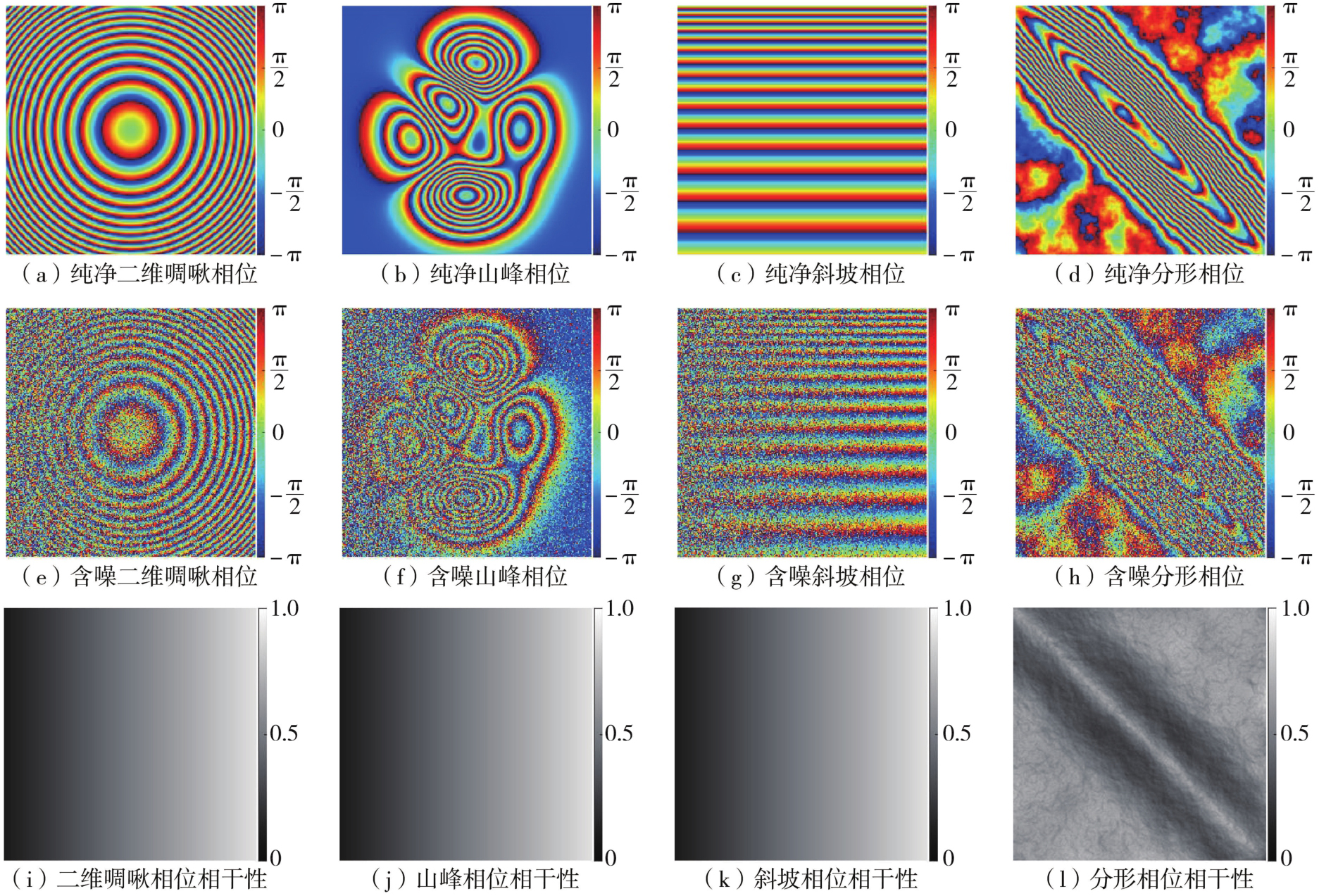
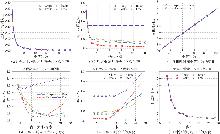
Fig. 2
Convergence and parameter sensitivity analysis of the QEC-CVIF algorithm"
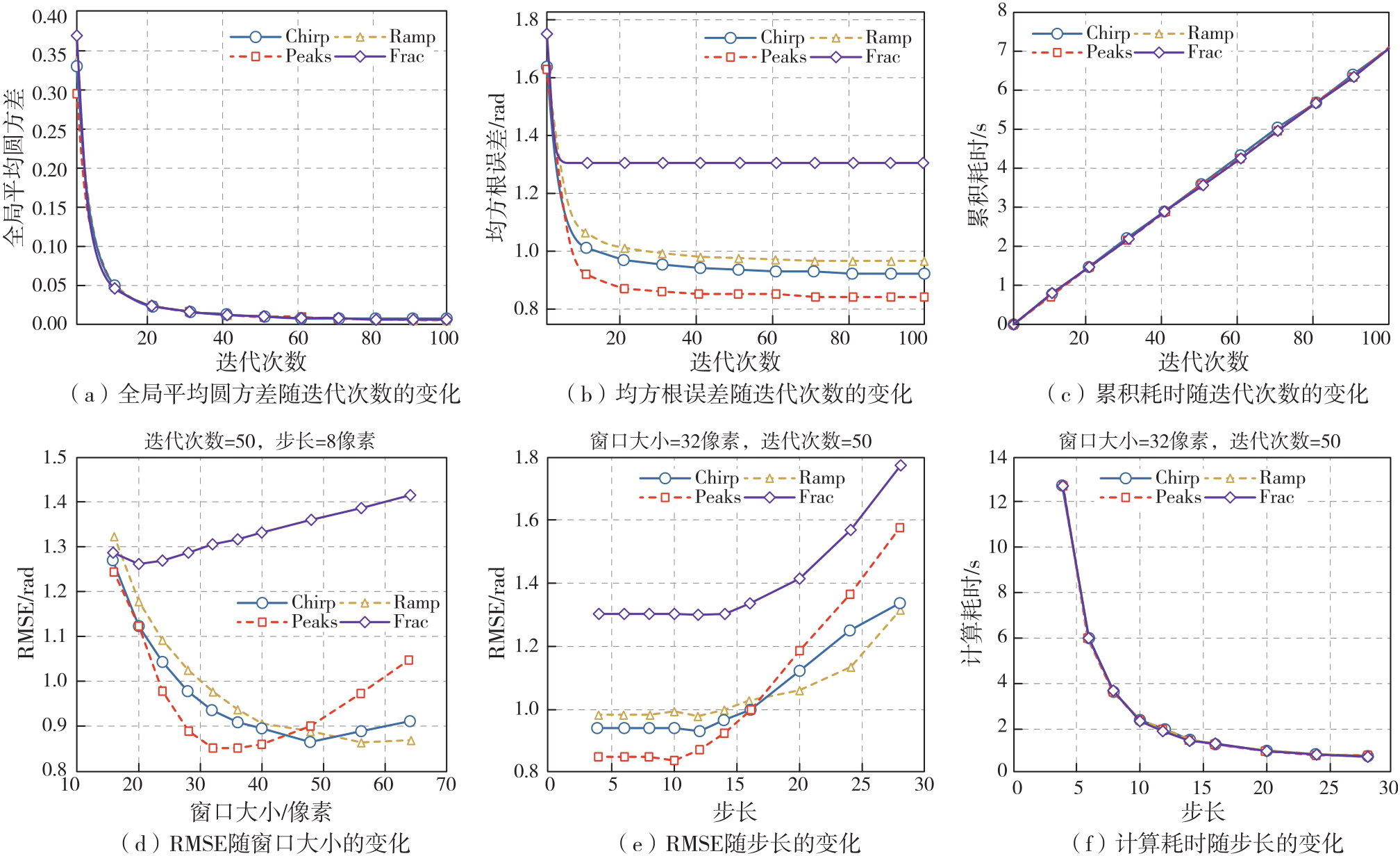
Fig. 3
Filtering results and corresponding absolute error of the 2D Chirp phase"
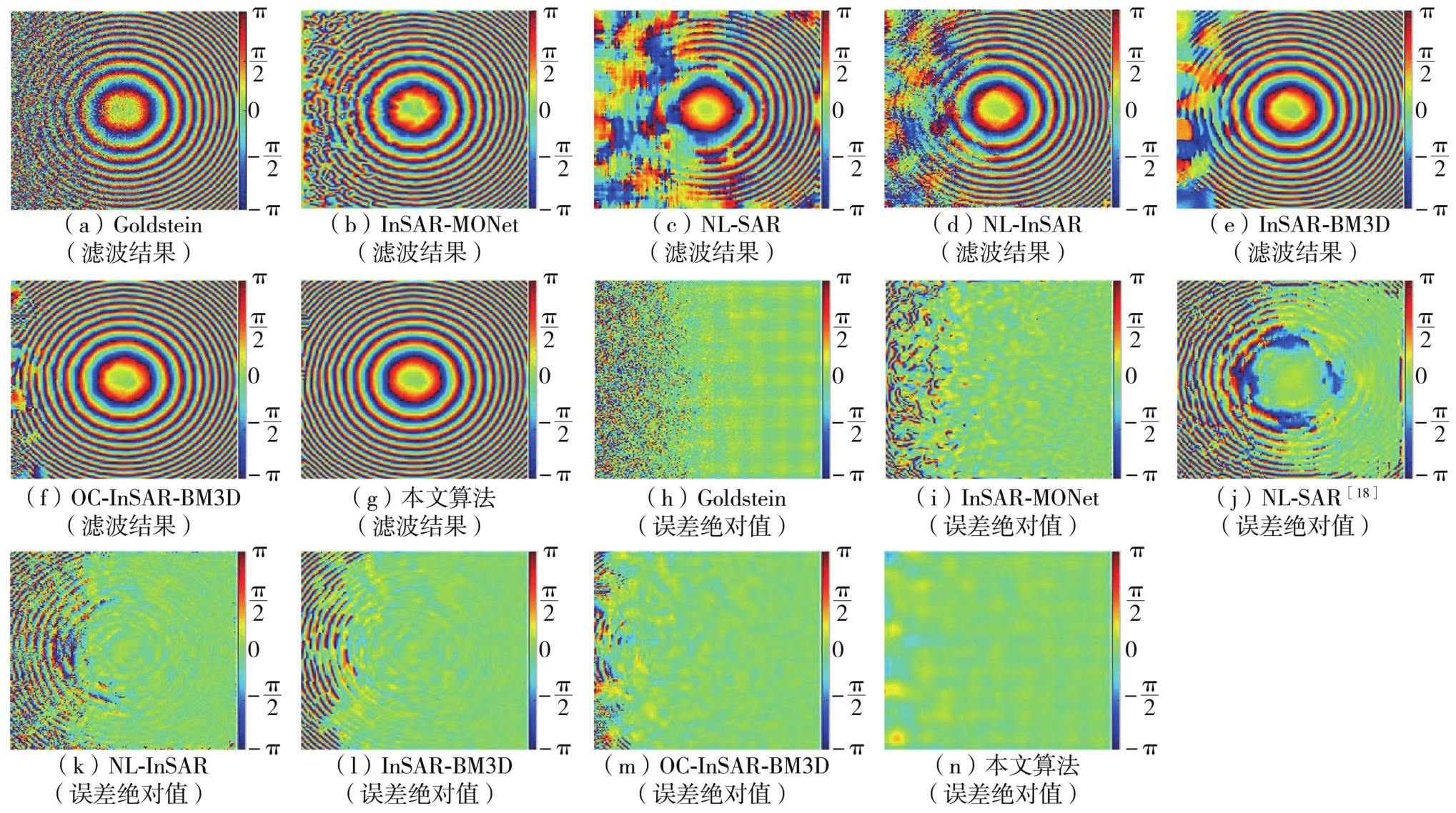
Fig. 4
Filtering results and corresponding absolute error of the Peaks phase"

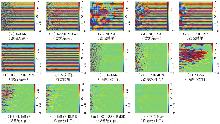
Fig. 5
Filtering results and corresponding absolute error of the Ramp phase"

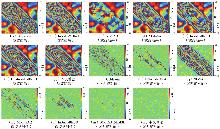
Fig. 6
Filtering results and corresponding absolute error of the Frac phase"

Tab. 2
Statistical results of quantitative evaluation indicators for simulated data"
| 模拟数据类型 | 指标 | Goldstein | InSAR-MONet | NL-SAR | NL-InSAR | InSAR-BM3D | OC-InSAR-BM3D | 本文算法 |
|---|---|---|---|---|---|---|---|---|
| 二维啁啾相位 | SSIM | 0.42 | 0.55 | 0.29 | 0.46 | 0.61 | 0.71 | 0.79 |
| RMSE | 1.68 | 1.39 | 1.91 | 1.62 | 1.32 | 1.11 | 0.88 | |
| PSNR | 5.43 | 7.07 | 4.33 | 5.75 | 7.51 | 9.00 | 11.10 | |
| RPN | 5904.00 | 438.00 | 713.00 | 2664.00 | 120.00 | 533.00 | 0.00 | |
| 山峰相位 | SSIM | 0.34 | 0.56 | 0.38 | 0.50 | 0.74 | 0.78 | 0.79 |
| RMSE | 1.83 | 1.32 | 1.84 | 1.30 | 1.01 | 0.96 | 0.85 | |
| PSNR | 4.70 | 7.52 | 4.64 | 7.66 | 9.84 | 10.33 | 11.33 | |
| RPN | 8346.00 | 308.00 | 466.00 | 768.00 | 10.00 | 4.00 | 2.00 | |
| 斜坡相位 | SSIM | 0.47 | 0.57 | 0.27 | 0.48 | 0.66 | 0.73 | 0.79 |
| RMSE | 1.59 | 1.36 | 2.17 | 1.61 | 1.34 | 1.11 | 0.95 | |
| PSNR | 5.91 | 7.30 | 3.22 | 5.80 | 7.42 | 9.02 | 10.39 | |
| RPN | 4466.00 | 292.00 | 472.00 | 1856.00 | 37.00 | 440.00 | 0.00 | |
| 分形相位 | SSIM | 0.23 | 0.45 | 0.18 | 0.36 | 0.46 | 0.52 | 0.50 |
| RMSE | 1.87 | 1.47 | 2.13 | 1.65 | 1.46 | 1.29 | 1.30 | |
| PSNR | 4.49 | 6.58 | 3.39 | 5.58 | 6.63 | 7.71 | 7.63 | |
| RPN | 7297.00 | 486.00 | 488.00 | 2369.00 | 220.00 | 105.00 | 10.00 |
Tab. 3
Comparison of root mean square error for unwrapped simulated data"
| 模拟数据类型 | Goldstein | InSAR-MONet | NL-SAR | NL-InSAR | InSAR-BM3D | OC-InSAR-BM3D | 本文算法 |
|---|---|---|---|---|---|---|---|
| 二维啁啾相位 | 7.75 | 5.63 | 19.65 | 8.97 | 8.05 | 2.21 | 0.20 |
| 山峰相位 | 2.97 | 1.23 | 9.35 | 1.59 | 0.31 | 0.23 | 0.24 |
| 斜坡相位 | 2.11 | 2.82 | 12.03 | 10.72 | 6.32 | 0.65 | 0.15 |
| 分形相位 | 11.64 | 6.20 | 24.17 | 6.48 | 10.44 | 1.45 | 0.34 |
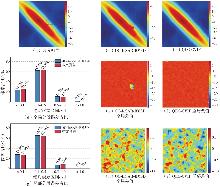
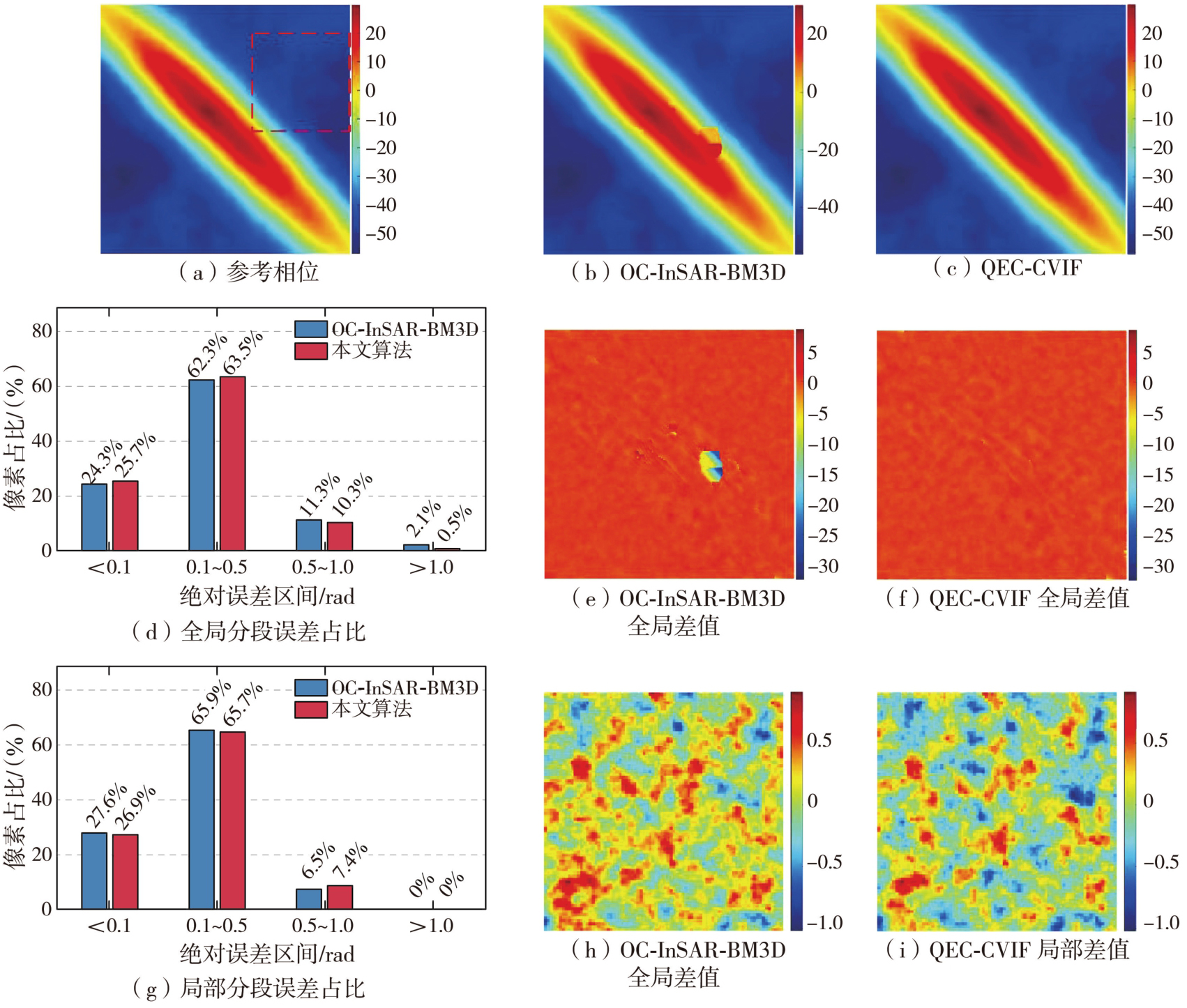
Fig. 7
Unwrapped results of different algorithms for the Frac phase and their differences from the reference phase"
Tab. 4
Results of computational efficiency for simulated data"
| 算法 | Goldstein | InSAR-MONet | NL-SAR | NL-InSAR | InSAR-BM3D | OC-InSAR-BM3D | 本文算法 |
|---|---|---|---|---|---|---|---|
| 运行耗时/s | 1.08 | 2.45 | 105.37 | 50.55 | 96.48 | 162.28 | 40.32 |
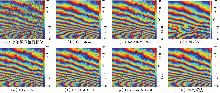
Fig. 8
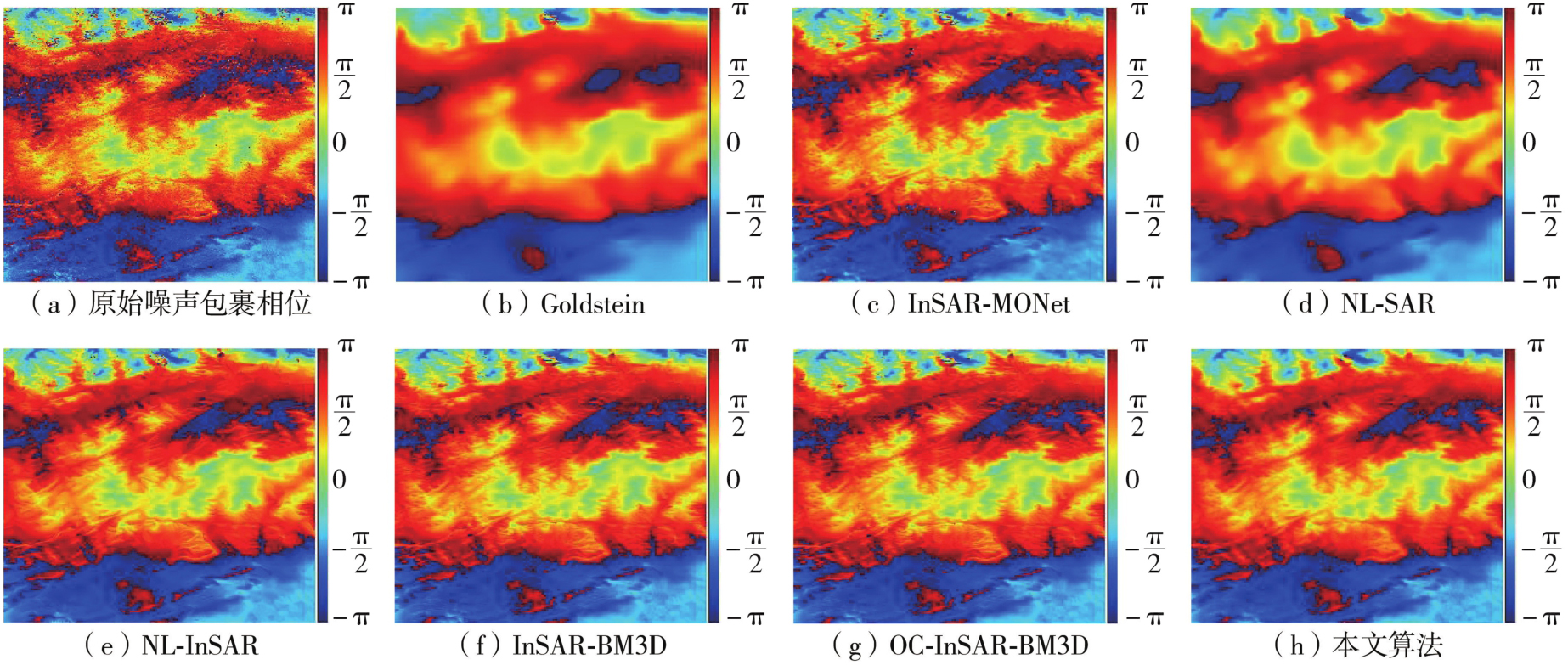
Filtering results of the Maduo earthquake co-seismic deformation area"
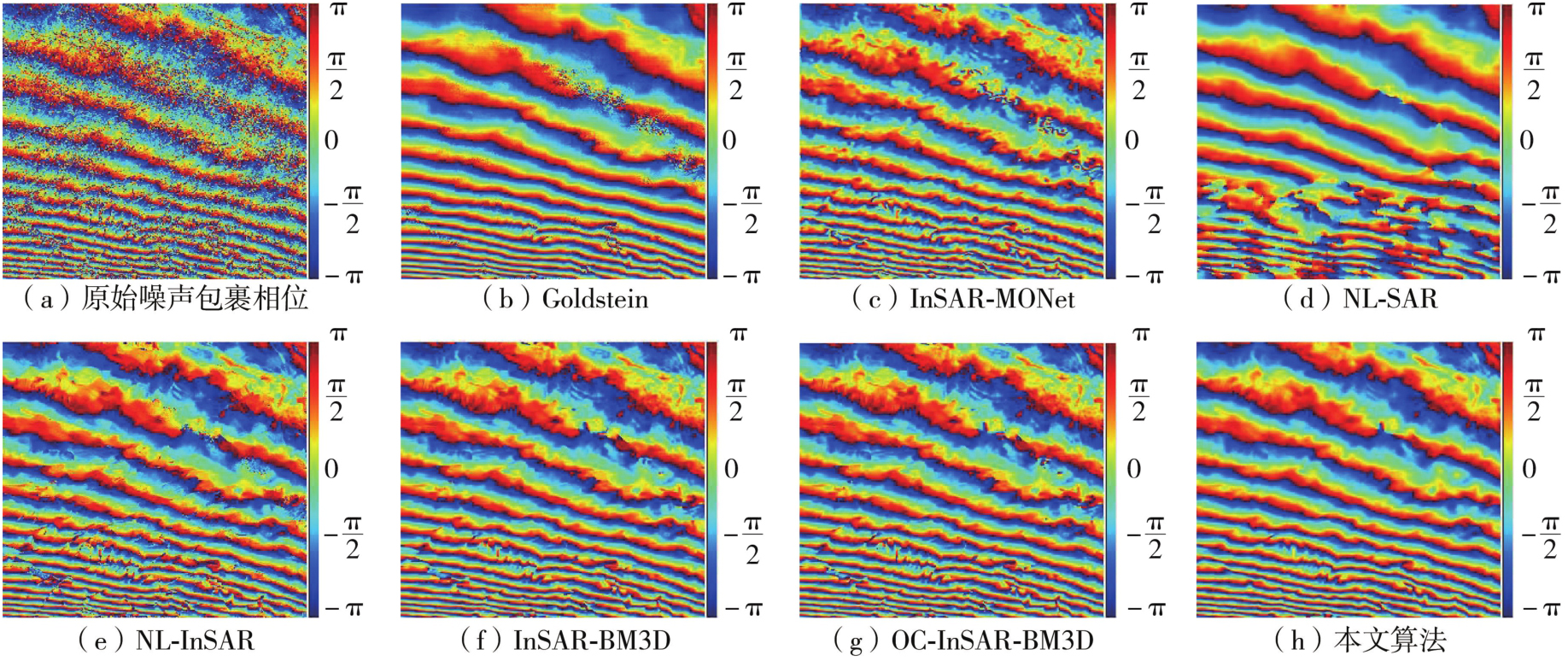
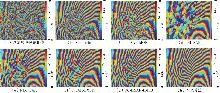
Fig. 9
Filtering results of the Etna volcano area"

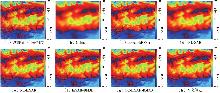
Fig. 10
Filtering results of the Aykol earthquake local area"
Tab. 5
Results of residue point number for real interferometric data"
| 数据 | 原始总数 | Goldstein | InSAR-MONet | NL-SAR | NL-InSAR | InSAR-BM3D | OC-InSAR-BM3D | QEC-CVIF |
|---|---|---|---|---|---|---|---|---|
| 玛多地震 | 20 987 | 1257 | 209 | 274 | 1095 | 152 | 137 | 17 |
| Etna火山 | 26 276 | 12 232 | 1175 | 983 | 3793 | 340 | 464 | 12 |
| Aykol地震 | 671 | 53 | 61 | 4 | 58 | 24 | 26 | 8 |
Fig. 11
Unwrapped phase of the Maduo earthquake co-seismic deformation area"

Fig. 12
Unwrapped phase of the Etna volcano area"

Fig. 13
Unwrapped phase of the Aykol earthquake local area"

| [1] |
朱建军, 李志伟, 胡俊. InSAR变形监测方法与研究进展[J]. 测绘学报, 2017, 46(10): 1717-1733. DOI: .
doi: 10.11947/j.AGCS.2017.20170350 |
|
Zhu Jianjun, Li Zhiwei, Hu Jun. Research progress and methods of InSAR for deformation monitoring[J]. Acta Geodaetica et Cartographica Sinica, 2017, 46(10): 1717-1733. DOI: .
doi: 10.11947/j.AGCS.2017.20170350 |
|
| [2] |
路中, 赵金奇, 牛玉芬, 等. NISAR卫星对地观测革新及其在地表形变监测中的应用[J]. 测绘学报, 2026, 55(2): 261-274. DOI: .
doi: 10.11947/j.AGCS.2026.20250363 |
|
Lu Zhong, Zhao Jinqi, Niu Yufen, et al. The NISAR mission: innovations in earth observation and applications in surface deformation monitoring[J]. Acta Geodaetica et Cartographica Sinica, 2026, 55(2): 261-274. DOI: .
doi: 10.11947/j.AGCS.2026.20250363 |
|
| [3] | Gong Zhiqiang, Liao Mingsheng, Dong Jie, et al. Wide-area coastal deformation extraction using multi-path/frame InSAR: a case study of the Bohai Rim[J]. Remote Sensing of Environment, 2025, 330: 114988. |
| [4] |
向建冰, 吕孝雷, 付希凯, 等. 天绘二号双星InSAR成像与DSM生成技术[J]. 测绘学报, 2022, 51(12): 2493-2500. DOI: .
doi: 10.11947/j.AGCS.2022.20210323 |
|
Xiang Jianbing, Lü Xiaolei, Fu Xikai, et al. Bistatic InSAR interferometry imaging and DSM generation for TH-2[J]. Acta Geodaetica et Cartographica Sinica, 2022, 51(12): 2493-2500. DOI: .
doi: 10.11947/j.AGCS.2022.20210323 |
|
| [5] | Mao Wenfei, Ma Peifeng, Zheng Yi, et al. Ionospheric error correction methods for InSAR measurements: a systematic review[J]. IEEE Geoscience and Remote Sensing Magazine, 2025, 13(4): 142-173. |
| [6] | Xu Gang, Gao Yandong, Li Jinwei, et al. InSAR phase denoising: a review of current technologies and future directions[J]. IEEE Geoscience and Remote Sensing Magazine, 2020, 8(2): 64-82. |
| [7] |
何毅, 杨旺, 朱庆. 基于R2AU-Net的InSAR相位解缠方法[J]. 测绘学报, 2024, 53(3): 435-449. DOI: .
doi: 10.11947/j.AGCS.2024.20230305 |
|
He Yi, Yang Wang, Zhu Qing. An InSAR phase unwrapping method based on R2AU-Net[J]. Acta Geodaetica et Cartographica Sinica, 2024, 53(3): 435-449. DOI: .
doi: 10.11947/j.AGCS.2024.20230305 |
|
| [8] |
高延东, 贾义琨, 李世金, 等. InSAR相位解缠最大流/最小割权值改进算法[J]. 测绘学报, 2024, 53(4): 644-652. DOI: .
doi: 10.11947/j.AGCS.2024.20220633 |
|
Gao Yandong, Jia Yikun, Li Shijin, et al. The improved max-flow/min-cut weight algorithm for InSAR phase unwrapping[J]. Acta Geodaetica et Cartographica Sinica, 2024, 53(4): 644-652. DOI: .
doi: 10.11947/j.AGCS.2024.20220633 |
|
| [9] | 李鹏飞, 李志伟, 蒋弥, 等. 融合视觉特征增设虚拟残点的InSAR相位解缠方法[J]. 地球物理学报, 2025, 68(12): 4589-4604. |
| Li Pengfei, Li Zhiwei, Jiang Mi, et al. A phase unwrapping method for InSAR by fusing visual features to add virtual residues[J]. Chinese Journal of Geophysics, 2025, 68(12): 4589-4604. | |
| [10] | Lee J S, Hoppel K W, Mango S A, et al. Intensity and phase statistics of multilook polarimetric and interferometric SAR imagery[J]. IEEE Transactions on Geoscience and Remote Sensing, 1994, 32(5): 1017-1028. |
| [11] | Lee J S, Papathanassiou K P, Ainsworth T L, et al. A new technique for noise filtering of SAR interferometric phase images[J]. IEEE Transactions on Geoscience and Remote Sensing, 1998, 36(5): 1456-1465. |
| [12] | Goldstein R M, Werner C L. Radar interferogram filtering for geophysical applications[J]. Geophysical Research Letters, 1998, 25(21): 4035-4038. |
| [13] | 于晓歆, 杨红磊, 彭军还. 一种改进的Goldstein InSAR干涉图滤波算法[J]. 武汉大学学报(信息科学版), 2011, 36(9): 1051-1054. |
| Yu Xiaoxin, Yang Honglei, Peng Junhuan. A modified Goldstein algorithm for InSAR interferogram filtering[J]. Geomatics and Information Science of Wuhan University, 2011, 36(9): 1051-1054. | |
| [14] |
赵文胜, 蒋弥, 何秀凤. 干涉图像第二类统计Goldstein自适应滤波方法[J]. 测绘学报, 2016, 45(10): 1200-1209. DOI: .
doi: 10.11947/j.AGCS.2016.20150457 |
|
Zhao Wensheng, Jiang Mi, He Xiufeng. Improved adaptive Goldstein interferogram filter based on second kind statistics[J]. Acta Geodaetica et Cartographica Sinica, 2016, 45(10): 1200-1209. DOI: .
doi: 10.11947/j.AGCS.2016.20150457 |
|
| [15] | 张斌, 胡庆荣, 韦立登, 等. 改进的形态学干涉图滤波方法[J]. 系统工程与电子技术, 2018, 40(10): 2230-2236. |
| Zhang Bin, Hu Qingrong, Wei Lideng, et al. Improved morphological filtering algorithm of interferograms[J]. Systems Engineering and Electronics, 2018, 40(10): 2230-2236. | |
| [16] | Otsuka Y, Natsuaki R, Hirose A. Biquaternion Fourier domain filter for InSAR noise suppression by enhancing polarimetric-interferometric fringe patterns[J]. IEEE Transactions on Geoscience and Remote Sensing, 2024, 62: 5221913. |
| [17] | Deledalle C A, Denis L, Tupin F. NL-InSAR: nonlocal interferogram estimation[J]. IEEE Transactions on Geoscience and Remote Sensing, 2011, 49(4): 1441-1452. |
| [18] | Deledalle C A, Denis L, Tupin F, et al. NL-SAR: a unified nonlocal framework for resolution-preserving (pol) (In) SAR denoising[J]. IEEE Transactions on Geoscience and Remote Sensing, 2015, 53(4): 2021-2038. |
| [19] | 汪洋, 黄海风, 董臻, 等. 改进分块局部最佳维纳滤波算法的干涉相位滤波[J]. 国防科技大学学报, 2015, 37(4): 99-105. |
| Wang Yang, Huang Haifeng, Dong Zhen, et al. Modified patch-based locally optimal Wiener for interferometric phase filtering[J]. Journal of National University of Defense Technology, 2015, 37(4): 99-105. | |
| [20] | Sica F, Cozzolino D, Zhu Xiaoxiang, et al. InSAR-BM3D: a nonlocal filter for SAR interferometric phase restoration[J]. IEEE Transactions on Geoscience and Remote Sensing, 2018, 56(6): 3456-3467. |
| [21] | Liu Ziyang, Zhang Xiang, Fan Hongdong, et al. Improved InSAR-BM3D filtering algorithm based on noise variance estimation[J]. IEEE Geoscience and Remote Sensing Letters, 2026, 23: 4003305. |
| [22] | 王杰, 柳稼航, 凌信鹏, 等. 基于深度学习的InSAR影像局部与非局部联合相位滤波[J]. 武汉大学学报(信息科学版), 2026, 51(2): 367-379. |
| Wang Jie, Liu Jiahang, Ling Xinpeng, et al. Deep learning-based joint local and non-local phase filtering for InSAR images[J]. Geomatics and Information Science of Wuhan University, 2026, 51(2): 367-379. | |
| [23] | Sica F, Cozzolino D, Verdoliva L, et al. The offset-compensated nonlocal filtering of interferometric phase[J]. Remote Sensing, 2018, 10(9): 1359. |
| [24] | 沈中伟, 赵峰, 马占国, 等. INL-InSAR:改进的非局部均值InSAR相位滤波算法[J/OL]. 武汉大学学报(信息科学版), 1-17 [2026-10-13]. https://doi.org/10.13203/j.whugis20250258. |
| Shen Zhongwei, Zhao Feng, Ma Zhanguo, et al. INL-InSAR: an improved nonlocal means algorithm for InSAR phase filtering[J/OL]. Geomatics and Information Science of Wuhan University, 1-17 [2026-10-13]. https://doi.org/10.13203/j.whugis20250258. | |
| [25] | Vitale S, Ferraioli G, Pascazio V, et al. InSAR-MONet: interferometric SAR phase denoising using a multiobjective neural network[J]. IEEE Transactions on Geoscience and Remote Sensing, 2022, 60: 5239814. |
| [26] | Sica F, Gobbi G, Rizzoli P, et al. Φ-net: deep residual learning for InSAR parameters estimation[J]. IEEE Transactions on Geoscience and Remote Sensing, 2021, 59(5): 3917-3941. |
| [27] | Sun Xinyao, Zimmer A, Mukherjee S, et al. DeepInSAR: a deep learning framework for SAR interferometric phase restoration and coherence estimation[J]. Remote Sensing, 2020, 12(14): 2340. |
| [28] | 张安琪, 曹荣刚, 周宇, 等. 基于2D-FFT与2D-CFAR的调频引信快速高精度信号处理方法[J]. 北京航空航天大学学报, 2026, 52(3): 837-845. |
| Zhang Anqi, Cao Ronggang, Zhou Yu, et al. Fast and high precision signal processing method for frequency modulation fuze based on 2D-FFT and 2D-CFAR[J]. Journal of Beijing University of Aeronautics and Astronautics, 2026, 52(3): 837-845. | |
| [29] | 赵树杰, 赵建勋. 信号检测与估计理论[M]. 北京: 清华大学出版社, 2005: 150-157. |
| Zhao Shujie, Zhao Jianxun. Signal detection and estimation theory[M]. Beijing: Tsinghua University Press, 2005: 150-157. | |
| [30] | Oppenheim A V, Schafer R W. Discrete-time signal processing[M]. 3rd ed. Upper Saddle River: Prentice Hall Press, 2009. |
| [31] | Fisher R. Dispersion on a sphere[J]. Proceedings of the Royal Society A: Mathematical, Physical and Engineering Sciences, 1953, 217(1130): 295-305. |
| [32] | Wang Zhou, Bovik A C, Sheikh H R, et al. Image quality assessment: from error visibility to structural similarity[J]. IEEE Transactions on Image Processing, 2004, 13(4): 600-612. |
| [33] | Li Zhilin, Zou Weibao, Ding Xiaoli, et al. A quantitative measure for the quality of InSAR interferograms based on phase differences[J]. Photogrammetric Engineering & Remote Sensing, 2004, 70(10): 1131-1137. |
| [34] | Costantini M. A novel phase unwrapping method based on network programming[J]. IEEE Transactions on Geoscience and Remote Sensing, 1998, 36(3): 813-821. |
| [1] | Hao Lu, Wei Feng, Xiaobing Wang, Wei Chen, Min Zhong. Assessing the capability and accuracy of SWOT satellite river observations in China [J]. Acta Geodaetica et Cartographica Sinica, 2026, 55(7): 1240-1253. |
| [2] | Qi LIU, Chen YU, Zhenhong LI, Chuang SONG, Xiaoning HU, Jie LI, Tenghui HU. Long-term uneven subsidence monitoring and risk prediction of ultra-large garbage landfills [J]. Acta Geodaetica et Cartographica Sinica, 2026, 55(6): 990-1002. |
| [3] | Zhong LU, Jinqi ZHAO, Yufen NIU, Liquan CHEN, Qianyou FAN, Jinzhao SI, Zixuan WANG, Yuan GAO, Shuai WANG, Feifei QU, Hongtao SHI, Shiyong YAN, Yun SHI, Zheng ZHAO. The NISAR mission: innovations in earth observation and applications in surface deformation monitoring [J]. Acta Geodaetica et Cartographica Sinica, 2026, 55(2): 261-274. |
| [4] | Peng LI, Jianbo BAI, Zhenhong LI, Houjie WANG. Wide area coastal subsidence monitoring and driver analysis with multi tracks of TS-InSAR—a case study of Shandong province [J]. Acta Geodaetica et Cartographica Sinica, 2025, 54(7): 1178-1191. |
| [5] | Kefu WU, Haiqiang FU, Jianjun ZHU, Qijin HAN, Aichun WANG, Mingxia ZHANG, Zhiwei LI. LT-1 InSAR block adjustment considering the impact of penetration depth in forest areas [J]. Acta Geodaetica et Cartographica Sinica, 2025, 54(6): 1009-1020. |
| [6] | Zhaofeng DU, Guopeng LI, Zhanke LIU, Xiaming SHANG, Shengjun KANG, Xiaoqiang WANG. Comprehensive analysis of multiple monitoring methods in main subsidence areas [J]. Acta Geodaetica et Cartographica Sinica, 2025, 54(3): 481-492. |
| [7] | Hailu CHEN, Yunzhong SHEN. GNSS-assisted InSAR tropospheric delay correction model incorporating vertical stratification and turbulent components [J]. Acta Geodaetica et Cartographica Sinica, 2025, 54(10): 1786-1797. |
| [8] | Liming JIANG, Yi SHAO, Zhiwei ZHOU, Peifeng MA, Teng WANG. A review of intelligent InSAR data processing: recent advancements, challenges and prospects [J]. Acta Geodaetica et Cartographica Sinica, 2024, 53(6): 1037-1056. |
| [9] | Canghai ZHOU, Zhen TIAN, Zhen SHI, Hayinaer TUOKAN. The characteristic of the Yadong-Gulu faults motion constraints by InSAR timeseries and GNSS observations [J]. Acta Geodaetica et Cartographica Sinica, 2024, 53(5): 933-945. |
| [10] | Jun ZHU, Wei PENG, Haiqiang FU, Man OU, Shancheng LEI, Shiping ZHANG. Large-scale TanDEM-X InSAR sub-canopy topography inversion under insufficient observation information [J]. Acta Geodaetica et Cartographica Sinica, 2024, 53(5): 959-966. |
| [11] | Yandong GAO, Yikun JIA, Shijin LI, Yu CHEN, Huaizhan LI, Nanshan ZHENG, Shubi ZHANG. The improved max-flow/min-cut weight algorithm for InSAR phase unwrapping [J]. Acta Geodaetica et Cartographica Sinica, 2024, 53(4): 644-652. |
| [12] | HE Yi, YANG Wang, ZHU Qing. An InSAR phase unwrapping method based on R2AU-Net [J]. Acta Geodaetica et Cartographica Sinica, 2024, 53(3): 435-449. |
| [13] | WANG Yuan, XU Huaping, LI Chunsheng, ZENG Guobing, LIU Aifang, GE Shiqi. Analysis of interferometric mapping accuracy for spaceborne distributed SAR dual-frequency alternative bistatic mode [J]. Acta Geodaetica et Cartographica Sinica, 2024, 53(3): 463-472. |
| [14] | YUE Jiawei, HUANG Qihuan, LIU Hui, MA Zhangfeng. A multi-baseline phase unwrapping method based on a discrete optimization framework [J]. Acta Geodaetica et Cartographica Sinica, 2024, 53(3): 473-481. |
| [15] | Yandong GAO, Nanshan ZHENG, Yansuo ZHANG, Shijin LI, Huachao YANG, Hefang BIAN, Qiuzhao ZHANG, Shubi ZHANG, Yu TIAN. A phase unwrapping method based on phase quality fusion estimation and information filtering [J]. Acta Geodaetica et Cartographica Sinica, 2024, 53(10): 1910-1919. |
| Viewed | ||||||
|
Full text |
|
|||||
|
Abstract |
|
|||||
