

Acta Geodaetica et Cartographica Sinica ›› 2026, Vol. 55 ›› Issue (10): 1732-1743.doi: 10.11947/j.AGCS.2026.20260135
• Geodesy and Navigation • Previous Articles Next Articles
Leyang Wang1,2( ), Kailing Yan1,2, Fei Wu1,2(), Haibo Que3
Received:2026-04-09
Revised:2026-10-13
Online:2026-11-16
Published:2026-11-16
Contact:
Fei Wu
E-mail:wleyang@163.com;201960114@ecut.edu.cn
About author:Wang Leyang (1983—), male, PhD, professor, majors in geodetic inversion and surveying adjustment. E-mail: wleyang@163.com
Supported by:CLC Number:
Leyang Wang, Kailing Yan, Fei Wu, Haibo Que. Short-term prediction of polar motion using an LS-BiGRU-Attention model based on radial basis function interpolation[J]. Acta Geodaetica et Cartographica Sinica, 2026, 55(10): 1732-1743.
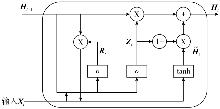
Fig. 1
GRU neuron structure (modified from reference [21])"
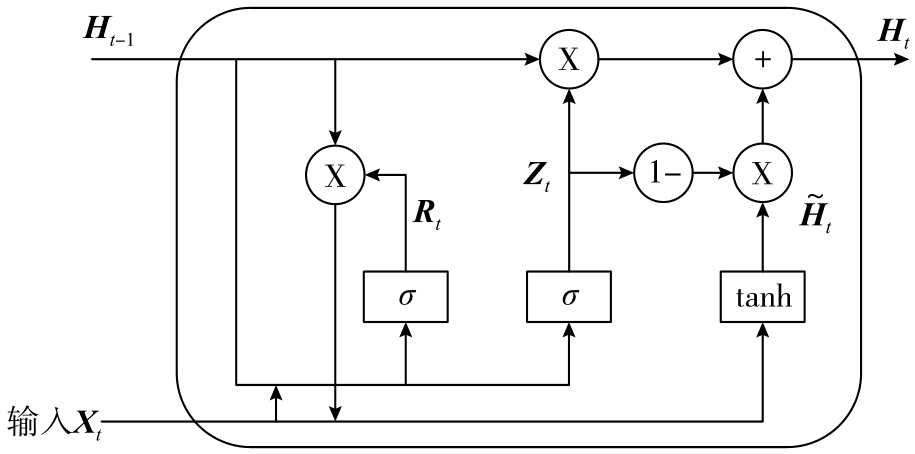
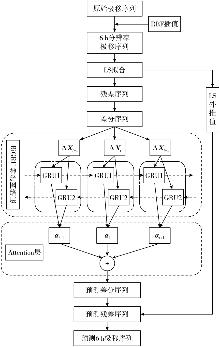
Fig. 2
Flowchart of the LS-BiGRU-Attention prediction"
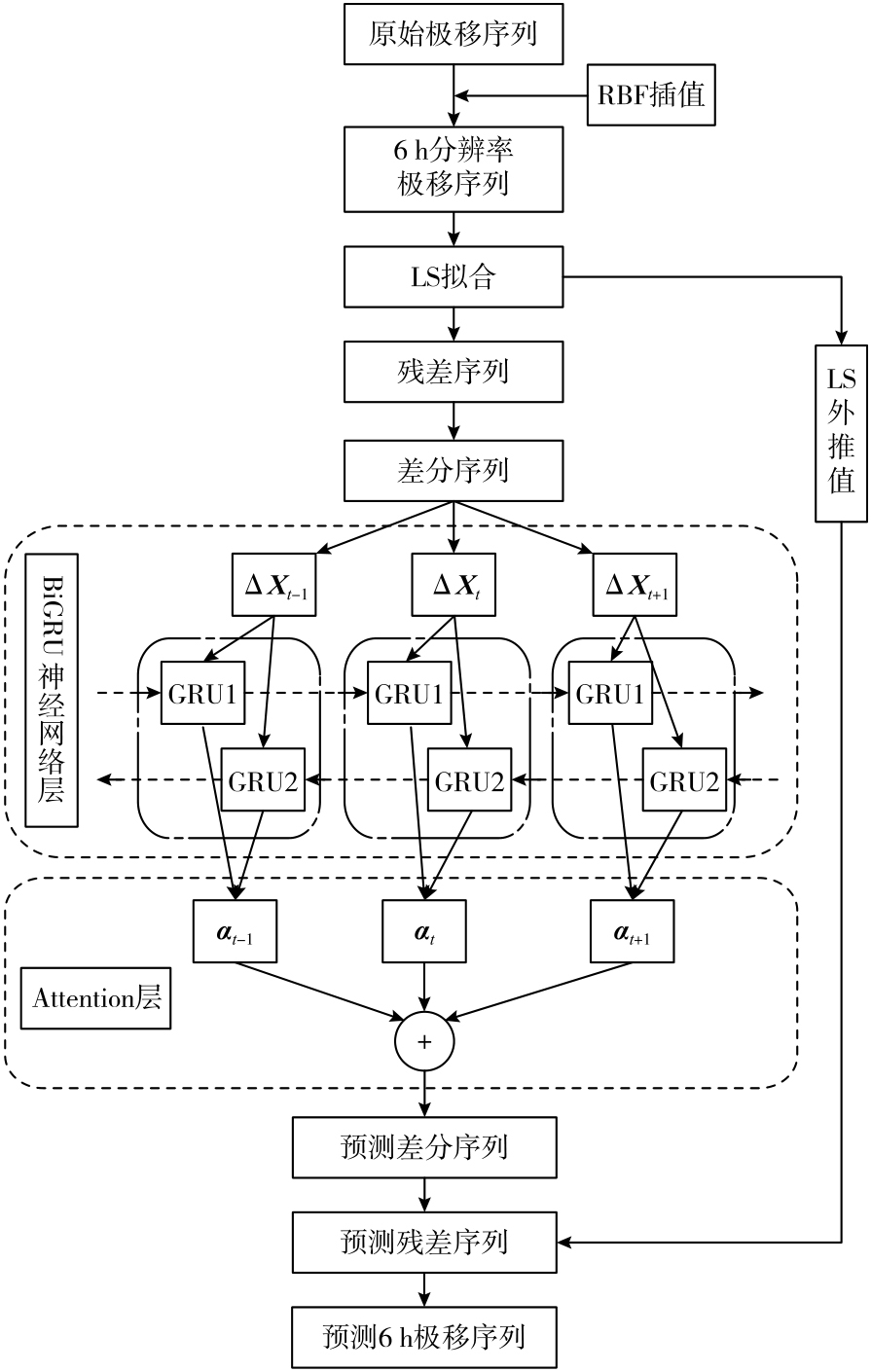
Fig. 3
Cross-correlation coefficients between PMX and PMY from 2000 to 2024"
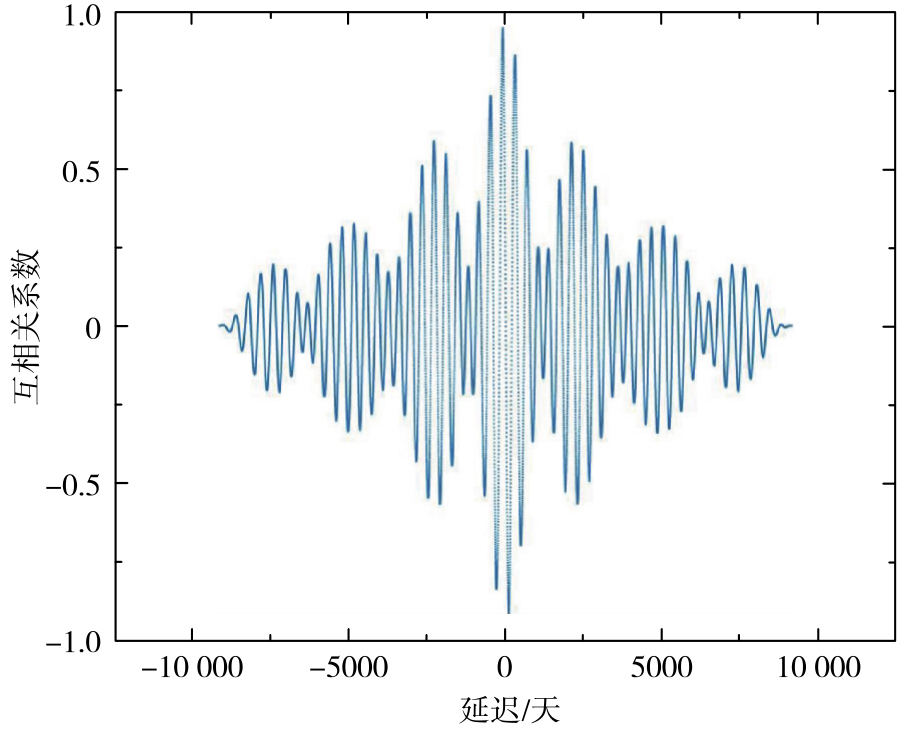
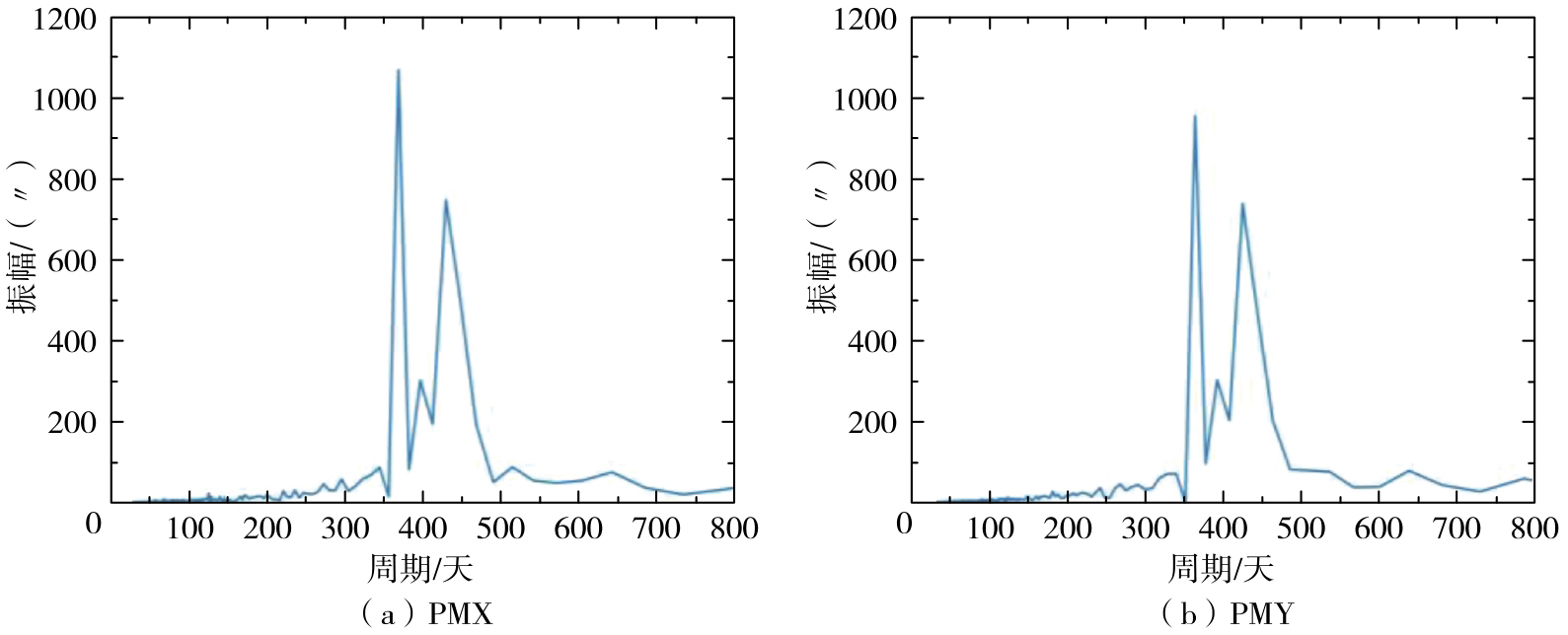
Fig. 4
FFT spectra of PMX and PMY series from 1997 to 2024"
Tab. 1
Experimental schemes for interpolation"
| 方案 | 预报方法 |
|---|---|
| 方案1 | LS+AR |
| 方案2 | 不插值双序列LS-BiGRU-Attention |
| 方案3 | 插值单序列LS-BiGRU-Attention |
| 方案4 | 插值双序列LS-BiGRU-Attention |
Fig. 5
MAE of comparison of scheme 4 under different interpolation methods"
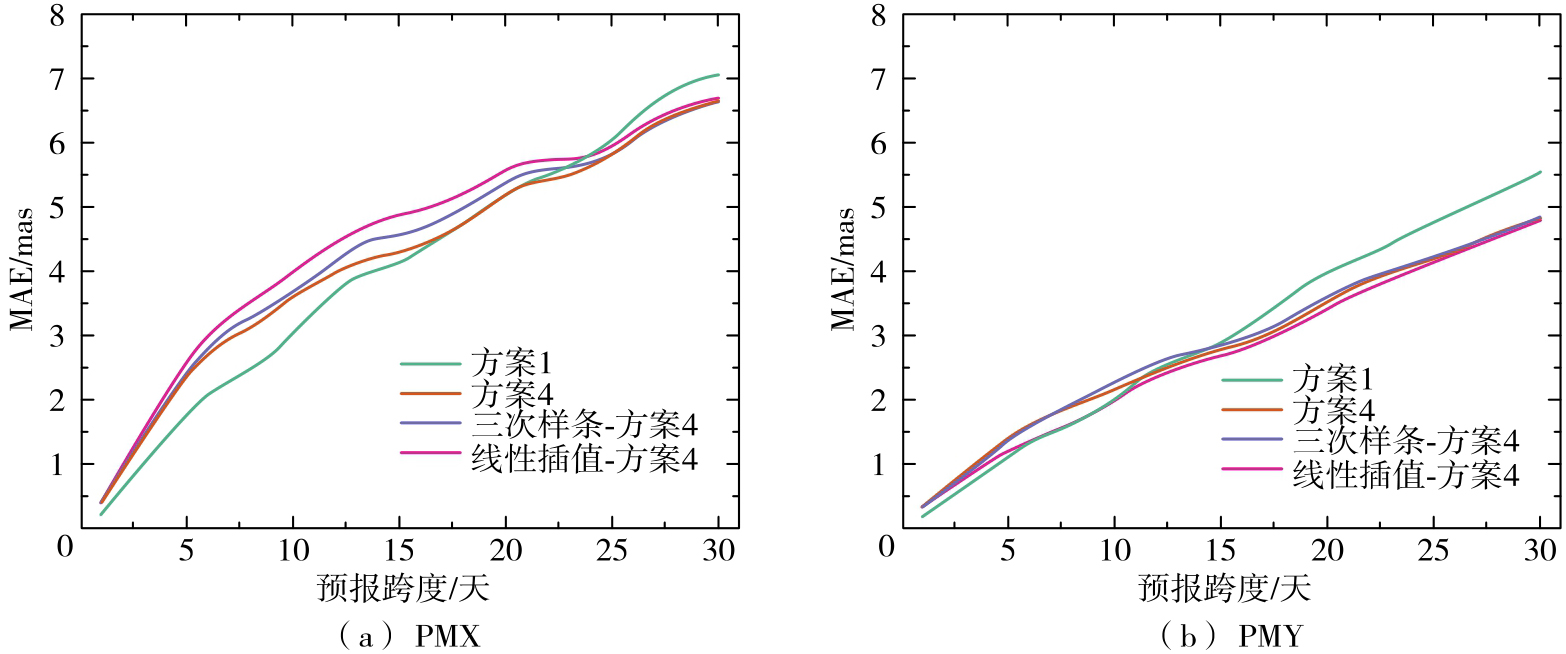
Fig. 6
MAE of polar motion prediction for scheme 4 with different interpolation step sizes"
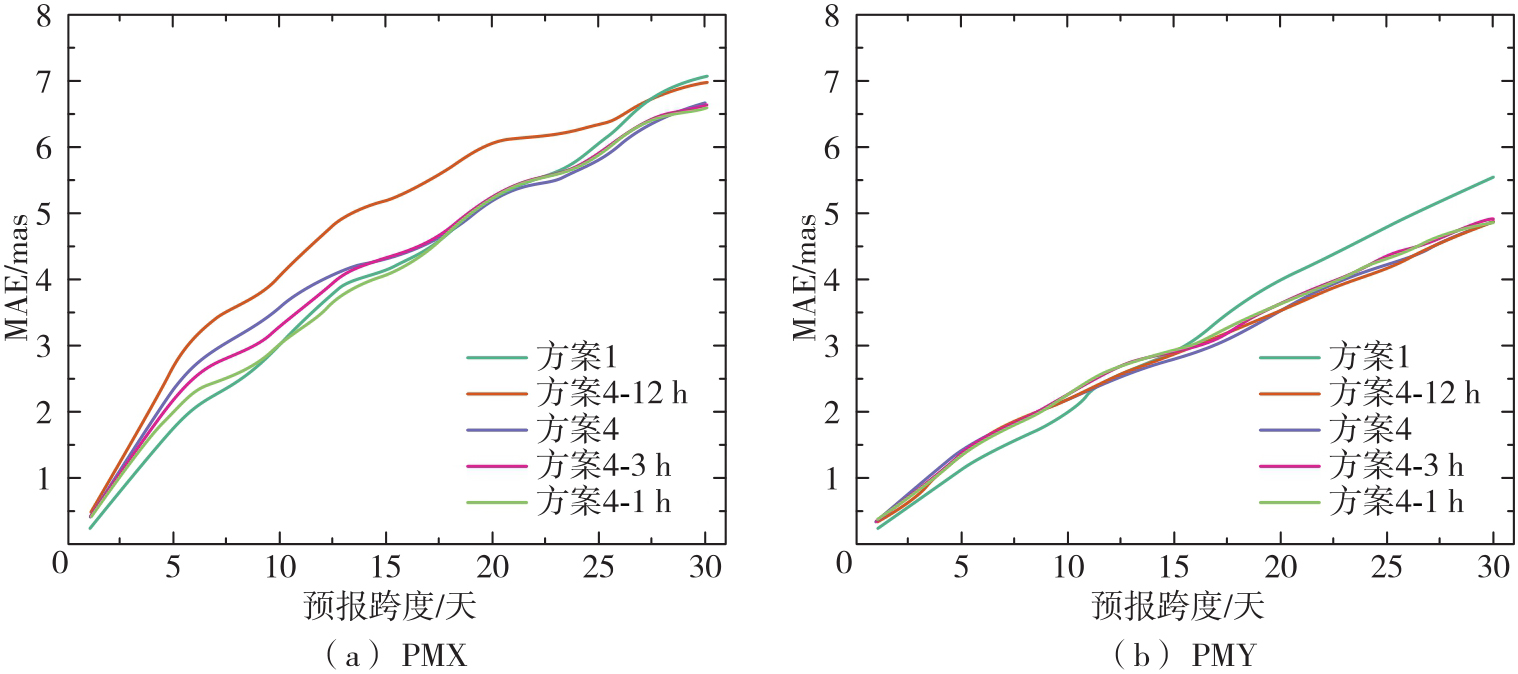
Fig. 7
AE of PMX for the four RBF interpolation schemes"

Fig. 8
AE of PMY for the four RBF interpolation schemes"
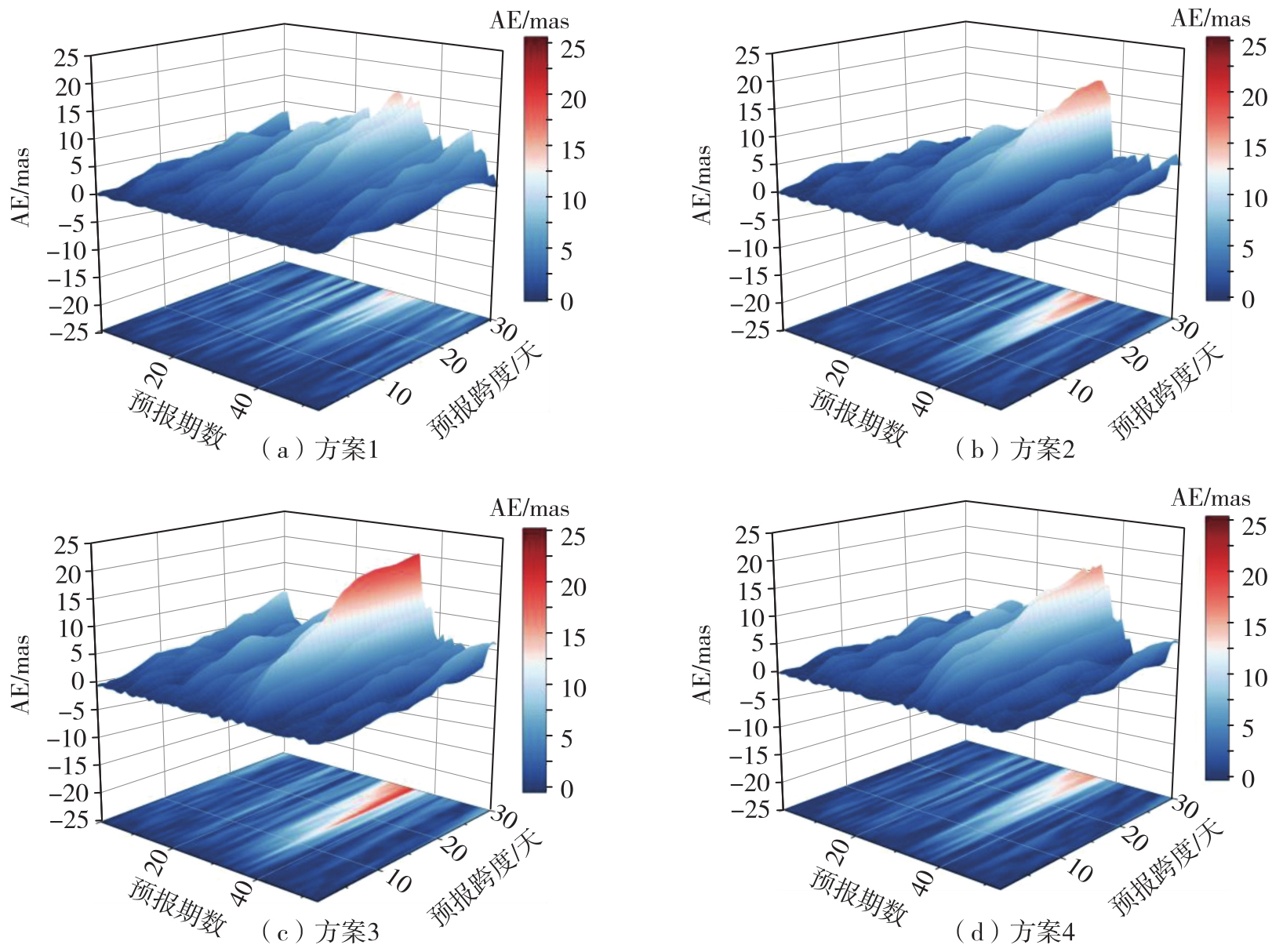
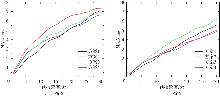
Fig. 9
MAE of four RBF interpolation schemes"
Tab. 2
Prediction MAE of PMX for different RBF interpolation schemes"
| 预报跨度/天 | PMX MAE/mas | |||
|---|---|---|---|---|
| 方案1 | 方案2 | 方案3 | 方案4 | |
| 3 | 1.002 | 1.663 | 1.375 | 1.419 |
| 5 | 1.768 | 2.771 | 2.29 | 2.367 |
| 7 | 2.275 | 3.528 | 2.902 | 2.948 |
| 9 | 2.688 | 4.030 | 3.346 | 3.337 |
| 12 | 3.650 | 4.946 | 4.240 | 3.970 |
| 15 | 4.138 | 5.557 | 4.615 | 4.281 |
| 18 | 4.715 | 6.159 | 5.108 | 4.716 |
| 21 | 5.381 | 6.612 | 5.635 | 5.353 |
| 24 | 5.823 | 6.816 | 6.011 | 5.632 |
| 27 | 6.628 | 7.133 | 6.589 | 6.253 |
| 30 | 7.053 | 7.314 | 6.851 | 6.633 |
Tab. 3
Prediction MAE of PMY for different RBF interpolation schemes"
| 预报跨度/天 | PMY MAE/mas | |||
|---|---|---|---|---|
| 方案1 | 方案2 | 方案3 | 方案4 | |
| 3 | 0.665 | 0.848 | 0.869 | 0.877 |
| 5 | 1.113 | 1.433 | 1.483 | 1.411 |
| 7 | 1.477 | 1.771 | 1.960 | 1.733 |
| 9 | 1.779 | 2.07 | 2.407 | 2.035 |
| 12 | 2.478 | 2.616 | 3.135 | 2.453 |
| 15 | 2.888 | 3.079 | 3.771 | 2.779 |
| 18 | 3.550 | 3.381 | 4.232 | 3.154 |
| 21 | 4.134 | 3.773 | 4.744 | 3.684 |
| 24 | 4.623 | 4.071 | 5.240 | 4.089 |
| 27 | 5.056 | 4.536 | 5.595 | 4.451 |
| 30 | 5.530 | 5.00 | 6.110 | 4.836 |
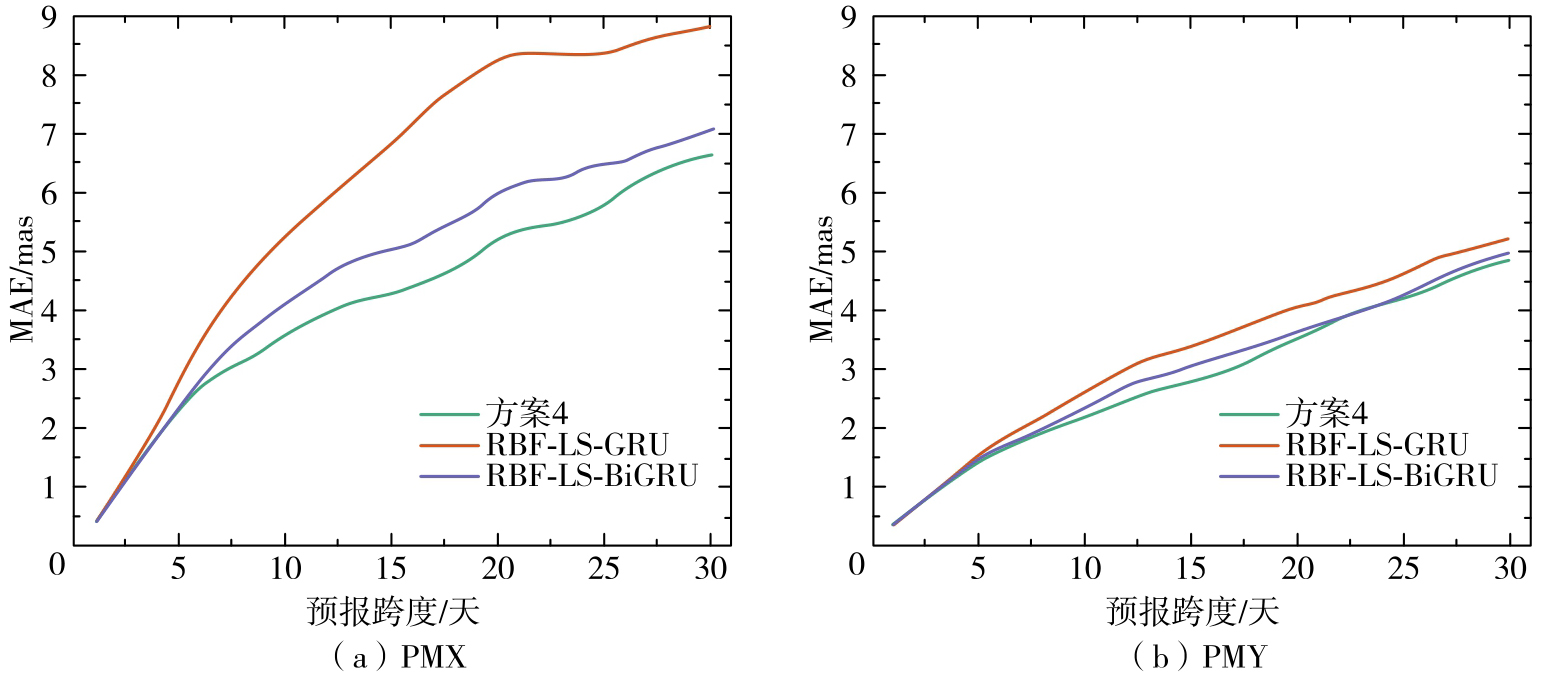
Fig. 10
MAE comparison of polar motion prediction with different network structures"
| [1] | Xu Xueqing, Zhou Yonghong. EOP prediction using least square fitting and autoregressive filter over optimized data intervals[J]. Advances in Space Research, 2015, 56(10): 2248-2253. |
| [2] | 赵鑫, 吴元伟, 杨新宇, 等. 基于有效角动量函数的多参数极移预报[J]. 天文学报, 2022, 63(4): 41-1-47-11. |
| Zhao Xin, Wu Yuanwei, Yang Xinyu, et al. Multi-parameter polar motion prediction based on effective angular momentum function[J]. Acta Astronomica Sinica, 2022, 63(4): 41-1-47-11. | |
| [3] | Zhao Danning, Lei Yu. A technique to reduce the edge effect in least squares extrapolation for enhanced Earth orientation prediction[J]. Studia Geophysica et Geodaetica, 2020, 64(3): 293-305. |
| [4] | Kong Qiaoli, Han Jingwei, Wu Yuanwei, et al. High-precision polar motion prediction using EOP20_C04 and EAM based on CSLS+AR and CSLS+LSTM methods[J]. Geophysical Journal International, 2023, 235(2): 1658-1670. |
| [5] | Wang Guocheng, Liu Lintao, Tu Yi, et al. Application of the radial basis function neural network to the short term prediction of the Earth's polar motion[J]. Studia Geophysica et Geodaetica, 2018, 62(2): 243-254. |
| [6] | Yu Kehao, Yang Kai, Shen Tonghui, et al. Estimation of earth rotation parameters and prediction of polar motion using hybrid CNN-LSTM model[J]. Remote Sensing, 2023, 15(2): 427. |
| [7] | Wang Chenxiang, Zhang Pengfei. Improving the accuracy of polar motion prediction using a hybrid least squares and long short-term memory model[J]. Earth, Planets and Space, 2023, 75(1): 153. |
| [8] | Wang Leyang, Que Haibo, Wu Fei. The CNN-LSTM-attention model for short term prediction of the polar motion[J]. Measurement Science and Technology, 2025, 36(1): 016323. |
| [9] | Wang Leyang, Que Haibo, Wu Fei, et al. Research on ultra-short-term prediction of polar motion using least square and spatial attention mechanism model[J]. Geodesy and Geodynamics, 2026, 17(4): 470-479. |
| [10] | Kiani Shahvandi M, Dill R, Dobslaw H, et al. Geophysically informed machine learning for improving rapid estimation and short-term prediction of earth orientation parameters[J]. Journal of Geophysical Research: Solid Earth, 2023, 128(10): e2023JB026720. |
| [11] | Niu Xiaotong, Wei Na, Zhou Yuxin. Improved polar motion prediction using a genetic algorithm optimized backpropagation neural network and effective angular momentum functions[J]. Advances in Space Research, 2025, 76(8): 3988-4000. |
| [12] | 吴飞, 王乐洋, 曾志庆, 等. 基于径向基函数插值的极移参数预报研究[J]. 大地测量与地球动力学, 2024, 44(7): 690-692. |
| Wu Fei, Wang Leyang, Zeng Zhiqing, et al. Research on polar motion parameter prediction based on radial basis function interpolation[J]. Journal of Geodesy and Geodynamics, 2024, 44(7): 690-692. | |
| [13] | Wu Fei, Yan Zefeng, Wang Leyang, et al. Research on polar motion prediction based on radial basis function neural network interpolation[J]. Earth and Space Science, 2025, 12(9): e2025EA004422. |
| [14] | Cakir L, Yilmaz N. Polynomials, radial basis functions and multilayer perceptron neural network methods in local geoid determination with GPS/levelling[J]. Measurement, 2014, 57: 148-153. |
| [15] | Aguilar F J, Agüera F, Aguilar M A, et al. Effects of terrain morphology, sampling density, and interpolation methods on grid DEM accuracy[J]. Photogrammetric Engineering & Remote Sensing, 2005, 71(7): 805-816. |
| [16] | Holt W E, Haines A J. Velocity fields in deforming Asia from the inversion of earthquake-released strains[J]. Tectonics, 1993, 12(1): 1-20. |
| [17] | 杨超, 邹志诚, 谢长川, 等. RBF动网格技术研究进展及其气动弹性应用[J]. 航空学报, 2025, 46(5): 530945. |
| Yang Chao, Zou Zhicheng, Xie Changchuan, et al. Research progress of RBF dynamic mesh technology and its application in aeroelasticity[J]. Acta Aeronautica et Astronautica Sinica, 2025, 46(5): 530947. | |
| [18] | Hochreiter S, Schmidhuber J. Long short-term memory[J]. Neural Computation, 1997, 9(8): 1735-1780. |
| [19] | Cho K, Van Merrienboer B, Gulcehre C, et al. Learning phrase representations using RNN encoder-decoder for statistical machine translation[PP/OL]. V3.arXiv (2014-09-03) [2026-03-02]. https://doi.org/10.48550/arXiv.1406.1078. |
| [20] | Qiao Ying, Xu Hongmin, Zhou Wenjun, et al. A BiGRU joint optimized attention network for recognition of drilling conditions[J]. Petroleum Science, 2023, 20(6): 3624-3637. |
| [21] | 刘伟吉, 张家辉, 程灵, 等. 基于CNN-BIGRU-Attention模型的地层可钻性预测[J]. 科学技术与工程, 2025, 25(36): 15473-15484. |
| Liu Weiji, Zhang Jiahui, Cheng Ling, et al. Formation drillability prediction based on CNN-BIGRU-Attention model[J]. Science Technology and Engineering, 2025, 25(36): 15473-15484. | |
| [22] | 剧伟良, 杨玮, 宋亚美, 等. 基于注意力机制的BiGRU土壤光谱全氮预测模型研究[J]. 光谱学与光谱分析, 2025, 45(7): 2017-2025. |
| Ju Weiliang, Yang Wei, Song Yamei, et al. Prediction of soil total nitrogen based on NIR spectroscopy and BiGRU model with attention mechanism[J]. Spectroscopy and Spectral Analysis, 2025, 45(7): 2017-2025. | |
| [23] | 印兴耀, 杨亚明, 李坤, 等. 地震数据互相关驱动的多道反演方法[J]. 地球物理学报, 2020, 63(10): 3827-3837. |
| Yin Xingyao, Yang Yaming, Li Kun, et al. Multitrace inversion driven by cross-correlation of seismic data[J]. Chinese Journal of Geophysics, 2020, 63(10): 3827-3837. | |
| [24] | Gross R S. The excitation of the chandler wobble[J]. Geophysical Research Letters, 2000, 27(15): 2329-2332. |
| [25] | Chao B F. On the excitation of the Earth's polar motion[J]. Geophysical Research Letters, 1985, 12(8): 526-529. |
| [26] | Yamaguchi R, Furuya M. Can we explain the post-2015 absence of the Chandler wobble?[J]. Earth, Planets and Space, 2024, 76(1): 1. |
| [27] | Kur T, Śliwińska-Bronowicz J, Wińska M, et al. Prospects of predicting the polar motion based on the results of the second Earth orientation parameters prediction comparison campaign[J]. Earth and Space Science, 2024, 11(11): e2023EA003278. |
| [28] | Kiani Shahvandi M, Schartner M, Soja B. Neural ODE differential learning and its application in polar motion prediction[J]. Journal of Geophysical Research: Solid Earth, 2022, 127(11): e2022JB024775. |
| [1] | Zhanjun He, Yina Hu, Wantong Meng. A spatial prediction method for street crimes by integrating causal discovery [J]. Acta Geodaetica et Cartographica Sinica, 2026, 55(9): 1641-1652. |
| [2] | Chuang SHI, Xinxin CHEN, Jiale WANG, Ming XIA. Multi-source GNSS data and deep learning-driven RTK positioning error prediction for smartphones [J]. Acta Geodaetica et Cartographica Sinica, 2026, 55(5): 761-775. |
| [3] | Yang LI, Haijun HUANG, Sulan LIU, Xiaohui WU, Qi LIU, Qipei PANG, Yunlong WU. Century-scale projection of terrestrial water storage anomaly and drought risk in the Poyang Lake Basin using a CMIP6-driven Transformer-GRU model [J]. Acta Geodaetica et Cartographica Sinica, 2026, 55(4): 721-738. |
| [4] | Lizeng WANG, Shifen CHENG, Yitao YANG, Peixiao WANG, Feng LU. LGA-EL: a spatio-temporal adaptive ensemble method with local-global awareness for traffic prediction [J]. Acta Geodaetica et Cartographica Sinica, 2026, 55(2): 206-221. |
| [5] | Wenyuan ZHANG, Jinsong PENG, Nadu WEI, Yu GAO, Shubi ZHANG. A short-term prediction method for Earth's polar motion using cascaded LSTM networks based on SSA denoising [J]. Acta Geodaetica et Cartographica Sinica, 2026, 55(1): 46-58. |
| [6] | Cong SHEN, Guocheng WANG, Lintao LIU, Huiwen HU, Zhiwu CAI. Kalman filter-based satellite clock bias prediction algorithm with frequency difference estimation correction [J]. Acta Geodaetica et Cartographica Sinica, 2025, 54(9): 1596-1607. |
| [7] | Wei QU, Rongtang XU, Jiuyuan LI, Xingyou TANG, Peinan CHEN. Singular value decomposition normalization prediction method for non-steady landslide displacement [J]. Acta Geodaetica et Cartographica Sinica, 2025, 54(9): 1647-1663. |
| [8] | Xiong PAN, Longjie ZHANG, Qingsong AI, Lihong JIN, Mao CAI. Improved ABC algorithm for optimizing BP neural network in short-term clock bias prediction and application [J]. Acta Geodaetica et Cartographica Sinica, 2025, 54(8): 1404-1415. |
| [9] | Haopeng FAN, Bojiao ZHANG, Zhongmiao SUN, Jinkai FENG. Prediction method of regional tropospheric wet delay based on Conv-LSTM network [J]. Acta Geodaetica et Cartographica Sinica, 2025, 54(5): 795-804. |
| [10] | Wei TU, Xiangyuan CHI, Tianhong ZHAO, Jian YANG, Shiping ZHU, Deli CHEN. Multi-view spatio-temporal graph convolutional networks model for urban drainage networks flow prediction [J]. Acta Geodaetica et Cartographica Sinica, 2025, 54(2): 334-344. |
| [11] | Xiong PAN, Zixuan ZHAO, Chang PING, Lihong JIN, Lilong LIU. Ionospheric TEC prediction incorporating semi-parametric and rule-learning [J]. Acta Geodaetica et Cartographica Sinica, 2025, 54(10): 1741-1756. |
| [12] | Yiyong LUO, Aowen ZHAN, Xiaohuan FENG, Tieding LU. A GNSS elevation time series prediction method based on geophysical factors and multi-model fusion [J]. Acta Geodaetica et Cartographica Sinica, 2025, 54(10): 1769-1785. |
| [13] | Tieding LU, Zhen LI. Prediction and interpolation of GNSS vertical time series based on the AdaBoost method considering geophysical effects [J]. Acta Geodaetica et Cartographica Sinica, 2024, 53(6): 1077-1085. |
| [14] | Xunqiang GONG, Hongyu WANG, Tieding LU, Wei YOU. A general progressive decomposition long-term prediction network model for high-speed railway bridge pier settlement [J]. Acta Geodaetica et Cartographica Sinica, 2024, 53(6): 1113-1127. |
| [15] | Yanan JIANG, Linfeng ZHENG, Qiang XU, Minggao TANG, Xing ZHU. Step-like displacement prediction of landslides guided by deformation mechanism [J]. Acta Geodaetica et Cartographica Sinica, 2024, 53(6): 1128-1139. |
| Viewed | ||||||
|
Full text |
|
|||||
|
Abstract |
|
|||||
