

Acta Geodaetica et Cartographica Sinica ›› 2026, Vol. 55 ›› Issue (2): 236-248.doi: 10.11947/j.AGCS.2026.20250434
• Spatial Artificial Intelligence and Smart Cities • Previous Articles Next Articles
Xiao FU1,2,3( ), Sirui ZHU1,2,3, Xudong LI4, Guonian LÜ1,2,3()
Received:2025-10-14
Revised:2026-01-22
Online:2026-03-13
Published:2026-03-13
Contact:
Guonian Lü
E-mail:fuxiao@njnu.edu.cn;gnlu@njnu.edu.cn
About author:FU Xiao (1988—), female, PhD, professor, majors in transport geography and intelligent transport. E-mail: fuxiao@njnu.edu.cn
Supported by:CLC Number:
Xiao FU, Sirui ZHU, Xudong LI, Guonian LÜ. An optimization method for the layout of urban vertiports in long-distance commuting scenarios[J]. Acta Geodaetica et Cartographica Sinica, 2026, 55(2): 236-248.
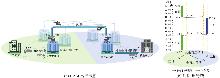
Fig. 1
Long-distance commuting by UAM"
"
| 算法:基于通勤起讫点覆盖的k-medoids聚类算法 |
| 输入:起讫点集X={Oi,Di|(Oi,Di)∈D},中心间距限制dmin,dmax,聚类中心覆盖半径R,覆盖率阈值θ |
| 输出:起讫点对覆盖率γ(C),聚类结果 |
| K←1 |
| repeat |
| K←K+1,随机初始化K个聚类中心,要求任意两中心间距∈[dmin,dmax] |
| repeat |
| foreach起讫点xi∈X do将xi分配到最近中心cj |
foreach簇Sj do候选中心 |
| if mj与其他候选中心距离∈[dmin,dmax] |
| then cj←mj |
| else选择满足约束的次优候选中心,若无满足条件的点则保持不变 |
| until所有中心收敛 |
| until γ(C)≥θ |
| 返回起讫点对覆盖率γ(C)、聚类结果 |
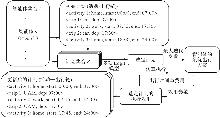
Fig. 2
Simulation process of agents' activity-travel plans"
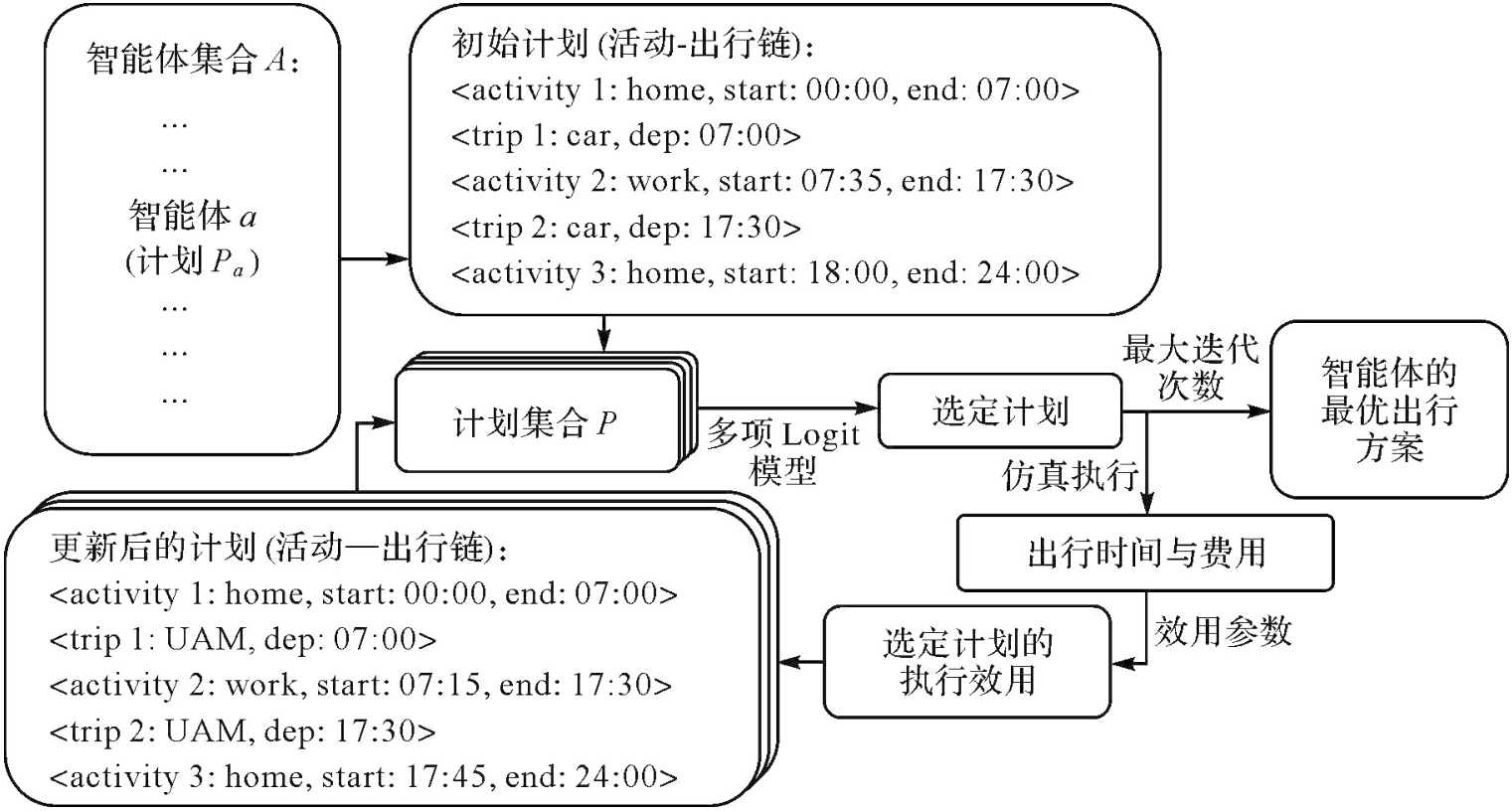
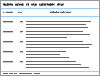
Fig. 3
Bi-level optimization-based site selection procedure for UAM"
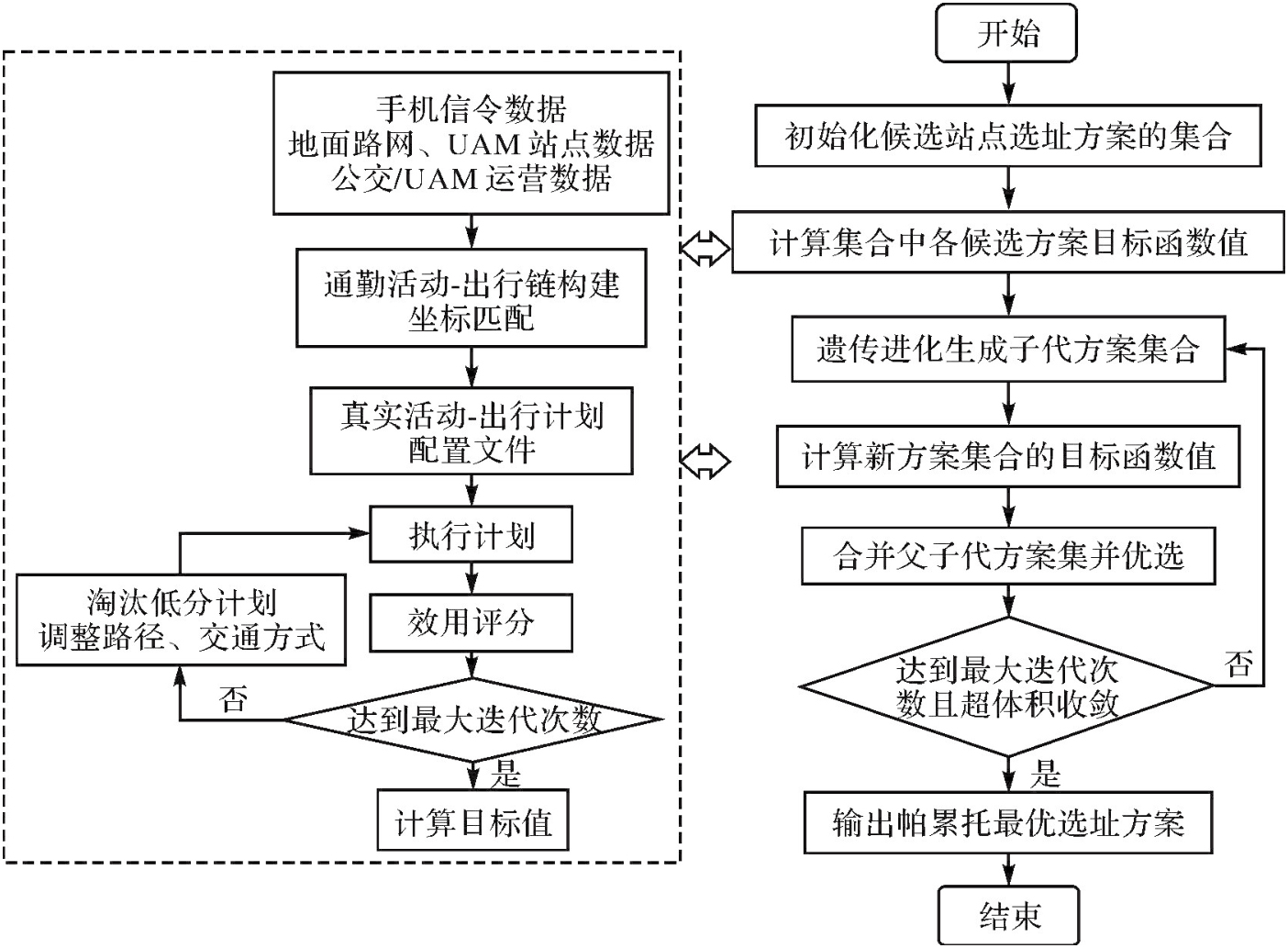
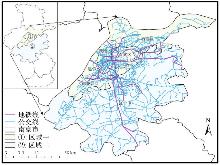
Fig. 4
Study area"
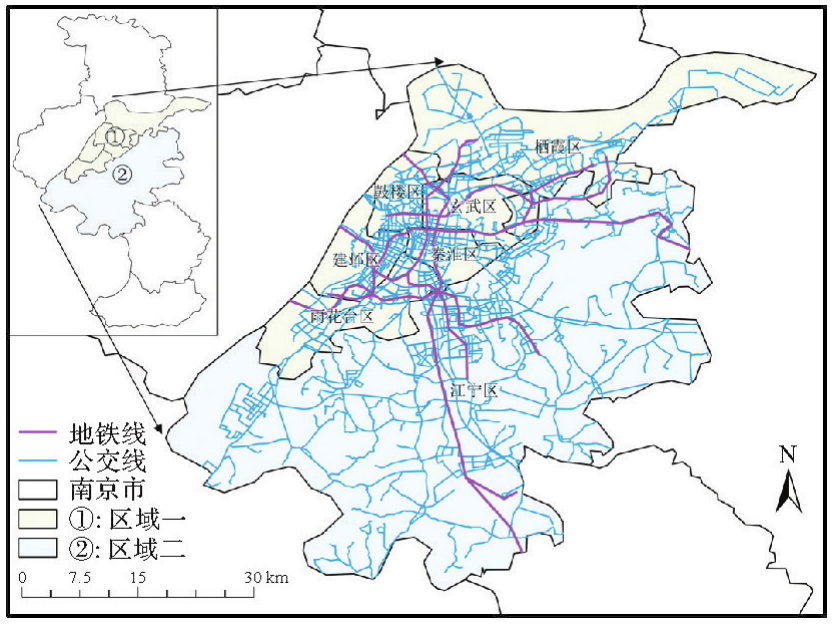
Fig. 5
Commuting distance statistics"
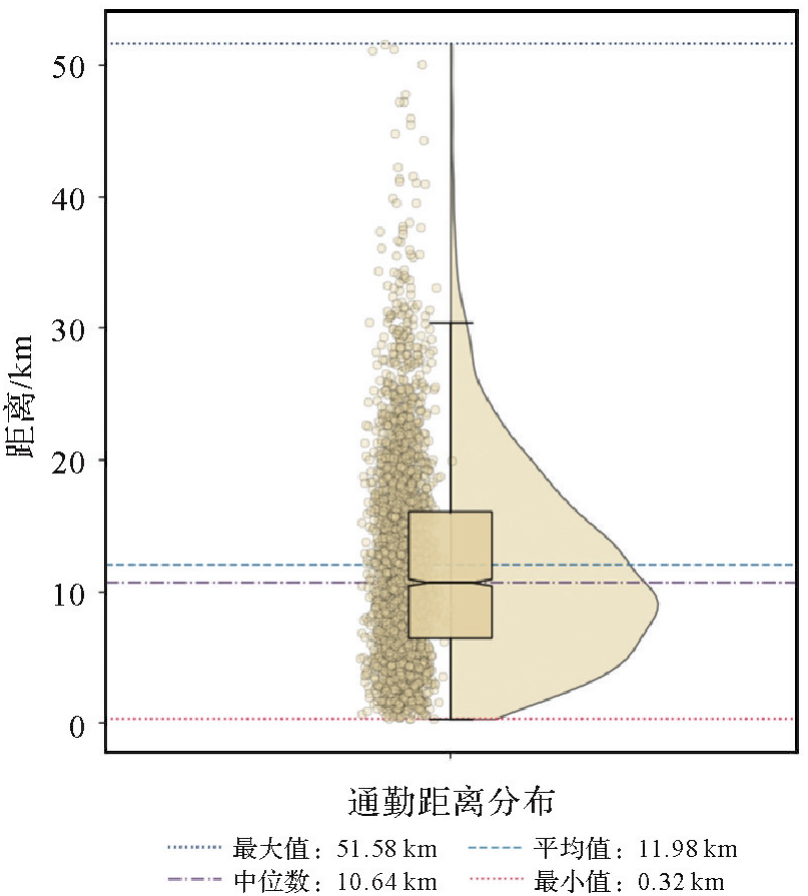
Fig. 6
Commuting mode statistics"
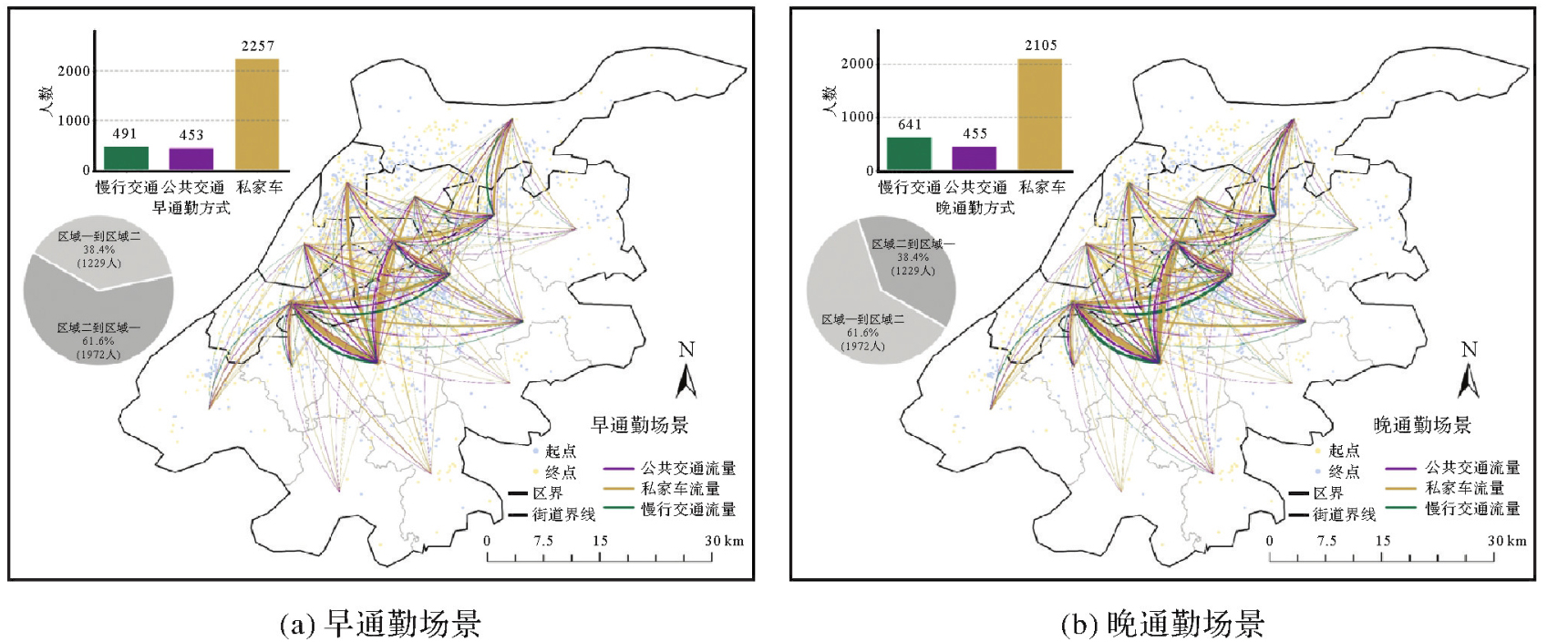
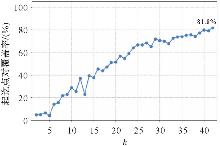
Fig. 7
Clustering process"
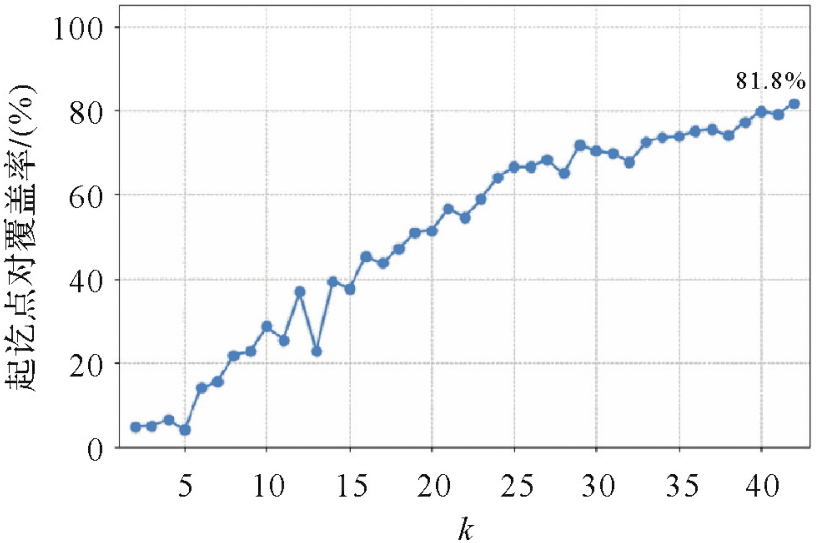
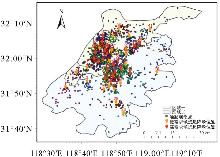
Fig. 8
Spatial distribution of candidate vertiport locations"
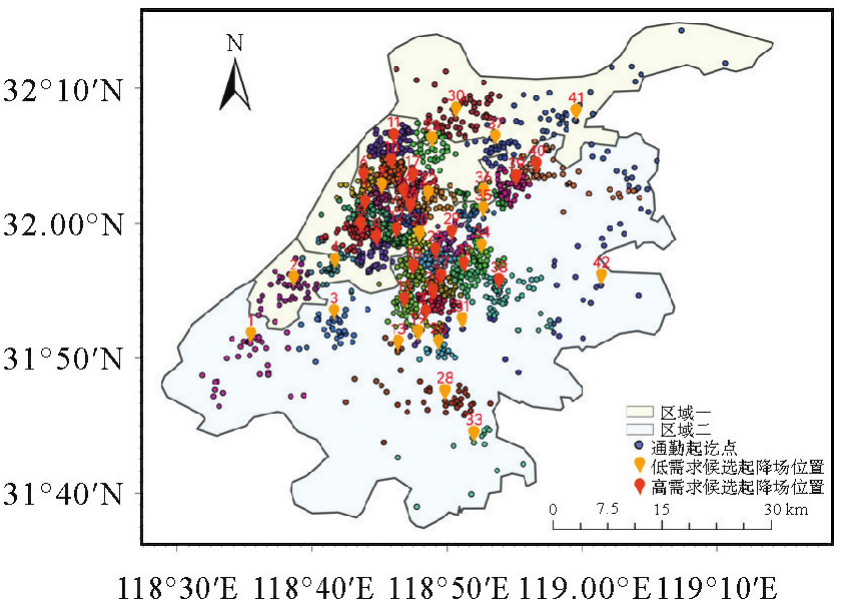
Fig. 9
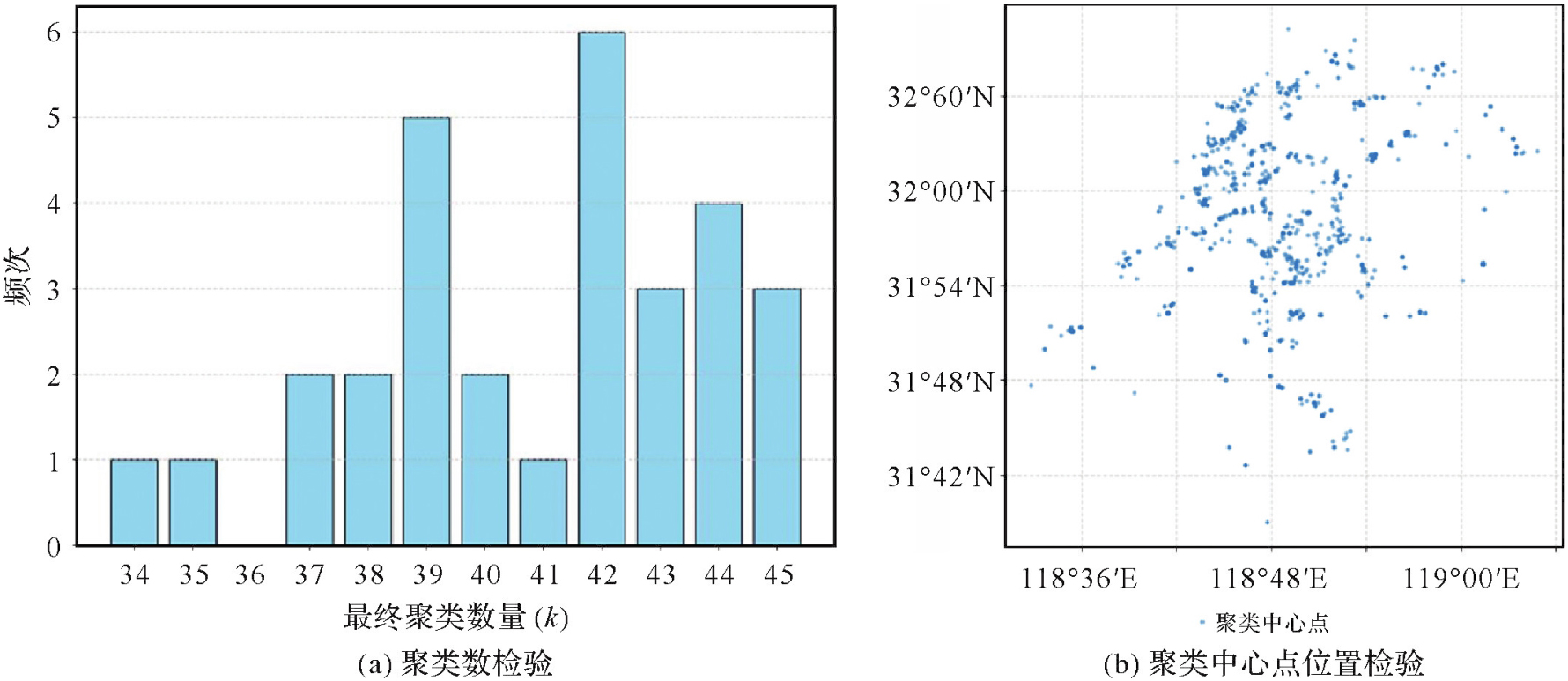
Robustness test of clustering"
Tab. 1
Values of utility parameters"
| 出行方式 | 出行的时间边际效用/h | 单位距离货币成本/(元/km) |
|---|---|---|
| 私家车 | -6 | -2 |
| 公共交通 | -1.2 | -0.2 |
| 慢行交通 | -3.6 | 0 |
| UAM | -18 | -12 |
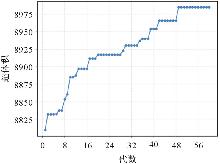
Fig. 10
Convergence curve of the hypervolume indicator"
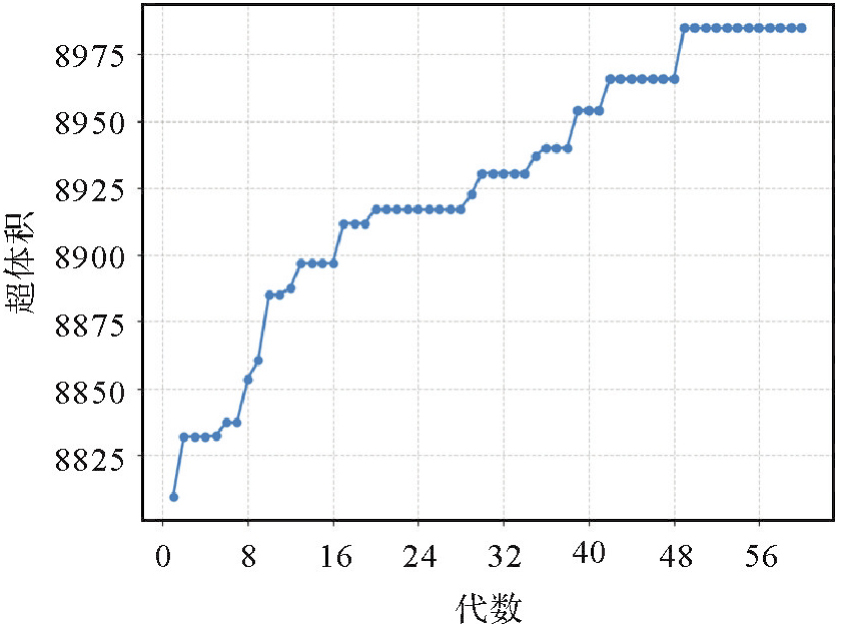
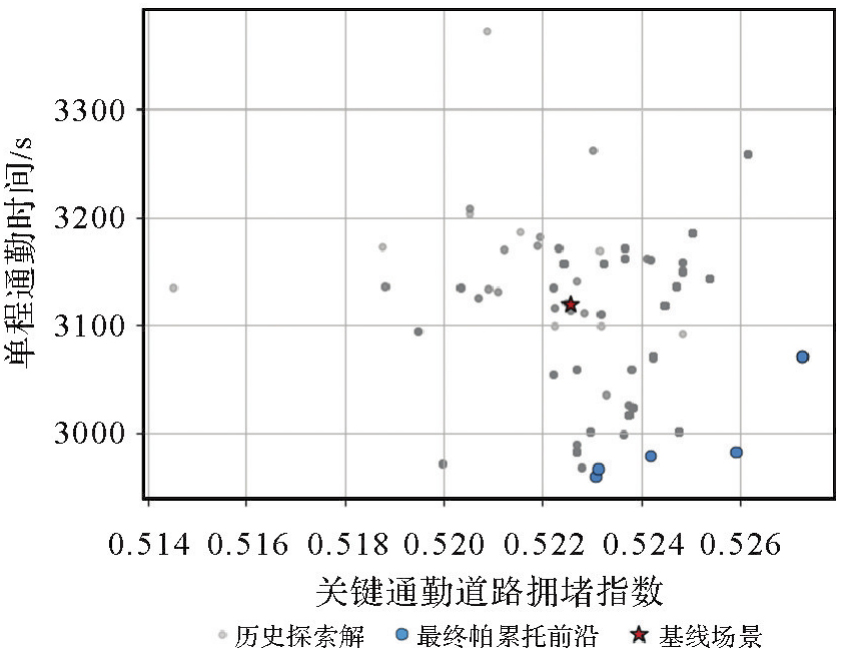
Fig. 11
Pareto front"
Tab. 2
Pareto solution sets for vertiport locations"
| 方案 | 站点数量 | 站点序号 | 航线数量 | 总容量(机位) | 目标1:单程通勤时间/s | 目标2:关键通勤道路拥堵指数 | UAM分担率/(%) |
|---|---|---|---|---|---|---|---|
| 1 | 27 | 1,2,3,5,6,8,10,12,13,14,16,17,20,23,24,25,26,27,29,31,32,33,34,35,37,38,40 | 150 | 276 | 2 959.261 3 | 0.523 1 | 6.60 |
| 2 | 22 | 5,8,9,10,12,13,14,17,19,20,24,25,26,27,29,31,32,33,35,37,38,40 | 94 | 228 | 2 966.758 2 | 0.523 1 | 5.55 |
| 3 | 25 | 5,6,8,9,10,12,13,14,16,17,20,21,23,24,25,26,27,31,32,33,34,35,37,38,40 | 134 | 260 | 2 979.004 2 | 0.524 2 | 6.25 |
| 4 | 23 | 5,8,9,10,12,13,14,16,17,20,23,24,25,26,27,29,31,32,33,35,37,38,40 | 106 | 240 | 2 982.306 1 | 0.525 9 | 6.03 |
| 5 | 18 | 3,5,8,9,10,20,22,24,25,27,28,31,32,33,34,35,36,37 | 63 | 172 | 3 070.402 8 | 0.527 3 | 3.59 |
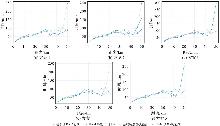
Fig. 12
Changes in commuting time with distance under different vertiport layouts"
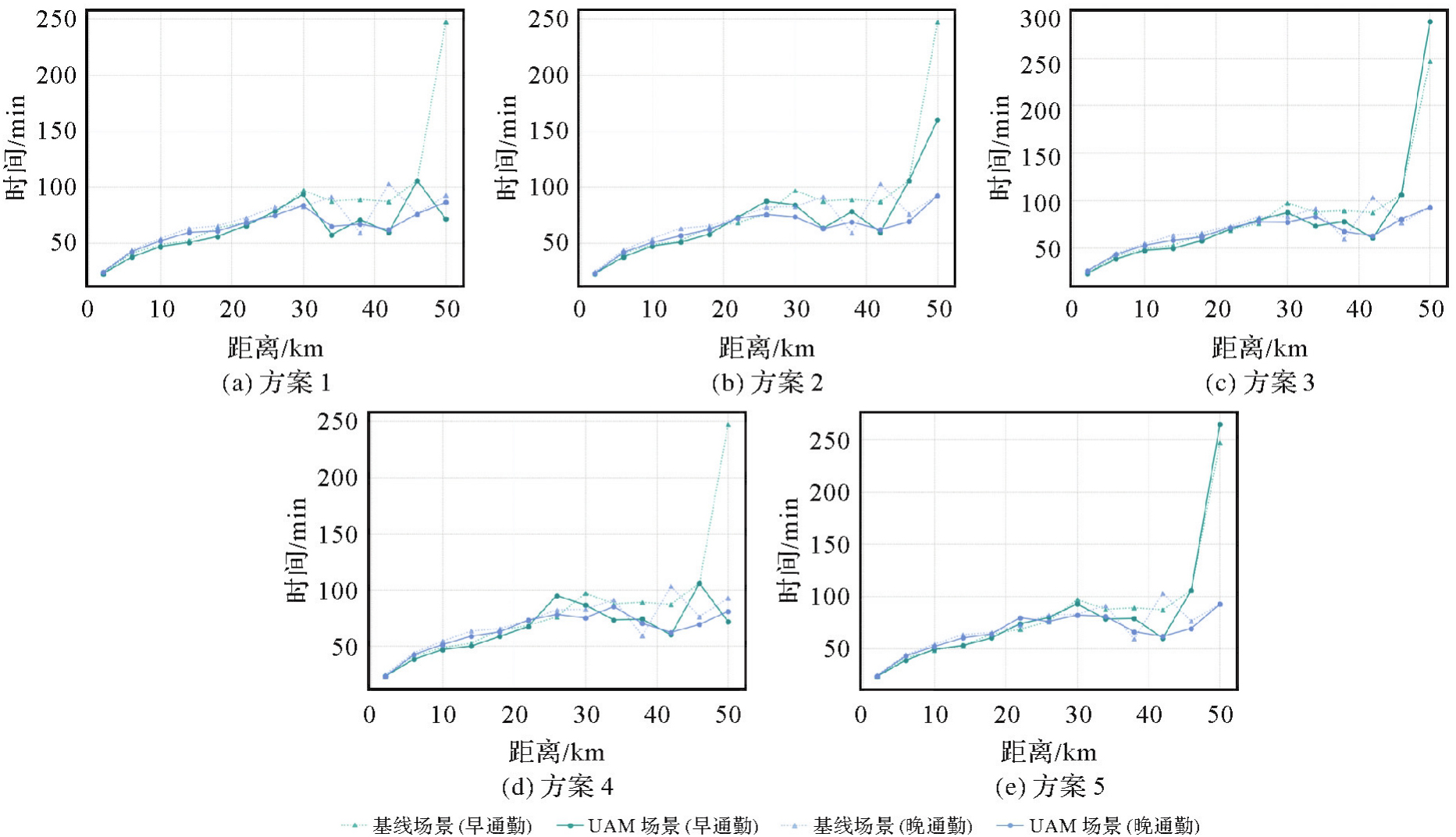
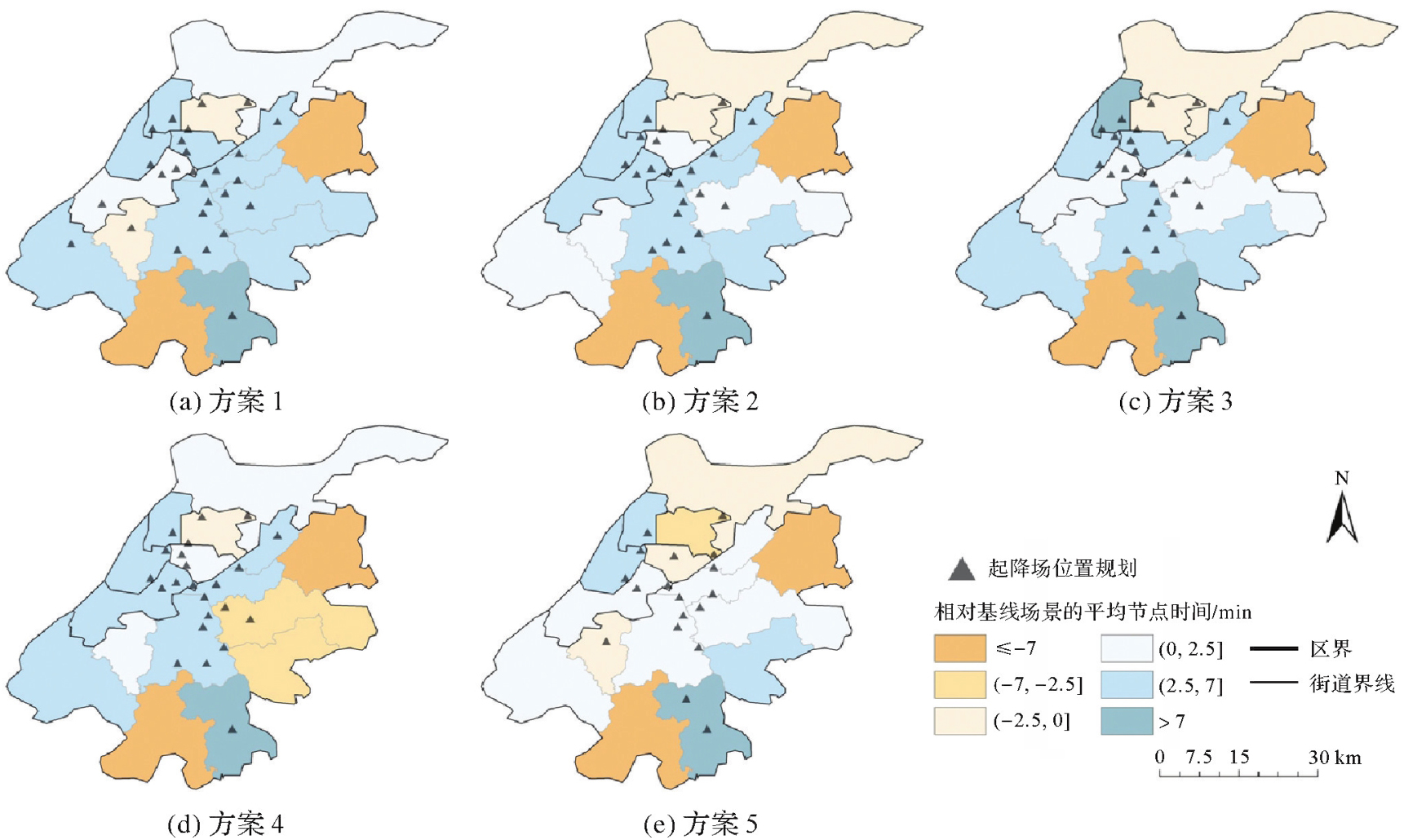
Fig. 13
Spatial distribution of commuting time savings under different vertiport layouts"
| [1] | ZHAO Pengjun, HU Haoyu. Geographical patterns of traffic congestion in growing megacities: big data analytics from Beijing[J]. Cities, 2019, 92: 164-174. |
| [2] | LU Juan, LI Bin, LI He, et al. Expansion of city scale, traffic modes, traffic congestion, and air pollution[J]. Cities, 2021, 108: 102974. |
| [3] | GOYAL R, COHEN A. Advanced air mobility: opportunities and challenges deploying eVTOLs for air ambulance service[J]. Applied Sciences, 2022, 12(3): 1183. |
| [4] | 廖小罕, 黄耀欢, 刘霞. 低空经济时代地理信息科技发展的机遇和挑战[J]. 地球信息科学学报, 2025, 27(1): 1-9. |
| LIAO Xiaohan, HUANG Yaohuan, LIU Xia. Opportunities and challenges in developing geographic information science and technology in the era of the low-altitude economy[J]. Journal of Geo-information Science, 2025, 27(1): 1-9. | |
| [5] | MORADI N, WANG Chun, MAFAKHERI F. Urban air mobility for last-mile transportation: a review[J]. Vehicles, 2024, 6(3): 1383-1414. |
| [6] | WANG Leilei, DENG Xiaoheng, GUI Jinsong, et al. A review of urban air mobility-enabled intelligent transportation systems: mechanisms, applications and challenges[J]. Journal of Systems Architecture, 2023, 141: 102902. |
| [7] | 陈军, 高崟, 郭辰阳, 等. 实景三维赋能低空经济的基本思路与重点任务[J]. 时空信息学报, 2025, 32(1): 1-10. |
| CHEN Jun, GAO Yin, GUO Chenyang, et al. Harnessing 3D realistic geospatial landscape model to empower the low-altitude economy: fundamental problems and major tasks[J]. Journal of Spatio-Temporal Information, 2025, 32(1): 1-10. | |
| [8] | BULUSU V, ONAT E B, SENGUPTA R, et al. A traffic demand analysis method for urban air mobility[J]. IEEE Transactions on Intelligent Transportation Systems, 2021, 22(9): 6039-6047. |
| [9] | ROTHFELD R, FU Mengying, BALAĆ M, et al. Potential urban air mobility travel time savings: an exploratory analysis of Munich, Paris, and San Francisco[J]. Sustainability, 2021, 13(4): 2217. |
| [10] | CUMMINGS C, MAHMASSANI H. Comparing urban air mobility network airspaces: experiments and insights[J]. Transportation Research Record: Journal of the Transportation Research Board, 2024, 2678(4): 440-454. |
| [11] | PUKHOVA A, LLORCA C, MORENO A, et al. Flying taxis revived: can urban air mobility reduce road congestion?[J]. Journal of Urban Mobility, 2021, 1: 100002. |
| [12] | SYED N, RYE M, ADE M, et al. Preliminary considerations for ODM air traffic management based on analysis of commuter passenger demand and travel patterns for the silicon valley region of California[C]//Proceedings of the 17th AIAA Aviation Technology, Integration, and Operations Conference. Reston: AIAA, 2017: 3082. |
| [13] | SCHWEIGER K, PREIS L. Urban air mobility: systematic review of scientific publications and regulations for vertiport design and operations[J]. Drones, 2022, 6(7): 179. |
| [14] | BRUNELLI M, DITTA C C, POSTORINO M N. New infrastructures for urban air mobility systems: a systematic review on vertiport location and capacity[J]. Journal of Air Transport Management, 2023, 112: 102460. |
| [15] | HUANG Yiman, ZHANG Anshu, SU Yuezhu, et al. Comparative analysis of metro passengers' mobility patterns and jobs-housing balance of metropolitan[J]. Journal of Geodesy and Geoinformation Science, 2024, 7(2): 1-17. |
| [16] | ZHOU Yuqing, FU Xiao, TANG Tianli, et al. Assessing resilience of transit networks: an activity-based space-time accessibility analysis[J]. Sustainable Cities and Society, 2025, 130: 106676. |
| [17] | LIU Yan, TONG L C, ZHU Xi, et al. Dynamic activity chain pattern estimation under mobility demand changes during COVID-19[J]. Transportation Research Part C: Emerging Technologies, 2021, 131: 103361. |
| [18] | FU Xiao, ZHANG Yi, DE DIOS ORTÚZAR J, et al. Activity-travel pattern inference based on multi-source big data[J]. Transport Reviews, 2025, 45(1): 26-48. |
| [19] | DELCEA C, CHIRITA N. Exploring the applications of agent-based modeling in transportation[J]. Applied Sciences, 2023, 13(17): 9815. |
| [20] | ROTHFELD R, BALAC M, PLOETNER K O, et al. Agent-based simulation of urban air mobility[C]//Proceedings of 2018 Modeling and Simulation Technologies Conference. Atlanta: AIAA, 2018: 3891. |
| [21] | HAGSPIHL T, KOLISCH R, SCHIFFELS S. Planning an airport shuttle network with air taxis using choice-based optimization[J]. OR Spectrum, 2025: 1-35. |
| [22] | ROTHFELD R, STRAUBINGER A, FU Mengying, et al. Urban air mobility[M]//Demand for emerging transportation systems. Amsterdam: Elsevier, 2020: 267-284. |
| [23] | JIANG Yu, LI Zhichao, WANG Yasha, et al. Vertiport location for eVTOL considering multidimensional demand of urban air mobility: an application in Beijing[J]. Transportation Research Part A: Policy and Practice, 2025, 192: 104353. |
| [24] | JIANG Xuan, CAO Shangqing, MO Baichuan, et al. Simulation-based optimization for vertiport location selection: a surrogate model with machine learning method[J]. Transportation Research Record: Journal of the Transportation Research Board, 2025, 2679(2): 2099-2110. |
| [25] | PARK H S, JUN C H. A simple and fast algorithm for K-medoids clustering[J]. Expert Systems with Applications, 2009, 36(2): 3336-3341. |
| [26] | 何惠雨, 付晓, 吕启航. 突发事件影响下的城市居民出行活动时空模式研究[J]. 时空信息学报, 2024, 31(2): 259-268. |
| HE Huiyu, FU Xiao, LÜ Qihang. Spatiotemporal patterns of urban residents' travel activities under the impact of emergencies[J]. Journal of Spatio-Temporal Information, 2024, 31(2): 259-268. | |
| [27] | PARVIN H, MINAEI-BIDGOLI B, ALINEJAD-ROKNY H, et al. Data weighing mechanisms for clustering ensembles[J]. Computers & Electrical Engineering, 2013, 39(5): 1433-1450. |
| [28] |
屈文虎, 刘振东, 蔡昊琳, 等. 顾及场景连通性的混合式SfM方法[J]. 测绘学报, 2023, 52(6): 966-979. DOI: .
doi: 10.11947/j.AGCS.2023.20220448 |
|
QU Wenhu, LIU Zhendong, CAI Haolin, et al. A hybrid SfM method considering scene connectivity[J]. Acta Geodaetica et Cartographica Sinica, 2023, 52(6): 966-979. DOI: .
doi: 10.11947/j.AGCS.2023.20220448 |
|
| [29] | HORN A. The multi-agent transport simulation MATSim[M]. London: Ubiquity Press, 2016. |
| [30] | KONG Xiaoqiang, ZHANG Yunlong, EISELE W L, et al. Using an interpretable machine learning framework to understand the relationship of mobility and reliability indices on truck drivers' route choices[J]. IEEE Transactions on Intelligent Transportation Systems, 2022, 23(8): 13419-13428. |
| [31] | HE Feifei, YAN Xuedong, LIU Yang, et al. A traffic congestion assessment method for urban road networks based on speed performance index[J]. Procedia Engineering, 2016, 137: 425-433. |
| [32] | VASCIK P D, HANSMAN R J. Development of vertiport capacity envelopes and analysis of their sensitivity to topological and operational factors[C]//Proceedings of 2019 AIAA Scitech Forum. San Diego: AIAA, 2019: 0526. |
| [33] | CHARYPAR D, NAGEL K. Generating complete all-day activity plans with genetic algorithms[J]. Transportation, 2005, 32(4): 369-397. |
| [34] | SIMONI M D, KOCKELMAN K M, GURUMURTHY K M, et al. Congestion pricing in a world of self-driving vehicles: an analysis of different strategies in alternative future scenarios[J]. Transportation Research Part C: Emerging Technologies, 2019, 98: 167-185. |
| [35] | ZHANG Bo, ZHAO Meng, HU Xiangpei. Location planning of electric vehicle charging station with users' preferences and waiting time: multi-objective bi-level programming model and HNSGA-II algorithm[J]. International Journal of Production Research, 2023, 61(5): 1394-1423. |
| [36] | 刘志远, 付晓. 基于手机大数据的交通规划方法与应用[M]. 北京: 科学出版社, 2022. |
| LIU Zhiyuan, FU Xiao. Traffic planning method and application based on mobile phone big data[M]. Beijing: Science Press, 2022. | |
| [37] | YANG Zhao, ZHANG Ying, BAI Xuelian, et al. Estimation of value of travel time savings using willingness-to-pay method[C]//Proceedings of the 18th COTA International Conference of Transportation Professionals. Beijing: American Society of Civil Engineers, 2018: 2433-2445. |
| [38] | SCHMID B, MOLLOY J, PEER S, et al. The value of travel time savings and the value of leisure in Zurich: estimation, decomposition and policy implications[J]. Transportation Research Part A: Policy and Practice, 2021, 150: 186-215. |
| [39] | COPPOLA P, DE FABIIS F, SILVESTRI F. Urban air mobility (UAM): airport shuttles or city-taxis?[J]. Transport Policy, 2024, 150: 24-34. |
| [1] | Mingguang WU, Ziming CHENG. Color generation method for green maps considering use contexts [J]. Acta Geodaetica et Cartographica Sinica, 2026, 55(3): 390-403. |
| [2] | Min YANG, Hongran MA, Bo KONG, Pengcheng LIU, Tinghua AI. A pre-trained model-based method for discriminating morphological patterns of vector-based coastlines [J]. Acta Geodaetica et Cartographica Sinica, 2026, 55(3): 404-414. |
| [3] | Wenhao YU, Ziyi ZENG, Yifan ZHANG, Haizhong QIAN. Road network grid pattern analysis using a pre-trained model fusing spatial and topological information [J]. Acta Geodaetica et Cartographica Sinica, 2026, 55(3): 415-424. |
| [4] | Xiaomin LU, Zhiyi ZHANG, Haowen YAN, Yi HE, Xiaoning SU. A recognition method for building group pattern integrating deep graph infomax and multilayer perceptron [J]. Acta Geodaetica et Cartographica Sinica, 2026, 55(3): 425-438. |
| [5] | Xiaoqiang CHENG, Jiawei ZHAO, Pengcheng LIU. Spatial interaction visualization based on the distance-similarity metaphor [J]. Acta Geodaetica et Cartographica Sinica, 2026, 55(3): 536-547. |
| [6] | Zejiao WANG, Longgang XIANG, Meng WANG, Xingjuan WANG, Qing LIU. Hierarchical feature and diversified attention fusion network for collaborative extraction of road surface and centerline [J]. Acta Geodaetica et Cartographica Sinica, 2026, 55(3): 548-563. |
| [7] | Zhibang XU. Hierarchical boundary identification, pattern analysis and expansion simulation of physical cities [J]. Acta Geodaetica et Cartographica Sinica, 2026, 55(3): 566-566. |
| [8] | Yunbo RAN, Xue YANG, Wenhao ZHOU, Chengen WU, Baoding ZHOU, Luliang TANG, Qingquan LI. Pedestrian path planning driven by preference-enhanced adversarial deep reinforcement learning [J]. Acta Geodaetica et Cartographica Sinica, 2026, 55(2): 191-205. |
| [9] | Lizeng WANG, Shifen CHENG, Yitao YANG, Peixiao WANG, Feng LU. LGA-EL: a spatio-temporal adaptive ensemble method with local-global awareness for traffic prediction [J]. Acta Geodaetica et Cartographica Sinica, 2026, 55(2): 206-221. |
| [10] | Shaohua WANG, Haojian LIANG, Cheng SU, Dachuan XU, Liang ZHOU, Kun QIN. Advances and prospects in urban facility allocation optimization through coupling spatio-temporal big data and artificial intelligence [J]. Acta Geodaetica et Cartographica Sinica, 2026, 55(2): 222-235. |
| [11] | Junhao GUO, Mingzhi WU, Peixiao WANG, Hengcai ZHANG. A dual-threshold stay point detection method based on adaptive extended density peak clustering for sparse fixed-point trajectories [J]. Acta Geodaetica et Cartographica Sinica, 2026, 55(2): 249-260. |
| [12] | Guannan LI. Method for automatic construction of three dimensional real scene model of the road [J]. Acta Geodaetica et Cartographica Sinica, 2026, 55(2): 378-378. |
| [13] | Pengcheng LIU, Xiaoqiang CHENG, Tianyuan XIAO, Min YANG, Tinghua AI. A Transformer model for building polygon simplification in map generalization [J]. Acta Geodaetica et Cartographica Sinica, 2026, 55(1): 124-137. |
| [14] | Biao HE, Haojia LIN, Renzhong GUO, Xi KUAI, Ding MA, Chen ZHANG. Visual perception-based quantitative calculation of 3D spatial similarity relations [J]. Acta Geodaetica et Cartographica Sinica, 2026, 55(1): 138-153. |
| [15] | Weilian LI, Qingqing RAN, Pei DANG, Jun ZHU, Qing ZHU, Heng ZHANG. A coupled LLMs-KG method for cascading flood vulnerability analysis of underground station facilities [J]. Acta Geodaetica et Cartographica Sinica, 2026, 55(1): 154-168. |
| Viewed | ||||||
|
Full text |
|
|||||
|
Abstract |
|
|||||
