

Acta Geodaetica et Cartographica Sinica ›› 2025, Vol. 54 ›› Issue (1): 1-13.doi: 10.11947/j.AGCS.2025.20240127
• Geodesy and Navigation • Next Articles
Chuang SHI1( ), Chenlong DENG2(), Lei FAN1, Fu ZHENG1, Tao ZHANG1, Yuan TIAN1, Guifei JING1, Jie MA2
Received:2024-04-02
Revised:2024-12-16
Online:2025-02-17
Published:2025-02-17
Contact:
Chenlong DENG
E-mail:shichuang@buaa.edu.cn;c.deng@whut.edu.cn
About author:SHI Chuang (1968—), male, PhD, professor, PhD supervisor, majors in the theory and method of satellite positioning, navigation and timing services. E-mail: shichuang@buaa.edu.cn
Supported by:CLC Number:
Chuang SHI, Chenlong DENG, Lei FAN, Fu ZHENG, Tao ZHANG, Yuan TIAN, Guifei JING, Jie MA. Positioning performance analysis and evaluation for standalone BDS receivers[J]. Acta Geodaetica et Cartographica Sinica, 2025, 54(1): 1-13.
Add to citation manager EndNote|Reference Manager|ProCite|BibTeX|RefWorks
URL: http://xb.chinasmp.com/EN/10.11947/j.AGCS.2025.20240127
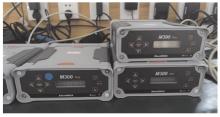
Fig. 1
M300Pro receivers manufactured by Shanghai ComNav Technology Ltd."
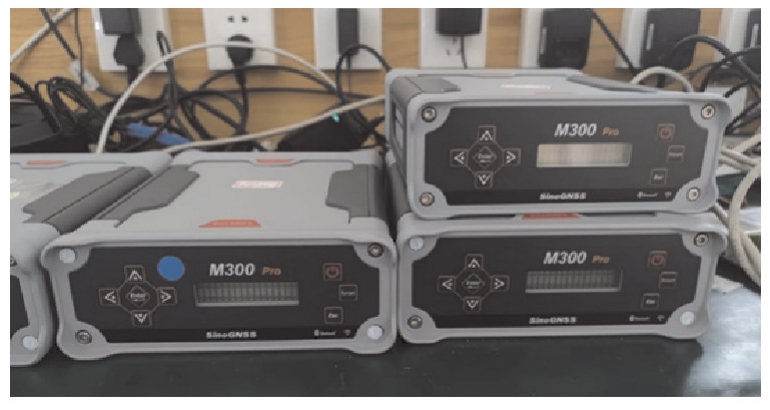
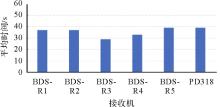
Fig. 2
Comparison of average cold start time between five M300Pro receivers and a PD318 receiver in 20 times"
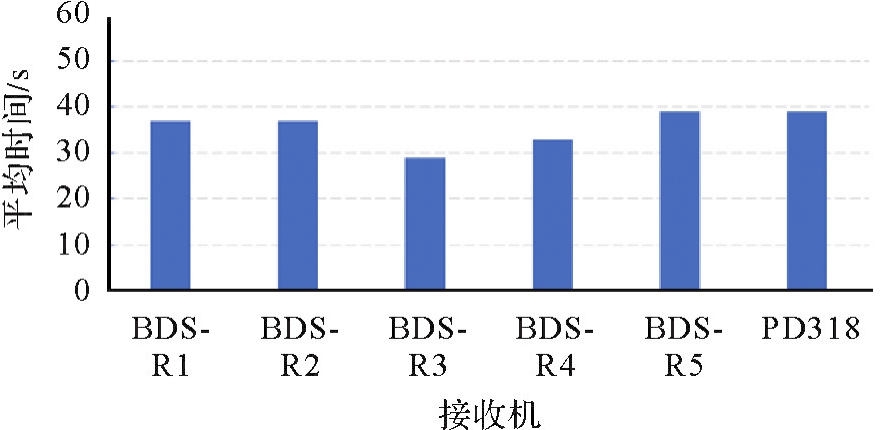
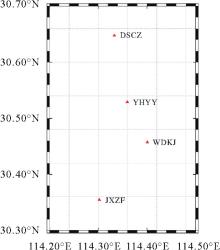
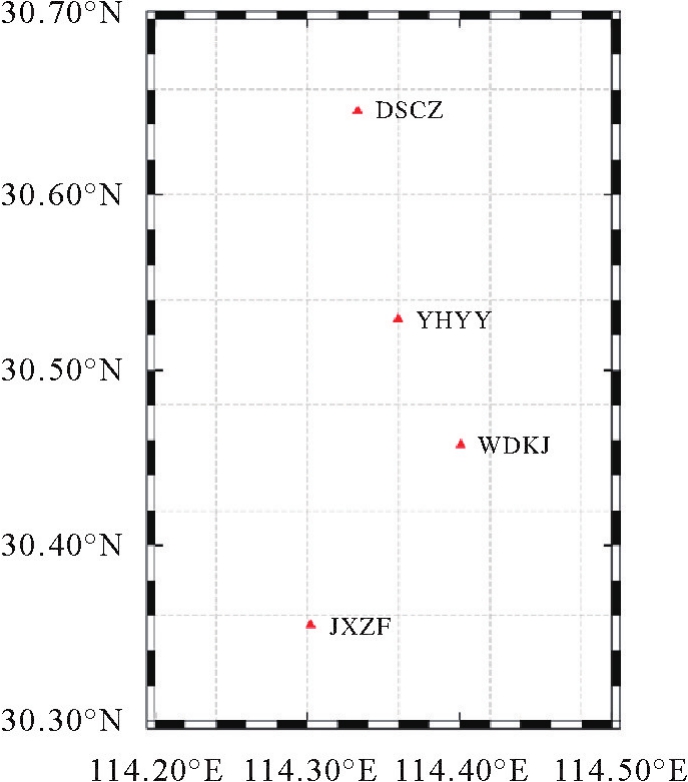
Fig. 3
Distribution of four static stations located in Wuhan"
Tab. 1
Signal quality results of different stations from M300Pro receivers"
| 测站名系统 | 观测卫星总数 | 完好比/(%) | 周跳数 | 连续完好比 | 信噪比均值/dB | 多路径均值/m | |
|---|---|---|---|---|---|---|---|
| DSCZ | BDS-2 | 14 | 89.21 | 3633 | 236.08 | 42.93 | 0.28 |
| BDS-3 | 29 | 92.09 | 16 388 | 54.60 | 44.99 | 0.35 | |
| JXZF | BDS-2 | 15 | 97.42 | 4179 | 224.47 | 41.57 | 0.35 |
| BDS-3 | 29 | 91.75 | 15 608 | 57.17 | 44.74 | 0.43 | |
| WDKJ | BDS-2 | 15 | 99.94 | 114 | 8 436.25 | 41.70 | 0.25 |
| BDS-3 | 29 | 99.39 | 4421 | 218.52 | 44.78 | 0.25 | |
| YHYY | BDS-2 | 15 | 99.12 | 1579 | 603.90 | 42.90 | 0.18 |
| BDS-3 | 29 | 98.64 | 17 451 | 54.93 | 46.06 | 0.20 | |
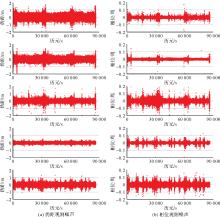
Fig. 4
Measurement noise on each frequency with standalone BDS receivers M300Pro"

Tab. 2
Statistical measurement noise of original code and carrier phase on each frequency with standalone BDS receivers M300 Pro"
| 标准差 | B1I | B2I | B3I | B1C | B2a | 平均 |
|---|---|---|---|---|---|---|
| 伪距/m | 0.068 1 | 0.066 2 | 0.043 3 | 0.028 8 | 0.052 0 | 0.051 7 |
| 载波/周 | 0.002 4 | 0.002 3 | 0.004 5 | 0.002 6 | 0.005 5 | 0.003 4 |
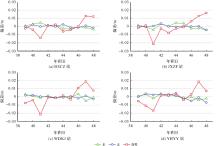
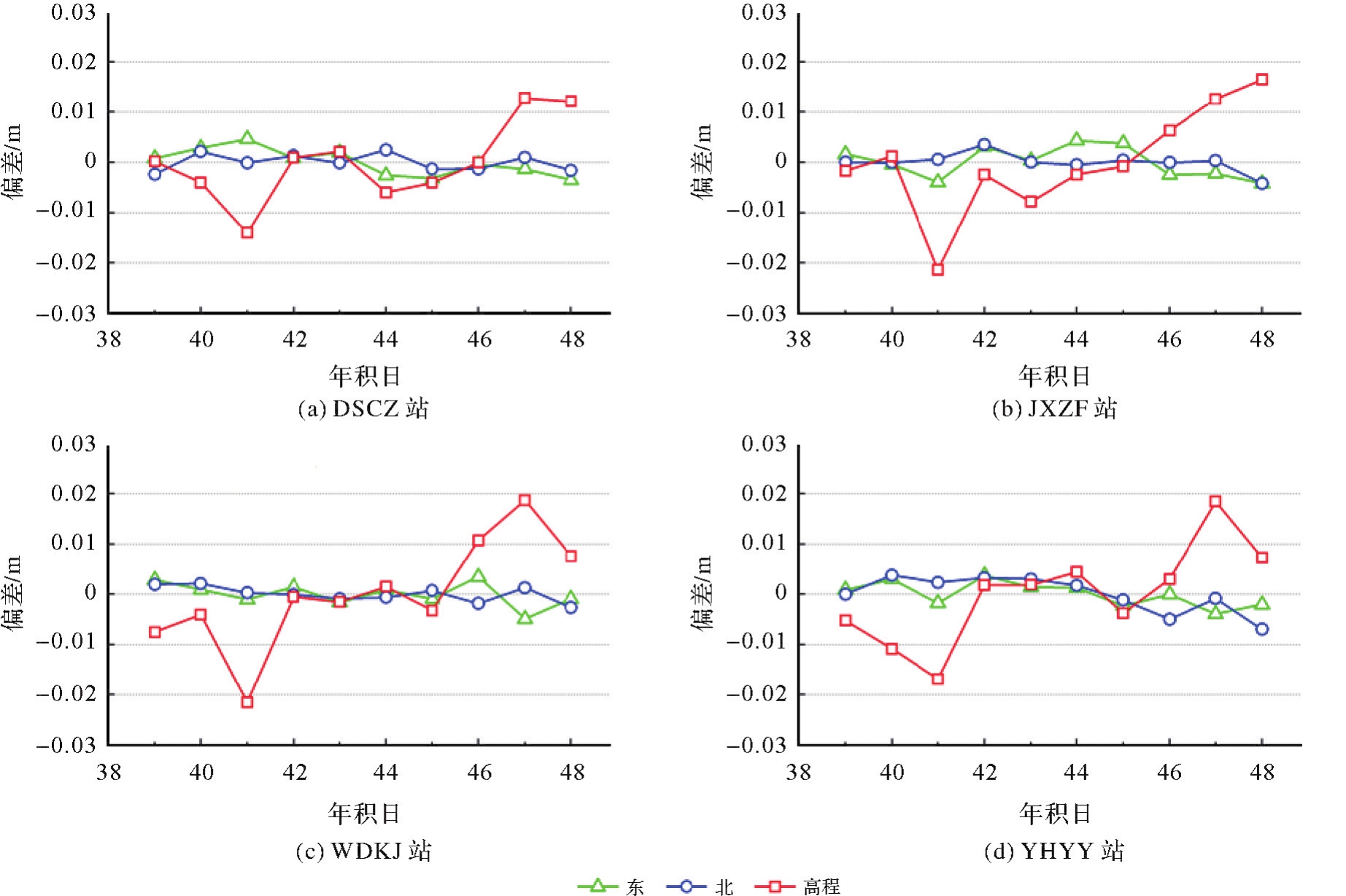
Fig. 5
Biases of coordinate daily solutions for four stations"
Tab. 3
STD of coordinate daily solutions for four stations"
| 测站 | 北 | 东 | 水平 | 高程 |
|---|---|---|---|---|
| DSCZ | 1.7 | 2.7 | 3.2 | 8.0 |
| JXZF | 1.8 | 3.2 | 3.7 | 10.6 |
| WDKJ | 1.6 | 2.4 | 2.9 | 10.9 |
| YHYY | 3.6 | 2.5 | 4.4 | 9.8 |
| 平均值 | 2.2 | 2.7 | 3.5 | 9.9 |
Tab. 4
Statistical results of single point positioning for different stations"
| 测站 | 平均卫星数 | 平均PDOP | PDOP≤3占比/(%) | 定位精度/m | |||
|---|---|---|---|---|---|---|---|
| 北 | 东 | 水平 | 高程 | ||||
| DSCZ | 12.59 | 2.238 | 92.9 | 1.901 | 1.027 | 2.160 | 2.779 |
| JXZF | 12.76 | 2.083 | 93.9 | 2.087 | 0.724 | 2.209 | 2.398 |
| WDKJ | 12.40 | 2.121 | 90.3 | 2.086 | 0.849 | 2.252 | 2.405 |
| YHYY | 12.19 | 2.429 | 80.2 | 2.077 | 0.758 | 2.211 | 2.427 |
| 平均值 | 12.48 | 2.218 | 89.4 | 2.038 | 0.839 | 2.208 | 2.502 |
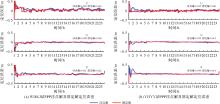
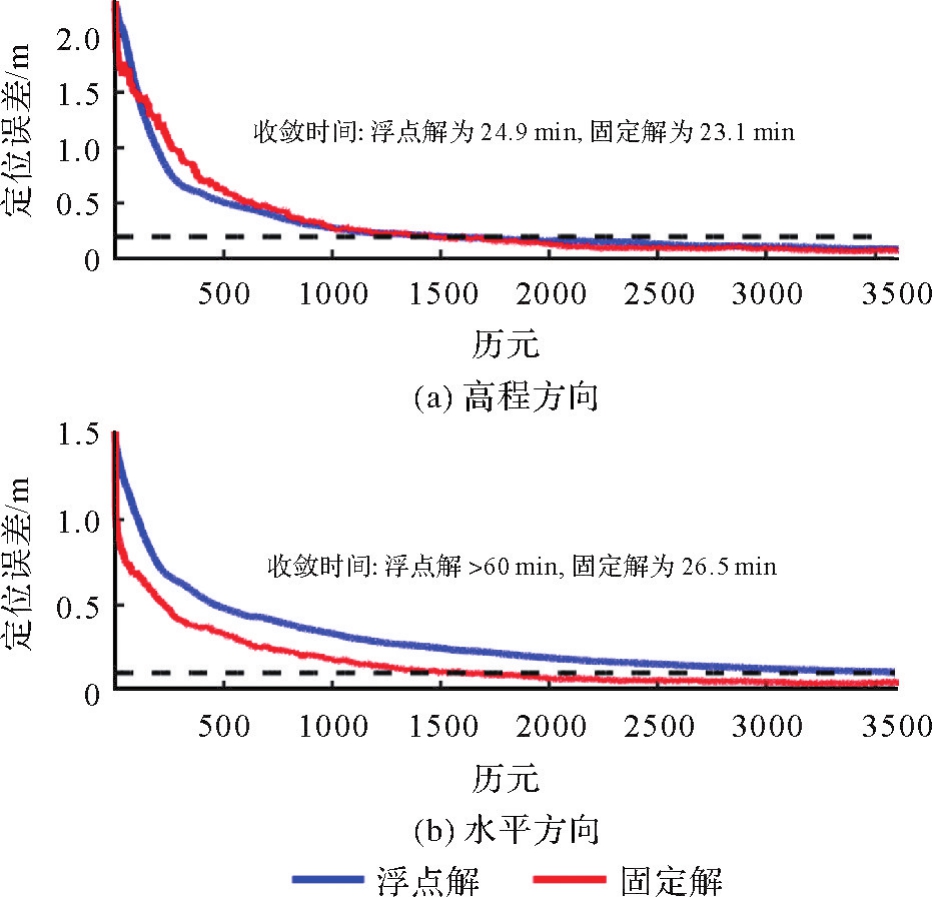
Fig. 6
Time series of PPP and PPP-AR errors for stations WDKJ and YHYY"

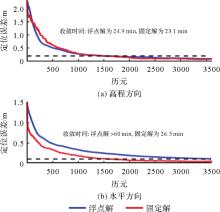
Fig. 7
Statistics of PPP and PPP-AR hourly solution differences"
Tab. 5
Stations information of three static baselines"
| 基线 | 基准站 | 流动站 | 长度 |
|---|---|---|---|
| A | YHYY | WDKJ | 8.88 |
| B | YHYY | DSCZ | 13.36 |
| C | YHYY | JXZF | 20.11 |
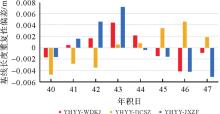
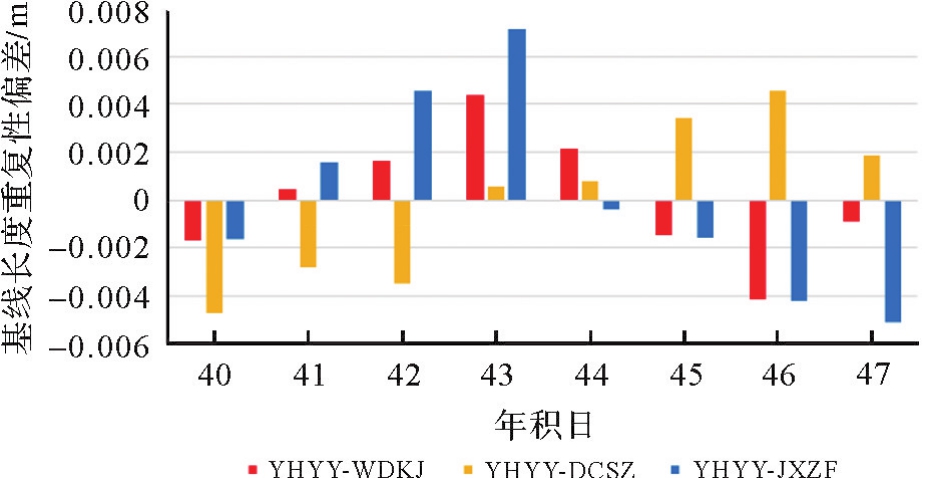
Fig. 8
Repeatability bias of baseline length from different baseline solutions"
Tab. 6
Accuracy of baseline solutions of three static baselines"
| 基线 | 长度/km | 重复性标准差/cm | 均方根误差/cm | ||||||
|---|---|---|---|---|---|---|---|---|---|
| 北 | 东 | 水平 | 高程 | 北 | 东 | 水平 | 高程 | ||
| A | 8.88 | 0.26 | 0.17 | 0.31 | 0.95 | 0.26 | 0.61 | 0.66 | 1.68 |
| B | 13.36 | 0.33 | 0.11 | 0.35 | 0.73 | 0.47 | 0.11 | 0.48 | 1.44 |
| C | 20.11 | 0.41 | 0.40 | 0.57 | 1.27 | 0.43 | 0.43 | 0.61 | 1.27 |
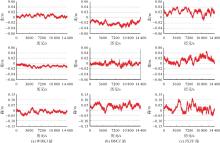
Fig. 9
Biases of RTK solutions for three static baselines"

Tab. 7
Statistical accuracy of RTK positioning results for three static baselines"
| 基线 | 长度/km | 固定率/(%) | 均方根误差/cm | |||
|---|---|---|---|---|---|---|
| 北 | 东 | 水平 | 高程 | |||
| A | 8.88 | 100 | 0.76 | 0.96 | 1.22 | 2.18 |
| B | 13.36 | 100 | 2.17 | 0.49 | 2.22 | 4.35 |
| C | 20.11 | 100 | 2.18 | 1.75 | 2.80 | 3.62 |
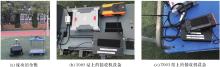
Fig. 10
Experiment devices equipped on two rover station platforms"

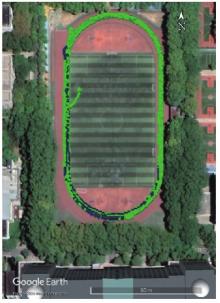
Fig. 11
Moving trajectory of rover station platform T003"
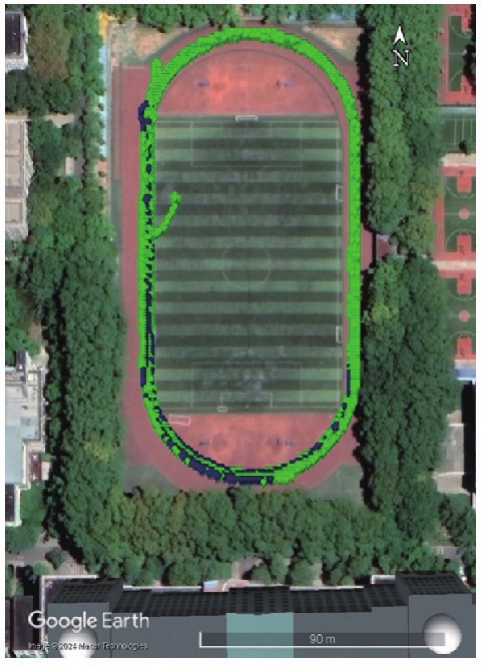
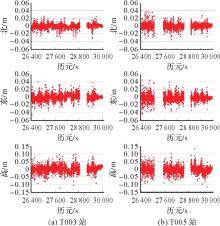
Fig. 12
RTK positioning errors of rover stations T003 and T005"
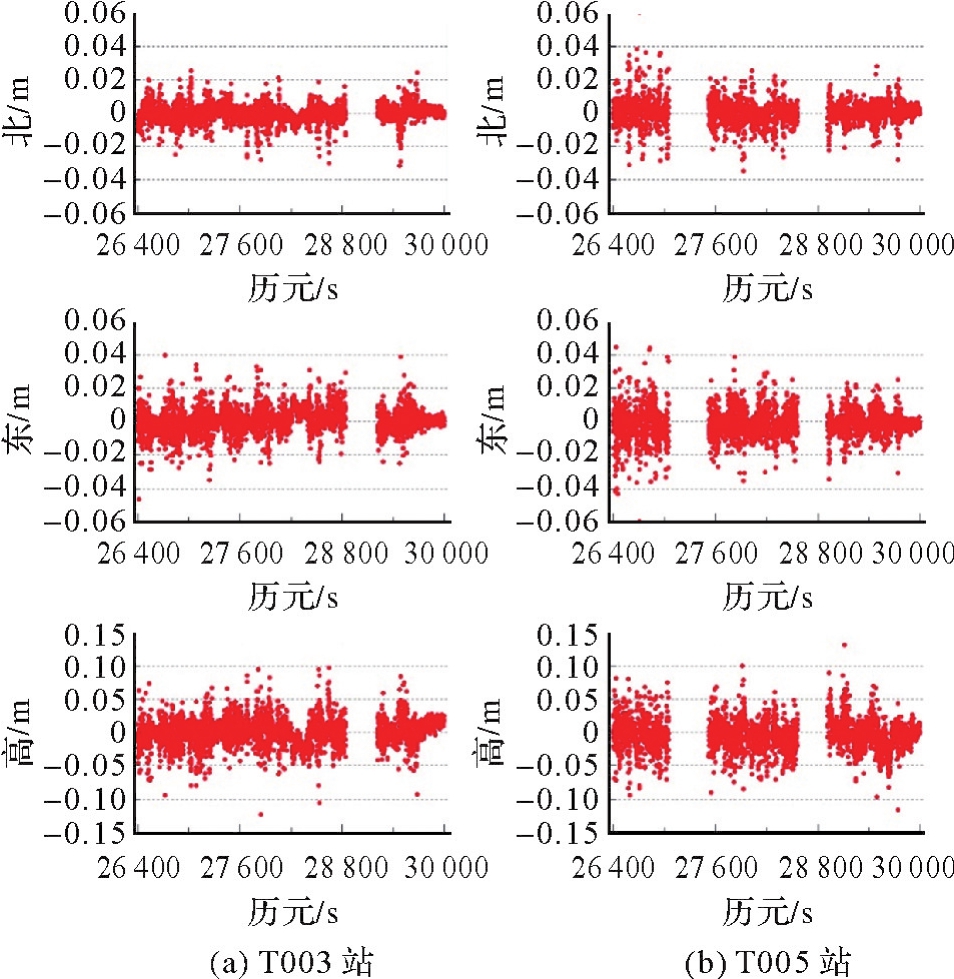
Tab. 8
Statistical results of RTK positioning for rover stations T003 and T005"
| 流动站 | 固定率/(%) | 固定正确率/(%) | 均方根误差/cm | |||
|---|---|---|---|---|---|---|
| 北 | 东 | 水平 | 高程 | |||
| T003 | 88.8 | 99.5 | 0.52 | 0.74 | 0.91 | 2.01 |
| T005 | 88.3 | 85.1 | 0.68 | 0.89 | 1.12 | 2.34 |
| [1] | 杨元喜. 北斗卫星导航系统的进展、贡献与挑战[J]. 测绘学报, 2010, 39(1): 1-6. |
| YANG Yuanxi. Progress, contribution and challenges of Compass/BeiDou satellite navigation system[J]. Acta Geodaetica et Cartographica Sinica, 2010, 39(1): 1-6. | |
| [2] | YANG Y, LI J, WANG A, et al. Preliminary assessment of the navigation and positioning performance of BeiDou regional navigation satellite system[J]. Science China: Earth Sciences, 2014, 57(1): 144-152. |
| [3] | 交通运输部办公厅. 交通运输部办公厅关于充分发挥全国道路货运车辆公共监管与服务平台作用支撑行业高质量发展的意见[EB/OL]. [2020-04-29]. https://xxgk.mot.gov.cn/jigou/ysfws/202006/t20200623_3316089.html. |
| General Office of the Ministry of Transport. Opinions on giving full play to the role of the national road freight vehicle public supervision and service platform to support high-quality development for the industry[EB/OL]. [2020-04-29]. https://xxgk.mot.gov.cn/jigou/ysfws/202006/t20200623_3316089.html. | |
| [4] | MONTENBRUCK O, HAUSCHILD A, STEIGENBERGER P, et al. Initial assessment of the COMPASS/ BeiDou-2 regional navigation satellite system[J]. GPS Solutions, 2013, 17(2): 211-222. |
| [5] | 程鹏飞, 李玮, 秘金钟. 北斗导航卫星系统测距信号的精度分析[J]. 测绘学报, 2012, 41(5): 690-695. |
| CHENG Pengfei, LI Wei, BEI Jinzhong. Precision analysis of BeiDou range measurement signals[J]. Acta Geodaetica et Cartographica Sinica, 2012, 41(5): 690-695. | |
| [6] | ZHANG X, WU M, LIU W, et al. Initial assessment of the Compass/BeiDou-3: new-generation navigation signals[J]. Journal of Geodesy, 2017, 91(10): 1225-1240. |
| [7] | 李金龙, 唐斌, 郭海荣, 等. 新一代北斗试验卫星伪距质量初步评估[J]. 导航定位与授时, 2017, 4(4): 66-73. |
| LI Jinlong, TANG Bin, GUO Hairong, et al. Evaluation on the pseudorange quality of new-generation BDS experimental satellites[J]. Navigation Positioning and Timing, 2017, 4(4): 66-73. | |
| [8] | YANG Y, XU Y, LI J, et al. Progress and performance evaluation of BeiDou global navigation satellite system: data analysis based on BDS-3 demonstration system[J]. Science China: Earth Sciences, 2018, 61(5): 614-624. |
| [9] | WANG M, WANG J, DONG D, et al. Performance of BDS-3: satellite visibility and dilution of precision[J]. GPS Solutions, 2019, 23(2): 56. |
| [10] |
郭树人, 蔡洪亮, 孟轶男, 等. 北斗三号导航定位技术体制与服务性能[J]. 测绘学报, 2019, 48(7): 810-821. DOI:.
doi: 10.11947/j.AGCS.2019.20190091 |
|
GUO Shuren, CAI Hongliang, MENG Yinan, et al. BDS-3 RNSS technical characteristics and service performance[J]. Acta Geodaetica et Cartographica Sinica, 2019, 48(7): 810-821. DOI:.
doi: 10.11947/j.AGCS.2019.20190091 |
|
| [11] | YANG Y, GAO W, GUO S, et al. Introduction to BeiDou-3 navigation satellite system[J]. Navigation, 2019, 66(1): 7-18. |
| [12] | LU M, LI W, YAO Z, et al. Overview of BDS III new signals[J]. Navigation, 2019, 66(1): 19-35. |
| [13] | DENG C, QI S, LI Y, et al. A comparative analysis of navigation signals in BDS-2 and BDS-3 using zero-baseline experiments[J]. GPS Solutions, 2021, 25(4): 143. |
| [14] | SHI C, ZHAO Q, HU Z, et al. Precise relative positioning using real tracking data from Compass GEO and IGSO satellites[J]. GPS Solutions, 2013, 17(1): 103-119. |
| [15] | 唐卫明, 邓辰龙, 高丽峰. 北斗单历元基线解算算法研究及初步结果[J]. 武汉大学学报(信息科学版), 2013, 38(8): 897-901. |
| TANG Weiming, DENG Chenlong, GAO Lifeng. Preliminary results of single epoch baseline solution based on BeiDou satellite navigation satellites system[J]. Geomatics and Information Science of Wuhan University, 2013, 38(8): 897-901. | |
| [16] | TANG W, DENG C, SHI C, et al. Triple-frequency carrier ambiguity resolution for BeiDou navigation satellite system[J]. GPS Solutions, 2014, 18(3): 335-344. |
| [17] | ZHANG Z, LI B, NIE L, et al. Initial assessment of BeiDou-3 global navigation satellite system: signal quality, RTK and PPP[J]. GPS Solutions, 2019, 23(4): 111. |
| [18] | YUAN Y, MI X, ZHANG B. Initial assessment of single- and dual-frequency BDS-3 RTK positioning[J]. Satellite Navigation, 2020, 1(31): 31. |
| [19] | SHI J, OUYANG C, HUANG Y, et al. Assessment of BDS-3 global positioning service: ephemeris, SPP, PPP, RTK, and new signal[J]. GPS solutions, 2020, 24(3): 81. |
| [20] | DENG C, QI S, TANG W, et al. Model comparison and performance analysis of multi-frequency precise positioning with the joint BDS-2 and BDS-3 system[J]. Advances in Space Research, 2022, 69(8): 3044-3058. |
| [21] | 罗庆红. 北斗导航接收机快速启动方法研究[D]. 广州: 广东工业大学, 2018. |
| LUO Qinghong. Research of quick positioning method in BDS receiver (in Chinese)[D]. Guangzhou: Guangdong University of Technology, 2018. | |
| [22] | 中国卫星导航系统管理办公室. 北斗/全球卫星导航系统(GNSS)测量型接收机通用规范[EB/OL]. [2015-10-19]. http://www.beidou.gov.cn/zt/bdbz/202407/W020240718511922279496.pdf. |
| China Satellite Navigation Office. General specification for BeiDou/gobal navigation satellite systems (GNSS) geodetic receivers[EB/OL]. [2015-10-19]. http://www.beidou.gov.cn/zt/bdbz/202407/W020240718511922279496.pdf. | |
| [23] | 丁艺伟. 多GNSS观测数据质量与完好性评价方法研究[D]. 南京: 东南大学, 2017. |
| DING Yiwei. Research on evaluation methods for multi-GNSS data quality and integrity (in Chinese)[D]. Nanjing: Southeast University, 2017. | |
| [24] | ESTEY L, MEERTENS C. TEQC: the multi-purpose toolkit for GPS/GLONASS data[J]. GPS Solutions, 1999, 3(1): 42-49. |
| [25] | 中国卫星导航系统管理办公室. 北斗/全球卫星导航系统(GNSS)测量型接收机观测数据质量评估方法[EB/OL]. [2019-11-25]. http://www.beidou.gov.cn/zt/bdbz/202407/W020240718527341977980.pdf. |
| China Satellite Navigation Office. Observation data quality assessment methods for BDS/GNSS geodetic receiver[EB/OL]. [2019-11-25]. http://www.beidou.gov.cn/zt/bdbz/202407/W020240718527341977980.pdf. | |
| [26] | DENG C, TANG W, LIU J, et al. Reliable single-epoch ambiguity resolution for short baselines using combined GPS/BeiDou system[J]. GPS Solutions, 2014, 18(3): 375-386. |
| [27] | ODOLINSKI R, TEUNISSEN P, ODIJK D. Combined BDS, Galileo, QZSS and GPS single-frequency RTK[J]. GPS Solutions, 2015, 19(1): 151-163. |
| [28] | GENG J, GUO J, MENG X, et al. Speeding up PPP ambiguity resolution using triple-frequency GPS/BeiDou/Galileo/QZSS data[J]. Journal of Geodesy, 2020, 94(1): 6. |
| [29] | SHI C, GUO S, FAN L, et al. GSTAR: an innovative software platform for processing space geodetic data at the observation level[J]. Satellite Navigation, 2023, 4(1): 18. |
| [30] | GUO J, XU X, ZHAO Q, et al. Precise orbit determination for quad-constellation satellites at Wuhan University: strategy, result validation, and comparison[J]. Journal of Geodesy, 2015, 35(3): 1-17. |
| [31] |
JIANG W, ZHAO Q, LI M, et al. The progress of IGS analysis center at Wuhan University[J]. Journal of Geodesy and Geoinformation Science, 2023, 6(3): 46-57. DOI:.
doi: 10.11947/j.JGGS.2023.0305 |
| [32] | 中国卫星导航系统管理办公室. 北斗卫星导航系统发展报告(4.0版)[EB/OL]. [2019-12-27]. http://www.beidou.gov.cn/xt/gfxz/201912/P020191227337020425733.pdf. |
| China Satellite Navigation Office. Development of the BeiDou navigation satellite system (version 4.0)[EB/OL]. [2019-12-27]. http://www.beidou.gov.cn/xt/gfxz/201912/P020191227337020425733.pdf. |
| [1] | Yangyang LU, Huizhong ZHU, Bo LI, Jun LI, Aigong XU. PPP algorithm for multi-frequency GPS/Galileo/BDS-3 with IFCB time-varying characteristic constraints [J]. Acta Geodaetica et Cartographica Sinica, 2025, 54(2): 233-247. |
| [2] | Bofeng LI, Long CHEN, Leitong YUAN. A high-precision deformation monitoring method with GNSS multi-baseline solutions [J]. Acta Geodaetica et Cartographica Sinica, 2025, 54(12): 2116-2128. |
| [3] | Jian CHEN, Jiahui WANG, Xingwang ZHAO, Chao LIU, Chunyang LIU, Xuexiang YU. Single-epoch RTK positioning optimization method based on BDS-3/Galileo multi-frequency ionosphere-reduced combinations [J]. Acta Geodaetica et Cartographica Sinica, 2025, 54(12): 2153-2167. |
| [4] | Xinrui LI, Xuanyu QU, Qin ZHANG, Bao SHU, Lingen MENG, Hao XU, Shuangcheng ZHANG, Guanwen HUANG, Hanwen WU, Li WANG. A data-driven multipath error mitigation method for PPP-RTK and its application in deformation monitoring [J]. Acta Geodaetica et Cartographica Sinica, 2025, 54(12): 2168-2181. |
| [5] | Yang LIU, Guang YANG, Xiaohui CHENG, Xiao ZHANG. Rapid single point positioning enhancement service and application based on urban CORS [J]. Acta Geodaetica et Cartographica Sinica, 2024, 53(9): 1706-1714. |
| [6] | Jianhua CHENG, Sicheng CHEN, Nan ZANG, Sixiang CHENG, Guojing ZHAO, Zifan MA. PPP/INS tightly integrated enhancement model considering adaptive short-term height variation rate constraint [J]. Acta Geodaetica et Cartographica Sinica, 2024, 53(9): 1761-1776. |
| [7] | Liang LI, Liuqi WANG, Ningbo WANG, Min LI, Zishen LI, Fengze DU, Shuai PANG, Zhibo NA. Vectorized integrity monitoring method for PPP-RTK correction products [J]. Acta Geodaetica et Cartographica Sinica, 2024, 53(9): 1777-1789. |
| [8] | Chuang SHI, Wei SONG, Fu ZHENG, Haoyuan WANG, Yuzhuo WANG, Aimin ZHANG, Weiming TANG. BDS real-time 100 picosecond level single difference time and frequency synchronization method [J]. Acta Geodaetica et Cartographica Sinica, 2024, 53(5): 869-878. |
| [9] | Xiaoyong SONG, Yuanxi YANG, Yue MAO, Rengui RUAN, Long WANG. Schmidt Kalman filter in autonomous orbit determination of navigation satellites [J]. Acta Geodaetica et Cartographica Sinica, 2024, 53(5): 879-888. |
| [10] | Tian HE, Guojie MENG, Weiwei WU, Xiaoning SU, Guoqiang ZHAO, Congmin WEI, Zhihua DONG. Preliminary analysis to positioning precision and crustal movement of BDS-3 data recorded by the China seismic experiment site [J]. Acta Geodaetica et Cartographica Sinica, 2024, 53(4): 653-665. |
| [11] | Yingzong LIN, Xiaomin LUO, Junfeng DU. Fitting improvement of PPP receiver tracking error stochastic model for high latitudes [J]. Acta Geodaetica et Cartographica Sinica, 2024, 53(4): 666-676. |
| [12] | HU Chao, WANG Qianxin. GNSS ultra-rapid orbit and clock offset estimation method with the aid of the constraint of BDS-3 onboard clock [J]. Acta Geodaetica et Cartographica Sinica, 2024, 53(3): 413-424. |
| [13] | Jianghui GENG, Jihang LIN, Qiyuan ZHANG, Qiang WEN, Jing ZENG, Biao JIN. Phase clock/bias estimation for GNSS all-frequency undifferenced ambiguity resolution [J]. Acta Geodaetica et Cartographica Sinica, 2024, 53(12): 2254-2267. |
| [14] | Chao HU, Qianxin WANG. BDS-3/GNSS satellite ultra-rapid clock offsets estimation model with the aid of onboard clock states solution [J]. Acta Geodaetica et Cartographica Sinica, 2024, 53(12): 2268-2281. |
| [15] | QU Weijing, HUANG Yong, XU Junyi, SUN Shuxian, ZHOU Shanshi, YANG Yufei, HE Bing, HU Xiaogong. Precise orbit determination using satellite laser ranging and inter-satellite link observations for BDS-3 satellites [J]. Acta Geodaetica et Cartographica Sinica, 2023, 52(9): 1437-1448. |
| Viewed | ||||||
|
Full text |
|
|||||
|
Abstract |
|
|||||
