

Acta Geodaetica et Cartographica Sinica ›› 2025, Vol. 54 ›› Issue (7): 1332-1345.doi: 10.11947/j.AGCS.2025.20240337
• Cartography and Geoinformation • Previous Articles Next Articles
Yaqing WANG1,2,3( ), Zhonghui WANG1,2,3()
Received:2024-08-19
Revised:2025-05-06
Online:2025-08-18
Published:2025-08-18
Contact:
Zhonghui WANG
E-mail:wyq1584816526@163.com;1449041349@qq.com
About author:WANG Yaqing (2000—), male, postgraduate, majors in map generalization and intelligent processing of map data. E-mail: wyq1584816526@163.com
Supported by:CLC Number:
Yaqing WANG, Zhonghui WANG. River network automated selection method based on heterogeneous graph convolutional networks[J]. Acta Geodaetica et Cartographica Sinica, 2025, 54(7): 1332-1345.

Fig. 1
Flowchart of river network automated selection method based on heterogeneous graph convolutional networks"

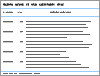
Tab. 1
Selection of river network feature indicators"
| 类别 | 分类标准 | 特征指标 |
|---|---|---|
| 河段的几何特征 | 描述河段的几何形态和物理属性 | 河段长度、河段曲率、汇入角、伸长比、圆度比 |
| 河段的空间关系 | 描述河段之间的关系及其在河网中的结构性知识 | 河流间距、目标河段支流数、左右支流数量对称性、Strahler编码、Horton编码 |
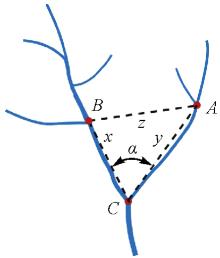
Fig. 2
River network confluence angle"


Fig. 3
Basin unit partitioning"

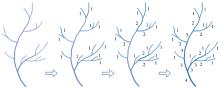
Fig. 4
Establishment of Strahler encoding"

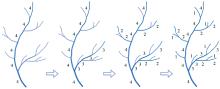
Fig. 5
Establishment of Horton encoding"

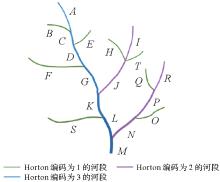
Fig. 6
River encoding and connection relationship"

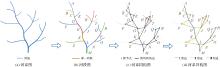
Fig. 7
The construction of heterogeneous graphs of river network"
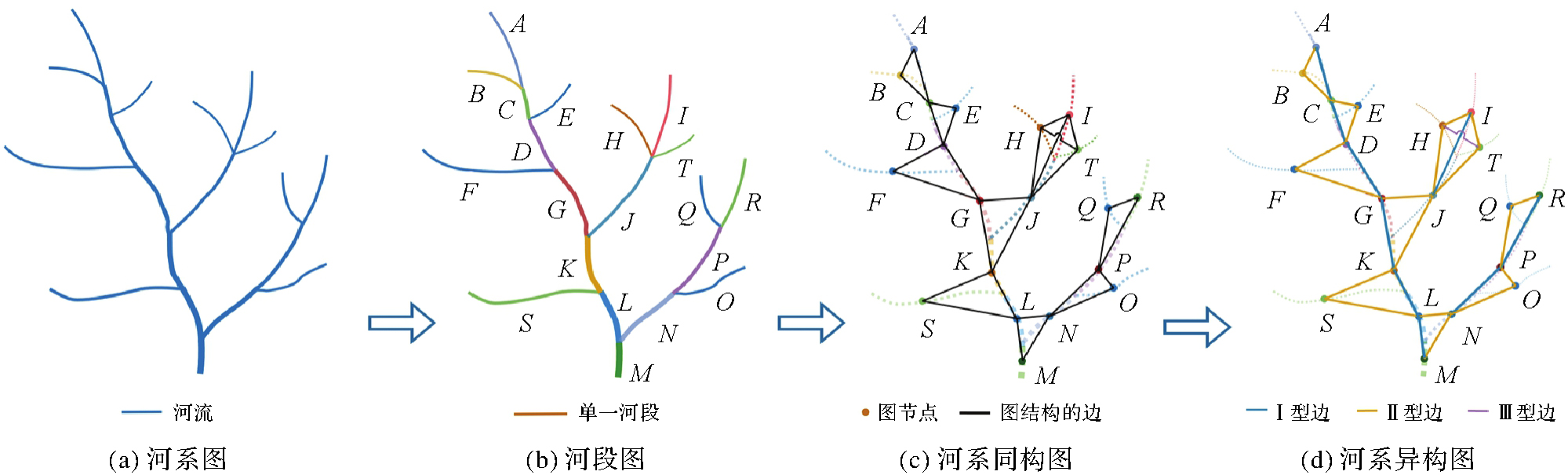

Fig. 8
Representation of feature matrix and adjacency matrix in the heterogeneous graph of river network"

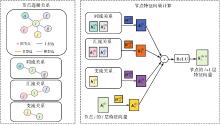
Fig. 9
Steps for computing RGCN node feature vector"

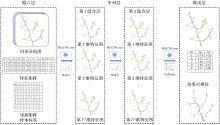
Fig. 10
River network selection model based on RGCN"


Fig. 11
River network sample bank data"


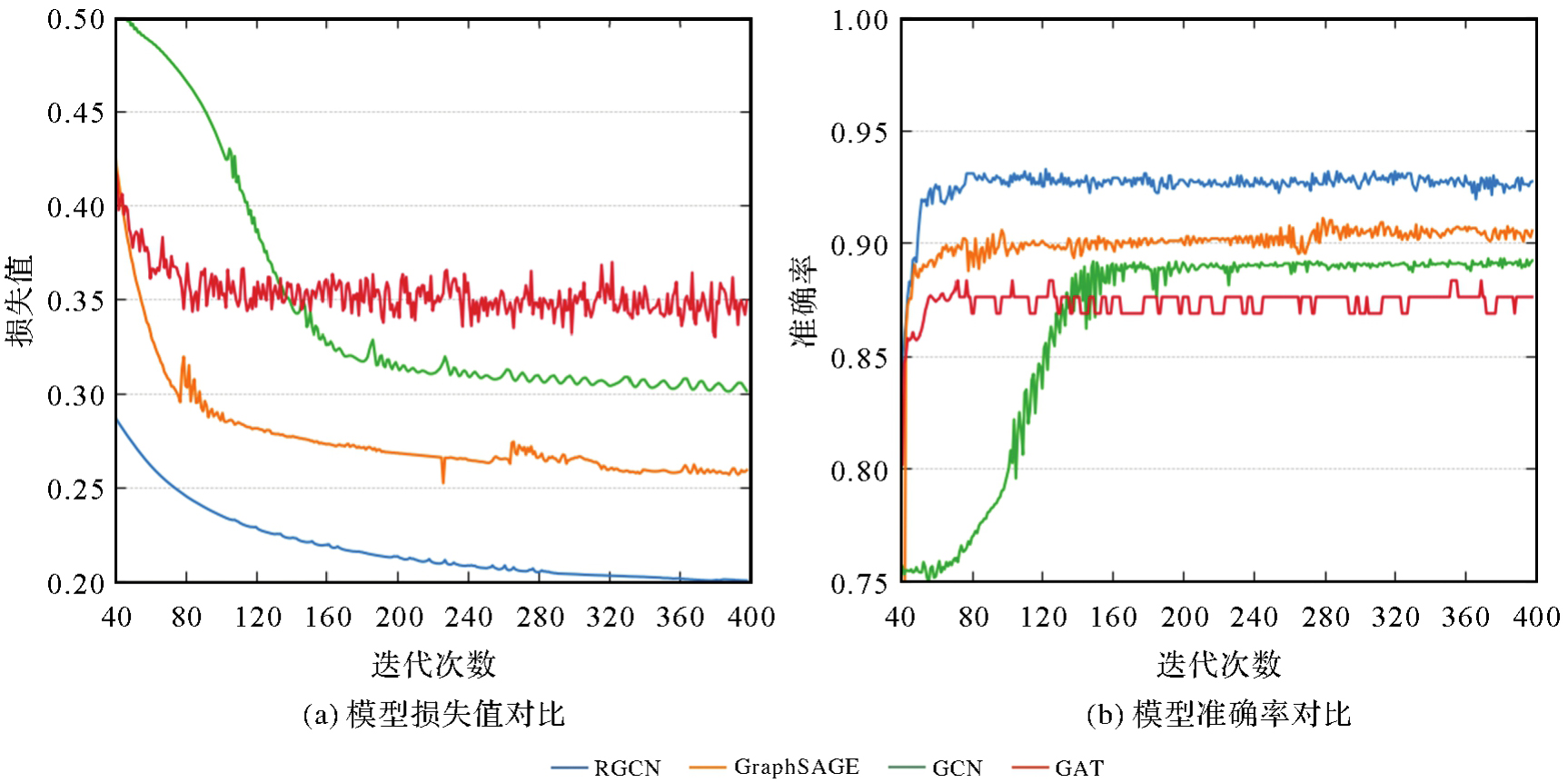
Fig. 12
Accuracy and loss of four graph neural networks"
Tab. 2
Evaluation index of river network selection models"
| 模型 | 精确率/(%) | 召回率/(%) | F1值/(%) | AUC |
|---|---|---|---|---|
| RGCN | 92.76 | 92.48 | 92.62 | 0.925 9 |
| GraphSAGE | 89.37 | 90.01 | 89.69 | 0.901 4 |
| GCN | 88.13 | 88.63 | 88.37 | 0.889 1 |
| GAT | 87.24 | 87.39 | 87.31 | 0.875 6 |
Tab. 3
Average discrimination of the river network selection models"
| 指标 | RGCN | GraphSAGE | GCN | GAT |
|---|---|---|---|---|
| ADM | 0.860 5 | 0.820 2 | 0.773 9 | 0.712 8 |

Fig. 13
The contrast of river network selection results"

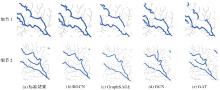
Fig. 14
Detailed comparison of river network selection results"

Tab. 4
Geometric similarity and connectivity retention of river network A before and after selection"
| 指标 | 目标结果 | RGCN | GraphSAGE | GCN | GAT |
|---|---|---|---|---|---|
| Sim_RN | 0.547 5 | 0.546 4 | 0.528 1 | 0.521 7 | 0.483 1 |
| RC | 0.261 8 | 0.259 1 | 0.191 9 | 0.200 7 | 0.185 1 |
Tab. 5
Accuracy of river network selection models based on RGCN under different graph structures"
| 图结构 | 精确率/(%) | 召回率/(%) | F1值/(%) | AUC |
|---|---|---|---|---|
| 异构图 | 92.76 | 92.48 | 92.62 | 0.925 9 |
| 同构图 | 90.49 | 90.11 | 90.30 | 0.904 3 |
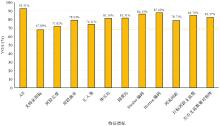
Fig. 15
The VOA of the model supported by different river network characteristic indicators"

| [1] | 王家耀, 王光霞, 江南, 等. 地图学原理与方法[M]. 3版. 北京: 科学出版社, 2023. |
| WANG Jiayao, WANG Guangxia, JIANG Nan, et al. Principles and methods of cartography[M]. 3rd ed. Beijing: Science Press, 2023. | |
| [2] | LIU Jingnan, ZHAN Jiao, GUO Chi, et al. Data logic structure and key technologies on intelligent high-precision map[J]. Journal of Geodesy and Geoinformation Science, 2020, 3(3): 1-17. |
| [3] | STOTER J, POST M, VANALTENA V, et al. Fully automated generalization of a 1∶50k map from 1∶10k data[J]. Cartography and Geographic Information Science, 2014, 41(1): 1-13. |
| [4] | 何宗宜. 地图数据处理模型的原理与方法[M]. 武汉: 武汉大学出版社, 2004. |
| HE Zongyi. Elements and methods of model for cartographical data processing[M]. Wuhan: Wuhan University Press, 2004. | |
| [5] | 张青年. 顾及密度差异的河系简化[J]. 测绘学报, 2006, 35(2): 191-196. |
| ZHANG Qingnian. Generalization of drainage network with density differences[J]. Acta Geodaetica et Cartographica Sinica, 2006, 35(2): 191-196. | |
| [6] | 张园玉, 李霖, 金玉平, 等. 基于图论的树状河系结构化绘制模型研究[J]. 武汉大学学报(信息科学版), 2004, 29(6): 537-539, 543. |
| ZHANG Yuanyu, LI Lin, JIN Yuping, et al. Structured design of dendritic river networks based on graph[J]. Geomatics and Information Science of Wuhan University, 2004, 29(6): 537-539, 543. | |
| [7] | 武芳, 谭笑, 翟仁健, 等. 基于知识表达和推理的河网自动选取[J]. 辽宁工程技术大学学报, 2007, 26(2): 183-186. |
| WU Fang, TAN Xiao, ZHAI Renjian, et al. Automated river selection based on cartographic knowledge representation and reasoning[J]. Journal of Liaoning Technical University, 2007, 26(2): 183-186. | |
| [8] | 谭笑. 基于知识的线状水系要素自动综合研究[D]. 郑州: 信息工程大学, 2005. |
| TAN Xiao. Research of linear drainage features automated generalizaton based on knowledge[D]. Zhengzhou: Information Engineering University, 2005. | |
| [9] | 邵黎霞, 何宗宜, 艾自兴, 等. 基于BP神经网络的河系自动综合研究[J]. 武汉大学学报(信息科学版), 2004, 29(6): 555-557. |
| SHAO Lixia, HE Zongyi, AI Zixing, et al. Automatic generalization of river network based on BP neural network techniques[J]. Geomatics and Information Science of Wuhan University, 2004, 29(6): 555-557. | |
| [10] | 翟仁健, 武芳, 邓红艳, 等. 基于遗传多目标优化的人工河网自动选取模型[J]. 测绘学报, 2008, 37(1): 108-113. |
| ZHAI Renjian, WU Fang, DENG Hongyan, et al. An automated selection model of ditch based on multi-objective optimization by genetic algorithm[J]. Acta Geodaetica et Cartographica Sinica, 2008, 37(1): 108-113. | |
| [11] | SEN A, GOKGOZ T. An experimental approach for selection/elimination in stream network generalization using support vector machines[J]. Geocarto International, 2015, 30(3): 311-329. |
| [12] | WANG Di, QIAN Haizhong. Graph neural network method for the intelligent selection of river system[J]. Geocarto International, 2023, 38(1): 2252762. |
| [13] | YU Huafei, AI Tinghua, YANG Min, et al. Integrating domain knowledge and graph convolutional neural networks to support river network selection[J]. Transactions in GIS, 2023, 27(7): 1898-1927. |
| [14] | KIPF T N, WELLING M. Semi-supervised classification with graph convolutional networks[EB/OL]. [2024-03-04]. https://arxiv.org/abs/1609.02907v4. |
| [15] | HAMILTON W L, YING R, LESKOVEC J. Inductive representation learning on large graphs[EB/OL]. [2024-03-04]. https://arxiv.org/abs/1706.02216v4. |
| [16] | 张瑞. 面向异构图节点分类问题的图卷积网络研究[D]. 上海: 华东师范大学, 2023. |
| ZHANG Rui. Graph convolutional networks for node classification tasks on heterophilic graphs[D]. Shanghai: East China Normal University, 2023. | |
| [17] | SCHLICHTKRULL M, KIPF T N, BLOEM P, et al. Modeling relational data with graph convolutional networks[C]//Proceedings of the 15th European Semantic Web Conference. Berlin: Springer, 2018: 593-607. |
| [18] | 贾香恩, 董一鸿, 朱锋, 等. 异构图卷积网络研究进展[J]. 计算机工程与应用, 2021, 57(9): 36-49. |
| JIA Xiang'en, DONG Yihong, ZHU Feng, et al. Research progress of heterogeneous graph convolutional networks[J]. Computer Engineering and Applications, 2021, 57(9): 36-49. | |
| [19] | 刘一漩, 张晶, 赵进勇, 等. 赤水河弯曲河段地貌特征参数统计分析[J]. 水生态学杂志, 2022, 43(3): 44-50. |
| LIU Yixuan, ZHANG Jing, ZHAO Jinyong, et al. Statistical analysis of geomorphological parameters in meandering sections of Chishui River[J]. Journal of Hydroecology, 2022, 43(3): 44-50. | |
| [20] | WANG Wenning, YAN Haowen, LU Xiaomin, et al. Drainage pattern recognition method considering local basin shape based on graph neural network[J]. International Journal of Digital Earth, 2023, 16(1): 593-619. |
| [21] | 王文宁. 多形态河系的流域基本单元特征分析、识别及相似度计算[D]. 兰州: 兰州交通大学, 2023. |
| WANG Wenning. Characteristics analysis, recognition, similarity calculation of the catchment basic units for multiple drainage patterns[D]. Lanzhou: Lanzhou Jiatong University, 2023. | |
| [22] | 艾廷华, 刘耀林, 黄亚锋. 河网汇水区域的层次化剖分与地图综合[J]. 测绘学报, 2007, 36(2): 231-236, 243. |
| AI Tinghua, LIU Yaolin, HUANG Yafeng. The hierarchical watershed partitioning and generalization of river network[J]. Acta Geodaetica et Cartographica Sinica, 2007, 36(2): 231-236, 243. | |
| [23] | 赵春燕. 水系河网的Horton编码与图形综合研究[D]. 武汉: 武汉大学, 2004. |
| ZHAO Chunyan. Research on horton code and graphic generalization of catchment[D]. Wuhan: Wuhan University, 2004. | |
| [24] | 黄子叶, 王易初, 倪晋仁. 汉江流域河网分级特征研究[J]. 北京大学学报(自然科学版), 2021, 57(2): 351-360. |
| HUANG Ziye, WANG Yichu, NI Jinren. Hierarchical characteristics of river network in Hanjiang basin[J]. Acta Scientiarum Naturalium Universitatis Pekinensis, 2021, 57(2): 351-360. | |
| [25] | 高翔. 基于关系图卷积神经网络的多标签事件预测[J]. 电讯技术, 2023, 63(4): 457-465. |
| GAO Xiang. Multi-label event prediction based on relational graph convolutional neural network[J]. Telecommunication Engineering, 2023, 63(4): 457-465. | |
| [26] | 徐冰冰, 岑科廷, 黄俊杰, 等. 图卷积神经网络综述[J]. 计算机学报, 2020, 43(5): 755-780. |
| XU Bingbing, CEN Keting, HUANG Junjie, et al. A survey on graph convolutional neural network[J]. Chinese Journal of Computers, 2020, 43(5): 755-780. | |
| [27] | THANAPALASINGAM T, VAN BERKEL L, BLOEM P, et al. Relational graph convolutional networks: a closer look[J]. PeerJ Computer Science, 2022, 8: e1073. |
| [28] | YU Huafei, AI Tinghua, YANG Min, et al. A recognition method for drainage patterns using a graph convolutional network[J]. International Journal of Applied Earth Observation and Geoinformation, 2022, 107: 102696. |
| [29] | 刘怀湘, 王兆印. 典型河网形态特征与分布[J]. 水利学报, 2007, 38(11): 1354-1357. |
| LIU Huaixiang, WANG Zhaoyin. Morphological feature and distribution of typical river networks[J]. Journal of Hydraulic Engineering, 2007, 38(11): 1354-1357. | |
| [30] | 杨飞, 王中辉. 河系几何相似性的层次度量方法[J]. 地球信息科学学报, 2021, 23(12): 2139-2150. |
| YANG Fei, WANG Zhonghui. River systems geometric similarity measurement method under hierarchical analysis[J]. Journal of Geo-information Science, 2021, 23(12): 2139-2150. |
| [1] | Jiayao WANG, Lin CHEN, Shiyuan CHENG, Lijun WANG, Siqi XIONG. Artificial intelligence empowering the digital-intelligent transformation of cartographic science [J]. Acta Geodaetica et Cartographica Sinica, 2026, 55(3): 381-389. |
| [2] | Xiaomin LU, Zhiyi ZHANG, Haowen YAN, Yi HE, Xiaoning SU. A recognition method for building group pattern integrating deep graph infomax and multilayer perceptron [J]. Acta Geodaetica et Cartographica Sinica, 2026, 55(3): 425-438. |
| [3] | Pengcheng LIU, Xiaoqiang CHENG, Tianyuan XIAO, Min YANG, Tinghua AI. A Transformer model for building polygon simplification in map generalization [J]. Acta Geodaetica et Cartographica Sinica, 2026, 55(1): 124-137. |
| [4] | Shunping JI, Jin LIU, Jian GAO, Jianya GONG. An intelligent 3D reconstruction framework via deep learning based multi-view image matching [J]. Acta Geodaetica et Cartographica Sinica, 2025, 54(9): 1633-1646. |
| [5] | Fubing ZHANG, Qun SUN, Qing XU, Jingzhen MA, Wenjun HUANG, Ruoxu CHEN. An automatic river classification and selection method supported by random forest and graph neural network [J]. Acta Geodaetica et Cartographica Sinica, 2025, 54(9): 1697-1711. |
| [6] | Jixian ZHANG, Haiyan GU, Huan NI, Haitao LI, Yi YANG, Shaopeng DING, Songman SUI. Deep learning methods for remote sensing intelligent change detection: evolution and development [J]. Acta Geodaetica et Cartographica Sinica, 2025, 54(8): 1347-1370. |
| [7] | Shuai FANG, Jiaen LIU, Jing ZHANG. Spatio-temporal fusion algorithm based on adaptive reference feature incorporation and multi-scale feature aggregation [J]. Acta Geodaetica et Cartographica Sinica, 2025, 54(8): 1476-1488. |
| [8] | Nina MENG, Fengmei LI, Xiaodong ZHOU. Data and cognition dual-driven building group generalization results and scale consistency assessment [J]. Acta Geodaetica et Cartographica Sinica, 2025, 54(7): 1318-1331. |
| [9] | Xiaoya AN, Weiru GUO, Pengxin ZHANG, Xinxin LI, Lei SHI. Ship trajectories clustering method considering similarity in geometric position and mobility features [J]. Acta Geodaetica et Cartographica Sinica, 2025, 54(6): 1107-1121. |
| [10] | Chao WANG, Tianyu CHEN, Tong ZHANG, Tanvir AHMED, Liqiang JI, Tao XIE, Jiajun YANG, Shuai WANG. Multi-sensor optical remote sensing images change detection based on global differential enhancement module and balance penalty loss [J]. Acta Geodaetica et Cartographica Sinica, 2025, 54(5): 873-887. |
| [11] | Qingli LUO, Xueyan LI, Guoman HUANG, Honghui CHEN, Minglong XUE, Jian LI. AOSN: alpha optimal structure network for height estimation from a single SAR image in mountain areas [J]. Acta Geodaetica et Cartographica Sinica, 2025, 54(5): 888-898. |
| [12] | Youneng SU, Qing XU, Qun SUN, Xinming ZHU, Fubing ZHANG, Bo LIU. A method for automatic buildings aggregation constrained by proximity edges [J]. Acta Geodaetica et Cartographica Sinica, 2025, 54(3): 563-576. |
| [13] | Wei TU, Xiangyuan CHI, Tianhong ZHAO, Jian YANG, Shiping ZHU, Deli CHEN. Multi-view spatio-temporal graph convolutional networks model for urban drainage networks flow prediction [J]. Acta Geodaetica et Cartographica Sinica, 2025, 54(2): 334-344. |
| [14] | Zhili ZHANG, Huiwei JIANG, Xiangyun HU. A minimal-interaction framework for accurate and batch extraction of geospatial objects from remote sensing imagery [J]. Acta Geodaetica et Cartographica Sinica, 2025, 54(10): 1863-1876. |
| [15] | Zhenghua ZHANG, Guoliang CHEN. A lightweight rotation-invariant network for LiDAR-based place recognition [J]. Acta Geodaetica et Cartographica Sinica, 2025, 54(1): 90-103. |
| Viewed | ||||||
|
Full text |
|
|||||
|
Abstract |
|
|||||
