

Acta Geodaetica et Cartographica Sinica ›› 2026, Vol. 55 ›› Issue (6): 1101-1115.doi: 10.11947/j.AGCS.2026.20250546
• Large-scale Engineering Infrastructure Surveying and Mapping and Underground Space Intelligent Perception • Previous Articles
Ze YOU1( ), Liying WANG1(), Yiwei YU1, Zhiwei QIN2, Chunxi XIE3, Yimo GENG1, Xinao LI1
Received:2025-12-29
Revised:2026-06-05
Published:2026-07-28
Contact:
Liying WANG
E-mail:youze1997@163.com;wangliyinglntu@163.com
About author:YOU Ze (1997—), male, PhD candidate, majors in intelligent processing and applications of LiDAR point clouds. E-mail: youze1997@163.com
Supported by:CLC Number:
Ze YOU, Liying WANG, Yiwei YU, Zhiwei QIN, Chunxi XIE, Yimo GENG, Xinao LI. A segment joint multi-measure interaction index for shield tunnel recognition in RMLS point clouds[J]. Acta Geodaetica et Cartographica Sinica, 2026, 55(6): 1101-1115.
Fig. 1
Flowchart of the proposed method"
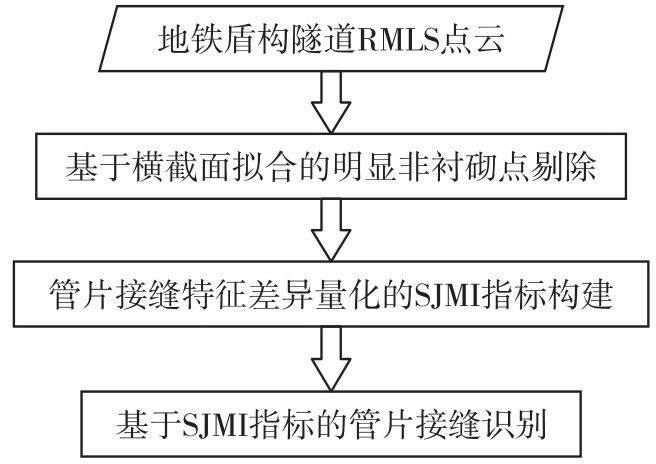
Fig. 2
Cross-sectional view of the segment joint"
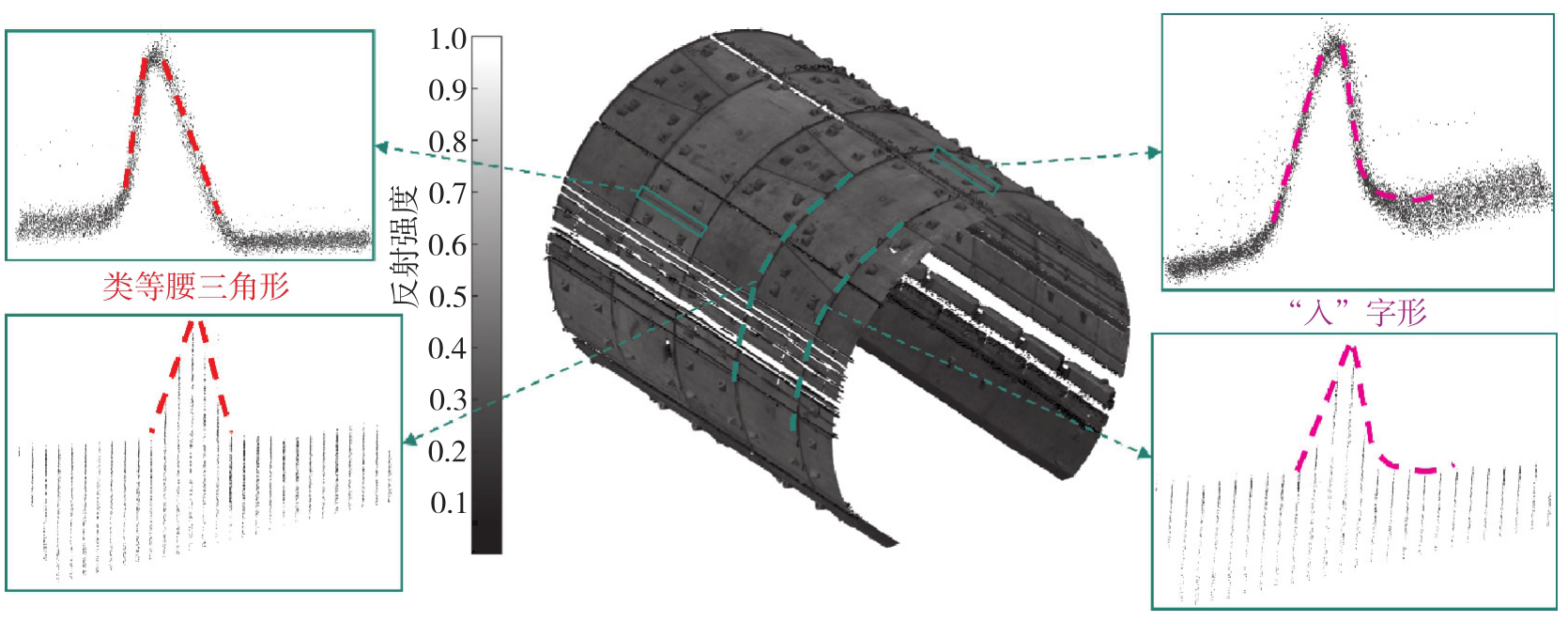
Fig. 3
Flowchart of RMSE calculation for pj (using a circumferential joint as an example)"
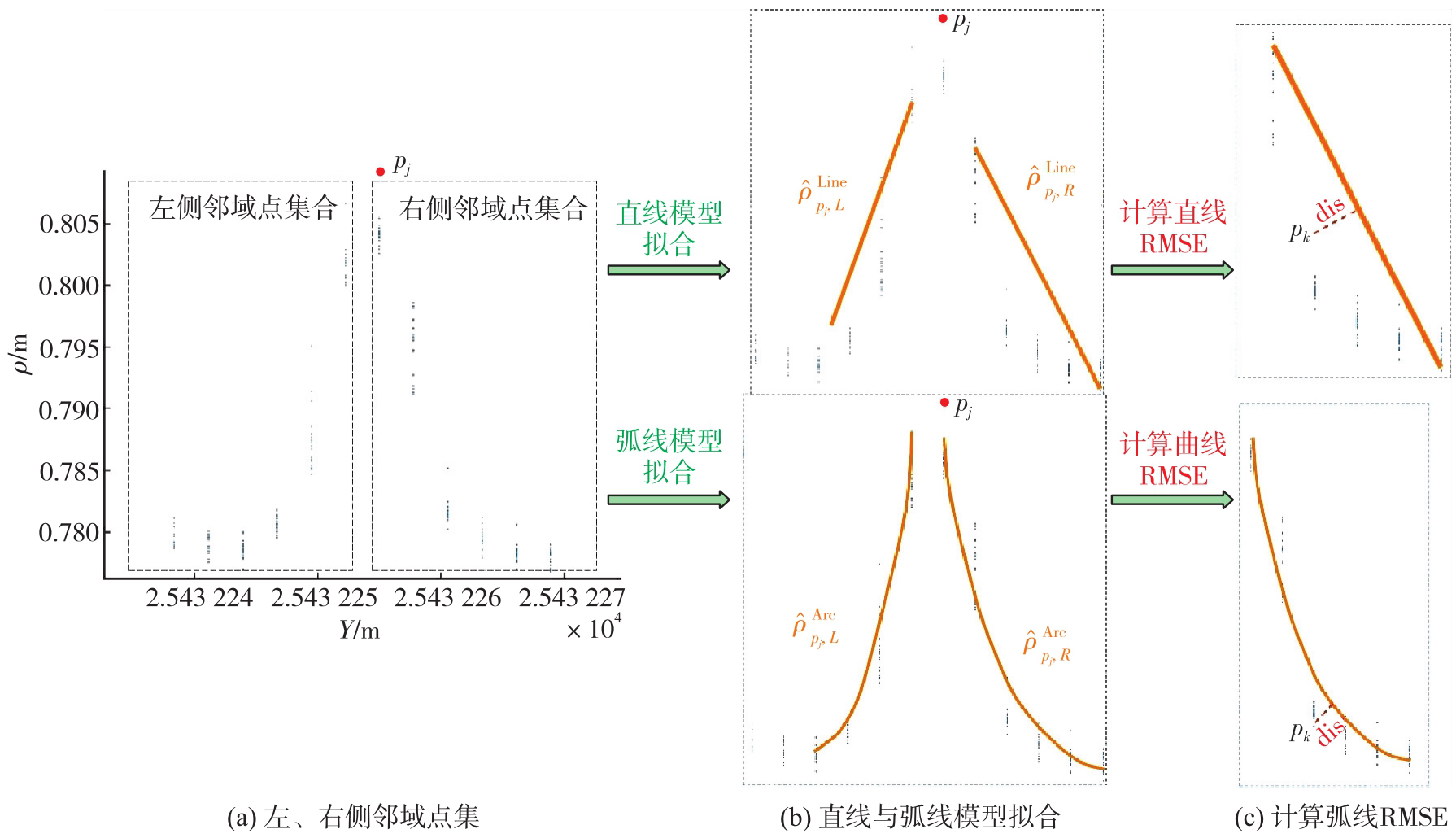
Fig. 4
The left and right fitted slopes of the segment joint are of opposite signs"
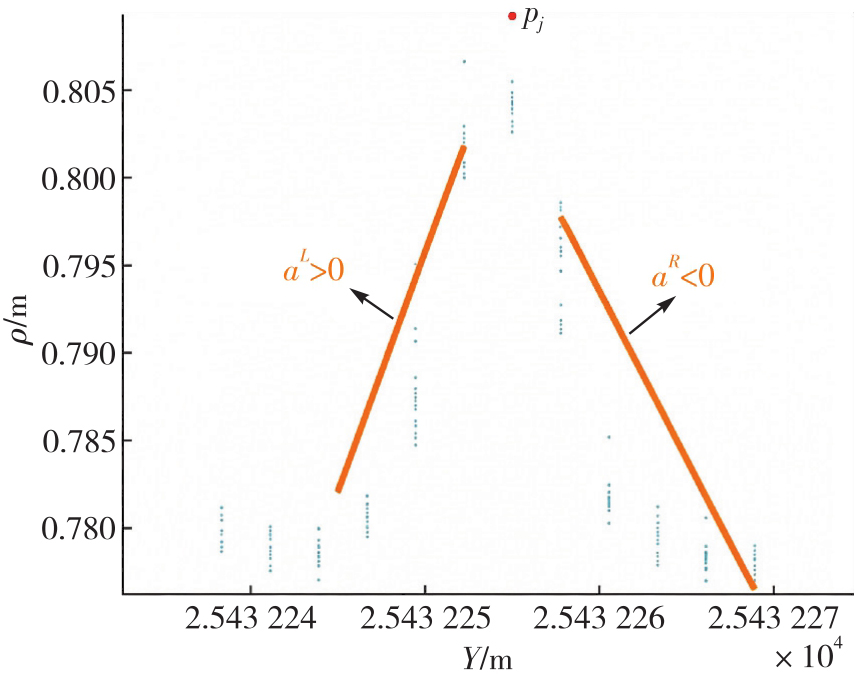
Fig. 5
Depth variation on both sides of different regions"
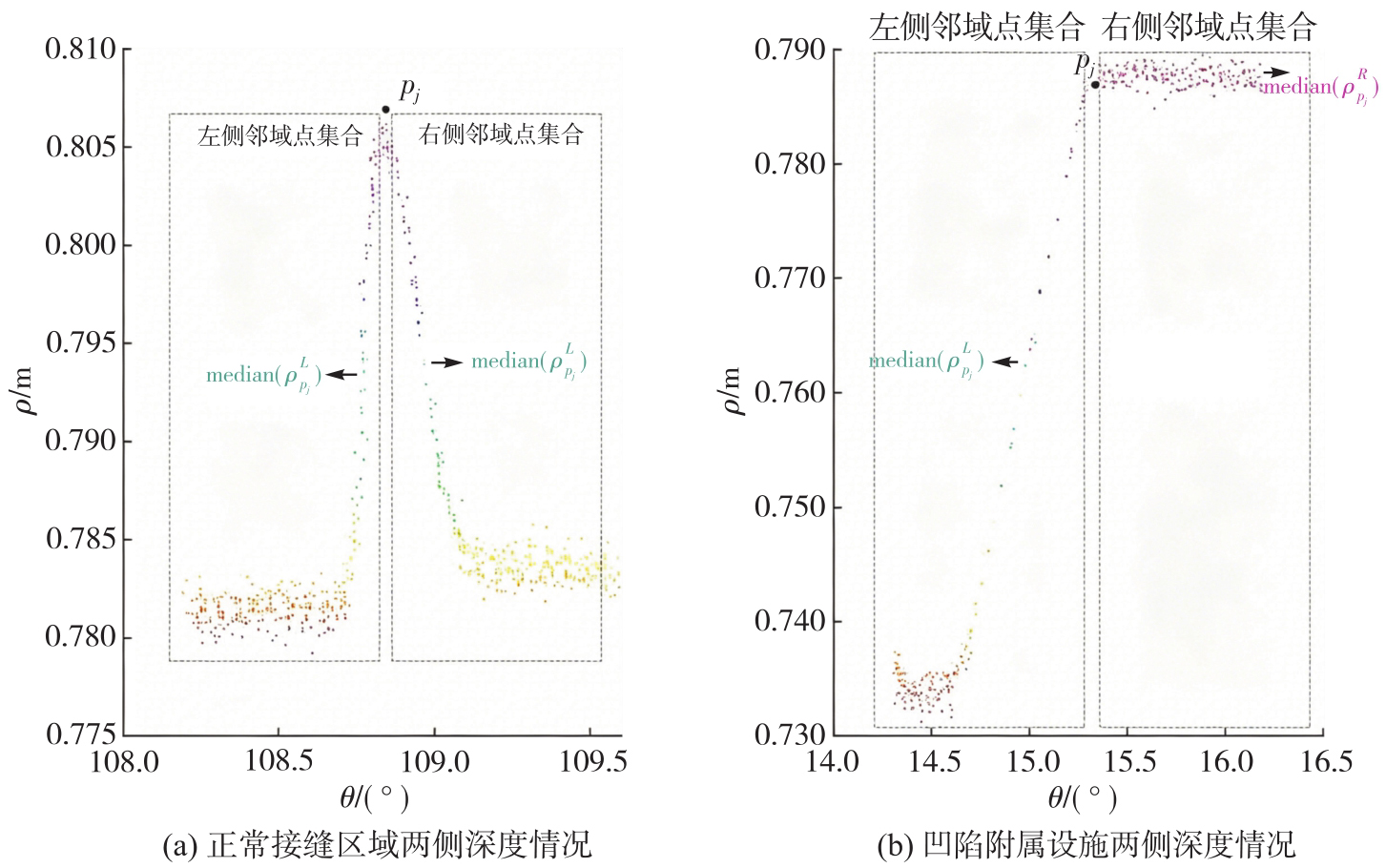
Fig. 6
The calculation results of bilateral fall wedge measure"
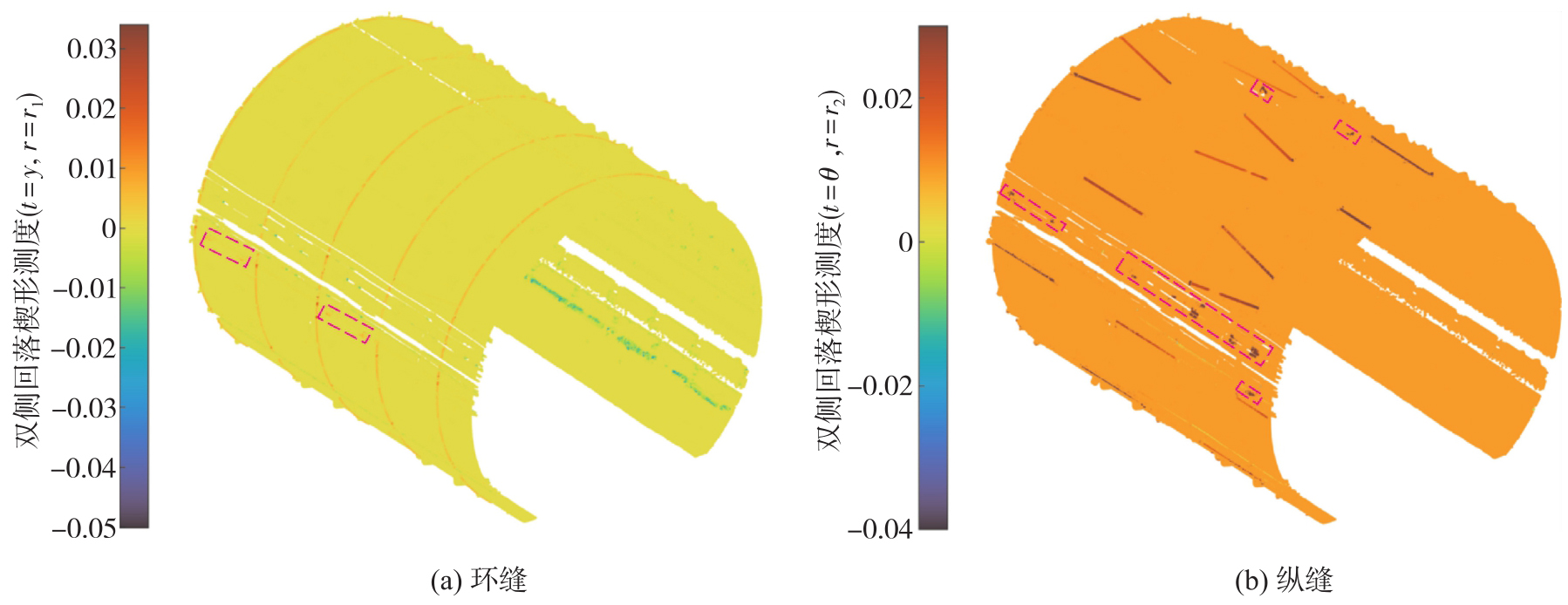
Fig. 7
The calculation results of SJMI"
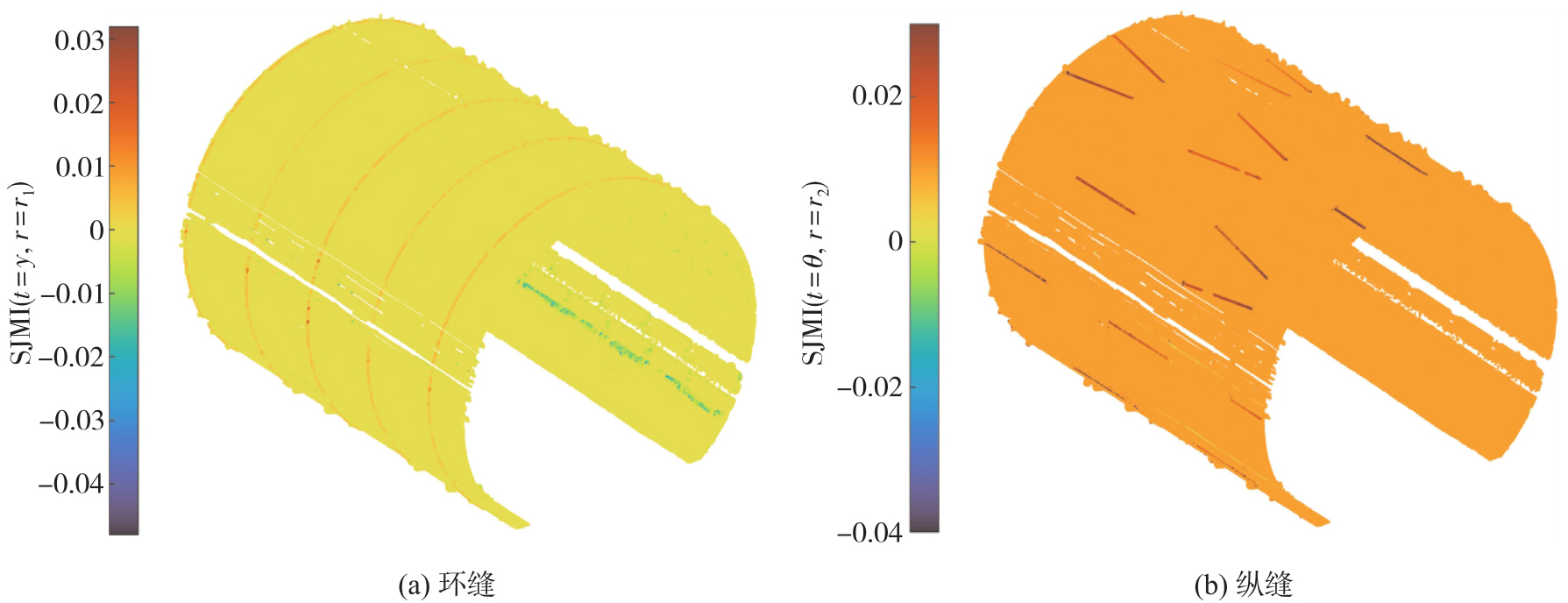
Fig. 8
Flowchart of the proposed circumferential joint recognition"

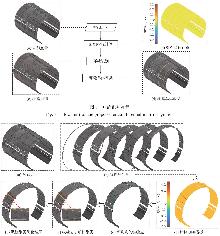
Fig. 9
Flowchart of the proposed longitudinal joint recognition"
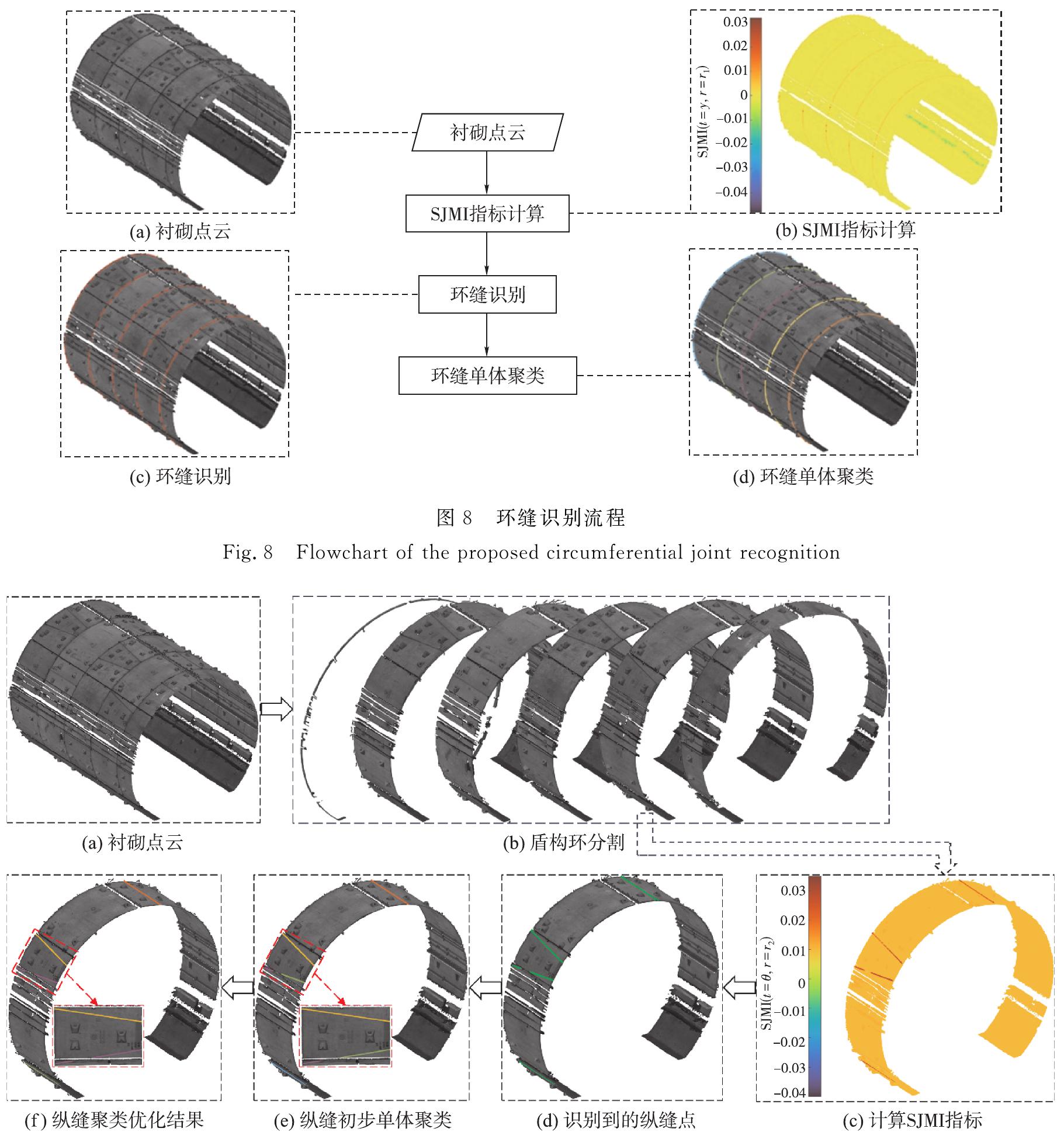
Fig. 10
Experimental data"
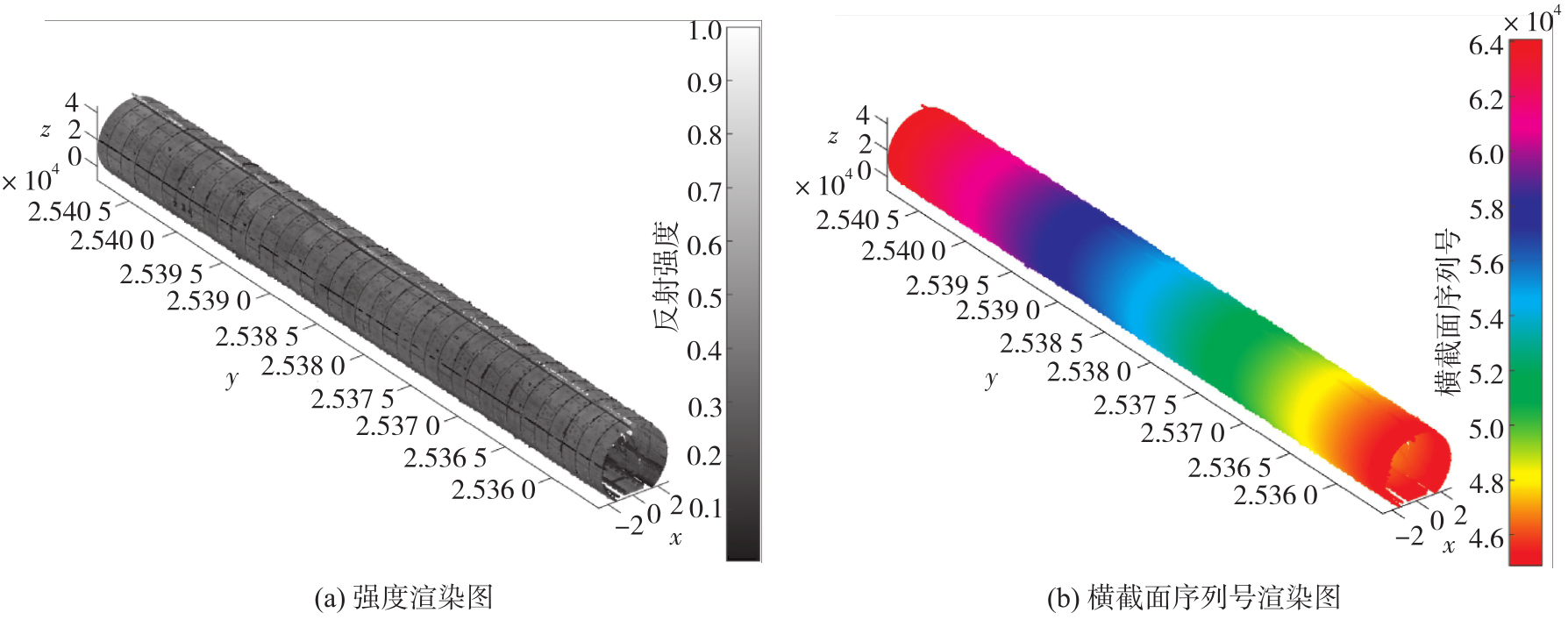
Fig. 11
Obvious non-lining points removal results"

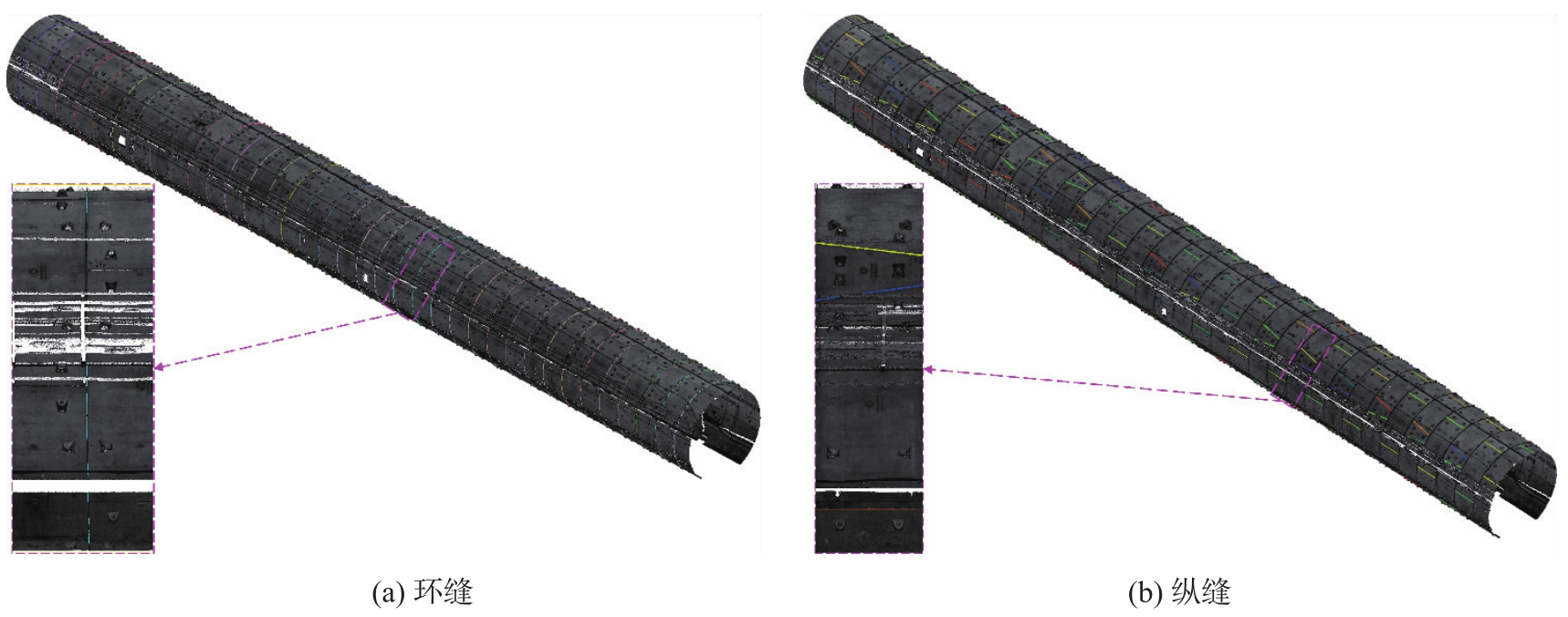
Fig. 12
Segment joints recognition results"
Tab. 1
Quantitative analysis of segment joint recognition results"
| 接缝类型 | IoU | 召回率 | 精确度 |
|---|---|---|---|
| 环缝 | 90.21 | 90.32 | 99.84 |
| 纵缝 | 94.52 | 95.89 | 98.23 |
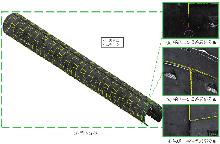
Fig. 13
Errors distribution"
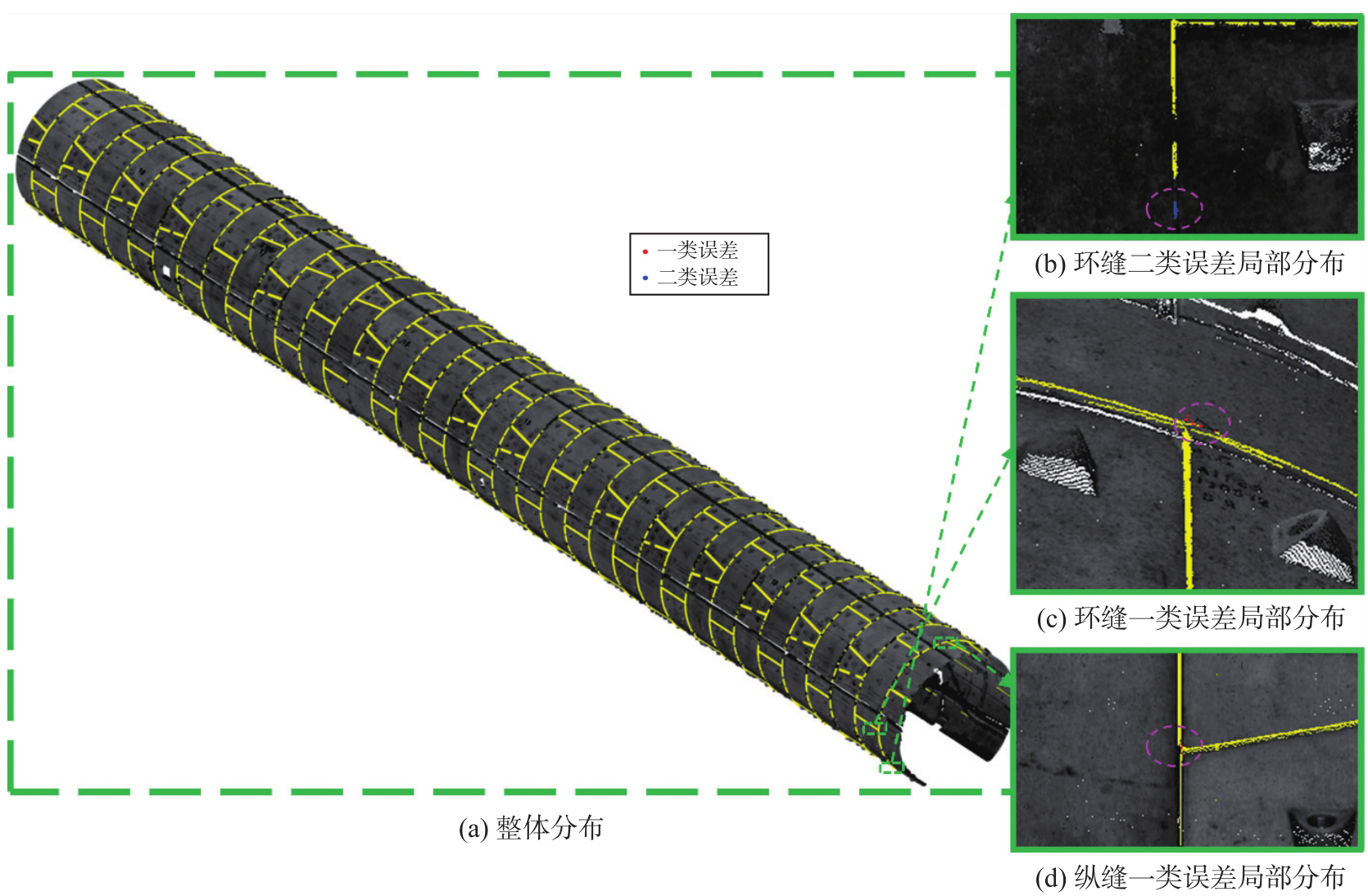
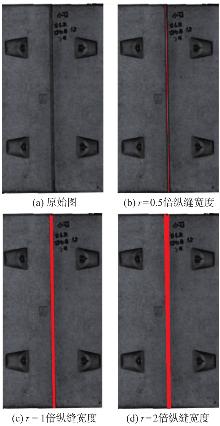
Fig. 14
Top view of showing the effect of r on longitudinal joint recognition"
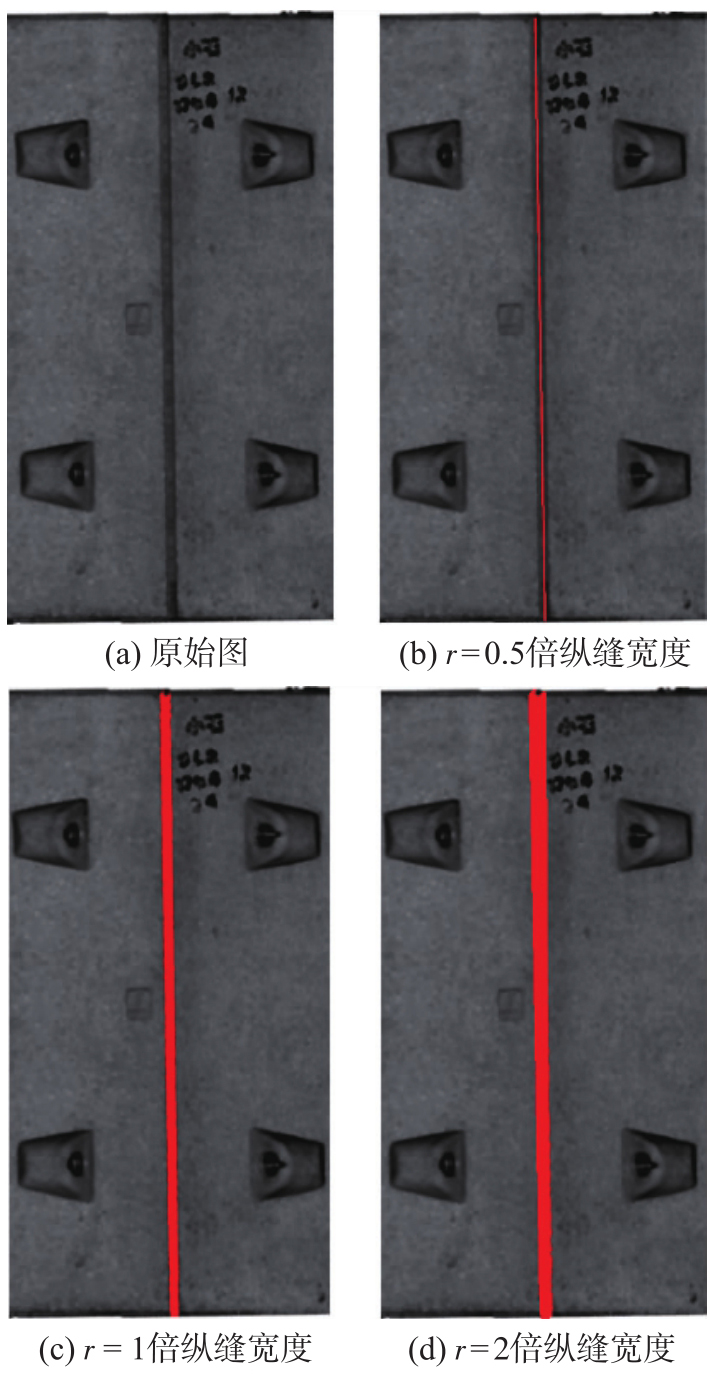
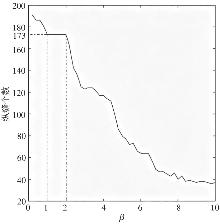
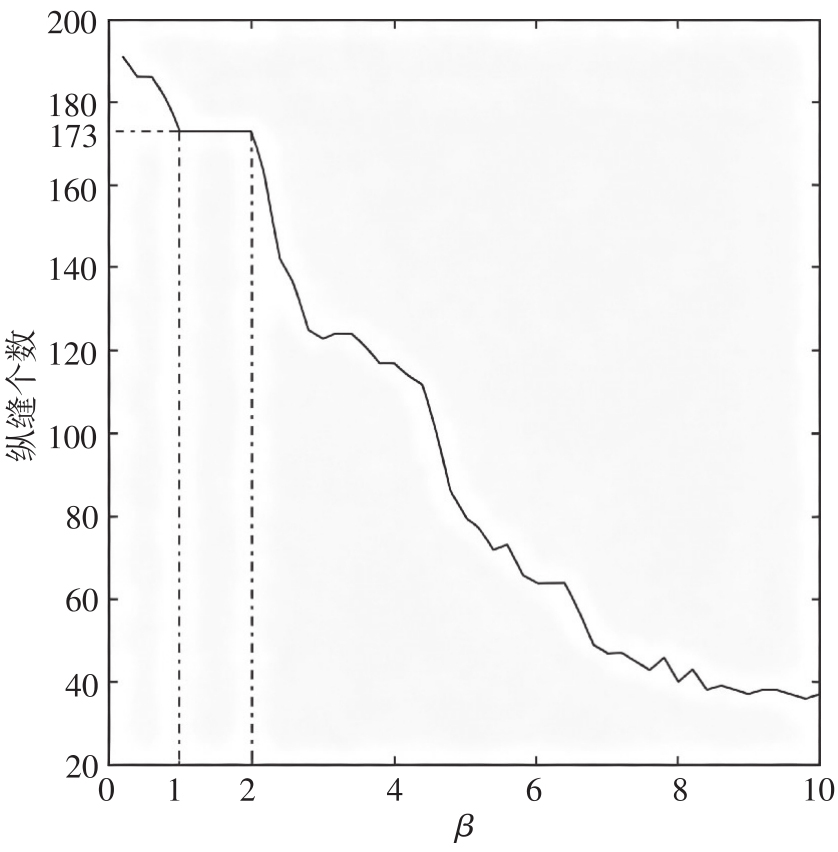
Fig. 15
Sensitivity analysis of TL on longitudinal joint unit clustering"
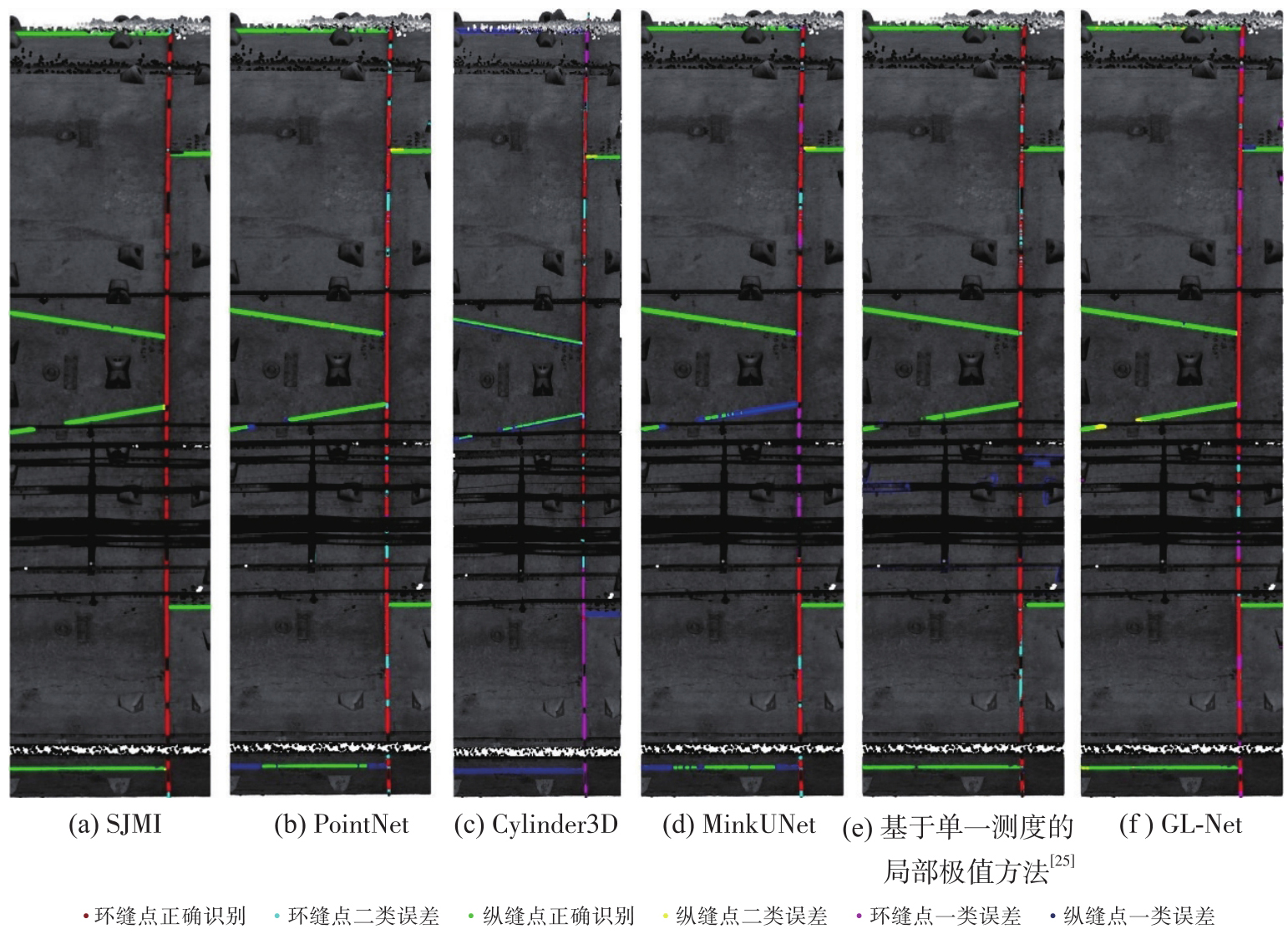
Tab. 2
Quantitative comparison of different methods"
| 算法 | 环缝IoU | 纵缝IoU |
|---|---|---|
| SJMI | 90.21 | 94.52 |
| PointNet | 70.88 | 64.47 |
| Cylinder3D | 77.52 | 44.57 |
| MinkUNet | 79.31 | 59.88 |
| 基于单一测度的局部极值方法[ | 87.96 | 86.56 |
| GL-Net | 79.69 | 71.09 |
Fig. 16
Qualitative comparison of segment joint recognition results produced by different methods on the same tunnel cross-sections"
Tab. 3
Efficiency comparison of different methods"
| 算法 | 训练/计算测度时间/h | 测试/识别接缝时间/min | 总时间/h |
|---|---|---|---|
| SJMI | 1.20 | 6.8 | 1.31 |
| PointNet | 2.46 | 8.6 | 2.60 |
| Cylinder3D | 4.05 | 10.6 | 4.23 |
| MinkUNet | 2.65 | 1.2 | 2.67 |
| 基于单一测度的局部极值方法[ | 1.68 | 12.2 | 1.88 |
| GL-Net | 3.07 | 12.0 | 3.27 |
| [1] | LI Xinyu, ZHANG Dingli, HOU Yanjuan. Analysis of shield tunnel ground deformation characteristics and affecting factors in water-rich soft stratum: a case study on the section tunnel of Tianjin metro line 6[J]. Applied Sciences, 2022, 12(12): 6208. |
| [2] | FENG Yong, FENG Shijin, ZHANG Xiaolei, et al. A two-step deep learning-based framework for metro tunnel lining defect recognition[J]. Tunnelling and Underground Space Technology, 2024, 150: 105832. |
| [3] | 刘新根, 陈莹莹, 刘学增. 激光扫描盾构隧道断面变形快速检测[J]. 交通运输工程学报, 2021, 21(2): 107-116. |
| LIU Xingen, CHEN Yingying, LIU Xuezeng. Laser scanning-based rapid detection of deformation of shield tunnel section[J]. Journal of Traffic and Transportation Engineering, 2021, 21(2): 107-116. | |
| [4] | NIU Yapeng, XIE Yongli, ZHANG Hongguang, et al. Study on deformation characteristics of segment joints of the immersed tunnel in Hong Kong-Zhuhai-Macau bridge[J]. Advances in Materials Science and Engineering, 2022: 8099308. |
| [5] | CAMARA M, WANG Liying, YOU Ze. Three-dimensional point cloud displacement analysis for tunnel deformation detection using mobile laser scanning[J]. Applied Sciences, 2025, 15(2): 625. |
| [6] | CAMARA M, WANG Liying, YOU Ze. Tunnel cross-section deformation monitoring based on mobile laser scanning point cloud[J]. Sensors, 2024, 24(22): 7192. |
| [7] | 余建伟, 廖江海, 陈智鹏, 等. 基于断面基准面点云模型的隧道管片分割与断面提取[J]. 测绘通报, 2021(10): 159-162. |
| YU Jianwei, LIAO Jianghai, CHEN Zhipeng, et al. A tunnel segment segmentation and section extraction based on point cloud model of cross-section datum plane[J]. Bulletin of Surveying and Mapping, 2021(10): 159-162. | |
| [8] | YU Anbin, MEI Wensheng, HAN Mulin. Deep learning based method of longitudinal dislocation detection for metro shield tunnel segment[J]. Tunnelling and Underground Space Technology, 2021, 113: 103949. |
| [9] | 朱家松, 郑澳, 雷占占, 等. 基于改进Yolov5的地铁隧道附属设施与衬砌表观病害检测方法[J]. 铁道科学与工程学报, 2023, 20(3): 1008-1019. |
| ZHU Jiasong, ZHENG Ao, LEI Zhanzhan, et al. Metro tunnel accessorial facilities and lining diseases detection method based on improved Yolov5[J]. Journal of Railway Science and Engineering, 2023, 20(3): 1008-1019. | |
| [10] | LI Zhonghao, MA Enlin, LAI Jinxing, et al. Tunnel deformation prediction during construction: an explainable hybrid model considering temporal and static factors[J]. Computers & Structures, 2024, 294: 107276. |
| [11] | CUI Hao, LI Jian, MAO Qingzhou, et al. STSD: a large-scale benchmark for semantic segmentation of subway tunnel point cloud[J]. Tunnelling and Underground Space Technology, 2024, 150: 105829. |
| [12] | YE Zehao, LIN Wei, FARAMARZI A, et al. SAM4Tun: no-training model for tunnel lining point cloud component segmentation[J]. Tunnelling and Underground Space Technology, 2025, 158: 106401. |
| [13] | 王兵海. 基于PointNet的地铁盾构隧道点云典型要素分割[J]. 铁道建筑技术, 2022(12): 159-163. |
| WANG Binghai. Segmentation of typical elements in metro shield tunnel point clouds based on PointNet[J]. Railway Construction Technology, 2022(12): 159-163. | |
| [14] | 黄星霖, 张星, 李清泉, 等. 多尺度与注意力聚合的隧道点云语义分割方法[J]. 测绘科学, 2024, 49(7): 56-65. |
| HUANG Xinglin, ZHANG Xing, LI Qingquan, et al. Multi-scale attention aggregation graph convolution for tunnel point cloud semantic segmentation[J]. Science of Surveying and Mapping, 2024, 49(7): 56-65. | |
| [15] | LI Jincheng, ZHANG Zhenxin, SUN Haili, et al. GL-Net: semantic segmentation for point clouds of shield tunnel via global feature learning and local feature discriminative aggregation[J]. ISPRS Journal of Photogrammetry and Remote Sensing, 2023, 199: 335-349. |
| [16] | JI Ankang, ZHOU Yunxiang, ZHANG Limao, et al. Semi-supervised learning-based point cloud network for segmentation of 3D tunnel scenes[J]. Automation in Construction, 2023, 146: 104668. |
| [17] | ZHOU Yunxiang, JI Ankang, ZHANG Limao, et al. Attention-enhanced sampling point cloud network (ASPCNet) for efficient 3D tunnel semantic segmentation[J]. Automation in Construction, 2023, 146: 104667. |
| [18] | ZHANG Zhiwei, ZHENG Gang, CHENG Xuesong, et al. Analytical approach for longitudinal deformation of shield tunnels considering bending-shear-torsional effects of circumferential joints[J]. Tunnelling and Underground Space Technology, 2024, 152: 105946. |
| [19] | ZHI Zhiyang, CHANG Bingtao, LI Yuan, et al. P-CSF: polar coordinate cloth simulation filtering algorithm for multi-type tunnel point clouds[J]. Tunnelling and Underground Space Technology, 2025, 155: 106144. |
| [20] | CUI Hao, REN Xiaochun, MAO Qingzhou, et al. Shield subway tunnel deformation detection based on mobile laser scanning[J]. Automation in Construction, 2019, 106: 102889. |
| [21] | 巩健. 盾构隧道环内错台移动扫描检测方法研究[J]. 铁道勘察, 2026, 52(2): 17-22. |
| GONG Jian. Research on mobile scanning detection method for intra-ring segment offsets in shield tunnels[J]. Railway Investigation and Surveying, 2026, 52(2): 17-22. | |
| [22] | 林康, 石波, 杨密, 等. 基于激光点云环缝环号识别的盾构隧道病害定位方法[J]. 铁道科学与工程学报, 2023, 20(12): 4835-4847. |
| LIN Kang, SHI Bo, YANG Mi, et al. Disease location method of shield tunnel based on laser point cloud ring seam ring number identification[J]. Journal of Railway Science and Engineering, 2023, 20(12): 4835-4847. | |
| [23] | 傅静雅. 面向盾构隧道的移动LiDAR点云强度校正及应用研究[D]. 赣州: 江西理工大学, 2023. |
| FU Jingya. Research on intensity correction and application of moving LiDAR point cloud for shield tunnel[D]. Ganzhou: Jiangxi University of Science and Technology, 2023. | |
| [24] | 易炼, 殷晓广, 张同刚. 基于螺栓孔特征的盾构隧道管片接缝识别[J]. 铁道标准设计, 2025, 69(2): 111-118. |
| YI Lian, YIN Xiaoguang, ZHANG Tonggang. Segment seam detection of shield tunnels based on bolt hole feature[J]. Railway Standard Design, 2025, 69(2): 111-118. | |
| [25] | WANG Liying, YOU Ze, FENG Yong, et al. Extraction and location of subway shield tunnel segment joints from RMLS point clouds[J]. International Journal of Digital Earth, 2025, 18: 2528627. |
| [26] | YOU Ze, WANG Liying. Dislocation detection of shield tunnel segments under non-uniform deformation conditions using RMLS point clouds[J]. ISPRS Annals of the Photogrammetry, Remote Sensing and Spatial Information Sciences, 2025, X-1/W2-2025: 195-204. |
| [27] | SHEN Yueqian, WANG Jinguo, WANG Jinhu, et al. Methodology for extraction of tunnel cross-sections using dense point cloud data[J]. Journal of Geodesy and Geoinformation Science, 2021, 4(2): 56-71. |
| [28] | WANG Liying, YOU Ze. JCFI: a composite index for RMLS-based shield tunnel segment joint recognition[C]//Proceedings of 2026 ISPRS Annals of the Photogrammetry, Remote Sensing and Spatial Information Sciences. Toronto: IEEE, 2026. |
| [29] | ZHU Xinge, ZHOU Hui, WANG Tai, et al. Cylindrical and asymmetrical 3D convolution networks for LiDAR segmentation[C]//Proceedings of 2021 IEEE/CVF Conference on Computer Vision and Pattern Recognition. Nashville: IEEE, 2021: 9934-9943. |
| [30] | CHOY C, GWAK J Y, SAVARESE S. 4D spatio-temporal convnets: minkowski convolutional neural networks[C]//Proceedings of 2019 IEEE/CVF Conference on Computer Vision and Pattern Recognition. Long Beach: IEEE, 2019: 3075-3084. |
| [1] | Pengcheng WEI, Guiyu JIANG, Hangyi SHEN, Haifeng HUANG, Rongling ZHANG. Millimeter-level surface deformation detection method based on high-precision laser point cloud registration [J]. Acta Geodaetica et Cartographica Sinica, 2026, 55(5): 866-880. |
| [2] | Zhengwen WANG, Juntao YANG, Zhizhong KANG, Yutao ZHANG, Xuzhe WANG, Xue ZHANG. A semantic-assisted method for constructing multi-floor indoor spatial topology models from 3D point clouds [J]. Acta Geodaetica et Cartographica Sinica, 2026, 55(5): 909-926. |
| [3] | Junhao GUO, Mingzhi WU, Peixiao WANG, Hengcai ZHANG. A dual-threshold stay point detection method based on adaptive extended density peak clustering for sparse fixed-point trajectories [J]. Acta Geodaetica et Cartographica Sinica, 2026, 55(2): 249-260. |
| [4] | Haopeng HU, Hangbin WU, Shihao ZHAN, Zaihao WEN, Chun LIU. Road pole-like object change detection supported by visual point cloud quality optimization [J]. Acta Geodaetica et Cartographica Sinica, 2026, 55(2): 344-358. |
| [5] | Deying YU, Houpu LI, Yi LIU, Shuguang WU, Deyan LI, Mingchao LI, Wenkui LI, Shaofeng BIAN. A DBSCAN-based RAIM algorithm for multiple gross error identification [J]. Acta Geodaetica et Cartographica Sinica, 2026, 55(1): 59-72. |
| [6] | Zhonghe LIU, Zongchun LI, Hua HE, Yinggang GUO, Wenbin ZHAO. A strategy for selecting quasi-stable points with a high breakdown point by integrating robust S-transform with K-means clustering [J]. Acta Geodaetica et Cartographica Sinica, 2025, 54(9): 1608-1619. |
| [7] | Yufu ZANG, Shuye WANG, Zhen DONG, Chi CHEN, Ronggang HUANG. High-precision extraction of building point cloud facade structure based on PCF-Net network [J]. Acta Geodaetica et Cartographica Sinica, 2025, 54(7): 1243-1253. |
| [8] | Jie WAN, Zhong XIE, Yongyang XU, Liufeng TAO. A U-shaped graph convolution network method for semantic segmentation of vehicle LiDAR point clouds towards urban road scenes [J]. Acta Geodaetica et Cartographica Sinica, 2025, 54(7): 1280-1293. |
| [9] | Lianzhong XU, Chuanfa CHEN, Dongxing CHEN, Xingjie WANG, Ziming YANG, Shufan YANG, Zhuangzhuang HONG, Jinda HAO. An efficient filtering method considering terrain features for large-scale airborne LiDAR point clouds [J]. Acta Geodaetica et Cartographica Sinica, 2025, 54(6): 1082-1093. |
| [10] | Xiaoya AN, Weiru GUO, Pengxin ZHANG, Xinxin LI, Lei SHI. Ship trajectories clustering method considering similarity in geometric position and mobility features [J]. Acta Geodaetica et Cartographica Sinica, 2025, 54(6): 1107-1121. |
| [11] | Qingdong WANG, Tengfei WANG, Li ZHANG. Cross-modal contrastive masked autoencoder pre-training for 3D real-scene point cloud [J]. Acta Geodaetica et Cartographica Sinica, 2025, 54(4): 675-687. |
| [12] | Xin JIA, Qing ZHU, Xuming GE, Ruifeng MA, Han HU. Parametric modeling and deformation identification of highway guardrail driven by MLS point clouds [J]. Acta Geodaetica et Cartographica Sinica, 2025, 54(4): 688-701. |
| [13] | Jiaxin GAO, Xin SUI, Changqiang WANG, Aigong XU, Zhengxu SHI. Loop closure detection method for LiDAR SLAM supported by stable static point cloud clusters [J]. Acta Geodaetica et Cartographica Sinica, 2025, 54(12): 2194-2205. |
| [14] | Yongjun ZHANG, Changjun ZHU, Siyuan ZOU, Xinyi LIU, Qingzhou MAO, Yi WAN. Registration of aerial images and LiDAR point clouds based on distance field and plane constraints [J]. Acta Geodaetica et Cartographica Sinica, 2025, 54(1): 64-74. |
| [15] | Tao XU, Yuanwei YANG, Xianjun GAO, Zhiwei WANG, Yue PAN, Shaohua LI, Lei XU, Yanjun WANG, Bo LIU, Jing YU, Fengmin WU, Haoyu SUN. Integrated graph convolution and multi-scale features for the overhead catenary system point cloud semantic segmentation [J]. Acta Geodaetica et Cartographica Sinica, 2024, 53(8): 1624-1633. |
| Viewed | ||||||
|
Full text |
|
|||||
|
Abstract |
|
|||||
