

Acta Geodaetica et Cartographica Sinica ›› 2025, Vol. 54 ›› Issue (10): 1769-1785.doi: 10.11947/j.AGCS.2025.20250257
• Geodesy and Navigation • Previous Articles Next Articles
Yiyong LUO( ), Aowen ZHAN, Xiaohuan FENG, Tieding LU
Received:2025-06-26
Revised:2025-10-19
Online:2025-11-14
Published:2025-11-14
About author:LUO Yiyong (1982—), male, PhD, professor, majors in measurement data processing. E-mail: luoyiyong@whu.edu.cn
CLC Number:
Yiyong LUO, Aowen ZHAN, Xiaohuan FENG, Tieding LU. A GNSS elevation time series prediction method based on geophysical factors and multi-model fusion[J]. Acta Geodaetica et Cartographica Sinica, 2025, 54(10): 1769-1785.
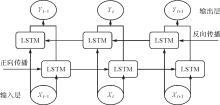
Fig. 1
BiLSTM network structure"

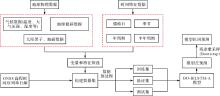
Fig. 2
Flowchart of BO-BiLSTM-A-Bootstrap model construction"


Fig. 3
GNSS sites distribution"
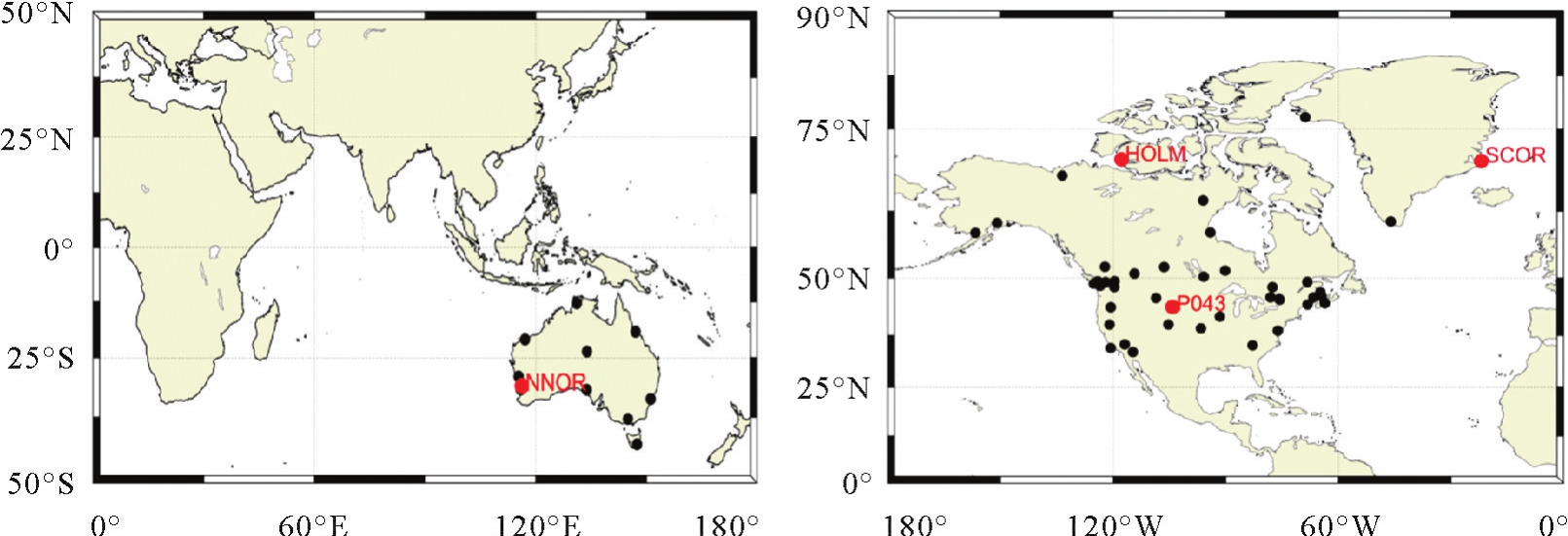
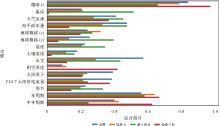
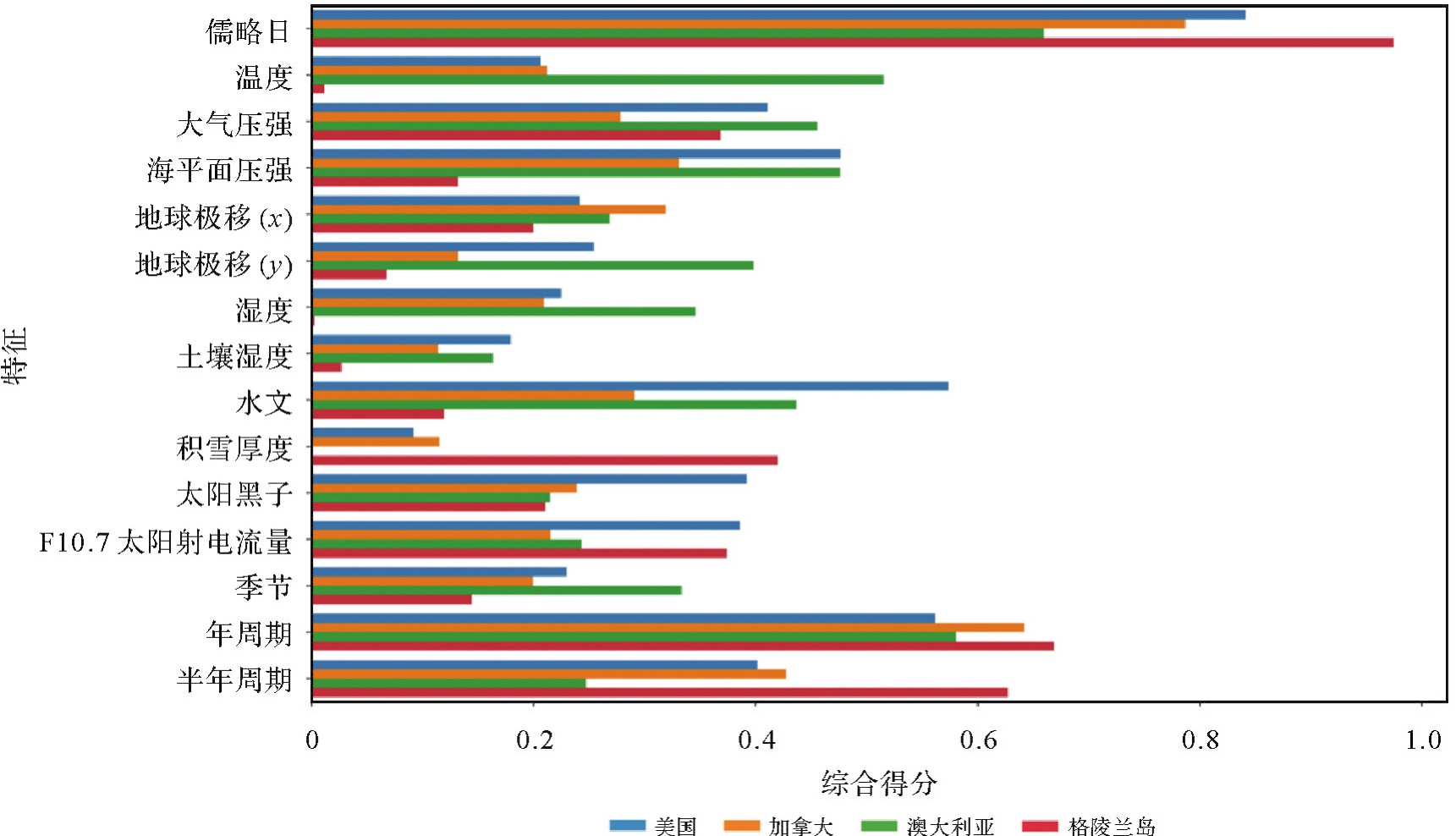
Fig. 4
Comparison of comprehensive score regions for features"
Tab. 1
Core parameters of the model"
| 测站 | 隐藏层神经元 | 训练次数 | 批数量 | 学习率 |
|---|---|---|---|---|
| P043 | 93 | 85 | 125 | 0.006 53 |
| HOLM | 83 | 104 | 16 | 0.000 1 |
| NNOR | 112 | 124 | 110 | 0.009 59 |
| SCOR | 71 | 89 | 34 | 0.000 1 |
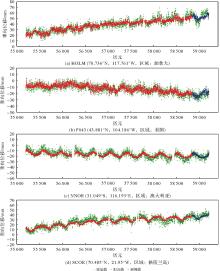
Fig. 5
Fitting and prediction results of P043, HOLM, NNOR, and SCOR stations"

Tab. 2
Comparison of prediction accuracy using different methods at various stations"
| 测站 | 方法 | RMSE | MAE |
|---|---|---|---|
| P043 | 时间变量建模 | 5.8 | 4.82 |
| 部分物理因素建模 | 4.93 | 4.14 | |
| 多物理因素特征筛选建模 | 3.63 | 2.89 | |
| NNOR | 时间变量建模 | 4.87 | 4.81 |
| 部分物理因素建模 | 3.87 | 3.12 | |
| 多物理因素特征筛选建模 | 3.6 | 2.88 | |
| HOLM | 时间变量建模 | 6.67 | 5.33 |
| 部分物理因素建模 | 6.33 | 5.22 | |
| 多物理因素特征筛选建模 | 5.7 | 4.8 | |
| SCOR | 时间变量建模 | 6.35 | 5.38 |
| 部分物理因素建模 | 5.69 | 4.75 | |
| 多物理因素特征筛选建模 | 4.5 | 3.63 |
Tab. 3
Experimental results of data augmentation method based on BiLSTM-A"
| 评估指标 | 数据增强前/mm | 数据增强后/mm | ARI/(%) |
|---|---|---|---|
| RMSE | 4.822 | 4.614 | 4.3 |
| MAE | 3.821 | 3.637 | 4.8 |
Tab. 4
Comparison of prediction accuracy (mean) of different models in four regions"
| 区域 | 方法 | RMSE | MAE |
|---|---|---|---|
| 美国 | AdaBoost | 5.90 | 4.9 |
| XGBoost | 5.60 | 4.63 | |
| GRU | 4.71 | 3.74 | |
| LSTM | 4.66 | 3.69 | |
| 本文方法 | 4.44 | 3.51 | |
| 澳大利亚 | AdaBoost | 4.51 | 3.61 |
| XGBoost | 4.4 | 3.50 | |
| GRU | 4.47 | 3.55 | |
| LSTM | 4.63 | 3.69 | |
| 本文方法 | 4.28 | 3.36 | |
| 加拿大 | AdaBoost | 6.74 | 5.57 |
| XGBoost | 6.67 | 5.58 | |
| GRU | 5.12 | 4.02 | |
| LSTM | 5.01 | 3.91 | |
| 本文方法 | 4.76 | 3.66 | |
| 格陵兰岛 | AdaBoost | 10.64 | 9.56 |
| XGBoost | 10.67 | 9.56 | |
| GRU | 5.16 | 4.26 | |
| LSTM | 4.82 | 3.95 | |
| 本文方法 | 4.61 | 3.67 |
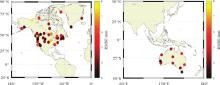
Fig. 6
Prediction accuracy indicators (RMSE) of BiLSTM-A at 56 stations"

Tab. 5
Comparison of prediction accuracy of different models for stations with poor accuracy (NLIB, VNDP, CHWK, PICL)"
| 测站 | 方法 | RMSE | MAE |
|---|---|---|---|
| NLIB | AdaBoost | 8.1 | 6.52 |
| XGBoost | 8.28 | 6.56 | |
| GRU | 8.48 | 6.73 | |
| LSTM | 8.06 | 6.49 | |
| 本文方法 | 7.60 | 6.10 | |
| CHWK | AdaBoost | 6.8 | 5.62 |
| XGBoost | 6.8 | 5.61 | |
| GRU | 7.32 | 6.04 | |
| LSTM | 7.25 | 5.98 | |
| 本文方法 | 6.44 | 5.15 | |
| INVK | AdaBoost | 9.61 | 7.69 |
| XGBoost | 8.73 | 6.87 | |
| GRU | 8.91 | 6.23 | |
| LSTM | 8.67 | 6.24 | |
| 本文方法 | 8.32 | 6.17 | |
| VNDP | AdaBoost | 6.84 | 4.96 |
| XGBoost | 6.73 | 4.86 | |
| GRU | 6.72 | 4.85 | |
| LSTM | 6.95 | 5.15 | |
| 本文方法 | 6.56 | 4.85 | |
| PICL | AdaBoost | 8.71 | 6.7 |
| XGBoost | 7.19 | 5.3 | |
| GRU | 7.11 | 5.24 | |
| LSTM | 7.77 | 5.95 | |
| 本文方法 | 6.97 | 5.16 |
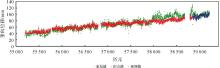
Fig. 7
Fitting and prediction results of PICL stations"


Fig. 8
Box plot of prediction accuracy indicators for 56 measurement stations"
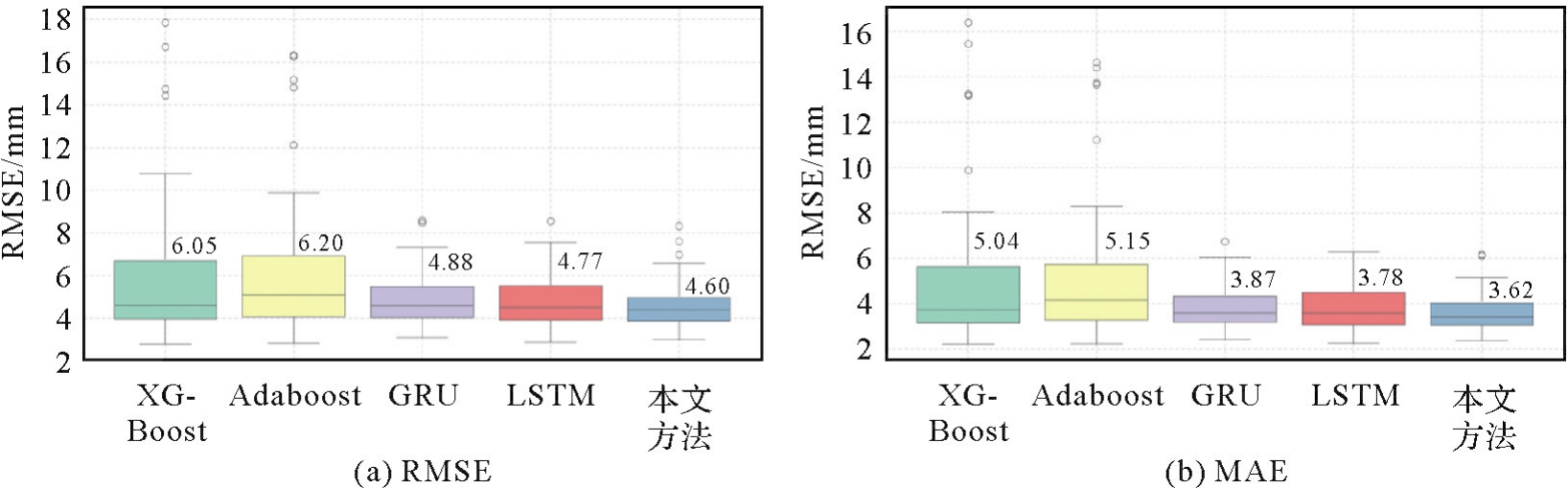
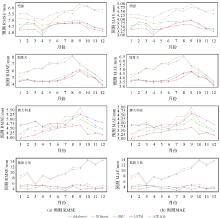
Fig. 9
Prediction accuracy and cycle correlation of P043, HOLM, NNOR and SCOR stations"

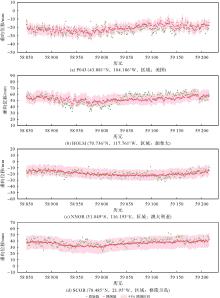
Fig. 10
Prediction results at a 95% confidence level"

Tab. 6
P043, HOLM, NNOR and SCOR station interval prediction accuracy indicators"
| 测站 | PICP | PINAW | CWC | CRPS |
|---|---|---|---|---|
| P043 | 0.90 | 12.06 | 24.78 | 2.13 |
| HOLM | 0.96 | 16.92 | 16.92 | 3.43 |
| NNOR | 0.96 | 16.12 | 16.12 | 2.07 |
| SCOR | 0.98 | 20.18 | 20.18 | 2.46 |
Tab. 7
Prediction accuracy indicators of different interval estimation methods"
| 模型 | CWC均值 | CRPS均值 |
|---|---|---|
| AdaBoost | 27.28 | 4.13 |
| XGBoost | 29.85 | 3.92 |
| GRU | 30.20 | 2.88 |
| LSTM | 29.8 | 2.87 |
| 本文方法 | 25.95 | 2.67 |
| [1] | GAO Wenzong, LI Zhao, CHEN Qusen, et al. Modelling and prediction of GNSS time series using GBDT, LSTM and SVM machine learning approaches[J]. Journal of Geodesy, 2022, 96(10): 71. |
| [2] | 明锋, 杨元喜, 曾安敏, 等. 中国区域IGS站高程时间序列季节性信号及长期趋势分析[J]. 中国科学:地球科学, 2016, 46(6): 834-844. |
| MING Feng, YANG Yuanxi, ZENG Anmin, et al. Seasonal signal and long-term trend analysis of elevation time series of IGS station in China area[J]. Scientia Sinica (Terrae), 2016, 46(6): 834-844. | |
| [3] | DHIRA Y, MEILANO I, DUDY D W. Analysis of tectonic plate velocity variations in the sunda strait based on GPS time-series data[J]. IOP Conference Series: Earth and Environmental Science, 2021, 873(1): 012084. |
| [4] | STALLER A, ÁLVAREZ-GÓMEZ J A, LUNA M P, et al. Crustal motion and deformation in Ecuador from cGNSS time series[J]. Journal of South American Earth Sciences, 2018, 86: 94-109. |
| [5] | 周东旭, 冯义楷, 张化疑, 等. 联合卫星测高和GNSS观测的天津沿海近25年相对海平面变化分析[J]. 武汉大学学报(信息科学版), 2024, 49(5): 775-784. |
| ZHOU Dongxu, FENG Yikai, ZHANG Huayi, et al. Analysis of relative sea level change of Tianjin coast in recent 25 years using satellite altimetry and GNSS observations[J]. Geomatics and Information Science of Wuhan University, 2024, 49(5): 775-784. | |
| [6] | WANG Xiaolei, NIU Zijin, HE Xiufeng, et al. Monitoring of coastal subsidence changes based on GNSS positioning and GNSS-IR[J]. Journal of Geodesy and Geoinformation Science, 2023, 6(2): 71-80. |
| [7] | BOGUSZ J, KLOS A, POKONIECZNY K. Optimal strategy of a GPS position time series analysis for post-glacial rebound investigation in Europe[J]. Remote Sensing, 2019, 11(10): 1209. |
| [8] | LAHTINEN S, JIVALL L, HÄKLI P, et al. Densification of the ITRF2014 position and velocity solution in the Nordic and Baltic countries[J]. GPS Solutions, 2019, 23(4): 95. |
| [9] | 何会齐, 谢伟, 孔冷进. 基于STL-XGBoost模型的GNSS高程时间序列预测方法[J]. 测绘通报, 2024(): 282-287. |
| HE Huiqi, XIE Wei, KONG Lengjin. Prediction method of GNSS elevation time series based on STL-XGBoost model[J]. Bulletin of Surveying and Mapping, 2024(): 282-287. | |
| [10] | LI Zhen, LU Tieding. Prediction of multistation GNSS vertical coordinate time series based on XGBoost algorithm[C]//Processings of 2022 China Satellite Navigation Conference. Singapore: Springer, 2022: 275-286. |
| [11] | WANG Jian, JIANG Weiping, LI Zhao, et al. A new multi-scale sliding window LSTM framework (MSSW-LSTM): a case study for GNSS time-series prediction[J]. Remote Sensing, 2021, 13(16): 3328. |
| [12] | ZHOU Yu, HE Xiaoxing, MONTILLET J P, et al. An improved ICEEMDAN-MPA-GRU model for GNSS height time series prediction with weighted quality evaluation index[J]. GPS Solutions, 2025, 29(3): 113. |
| [13] | ŞIMŞEK M, TAŞKıRAN M, DOGĞAN U. Modelling of GNSS station position time series using deep learning approaches[J]. Earth Science Informatics, 2024, 18(1): 96. |
| [14] | 胡顺强, 陈克杰, 贺小星, 等. 顾及环境负载的青藏高原东南缘GNSS垂向坐标时序噪声模型研究[J/OL]. 武汉大学学报(信息科学版), 2024: 1-26. [2024-06-24]. https://link.cnki.net/doi/10.13203/j.whugis20240098. |
| HU Shunqiang, CHEN Kejie, HE Xiaoxing, et al. GNSS vertical coordinate time series noise model in southeastern Tibet plateau based on environmental loading[J/OL]. Geomatics and Information Science of Wuhan University, 2024: 1-26. [2024-06-24]. https://link.cnki.net/doi/10.13203/j.whugis20240098. | |
| [15] | LI Zhao, JIANG Weiping, VAN DAM T, et al. A review on modeling environmental loading effects and their contributions to nonlinear variations of global navigation satellite system coordinate time series[J]. Engineering, 2025, 47: 26-37. |
| [16] | ZHANG Zihao, XU Keke, LIU Yifu, et al. Study on the influence of nonlinear change of regional GNSS station coordinate time series and environmental loading[DB/OL]. [2025-06-26]. https://doi.org/10.21203/rs.3.rs-4590502/v1. |
| [17] | 高菡, 匡翠林, 楚彬. 广义回归神经网络修正GNSS垂向坐标时间序列环境负荷效应[J]. 地球物理学报, 2024, 67(9): 3357-3366. |
| GAO Han, KUANG Cuilin, CHU Bin. Correction of environmental loading effects in GNSS vertical coordinate time series based on generalized regression neural network[J]. Chinese Journal of Geophysics, 2024, 67(9): 3357-3366. | |
| [18] |
鲁铁定, 李祯. 顾及地球物理效应的GNSS高程时间序列AdaBoost预测和插值方法[J]. 测绘学报, 2024, 53(6): 1077-1085. DOI: .
doi: 10.11947/j.AGCS.2024.20230434 |
|
LU Tieding, LI Zhen. Prediction and interpolation of GNSS vertical time series based on the AdaBoost method considering geophysical effects[J]. Acta Geodaetica et Cartographica Sinica, 2024, 53(6): 1077-1085. DOI: .
doi: 10.11947/j.AGCS.2024.20230434 |
|
| [19] | 宋绍剑, 姜屹远, 刘斌. 一种TCN的改进模型及其在短期光伏功率区间预测的应用[J]. 计算机应用研究, 2023, 40(10): 3064-3069. |
| SONG Shaojian, JIANG Yiyuan, LIU Bin. Improved TCN model and its application in short-term photovoltaic power interval prediction[J]. Application Research of Computers, 2023, 40(10): 3064-3069. | |
| [20] |
潘雄, 黄伟凯, 赵万卓, 等. 基于BiLSTM模型的BDS-3短期钟差预报精度研究[J]. 测绘学报, 2024, 53(1): 65-78. DOI: .
doi: 10.11947/j.AGCS.2024.20230082 |
|
PAN Xiong, HUANG Weikai, ZHAO Wanzhuo, et al. Research on short-term prediction accuracy of BDS-3 clock bias based on BiLSTM model[J]. Acta Geodaetica et Cartographica Sinica, 2024, 53(1): 65-78. DOI: .
doi: 10.11947/j.AGCS.2024.20230082 |
|
| [21] | 王凯, 肖星星, 余永明, 等. CEEMDAN-CNN-BiLSTM混合模型矿区地表沉降预测[J]. 导航定位学报, 2024, 12(5): 156-163. |
| WANG Kai, XIAO Xingxing, YU Yongming, et al. Hybrid prediction model of surface subsidence deformation using CEEMDAN-CNN-BiLSTM[J]. Journal of Navigation and Positioning, 2024, 12(5): 156-163. | |
| [22] | BAHDANAU D, CHO K, BENGIO Y. Neural machine translation by jointly learning to align and translate[EB/OL]. [2025-02-24]. arxiv.org/abs/1409.0473. |
| [23] | WANG Xilu, JIN Yaochu, SCHMITT S, et al. Recent advances in Bayesian optimization[J]. ACM Computing Surveys, 2023, 55(13s): 1-36. |
| [24] | 张明书, 姚琛, 吴贤国, 等. 基于BO-Adam-Bi-LSTM的盾构下穿既有隧道变形预测及调控[J]. 现代隧道技术, 2024, 61(6): 92-99, 110. |
| ZHANG Mingshu, YAO Chen, WU Xianguo, et al. Deformation prediction and control for shield tunnelling passing under existing tunnels based on BO-Adam-Bi-LSTM[J]. Modern Tunnelling Technology, 2024, 61(6): 92-99, 110. | |
| [25] | 林平, 李有鹏, 谭彬. 基于Bootstrap方法和LSSVM模型的滑坡位移区间预测[J]. 测绘与空间地理信息, 2024, 47(9): 48-51, 56. |
| LIN Ping, LI Youpeng, TAN Bin. Interval prediction of landslide displacement based on Bootstrap method and LSSVM model[J]. Geomatics & Spatial Information Technology, 2024, 47(9): 48-51, 56. | |
| [26] | 田景环, 李丛鑫, 王文川, 等. 基于Bootstrap法和极限学习机的月降水区间预测[J]. 水文, 2022, 42(3): 14-19. |
| TIAN Jinghuan, LI Congxin, WANG Wenchuan, et al. Monthly precipitation interval forecast based on Bootstrap and extreme learning machine[J]. Journal of China Hydrology, 2022, 42(3): 14-19. | |
| [27] | 文海平, 钟萍, 汤苗, 等. 利用GNSS探究2015—2022年澳大利亚东南部干旱时空演变特征及其与ENSO-IOD的遥相关[J]. 地球物理学进展, 2025, 40(3): 875-892. |
| WEN Haiping, ZHONG Ping, TANG Miao, et al. Exploring the spatiotemporal evolution characteristics and teleconnection with ENSO-IOD of drought in Southeastern Australia from 2015 to 2022 using GNSS[J]. Progress in Geophysics, 2025, 40(3): 875-892. | |
| [28] | ALTAMIMI Z, REBISCHUNG P, MÉTIVIER L, et al. ITRF2014: a new release of the International Terrestrial Reference Frame modeling nonlinear station motions[J]. Journal of Geophysical Research: Solid Earth, 2016, 121(8): 6109-6131. |
| [29] | 王鹏, 刘静, 刘小利, 等. GNSS在地表过程研究中的应用[J]. 武汉大学学报(信息科学版), 2024, 49(12): 2159-2180. |
| WANG Peng, LIU Jing, LIU Xiaoli, et al. Application of GNSS in the study of Earth surface processes[J]. Geomatics and Information Science of Wuhan University, 2024, 49(12): 2159-2180. | |
| [30] | NIE Wenfeng, ROVIRA-GARCIA A, WANG Yong, et al. On the global kinematic positioning variations during the September 2017 solar flare events[J]. Journal of Geophysical Research: Space Physics, 2022, 127(8): e2021JA030245. |
| [31] | ZHOU Wei, GU Shegnfeng, GE Maorong, et al. Analysis of the effect of the 06-09-2017 solar flare on GNSS signal and positioning performance[C]//Proceedings of 2018 China Satellite Navigation Conference. Singapore: Springer, 2018: 555-569. |
| [32] | 任文宗, 刘婕, 邓玉婷, 等. 基于RF回归和LSTM神经网络的空气污染耦合性研究及预测:以北京市为例[J]. 科学技术创新, 2025(10): 22-26. |
| REN Wenzong, LIU Jie, DENG Yuting, et al. Research and prediction on air pollution coupling based on RF regression and LSTM neural networks: a case study of Beijing[J]. Scientific and Technological Innovation, 2025(10): 22-26. | |
| [33] | 罗亦泳, 占奥文, 冯小欢. 基于CEEMDAN与TCN-Attention的陆态网络GNSS高程时间序列多尺度预测[J]. 大地测量与地球动力学, 2025, 45(8): 781-790. |
| LUO Yiyong, ZHAN Aowen, FENG Xiaohuan. Multi-scale prediction of GNSS elevation time series of CMONOC based on CEEMDAN and TCN-attention[J]. Journal of Geodesy and Geodynamics, 2025, 45(8): 781-790. | |
| [34] | 蒋婷婷. 基于不确定性理论的区域光伏发电功率预测[D]. 北京: 华北电力大学, 2023. |
| JIANG Tingting. Regional photovoltaic power forecasting based on uncertainty theory[D]. Beijing: North China Electric Power University, 2023. | |
| [35] | 陈船宇, 熊国江, 方厚康, 等. 基于MODWT-CEEMDAN-LSTM的短期光伏功率区间预测模型[J]. 太阳能学报, 2025, 46(2): 416-424. |
| CHEN Chuanyu, XIONG Guojiang, FANG Houkang, et al. Short-term photovoltaic power interval prediction model based on modwt-ceemdan-lstm[J]. Acta Energiae Solaris Sinica, 2025, 46(2): 416-424. | |
| [36] | 赵宇, 郑东健. 基于QR-KOA-ITransformer-BiLSTM的混凝土坝变形区间预测模型[J/OL]. 河海大学学报(自然科学版), 2025: 1-12. [2025-02-24]. https://kns.cnki.net/kcms/detail/32.1117.tv.20250224.1500.004.html. |
| ZHAO Yu, ZHENG Dongjian. Prediction model of deformation interval of concrete dam based on QR-KOA-ITransformer-BiLSTM[J/OL]. Journal of Hohai University (Natural Sciences), 2025: 1-12. [2025-02-24]. https://kns.cnki.net/kcms/detail/32.1117.tv.20250224.1500.004.html. |
| [1] | Chengcheng ZHU, Zhen LI, Jinyun GUO, Maosheng ZHOU, Wanqiu LI. Improved latitude difference method for calculating crossover point position from wide-swath measurement data [J]. Acta Geodaetica et Cartographica Sinica, 2026, 55(4): 673-683. |
| [2] | Xiaolei YANG, Yun XIAO, Liqing YANG, Xiaodong HONG, Enze GUO, Han WANG. Improved baseline method for time-variable gravity field recovery [J]. Acta Geodaetica et Cartographica Sinica, 2026, 55(4): 708-720. |
| [3] | Yang LI, Haijun HUANG, Sulan LIU, Xiaohui WU, Qi LIU, Qipei PANG, Yunlong WU. Century-scale projection of terrestrial water storage anomaly and drought risk in the Poyang Lake Basin using a CMIP6-driven Transformer-GRU model [J]. Acta Geodaetica et Cartographica Sinica, 2026, 55(4): 721-738. |
| [4] | Xiansheng YANG. Research on high-available visible light intelligent positioning technology [J]. Acta Geodaetica et Cartographica Sinica, 2026, 55(4): 753-753. |
| [5] | Jijun GENG. Research on pedestrian indoor and outdoor positioning based on smartphone multi-sensor fusion [J]. Acta Geodaetica et Cartographica Sinica, 2026, 55(4): 754-754. |
| [6] | Hongyang MA. Tropospheric corrections augmented PPP-AR: theory, methods and the application in aviation navigation [J]. Acta Geodaetica et Cartographica Sinica, 2026, 55(4): 756-756. |
| [7] | Hang LIU. Research on low-latitude ionospheric scintillation monitoring and forecasting methods using ground-based GNSS and space-borne GNSS-R observations [J]. Acta Geodaetica et Cartographica Sinica, 2026, 55(4): 758-758. |
| [8] | Haifeng LIU. Study on the spatiotemporal distribution of sporadic E layers based on GNSS radio occultation [J]. Acta Geodaetica et Cartographica Sinica, 2026, 55(4): 759-759. |
| [9] | Jiayao WANG, Lin CHEN, Shiyuan CHENG, Lijun WANG, Siqi XIONG. Artificial intelligence empowering the digital-intelligent transformation of cartographic science [J]. Acta Geodaetica et Cartographica Sinica, 2026, 55(3): 381-389. |
| [10] | Tangting WU, Xinyu LUO, Liguo LU, Zhanke LIU, Nengfang CHAO. Assessment of water resource changes and drought characteristics in the Shaanxi, Gansu and Ningxia region based on GNSS and GRACE/GRACE-FO [J]. Acta Geodaetica et Cartographica Sinica, 2026, 55(3): 439-450. |
| [11] | Zhongmin MA, Shuangcheng ZHANG, Xin ZHOU, Qi LIU, Ning LIU, Hengli WANG. A flood monitoring method using FY-3 GNSS-R accounting for surface reflectivity uncertainty: a case study of the August 2 Guangdong rainstorm disaster [J]. Acta Geodaetica et Cartographica Sinica, 2026, 55(3): 451-464. |
| [12] | Rui ZHOU, Feng ZHU, Xiaohong ZHANG. Camera-IMU extrinsic calibration based on prior poses and motion planning [J]. Acta Geodaetica et Cartographica Sinica, 2026, 55(3): 465-476. |
| [13] | Jingxuan LIU, Xuexi LIU, Kefei ZHANG, Chao YANG, Suqin WU, Shouqing ZHU, Fudong GUO. A prediction method for LOD based on combined LSTM and WLS [J]. Acta Geodaetica et Cartographica Sinica, 2026, 55(3): 477-489. |
| [14] | Wentao HOU, Yun XIAO, Jie CAO, Yukang WANG, Chunting CAO, Han WANG. A downscaling method for gravity satellite derived groundwater storage changes based on a feature-weighted CatBoost model [J]. Acta Geodaetica et Cartographica Sinica, 2026, 55(3): 490-501. |
| [15] | Lei XU. Study on the theory and method of fine modeling of GNSS regional ionosphere [J]. Acta Geodaetica et Cartographica Sinica, 2026, 55(3): 565-565. |
| Viewed | ||||||
|
Full text |
|
|||||
|
Abstract |
|
|||||
